
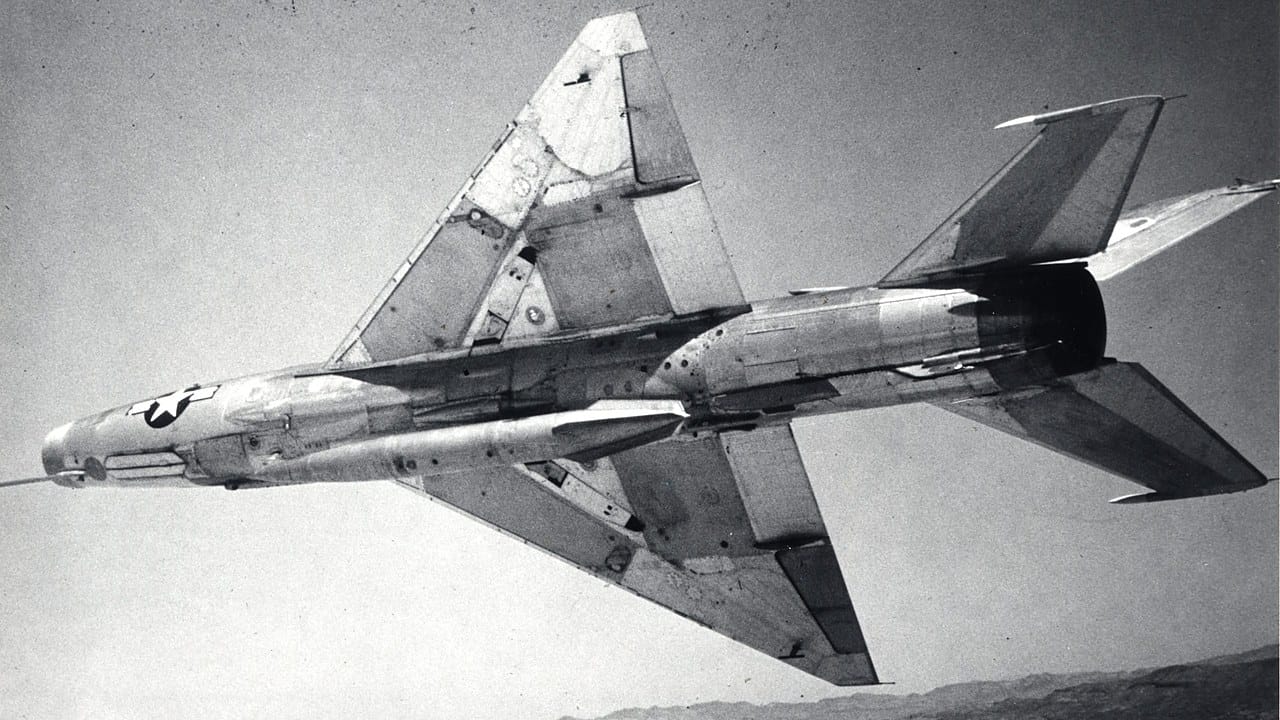
Una mañana en el desierto alto de Nevada, a principios de la década de 1980. El calor ya se siente en una pista que no aparece en ninguna carta aeronáutica fiable. Un piloto de caza recién llegado de la Base Aérea Nellis sale de un giro a 15.000 pies y ve algo que sus informes de inteligencia solo le habían mostrado en fotografías borrosas: un pequeño delta plateado con una estrella roja en su flanco, que se dirige hacia él. Su ritmo cardíaco se dispara. Esa reacción tiene un nombre en el escuadrón al que está a punto de unirse. La llaman fiebre del ciervo, y curarla es su único trabajo.
La unidad era el 4477.º Escuadrón de Pruebas y Evaluación, con el indicativo "Águilas Rojas", y entre 1977 y 1988 operó aviones de fabricación soviética. MiG-17, MiG-21 y MiG-23 Desde el aeropuerto de Tonopah Test Range, a unos 110 kilómetros al noroeste de Groom Lake. El programa se llamaba Constant Peg. Su existencia permaneció clasificada hasta noviembre de 2006.
Datos rápidos
- Establecido el 1 de abril de 1977 como el 4477.º Escuadrón de Pruebas y Evaluación; el entrenamiento con MiG desde Tonopah comenzó en julio de 1979.
- Voló MiG-17 (hasta 1982), MiG-21 y MiG-23, además de J-7B de fabricación china desde 1987; designaciones de cubierta YF-110, YF-113, YF-114
- Más de 15.000 salidas aéreas realizadas; casi 6.000 tripulantes de la Fuerza Aérea, la Armada y el Cuerpo de Marines de EE. UU. expuestos a MiG reales.
- Sesenta y nueve pilotos prestaron servicio, a cada uno se le asignó un número de "Bandit".
- Aeronaves procedentes de Israel, Indonesia, Egipto y China, a menudo sin manuales ni repuestos.
- Las operaciones finalizaron en marzo de 1988; la unidad fue desactivada el 15 de julio de 1990; el programa fue desclasificado en noviembre de 2006.
- Su entrenamiento de exposición se aplica directamente a los escuadrones Aggressor actuales.
El minidocumental desclasificado de la propia USAF sobre los Red Eagles de Constant Peg.
De tener una rosquilla a una pinza constante
La historia comienza, con precisión técnica, en 1968. Cuando Israel obtuvo un MiG-21 iraquí mediante la deserción del piloto Munir Redfa en 1966, la aeronave fue prestada a Estados Unidos y evaluada en Groom Lake bajo el nombre en clave Have Doughnut. Dos MiG-17 exsirios le siguieron en 1969 bajo los nombres Have Drill y Have Ferry. Estos fueron programas de explotación: medición del rendimiento, análisis de sistemas y combate de prueba limitado contra aeronaves estadounidenses. Los resultados fueron desalentadores. En los primeros enfrentamientos del programa Have Drill, ningún piloto de la Armada ganó su primer combate contra el MiG-17.
El contexto era Vietnam. Entre 1965 y 1968, la Fuerza Aérea de EE. UU. intercambiaba aproximadamente un avión propio por cada dos MiG derribados, una proporción inaceptable frente a un adversario supuestamente inferior. La Armada respondió creando Topgun en 1969, alimentado directamente con datos de Have Doughnut y Have Drill, y su índice de derribos mejoró notablemente. La Fuerza Aérea se quedó atrás, y un grupo de veteranos frustrados decidió que la solución no era otro estudio teórico, sino un escuadrón permanente de MiG reales, que volaran diariamente contra tripulaciones regulares de primera línea.
La fuerza impulsora fue el coronel Gaillard "Gail" Peck Jr., un veterano de Vietnam. F-4 piloto que entonces trabajaba en el Pentágono. Su propuesta obtuvo el respaldo del Mayor General Hoyt S. Vandenberg Jr., y el nombre del programa se formó a partir del indicativo de llamada de Vandenberg, "Constant", y el apodo de la esposa de Peck, Peg. El 4477.º se creó el 1 de abril de 1977; para julio de 1979, las salidas regulares de entrenamiento de MiG volaban desde una pista ampliada expresamente en Tonopah, un aeródromo que Peck había esbozado por primera vez en una servilleta de aerolínea. La base era lo suficientemente remota como para que no fuera reconocida públicamente como aeródromo militar hasta 1985, momento en el que también albergaba discretamente el F-117 programa por la noche.
Pantanos, desguaces y canales diplomáticos
¿Dónde se compran MiG cuando se es la Fuerza Aérea de los Estados Unidos? En cualquier lugar donde se pueda. Israel suministró máquinas sirias e iraquíes capturadas. Indonesia vendió MiG-21F-13 almacenados a principios de la década de 1970, un acuerdo que luego se equilibró con entregas de F-5E Tiger II. Tras la ruptura de Egipto con Moscú, según se informa, Egipto proporcionó MiG-23 como parte de un acuerdo armamentístico que también le brindó a El Cairo F-4E Phantom. En 1987, el escuadrón incluso adquirió doce J-7B chinos, copias del MiG-21, recién salidos de fábrica. En la documentación estadounidense, los aviones llevaban las siguientes designaciones encubiertas: YF-110 para el MiG-21, YF-113 para el MiG-23 y YF-114 para el MiG-17.
Los aviones llegaban sin manuales, sin repuestos y, con frecuencia, sin certificado de aeronavegabilidad. Los técnicos de mantenimiento del escuadrón, que vivían en remolques prefabricados con neumáticos que sujetaban los techos para protegerlos del viento del desierto, realizaban ingeniería inversa de los sistemas de frenos, reacondicionaban motores con una vida útil prevista de 500 horas y, ocasionalmente, recibían piezas de nueva fabricación, minuciosamente copiadas de originales desgastados. Según exfuncionarios, su índice de accidentes rondaba los 100 por cada 100 000 horas de vuelo, un orden de magnitud superior a la media de la Fuerza Aérea.
Los resultados eran tan consistentes que se podían apostar vidas a ellos. Para minimizar el riesgo, los MiG nunca volaban de noche ni con mal tiempo, y las salidas eran cortas, de unos 20 minutos, debido a la escasa capacidad de combustible de estos aviones. El MiG-17 fue retirado en 1982 por obsoleto y cada vez más inseguro; el MiG-21 se convirtió en el avión de trabajo; y el MiG-23 de ala de geometría variable, rápido en línea recta e inestable en cualquier otro terreno, quedó reservado para los pilotos más experimentados del escuadrón.
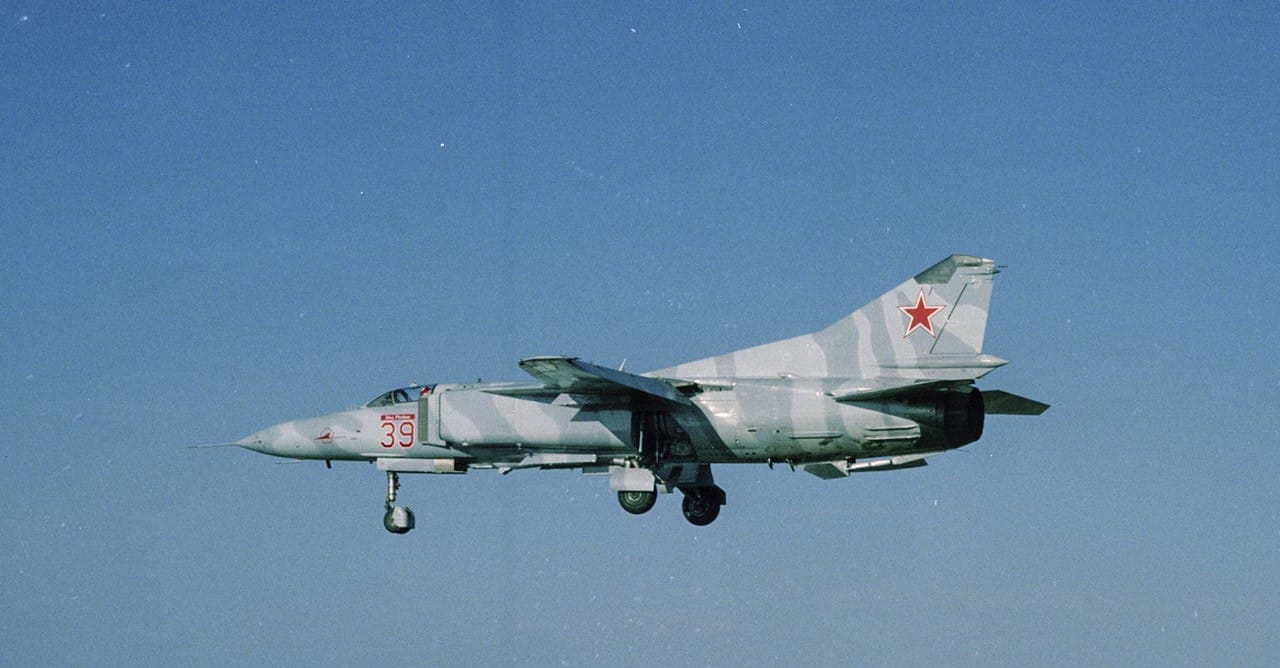
Exposición: Curando la fiebre del ciervo
El programa de entrenamiento era deliberadamente gradual. Una tripulación visitante, a menudo sin saber oficialmente lo que les esperaba, primero realizaba un vuelo de prueba junto al MiG simplemente para observarlo, ya que la conmoción del primer avistamiento era en sí misma la amenaza del enemigo. Luego venían enfrentamientos uno contra uno, tanto ofensivos como defensivos, después dos contra dos, y finalmente combates de muchos contra muchos integrados en los ejercicios Red Flag. Cada fase terminaba con largas sesiones informativas. Las lecciones eran concretas: no girar con un MiG-17, afrontar el combate verticalmente; no reducir la velocidad contra un MiG-21; y si un piloto de MiG-23 comete el error de girar en lugar de huir, es tuyo.
Las cifras, confirmadas cuando la Fuerza Aérea de EE. UU. desclasificó el programa en 2006, son notables en el sentido más sobrio de la palabra: más de 15 000 misiones de vuelo y casi 6000 tripulantes estadounidenses expuestos directamente al armamento soviético. Sesenta y nueve pilotos sirvieron como Águilas Rojas, cada uno con un número secuencial de "Bandit". Provenían de la Escuela de Armas de Caza, Topgun y los escuadrones Aggressor, y solían tener entre 2000 y 3000 horas de vuelo.
Los riesgos no eran teóricos. El teniente de la Armada M. Hugh Brown, Bandit 12, murió el 23 de agosto de 1979 cuando su MiG-17 entró en una segunda barrena demasiado baja para eyectarse. El capitán de la Fuerza Aérea Mark Postai murió en un accidente de un MiG-23 el 21 de octubre de 1982; su familia conoció las verdaderas circunstancias solo en torno a la desclasificación de 2006. El sargento técnico Rey Hernández murió en un accidente en tierra.
Los pilotos de Constant Peg reaccionan a imágenes inéditas de sus MiG, según informa 10 Percent True.
El costo, el general y el legado
El 26 de abril de 1984, el teniente general Robert M. Bond, subcomandante del Comando de Sistemas de la Fuerza Aérea, falleció al intentar eyectarse a alta velocidad de un MiG-23 sobre el Campo de Pruebas de Nevada. Cabe hacer una aclaración: Bond volaba con la unidad independiente de explotación "Red Hats" en Groom Lake, no con el 4477.º Escuadrón, un punto que la propia Fuerza Aérea destacó al desclasificar el programa Constant Peg. Sin embargo, la muerte de un general de tres estrellas en un caza soviético sobre Nevada planteó interrogantes incómodos años antes de que el programa fuera reconocido oficialmente.
El escuadrón Constant Peg terminó por razones poco glamorosas: dinero, fuselajes envejecidos y una nueva generación de tipos soviéticos que la antigua flota ya no podía representar. Las últimas salidas se volaron el 4 de marzo de 1988, y el escuadrón fue desactivado formalmente el 15 de julio de 1990. Varios de sus MiG se encuentran hoy en museos; el destino de otros permanece clasificado. La explotación de material extranjero en sí nunca cesó, y los repetidos avistamientos de Su-27 y MiG-29 Las vistas desde Nevada sugieren que la misión simplemente volvió a caer en la más profunda penumbra.
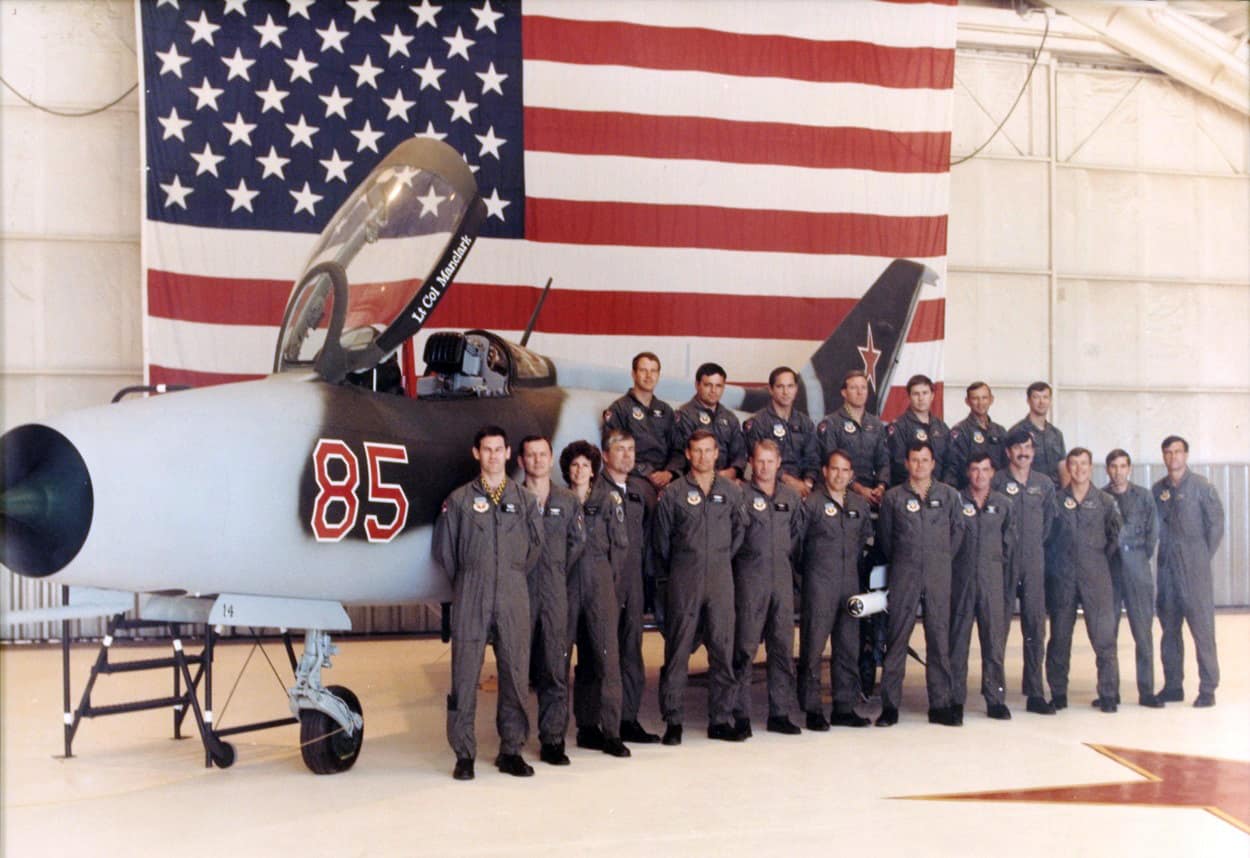
El balance, al final, es favorable. El entrenamiento de exposición pionero en Tonopah se aplica directamente a los escuadrones Aggressor actuales, cuyos esquemas de pintura aún recuerdan a los aviones de los Red Eagles. En la Operación Tormenta del Desierto, los pilotos de la Fuerza Aérea de EE. UU. destruyeron unos 40 aviones iraquíes, incluidos MiG-21 y MiG-23, sin una sola pérdida en combate aire-aire; muchos atribuyen el mérito a los hombres que dedicaron una década a asegurarse de que ningún piloto estadounidense viera una estrella roja por primera vez en combate. Cómo algunos de esos primeros MiG llegaron a Occidente, a través de... un espía, un piloto y un MiG-21 robado — es una historia que contamos aquí la semana pasada.
Fuentes: Museo Nacional de la Fuerza Aérea de los Estados Unidos, Revista Air & Space Forces (abril de 2007), The War Zone, Red Eagles de Steve Davies, Wikipedia
Preguntas relacionadas
¿Qué era el programa Constant Peg?
Constant Peg fue un programa secreto de la Fuerza Aérea de los Estados Unidos que utilizó cazas MiG de fabricación soviética para entrenar a tripulaciones aéreas estadounidenses. Desde 1979, el 4477.º Escuadrón de Pruebas y Evaluación —los "Águilas Rojas"— operó MiG-17, MiG-21 y MiG-23 desde el Campo de Pruebas de Tonopah en Nevada hasta 1988.
¿Quiénes eran las Águilas Rojas?
Los Red Eagles eran el 4477.º Escuadrón de Pruebas y Evaluación, creado en 1977. Volaban MiG soviéticos reales contra tripulaciones de la Fuerza Aérea, la Armada y la Infantería de Marina de EE. UU. para que los pilotos pudieran enfrentarse a los aviones enemigos durante el entrenamiento, en lugar de hacerlo por primera vez en combate. Participaron 69 pilotos, cada uno con un número de identificación de "Bandit".
¿De dónde obtuvo Estados Unidos sus MiG secretos?
Los MiG se obtuvieron clandestinamente a través de países como Israel, Indonesia, Egipto y China, a menudo sin manuales ni repuestos. Un ejemplo temprano, un MiG-21 iraquí, llegó a Occidente después Una operación del Mossad israelí persuadió a su piloto para que desertara. en 1966.
¿Qué avión pilotaba Constant Peg?
El programa utilizó aviones MiG-17 (hasta 1982), MiG-21 y MiG-23, además de J-7B de fabricación china a partir de 1987. Para camuflarlos, los aviones llevaban designaciones de la "serie del siglo" estadounidense, como YF-110, YF-113 y YF-114.
¿Cuántos pilotos se entrenaron para combatir los MiG secretos?
El Constant Peg realizó más de 15 000 salidas y expuso a casi 6000 tripulantes de la Fuerza Aérea, la Armada y el Cuerpo de Marines de EE. UU. a MiG reales. Esa experiencia —que curó a los pilotos del miedo a volar un MiG— se aplica directamente a los escuadrones Aggressor actuales.
¿Cuándo se desclasificó el programa Constant Peg?
Las operaciones terminaron en marzo de 1988 y la unidad fue desactivada el 15 de julio de 1990, pero el programa permaneció en secreto hasta que fue desclasificado en noviembre de 2006. Su legado perdura en el entrenamiento moderno de adversarios, incluyendo aviones agresores operados por empresas privadas.
¿Dónde tenían su base los MiG secretos?
Los Red Eagles operaban desde el aeropuerto del campo de pruebas de Tonopah en Nevada, aproximadamente a 110 kilómetros al noroeste de Groom Lake (Área 51). El entrenamiento con MiG allí comenzó en julio de 1979, después de que se estableciera el 4477.º en 1977.
Publicaciones relacionadas
Un espía, un piloto y un MiG-21 robado
El pánico por el MiG-25 Foxbat que reescribió el diseño de cazas.
0 Comentarios