
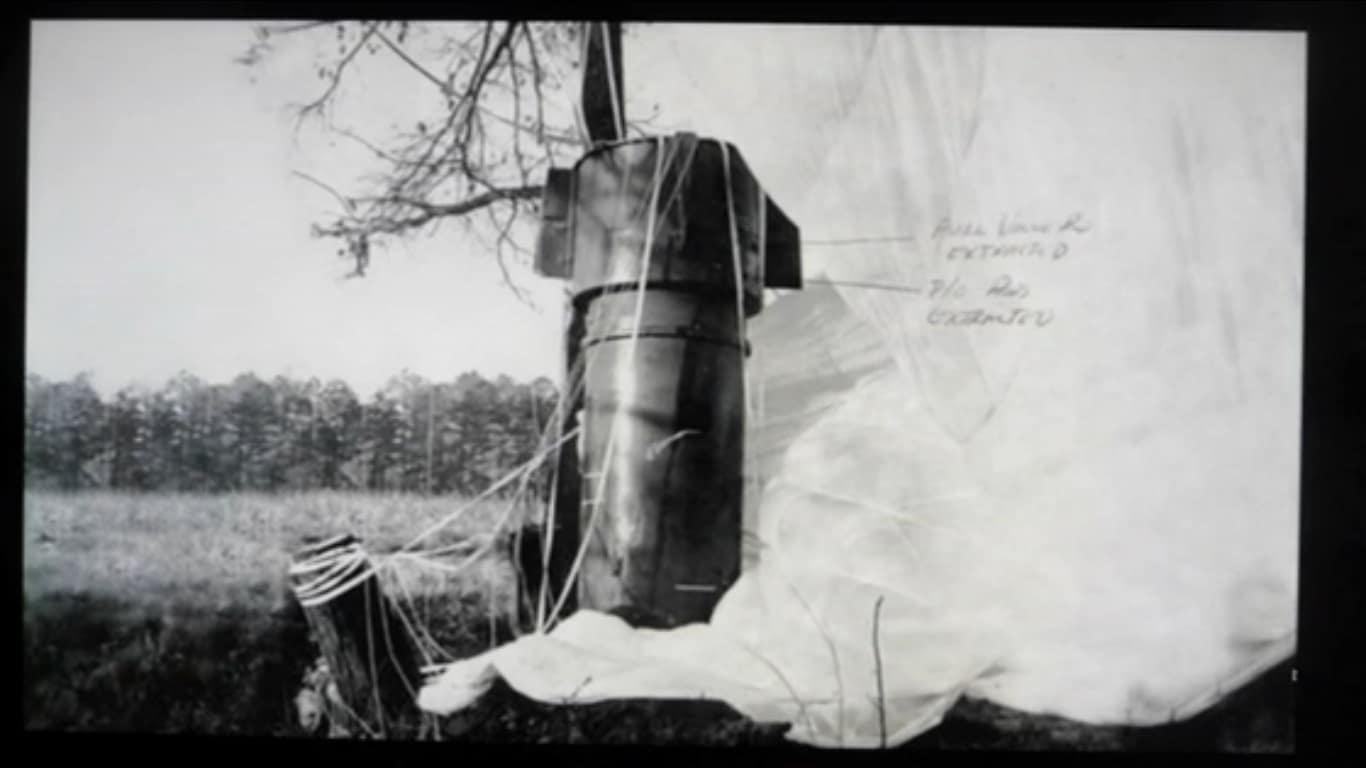
Pocos minutos después de la medianoche del 24 de enero de 1961, una bomba de hidrógeno Mark 39 descendió lentamente en la oscuridad invernal sobre el condado de Wayne, Carolina del Norte, balanceándose bajo un paracaídas de 30 metros (100 pies). Cayó de morro en un campo cerca de la aldea de Faro y quedó casi en posición vertical, con su paracaídas enganchado en un árbol. La potencia de diseño del arma se suele citar en 3,8 megatones, aproximadamente 250 veces el poder destructivo de la bomba de Hiroshima.
Una segunda bomba idéntica caía al mismo tiempo. Su paracaídas nunca se abrió. Se estrelló contra un campo de cultivo fangoso a una velocidad que, según se informa, rondaba los 1100 km/h (700 mph) y se hizo añicos, enterrando partes de sí misma más profundamente de lo que nadie podría excavar. El avión que había transportado ambas —un B-52G En una misión de alerta aérea durante la Guerra Fría, el avión se desplomaba del cielo hecho pedazos.
Durante décadas, la versión oficial fue que nunca había existido ningún peligro real. Luego, en 2013, el periodista Eric Schlosser logró obtener un memorando de los Laboratorios Nacionales Sandia de 1969 a través de la Ley de Libertad de Información mientras investigaba para su libro. Mando y control. Su veredicto esa noche en Carolina del Norte se resumía en una sola frase, y no coincidía con él.
Datos rápidos: Goldsboro Broken Arrow, 1961
| Fecha | Noche del 23 al 24 de enero de 1961; los restos impactaron contra el suelo a las 12:35 a. m. EST |
| Aeronave | Boeing B-52G Stratofortress, Base Aérea Seymour Johnson, Carolina del Norte |
| Carga útil | Dos bombas termonucleares Mark 39 Mod 2, con una potencia comúnmente citada de 3,8 megatones cada una. |
| Multitud | Ocho personas a bordo: cinco sobrevivieron y tres fallecieron. |
| Causa | Fuga de combustible en el ala derecha; rotura estructural por debajo de los 3000 metros (10 000 pies). |
| Bomba nº 1 | Paracaídas desplegado; encontrado prácticamente intacto, la mayoría de los pasos de activación completados. |
| Bomba nº 2 | Cayó en picado sobre el lodo; su etapa secundaria termonuclear nunca fue recuperada. |
| Legado | Análisis de la serie documental Declassified de 1969: un interruptor de bajo voltaje separó a Estados Unidos de la catástrofe. |
Ocho hombres y un ala con goteras
El B-52G había despegado de la Base Aérea Seymour Johnson en una misión de alerta aérea, parte de la rutina del Comando Aéreo Estratégico que mantenía a los bombarderos con capacidad nuclear en el aire las 24 horas. Alrededor de la medianoche, la tripulación se reunió con un avión cisterna para reabastecerse de combustible en vuelo. La tripulación del avión cisterna notó algo que los instrumentos del bombardero aún no habían detectado: el combustible salía a borbotones del ala derecha del B-52.
El reabastecimiento de combustible fue abortado. En cuestión de minutos, la fuga pasó de preocupante a catastrófica: el comandante de la aeronave, el mayor Walter Scott Tulloch, informó que se habían escapado aproximadamente 17 000 kg (37 000 lb) de combustible en tan solo tres minutos. El control terrestre ordenó al bombardero regresar a Seymour Johnson. Nunca llegó a la pista.
Al descender a 3000 metros (10 000 pies), los pilotos perdieron el control. Tulloch ordenó a la tripulación que saltara a 2700 metros (9000 pies). Cinco hombres se eyectaron y aterrizaron sanos y salvos; uno se eyectó pero no sobrevivió al aterrizaje; dos murieron en el accidente. El tercer piloto, el teniente Adam Mattocks, salió por la escotilla superior sin asiento eyectable; es la única persona que se sabe que escapó de un B-52 de esa manera y sobrevivió. El bombardero vacío se desintegró en el aire, esparciendo los restos por unos cinco kilómetros cuadrados (dos millas cuadradas) de tierras de cultivo de tabaco y algodón.
Dos bombas, dos caídas muy diferentes
Al desintegrarse el fuselaje, ambas bombas Mark 39 se desprendieron. La bomba número 1, ubicada en la bodega de bombas trasera, salió despedida a unos 9000 pies de altura. La violenta fragmentación provocó un efecto que la tripulación jamás había previsto: arrancó los pasadores de seguridad de las varillas de activación de la bomba, tal como lo habría hecho un lanzamiento deliberado, y el paracaídas de frenado se desplegó según lo previsto.
El arma número 2 salió de la bahía delantera a una altura mucho menor, entre 1500 y 600 metros (5000 y 2000 pies). Su paracaídas nunca se abrió. La bomba impactó contra un campo anegado a velocidad de caída libre y se desintegró, hundiendo sus componentes en el lodo.
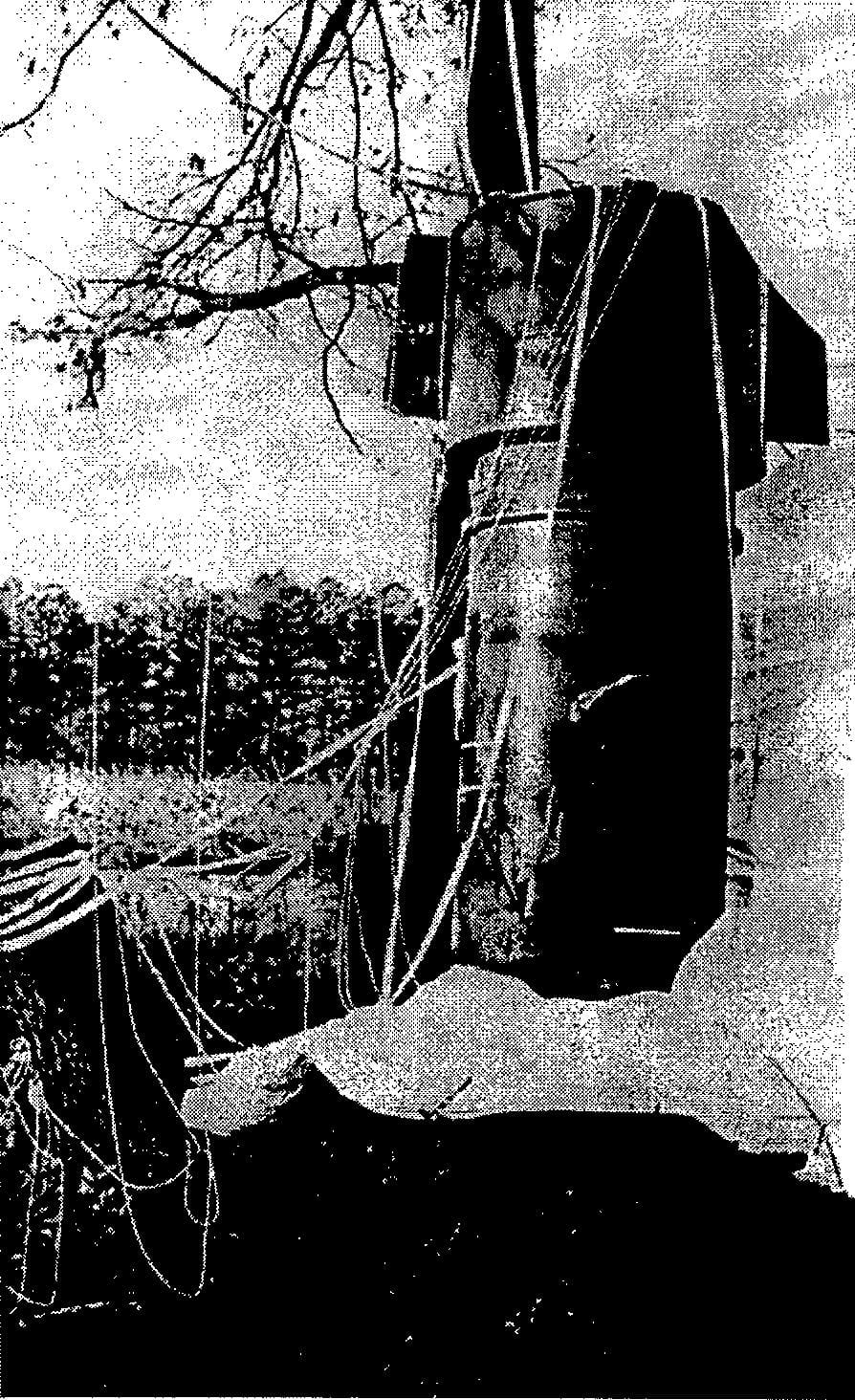
Los equipos de recuperación encontraron el arma número 1 casi en posición vertical, con el paracaídas enganchado en un árbol y, según la evaluación oficial, con daños mínimos. Lo inquietante fue lo que había estado haciendo el arma durante su descenso. Las varillas de activación extraídas habían disparado su generador de impulsos, que activó la batería de bajo voltaje; el temporizador de 42 segundos se completó; y el interruptor de presión barométrica se cerró mientras la bomba descendía: una secuencia de lanzamiento real paso a paso.
Según los relatos populares, basados en los documentos que obtuvo Schlosser, la historia suele resumirse así: tres de los cuatro sistemas de seguridad de la bomba fallaron o fueron eludidos. Los análisis de Sandia han presentado los detalles de forma ligeramente diferente a lo largo de los años, pero la conclusión principal no está en discusión: cuando la bomba llegó al suelo, solo un dispositivo de la cadena de detonación seguía desactivado.
El interruptor que resistió
Dicho dispositivo era el interruptor de seguridad/armado MC-772, un interruptor electromecánico accionado por solenoide integrado en la electrónica de la bomba. Permanecía en la posición de SEGURO a menos que una señal deliberada de 28 voltios desde la cabina lo activara. En el arma número 1, permanecía en SEGURO, y el circuito de disparo de alto voltaje nunca se completaba.
Análisis posteriores dejaron claro lo estrecho que era ese margen. Jones concluyó en 1969 que la Mk 39 Mod 2, en sus propias palabras, no poseía la seguridad adecuada para la función de alerta aérea en el B-52; un cortocircuito eléctrico durante una desintegración en pleno vuelo, según su criterio, podría haber activado el interruptor. Un estudio de Sandia de 1987 planteó la misma preocupación. El ingeniero de seguridad de Sandia, Bill Stevens, resumió posteriormente la ambigüedad: “Algunos dirán: "La bomba funcionó exactamente como se diseñó". Otros dirán: "Todos los interruptores, excepto uno, funcionaron, y ese interruptor impidió la detonación nuclear"‘.’
La bomba que no quería salir
El arma número 2 planteaba un problema diferente. Se había quedado enterrada en un terreno pantanoso, y los equipos de desactivación de explosivos pasaron días excavando entre lodo helado y agua subterránea para poder acceder a sus componentes. Tardaron tres días en recuperar la pieza que todos querían ver: el interruptor de seguridad.
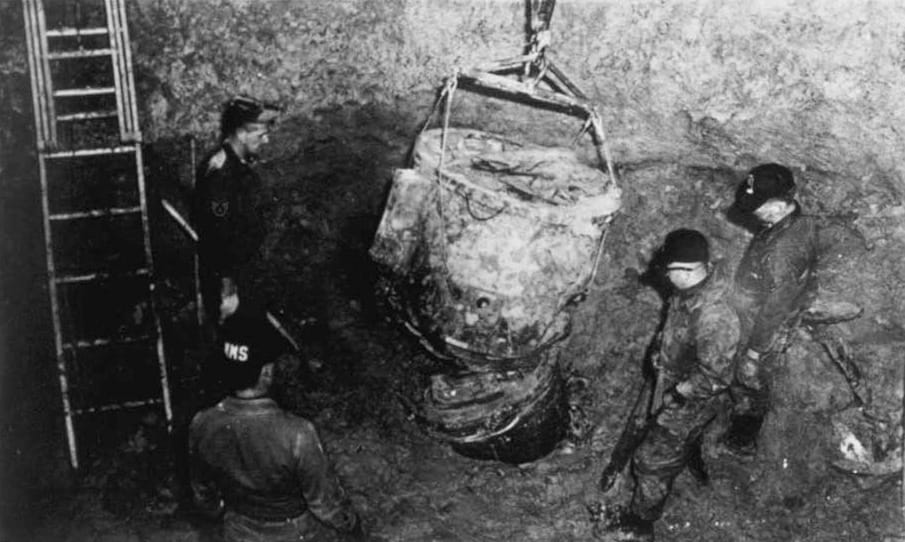
El teniente Jack ReVelle, el oficial de desactivación de explosivos que dirigió la recuperación, describió el momento en que su equipo finalmente sacó el interruptor del cráter. Es uno de los diálogos más citados de toda la Guerra Fría, y lo repitió en entrevistas durante el resto de su vida.
El hallazgo fue menos concluyente de lo que sugiere el intercambio: el análisis técnico inmediato registró que el interruptor dañado no se encontraba eléctricamente ni en la posición de armado ni en la de seguro, y que la bomba no había cargado su circuito de disparo. Pero a nadie que estuviera al borde de aquel cráter le tranquilizó esa distinción.
La etapa primaria del arma emergió el 30 de enero desde unos 6 metros (20 pies) de profundidad; sus explosivos se desmoronaron, pero no detonaron. La etapa secundaria termonuclear se hundía cada vez más lejos del alcance. Dado que el cráter se inundaba más rápido de lo que las bombas podían evacuarlo, la Fuerza Aérea abandonó la excavación a 13 metros (42 pies) de profundidad. Investigadores de la Universidad de Carolina del Norte estimaron posteriormente que la etapa secundaria se encuentra a unos 55 metros (180 pies) bajo el terreno, donde permanece hasta hoy; el gobierno adquirió una servidumbre sobre el sitio que restringe cualquier excavación.
De la negación a la desclasificación
Durante medio siglo, las declaraciones oficiales enfatizaron que los sistemas de seguridad funcionaban. El memorando de Jones de 1969, publicado por The Guardian en septiembre de 2013 tras la solicitud de información de Schlosser, demostró que los responsables de la seguridad de las armas habían llegado en privado a una conclusión más cercana a la opuesta. El documento se convirtió en una pieza central de Mando y control, La historia de los accidentes nucleares estadounidenses escrita por Schlosser, posteriormente adaptada a un documental de PBS.
Goldsboro impulsó a los diseñadores de armas hacia la doctrina moderna de seguridad nuclear: dispositivos de detección ambiental, mayor aislamiento eléctrico y salvaguardas que asumen que la propia aeronave puede desintegrarse. La lección se reforzó cinco años después, cuando otro B-52 se desintegró durante el reabastecimiento de combustible y arrojó cuatro bombas de hidrógeno cerca de Palomares, España —dos de los cuales esparcieron plutonio por todo el campo.
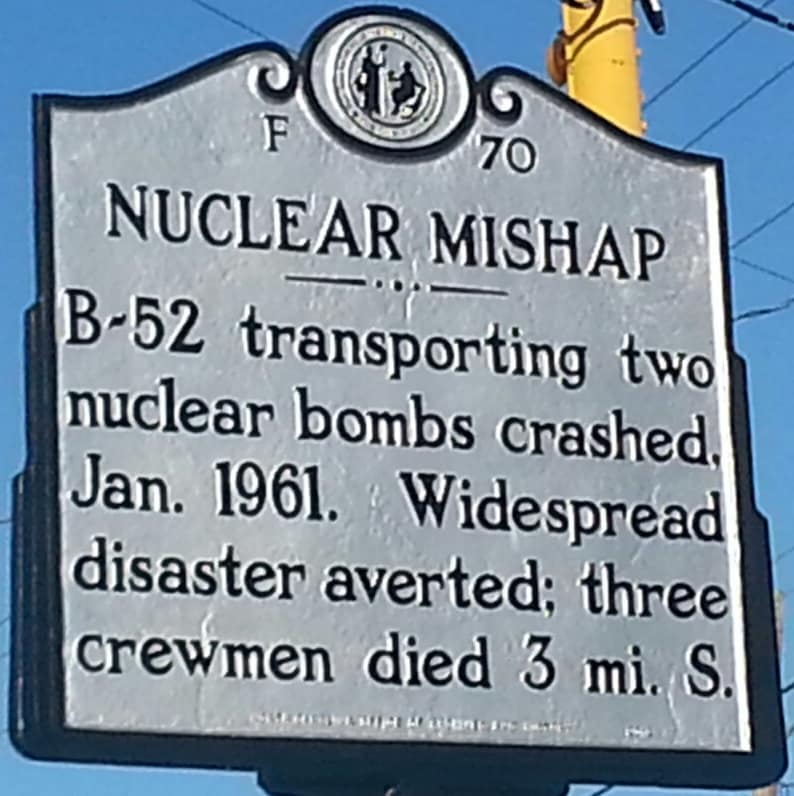
Carolina del Norte finalmente reconoció su roce con la catástrofe a su manera discreta. En 2012, el estado erigió una señal de carretera en la cercana ciudad de Eureka. En ella se lee, simplemente, “Accidente nuclear”.”
Si el interruptor del arma número 1 se hubiera activado, una detonación termonuclear con espoleta de contacto en el este de Carolina del Norte habría sido —en palabras del propio Sandia— creíble. Un simple interruptor de bajo voltaje lo impidió.
Fuentes: Wikipedia, The Guardian, Archivo de Seguridad Nacional, Eric Schlosser – Comando y Control, ECU News, documentos desclasificados de los Laboratorios Nacionales Sandia
Preguntas relacionadas
¿Qué fue el incidente del B-52 en Goldsboro?
El incidente de Goldsboro fue un accidente nuclear ocurrido entre el 23 y el 24 de enero de 1961, cuando un bombardero B-52G Stratofortress de la Fuerza Aérea de los Estados Unidos se desintegró sobre Goldsboro, Carolina del Norte, y lanzó dos bombas de hidrógeno Mark 39. El paracaídas de una de las bombas se desplegó y fue hallada prácticamente intacta; la otra cayó en un campo fangoso y se hizo añicos. Según los informes, un único interruptor de bajo voltaje evitó la detonación.
¿Qué es una Flecha Rota en términos nucleares?
Un "Flecha Rota" es el término militar estadounidense para un accidente que involucra un arma nuclear que no crea riesgo de guerra, como una detonación accidental, una pérdida o un lanzamiento accidental. El accidente de Goldsboro de 1961, en el que un B-52 arrojó dos bombas de hidrógeno sobre Carolina del Norte, es uno de los eventos de Flecha Rota más famosos, parte de un patrón más amplio de Casi desastres de la Guerra Fría.
¿Qué tan potentes eran las bombas de Goldsboro?
Cada una de las dos bombas termonucleares Mark 39 lanzadas cerca de Goldsboro tenía una potencia explosiva de 3,8 megatones, aproximadamente 250 veces superior al poder destructivo de la bomba de Hiroshima. Una sola detonación sobre Carolina del Norte podría haber devastado una vasta área y extendido la lluvia radiactiva por todo el este de Estados Unidos, lo que hace que el incidente, que estuvo a punto de convertirse en una tragedia, sea especialmente alarmante.
¿Estuvieron a punto de explotar las bombas de Goldsboro?
Según un informe desclasificado de 1969, una de las dos bombas Goldsboro completó la mayor parte de su activación tras el despliegue de su paracaídas, y solo un interruptor de seguridad de bajo voltaje la separaba de una detonación nuclear completa. Este relato sigue siendo objeto de debate, pero puso de manifiesto lo cerca que estuvo una misión de bombardeo rutinaria de convertirse en una catástrofe.
¿Qué ocurrió con la tripulación del B-52 en Goldsboro?
El B-52G transportaba ocho tripulantes cuando una fuga de combustible en su ala derecha provocó su desintegración por debajo de los 10.000 pies. Cinco de los tripulantes sobrevivieron y tres murieron. El accidente ocurrió durante una misión de alerta aérea del Comando Aéreo Estratégico que mantenía bombarderos armados con armas nucleares en el aire las 24 horas del día, similar en peligro a los vuelos de reconocimiento como el Misiones del U-2 sobre Cuba.
¿Nunca se recuperó una de las bombas de Goldsboro?
Sí. La segunda bomba Mark 39 cayó en caída libre sin paracaídas y se estrelló a gran velocidad contra un campo fangoso, quedando enterrada profundamente en el suelo. Su etapa secundaria termonuclear nunca fue recuperada, y el Ejército de los Estados Unidos finalmente adquirió una servidumbre sobre el terreno para impedir cualquier excavación en el lugar.

0 Comentarios