
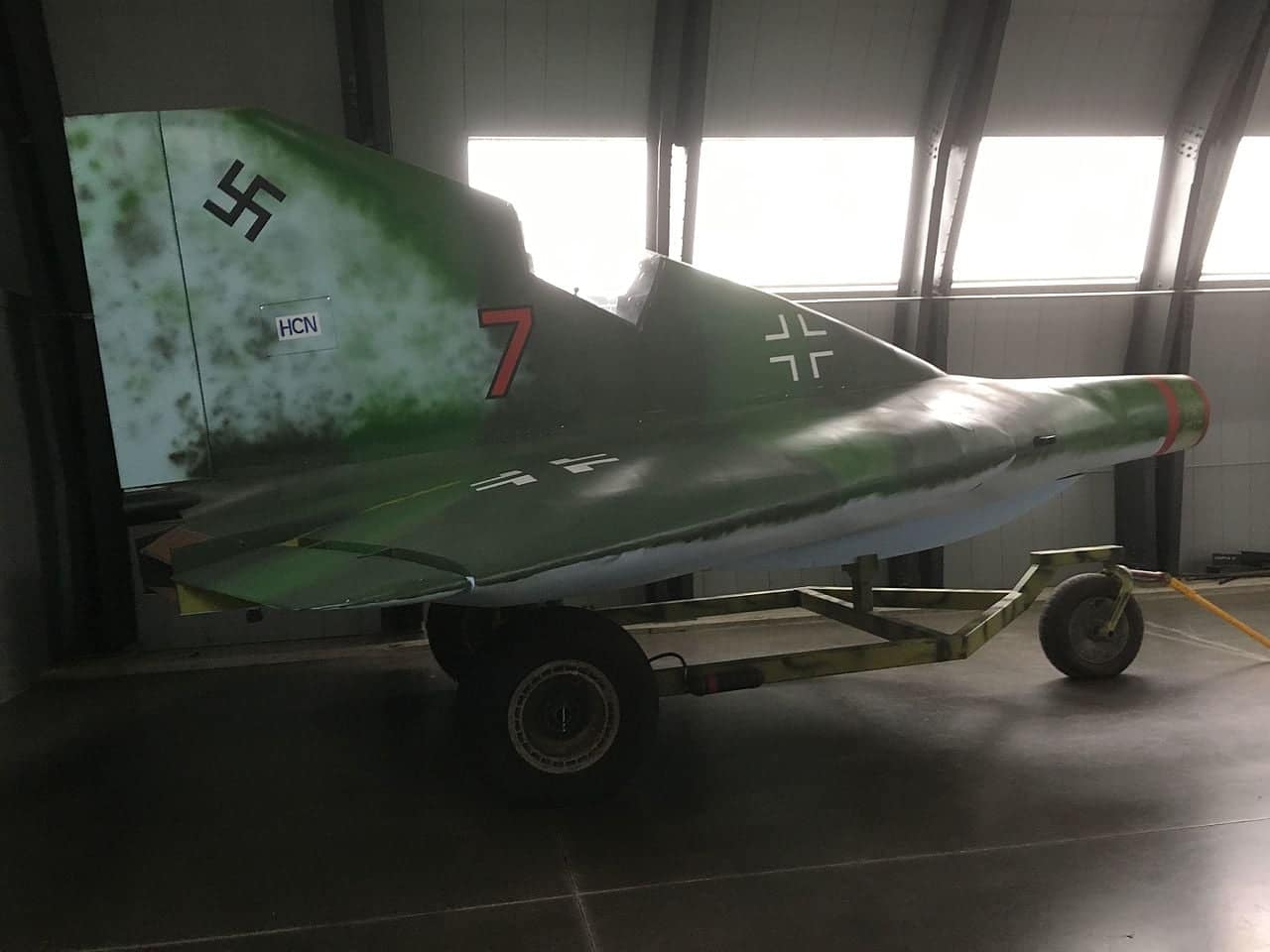
By late 1944, Nazi Germany was running out of almost everything an air force needs — most critically, fuel. So when Dr. Alexander Lippisch, the delta-wing pioneer behind the rocket-powered Me 163 Komet, sketched a supersonic interceptor, he gave it an engine designed to run on the one thing Germany still had in abundance: coal.
The Lippisch P.13a was a ramjet-powered delta meant to burn a basket of coal and, on paper, reach the edge of Mach 2.6. It never flew under power. But it was no idle fantasy — and the ideas inside it outlived the regime that spawned them.
Datos rápidos
- Tipo: ramjet-powered delta-wing interceptor (project study)
- Diseñador: Dr. Alexander Lippisch, 1944
- Combustible: coal — burned in the ramjet in flight
- Predicted stability: to around Mach 2.6 in wind-tunnel tests
- Test glider: the DM-1, later completed for the U.S. and tested by NACA
- Estado: never built as a powered aircraft
An engine fed by fire and coal
The P.13a had no conventional engine at all. A ramjet has no moving parts: it works only at speed, compressing incoming air by sheer forward motion. Lippisch’s twist was the fuel. A wire-mesh basket of granulated coal would sit behind the nose intake, ignited by a gas burner; air rushing through would sweep the burning coal-gas rearward, mix it with clean air under pressure, and blast it out of a nozzle as thrust.
Because a ramjet produces nothing at low speed, the aircraft would first have to be flung into the air by a rocket booster or a tow. Only then, at high speed, would the coal fire do its work.
A wing that tested faster than Mach 2
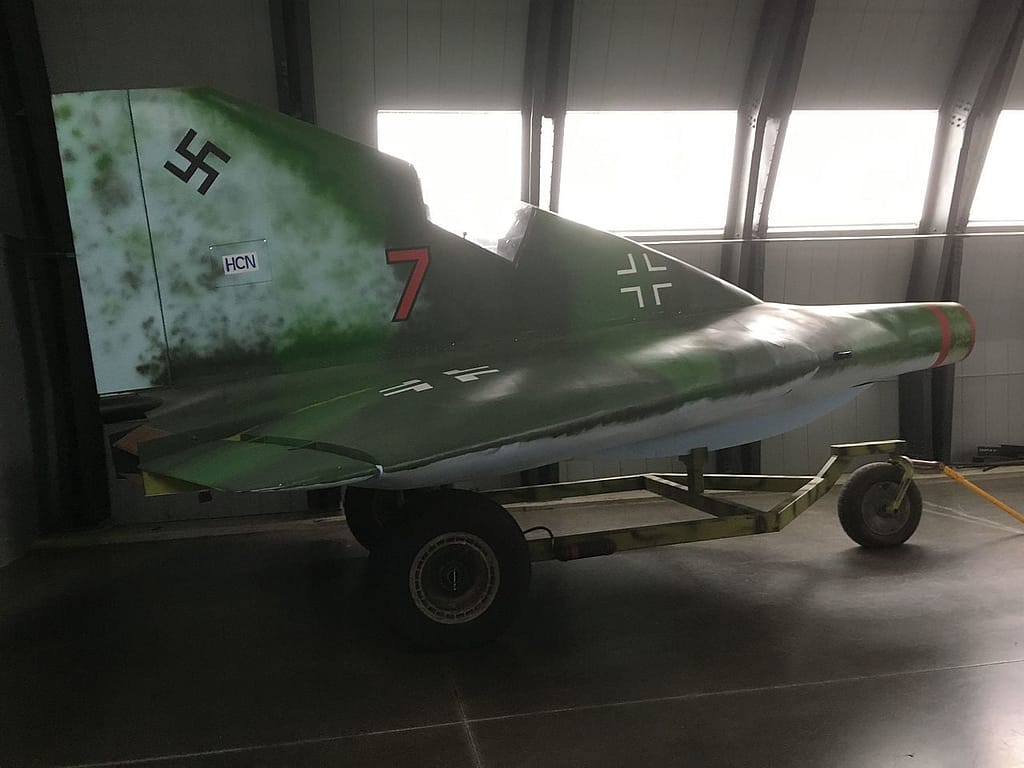
Lippisch never built the powered aircraft, but he did test its radical shape. Models in the DVL high-speed wind tunnel showed the sharp delta staying stable to around Mach 2.6 — an astonishing figure for 1944. Some versions were to carry no guns at all, ramming enemy bombers with reinforced wings, a grim measure of how desperate late-war German air defence had become.
The glider the Americans finished
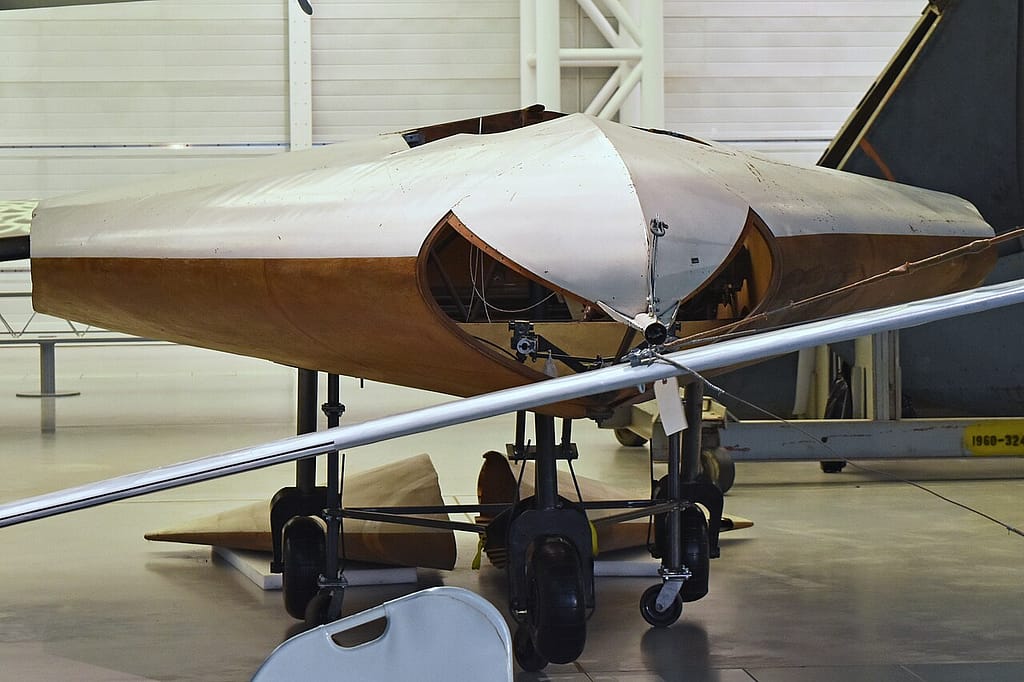
To explore how the delta would behave at low speed, students built an unpowered glider, the DM-1. It was still unfinished when American forces overran the site in 1945 — so the U.S. ordered Lippisch’s own team to complete it, then shipped the glider to NACA’s Langley wind tunnel for study. The DM-1 survives today in the Smithsonian’s collection.
The idea that survived the war
Lippisch himself was brought to the United States and went to work for Convair, where his lifelong obsession with the delta wing fed directly into the Convair XF-92 and the delta-winged interceptors that followed. The coal-burning ramjet was a dead end. The delta shape wrapped around it became one of the defining silhouettes of the jet age.
The P.13a is remembered as a curiosity — the fighter that would have run on coal. But strip away the desperation, and what remains is a startlingly modern wing, tested toward supersonic speeds a decade before anyone actually flew there.
Sources: Wikipedia; MilitaryFactory; The Aviation Geek Club; Hush-Kit; Smithsonian.

0 Comentarios