
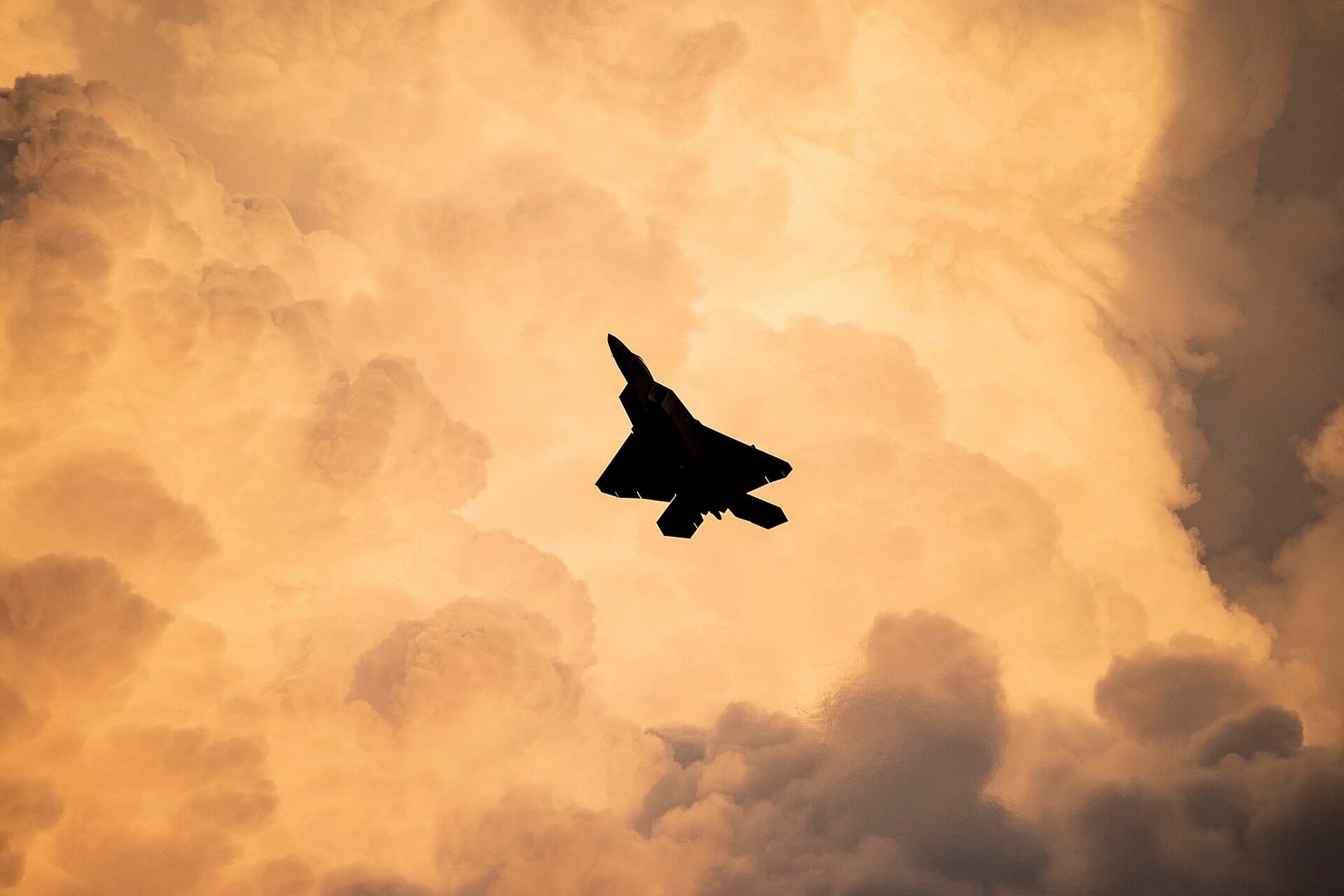
The opening chapter of Alas de guerra: del zepelín a la sexta generación, our series on how military aviation was invented, one breakthrough at a time.
It is the first of November, 1911, and a young Italian lieutenant named Giulio Gavotti is flying a flimsy Etrich Taube monoplane over the desert near Tripoli, in Libya. Balanced on his knees is a small leather pouch. Inside it are four grenades, each about the size of a grapefruit and weighing roughly four pounds.
At about 600 feet over the oasis of Ain Zara, Gavotti takes the controls between his knees, reaches into the pouch, screws a detonator into the first grenade by hand, and simply drops it over the side. Then the second. Then the third and the fourth, onto a Turkish camp below. There is no bombsight, no bomb rack, no real aiming — just a man in a wood-and-fabric aeroplane throwing explosives out of the cockpit with his bare hands.
It is the first time in history that bombs have been dropped on an enemy from an aircraft. The whole future of air war — the Blitz, Hiroshima, the cruise missile, the armed drone — is sitting in that little leather pouch. And almost no one notices.
A little over a century later, the descendants of Gavotti’s grapefruit grenades are stealth jets that can cross a continent unseen and place a weapon through a specific window. This is the story of how we got from one to the other — and it is, again and again, the same story: a new idea, invented at almost the same moment by rival nations, and won not by whoever thought of it first, but by whoever could build and use it at scale.
THE FIVE ERAS AT A GLANCE (tap an era to jump)
Era 1 — Birth (1900s–1918): the first jobs in the sky
When the First World War began in 1914, the aeroplane was barely a decade old and most generals saw it as a toy. Its first military value was not fighting at all — it was seeing.
Reconocimiento was the original job. Spindly two-seaters droned over the trenches, their observers sketching and photographing enemy positions. In the war’s opening weeks, Allied airmen spotted German armies wheeling east of Paris — intelligence that helped save the city at the Battle of the Marne. The general who had dismissed the aeroplane suddenly could not do without it.
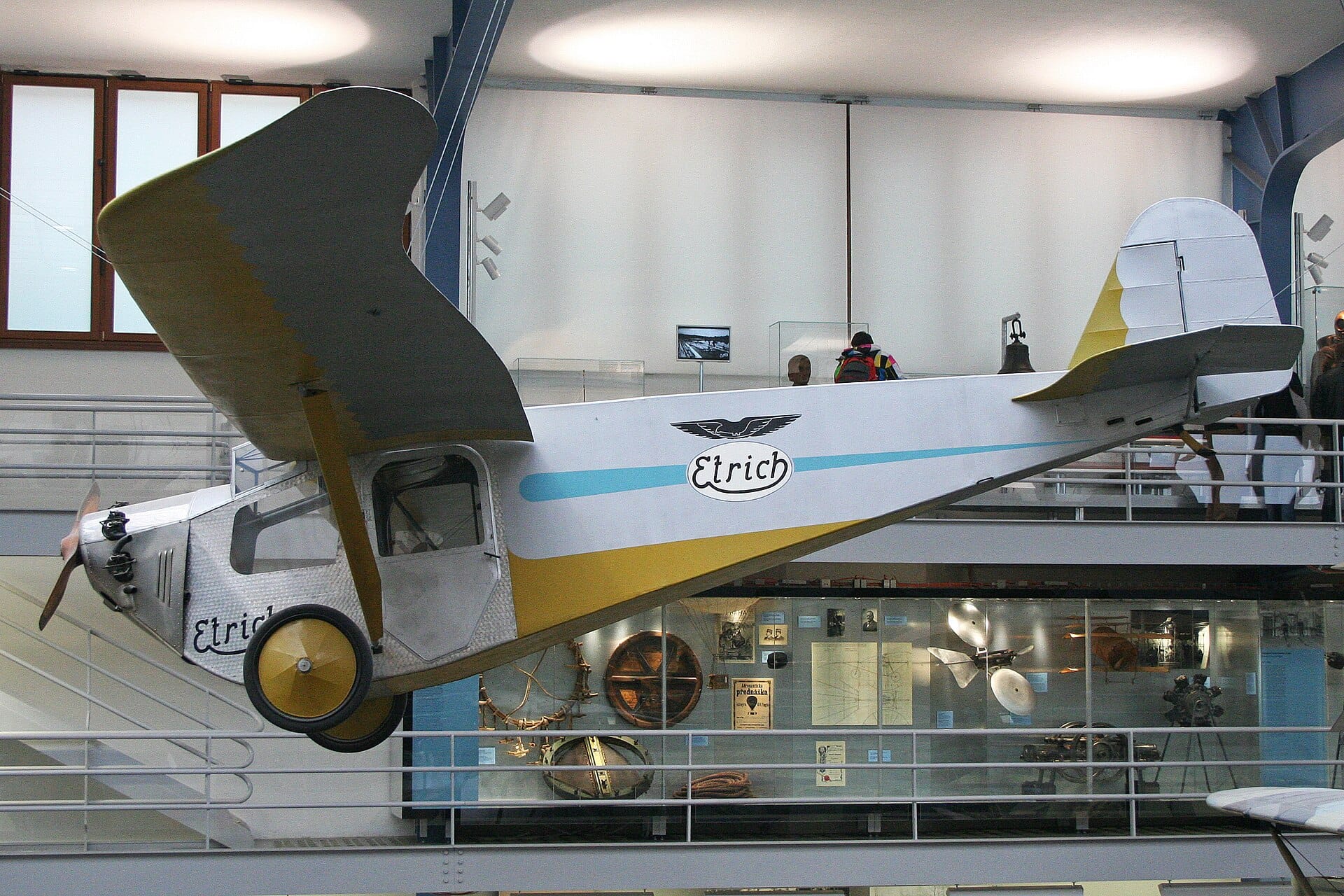
Bombing came astonishingly early — earlier, in fact, than the fighter. As far back as 1911, before the World War had even begun, the Italian lieutenant Giulio Gavotti leaned out of a Taube like the one above and dropped the first bombs in history by hand. Through the early years of the war, crews simply carried small bombs and grenades aloft and lobbed them over the side. It was wildly inaccurate — but the idea of attack from above was already loose in the world.
The fighter was the last of the three roles to appear, and it came precisely to stop the other two. If aeroplanes could see and could bomb, each side urgently needed a way to shoot down the enemy’s. The breakthrough, around 1915, was a mechanism to fire a machine gun straight through the spinning propeller without shredding it — credit genuinely contested between a German patent, a French design and the famous Fokker production version. Once Germany fielded it, the “Fokker Scourge” gave the Central Powers a deadly edge, and the dogfight was born.
From there the bomber grew up fast. Hand-thrown grenades gave way to purpose-built machines — the twin-engined Gotha and the four-engined “Giant” — that could cross the sea and strike cities. The first effective campaign of strategic bombing fell on Folkestone in May 1917, a story we tell in full in the first deep-dive of this series.
POWERS COMPARED — WORLD WAR I — CENTRAL POWERS vs ALLIES
| Los contendientes | Germany & Austria-Hungary vs Britain, France, Italy and the USA |
| Who led | Germany — first with the synchronised gun, the Zeppelin and the heavy bomber |
| Who answered | The Allies — out-producing Germany and inventing organised air defence (and, in Britain, the first independent air force, the RAF) |
| El veredicto | By 1918 every modern mission — recon, fighter, bomber — already existed in embryo |
Era 2 — The hard lessons (1919–1945): radar, the carrier, the jet
Between the wars the biplane gave way to the sleek, all-metal monoplane, and theorists like Italy’s Giulio Douhet argued that fleets of bombers could win wars on their own by flattening cities. When the Second World War came, those ideas were tested to destruction.
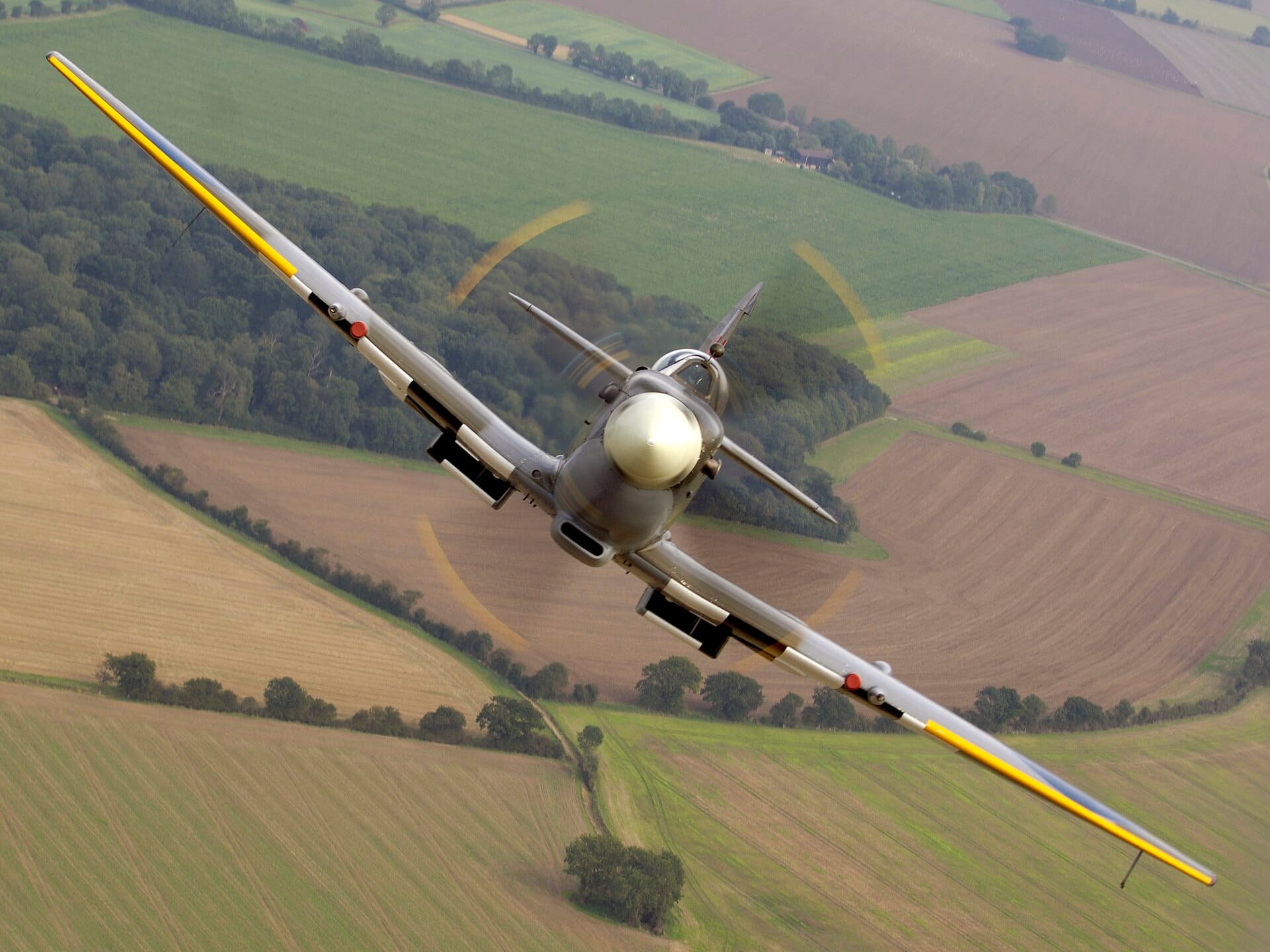
The Battle of Britain in 1940 was decided not just by Spitfires and Hurricanes but by something invisible: radar. Britain’s Chain Home network could detect raiders far out to sea and vector fighters to meet them — the first time a nation fought an air battle with a real-time picture of the sky. Germany had radar too; Britain simply integrated it better.
At sea, the aircraft carrier dethroned the battleship: at Taranto, Pearl Harbor and Midway, aircraft launched from ships decided the fate of fleets. And strategic bombing arrived in horrifying maturity, as thousand-bomber streams of Lancasters, B-17s and B-29s burned the cities of Germany and Japan — the logic of Folkestone, scaled up a thousandfold.
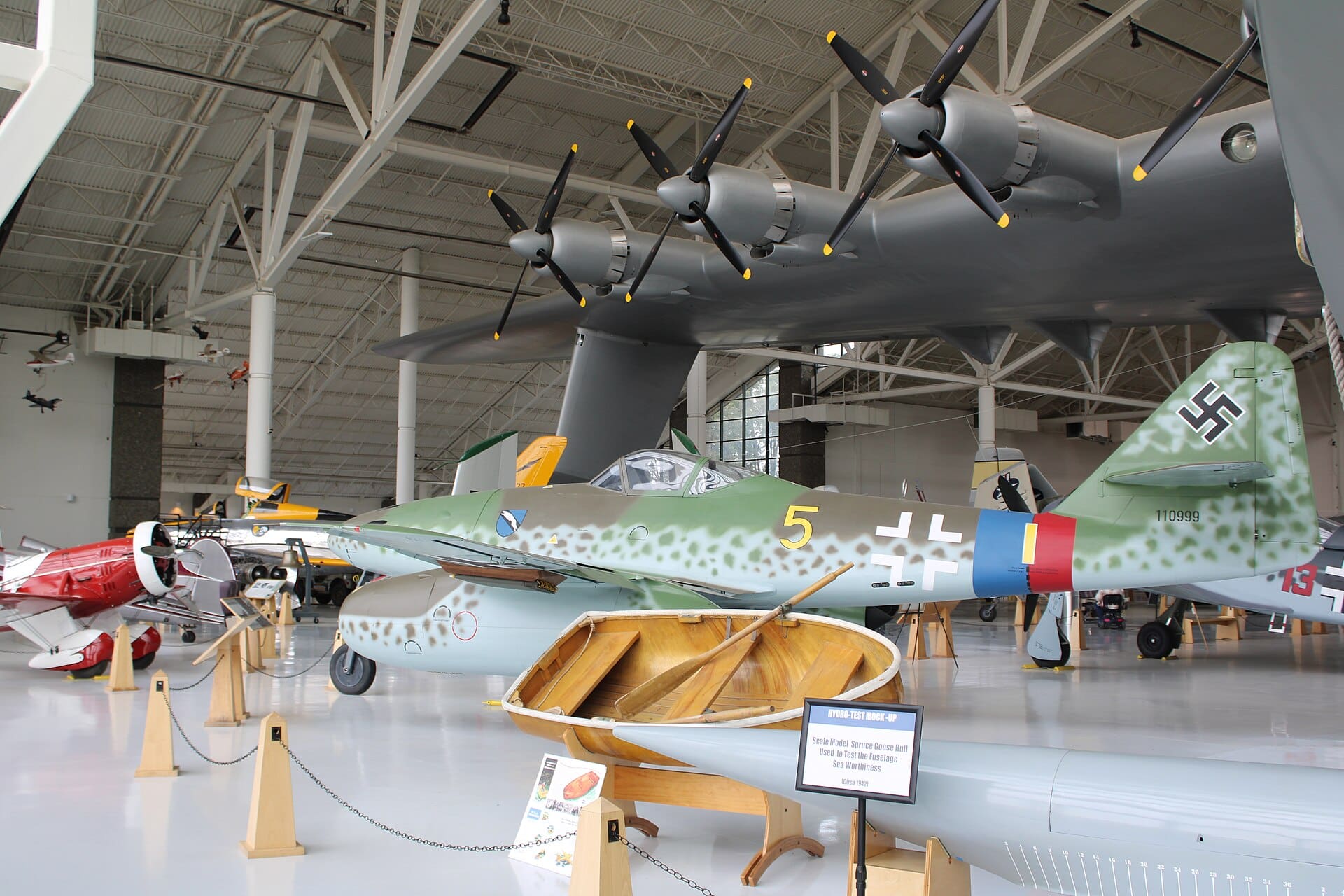
Then, in the war’s final years, came two revolutions that would define everything after. In Britain, Frank Whittle, and in Germany, Hans von Ohain, had each independently invented the jet engine; Germany fielded the first operational jet fighter, the Messerschmitt Yo 262, in 1944. And from German test ranges rose the first cruise and ballistic missiles, the V-1 and V-2 — the ancestors of every guided weapon and space rocket to come.
POWERS COMPARED — WORLD WAR II — AXIS vs ALLIES
| Los contendientes | Nazi Germany, Japan and Italy vs Britain, the USA and the USSR |
| Who invented it | Germany led on the jet, the rocket and early radar; the jet engine appeared in Britain at the very same time |
| Who did it better | The Allies — radar integration, carrier aviation and sheer industrial mass (the USSR and USA out-built everyone) |
| El veredicto | Germany invented the future and lost the present; the jet and the rocket came too late to save it |
Era 3 — The Cold War (1945–1991): faster, higher, deadlier
The jet engine and the atomic bomb fused into a single, terrifying idea: the nuclear-armed bomber that could erase a city in an afternoon. For decades the world’s survival rested on a “triad” of bombers, land-based missiles and submarines — and on the aircraft built to deliver, deter and spy.
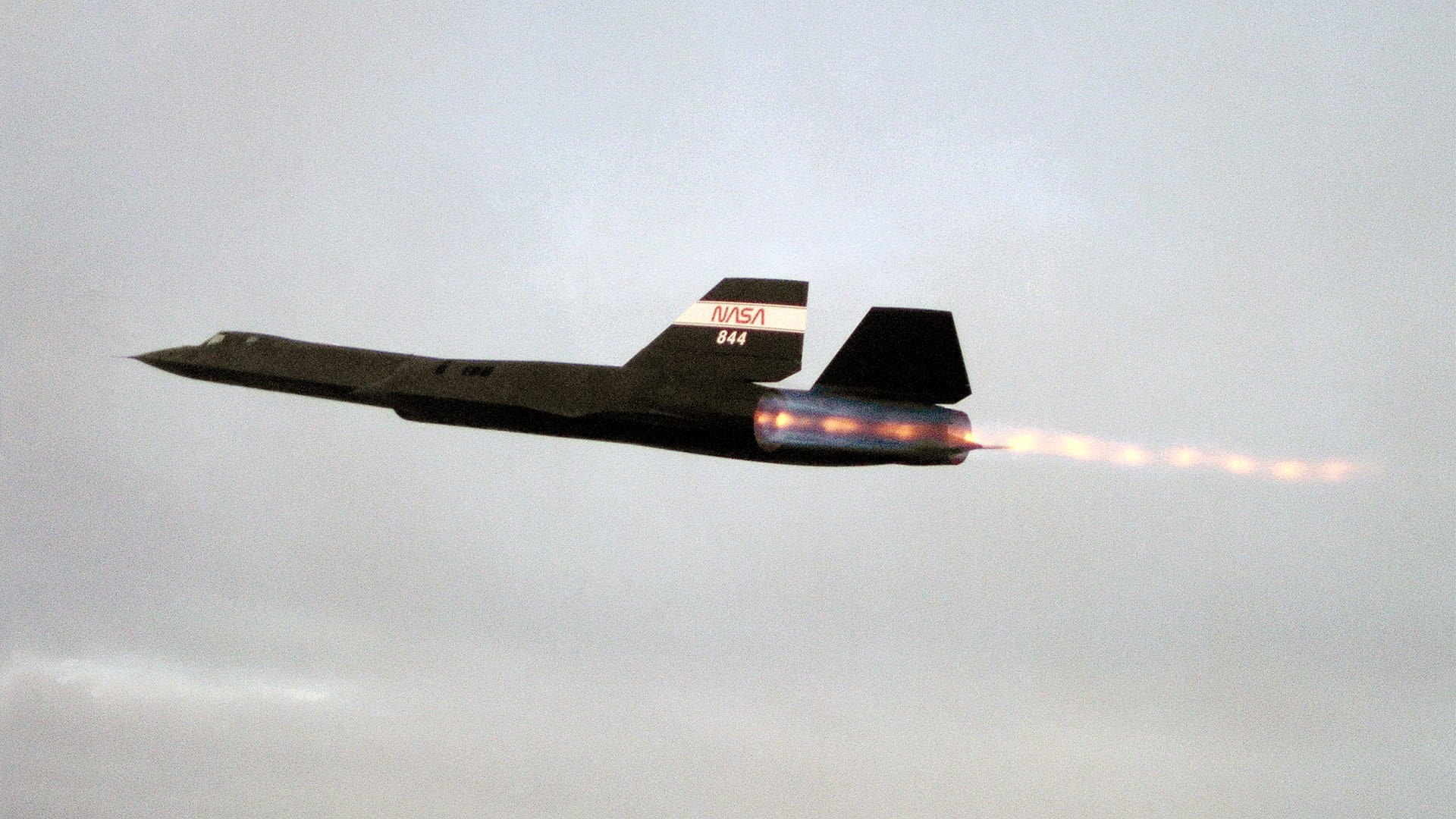
Fighters broke the sound barrier and kept climbing. Over Korea, American F-86 Sabres dueled Soviet-built MiG-15 in the world’s first large-scale jet combat. The contest became a relentless ladder of speed and altitude, culminating in machines like the Lockheed SR-71 Blackbird — a reconnaissance aircraft so fast and so high that no missile ever caught it.
But the most important Cold War aircraft of all may have had no pilot and no wings. In 1960, after the U-2 spy plane was shot down over the USSR, America’s first reconnaissance satellite, Corona, returned its first film capsule — snatched out of the sky over the Pacific by a passing aeroplane. In a single pass it photographed more of the Soviet Union than every U-2 flight combined. The Soviets had their own, Zenit. The highest ground of all had been seized, and it was in orbit.
POWERS COMPARED — THE COLD WAR — NATO vs THE WARSAW PACT
| Los contendientes | The United States and NATO vs the Soviet Union and the Warsaw Pact |
| Who invented what | A genuine arms race of parallel invention — for every SR-71 a MiG-25, for every Corona a Zenit |
| Who did it better | The West generally held an edge in electronics, engines and stealth research; the Soviets in rugged mass production |
| El veredicto | Neither side “won” in the air — but the technologies they raced to build now define modern war |
Era 4 — The information age (1991–2015): the invisible and the precise
On the opening night of the 1991 Gulf War, aircraft that radar could barely see slipped over Baghdad and dropped bombs down ventilation shafts while the city’s defences fired blindly into an empty sky. Two ideas had come of age at once.
The first was sigilo. In one of history’s great ironies, the mathematics that made it possible came from a paper by a Soviet physicist that the USSR ignored and American engineers read — producing the faceted F-117 and, later, the B-2 y F-22. The second was precision: laser- and satellite-guided bombs meant that a single aircraft could now do what once took a thousand, and do it without levelling the neighbourhood around the target.
And quietly, a third revolution began on the ground. The drone — pioneered as a reconnaissance tool by Israel and turned into a hunter-killer by the American Predator and Reaper — put the pilot in a trailer thousands of miles from the fight, and changed the moral and political shape of war itself.
POWERS COMPARED — THE INFORMATION AGE — THE WEST AND THE REST
| Los contendientes | The US and NATO at the height of their dominance — and the powers quietly studying them |
| Who invented it | America led on stealth, precision and armed drones; Israel pioneered combat reconnaissance UAVs |
| Who is catching up | China and Russia, who watched Desert Storm closely and set out to copy and counter it |
| El veredicto | For two decades the West owned the sky; the rest of the world spent those decades learning how to take it back |
Era 5 — Now & next (2015–): the sixth generation
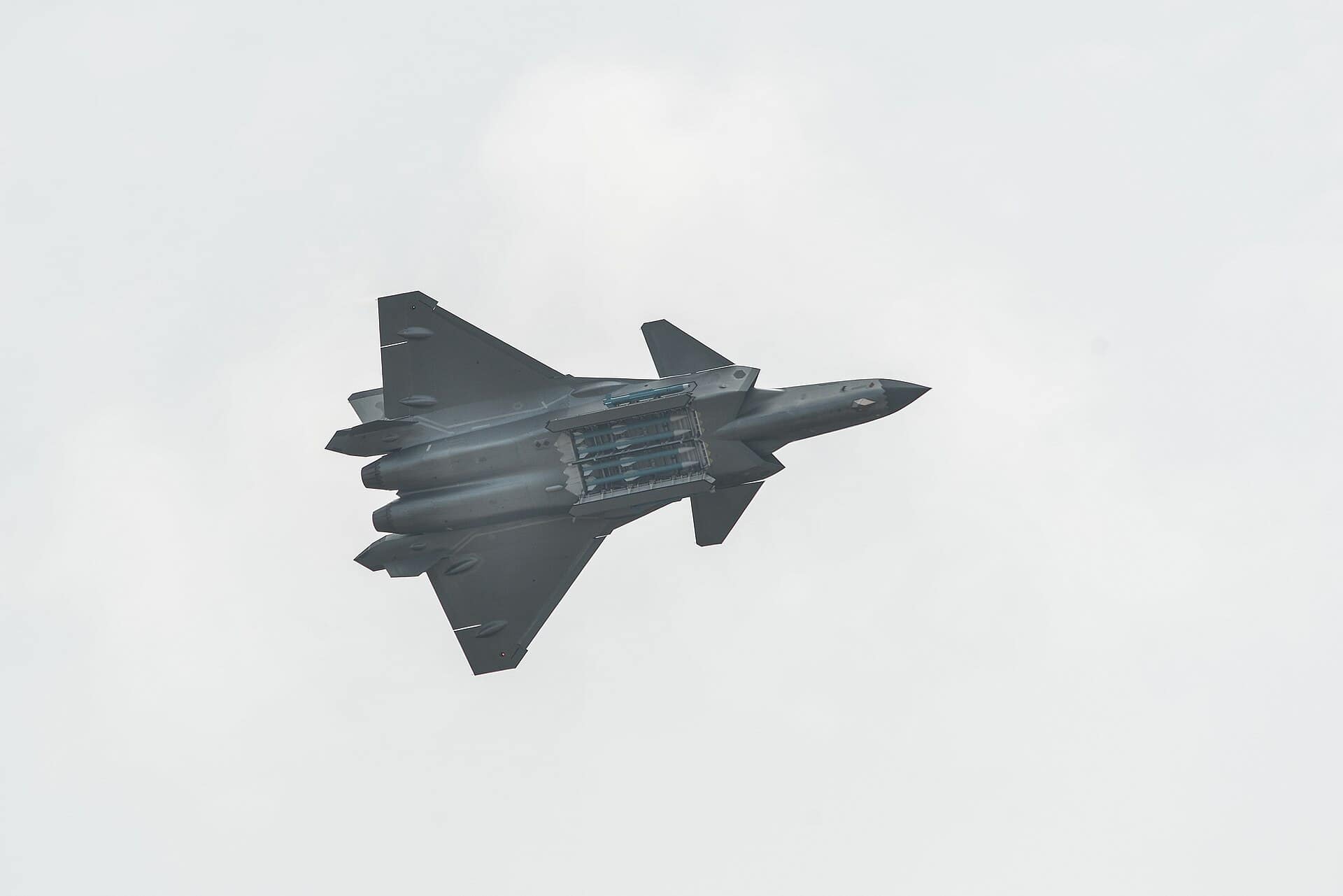
Stealth is no longer an American monopoly. Russia flies the Su-57, and China has not only fielded the J-20 but revealed the tailless, three-engined shapes of what look like true sixth-generation designs — first glimpsed, fittingly, on phone cameras held up by onlookers in Chengdu.
That sixth generation — America’s F-47 and NGAD, Europe’s GCAP and FCAS, China’s new prototypes — is about more than going faster. The defining feature is teaming: a crewed fighter quarterbacking a flock of cheap, autonomous “loyal wingman” drones, with the pilot increasingly a manager of machines rather than a lone gladiator. Space, meanwhile, has become a warfighting domain in its own right, full of the satellites that make everything below them work.
From a man dropping grenades by hand at 600 feet to a pilot commanding a swarm of robots from a stealth cockpit, the throughline has never changed. The side that wins is the side that takes a new idea and industrialises it fastest — and that race is now a three-way contest between NATO, Russia and China.
POWERS COMPARED — NOW & NEXT — NATO, RUSSIA & CHINA
| Los contendientes | The United States and its allies (incl. the European GCAP/FCAS programmes) vs China vs Russia |
| Who is inventing it | All three are racing toward sixth-generation fighters and autonomous wingmen; China is moving startlingly fast |
| Who can build it | The decisive question — advanced jets are only as good as the industry that can mass-produce them |
| El veredicto | For the first time since 1945, the West’s command of the air is genuinely contested |
The pattern beneath it all
Across a century and five eras, the same rhythm repeats. The synchronised gun, the jet engine, radar, stealth — each was invented in two or three places almost simultaneously, because the same problems produce the same answers. The winners were rarely the inventors. They were the ones who turned a clever idea into thousands of aircraft, tied them into a system, and trained the people to use them.
Over the coming weeks, this series will tell each of these stories in full — the airship, the fighter, the bomber, reconnaissance, the satellite, the drone, stealth, the guided missile, electronic warfare and the sixth-generation race — and each will begin, like this one, with the single moment it all turned on. Welcome to Alas de guerra.
Sources: Imperial War Museum; U.S. National Archives; NASA; National Air and Space Museum; standard aviation histories. Figures and firsts are checked against multiple sources; where credit for an invention is disputed, we say so.
| 1. | El dirigible en guerra | Cómo el Zeppelin llevó la guerra al cielo por primera vez |
| 2. | El primer trabajo: reconocimiento | Los ojos que conquistaron el Marne y ascendieron a la órbita. |
| 3. | El luchador | La búsqueda centenaria por el control del aire |
| 4. | Folkestone, 1917 | El día en que nació el bombardeo estratégico. |
| 5. | La revolución de la precisión | Cuando las bombas y los misiles aprendieron a apuntar por sí mismos |
| 6. | La guerra de los magos | Cómo la guerra electrónica aprendió a cegar al enemigo. |
| 7. | Ojos en órbita | Cómo el espionaje se extendió al espacio. |
| 8. | Sigilo | Cómo los aviones aprendieron a desaparecer del radar |
| 9. | El auge de los drones | Guerra sin piloto en la cabina |
| 10. | La sexta generación | Cuando el caza aprendió a volar por sí mismo |
LECTURAS RELACIONADAS
Wilbur and Orville Wright: Twelve Seconds That Changed the WorldBoeing gana el contrato para el F-47 NGAD: aumentan las críticas.Preguntas relacionadas
When were bombs first dropped from an aircraft?
The first aerial bombing took place on 1 November 1911, when Italian lieutenant Giulio Gavotti dropped four grenades by hand from his Etrich Taube monoplane over Libya. It happened four years before a true fighter aircraft even existed — the earliest example of attack from the air.
How has military aviation changed since World War I?
In just over a century, military aircraft went from wood-and-fabric planes whose crews dropped bombs by hand to stealth jets that cross continents unseen and place a weapon through a single window. Each leap — the fighter, radar, the jet, stealth, precision weapons and now drone teaming — reshaped how wars are fought.
Which came first, the fighter or the bomber?
The bomber came first. Crews were dropping bombs and grenades by hand as early as 1911, before World War I began. The fighter was the last of the three core roles to appear — invented specifically to stop the other two, once aircraft could both see and bomb.
What role did radar play in the Battle of Britain?
Radar was decisive. Britain's Chain Home network detected German raiders far out to sea and vectored fighters to intercept them — the first time a nation fought an air battle with a real-time picture of the sky. Germany had radar too, but Britain integrated it into its defences far better.
Who invented the jet engine?
The jet engine was developed independently in Britain and Germany in the late 1930s — by Frank Whittle in Britain and Hans von Ohain in Germany. Germany fielded the first operational jet fighter, the Me 262, but it arrived too late in World War II to change the outcome.
What is the nuclear triad?
The nuclear triad is the trio of systems a nuclear power relies on for deterrence: long-range bombers, land-based missiles and missile submarines. Through the Cold War the world's survival rested on this triad and the aircraft built to deliver, deter and spy.
When was stealth first used in combat?
Stealth aircraft first proved themselves on the opening night of the 1991 Gulf War, slipping over Baghdad and dropping precision bombs while the city's defences fired blindly into an empty sky. It marked the arrival of two technologies at once: stealth and precision-guided weapons.
¿Quién inventó la tecnología furtiva?
The mathematics behind stealth came from a paper by the Soviet physicist Pyotr Ufimtsev, which the USSR ignored — American engineers seized on it to design the first stealth aircraft. Stealth is no longer an American monopoly: Russia flies the Su-57 and China the J-20.
¿Qué es un caza de sexta generación?
A sixth-generation fighter is the newest class of combat aircraft, including America's F-47/NGAD, Europe's GCAP and FCAS, and China's new prototypes. Their defining feature isn't raw speed but teaming: a crewed jet controlling a flock of autonomous drones, with the pilot acting as a manager of machines.
¿Qué es un dron de apoyo leal?
A loyal wingman is a cheap, autonomous drone that flies alongside a crewed fighter under the pilot's control. It can scout, carry sensors or weapons, and absorb risk ahead of the manned jet. Loyal-wingman teaming is the defining concept of sixth-generation air power.
0 Comentarios