
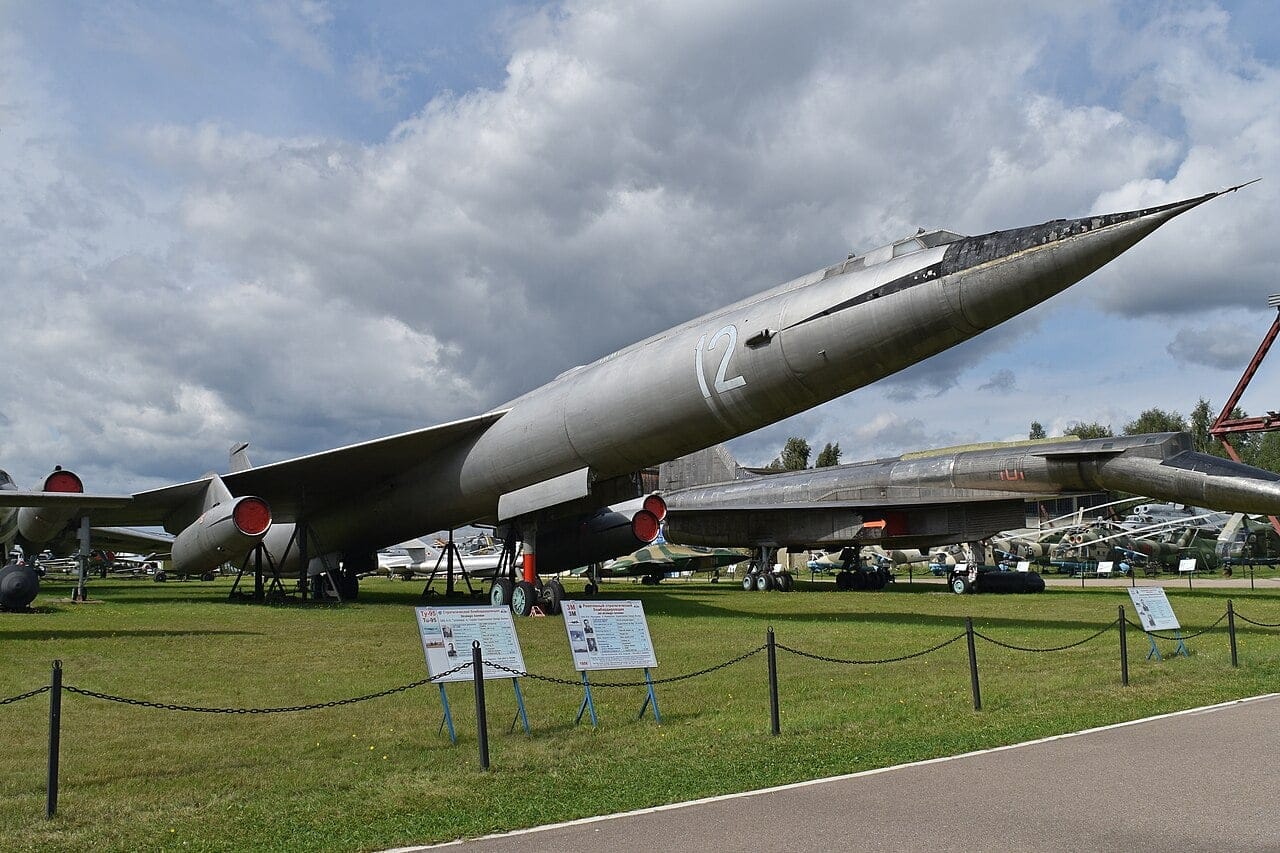
On 9 July 1961, a huge four-engined jet thundered over the Tushino airfield near Moscow, flanked by two MiG-21s. Western observers craned their necks and reached for their notebooks. Here, it seemed, was proof that the Soviet Union had built a supersonic intercontinental bomber to rival anything in the American inventory.
They were wrong on almost every count. The Myasishchev M-50 — soon given the NATO name Bounder — could not even reach the speed of sound. That flypast was very nearly the last time it ever flew.
Datos rápidos
- Aeronave: Myasishchev M-50 (NATO: Bounder), prototype strategic bomber
- Disposición: Truncated delta wing; four turbojets — two underwing, two on the wingtips
- Primer vuelo: 27 October 1959; first seen by Western intelligence in 1958
- Public debut: Tushino Aviation Day, 9 July 1961, escorted by two MiG-21s
- Real top speed: About Mach 0.99 — it never went supersonic
- Destino: Cancelled; a single airframe survives at Monino
Built to frighten the West
The M-50 was Vladimir Myasishchev’s bid for a supersonic bomber that could cross oceans and strike the United States. Its truncated delta wing carried four engines in an unusual split arrangement — two slung under the wing, two perched right on the wingtips. On paper it looked like the shape of the future.
In practice it was badly underpowered. The engines it needed never materialised, and the airframe it flew with could not push past Mach 1 even in a shallow dive. After roughly 19 flights the programme was effectively finished — but the Soviets had one more use for it.
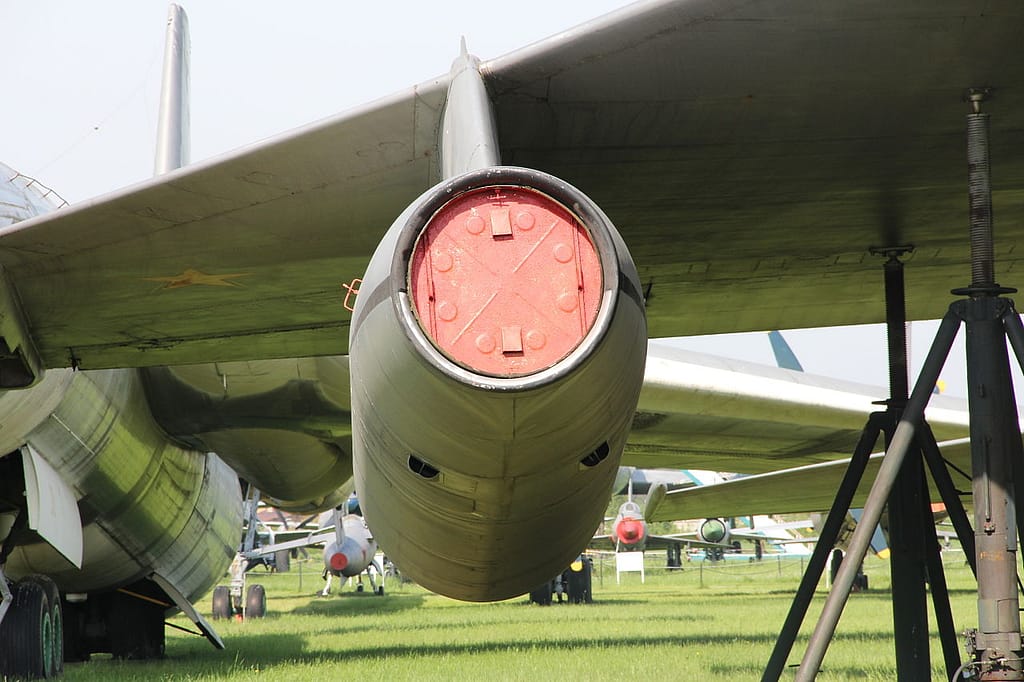
The parade that fooled the analysts
By mid-1961 the design bureau and its bomber had already been shut down. Yet the decision was taken to roll the M-50 out for the Tushino air parade as a show of strength. It flew once more, smokily, and the effect on Western intelligence was immediate.
American estimates ran wild. Air Force Magazine put its length at 200 feet, its weight at 400,000 pounds and its speed at Mach 1.7. The reality was a 190-foot airframe weighing about 260,000 pounds that topped out below Mach 1. The CIA credited it with a 1,500-nautical-mile radius; the true figure was closer to 850. Almost every published number was too big.
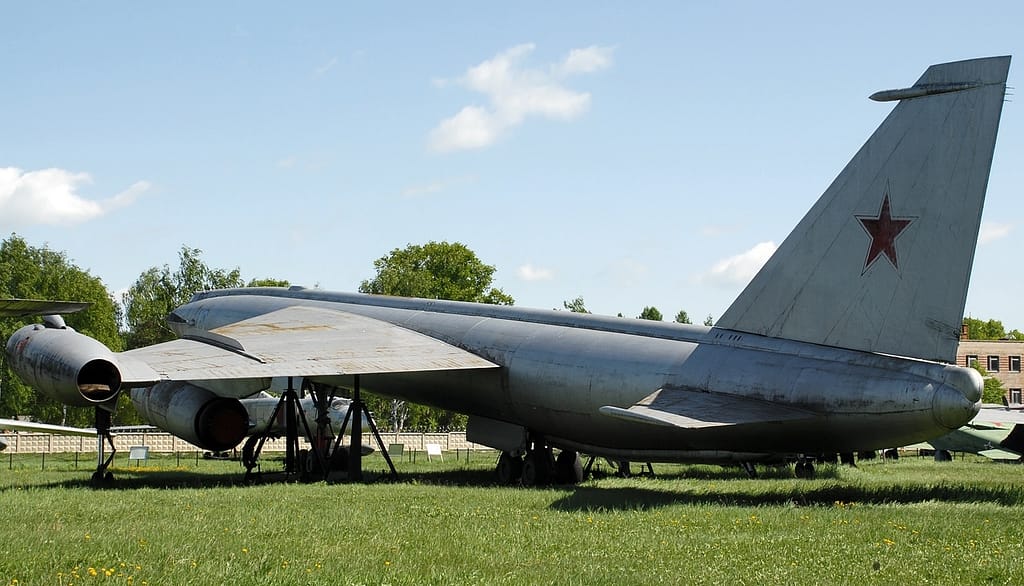
A prototype, not a threat
The confusion had started earlier. In December 1958, Aviation Week ran an article claiming the Soviets were flight-testing a nuclear-powered bomber; the artwork that ran with it was actually the M-50. The Bounder had become a phantom — a single experimental aircraft magnified by Cold War anxiety into a fleet that never existed.
The Soviet Union ultimately placed its strategic bets on intercontinental missiles, not supersonic bombers. The M-50 was retired to the museum at Monino, where it still sits today — the lone survivor of an aircraft that frightened the West far more than it ever deserved to.
Sources: GlobalSecurity.org (Western Views, CIA and NIE estimates); Air Force Magazine, August 1961; Old Machine Press; Wikipedia.
Publicaciones relacionadas
El A-5 Vigilante: El bombardero más bello que nunca funcionó

0 Comentarios