
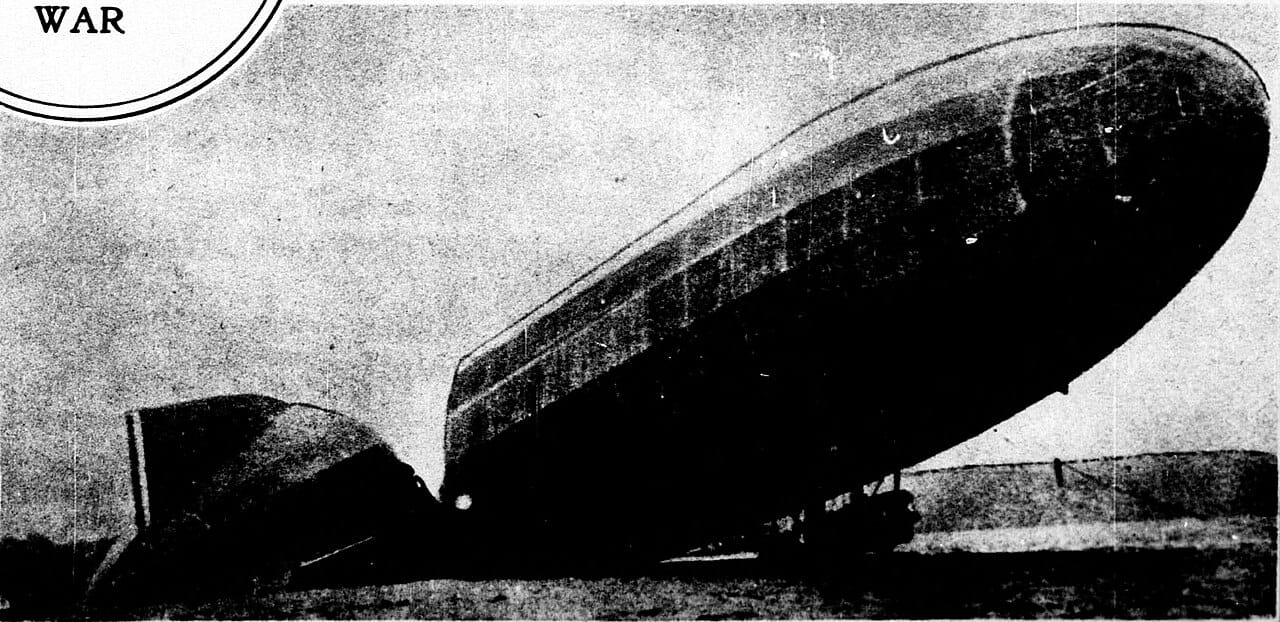
On a warm night in the summer of 1915, Londoners looked up from their blacked-out streets and heard something no city had ever heard before: the steady drone of engines coming out of the dark, high overhead. Moments later, bombs began to fall from a vast silver shape drifting a thousand feet above the rooftops. The age of aerial bombardment had begun, and it began over the homes of ordinary people.
The weapons were Zeppelins, hydrogen-filled rigid airships longer than a football pitch, and for the first time in history a nation was being bombed not on the battlefield but in its own bedrooms. It was the true start of a story that runs all the way from these lumbering giants to today’s stealth fighters.
Quick Facts: The Zeppelin Raids
- First raid on Britain: 19 January 1915 (Norfolk coast)
- First raid on London: Night of 31 May 1915 (Zeppelin LZ 38)
- Arma: Hydrogen-filled rigid airships, flying above the reach of early fighters
- Turning point: SL 11 shot down over Cuffley, 2/3 September 1916
- Total dead in Britain: More than 500 from airship raids
- Significado: The first sustained strategic bombing of cities
Death from the night sky
The first German airship raid on Britain struck the Norfolk coast on 19 January 1915. London’s turn came on the night of 31 May, when the Zeppelin LZ 38 dropped some 3,000 pounds of bombs on Stoke Newington, Stepney and Leytonstone, killing seven people. There was almost nothing the defenders could do. The airships cruised higher than any British aeroplane could climb, and in the dark they were nearly impossible to find.
To the German command, terrorising civilians was the point. Frightened populations, the theory went, would pressure their governments to end the war. The head of the German Naval Airship Division, Peter Strasser, made the logic chillingly plain.
The hunters catch up
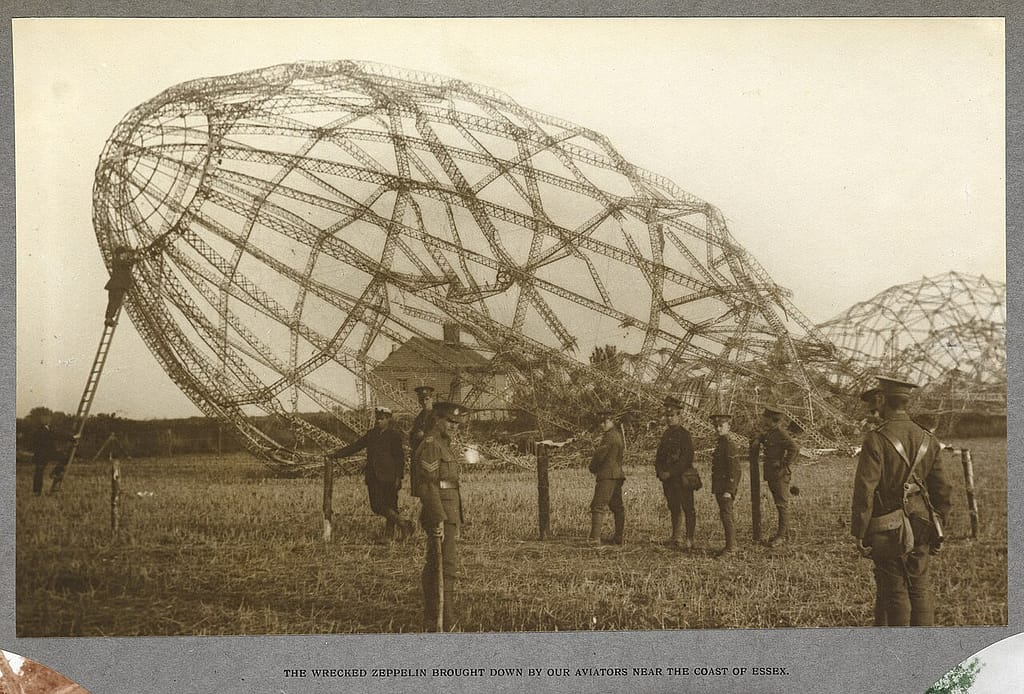
For more than a year the airships seemed untouchable, and Londoners nicknamed their crews “baby killers.” What finally beat them was chemistry: new incendiary and explosive bullets that could ignite the hydrogen that kept a Zeppelin aloft. On the night of 2/3 September 1916, Lieutenant William Leefe Robinson of the Royal Flying Corps caught the airship SL 11, a wooden-framed Schütte-Lanz that the public lumped in with the Zeppelins, in his sights over Cuffley, just north of London.
Raking the airship with his machine gun, Robinson watched it begin to glow, then erupt into a sheet of flame that lit the sky for miles. It fell to earth in full view of the capital, and its entire crew of 16 died. Crowds who had watched from their windows cheered wildly. Robinson was awarded the Victoria Cross, and in the months that followed, his proven tactics brought down five more airships.
The first Blitz
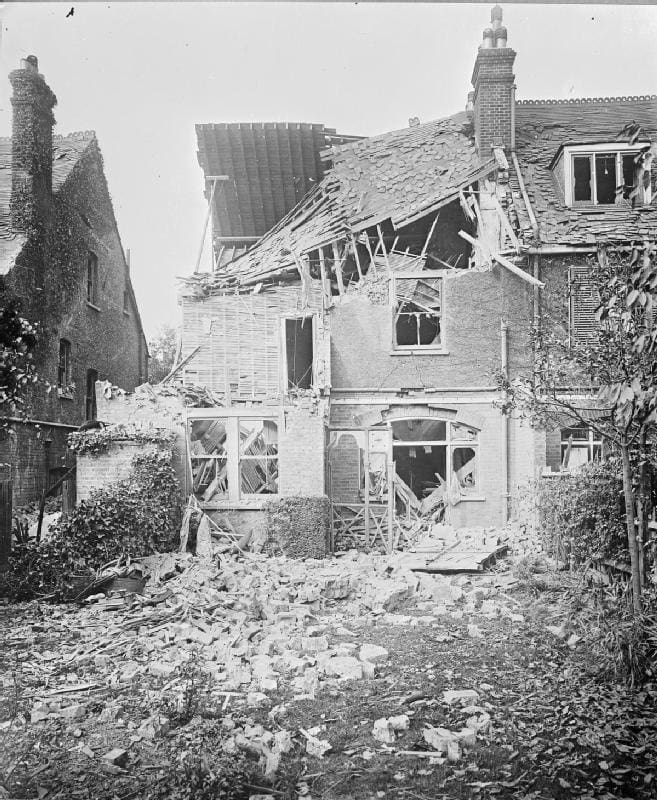
Across the war, German airships mounted around 50 raids on Britain, killing more than 500 people and injuring well over a thousand. The physical damage was modest by later standards, but the psychological shock was profound, and it forced Britain to invent something entirely new: an organised home air-defence network of guns, searchlights and night fighters. That system was the direct ancestor of the one that would save the country in 1940.
By 1917 the vulnerable airships were giving way to Gotha and Giant bombers, and the Zeppelin’s brief reign of terror was over. But these clumsy, beautiful giants had already changed war forever. They were the moment the sky itself became a battlefield over the heads of ordinary citizens.
Sources: RAF Museum, London Museum, World History Encyclopedia, Imperial War Museum.

0 Comentarios