
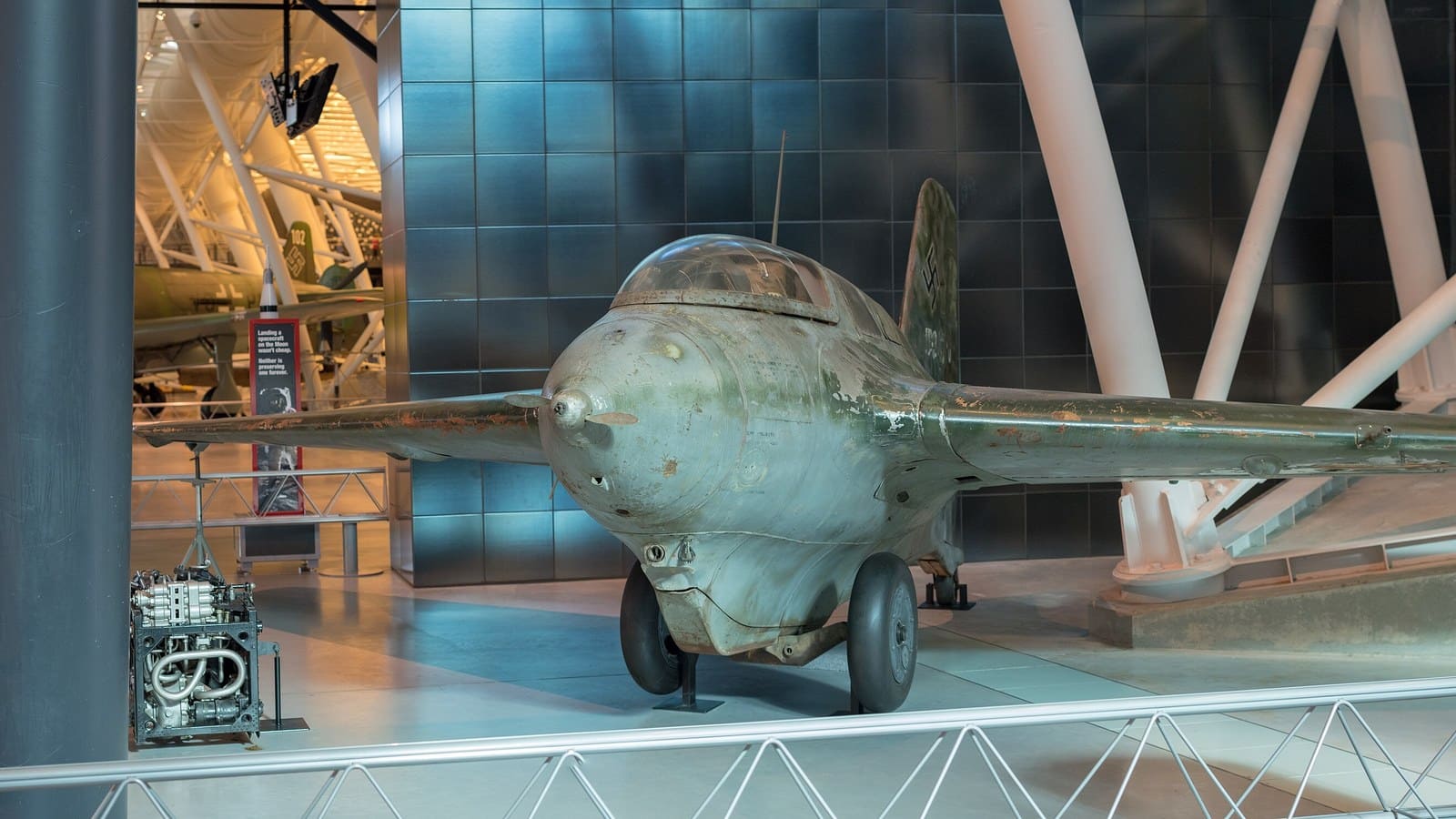
Le 28 juillet 1944, P-51 Les pilotes du 359e groupe de chasse escortaient des B-17 au large de Merseburg lorsqu'un homme annonça des traînées de condensation à six heures. Deux formes trapues et sans queue traversèrent la formation à une vitesse jamais vue par les Américains, puis l'une d'elles se cabra et prit de l'altitude, disparaissant sous le soleil. Les pilotes d'escorte ne purent qu'assister, impuissants, à la scène.
L'appareil qu'ils venaient de découvrir était le Messerschmitt Me 163 Komet, le seul chasseur à propulsion fusée jamais entré en service opérationnel. Il pouvait surpasser en vitesse ascensionnelle et en vitesse de tous les avions du ciel en 1944, atteignant des vitesses avoisinant les 1 000 km/h (620 mph) alors que les chasseurs alliés les plus rapides peinaient à atteindre 700 km/h.
C'était aussi, et de loin, l'avion le plus dangereux de la guerre pour ses propres pilotes. Le Komet utilisait deux produits chimiques hypergoliques qui s'enflammaient au contact l'un de l'autre, et l'un d'eux dissolvait les tissus humains au contact. Davantage de Komet furent détruits par accidents, explosions et atterrissages ratés que par les tirs alliés.
Informations clés : Messerschmitt Me 163B Komet
| Rôle | Intercepteur de défense ponctuelle à propulsion par fusée — le seul jamais opérationnel |
| Premier vol | 1er septembre 1941 (prototype Me 163A) |
| Moteur | Fusée à propergol liquide Walter HWK 109-509A, poussée d'environ 17 kN (3 800 lbf). |
| propergols | T-Stoff (peroxyde d'hydrogène concentré) + C-Stoff (méthanol/hydrazine) — hypergolique |
| vitesse maximale | ~960 km/h (600 mph) en service ; record de vitesse de 1 130 km/h (702 mph), juillet 1944 |
| Endurance motorisée | Environ 7,5 minutes |
| Grimper | 12 000 m (39 000 pieds) en environ trois minutes |
| Armement | 2 canons MK 108 de 30 mm |
| Construit | ~370 |
| antécédents de combat | Crédité de 9 à 18 victoires (souvent cité : 9 confirmées) pour environ 10 pertes au combat |
Un planeur avec une fusée dans sa queue
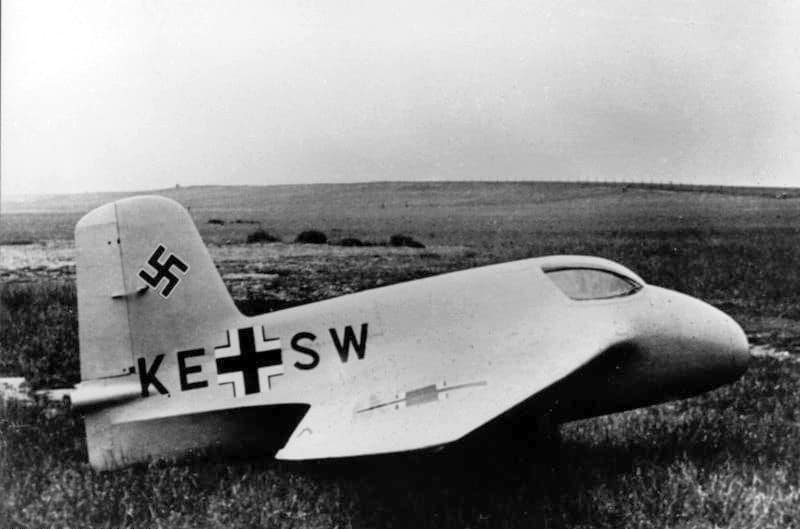
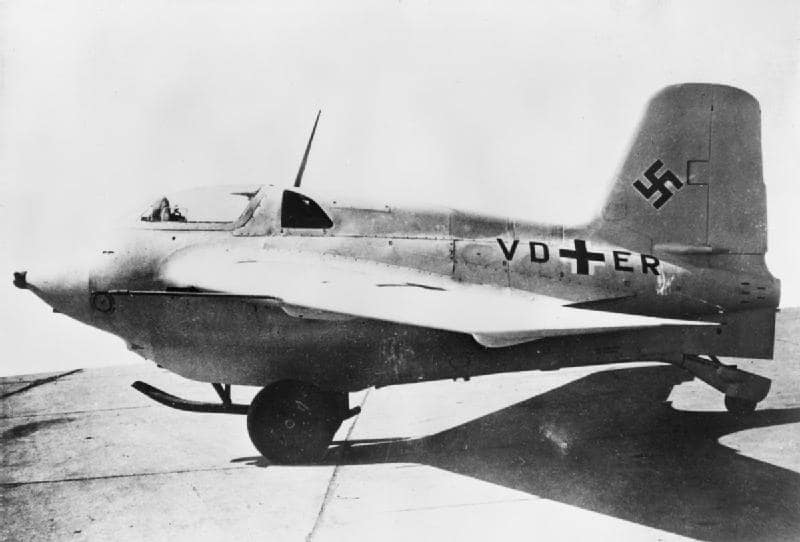
Le Komet est né sur la planche à dessin d'Alexander Lippisch, fervent défenseur allemand de l'avion sans queue. Ses projets, initialement des planeurs ayant établi des records, ont évolué vers l'avion de recherche DFS 194, équipé d'un moteur-fusée développé par Hellmuth Walter et fonctionnant au peroxyde d'hydrogène concentré. Lorsque la cellule et le moteur furent assemblés chez Messerschmitt, le résultat fut un aéronef unique en son genre : un minuscule œuf sans queue, à ailes en flèche, sans stabilisateur horizontal, sans hélice et sans train d'atterrissage conventionnel.
Il décollait d'un chariot à deux roues largable et atterrissait sur un patin ventral rétractable — des caractéristiques héritées directement de ses ancêtres planeurs. Tout en lui était minimaliste, car tout existait au service d'un seul chiffre : la vitesse.
Ce chiffre fut atteint très tôt. Le 2 octobre 1941, le pilote d'essai Heini Dittmar porta le prototype Me 163A V4 à 1 004,5 km/h (624,2 mph), à une époque où les chasseurs de première ligne étaient environ 400 km/h plus lents. Cette performance était tellement exceptionnelle qu'elle fut tenue secrète. Le 6 juillet 1944, Dittmar fit encore mieux, atteignant 1 130 km/h (702 mph) aux commandes du Me 163B V18, un record non officiel qu'aucun avion à turboréacteur n'égala avant 1953. Ce jour-là, il atterrit avec la majeure partie de son gouvernail arrachée par les vibrations de l'appareil.
Les prototypes de la série A ont validé le concept ; le Me 163B définitif était doté d'une cellule armée et plus facile à produire, articulée autour du nouveau moteur Walter HWK 109-509. Environ 370 Komets ont finalement été construits.
Ses performances n'ont jamais cessé d'étonner. Wolfgang Späte, le commandant de l'unité d'essai qui a piloté le premier Me 163B de série, a décrit un appareil élégant, fulgurant et facile à contrôler, capable d'intercepter n'importe quel autre avion dans le ciel.
Le carburant qui a dévoré les gens
Le moteur Walter brûlait du C-Stoff — un mélange de méthanol, d'hydrate d'hydrazine et d'eau — dans les gaz d'échappement riches en oxygène issus de la décomposition du T-Stoff, du peroxyde d'hydrogène concentré à environ 80 %. Ces deux liquides étaient hypergoliques : leur simple contact provoquait une inflammation instantanée, sans étincelle. Les équipes au sol utilisaient des camions-citernes distincts et dédiés à chaque produit chimique, et l'un des camions devait quitter la zone avant l'arrivée de l'autre. Même des traces mélangées dans une canalisation pouvaient exploser, et il arrivait que des Komet soient détruits sur le tarmac lors d'un simple ravitaillement.
Le T-Stoff possédait une seconde propriété qui contribua à la sinistre réputation du Komet : il s’enflammait spontanément sous toutes ses formes organiques et dissolvait la chair. Les pilotes volaient dans des combinaisons de protection spéciales en tissu caoutchouté, assis de part et d’autre du cockpit, entre deux réservoirs auxiliaires de T-Stoff contenant environ 120 litres (32 gallons américains) d’oxydant.
L'avertissement n'était pas théorique. Fin 1943, l'as de la Luftwaffe, Josef Pöhs, trouva la mort lors d'un décollage raté qui provoqua la rupture d'une conduite de carburant ; la version officielle attribue son décès à une exposition au T-Stoff combinée à ses blessures. Les atterrissages brutaux sur patins étaient connus pour rompre les conduites de propergol résiduel, et un Komet qui se retournait ou faisait un tonneau avec encore du carburant dans ses réservoirs explosait généralement.
L'atterrissage lui-même était une situation d'urgence en puissance. Après avoir consommé tout son carburant, le Komet se transformait en planeur : une seule approche, pas de remise de gaz, et l'appareil se terminait sur un patin métallique à ressort. Si le mécanisme du patin venait à lâcher ou si l'atterrissage était brutal, le choc pouvait comprimer la colonne vertébrale du pilote ; les blessures au dos étaient un risque récurrent pour ce type d'appareil.
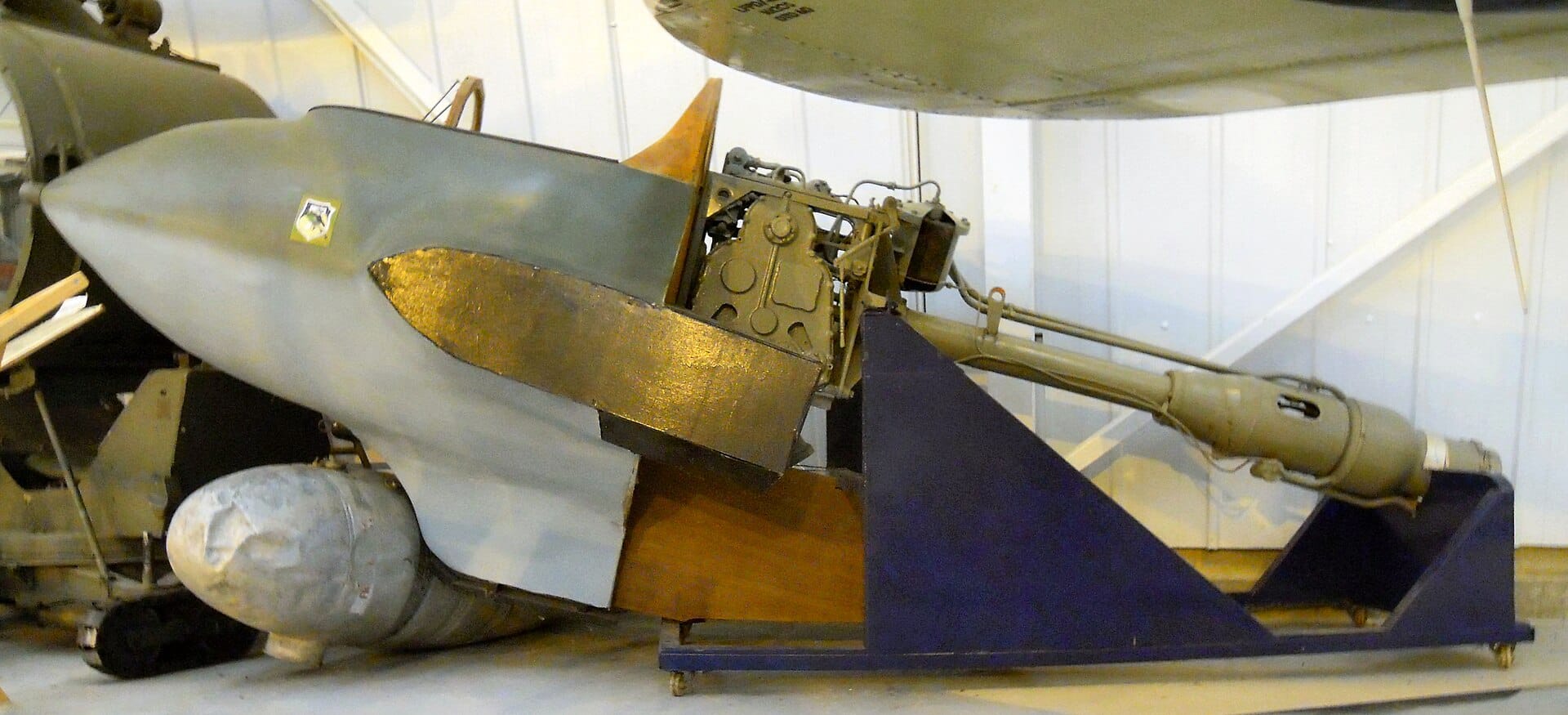
Sept minutes et demie de tonnerre
Dès la première seconde, le décollage du Komet fut d'une violence inouïe. L'appareil quitta son chariot à plus de 320 km/h, accéléra en vol horizontal jusqu'à environ 676 km/h, puis entama une montée à 70 degrés qu'aucun pilote allié ne put suivre : 12 000 m en trois minutes environ. À cette altitude, il se stabilisa et accéléra jusqu'à environ 880 km/h.
Puis le temps s'écoula. L'autonomie maximale du moteur était d'environ 7,5 minutes, bien en deçà des prévisions de ses concepteurs. S'ensuivit une descente en planant : un ou deux passages de tir à travers les bombardiers, puis une longue descente silencieuse et sans défense vers la base, où les chasseurs alliés apprirent à patrouiller et à abattre les Komets lors de leur atterrissage.
Le pilote d'essai Rudolf Opitz, qui livra l'un des premiers Komets de combat à l'escadre de chasse, découvrit que même les aérodromes amis représentaient un danger : il se souvint que lorsqu'il se dirigea vers le terrain pour un passage à basse altitude à grande vitesse, “ de longues rafales de balles traçantes me frappèrent de toutes parts ”. Les équipes de DCA n'avaient jamais rien vu se déplacer aussi vite et supposèrent qu'il s'agissait d'un appareil ennemi.
Contre les flux de bombardiers
La Luftwaffe créa sa seule escadre de chasseurs à réaction, la Jagdgeschwader 400, à Brandis, près de Leipzig, afin de défendre l'usine de carburant synthétique de Leuna, l'une des cibles les plus bombardées du Reich. La première interception en combat réel de ce type d'appareil eut lieu le 28 juillet 1944, lorsque deux Komets attaquèrent des B-17 sans parvenir à les toucher. Le rapport du commandant de l'escorte, le colonel Avelin P. Tacon Jr., ce jour-là, donna le ton à tous les engagements alliés qui suivirent.
Pourtant, cette même vitesse qui rendait le Komet intouchable le rendait presque inutilisable comme plateforme de tir. Ses deux canons MK 108 de 30 mm avaient une faible vitesse initiale et n'étaient précis qu'à courte portée ; il fallait généralement quatre ou cinq impacts pour abattre un B-17. Avec des vitesses de rapprochement de plusieurs centaines de kilomètres par heure, la fenêtre de tir était extrêmement réduite.
Le meilleur pilote de fusée de la guerre, le Feldwebel Siegfried Schubert, résolut le problème grâce à son adresse au tir exceptionnelle : trois bombardiers, dont un B-17, furent abattus, semble-t-il, avec seulement trois balles. Sa fin tragique en dit long sur cet appareil : le 7 octobre 1944, quelques heures après sa dernière victoire, son moteur s’arrêta au décollage, une aile accrocha le sol, son Komet fit un tonneau et explosa.
Le bilan final fait l'objet de quelques controverses, mais il est accablant dans toutes les versions. Le Komet est crédité de la destruction de 9 à 18 avions alliés — neuf victoires confirmées étant le chiffre généralement cité — contre une dizaine de pertes au combat. Fin 1944, la JG 400 n'avait perdu que six appareils au combat, contre neuf suite à des accidents ou autres causes. Cette tendance s'est maintenue jusqu'au bout : le Komet a tué plus d'avions alliés que l'ennemi.
L'échec qui annonçait l'avenir
En tant qu'arme, le Komet fut un échec : un effort d'ingénierie colossal pour une poignée de bombardiers, pilotés par des pilotes qui risquaient d'être dissous, tués dans l'explosion ou grièvement blessés avant même d'apercevoir l'ennemi. Les pénuries de carburant clouèrent au sol la plupart des quelque 370 appareils, et durant le dernier hiver de la guerre, les Américains apprirent qu'ils pouvaient tout simplement contourner Brandis avec leurs formations de bombardiers.
Cependant, en tant que machine, elle avait une décennie d'avance sur son temps. Ses vitesses restèrent inégalées par les avions à réaction jusqu'aux années 1950 ; le Japon la développa sous licence sous le nom de Mitsubishi J8M ; et les Komets capturés furent étudiés avec attention par les vainqueurs – le pilote d'essai de la Royal Navy, Eric Brown, tint à en piloter un en vol. L'autre intercepteur à fusée de la dernière chance de l'Allemagne, le Komet à lancement vertical, était également un appareil à propulsion nucléaire. Bachem Ba 349 Bavarder, était encore plus radicale et encore moins réussie, tandis que les Soviétiques avaient essayé le concept dès 1942 avec le BI-1.
Aujourd'hui, une dizaine de Komets subsistent dans des musées, suffisamment petits pour être stationnés sous l'aile d'un bombardier. À côté de l'un d'eux, l'idée paraît absurde : un œuf aux ailes de bois, rempli de produits chimiques mortels, conçu pour atteindre la vitesse d'un avion de ligne moderne et atterrir en silence. En 1944, pendant sept minutes et demie d'affilée, c'était l'engin le plus rapide du ciel.
Sources : Wikipédia, Aviation History / HistoryNet (Don Hollway), Musée national de l’air et de l’espace du Smithsonian, Warfare History Network
Questions connexes
Qu'était-ce que le Messerschmitt Me 163 Komet ?
Le Messerschmitt Me 163 Komet était un intercepteur allemand à propulsion par fusée de la Seconde Guerre mondiale, le seul chasseur à fusée à avoir jamais été mis en service. Propulsé par une fusée à ergols liquides, il pouvait atteindre 12 000 mètres d'altitude en trois minutes environ et une vitesse d'environ 960 km/h, bien supérieure à celle de n'importe quel chasseur allié. Environ 370 exemplaires furent construits.
Quelle était la vitesse du Me 163 Komet ?
Le Me 163 Komet atteignait environ 960 km/h (600 mph) en service et établissait un record de 1 130 km/h (702 mph) lors d'un vol d'essai en juillet 1944, à une époque où les meilleurs chasseurs alliés peinaient à atteindre 700 km/h. Il pouvait grimper à 12 000 mètres en environ trois minutes, surpassant en vitesse et en altitude tous les autres appareils.
Pourquoi le Me 163 était-il dangereux pour ses propres pilotes ?
Le Me 163 était mortel pour ses pilotes car il utilisait deux propergols hypergoliques, le T-Stoff (peroxyde d'hydrogène concentré) et le C-Stoff (un mélange de méthanol et d'hydrazine), qui s'enflammaient au contact et pouvaient dissoudre ou brûler un pilote. Les atterrissages brutaux pouvaient provoquer des explosions, et son vol plané sans moteur vers la base le laissait sans défense, ce qui en faisait l'un des avions les plus dangereux de la guerre, rivalisant avec les appareils suivants. Chasseur stellaire F-104.
Quelle était l'autonomie du Me 163 en vol motorisé ?
Le Me 163 Komet ne disposait que d'environ 7,5 minutes de vol propulsé avant que son carburant ne soit épuisé. Il se transformait ensuite en planeur, regagnant sa base en planant sans moteur et atterrissant sur un patin. Cette très faible autonomie ne lui permettait d'effectuer qu'un ou deux passages de tir sur les bombardiers alliés avant d'être contraint de se désengager.
Quel armement le Me 163 emportait-il ?
Le Me 163 Komet était armé de deux canons MK 108 de 30 mm. Ces derniers infligeaient de lourds dégâts, mais leur cadence de tir était lente et leur portée réduite. De plus, la vitesse de rapprochement extrême du Komet ne laissait aux pilotes qu'une fraction de seconde pour viser les bombardiers alliés. On lui attribue environ 9 à 18 victoires aériennes pour une dizaine de pertes au combat.
Qui a conçu le Me 163 Komet ?
Le Me 163 Komet est issu des plans sans empennage d'Alexander Lippisch, pionnier allemand du concept d'aile volante. Ses planeurs, qui ont établi des records, ont évolué vers l'avion de recherche DFS 194, auquel un moteur-fusée a été associé pour créer le Komet. Le désespoir de l'Allemagne en fin de guerre a également produit des projets précipités comme le Il 162 Volksjäger.
0 commentaire