
The most important document in the history of stealth aircraft was not written in California or at a secret desert airfield. It was written in Moscow, in Russian, by a Soviet physicist — and the Soviet Union let it go abroad because it decided the work was of no military use whatsoever. His name was Pyotr Ufimtsev, and without him there might be no F-117, no B-2, and no modern stealth at all.
Un article sur les bords
En 1962, Ufimtsev publia un ouvrage théorique dense au titre peu prometteur. Méthode des ondes de bord dans la théorie physique de la diffraction. Il s'agissait de mathématiques pures : une méthode permettant de calculer avec précision la diffusion des ondes électromagnétiques — y compris celles du radar — par les arêtes et les faces planes d'une forme. Pour l'establishment militaire soviétique de l'époque, cela ressemblait à de la physique académique abstraite sans application concrète à une arme, et sa publication ouverte ne posait donc aucun problème.
En 1971, la division des technologies étrangères de l'US Air Force, basée à Wright-Patterson, a traduit l'ouvrage en anglais. Il est resté là, dans la documentation technique, jusqu'à ce que la personne compétente le lise.
L'ingénieur qui a compris ce que cela signifiait
Cette personne était Denys Overholser, Overholser, spécialiste radar chez Lockheed Skunk Works, la légendaire division de recherche de Lockheed, cherchait au milieu des années 1970 à concevoir un avion indétectable par radar. Le problème était complexe : il était impossible de prédire avec certitude la réflexion des ondes radar sur une forme tridimensionnelle complexe. En lisant les travaux d'Ufimtsev, Overholser comprit que le physicien soviétique lui avait déjà fourni la solution. Ses équations permettaient de calculer la réflexion radar d'une structure composée de panneaux plats et de concevoir cette structure de manière à ce que les réflexions ne soient pas renvoyées vers le radar ennemi.
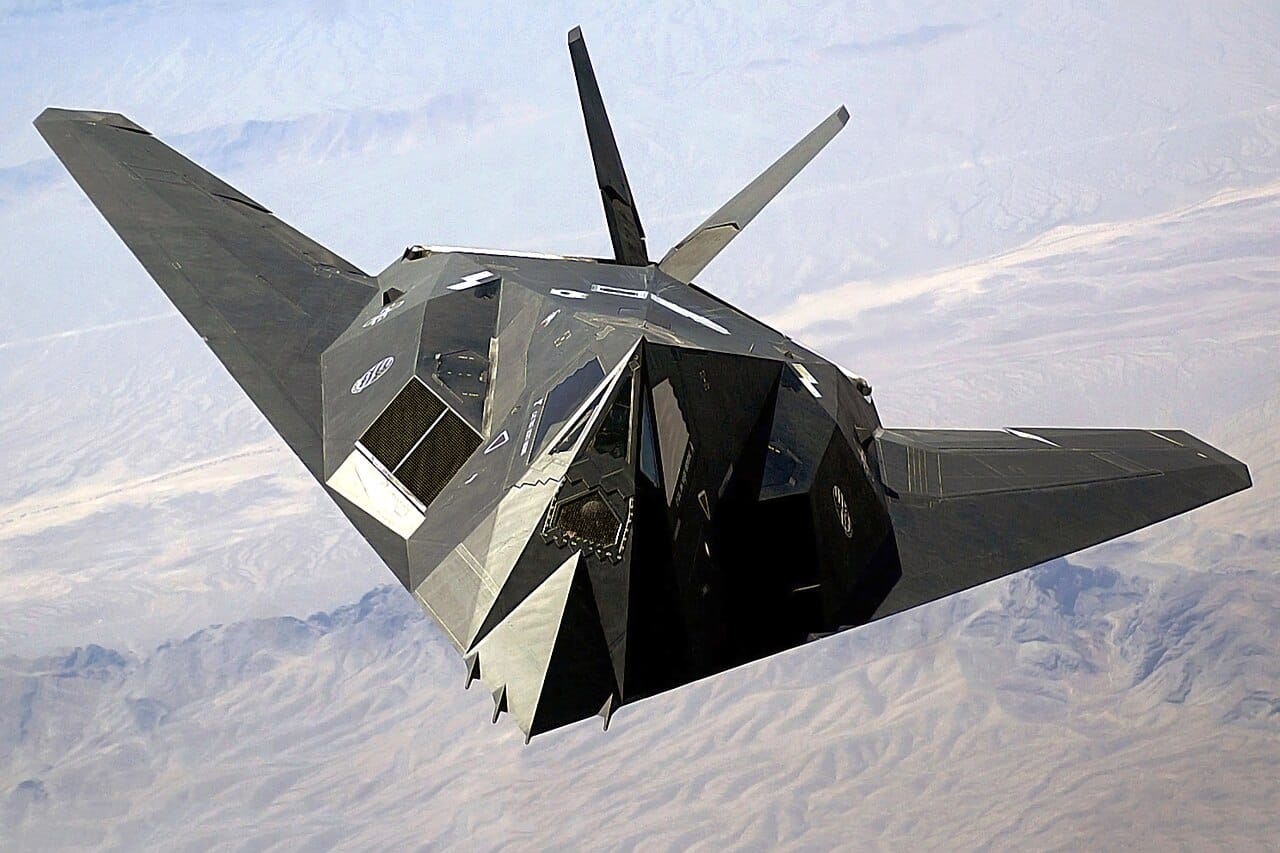
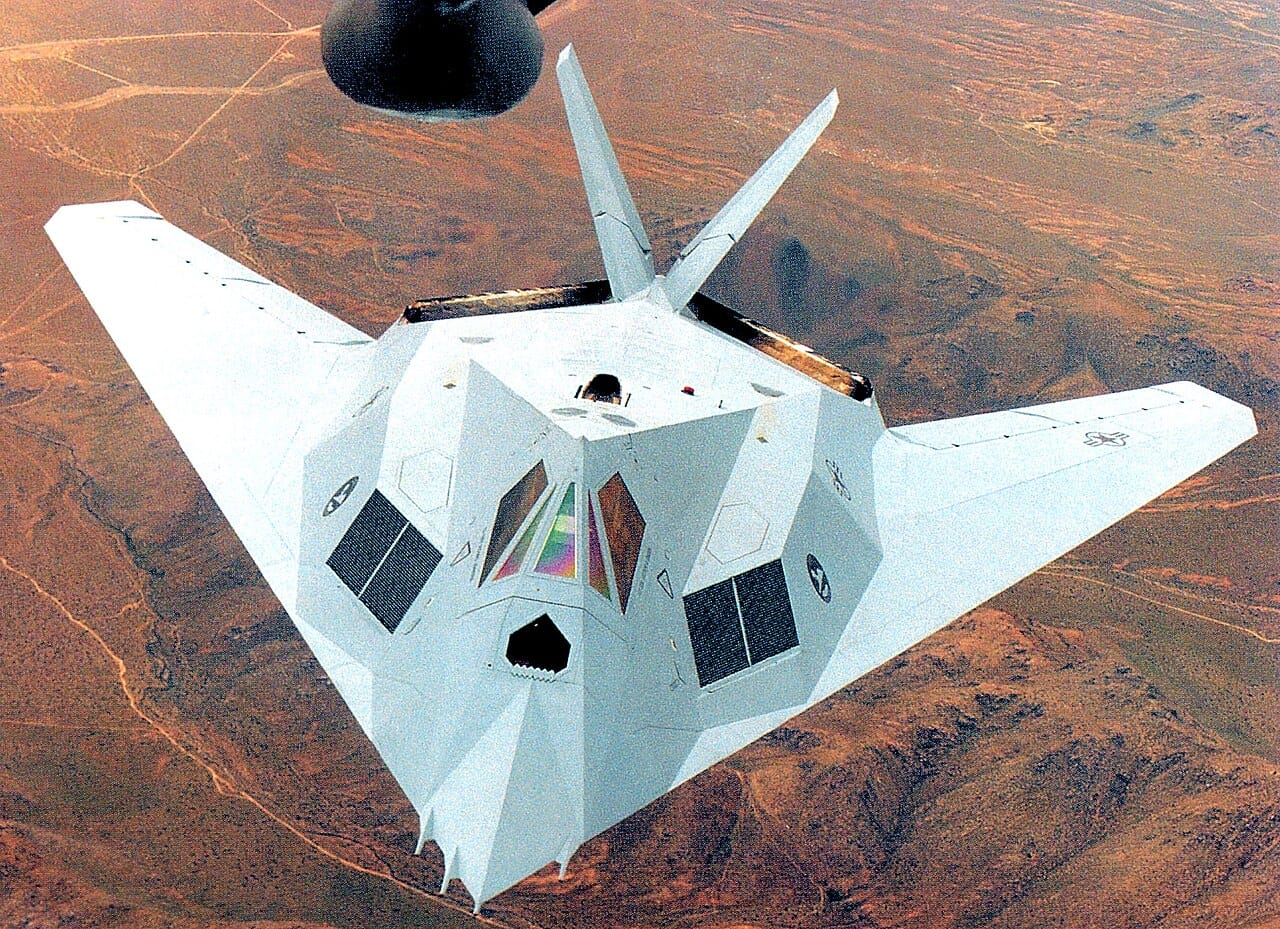
Comme les ordinateurs de l'époque ne pouvaient traiter que des surfaces planes, l'avion qui en résulta ressemblait à une pierre précieuse à facettes. Cet avion était le F-117 Nighthawk. Overholser a par la suite, et c'est resté célèbre, reconnu Ufimtsev comme le véritable père de la furtivité. L'histoire du petit prototype peu esthétique qui a prouvé son efficacité est racontée dans notre article sur Avoir du bleu.
La grande ironie
La même théorie a ensuite servi de base à la conception aux courbes douces B-2 Spirit, Une fois que les ordinateurs furent suffisamment puissants pour modéliser les surfaces courbes, les fondements mathématiques de toute la première génération d'avions furtifs américains – ces appareils qui allaient un jour déjouer les défenses aériennes soviétiques – provenaient d'un ouvrage librement accessible d'un scientifique soviétique.
L'histoire d'Ufimtsev connaît un dénouement tout à fait approprié. Après la Guerre froide, il s'installe aux États-Unis et occupe un poste universitaire à UCLA en Californie — vivant et enseignant dans le pays que son travail avait discrètement transformé.
C'est l'une des grandes interrogations de la Guerre froide : si un seul comité d'examen soviétique avait décidé qu'un article sur les limites des radars méritait d'être classifié, la configuration de la puissance aérienne moderne aurait pu être complètement différente.
Questions connexes
Qui a inventé la technologie furtive ?
La technologie furtive n'a pas d'inventeur unique, mais ses fondements mathématiques proviennent du physicien soviétique Piotr Oufimtsev. Son article de 1962 calculait la diffusion des ondes radar par les arêtes et les surfaces planes, permettant aux ingénieurs de concevoir des formes qui dévient les ondes radar de leur source. La division Skunk Works de Lockheed a utilisé ses équations pour construire le premier avion furtif opérationnel, le… F-117 Nighthawk.
Qui était Piotr Oufimtsev ?
Piotr Oufimtsev était un physicien soviétique dont les travaux ont posé les bases mathématiques des avions furtifs. En 1962, il publia " Méthode des ondes de bord dans la théorie physique de la diffraction ", décrivant la diffusion des ondes radar par les arêtes et les facettes. L'armée soviétique n'y voyant aucune application militaire, l'article fut publié publiquement. Après la Guerre froide, il s'installa aux États-Unis et enseigna à l'UCLA.
Qu'est-ce que la méthode des ondes de bord dans la théorie physique de la diffraction ?
Il s'agit d'un ouvrage théorique de 1962 du physicien soviétique Piotr Oufimtsev qui décrit mathématiquement la diffusion des ondes électromagnétiques, notamment radar, par les arêtes et les faces planes d'une forme. Considéré à l'époque comme relevant de la physique académique abstraite, il fut publié gratuitement et traduit en anglais par l'US Air Force en 1971, servant par la suite de base à la conception des avions furtifs.
Comment le F-117 Nighthawk a-t-il été conçu ?
La forme à facettes du F-117 Nighthawk a été conçue à partir des équations du physicien soviétique Piotr Oufimtsev. Denys Overholser, spécialiste radar chez Lockheed, a compris que les calculs d'Oufimtsev permettaient de prédire la réflexion des ondes radar sur les panneaux plats, permettant ainsi aux concepteurs d'orienter chaque surface de manière à ce que les ondes radar soient réfléchies loin des récepteurs ennemis. L'appareil a ensuite connu son baptême du feu lors du… Des F-117 ont bombardé le Panama en 1989..
Pourquoi le F-117 a-t-il une forme angulaire et facettée ?
La forme angulaire et facettée du F-117 s'explique par le fait que les ordinateurs des années 1970 ne pouvaient calculer les réflexions radar que sur des surfaces planes, et non sur des surfaces courbes. En utilisant les équations d'Ufimtsev, Lockheed a conçu chaque facette plane pour dévier les ondes radar de leur source. Les avions furtifs ultérieurs ont adopté des courbes douces dès que les ordinateurs ont pu les modéliser, notamment le bombardier B-2 Spirit à aile volante.
L'Union soviétique a-t-elle contribué à la création des avions furtifs américains ?
Involontairement, oui. Les fondements mathématiques du premier avion furtif américain proviennent d'un article publié librement en 1962 par le physicien soviétique Piotr Oufimtsev. Jugé sans intérêt pour l'armement par l'armée soviétique, cet article fut diffusé à l'étranger et traduit par l'US Air Force en 1971. Lockheed s'en servit ensuite pour construire des avions conçus pour déjouer les systèmes de défense aérienne soviétiques.
Qui était Denys Overholser ?
Denys Overholser, spécialiste des radars chez Skunk Works (Lockheed), a compris au milieu des années 1970 que les équations du physicien soviétique Piotr Oufimtsev pouvaient résoudre le problème de la prédiction de la réflexion des ondes radar sur des formes complexes. Son intuition a permis la conception à facettes du F-117 Nighthawk, le premier avion furtif opérationnel.
Quel fut le premier avion furtif opérationnel américain ?
Le Lockheed F-117 Nighthawk fut le premier avion furtif opérationnel américain. Sa forme à facettes était issue des équations de diffraction du physicien soviétique Piotr Oufimtsev, appliquées par le département Skunk Works de Lockheed. D'autres programmes furtifs suivirent, du bombardier B-2 Spirit au projet abandonné de l'US Navy. A-12 Avenger II.
0 commentaire