
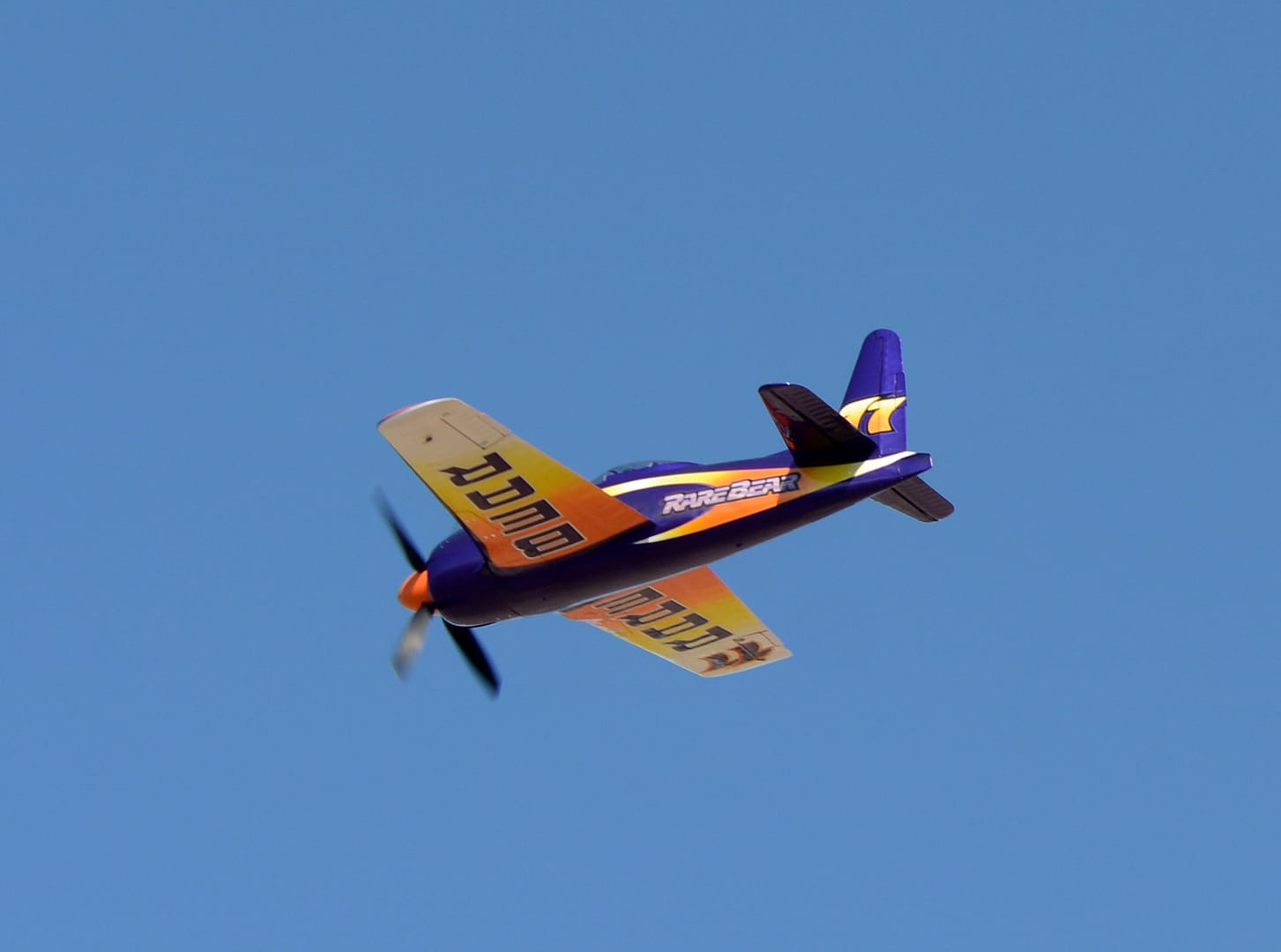
Grumman built the F8F Bearcat around one brutal idea: take the biggest engine America had and wrap the smallest possible aeroplane around it. The result was less a fighter than an engine with a saddle — an 18-cylinder radial hauling a featherweight airframe into the sky faster than anything the piston age had yet produced.
It was born from hard lessons. In 1942, Pacific veterans told Grumman what they wanted most in a fighter: climb. The Bearcat answered so completely it could leap off a carrier deck in a couple of hundred feet and rocket upward at nearly 4,800 feet a minute.
But history had other plans. By the time it reached the fleet in 1945, the war it was built for was ending, and the jet age was dawning. The Bearcat never fired its guns in American hands. Its immortality came later, on the pylons of Reno.
Quick Facts
| Type | Single-engine, single-seat carrier fighter — Grumman’s last piston fighter |
| Engine | Pratt & Whitney R-2800 Double Wasp radial |
| First flight | 21 August 1944 |
| Service entry | 1945 — too late for WWII combat |
| Design goal | Smallest, lightest airframe around the biggest engine, for blistering climb |
| Combat use | French Indochina and later South Vietnam — never in US hands |
| Built | 1,265 (1945–1949) |
| Record afterlife | “Rare Bear” set a piston 3 km speed record of about 528 mph in 1989 |
An Engine With a Saddle
Climb depends on power-to-weight, and Grumman chased it ruthlessly. The Bearcat was five feet shorter than the F6F Hellcat, spanned seven feet less, and carried just four guns and a modest fuel load. It gained a bubble canopy — a first for a US Navy fighter.
Against the Hellcat it was about a fifth lighter, climbed some thirty percent better, and flew markedly faster on the same class of engine. Grumman even gave it detachable wingtips designed to snap off cleanly under extreme load.
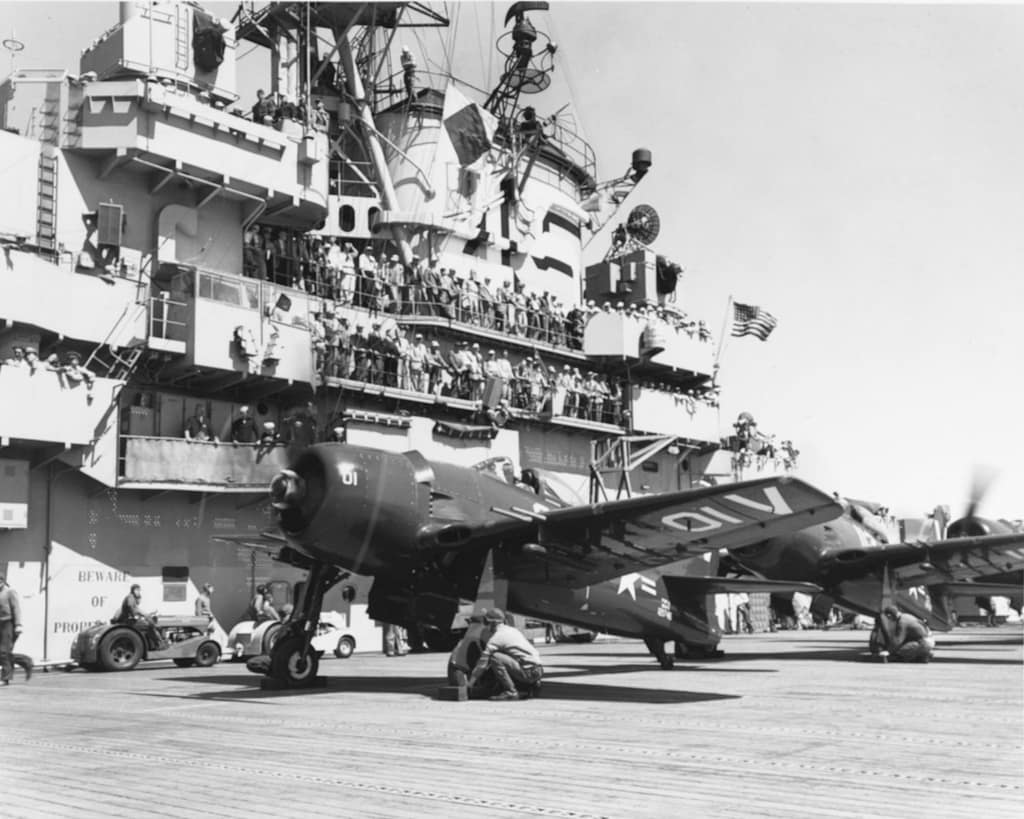
Too Late for Its Own War
Ordered in 1943, the prototype first flew on 21 August 1944 and deliveries began in May 1945. The first Bearcat air wing reached the Pacific only days after Japan surrendered. Not one Bearcat ever flew the air-to-air combat mission it was designed for in US service — it remains one of aviation’s great “what-ifs.”
Rare Bear on the Reno pylons.
The Climb That Made Legends
What the Bearcat could do vertically stunned everyone. In 1946 an unmodified example set a time-to-climb record — 10,000 feet in 94 seconds after a takeoff run of little more than a hundred feet — that stood for about a decade. The Navy’s Blue Angels flew Bearcats in the late 1940s, and a young Neil Armstrong, who trained on the type, later called it his favourite aeroplane.
The Only War It Fought
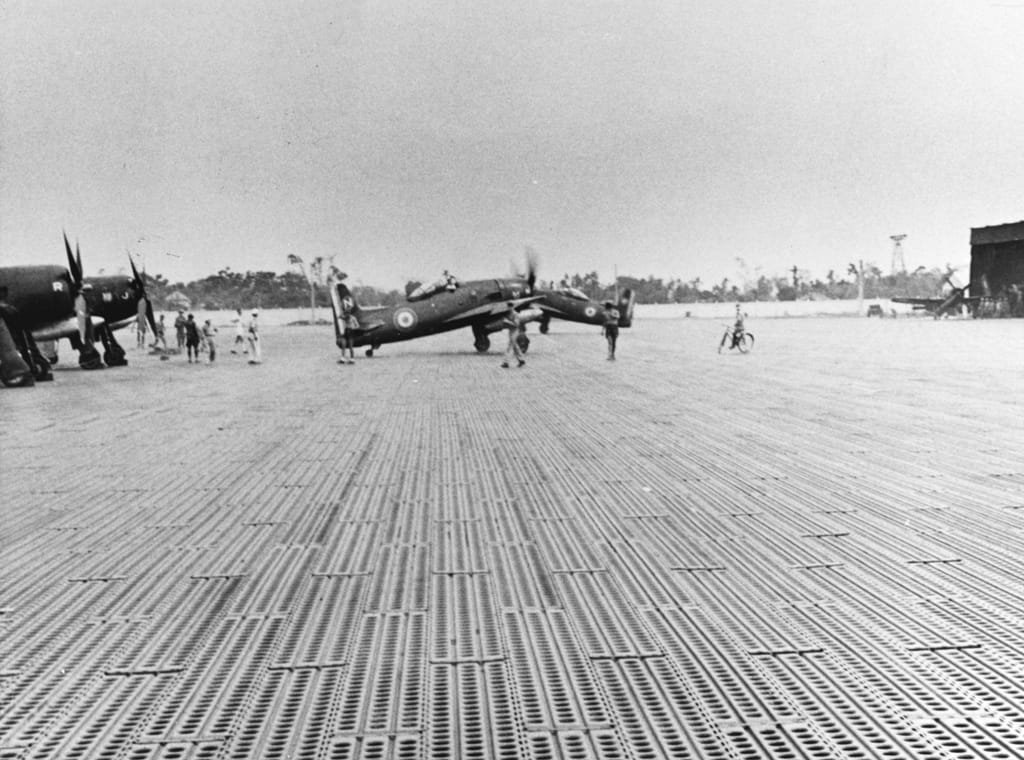
The Bearcat’s only combat came in French hands. Nearly two hundred were delivered to French forces in Indochina from 1951 for ground attack against the Viet Minh, and when France withdrew, survivors passed to the South Vietnamese air force. The type that missed the Pacific found its war in the paddies of Southeast Asia.
Unlimited racers, including Rare Bear, at Reno.
Rare Bear and the Record Books
One Bearcat, found as a stripped 1962 wreck, became the most famous of all. Rebuilt by Lyle Shelton and re-engined with a monstrously tuned Wright radial, “Rare Bear” dominated the Reno Unlimited class for decades. On 21 August 1989 — 45 years to the day after the prototype first flew — it clocked a measured 528 mph over a three-kilometre course, becoming the fastest piston-engined aircraft ever recorded in that class. Later racers have gone quicker over different courses, but the Bearcat’s place in the record books endures.
The Bearcat racer at full song.
Sources: Wikipedia (Grumman F8F Bearcat; Rare Bear); Stephan Wilkinson, “An Engine With a Saddle,” Aviation History / HistoryNet (2010). Featured photo: Don Ramey Logan / CC BY.
0 Comments