
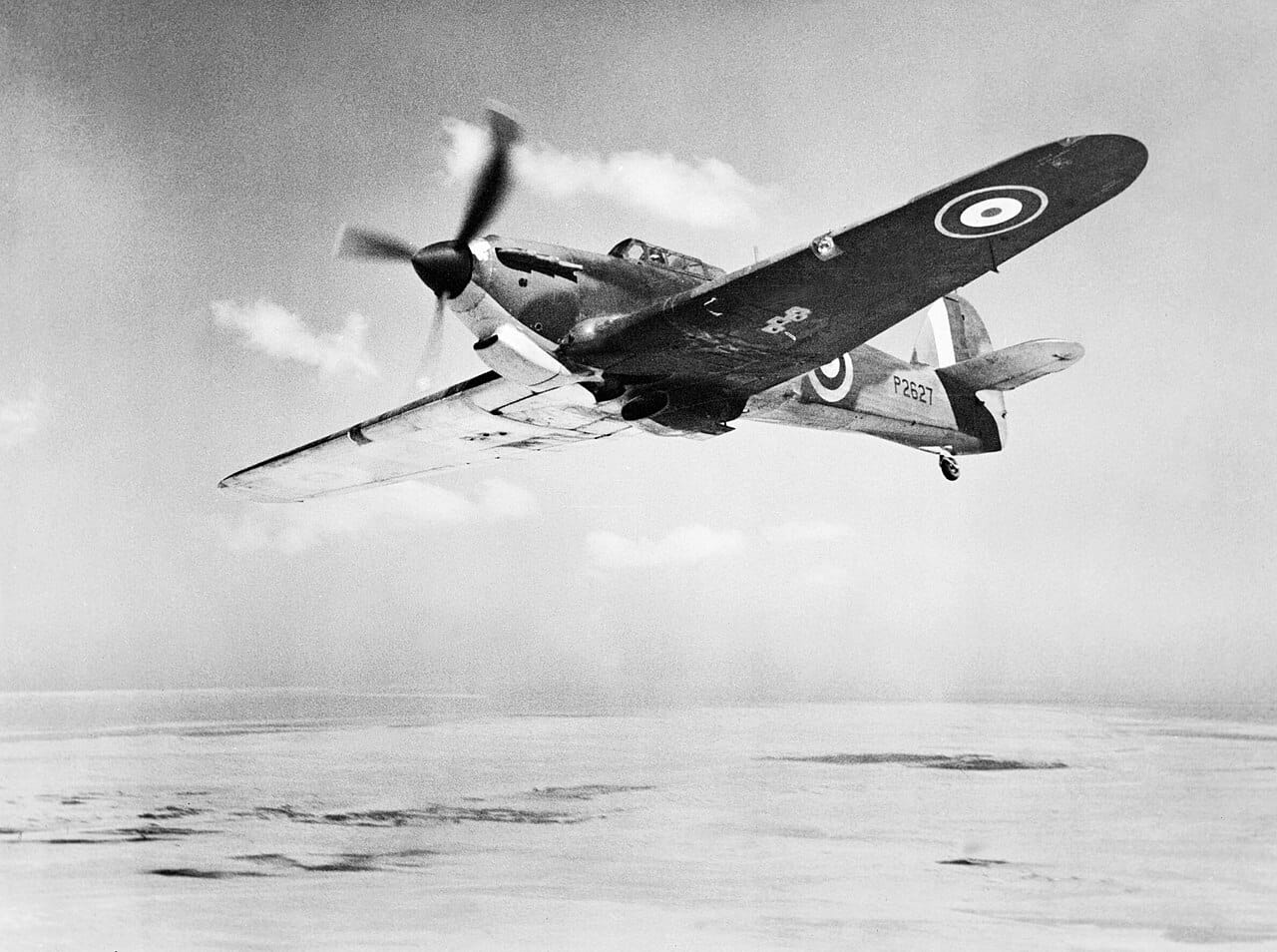
Ask almost anyone which aircraft won the Battle of Britain and you will get the same answer: the Spitfire. It is one of the most beautiful machines ever built, and it has earned its legend. But it is, at best, only half the story.
The aircraft that actually shot down more of the Luftwaffe in the summer of 1940 was slower, older-looking, and partly covered in fabric. It was the Hawker Hurricane — and for eighty-five years it has flown in the Spitfire’s shadow.
Quick Facts
- Aircraft: Hawker Hurricane, designed by Sir Sydney Camm — the RAF’s first monoplane fighter (in service 1937)
- Myth vs reality: the Spitfire gets the glory, but the Hurricane did more of the fighting in 1940
- The numbers: Hurricanes were credited with about 656 of the 1,107 aircraft downed by Fighter Command in the Battle of Britain — over half
- Why: doctrine sent Hurricanes after the German bombers while Spitfires tackled the faster Bf 109 escorts
- Built tough: fabric-and-steel-tube construction made it rugged, cheap and quick to repair
Older, Tougher, and Everywhere
Designed by Sir Sydney Camm as a monoplane evolution of the Hawker Fury biplane, the Hurricane reached RAF squadrons in 1937 — the service’s first monoplane fighter and its first capable of more than 300 mph. Where the Spitfire was a sleek, all-metal thoroughbred, the Hurricane kept a traditional structure of steel tubing and fabric over much of the rear fuselage. It looked like yesterday’s aircraft. That turned out to be a strength.
The Numbers Don’t Lie
When the Battle of Britain was over and the claims were tallied, the Hurricane came out on top. RAF Fighter Command credited it with roughly 656 of the 1,107 enemy aircraft destroyed — comfortably more than half, and more than the Spitfire. There were simply more Hurricanes in the fight: they equipped the majority of Fighter Command’s squadrons that summer.
A Division of Labour
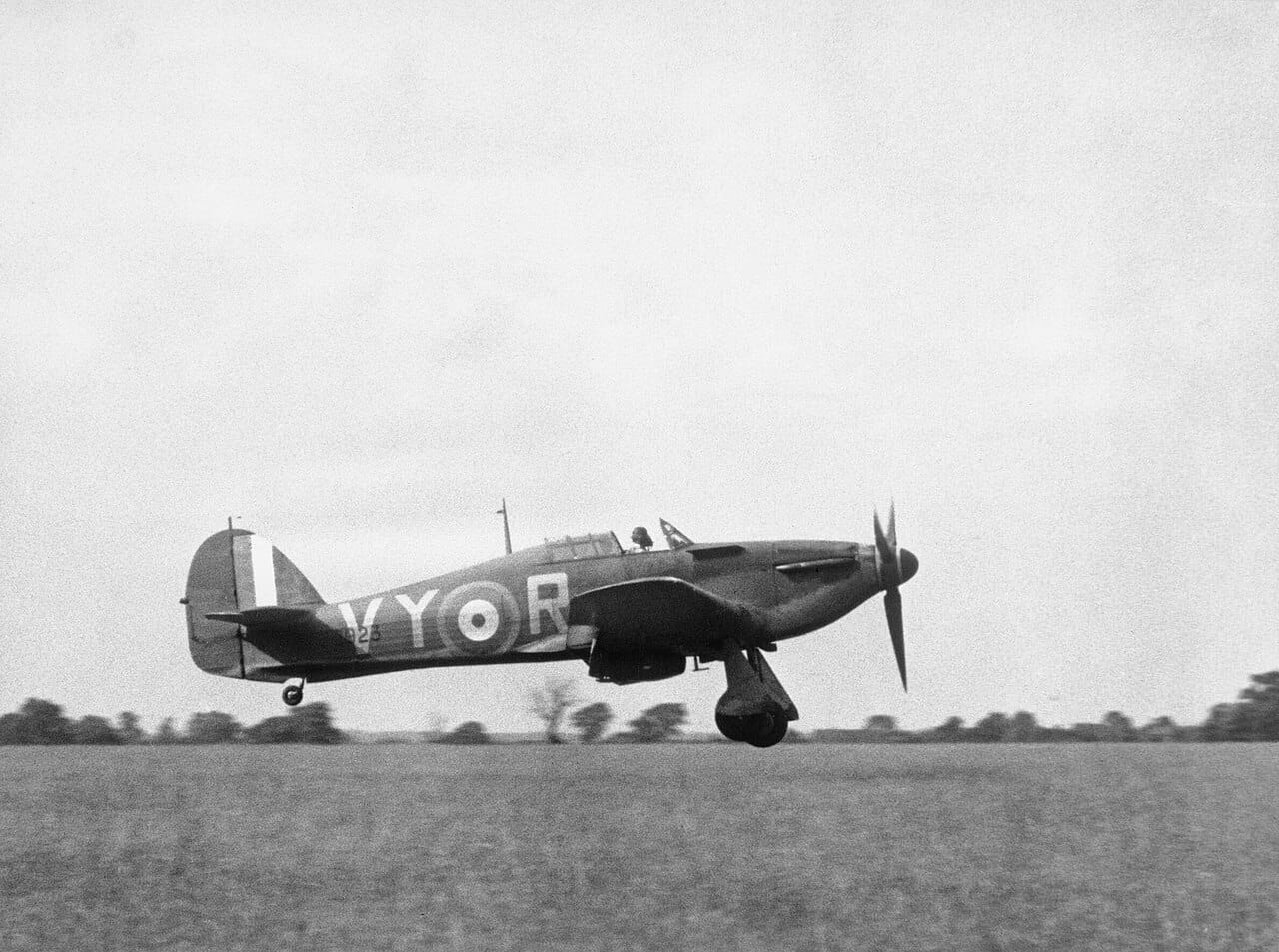
The two fighters were used differently, by design. Whenever possible, controllers sent the faster, higher-flying Spitfires to tangle with the Messerschmitt Bf 109 escorts, while the Hurricanes went for the bombers — the aircraft actually dropping high explosive on British cities and airfields. The Hurricane was ideal for the job: its thick wings made it a rock-steady gun platform, and its eight Browning machine guns were grouped close together for a concentrated, accurate burst.
And when it got hurt — which it did — the Hurricane was far easier to patch up. A cannon shell that would write off a stressed-metal Spitfire wing often punched straight through a Hurricane’s fabric, leaving a repairable hole. Ground crews could turn damaged Hurricanes around and get them back into the air fast.
The Workhorse of the War
The Hurricane’s war did not end with Britain’s skies. It fought across North Africa and Malta, was shipped in numbers to the Soviet Union, flew off catapult-armed merchant ships and carriers as the Sea Hurricane, dropped bombs as the “Hurribomber,” and even hunted tanks with 40 mm cannon. More than 14,000 were built, in just about every role a fighter could be asked to fill.
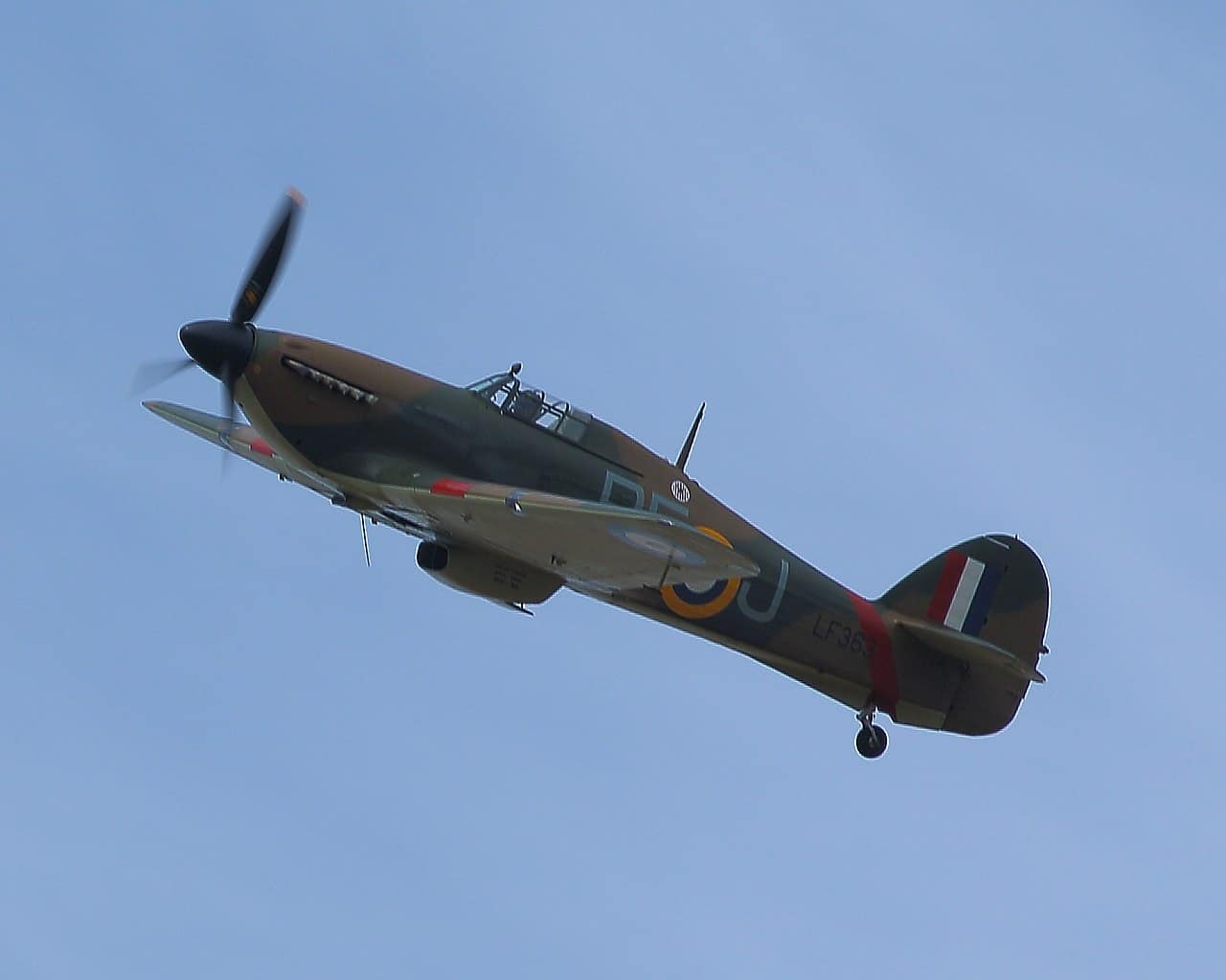
The Spitfire was the icon, and deservedly so. But the Hurricane was the workhorse — and in the summer that decided Britain’s survival, the workhorse did the heavier lifting.
Sources: Imperial War Museum; Interesting Engineering; We Are The Mighty; Hush-Kit; Wikipedia.
Related Questions
Did the Spitfire or the Hurricane win the Battle of Britain?
While the Spitfire gets the glory, the Hawker Hurricane did the bulk of the fighting. Hurricanes were credited with about 656 of the 1,107 aircraft downed by RAF Fighter Command in the Battle of Britain — more than half the total, and more than the Spitfire.
How many kills did the Hurricane score in the Battle of Britain?
Hurricanes accounted for roughly 656 of the 1,107 enemy aircraft destroyed by Fighter Command during the 1940 battle — over half of all RAF victories, making it the most successful British fighter of the campaign.
What was the Hawker Hurricane?
The Hawker Hurricane, designed by Sir Sydney Camm, was the RAF's first monoplane fighter, entering service in 1937. Rugged and steady, it formed the backbone of Fighter Command during the Battle of Britain in 1940.
Why did the Hurricane shoot down more planes than the Spitfire?
RAF tactics played to each fighter's strengths: the more numerous, stable Hurricanes were sent against the German bomber formations, while the faster Spitfires tackled the escorting Bf 109s. With the bombers as their target, Hurricanes racked up the most kills.
Who designed the Hawker Hurricane?
It was designed by Sir Sydney Camm, Hawker's chief designer. His rugged fabric-and-metal monoplane was easy to build and repair, which helped keep large numbers of Hurricanes in the fight throughout 1940.
Related Posts
The de Havilland Mosquito: Plywood Beats Metal
0 Commenti