
Two weeks ago the story was aircraft going home. Raptors leaving the Gulf for England, squadrons rotating out, a ceasefire holding well enough that the US Air Force felt comfortable thinning out its presence in the region.
That lasted about as long as it took to write down.
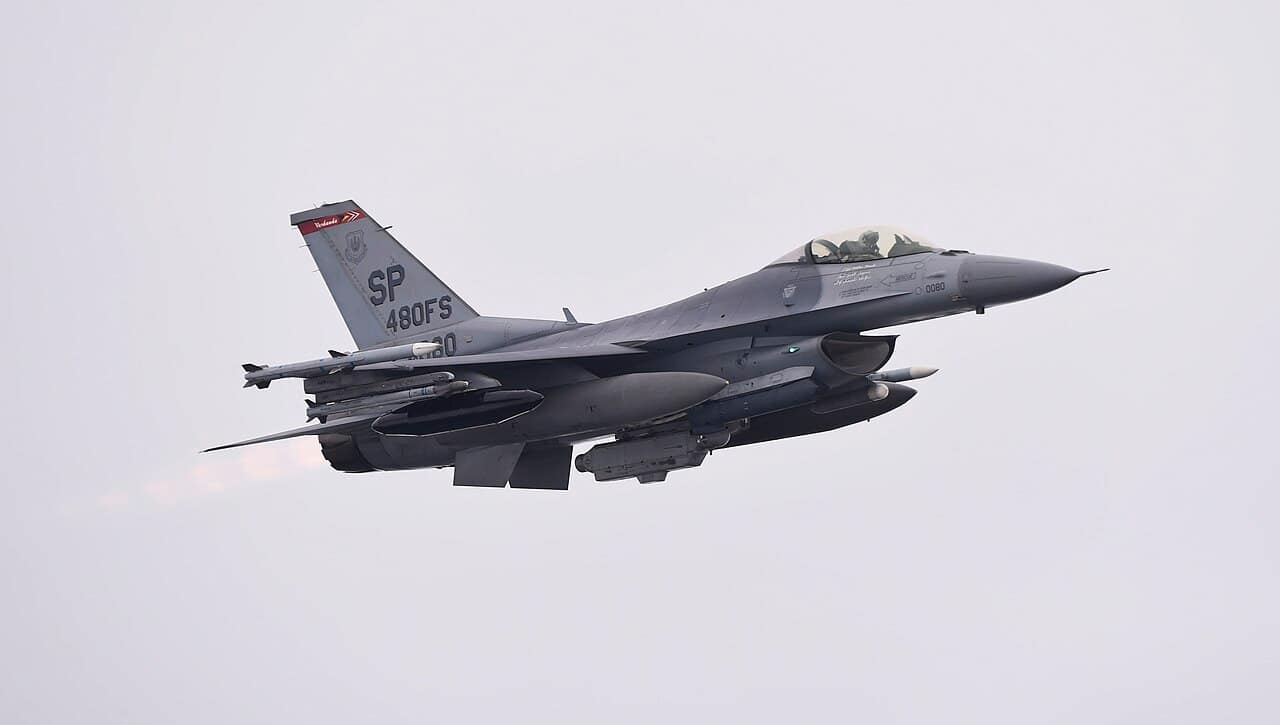
IL F-16 of the 480th Fighter Squadron at Spangdahlem Air Base in Germany are heading back to the Middle East, along with F-35 from the 48th Fighter Wing at RAF Lakenheath and a supporting cast of tankers. Some of those Vipers had only just got their jets back into German hangars. The Pentagon has decided it needs them somewhere hotter.
Informazioni rapide
Units moving: 480th Fighter Squadron (F-16, Spangdahlem AB, Germany) and the 48th Fighter Wing (F-35A, RAF Lakenheath, UK), plus aerial refuelling tankers
Movements identified: 17 July 2026
Missione: suppression of enemy air defences. Finding and killing Iranian radars and surface-to-air missile systems
Radar: the 480th completed AN/APG-83 AESA installation across its fleet in 2022, the first active-duty USAF F-16 unit to finish the upgrade
Grilletto: collapse of the US-Iran ceasefire over the Strait of Hormuz
Soprannome: Wild Weasel, a mission name in continuous use since Vietnam
What a Weasel actually does
Suppression of Enemy Air Defences is the least glamorous and most dangerous job in the air campaign. The Wild Weasel mission exists to solve one problem: an enemy has radars, those radars feed surface-to-air missiles, and everything else the air force wants to do becomes suicidal until the radars stop working.
The solution is deliberately unhinged. You fly a fighter into the threat envelope, let the enemy radar find you and start tracking, and then use its own transmission to guide an anti-radiation missile back down the beam. The unofficial squadron motto that came out of Vietnam has never been improved on: YGBSM. You have got to be something-ing kidding me.
The aircraft going back to the Gulf are Block 50 F-16s, still widely called the CJ even though the current designation is CM. They carry the AGM-88 HARM and, since 2022, the AN/APG-83 AESA radar. Reporting from Army Recognition and others indicates the deploying package includes jets fitted with Angry Kitten electronic-warfare pods, though the exact aircraft count varies between accounts and should be treated as an estimate rather than a confirmed order of battle.
Perché adesso?
The short version: the ceasefire is dead. Iran struck commercial shipping in the Strait of Hormuz, the UAE said Iranian missiles hit two of its tankers in Omani territorial waters and killed a crew member, and Washington responded by resuming strikes and reinstating a naval blockade of Iranian ports.
US Central Command has now run consecutive nights of strikes, hitting coastal defence systems and cruise missile storage and launch sites. Its public framing has been consistent throughout.
Every one of those strike packages needs somebody to deal with what is looking back at them on radar. Iran's air defence network took heavy damage during Operation Epic Fury earlier this year, but damaged is not the same as dead, and the systems that survived have had months to disperse, repair and relocate. That is exactly the problem a Weasel squadron exists to solve.

The bill Europe pays
There is a second story underneath the first one, and it is the one European air forces are watching. Spangdahlem and Lakenheath are not Middle East bases. They are the American contribution to NATO's conventional posture facing Russia. Every jet that leaves Germany or Suffolk for the Gulf is a jet not sitting alert in Europe.
This is the arithmetic that has been driving European defence policy all year, and it is not a coincidence that Paris and Berlin spent the same week signing deterrence agreements with each other. When American airpower can be pulled out of the European theatre at a few days' notice, the case for a European capability that cannot be pulled out writes itself.
Cosa guardare
The tell will be duration. A short surge to cover a specific strike series is routine. A deployment that stretches into autumn means the Air Force has concluded that Iranian air defences are a standing problem rather than a solved one, and the Vipers that went home in July will not be seeing Germany again this year.
For the crews, it is the oldest story in the business. Unpack, repack, go.
Sources: Air & Space Forces Magazine, Army Recognition, US Central Command public releases, CNN, Al Jazeera, Elysee.

0 Commenti