
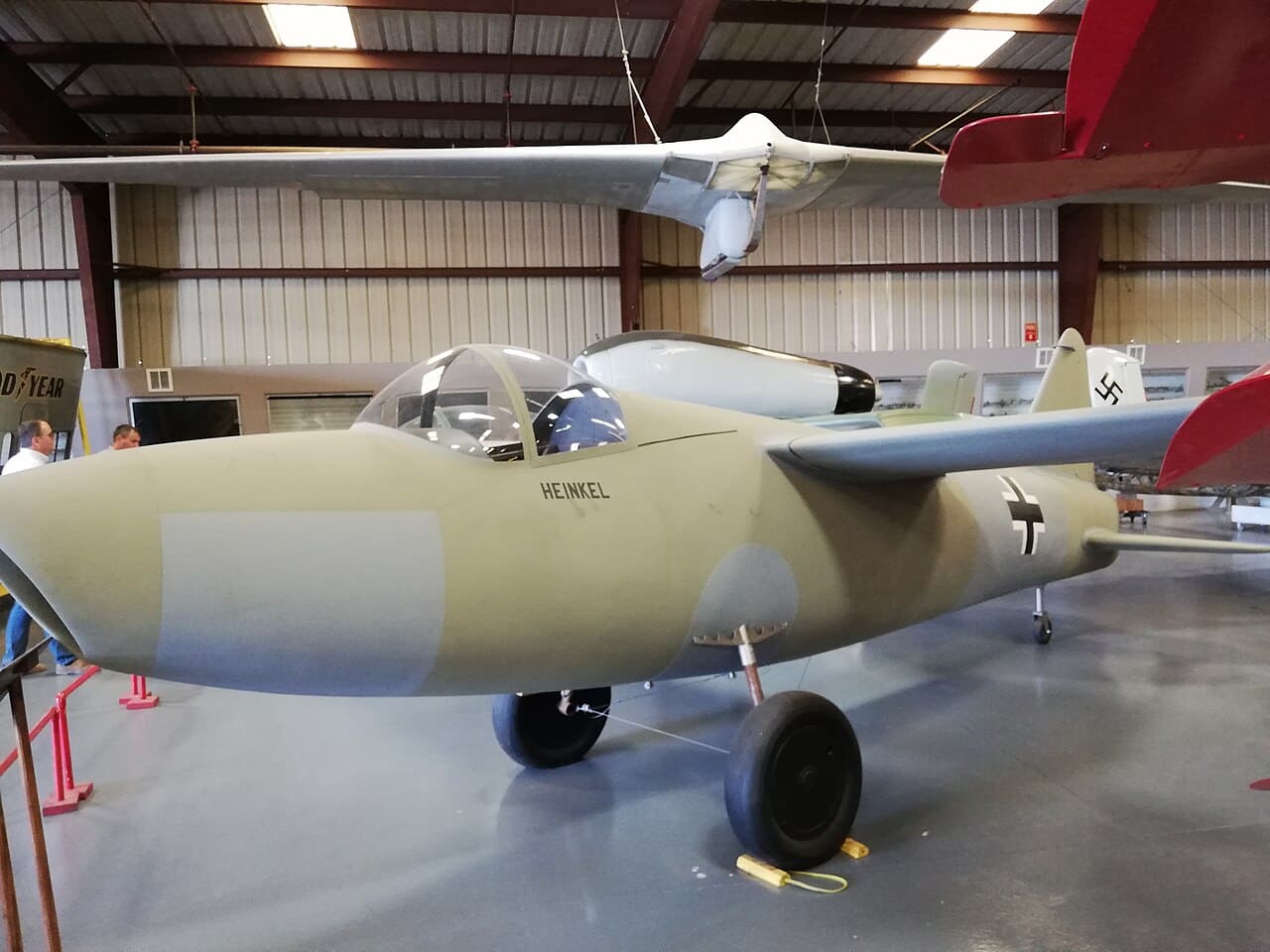
On the morning of 27 August 1939, over the Heinkel works at Rostock-Marienehe, a small, stub-nosed monoplane lifted off with a sound no one had heard from an aeroplane before: a rising, tearing howl in place of the familiar hammer of pistons. It was the Heinkel He 178, and in roughly six minutes it became the first aircraft in history to fly on the thrust of a turbojet.
Five days later, Germany invaded Poland. The world’s attention went elsewhere, and the machine that had just opened the jet age was allowed to become a footnote. It was a private venture, built in near-secrecy, and the men who ran the Reich air ministry could not be bothered to be impressed.
This month marks the 87th anniversary of that flight. The aircraft itself is long gone, destroyed in a 1943 air raid, but a full-size replica stands today at Rostock-Laage. What follows is the sober record of how the propeller was, for the first time, left behind.
Informazioni rapide
| Tipo | Single-seat experimental jet testbed |
| Primo volo | 27 August 1939 (brief hop 24 August), pilot Erich Warsitz |
| centrale elettrica | 1 × Heinkel HeS 3 centrifugal-flow turbojet, ~4.4 kN (992 lbf) |
| Maximum speed | 598 km/h (372 mph) |
| Costruzione | Duralumin fuselage; wooden wings |
| Destino | Displayed in Berlin; destroyed in an Allied air raid, 1943 |
A propeller-less engine, and a manufacturer bold enough to fund it
The He 178 existed to prove one man’s idea. Hans Joachim Pabst von Ohain, a physicist from the University of Göttingen, had patented the use of gas-turbine exhaust for propulsion in the mid-1930s. His insight was one of principle: the vibration and noise of the piston-and-propeller combination offended him, and he reasoned that a continuous cycle of compression, combustion and expansion would be smoother and, at speed, superior.
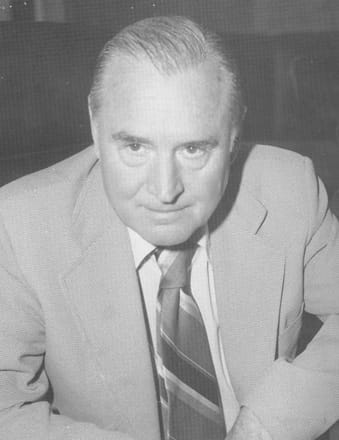
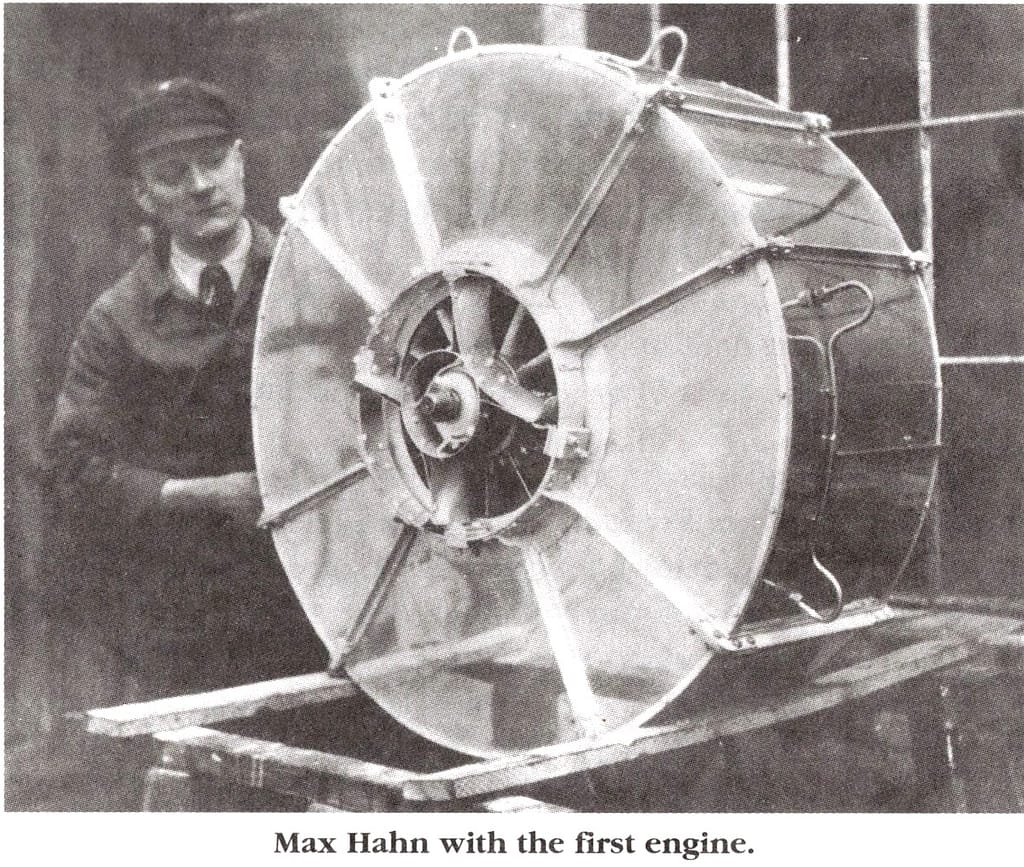
Where Frank Whittle in Britain worked with thin funding and official indifference, von Ohain found an industrialist willing to gamble. Ernst Heinkel hired von Ohain and the mechanic Max Hahn in 1936 and set them up at Marienehe. A hydrogen-fuelled demonstrator ran on the bench in 1937; the flight engine that followed, the HeS 3, burned petrol and was tested in the air slung beneath a Heinkel He 118 before ever powering an aircraft alone.
Six minutes over Marienehe
The airframe wrapped around the HeS 3 was deliberately simple: a metal, circular-section fuselage with the air intake in the nose, the engine amidships behind the fuel tank, and a long tailpipe venting at the rear. The high-mounted wings were of wooden construction. The undercarriage was meant to retract but stayed locked down throughout the trials.
Erich Warsitz, Heinkel’s test pilot, had already flown the rocket-powered He 176. On 27 August 1939 he took the He 178 up for its true maiden flight.
The performance was modest by any standard: a top speed around 598 km/h (372 mph) and an endurance measured in minutes. But the point was never the numbers. The point was that an aeroplane had flown with no propeller at all, and had proved the concept airworthy.
The breakthrough that Berlin ignored
Heinkel had kept the whole programme concealed, even from the Luftwaffe. On 1 November 1939, after the Polish campaign, he staged a demonstration for senior officials. Hermann Göring did not attend; Ernst Udet and Erhard Milch did, and left unimpressed. The aircraft’s limited speed and endurance, set against a war that seemed already half-won, spoke louder than the physics.
Heinkel never forgave the omission. Unknown to him, the ministry was in fact quietly funding its own jet work — but along the axial-flow path, not his. The He 178 led nowhere directly; mounting the engine inside the fuselage proved impractical, and Heinkel moved on to the twin-engined He 280 fighter. The single prototype went on static display in Berlin, where an Allied air raid destroyed it in 1943. The jet age it had begun, however, would define the second half of the century.
Sources: Wikipedia (Heinkel He 178; Hans von Ohain); historyofwar.org; Lutz Warsitz, The First Jet Pilot (Pen & Sword, 2009).

0 Commenti