

Quick Facts: Sea Baby USV
- Tipo: Unmanned Surface Vessel (USV) with multi-domain capability
- Unit cost: ~$200,000
- Allineare: 1,500 km
- Carico utile: 6–8 FPV attack drones + thermobaric rockets
- Indicazioni: Remote piloting + AI-assisted autonomous navigation; some onboard FPV drones are fibre-optic guided (jam-proof)
- Velocità: 40+ knots
- Key innovation: Combined surface strike + aerial FPV swarm from a single platform
The Engineering Behind the Sea Baby
The fibre-optic guidance fitted to some of the Sea Baby's FPV drones is the engineering detail that separates them from conventional radio-controlled drones. A hair-thin optical fibre spools out behind the drone as it flies, carrying two-way data at the speed of light. The operator sees what the drone sees in real time — high-definition video with zero latency. Electronic jamming, which defeats RF-guided drones by flooding the spectrum with noise, is physically incapable of disrupting a fibre-optic link. The signal travels through glass, not air. The boat itself is remote-piloted from a mobile ground station, with AI-assisted navigation to fall back on when communications are degraded. At roughly $200,000 per unit, the Sea Baby occupies a cost tier that inverts the traditional naval calculus. A modern anti-ship missile costs between $1 million and $4 million. A corvette costs $200–400 million. A drone boat that achieves comparable effects at two orders of magnitude less changes the maths of naval warfare in a way that no single weapons system has done since the torpedo.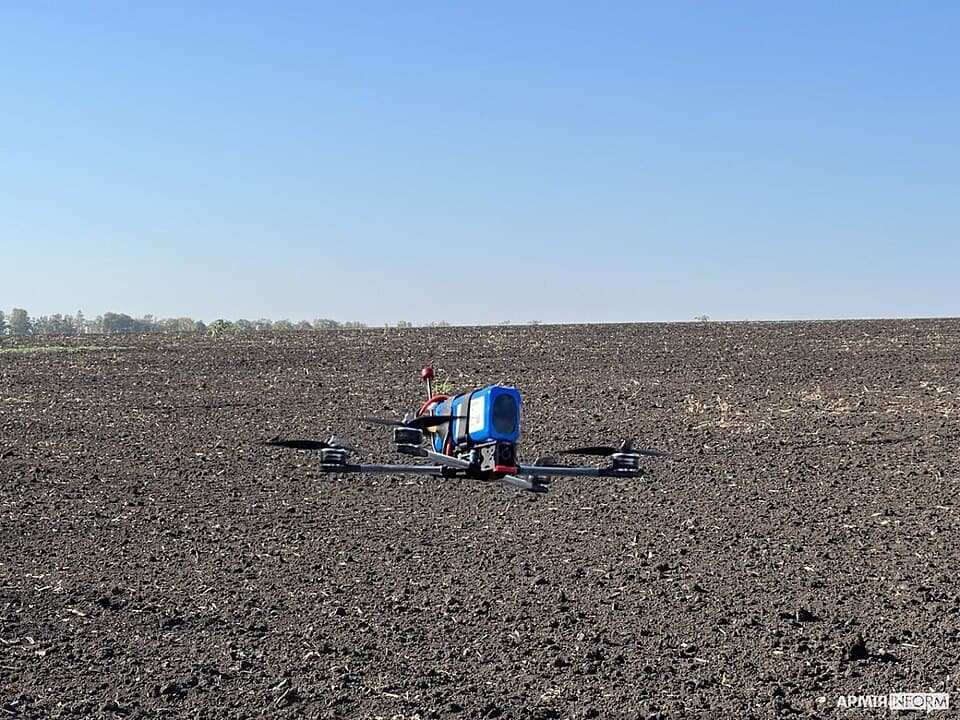
Multi-Domain from a Single Hull
The latest evolution is what makes the Sea Baby genuinely novel. Earlier versions were pure surface-strike platforms — fast boats that rammed targets. The current generation carries six to eight FPV drones in onboard launch compartments that open during an attack, each independently controllable. When the Sea Baby reaches its operating area, it can launch the FPVs to strike targets the boat itself cannot reach: port infrastructure, vehicles on shore, or aerial targets. This turns a $200,000-class boat into a multi-domain platform. It operates on the water surface, its FPV drones operate in the air, and the thermobaric rockets give it a stand-off strike capability. A single operator, sitting hundreds of kilometres away at a mobile ground station with a pair of screens, controls the entire system.Naval analysts describe the concept as a carrier at drone scale — an uncrewed mothership that delivers aerial strike power close to the target without anyone aboard.
What It Means for Naval Doctrine
The U.S. Navy took notice. At the Balikatan 2026 exercise in the Philippines, American forces operated the Magura V5 — a related Ukrainian-designed naval drone — in the Pacific for the first time. The technology is no longer experimental. It has moved from proof-of-concept to joint exercises with the world's largest navy. For smaller navies — the Philippines, the Baltic states, Pacific island nations — drone boats like the Sea Baby represent a form of naval power that was previously unimaginable. A fleet of 50 Sea Babys costs around $10 million. A single patrol boat costs more. The implications for maritime strategy in congested littoral waters are profound, and every navy in the world is paying attention.Sources: Naval News, USNI News, Forbes, The War Zone, H.I. Sutton / Covert Shores
Domande correlate
What is the Sea Baby drone boat?
The Sea Baby is an unmanned surface vessel — a remotely piloted attack boat — that has grown into a multi-domain weapons platform. With a 1,500-kilometre range, it can carry thermobaric rockets and launch six to eight FPV attack drones while underway at sea. It reflects a wider shift toward cheap autonomous swarm warfare.
How much does a Sea Baby naval drone cost?
A Sea Baby unmanned surface vessel costs roughly $200,000 — a fraction of the price of a conventional warship. That low cost lets forces field them in large numbers, making advanced naval strike capability accessible to militaries that could never afford a frigate.
What is an unmanned surface vessel?
An unmanned surface vessel (USV) is a boat that operates without a crew on board, controlled remotely or by autonomous software. Military USVs such as the Sea Baby carry sensors and weapons for reconnaissance and attack. They are increasingly central to naval warfare, part of the same trend that led the Pentagon to centralise drone oversight.
What weapons can the Sea Baby carry?
The Sea Baby can carry thermobaric rockets and up to eight first-person-view (FPV) attack drones stored in onboard launch compartments, letting it strike targets both on the water and beyond. Travelling at over 40 knots with a 1,500-kilometre range, it effectively combines a mother-ship and a drone swarm in one low-cost platform.
Why are fibre-optic drones hard to jam?
Fibre-optic guided drones trail a thin cable that carries control signals and video instead of relying on radio links. Because there is no wireless signal to intercept or jam, electronic-warfare systems cannot block them. Some of the Sea Baby's onboard FPV drones use this jam-proof fibre-optic guidance.
Post correlati

0 Commenti