

| Informazioni rapide | |
|---|---|
| Che cos'è | Aborting an approach and climbing away instead of landing |
| When It's Required | Unstable approach, runway not in sight at minimums, traffic on runway, wind shear, ATC instruction |
| Accident Factor | ~83% of approach-and-landing accidents involve a failure to go around (Flight Safety Foundation) |
| Go-Around Rate | Only 3% of unstable approaches result in a go-around — 97% of pilots press on |
| Most Common Error | Failing to add full power immediately — half-measures kill |
| Chi ne ha bisogno? | Every pilot — from students to airline captains. The go-around is the most under-practised manoeuvre in aviation |

Every pilot learns the go-around on day one. Almost none of them practise it enough. And when the moment comes — the runway disappearing in fog, a deer on the centreline, a gust shoving you sideways at fifty feet — the pilots who hesitate are the ones who make the news.
The go-around is the safest decision a pilot can make. It is also, statistically, the most dangerous manoeuvre in the approach-and-landing phase. That paradox kills people every year. Here's why — and how to make sure it doesn't kill you.
The Numbers Are Brutal
According to the Flight Safety Foundation, approximately 83% of approach-and-landing accidents involve a failure to execute a go-around. The pilot saw the signs — too fast, too high, too far off centreline — and pressed on anyway. The industry calls it "continuation bias," and it is the single most lethal habit in aviation.
The flip side is almost as alarming. Studies show that only about 3% of unstable approaches result in a go-around. That means 97% of the time, when the approach isn't meeting stabilised criteria, the pilot lands anyway. Most of the time, it works out. Sometimes it doesn't. And when it doesn't, the consequences are catastrophic.
What makes this so dangerous isn't the manoeuvre itself — it's the transition. One second you're descending, configured to land, eyes outside, mentally committed to touching down. The next second you need full power, a positive climb rate, gear up, flaps retracting, and a completely new mental picture. That cognitive shift, under stress, at low altitude, is where pilots get lost.
The Five Mistakes That Kill
1. Not adding full power immediately. This is the big one. Half-throttle go-arounds are the leading cause of go-around accidents. When you decide to go around, shove the throttle to the wall. Every second of hesitation is altitude you don't have. In a single-engine trainer like a Cessna 172, this means full throttle. In a jet, it means TOGA (Takeoff/Go-Around) thrust. No half-measures.
2. Pitching up too aggressively. Full power doesn't mean full nose-up. Pitch to the initial climb attitude — typically about 7-10 degrees nose up in a light aircraft — and let the power do the work. Yanking the nose up at low speed is a recipe for a stall, and a stall at 200 feet is not survivable.
3. Forgetting the flaps. Landing flaps create enormous drag. Once you're climbing, you need to retract them — but not all at once. Take out one notch at a time. Dumping full flaps in one motion can cause a momentary sink that puts you into the ground.

4. Letting the runway hypnotise you. Once you've decided to go around, stop looking at the runway. Your eyes should be on the airspeed indicator, the attitude indicator, and the altimeter. The runway is behind you now — psychologically, you need to leave it there.
5. Deciding too late. The best go-around is the one you start early. If you're not stabilised at 500 feet AGL on an instrument approach (or 300 feet on a visual approach in a light aircraft), go around. Don't wait to see if it "works out." The pilots who die are the ones who gave themselves one more chance at 100 feet.
Why Pilots Don't Go Around
The psychology is simple. A go-around feels like failure. You've flown the approach, briefed the landing, maybe told your passengers you'd be on the ground in two minutes. Now you have to climb away, re-enter the pattern, and try again. In an airline cockpit, a go-around means delays, extra fuel burn, and a conversation with dispatch. For a student pilot, it feels like admitting you can't land.
That's exactly backwards. A go-around is the most professional thing a pilot can do. Airlines track go-around rates as a safety metric — not because they want fewer of them, but because they want more. Every captain who goes around is demonstrating judgment. Every pilot who presses on through an unstable approach is gambling.
The antidote is practice. Go-arounds should be rehearsed on every training flight, from every configuration — full flaps, partial flaps, no flaps. The manoeuvre should be so automatic that when the moment comes, your hands move before your brain catches up. Power up. Pitch. Clean up. Climb. That sequence needs to be muscle memory, not a decision tree.

The One Rule That Saves Lives
Here it is: if you're thinking about going around, go around. The decision to continue an approach should be active and deliberate. If doubt creeps in — about the wind, the speed, the glidepath, the runway environment — that doubt is your brain telling you something isn't right. Trust it. Push the throttle forward. Fly the go-around. Come back and try again.
No pilot has ever been fired for going around. Plenty have died for not doing it. The manoeuvre takes thirty seconds. The decision takes one. Make it early, make it decisively, and make it every single time the approach doesn't feel right.
The runway will still be there when you come back.
Domande correlate
What is a go-around in aviation?
A go-around is the manoeuvre of aborting a landing approach and climbing away to try again rather than continuing to the runway. Pilots initiate one when the approach is unstable, the runway isn't in sight at minimums, there's traffic or wind shear, or air traffic control instructs it.
When should a pilot go around?
A pilot should go around whenever the approach is not stabilised — too fast, too high or off centreline — or when the runway is blocked, visibility drops below minimums, or wind shear threatens the landing. In short, any time a safe landing is in doubt.
Why is the go-around considered dangerous?
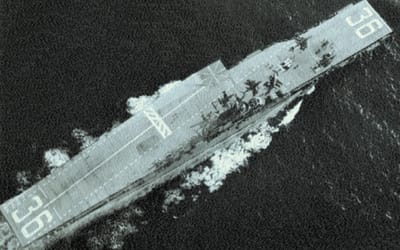
Although it is a safety manoeuvre, the go-around demands an abrupt transition — from a descent configured to land to full power, a positive climb and a new mental picture in seconds. The most common fatal error is failing to apply full power immediately, a workload challenge akin to atterraggi notturni delle portaerei.
What is continuation bias?
Continuation bias is the tendency to press on with a landing despite warning signs that the approach is unstable. The Flight Safety Foundation found that roughly 83% of approach-and-landing accidents involve a failure to go around.
How often do pilots actually go around?
Only about 3% of unstable approaches result in a go-around, meaning pilots continue to land roughly 97% of the time even when criteria aren't met. Most work out, but when they don't the consequences can be catastrophic.
Is the go-around taught to all pilots?
Yes. Every pilot learns the go-around on day one, from students earning an instrument rating to airline captains, yet it remains one of aviation's most under-practised manoeuvres because the rapid, high-workload transition is rarely drilled.

0 Commenti