
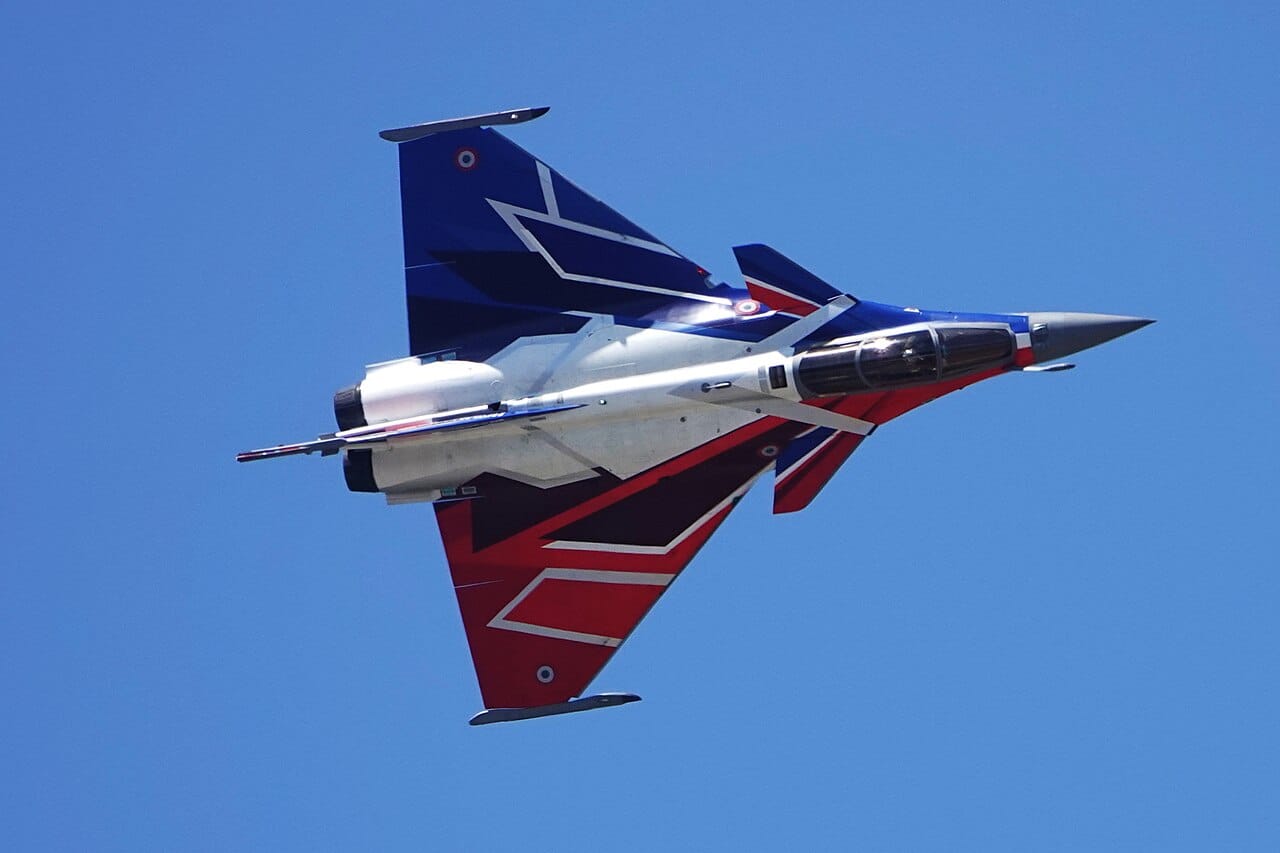
Look at the front of a Rafale, a Eurofighter Typhoon, a Gripen or a Chinese J-20 and you will see a small pair of wings mounted high on the nose, ahead of the main wing. They are called canards, and they divide the fighter world in two. Europe and China build their best fighters around them; the United States, on its stealthiest jets, refuses to fit them at all. The disagreement is not fashion. It is physics.
A canard is simply a small foreplane placed ahead of the aircraft’s centre of gravity. What it does there turns out to be surprisingly powerful — and surprisingly awkward for a stealth designer.
Informazioni rapide
| Che cos'è | Un piccolo alettone anteriore montato davanti all'ala principale e al centro di gravità |
| Principali mansioni | Controllo del beccheggio, portanza extra e energizzazione del flusso d'aria sull'ala principale |
| Amori | Tailless delta wings — Rafale, Typhoon, Gripen, Viggen, J-20 |
| Evita | Frontal-aspect stealth — the F-22, F-35 and B-21 have none |
| Commercio | Agilità e portanza contro firma radar e complessità |
| L'ultima svolta | Boeing’s F-47 reportedly brings canards back to a US fighter |
Cosa fa realmente un'autobomba?
Un caccia convenzionale porta la sua superficie di controllo orizzontale nella coda, dove il piano di coda solitamente spinge giù to keep the nose up — a small but constant penalty called trim drag. A canard sits at the other end and does the opposite: it can be made to sollevare, condividendo il carico con l'ala principale invece di contrastarlo. Su un delta, un canard genera anche un potente vortice che si propaga all'indietro sull'ala, rienergizzando il flusso d'aria e ritardando lo stallo ad angoli di incidenza molto elevati.
Un'analisi dettagliata dei motivi per cui la configurazione delta-canard divenne così popolare nei caccia europei.
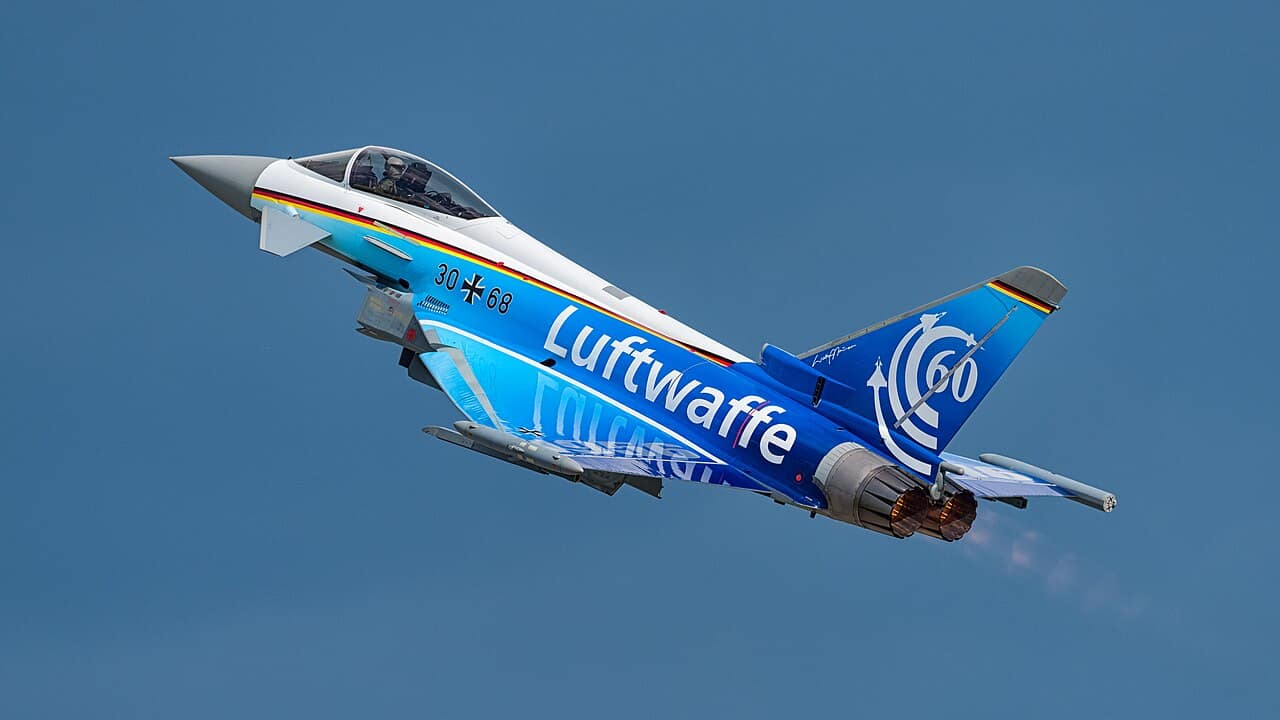
Perché il Delta ama le alette canard
The pure delta wing is a superb supersonic shape: low drag, big internal volume, structurally simple. Its weakness is low-speed handling and a tendency to bleed energy in tight turns. Bolt a canard onto the nose and many of those vices soften — the foreplane restores pitch authority, sharpens the turn, and lets the designer relax the aircraft into deliberate instability that a fly-by-wire computer then tames. It is no accident that the Viggen, Rafale, Typhoon, Gripen and J-20 are all canard deltas.
Un confronto tra le modalità di integrazione delle alette canard nei velivoli Rafale, Gripen e Typhoon.
Perché la furtività li rifiuta
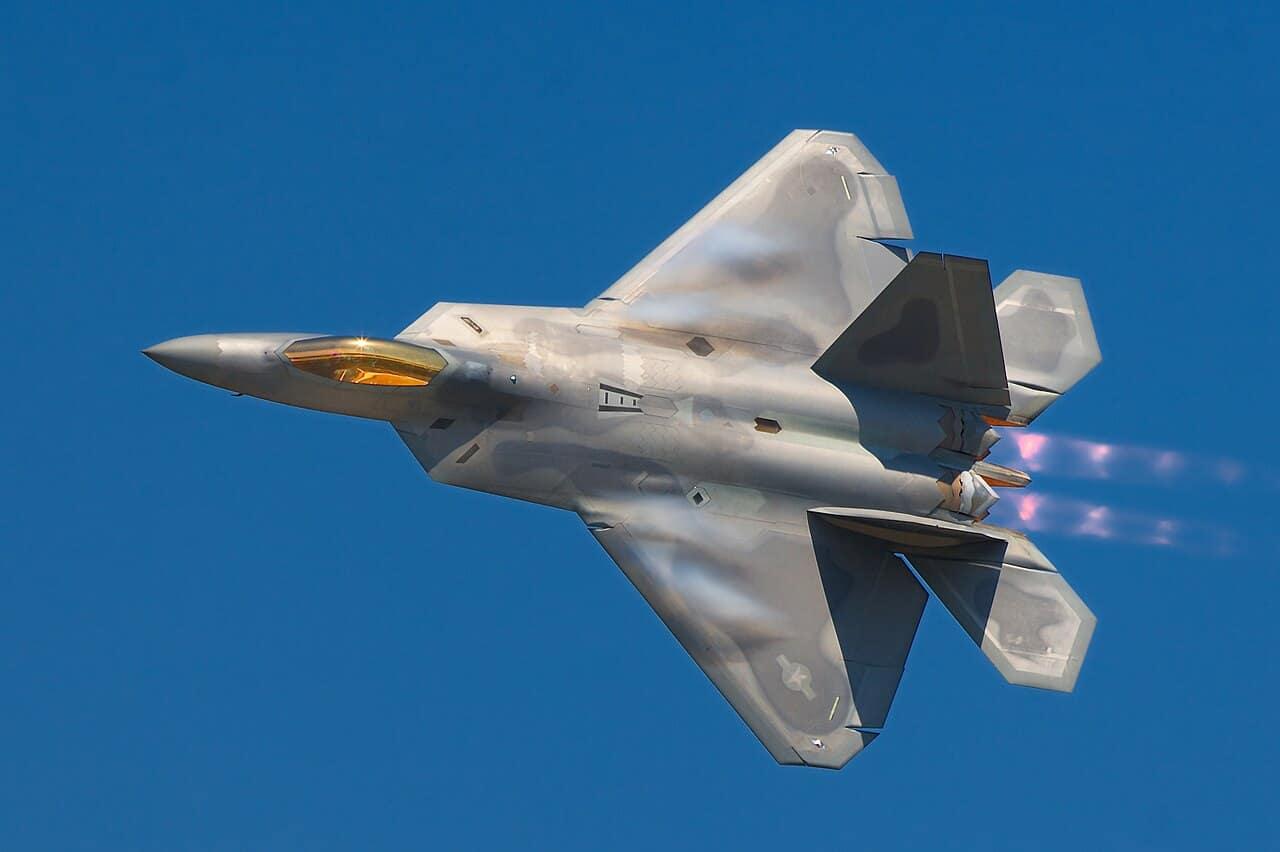
So why do the F-22, F-35 and B-21 wear none? Because a canard is, to a radar, a bright moving reflector hung right at the front of the aircraft — the very aspect a fighter most needs to hide. Extra edges, extra gaps and extra moving surfaces all add returns exactly where low observability matters most.
L'F-47 li riporta indietro
Which makes the newest twist so revealing. Boeing’s F-47, America’s next fighter, reportedly wears canards — a break from two decades of stealth orthodoxy. Read one way, it says the Air Force decided agility and range were worth a measured hit to frontal stealth; read another, it hints that radar-absorbing materials and clever shaping have advanced enough to blunt the old penalty. Either way, the little wings up front are once again telling you what an aircraft was really designed to do.
Un'analisi più approfondita del design delle alette canard e della teoria aerodinamica che ne è alla base.
Fonti: The War Zone; SlashGear; studi concettuali sui caccia della NASA.
Domande correlate
Cosa sono le alette canard su un aereo da caccia?
Le alette canard sono piccole ali anteriori – una seconda coppia di ali più piccole – montate sul muso, davanti all'ala principale e al baricentro del velivolo. Forniscono controllo di beccheggio, generano portanza aggiuntiva ed energizzano il flusso d'aria sull'ala principale. Caccia come l'Eurofighter Typhoon, il Dassault Rafale, il Saab Gripen e il cinese J-20 sono costruiti attorno a queste alette.
Qual è la funzione delle alette canard in un aereo?
Un'aletta canard posizionata davanti al baricentro conferisce un forte controllo del beccheggio, aumenta la portanza e migliora la manovrabilità in virata. Funziona particolarmente bene sulle ali a delta senza coda, ripristinando la manovrabilità a bassa velocità che manca a un'ala a delta pura. In combinazione con i comandi fly-by-wire, le alette canard consentono ai progettisti di realizzare un velivolo deliberatamente instabile – e quindi più agile – mentre il computer ne mantiene la controllabilità.
Quali aerei da caccia sono dotati di alette canard?
Tra i delta canard si annovera il Saab 37 Viggen, Tra gli aerei di questo tipo si annoverano il Dassault Rafale, l'Eurofighter Typhoon, il Saab Gripen e il cinese Chengdu J-20. I progettisti europei e cinesi hanno privilegiato questa configurazione per la sua agilità e portanza, abbinando un piccolo piano anteriore a un'ala a delta senza o quasi senza coda.
Perché i caccia stealth come l'F-22 e l'F-35 non hanno le alette canard?
Perché un canard è, per il radar, un riflettore mobile luminoso posizionato proprio nella parte anteriore dell'aereo, l'aspetto che un caccia stealth ha più bisogno di nascondere. I suoi bordi extra, le fessure e le superfici mobili aggiungono ritorni radar esattamente dove la bassa osservabilità è più importante. Ecco perché il F-22 Raptor, Gli F-35 e i B-21 non sono dotati di alette canard.
Che cos'è un delta canard?
Un'ala a delta con alette canard combina un'ala principale a delta triangolare con un'aletta canard sul muso. Il delta offre bassa resistenza aerodinamica, grande volume interno e una struttura semplice e robusta, ideale per il volo supersonico, mentre le alette canard compensano la scarsa manovrabilità a bassa velocità e la dispersione di energia nelle virate strette tipiche del delta. Il Viggen, il Rafale, il Typhoon, il Gripen e il J-20 utilizzano tutti questa configurazione.
Le alette canard sono un vantaggio o uno svantaggio per un aereo da caccia?
È un compromesso. I canard aggiungono agilità, portanza e controllo del beccheggio, motivo per cui molti caccia europei li usano, ma aggiungono anche complessità e traccia radar, rendendo più difficile la furtività frontale. J-20 È l'eccezione più notevole tra i caccia stealth: mantiene le alette canard, accettando una certa penalità in termini di tracciamento in cambio di prestazioni aerodinamiche.
Le alette canard rendono un aereo più manovrabile?
In generale sì. Aggiungendo una superficie di controllo davanti al baricentro, le alette canard offrono una risposta di beccheggio rapida e potente e consentono di ottimizzare il progetto per una stabilità rilassata, che aumenta l'agilità. Contribuiscono inoltre a ritardare il distacco del flusso d'aria sull'ala principale ad alti angoli di incidenza. Lo svantaggio è rappresentato da una maggiore complessità strutturale e aerodinamica e da una maggiore traccia radar.
0 Commenti