

Chengdu J-20
“Mighty Dragon”
China’s first operational fifth-generation stealth fighter — a big, canard-delta interceptor now reportedly built in larger numbers than any non-American stealth jet. Much of what is public about it is estimate rather than confirmed fact.
China’s leap into the stealth age
For most of the jet age China flew derivatives of Soviet designs. The Chengdu J-20 was meant to end that. Developed by the Chengdu Aircraft Corporation en de 611 Institute (Chengdu Aircraft Design Institute) under chief designer Yang Wei, it emerged from a long-running “J-XX” fifth-generation programme. A prototype numbered 2001 made its first flight on 11 January 2011 — pointedly during a Beijing visit by US Defense Secretary Robert Gates.
The aircraft that broke cover was unlike any Western stealth fighter: a long, twin-engined machine combining forward canards with a delta wing, diverterless supersonic inlets and internal weapon bays. Western analysts have argued for years about what that layout means — canards can help a big jet manoeuvre and lift, but they are usually seen as awkward for all-aspect stealth. China has released almost no hard data, so its true radar signature remains, in open sources, an estimate rather than a measured fact.
After a public debut at the 2016 Zhuhai airshow and entry into service around 2017, the J-20 moved from a handful of test airframes to serial production. It is now reportedly the most-produced fifth-generation fighter outside the United States, though exact numbers are secret and the widely quoted figures should be treated with caution. What is clear is the direction of travel: China set out to field a home-grown stealth fighter in quantity, and by the mid-2020s it plainly had one.
01The J-20’s long road: from the secretive J-XX programme to a frontline stealth fighter
China’s fifth-generation ambitions date back to the 1990s, when the PLAAF began studying a stealth fighter under the “J-XX” label. Chengdu’s proposal — sometimes referred to as Project 718 — was reportedly selected over a larger Shenyang design. The first flying prototype, “2001,” appeared at Chengdu in late 2010 and flew in January 2011, years before many Western observers expected China to fly a stealth fighter at all.
Development since has been incremental and, from the outside, opaque. Early airframes flew on interim engines; the airframe, intakes and coatings were refined across successive batches; and an upgraded J-20A and a two-seat J-20S followed. Because China publishes little and much reporting relies on spotter photos and state media, this history is best read as a reconstructed outline rather than a documented record.
What makes the J-20 special
A canard-delta stealth airframe
The J-20 pairs forward canards and a large delta wing with all-moving tail surfaces, ventral fins and diverterless supersonic inlets (DSI) that avoid radar-reflecting splitter plates. The shaping, faceting and internal bays are clearly aimed at a low frontal signature. How stealthy it really is remains disputed: China has released no radar-cross-section data, and analysts note canards are an unusual choice for all-aspect stealth. Treat any specific RCS figure as speculation.
Long-range missiles in internal bays
The J-20 carries its weapons internally to preserve stealth: a large ventral bay for PL-15 long-range radar-guided missiles and side bays for PL-10 short-range infrared missiles on extending rails. It is paired with an AESA radar (transmit/receive module counts are estimated, not confirmed), an electro-optical targeting system and infrared sensors feeding a sensor-fusion cockpit. The design intent is to see and shoot first; the real-world performance of these systems is not independently verified.
The engine question
Engines have been the programme’s long-running weak point. Early jets used Russian AL-31 derivatives; most in service now reportedly fly the Chinese WS-10C. The purpose-built WS-15 — intended to unlock genuine supercruise — has been flight-tested and is entering some airframes, but claims about its thrust and about sustained supersonic cruise come largely from Chinese sources and should be hedged accordingly.
02The J-20’s canards: clever aerodynamics or a stealth compromise?
No other operational fifth-generation fighter uses forward canards; the F-22, F-35 and Su-57 all avoid them. Canards give a large aircraft extra lift and pitch authority — useful for a jet the size of the J-20 — and Chinese engineers argue the surfaces can be aligned and managed to limit their radar return. Western analysts counter that any moving surface ahead of the wing is a potential reflector, especially from the side. Without measured signature data, both positions remain arguments rather than proof, and the canard debate has become the single most-discussed feature of the aircraft.
03The J-20’s WS-15 engine and the supercruise claim
A true fifth-generation fighter is often expected to “supercruise” — fly supersonically without afterburner. For years the J-20 could not, because its interim engines lacked the thrust. The indigenous WS-15 is meant to change that: Chinese state media report it has flown in the J-20 and quote thrust figures rivalling or exceeding the F-22’s F119. Those numbers are not independently confirmed, and how many aircraft fly the WS-15 versus the WS-10C is unclear. Until there is verified data, J-20 supercruise is best described as a stated goal that is being progressively realised, not an established fact.
Full specifications (estimates)
China has published almost no official figures for the J-20. Every number below is an open-source estimate drawn from analysts, spotters and state media, and different sources disagree. Read them as ranges, not gospel.
Airframe & Performance (est.)
- Bemanning
- 1 (2 in the J-20S)
- Lengte
- ~20.3–21.2 m (estimate)
- Spanwijdte
- ~13.0 m (estimate)
- Hoogte
- ~4.5–4.7 m (estimate)
- Max takeoff weight
- ~37,000 kg (estimate)
- Max speed
- ~Mach 2.0 (estimate)
- Supercruise
- Claimed with WS-15 — unverified
- Serviceplafond
- ~20,000 m (estimate)
- Gevechtsradius
- ~1,100–2,000 km (estimate)
Propulsion & Systems (est.)
- Engines
- 2 × WS-10C; WS-15 emerging
- Radar
- AESA (module count estimated)
- Long-range AAM
- PL-15 (internal main bay)
- Short-range AAM
- PL-10 (side bays)
- Sensors
- EO targeting & IRST, sensor fusion
- First flight
- 11 January 2011
- In service
- ~2017
- Unit cost
- No reliable public figure
- Cost per flight hour
- Not publicly known
04The J-20’s cost: why no trustworthy price exists
The J-20 is a Chinese state programme and is not exported, so there is no market price and no published procurement figure. Estimates you may see — often around $100–120 million per aircraft — are Western guesses extrapolated from other stealth fighters and Chinese economics, not official data. Likewise, no credible cost-per-flight-hour number exists in open sources. Any precise dollar figure attached to a J-20 should be read as an estimate, not a fact.
From secret programme to mass production
The J-XX programme
China begins studying a fifth-generation stealth fighter. Chengdu’s design, under chief designer Yang Wei, is eventually selected.
First flight
Prototype “2001” flies at Chengdu on 11 January — during a Beijing visit by US Defense Secretary Robert Gates.
Public debut
Two J-20s make a brief flypast at the Zhuhai airshow — the type’s first public appearance.
Enters service
The PLAAF announces the J-20 has entered service; a first combat unit forms over the following year.
Serial production
Output ramps up as interim engines give way to the Chinese WS-10C, and the type spreads across PLAAF brigades.
WS-15 flies
The indigenous WS-15 engine is reported to fly in a J-20 — the powerplant intended to enable true supercruise.
The two-seat J-20S
A twin-seat variant is revealed, reportedly aimed at commanding drones and handling electronic-warfare and sensor tasks.
The most-built non-US stealth jet
By open-source estimates the J-20 becomes the most-produced fifth-generation fighter outside the United States — exact numbers remain secret.
Twelve things to know about the J-20
The programme that surprised the West
The J-20’s 2011 first flight came years earlier than many analysts expected.
Read the full story
Yang Wei’s dragon
The J-20 is associated with chief designer Yang Wei and the Chengdu 611 Institute.
Read the full story
A layout no rival copied
The J-20 is the only operational fifth-gen fighter with forward canards.
Read the full story
How stealthy is it, really?
The J-20’s radar signature is, in open sources, an estimate — not a measured value.
Read the full story
PL-15 and the reach question
The J-20’s internal PL-15 missiles are central to its intended way of fighting.
Read the full story
The long search for the right powerplant
The J-20’s biggest weakness has been finding a suitable engine.
Read the full story
A goal, not yet a proven fact
Supercruise — sustained supersonic flight without afterburner — is claimed but unconfirmed.
Read the full story
J-20, J-20A and J-20S
The design has evolved through an upgraded single-seater and a two-seat version.
Read the full story
A stealth fighter with a back-seater
The two-seat J-20S is reportedly designed to command drones and manage complex missions.
Read the full story
The most-built non-US stealth fighter
By open-source estimates the J-20 is produced in larger numbers than any stealth jet outside America.
Read the full story
Untested in battle
The J-20 has never been used in combat.
Read the full story
Guarding China’s periphery
J-20s are deployed with front-line PLAAF units across China’s theatre commands.
Read the full story
The Mighty Dragon in pictures
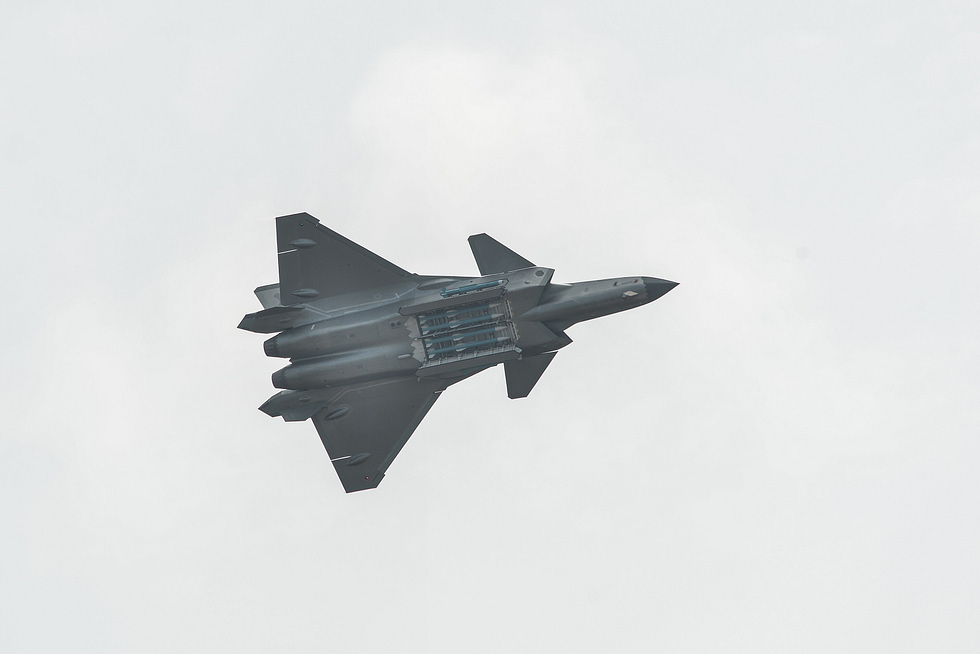
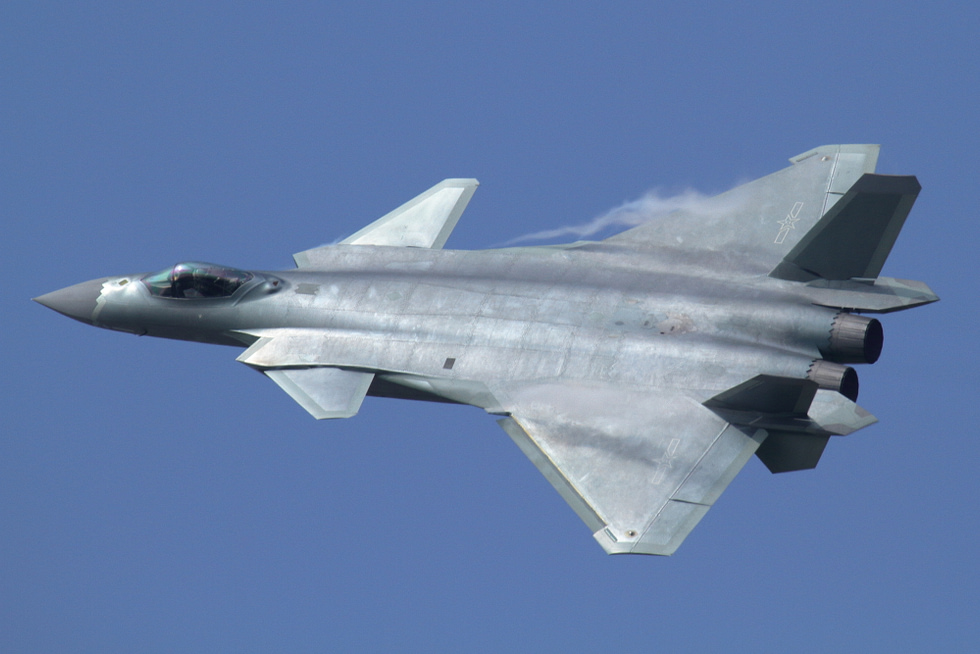
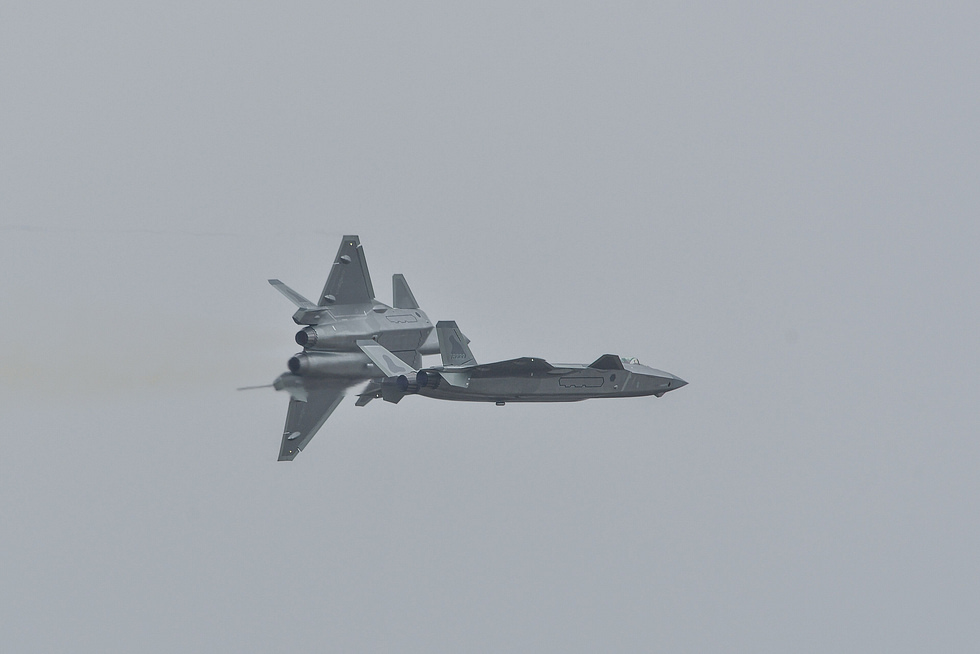
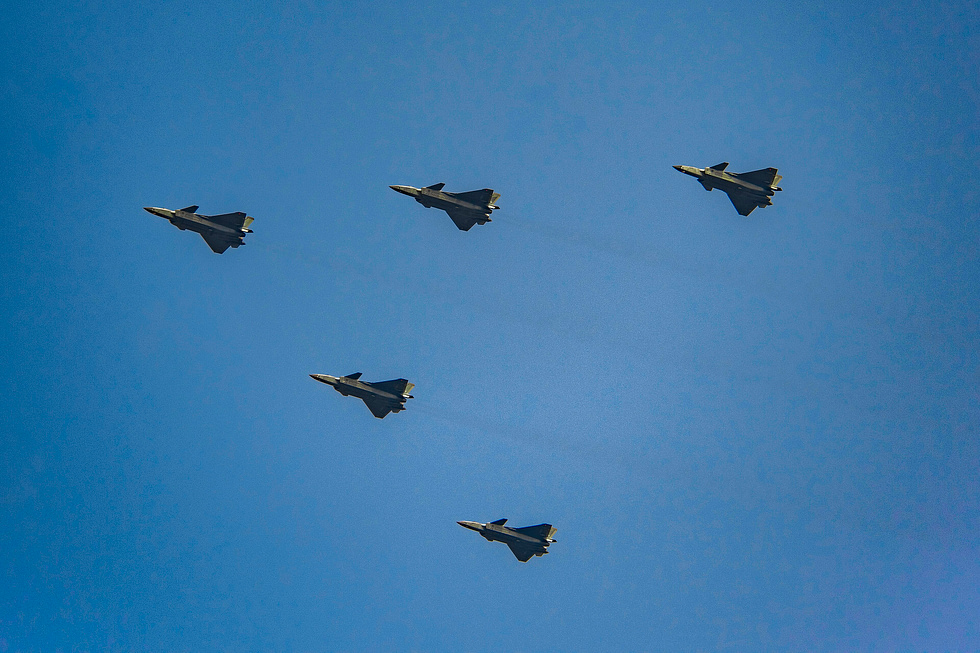
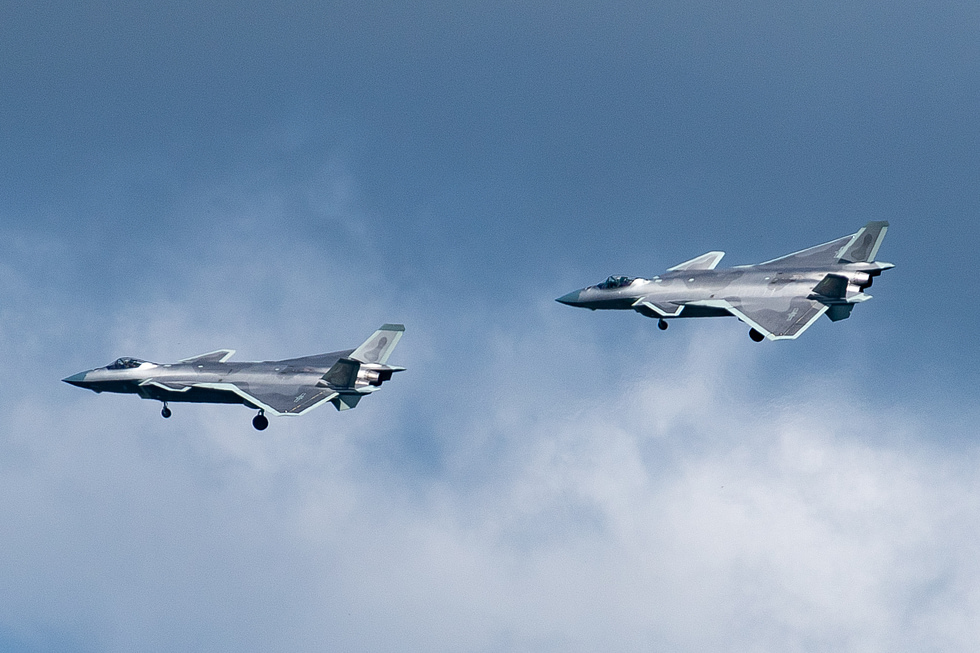
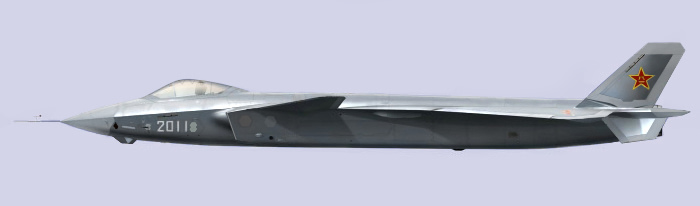
The J-20 in motion
A hand-picked J-20 video is coming soon. In the meantime, browse the photo gallery above and the twelve stories for a fuller picture of China’s Mighty Dragon.
The Chengdu J-20 in motion
Megaprojects — one of the most-watched Chengdu J-20 films on YouTube.
Where the J-20 flies
A stealth fighter yet to fire a shot
The J-20 has no combat record. It has never been used in war, and every assessment of how it would perform rests on exercises, analysis and inference rather than real fighting. It has reportedly taken part in patrols and regional encounters over the East and South China Seas and near Taiwan, but these have not involved combat. Its reputation is built on numbers produced and capabilities claimed — not on results in the air.
Compare the combat record of every military aircraft. Figures as of July 2026.
Everything people ask about the J-20
Can I fly in a J-20?
Is the J-20 a real fifth-generation stealth fighter?
How fast is the J-20?
Why does the J-20 have canards?
Has the J-20 ever been in combat?
How many J-20s has China built?
Does any country besides China operate the J-20?
What engines does the J-20 use?
You can’t fly the J-20.
These, you can.
Some legends only live in museums — others are fuelled and waiting. MiGFlug has put civilians in real military jet cockpits since 2004.
 Fly the L-39 AlbatrosThe world’s most-flown jet trainer — aerobatics included
 Fly the F-104 Starfighter“The missile with a man in it”
 Fly the MiG-21The Cold War’s most-produced jet
 Vlieg met de T-33 Shooting StarAmerica’s first jet trainer
 Fly the DH VampireA piece of early jet history
 Fly the S.211Agile Italian jet trainer
 Fly the MB-326The classic Aermacchi jet
 Fly the MiG-15The Soviet legend of the Korean War
Continue the tour
Every fact, checked
Note: much J-20 data is secret. The sources below are used for context and open-source estimates; specification and production figures on this page are explicitly marked as estimates.
- JanesOpen-source intelligence on the J-20 fleet, variants and production growth.
- GlobalSecurity.orgProgramme history, design analysis and the J-20S two-seat variant.
- The National InterestAnalysis of the J-20’s capabilities, engines and the two-seat J-20S.
- 19FortyFiveProduction numbers, engine development and comparisons with the F-22 and F-35.
- Military Watch MagazineReporting on J-20 brigade deployments and fleet growth (figures are estimates).
- Defence Security AsiaWS-15 engine reporting and Indo-Pacific deployment context.
- RUSIProjections of Chinese stealth-fighter fleet size to 2030 (projections, not facts).
- National Museum of the US Air ForceReference context on fifth-generation fighter design.