
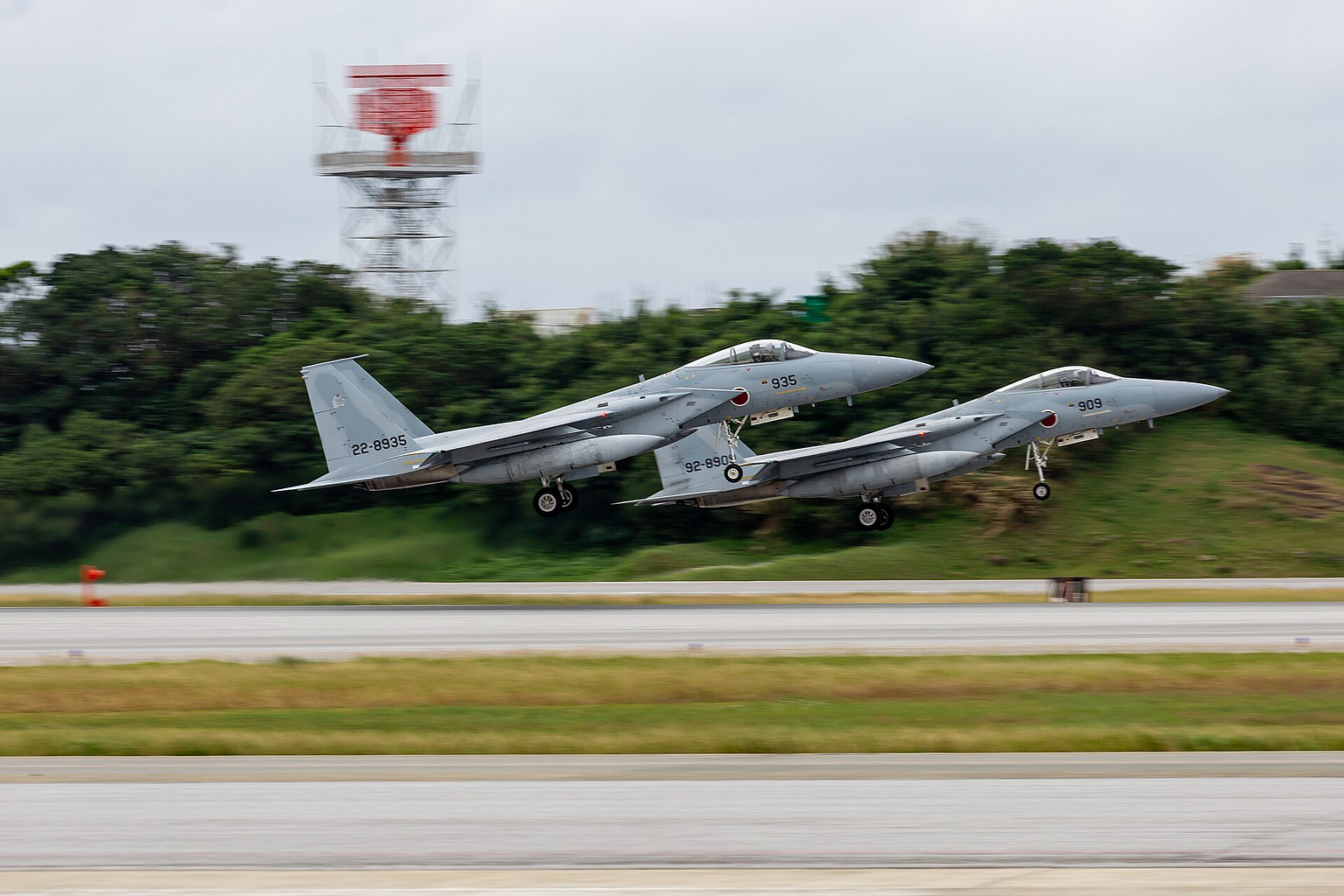
Mitsubishi F-1
Japan’s first home-grown post-war fighter
Developed from the Mitsubishi T-2 — Japan’s first supersonic aircraft — the F-1 became the country’s first domestically designed jet fighter since 1945: a Jaguar-like strike aircraft built to defend Japan’s coasts with the home-grown ASM-1 anti-ship missile.
A trainer that grew fangs
After 1945, Japan was barred from building military aircraft during the Allied occupation, and its aviation industry was dismantled. When the Japan Air Self-Defense Force (JASDF) stood up in 1954, it flew licensed American types — the F-86 Sabre, and later the F-104J Starfighter and F-4EJ Phantom II. But Japanese industry wanted to design combat aircraft again, and in the mid-1960s the government launched the T-X programme for a home-grown supersonic trainer to prepare pilots for those fast jets.
Mitsubishi Heavy Industries won the contract, and on 20 July 1971 the resulting T-2 made its first flight — the first domestically designed Japanese aircraft to exceed the speed of sound. Twin-engined, sharply swept and powered by license-built Rolls-Royce Turboméca Adour turbofans, the T-2 bore a strong external resemblance to the Anglo-French SEPECAT Jaguar, which shared the same engine and era. The two aircraft were designed independently, but the family likeness is unmistakable.
Almost from the start, planners saw that the T-2’s airframe could carry weapons. When a separate Kawasaki project was cancelled, funding freed up for a single-seat close-support derivative. The prototype — designated FS-T2-Kai — first flew on 3 June 1975, and the type entered JASDF service in April 1978 as the Mitsubishi F-1: Japan’s first domestically developed fighter since the Second World War.
The F-1 was built for a specific job. Its primary mission was anti-ship strike and close air support in defence of the Japanese home islands, and its signature weapon was the indigenous Mitsubishi ASM-1 (Type 80) anti-ship missile. Facing the Soviet Pacific Fleet across the northern seas, Japan needed an aircraft that could help repel an amphibious invasion by sinking ships offshore — and the F-1, with two ASM-1s, a 20 mm cannon and short-range air-to-air missiles for self-defence, was its answer.
It was never a world-beater. Range and payload were modest, the radar was limited, and only 77 were built by Mitsubishi and Fuji Heavy Industries before production ended in 1987. The F-1 served only with the JASDF and was never exported. Yet its real significance was industrial: it proved Japan could design and field a supersonic combat aircraft on its own, a stepping stone that led directly to the F-2 that replaced it. The last F-1s were withdrawn in March 2006.
01The Mitsubishi F-1’s origins: how a jet trainer became Japan’s first post-war fighter
The F-1 began life as the T-2, a supersonic trainer built to the JASDF’s T-X requirement of the mid-1960s. Once the T-2 was flying, Mitsubishi proposed a single-seat close-support variant using the same airframe with the rear cockpit faired over and replaced by avionics and fuel. The special-support-fighter prototype, the FS-T2-Kai, flew on 3 June 1975 and was evaluated at Gifu. Because it reused a proven, already-tooled airframe, the F-1 could be fielded quickly and relatively cheaply — entering service in April 1978. It is commonly described as Japan’s first indigenous post-war fighter, though it is more accurately a home-grown attack derivative of a home-grown trainer.
What makes it special
Built from the T-2 trainer
The F-1 shares the airframe of the Mitsubishi T-2 supersonic trainer — a swept-wing, twin-engined design with a high-set tailplane. The single-seat F-1 faired over the T-2’s rear cockpit to make room for avionics and an internal fuel tank. Reusing a proven, already-tooled airframe let Japan field a domestic fighter far faster and cheaper than a clean-sheet design would have allowed.
Adour engines, built under licence
Power came from two Ishikawajima-Harima TF40-IHI-801A afterburning turbofans — license-built versions of the Rolls-Royce Turboméca Adour that also powers the SEPECAT Jaguar and the Hawk. Each produced roughly 32 kN (about 7,300 lbf) in reheat. The Adour gave the F-1 supersonic dash without afterburner-hungry fuel penalties, but total thrust was modest, capping speed at around Mach 1.6.
The ASM-1 anti-ship mission
The F-1’s reason for being was coastal defence. Its signature weapon, the indigenous Mitsubishi ASM-1 (Type 80) anti-ship missile, gave it a stand-off punch against warships — inertial mid-course guidance and active-radar terminal homing out to roughly 50 km. Carrying two ASM-1s, the F-1 was tasked with helping to break up an amphibious assault on the Japanese home islands.
02The Mitsubishi F-1 and the SEPECAT Jaguar: two Adour-powered lookalikes
Observers often note how much the F-1 resembles the Anglo-French SEPECAT Jaguar: both are compact, twin-engined, shoulder-winged strike fighters of the same generation, and both are powered by the Rolls-Royce Turboméca Adour. The similarity is real but largely convergent — the two were designed independently to meet broadly similar requirements with the same engine, which tends to drive similar proportions. The F-1 traces its shape to the T-2 trainer rather than to any Jaguar blueprint, and the aircraft differ in detail, but the family likeness has made the comparison a fixture of the F-1’s story.
03The Mitsubishi F-1’s ASM-1: Japan’s home-grown anti-ship missile
De ASM-1, or Type 80 air-to-ship missile, was developed by Mitsubishi and entered service with the JASDF around 1980. Roughly comparable in concept to the American Harpoon or French Exocet, it uses inertial guidance for the cruise phase and active radar homing for terminal attack, with a range commonly cited at about 50 km and a warhead of around 150 kg. Pairing the F-1 with the ASM-1 gave Japan a wholly domestic air-launched anti-ship capability — a deliberate hedge against reliance on imported weapons, and the core of the F-1’s coastal-defence role. Later ground- and ship-launched members of the same family remain in Japanese service.
Full specifications
Airframe & Performance
- Bemanning
- 1 (T-2 trainer variant seats 2)
- Lengte
- ~17.9 m (58.6 ft)
- Spanwijdte
- ~7.9 m (25.9 ft)
- Hoogte
- ~4.5 m (14.7 ft)
- Leeggewicht
- ~6,360 kg
- Max takeoff weight
- ~13,700 kg (30,200 lb)
- Max speed
- ~Mach 1.6 (~1,700 km/h) at altitude
- Serviceplafond
- ~15,240 m (50,000 ft)
- First flight
- 3 June 1975 (FS-T2-Kai prototype)
- Built
- 77 (1977–1987)
Propulsion & Armament
- Engines
- 2 × IHI TF40-IHI-801A turbofan
- Engine origin
- Licensed Rolls-Royce Turboméca Adour
- Thrust (each)
- ~32 kN (~7,300 lbf) with afterburner
- Cannon
- 1 × 20 mm JM61 Vulcan
- Anti-ship
- Up to 2 × ASM-1 (Type 80)
- Air-to-air
- AIM-9 / AAM-1 short-range (self-defence)
- Operator
- Japan Air Self-Defense Force only
- Unit cost
- No reliable public figure (not exported)
- Cost per flight hour
- No reliable public figure
04The Mitsubishi F-1’s operating costs: why no reliable price exists
The F-1 was a domestic Japanese product built only for the JASDF and never offered for export, so no open-market flyaway price or published cost-per-flight-hour figure exists in the public record. Any dollar or yen figure attached to it should be treated as an estimate. What can be said is that the F-1 was deliberately designed to be affordable: by reusing the already-developed T-2 airframe and a license-built engine, Japan avoided the cost of a clean-sheet fighter programme. Its economy was in its engineering approach rather than in any documented price tag.
From licensed jets to a home-grown fighter
JASDF stands up
Japan’s post-war air arm forms, flying licensed American jets while its aviation industry rebuilds.
T-X to Mitsubishi
The government selects Mitsubishi to build a domestic supersonic trainer under the T-X programme.
The T-2 flies
On 20 July the T-2 becomes the first domestically designed Japanese aircraft to break the sound barrier.
FS-T2-Kai prototype
The single-seat close-support prototype — the future F-1 — first flies on 3 June.
F-1 enters service
In April the JASDF fields the Mitsubishi F-1: Japan’s first indigenous post-war fighter.
ASM-1 in service
The indigenous Type 80 anti-ship missile enters service, giving the F-1 its signature stand-off weapon.
Production ends
The 77th and final F-1 is delivered by Mitsubishi and Fuji Heavy Industries.
Retired for the F-2
The F-16-derived Mitsubishi F-2 replaces the F-1, which flies its last frontline missions in March 2006.
Twelve stories of Japan’s F-1
Banned from building fighters
After 1945 Japan’s aircraft industry was dismantled; the F-1 marked its return to fighter design.
Read the full story
The trainer that had to be supersonic
Japan needed a home-grown jet to train pilots for the F-104 and F-4 — and chose to build it itself.
Read the full story
The supersonic first
On 20 July 1971 the T-2 became the first Japanese-designed aircraft to break the sound barrier.
Read the full story
The Japanese Jaguar?
The F-1 looks strikingly like the SEPECAT Jaguar — a convergence, not a copy.
Read the full story
Turning a trainer into a fighter
The single-seat FS-T2-Kai reworked the trainer into a close-support strike aircraft.
Read the full story
Japan’s first post-war fighter
In April 1978 the F-1 entered service — the country’s first indigenous fighter since 1945.
Read the full story
A missile to break an invasion fleet
The home-grown ASM-1 gave the F-1 a stand-off punch against warships.
Read the full story
Guarding Japan’s coasts
The F-1 existed to help repel an amphibious assault on the home islands.
Read the full story
Cannon, missiles and bombs
Beyond the ASM-1, the F-1 carried a 20 mm cannon, air-to-air missiles and conventional stores.
Read the full story
Adour power, made in Japan
Two license-built Adour turbofans gave the F-1 supersonic dash on modest thrust.
Read the full story
Where the F-1 flew
F-1 squadrons were based in northern and southern Japan, guarding the approaches to the home islands.
Read the full story
From F-1 to F-2
The F-1’s retirement in 2006 handed its mission to the larger, F-16-based F-2.
Read the full story
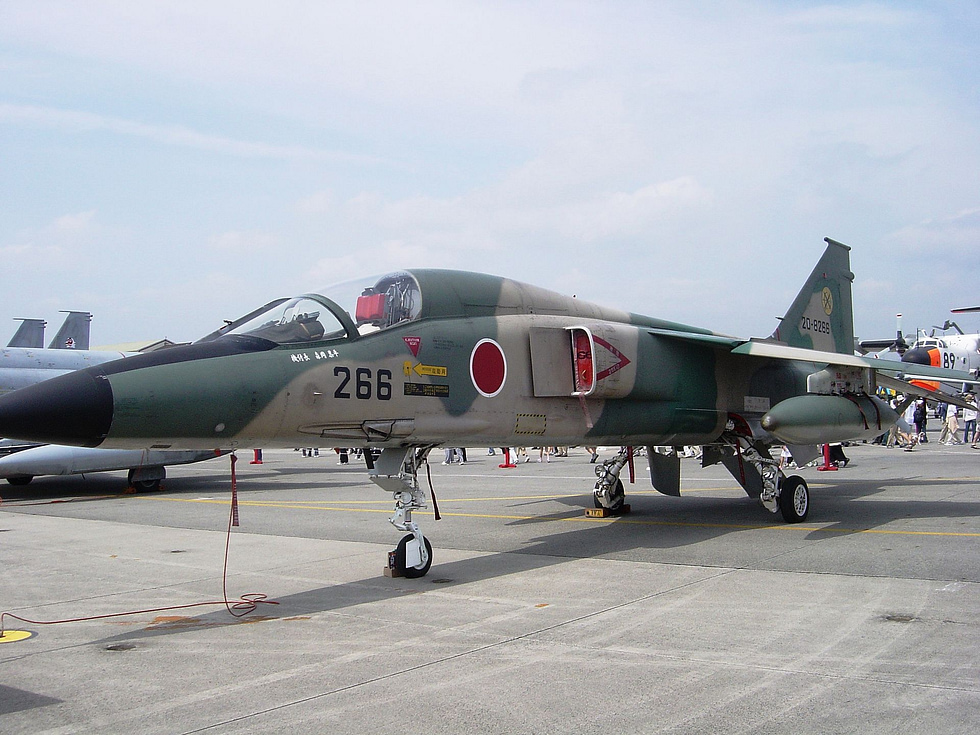
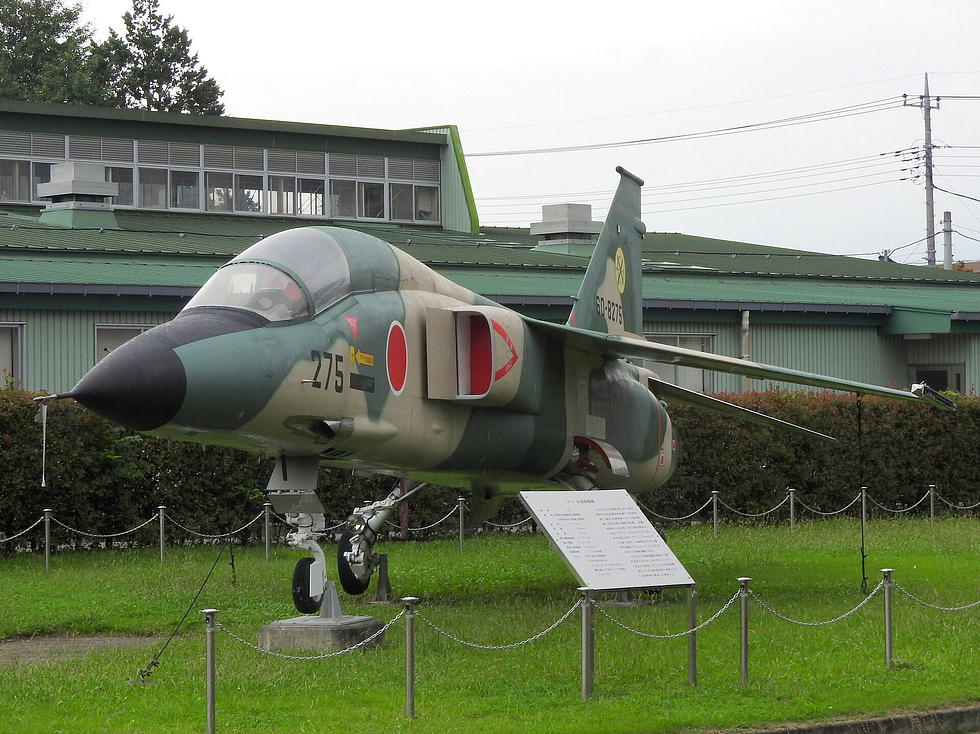
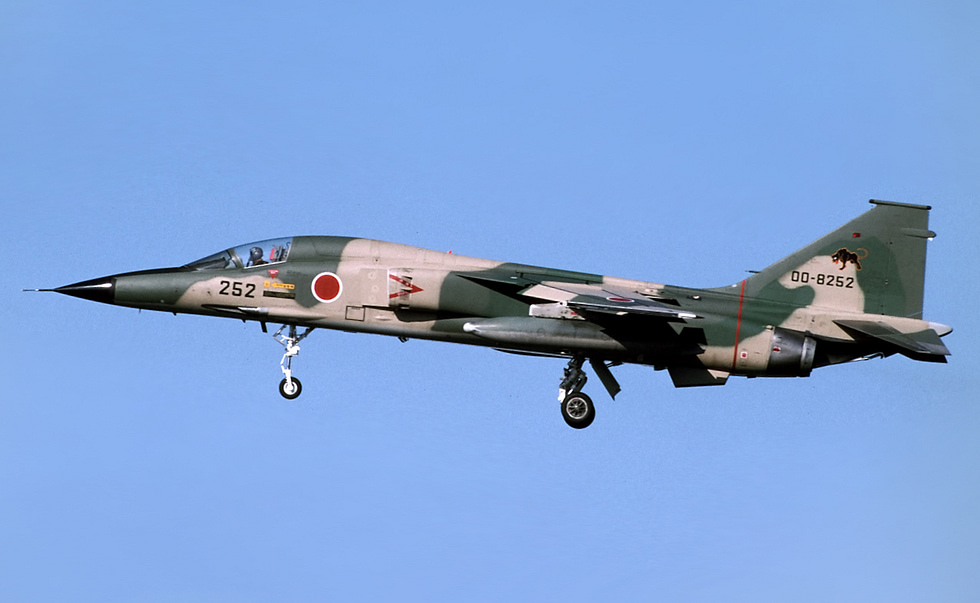
The F-1 in pictures
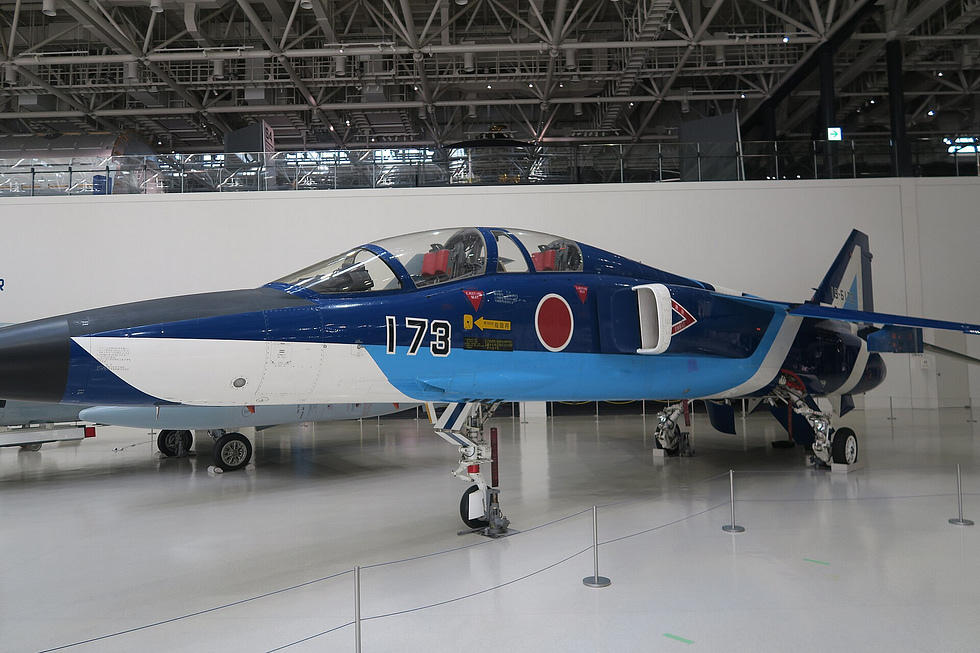
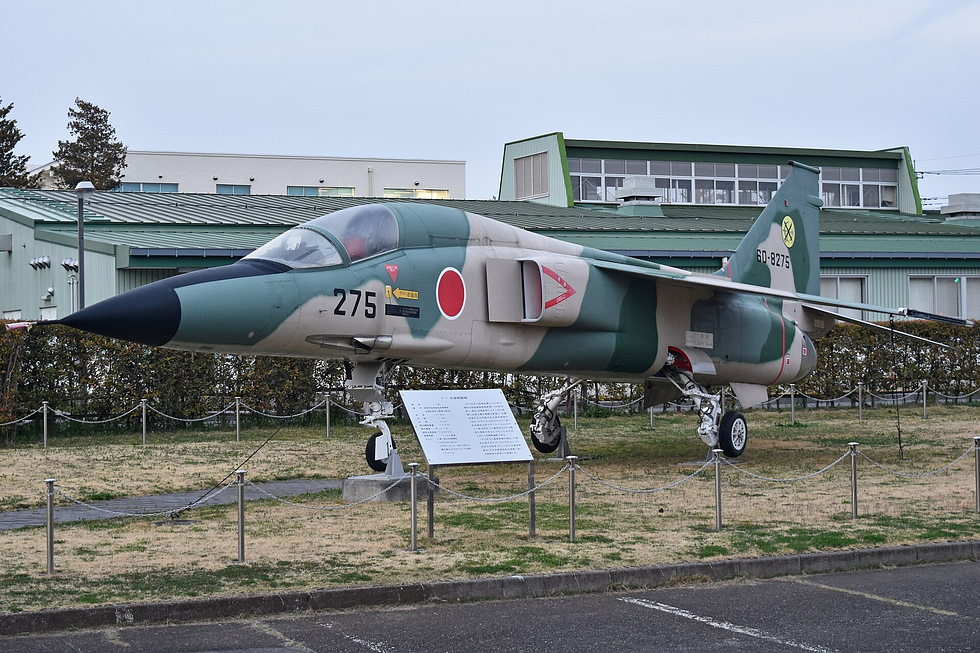
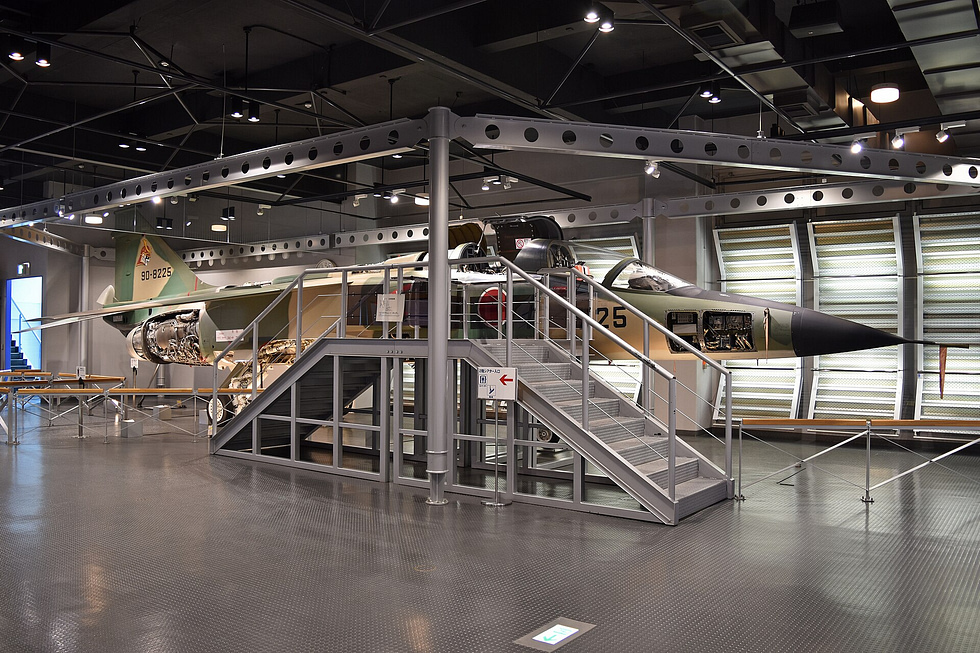
The F-1 in motion
A verified, high-authority video feature on the Mitsubishi F-1 is coming soon. We only embed footage from established, reputable channels — and we would rather leave this space empty than fill it with a low-quality clip. Check back for a documentary-grade feature on Japan’s first home-grown fighter.
Where the F-1 flew
The record that defines it
The F-1 never fired a shot in anger. Japan’s post-war constitution restricts its forces to self-defence, and the F-1 spent its entire career training for a war that never came — practising anti-ship strikes and coastal defence against a hypothetical amphibious invasion. Its record is one of deterrence and industrial achievement rather than combat.
Compare the combat record of every military aircraft. Figures as of July 2026.
Everything people ask about the Mitsubishi F-1
Can I fly in a Mitsubishi F-1?
What was the Mitsubishi F-1?
Was the F-1 based on the T-2 trainer?
Why does the F-1 look like the SEPECAT Jaguar?
What is the ASM-1, and what weapons did the F-1 carry?
How fast was the Mitsubishi F-1?
When was the F-1 retired, and what replaced it?
Was the Mitsubishi F-1 exported?
You can’t fly the F-1.
These, you can.
Some legends only live in museums — others are fuelled and waiting. MiGFlug has put civilians in real military jet cockpits since 2004.
 Fly the L-39 AlbatrosThe world’s most-flown jet trainer — aerobatics included
 Fly the F-104 Starfighter“The missile with a man in it”
 Fly the MiG-21The Cold War’s most-produced jet
 Vlieg met de T-33 Shooting StarAmerica’s first jet trainer
 Fly the DH VampireA piece of early jet history
 Fly the S.211Agile Italian jet trainer
 Fly the MB-326The classic Aermacchi jet
 Fly the MiG-15The Soviet legend of the Korean War
Continue the tour
Every fact, checked
- Military Factory — Mitsubishi F-1Development from the T-2, service dates, dimensions, engines and armament.
- Vintage Aviation News — First flight of the Mitsubishi T-2The T-2 as Japan’s first domestically designed supersonic aircraft, and the F-1 lineage.
- AeroCorner — Mitsubishi F-1Technical data, production totals and operator history.
- Global Military — ASM-1 (Type 80)Range, guidance, warhead and the F-1’s anti-ship coastal-defence role.
- The Aviation Geek ClubBackground on the T-2/F-1 programme and JASDF service.
- 19FortyFiveAnalysis of Japan’s post-war fighter development and the F-1’s place in it.
- The National InterestContext on the F-1, the F-2 successor and Japanese anti-ship doctrine.
- Japan Air Self-Defense Force (JASDF)Official operator of the F-1 throughout its 1978–2006 career.