
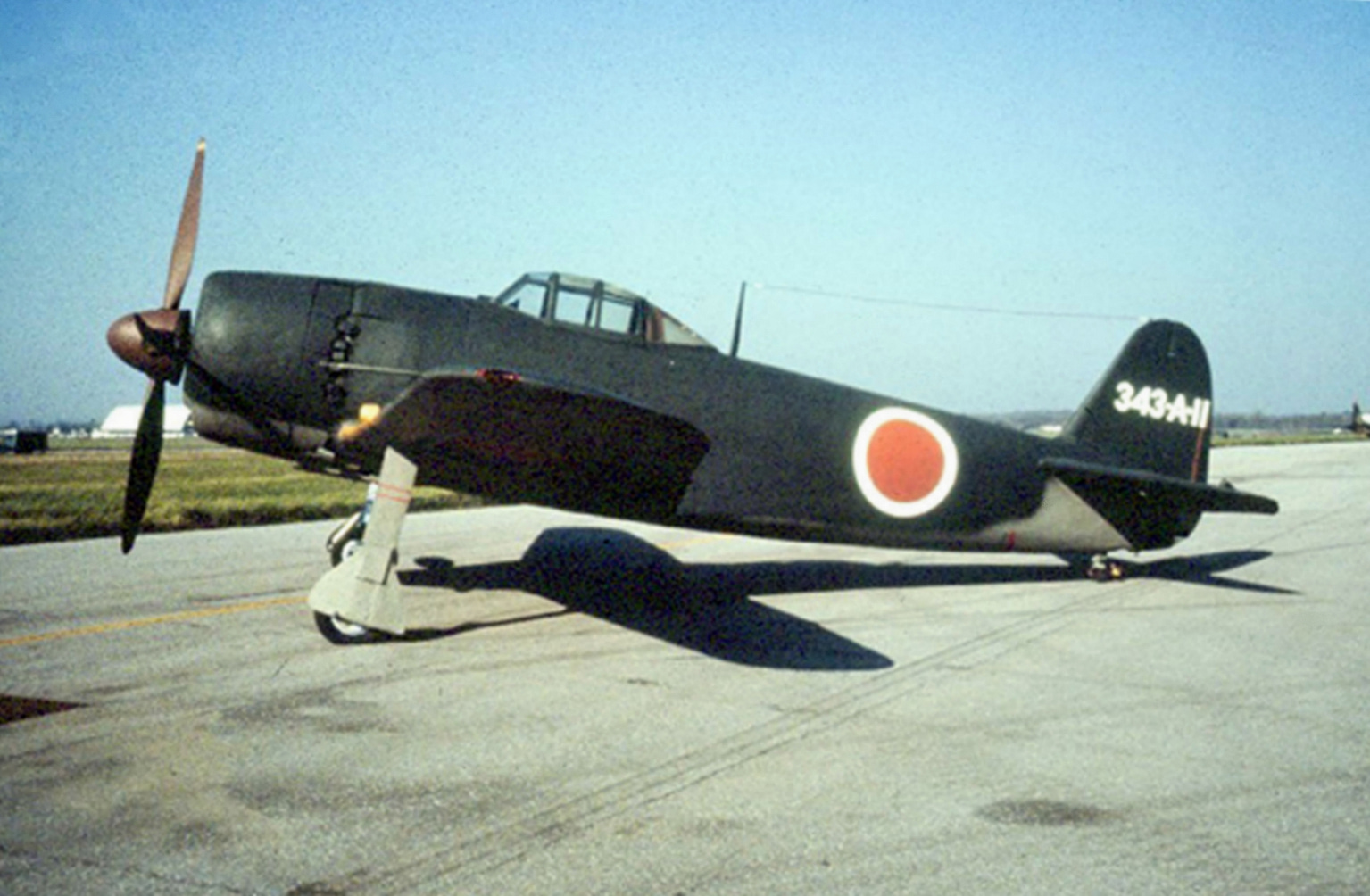
Kawanishi N1K Shiden-Kai
“George”
Grown from a floatplane fighter into the best land-based fighter the Imperial Japanese Navy ever fielded — heavily armed, fitted with automatic combat flaps, and one of the few late-war Japanese types that could meet the Hellcat, Corsair and Mustang on even terms.
The floatplane that became Japan’s finest Navy fighter
Most great fighters begin as fighters. The Kawanishi Shiden began as a seaplane. In 1940–41 Kawanishi built the N1K1 Kyofu (“Mighty Wind,” Allied code name “Rex”), a single-seat float-equipped fighter meant to defend island anchorages that had no runways. As those plans faded, Kawanishi’s engineers proposed the reverse of the usual path — strip off the floats, add wheels, and turn the floatplane into a land fighter. The result, first flown as a landplane on 27 December 1942, became the N1K1-J Shiden (“Violet Lightning”).
That unusual parentage gave the aircraft both its strength and its worst flaw. The Kyofu had a mid-mounted wing — sensible over water — and keeping it on the landplane, together with a large propeller, forced extraordinarily long main undercarriage legs to give the blades ground clearance. Kawanishi made them telescopic so they contracted as they folded, a complex, fragile mechanism that caused persistent landing accidents. The fix was a near-complete redesign: the N1K2-J Shiden-Kai (“modified Violet Lightning”), first flown on 31 December 1943, moved the wing to the bottom of a lengthened fuselage, allowing short, conventional gear and using far fewer parts.
Power came from the Nakajima Homare radial, nominally near 2,000 hp — the Smithsonian sums it up as “powerful but temperamental,” and wartime fuel and manufacturing meant many engines never made rated power. Yet when the Homare ran, the Shiden-Kai was formidable: four 20 mm cannon, strong high-altitude performance, and an automatic mercury-switch combat flap that tightened its turn without pilot input. In the hands of the elite 343rd Kokutai — “Genda’s Blade” — it became one of the very few Japanese fighters that could meet the F6F Hellcat, F4U Corsair and P-51 Mustang on roughly even terms. Only about 1,435 of all Shiden types were built; it arrived good, but far too scarce to change the war.
01Why the N1K Shiden was derived from a floatplane — and what it cost the design
Deriving a first-line fighter from a floatplane was genuinely rare. The N1K1 Kyofu float fighter was built to operate from sheltered water where the Navy expected to seize islands without airfields; when that doctrine faded, Kawanishi pitched the landplane conversion as a private venture in late 1941, and the Navy formally backed it in 1943. The seaplane heritage carried over the mid-wing layout and a robust, heavy structure — good for soaking up damage, bad for the landing gear. The long, telescoping legs needed to clear a big propeller under a mid-set wing were the Shiden’s Achilles heel, and curing them was the single biggest reason for the Shiden-Kai redesign.
What makes the Shiden-Kai special
From floatplane to fighter — and the landing-gear fix
The N1K1-J Shiden inherited the Kyofu float fighter’s mid-wing layout, forcing long, complex telescoping landing gear that failed often. The N1K2-J Shiden-Kai solved it by dropping the wing to the bottom of a lengthened fuselage — short, conventional gear, a redesigned tail, and a simplified structure with far fewer parts that was also easier to build.
Automatic combat flaps and a four-cannon punch
A mercury (acceleration) switch automatically lowered the flaps under hard manoeuvring to add lift and tighten the turn, then raised them as the G-load eased — the Smithsonian notes no other WWII fighter carried the feature. Combined with four wing-mounted 20 mm Type 99 cannon, it gave the George both agility and concentrated hitting power against fighters and bombers alike.
A match for the Hellcat, Corsair and Mustang — when serviceable
With heavy firepower, good high-altitude performance and the combat flaps, the Shiden-Kai is widely rated as one of the only Japanese fighters that could fight the F6F, F4U and P-51 on roughly even terms. That parity was real but conditional: it depended on well-trained pilots and on the temperamental Homare actually delivering its power — which it too often did not.
02The Shiden-Kai’s Nakajima Homare engine: a great fighter held back by its powerplant
The Nakajima Homare 21 was an 18-cylinder radial rated at roughly 1,990–2,000 hp — on paper, exactly the muscle a modern fighter needed. In practice, low-octane wartime fuel, material shortages and rushed manufacturing meant a great many Homare engines never reached rated output and broke down frequently. The Smithsonian’s own description is blunt: “powerful but temperamental.” Much of the gap between the Shiden-Kai’s potential and its record traces directly to that engine, compounded by B-29 raids on the factories that supplied it.
03343 Kokutai and the Shiden-Kai: how “Genda’s Blade” gathered Japan’s last aces
In late December 1944 Captain Minoru Genda — a planner of the Pearl Harbor attack — reformed the 343rd Naval Air Group, nicknamed “Tsurugi” (Sword) and remembered as “Genda’s Blade” or the “Squadron of Aces.” He deliberately concentrated veteran aviators around the new Shiden-Kai to create a unit that could still contest the skies over the home islands in 1945. Based first at Matsuyama on Shikoku, it became the most famous Japanese fighter group of the final year of the war — proof of what the George could do in expert hands, even as the wider force disintegrated.
Full Shiden-Kai specifications
Airframe & Performance (N1K2-J)
- Bemanning
- 1
- Lengte
- ~9.35 m
- Spanwijdte
- ~11.99 m
- Hoogte
- ~3.96 m
- Max takeoff weight
- ~4,860 kg
- Max speed
- ~595 km/h (~369 mph) at ~5,600 m
- Serviceplafond
- ~10,760 m
- Bereik
- ~1,715 km (normal)
- First flight (Shiden)
- 27 December 1942
- First flight (Shiden-Kai)
- 31 December 1943
Propulsion, Armament & Cost
- Motor
- 1 × Nakajima Homare 21 radial
- Power
- ~1,990–2,000 hp
- Bewapening
- 4 × 20 mm Type 99 cannon
- Bombs
- Up to 2 × 250 kg (N1K2-Ja)
- Operator
- Imperial Japanese Navy only
- Built
- ~1,435 total (~1,000 Shiden + ~400 Shiden-Kai)
- Unit cost
- No reliable public figure
- Cost per flight hour
- No meaningful figure exists
04The Shiden-Kai’s cost: why no reliable price exists
The Shiden was a wartime Japanese state product, built under a command economy and never sold on an open market, so there is no meaningful flyaway unit price or cost-per-flight-hour figure in the public record. What the sources do make clear is the real cost that mattered: the type was expensive in industrial terms to build well, and the chronic unreliability of its Homare engine, plus material shortages and Allied bombing of the factories, kept production and serviceability far below what Japan needed. Any precise dollar figure attached to a Shiden-Kai should be treated as invented rather than sourced.
From float fighter to museum survivor
The Kyofu floatplane
Kawanishi develops the N1K1 Kyofu (“Rex”) float fighter; its prototype flies on 6 May 1942, seeding the land-fighter idea.
Shiden first flight
The N1K1-J Shiden landplane prototype flies on 27 December 1942 — fast and heavily armed, but plagued by its long telescoping landing gear.
Into service, and a redesign
The N1K1-J enters Navy service; on 31 December 1943 the low-wing N1K2-J Shiden-Kai flies, curing the gear problem and simplifying production.
Genda’s Blade forms
Captain Minoru Genda reforms the 343rd Kokutai, concentrating veteran aces around the new Shiden-Kai for home defence.
The Kure air battle
343 Kokutai’s Shiden-Kai fight US carrier aircraft over the Kure / Bungo Strait area in the unit’s first major action — both sides take real losses.
Too few, too late
Engine unreliability and B-29 raids throttle output; only about 1,435 of all Shiden types are ever built.
War’s end
Japan surrenders on 15 August 1945; surviving Georges are grounded and handed over, several shipped to the US for evaluation.
Into the museums
Preserved and recovered examples are restored for display; today about four survive, two of them wearing 343 Kokutai markings — none airworthy.
From the cockpit: twelve Shiden-Kai stories
From the water to the runway
A floatplane fighter that traded its floats for a fight over the home islands.
Read the full story
The impossible landing gear
A mid-wing borrowed from a seaplane forced some of the strangest legs of the war.
Read the full story
Shiden-Kai: the fix that made a great fighter
Drop the wing, shorten the legs, cut the parts — a better aircraft emerged.
Read the full story
The Homare’s broken promise
A near-2,000-horsepower engine that too often did not deliver.
Read the full story
Flaps with a mind of their own
A blob of mercury gave the George a turn that surprised Allied pilots.
Read the full story
Four cannon in the wings
Heavy, all-cannon firepower built to kill Hellcats and B-29s.
Read the full story
Genda’s Blade
Japan gathered its best surviving pilots into one elite squadron.
Read the full story
No easy victory
The day American carrier pilots met an enemy that fought back.
Read the full story
Kaneyoshi Muto and the legend
One of Japan’s great aces — and a story that outgrew the facts.
Read the full story
A fighter that could meet the best
One of the few late-war Japanese fighters not simply outclassed.
Read the full story
Too few, too late
A first-class fighter the factories could never build enough of.
Read the full story
Four survivors, none that fly
From wartime frontline to quiet museum halls.
Read the full story
The Shiden-Kai in pictures
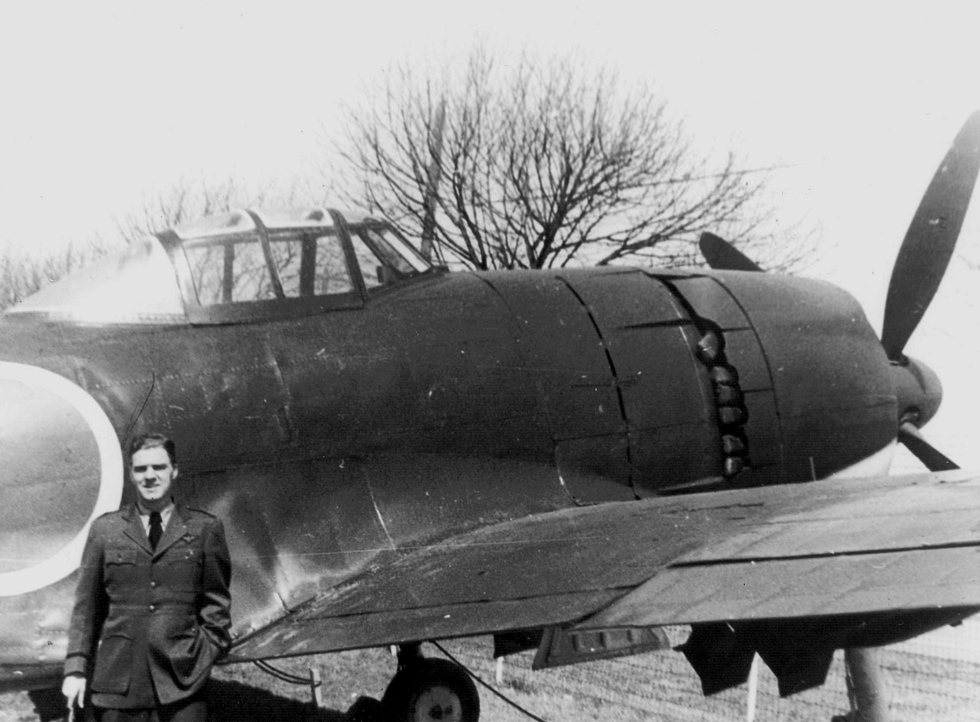
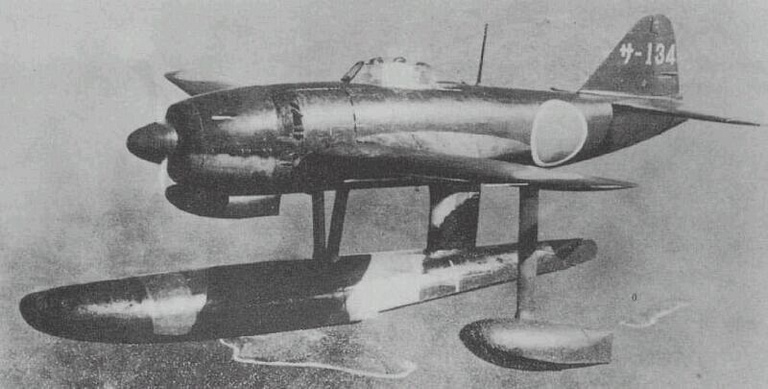
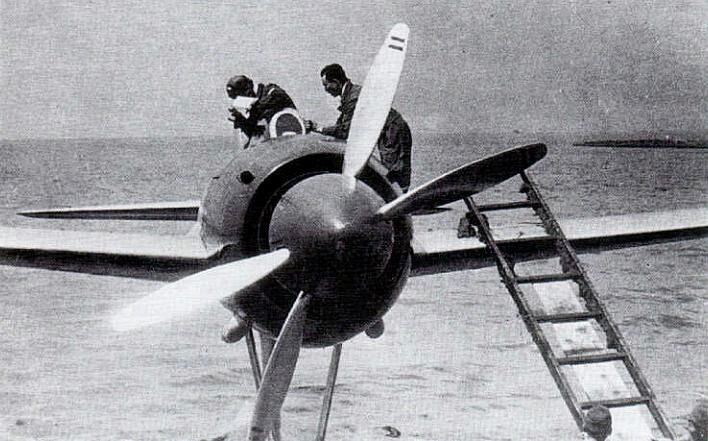
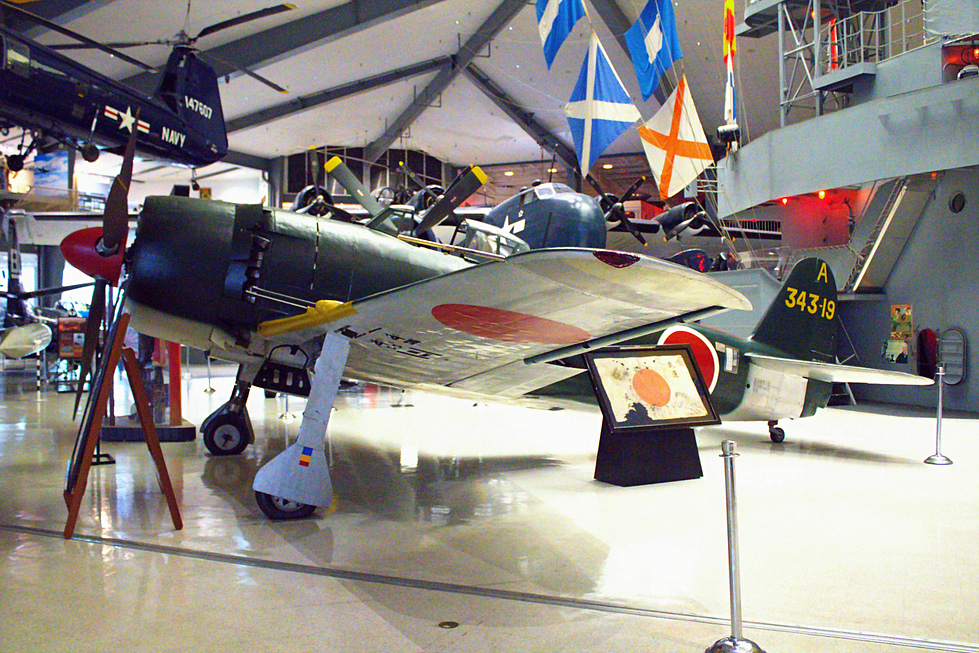
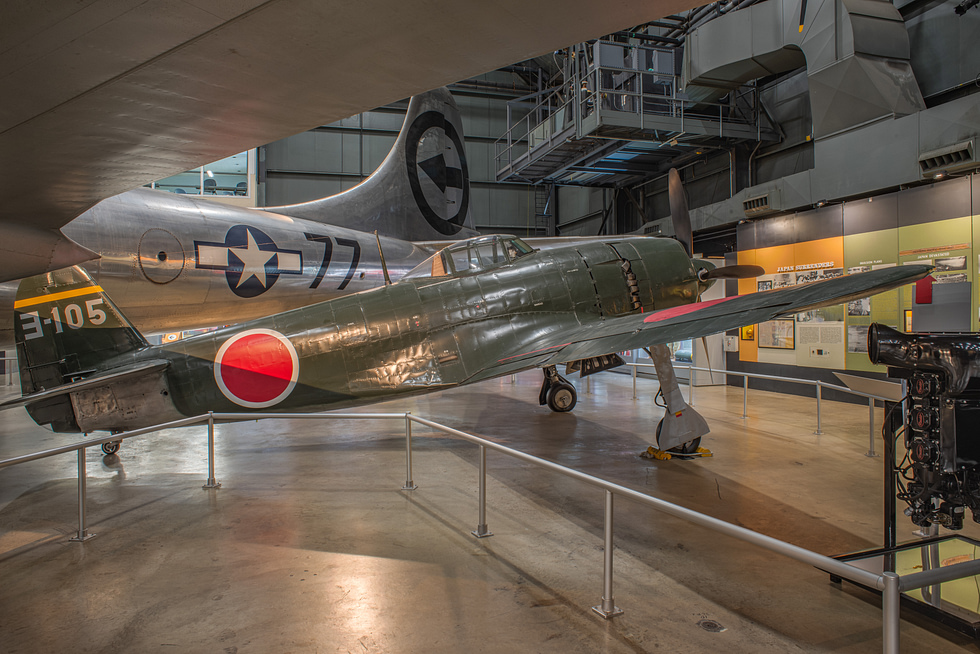
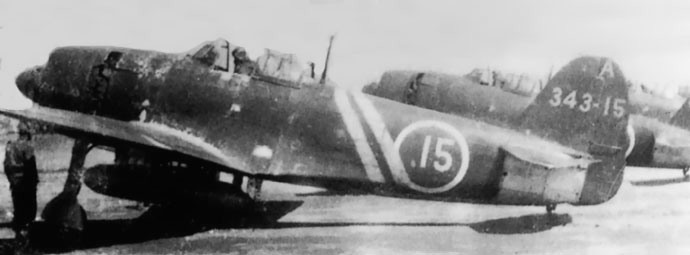
The Shiden-Kai on film
We are still sourcing verified, high-authority archive footage of the N1K Shiden-Kai worth embedding here — video coming soon.
Where the Shiden-Kai served
The record, honestly told
The Shiden-Kai reached the front late and in small numbers, so its combat history is narrow but pointed. Its reputation rests less on a big tally than on a simple fact: in the hands of the 343rd Kokutai in 1945, it was one of the few Japanese fighters that could still trade blows with the best American types. Japanese victory claims from those battles are high and best treated as claims — both sides lost aircraft.
Compare the combat record of every military aircraft. Figures as of August 2026.
Everything people ask about the N1K Shiden-Kai
Can I fly in an N1K Shiden-Kai?
What does “Shiden” and “Shiden-Kai” mean, and why “George”?
Was the N1K really developed from a floatplane?
How good was the Shiden-Kai against American fighters?
What were the automatic combat flaps?
How many were built, and why so few?
What was the 343rd Kokutai?
Are any Shiden-Kai still around today?
You can’t fly the Shiden-Kai.
These, you can.
Some legends only live in museums — others are fuelled and waiting. MiGFlug has put civilians in real military jet cockpits since 2004.
 Fly the L-39 AlbatrosThe world’s most-flown jet trainer — aerobatics included
 Fly the F-104 Starfighter“The missile with a man in it”
 Fly the MiG-21The Cold War’s most-produced jet
 Vlieg met de T-33 Shooting StarAmerica’s first jet trainer
 Fly the DH VampireA piece of early jet history
 Fly the S.211Agile Italian jet trainer
 Fly the MB-326The classic Aermacchi jet
 Fly the MiG-15The Soviet legend of the Korean War
Continue the tour
Every fact, checked
- Smithsonian National Air and Space MuseumMuseum history and specifications; source for the “powerful but temperamental” Homare and the automatic combat flaps.
- National Museum of the U.S. Air ForceFact sheet for the restored Dayton airframe and its markings.
- CombinedFleet.com — Imperial Japanese Naval AviationDetailed engine, armament and production totals (~1,435), with full specifications.
- HistoryOfWar.orgDevelopment history, the landing-gear problem, first-flight dates and variant armament.
- Aces Flying High — The SurvivorsSurvivor list with serials, museums, markings and non-airworthy status.
- Pacific Wrecks — review of Sakaida’s Genda’s BladeEntry point to the standard English history of 343 Kokutai.
- ArmedConflicts.com — Kaneyoshi MutoAce biography, victory total and the reality behind the February 1945 lone-fight legend.
- Naval-History.netReference for the 1945 home-islands air campaign context.
Standard print reference: Henry Sakaida & Koji Takaki, Genda’s Blade: Japan’s Squadron of Aces — 343 Kokutai.