
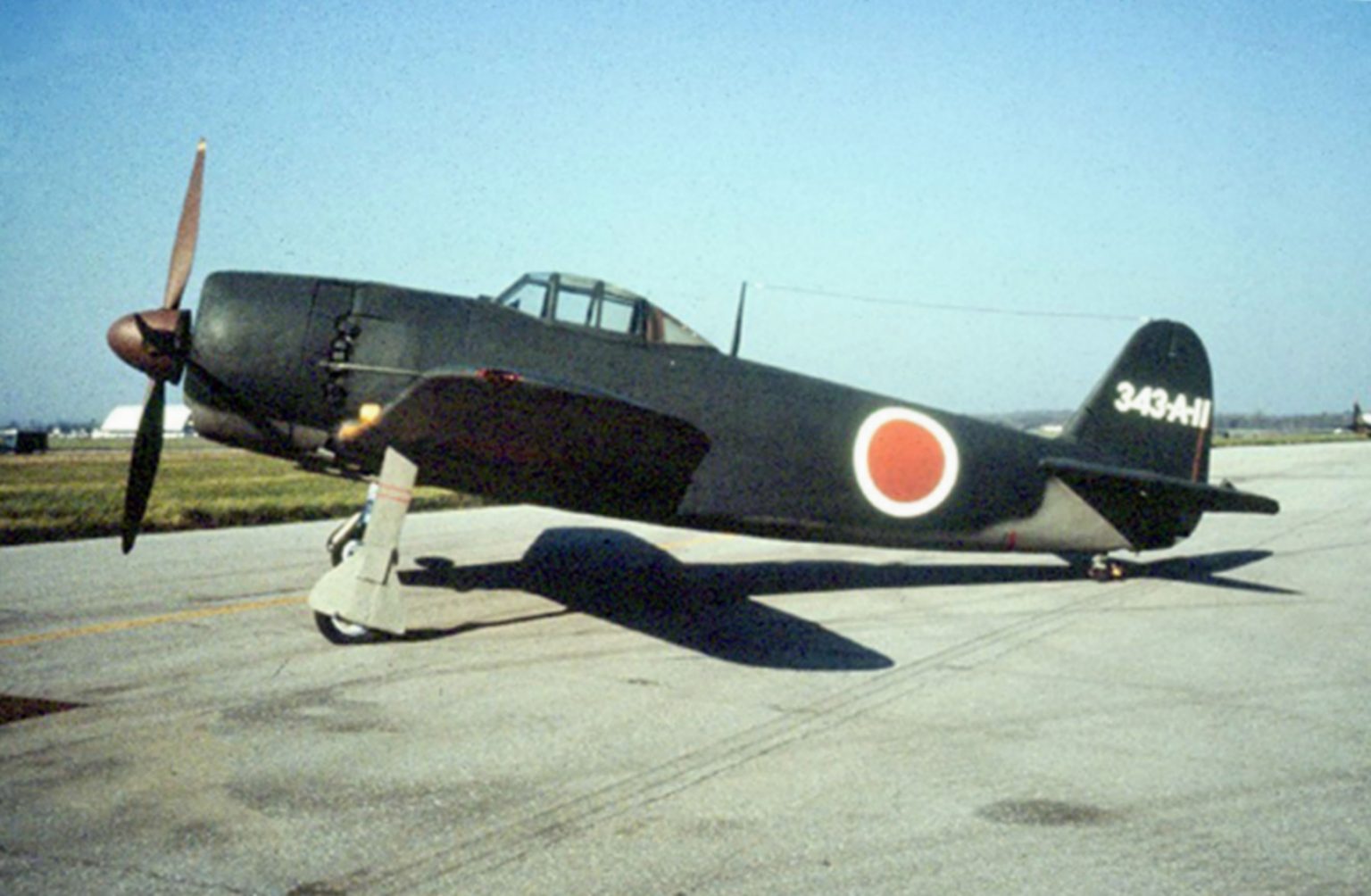
Kawanishi N1K Shiden-Kai
“George”
Grown from a floatplane fighter into the best land-based fighter the Imperial Japanese Navy ever fielded — heavily armed, fitted with automatic combat flaps, and one of the few late-war Japanese types that could meet the Hellcat, Corsair and Mustang on even terms.
The floatplane that became Japan’s finest Navy fighter
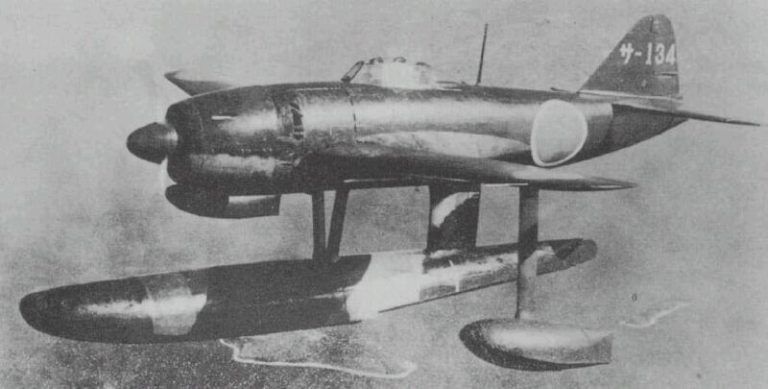
Most great fighters begin as fighters. The Kawanishi Shiden began as a seaplane. In 1940–41 Kawanishi built the N1K1 Kyofu (“Mighty Wind,” Allied code name “Rex”), a single-seat float-equipped fighter meant to defend island anchorages that had no runways. As those plans faded, Kawanishi’s engineers proposed the reverse of the usual path — strip off the floats, add wheels, and turn the floatplane into a land fighter. The result, first flown as a landplane on 27 December 1942, became the N1K1-J Shiden (“Violet Lightning”).
That unusual parentage gave the aircraft both its strength and its worst flaw. The Kyofu had a mid-mounted wing — sensible over water — and keeping it on the landplane, together with a large propeller, forced extraordinarily long main undercarriage legs to give the blades ground clearance. Kawanishi made them telescopic so they contracted as they folded, a complex, fragile mechanism that caused persistent landing accidents. The fix was a near-complete redesign: the N1K2-J Shiden-Kai (“modified Violet Lightning”), first flown on 31 December 1943, moved the wing to the bottom of a lengthened fuselage, allowing short, conventional gear and using far fewer parts.
Power came from the Nakajima Homare radial, nominally near 2,000 hp — the Smithsonian sums it up as “powerful but temperamental,” and wartime fuel and manufacturing meant many engines never made rated power. Yet when the Homare ran, the Shiden-Kai was formidable: four 20 mm cannon, strong high-altitude performance, and an automatic mercury-switch combat flap that tightened its turn without pilot input. In the hands of the elite 343rd Kokutai — “Genda’s Blade” — it became one of the very few Japanese fighters that could meet the F6F Hellcat, F4U Corsair and P-51 Mustang on roughly even terms. Only about 1,435 of all Shiden types were built; it arrived good, but far too scarce to change the war.
01Why the N1K Shiden was derived from a floatplane — and what it cost the design
Deriving a first-line fighter from a floatplane was genuinely rare. The N1K1 Kyofu float fighter was built to operate from sheltered water where the Navy expected to seize islands without airfields; when that doctrine faded, Kawanishi pitched the landplane conversion as a private venture in late 1941, and the Navy formally backed it in 1943. The seaplane heritage carried over the mid-wing layout and a robust, heavy structure — good for soaking up damage, bad for the landing gear. The long, telescoping legs needed to clear a big propeller under a mid-set wing were the Shiden’s Achilles heel, and curing them was the single biggest reason for the Shiden-Kai redesign.
What makes the Shiden-Kai special
From floatplane to fighter — and the landing-gear fix
The N1K1-J Shiden inherited the Kyofu float fighter’s mid-wing layout, forcing long, complex telescoping landing gear that failed often. The N1K2-J Shiden-Kai solved it by dropping the wing to the bottom of a lengthened fuselage — short, conventional gear, a redesigned tail, and a simplified structure with far fewer parts that was also easier to build.
Automatic combat flaps and a four-cannon punch
A mercury (acceleration) switch automatically lowered the flaps under hard manoeuvring to add lift and tighten the turn, then raised them as the G-load eased — the Smithsonian notes no other WWII fighter carried the feature. Combined with four wing-mounted 20 mm Type 99 cannon, it gave the George both agility and concentrated hitting power against fighters and bombers alike.
A match for the Hellcat, Corsair and Mustang — when serviceable
With heavy firepower, good high-altitude performance and the combat flaps, the Shiden-Kai is widely rated as one of the only Japanese fighters that could fight the F6F, F4U and P-51 on roughly even terms. That parity was real but conditional: it depended on well-trained pilots and on the temperamental Homare actually delivering its power — which it too often did not.
02The Shiden-Kai’s Nakajima Homare engine: a great fighter held back by its powerplant
The Nakajima Homare 21 was an 18-cylinder radial rated at roughly 1,990–2,000 hp — on paper, exactly the muscle a modern fighter needed. In practice, low-octane wartime fuel, material shortages and rushed manufacturing meant a great many Homare engines never reached rated output and broke down frequently. The Smithsonian’s own description is blunt: “powerful but temperamental.” Much of the gap between the Shiden-Kai’s potential and its record traces directly to that engine, compounded by B-29 raids on the factories that supplied it.
03343 Kokutai and the Shiden-Kai: how “Genda’s Blade” gathered Japan’s last aces
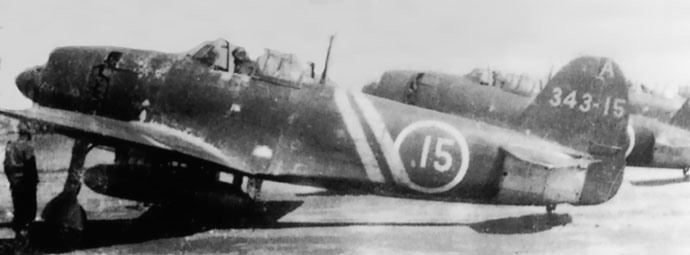
In late December 1944 Captain Minoru Genda — a planner of the Pearl Harbor attack — reformed the 343rd Naval Air Group, nicknamed “Tsurugi” (Sword) and remembered as “Genda’s Blade” or the “Squadron of Aces.” He deliberately concentrated veteran aviators around the new Shiden-Kai to create a unit that could still contest the skies over the home islands in 1945. Based first at Matsuyama on Shikoku, it became the most famous Japanese fighter group of the final year of the war — proof of what the George could do in expert hands, even as the wider force disintegrated.
Full Shiden-Kai specifications
Baseline note: the figures below describe the N1K2-J Shiden Kai Model 21 — the redesigned low-wing aeroplane Kawanishi began delivering in the autumn of 1944 and the one the 343rd Kokutai took into battle in 1945. Deltas for the mid-wing N1K1-J Shiden Model 11 and for the N1K1 Kyofu floatplane the family descends from are given in grey. Japanese manufacturer’s data for 1944–45 survive unevenly; where René Francillon’s reconstruction and wartime American technical-intelligence tests of captured airframes disagree, both are named, and the American numbers are almost always the flattering ones because they were flown on 100-octane fuel the Imperial Navy never issued.
Dimensions & weights
- Crew
- 1
- Length
- 9.35 m (30 ft 8 in); N1K1-J 8.89 m (29 ft 2 in) — the Shiden Kai fuselage was stretched to restore the directional stability lost when the wing moved down
- Wingspan
- 11.99 m (39 ft 4 in) — unchanged from the N1K1-J and from the Kyofu floatplane; the wing planform is the one constant across the whole family
- Height
- 3.96 m (13 ft 0 in); N1K1-J 4.06 m (13 ft 4 in), and that extra height was all undercarriage
- Wing area
- 23.5 m² (253 sq ft) — generous for a 1944 fighter, and the single largest reason the type turned as well as it did
- Wing position
- Low on the N1K2-J. Mid-mounted on the N1K1-J and on the Kyofu, where it had been placed to keep the wing clear of spray
- Empty weight
- 2,657 kg (5,858 lb); N1K1-J 2,897 kg (6,387 lb)
- Loaded weight
- 4,000 kg (8,818 lb); N1K1-J 3,900 kg (8,598 lb) — the Shiden Kai was lighter empty and heavier loaded, because it carried more fuel and ammunition
- Maximum take-off weight
- 4,860 kg (10,714 lb); N1K1-J 4,321 kg (9,526 lb)
- Weight saved by the redesign
- 240 kg (529 lb) empty — the shorter undercarriage, the deleted gun gondolas and a simpler structure
- Wing loading
- 170 kg/m² (34.8 lb/sq ft) at loaded weight, against roughly 226 kg/m² (46 lb/sq ft) for a Grumman F6F-5 Hellcat
- Power loading
- 2.70 kg/kW (4.43 lb/hp) at loaded weight, on the engine’s rated power rather than the power it usually gave
- Constructional parts
- Roughly two-thirds the N1K1-J’s count — commonly quoted as about 43,000 against about 66,000, with man-hours per airframe falling by a similar proportion. This, not speed, was the point of the N1K2-J.
Performance
- Maximum speed
- 594 km/h (369 mph) at 5,600 m (18,400 ft)
- N1K1-J, for comparison
- 583 km/h (362 mph) at 5,900 m (19,400 ft). American tests of a captured N1K1-J on 100-octane fuel returned 656 km/h (408 mph) at 6,100 m (20,000 ft); that figure circulates widely and no Japanese squadron ever saw it.
- Cruising speed
- 370 km/h (230 mph)
- Time to 6,000 m
- 7 min 22 s (19,700 ft); N1K1-J 7 min 50 s — respectable, and still slower than a Mitsubishi J2M Raiden, which was the Navy’s dedicated interceptor
- Service ceiling
- 10,760 m (35,300 ft); N1K1-J 12,500 m (41,000 ft). The Shiden Kai lost altitude performance to weight growth and to Homare engines that were getting worse, not better — and B-29s came over at 9,000 to 10,000 m.
- Range, internal fuel
- ~1,715 km (1,065 miles)
- Maximum range, one drop tank
- ~2,395 km (1,490 miles) — far better than the J2M Raiden and a large part of why the Navy kept the type in production
- Roll rate
- 82° per second at 386 km/h (240 mph) — markedly better than an A6M Zero at the same speed, and the trait Corsair pilots complained about most
- Sustained turn
- With the automatic combat flaps out, inside an F6F-5 or F4U-1D at medium speed and medium altitude — the margin closed sharply above 7,000 m (23,000 ft), where the Homare fell away and the American engines did not
- Dive
- Structurally sound and stable, unlike the A6M; a Shiden Kai could follow a Hellcat down and pull out, though it could not catch a diving Mustang
- For comparison: F6F-5 Hellcat
- 612 km/h (380 mph) at 7,100 m (23,400 ft) — the Shiden Kai was the faster aeroplane low down and the slower one high up
- Performance as flown
- Every figure above assumes a healthy engine. On 91-octane service fuel, with a Homare built to 1945 standards, squadron aircraft commonly ran 30 to 50 km/h (20 to 30 mph) below the book
Propulsion & systems
- Engine
- 1 × Nakajima NK9H Homare 21 (unified designation Ha-45), 18-cylinder two-row air-cooled radial with a two-speed supercharger
- Take-off power
- 1,484 kW (1,990 hp)
- Power as delivered
- Frequently nearer 970 kW (1,300 hp) at altitude. The Homare was designed around 100-octane fuel and tight manufacturing tolerances, and got neither: the Navy issued 91 to 92 octane, and dispersed 1945 production could not hold the tolerances the design needed.
- Displacement
- 35.8 litres (2,185 cu in); bore 130 mm, stroke 150 mm
- Engine diameter and dry weight
- 1,180 mm and 810 kg (46.5 in, 1,786 lb) — only about 30 mm wider than the 14-cylinder Sakae it was meant to replace, which is exactly why it was so hard to cool and so hard to build
- Induction
- Low-pressure direct fuel injection with water-methanol anti-detonation injection; the injection pumps, the plugs and the exhaust valves were the parts that failed, and they failed constantly
- Propeller
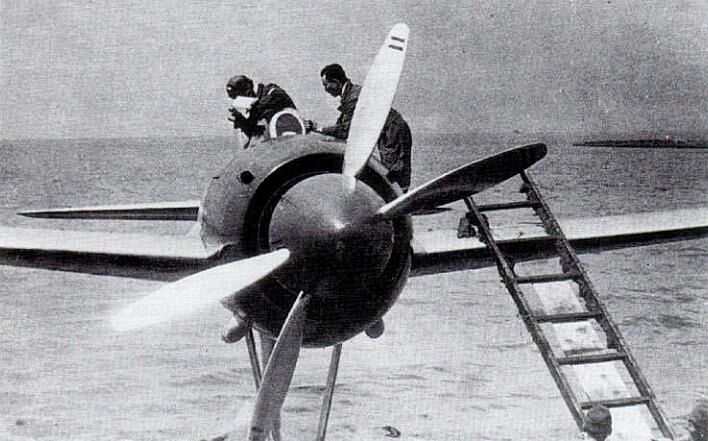
- Four-blade constant-speed metal airscrew, 2.99 m (9 ft 10 in) — a large disc, and the reason a mid-wing airframe needed such absurd legs
- Main undercarriage
- N1K2-J: conventional single-stage oleos, short and stiff, retracting inward from a low wing. N1K1-J: two-stage telescoping legs that contracted as they folded, so that a leg long enough to clear the propeller would still fit the well. Complex, poorly heat-treated and the commonest cause of losses that had nothing to do with the enemy.
- Flaps
- Slotted landing flaps doubling as automatic combat flaps, driven hydraulically to as much as 30° by a mercury-tilt sensor reading load factor and airspeed, with no pilot input at all — and retracting themselves as speed built
- Internal fuel
- ~477 litres (105 imp gal, 126 US gal) on the N1K1-J; the N1K2-J’s exact tankage is reported inconsistently and is not securely attested
- Drop tank
- 1 × ~323 litres (71 imp gal, 85 US gal) on the centreline, taking maximum fuel to about 800 litres (176 imp gal, 211 US gal)
- Protection
- Armoured seat back and head plate, self-sealing fuel tanks and automatic extinguishers in the tank bays — standard from the outset, rare among Japanese Navy fighters, and one of the type’s few unarguable advantages over the Zero
- Avionics
- Type 3 Mark 1 radio and a Type 98 reflector sight. No radar, no pressurisation, no oxygen system fit for sustained work above 9,000 m (29,500 ft)
04The Shiden-Kai’s cost: why no reliable price exists
The Shiden was a wartime Japanese state product, built under a command economy and never sold on an open market, so there is no meaningful flyaway unit price or cost-per-flight-hour figure in the public record. What the sources do make clear is the real cost that mattered: the type was expensive in industrial terms to build well, and the chronic unreliability of its Homare engine, plus material shortages and Allied bombing of the factories, kept production and serviceability far below what Japan needed. Any precise dollar figure attached to a Shiden-Kai should be treated as invented rather than sourced.
Armament & payload
The Shiden-Kai carried four 20 mm cannon buried in the wing, and for once a Japanese Navy fighter hit as hard as it flew
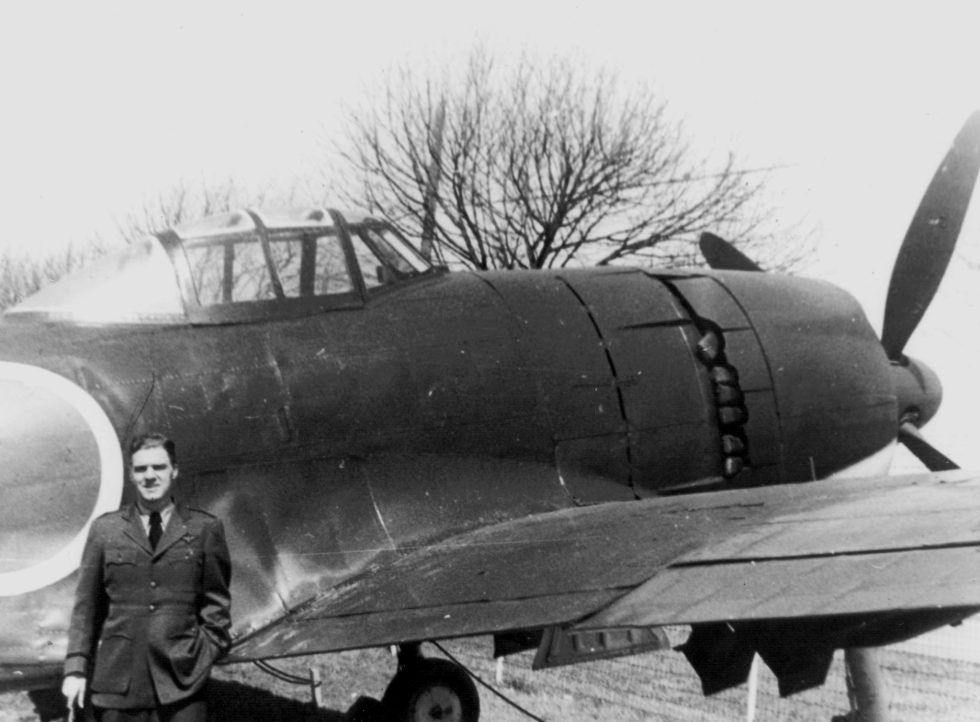
The armament is the least complicated part of this aeroplane and one of the best things about it. Four Type 99 Model 2 cannon sat inside the wing — not in gondolas, not synchronised through the disc, not split between calibres — and that battery threw a heavier weight of fire than a Zero’s and stood comparison with a Hellcat’s six 0.50 in Brownings. The Model 2 fired the long 20 × 101RB round at around 750 m/s, which was fast enough to be aimed rather than lobbed, and the late belt-fed versions carried enough ammunition for perhaps twenty-five seconds of firing, several times what the drum-fed Zero had allowed. Against a B-29 the weapon was adequate; against a Hellcat it was decisive if it connected. Ammunition loads are reported inconsistently and the earliest N1K1-J Model 11 was armed quite differently, with two rifle-calibre guns in the fuselage and half its cannon slung under the wing in draggy gondolas; figures below are given per mark.
Gun
- N1K2-J Shiden Kai: 4 × 20 mm Type 99 Model 2 cannon, all inside the wing, roughly 200 rounds per gun
- Type 99 Model 2 fired the 20 × 101RB round at about 750 m/s, at some 490 rounds per minute; the Model 2 Mod 4 was belt-fed, ending the Zero’s crippling 60-round drums
- N1K1-J Model 11 as first built: 2 × 7.7 mm Type 97 in the fuselage decking, 2 × 20 mm in the wing and 2 × 20 mm in underwing gondolas
- Model 11A onwards: four 20 mm all inside the wing, the rifle-calibre guns deleted as useless against armoured American aircraft and the gondolas deleted for drag
- N1K3-J prototypes added 2 × 13.2 mm Type 3 in the fuselage decking — two aircraft only, never in service
Air-to-air
- No guided air-to-air weapon of any kind. Guns were the whole of it, as they were for every Japanese fighter in service in 1945
- The nearest thing the type had to an air-to-air system was the automatic combat flap, which gave an average pilot a turn that had previously required an expert’s timing on a manual flap lever
- 343rd Kokutai doctrine broke with Japanese practice: two-aircraft sections rather than the traditional three-aircraft shotai, C6N Saiun reconnaissance aircraft sent out ahead to find the raid, and a climb to altitude before the Americans arrived
- Against B-29s the standard approach was from above and ahead, diving through the formation; Lt Naoshi Kanno of Hikotai 301 made a speciality of rolling inverted a kilometre in front of a bomber and attacking vertically from directly overhead
- Air-to-air bombs of the Type 3 No. 6 pattern were dropped into B-29 formations by other Japanese units; there is no good evidence that Shiden or Shiden-Kai units used them, and it is not claimed here.
Air-to-surface guided
- None. No guided air-to-surface weapon reached Japanese service in a form a single-seat fighter could carry, and the Shiden family never carried one
- The card is kept because the absence is the point: by 1945 the Shiden-Kai was a pure air-superiority fighter with a vestigial bombing fit and nothing else
- The Navy’s stand-off thinking of 1945 ran instead to the manned Yokosuka MXY-7 Ohka, carried by bombers, not fighters
- What the Shiden-Kai was actually being husbanded for by the summer of 1945 was Ketsu-Go, the anti-invasion battle, in which fighters were to be thrown at landing shipping with iron bombs and, if necessary, with themselves
Bombs
- 2 × 250 kg (551 lb) bombs on underwing racks — standard from the N1K1-J Model 11B and carried by the N1K2-J and the N1K2-Ja Model 21A
- The Model 11C and the Model 21A had four racks for smaller weapons, typically 60 kg (132 lb) bombs, and were classed as fighter-bombers
- N1K1-J units in the Philippines from October 1944 flew ground-attack and escort as much as interception, and some aircraft were expended in special-attack sorties
- In the home-defence year bombs were almost never carried: every kilogramme of external store cost climb rate the type could not spare against a bomber stream already overhead
- An experimental N1K1-J Kai dive-bomber conversion was flown but did not enter production.
Rockets
- None as standard. No Shiden or Shiden-Kai is reliably recorded as having fired rocket projectiles, air-to-air or air-to-ground, on operations
- The wing was already full: four cannon, their ammunition boxes, the fuel and the retracted undercarriage left little structure to hang anything else from
- Experimental N1K1-J Kai conversions were fitted with rocket-assisted take-off gear, which is the only rocket motor the type is known to have carried
- The Navy’s answer to the B-29 remained four 20 mm cannon fired at close range, which was a reasonable answer when the fighter could reach the bomber’s altitude and a useless one when it could not
Pods & other stores
- 1 × ~323 litre (71 imp gal, 85 US gal) centreline drop tank, taking maximum range to about 2,395 km (1,490 miles)
- The underwing 20 mm gondolas of the first N1K1-J Model 11 were the only true pods the family carried, and were deleted as soon as the guns could be fitted inside the wing
- Type 3 Mark 1 radio. Japanese fighter radios were notoriously poor and were often removed to save weight; the 343rd Kokutai’s insistence that its sets actually work, and that interceptions be directed from the ground on Saiun reports, is a large part of why the unit performed as it did
- Type 98 reflector gunsight and a camera gun for gunnery assessment
- No radar, no pressurisation and no high-altitude oxygen fit — the omissions that decided how the type fared against the B-29 rather than against Navy fighters
Three typical loadouts
- Fighter interception, Matsuyama, 19 March 1945
- Clean airframe, four cannon full, no external stores, scrambled on a Saiun sighting to be at altitude before Task Force 58’s strike arrived. This is the mission the Shiden-Kai was designed for and the only day on which a full elite unit flew it in strength.
- High-altitude B-29 interception, spring 1945
- Clean, water-methanol topped up, everything not essential left on the ground, climbing for 9,000 m (29,500 ft) and often failing to get there in time. The Shiden-Kai’s 10,760 m ceiling was on paper; a worn Homare made a mockery of it.
- Fighter-bomber sortie, Luzon, winter 1944–45
- N1K1-J Model 11B with two 250 kg (551 lb) bombs on the wing racks and a centreline tank for the transit, flown by the 341st and 201st Kokutai against American beachheads and shipping. Attrition in the Philippines was ruinous, and more Shidens were lost to undercarriage collapse and engine failure than to combat.
Sourcing caveat. Japanese Navy ordnance records for 1944–45 are fragmentary, and much of what circulates in English derives from post-war interrogation and from Francillon’s 1970 reconstruction. Rounds per gun, external-store clearances and the exact subtype breakdown of the N1K1-J Model 11 series are all reported inconsistently; the conservative figure has been taken throughout, and where a claim rests on a single source it is flagged rather than stated flatly.
Variants
The Shiden family went from floatplane fighter to Japan’s best Navy interceptor in three years, and never built enough of the good one
The origin is genuinely strange, and it explains almost every fault the aeroplane had. Kawanishi were a seaplane firm, and in 1940 the Navy asked them for a floatplane fighter to cover amphibious landings before airstrips existed. That aircraft, the N1K1 Kyofu — Allied reporting name Rex — flew on 6 May 1942 on a Mitsubishi Kasei radial turning contra-rotating propellers, which were abandoned as unreliable almost at once. By the time 97 had been built the war had turned, Japan was not making landings any more, and a fighter dragging a great central float around at 489 km/h had no job left to do.
Kawanishi had already seen this coming. In late 1941, unasked, the design team began a land-based version: take the Kyofu, remove the floats, fit the new and far more powerful Nakajima Homare radial, and put an undercarriage under it. The catch was the wing. The Kyofu’s wing sat halfway up the fuselage to keep it out of the spray, and a mid-wing fighter with a 2.99 m propeller needs main legs of extravagant length to give the blades ground clearance. Legs that long would not fit in the wells, so Kawanishi designed a two-stage telescoping oleo that shortened itself as it retracted. It worked, in the sense that it functioned. It also broke — the wheels and legs were inadequately heat-treated, ground handling was awkward on a stalky, high-set aeroplane, and undercarriage collapse became a routine way of writing off a fighter that had never met an enemy.
Four days after the N1K1-J first flew on 27 December 1942, Kawanishi started again. The N1K2-J moved the wing to the bottom of the fuselage, which allowed a short, conventional, strong undercarriage; stretched the fuselage to recover the stability that change cost; redesigned the tail; and, decisively for a country running out of factories and skilled labour, cut the parts count to roughly two-thirds of the old aeroplane’s. It came out 240 kg lighter, faster, easier to fly, and far easier to build. It first flew on the last day of 1943 or the first of 1944, depending on which source is followed. And then the B-29s arrived over the factories, and Japan built barely four hundred of them.
- N1K1 Kyofu Model 11 (1942–44, 97 built including prototypes)
- The floatplane fighter the family grew from. Mitsubishi Kasei radial, one large central float and two stabilising floats, 2 × 20 mm and 2 × 7.7 mm; 489 km/h (304 mph), well short of the Navy’s 574 km/h requirement. Served in small numbers in the Netherlands East Indies and around Lake Biwa. Allied reporting name Rex.
- N1K1-J Shiden Model 11 (1943–45; ~1,007 built of all Model 11 subtypes)
- The land conversion: Homare 21 in place of the Kasei, mid-wing retained, telescoping main legs, 2 × 7.7 mm in the fuselage plus four 20 mm of which two hung in underwing gondolas. Fast, well-armed, well-protected, and undermined by its engine and its legs.
- N1K1-Ja, -Jb and -Jc, Models 11A, 11B and 11C (1944–45, part of the 1,007)
- Progressive fixes rather than new aeroplanes: the 11A moved all four cannon inside the wing and deleted the rifle-calibre guns; the 11B added racks for two 250 kg bombs; the 11C was a four-rack fighter-bomber.
- N1K2-J Shiden Kai Model 21 (1944–45, about 400 to 430 built)
- The redesign that mattered. Low wing, short conventional undercarriage, longer fuselage, new tail, roughly two-thirds the parts, 240 kg lighter, four 20 mm in the wing. Built at Naruo and Himeji and dispersed across further plants; production ceased in June 1945 under bombing. Allied reporting name George.
- N1K2-Ja Shiden Kai Model 21A (1945, part of the N1K2-J total)
- Fighter-bomber sub-type with four underwing racks, intended for the anti-invasion battle rather than for interception.
- N1K2-K Shiden Kai Rensen (1945, small number of conversions)
- Two-seat trainer conversions of existing airframes, produced in tiny numbers as the Navy tried to convert pilots onto a fighter that was noticeably less forgiving than a Zero.
- N1K3-J Shiden Kai 1 Model 31 (1945, 2 prototypes)
- Engine moved forward to cure a centre-of-gravity problem and improve gun-platform steadiness, with 2 × 13.2 mm Type 3 added in the fuselage. Never produced.
- N1K4-J Model 32 and N1K4-A Model 42 (1945, 3 aircraft)
- Two prototypes with the Homare 23, plus one navalised carrier conversion with arrester gear — built for carriers Japan no longer had, and for an air group it could no longer man.
- N1K5-J Shiden Kai 5 Model 25 (project only)
- The high-altitude answer to the B-29: Mitsubishi Ha-43 of around 2,200 hp in place of the Homare. No airframe was completed, and the one thing that might have made the type relevant against the bombers never existed.
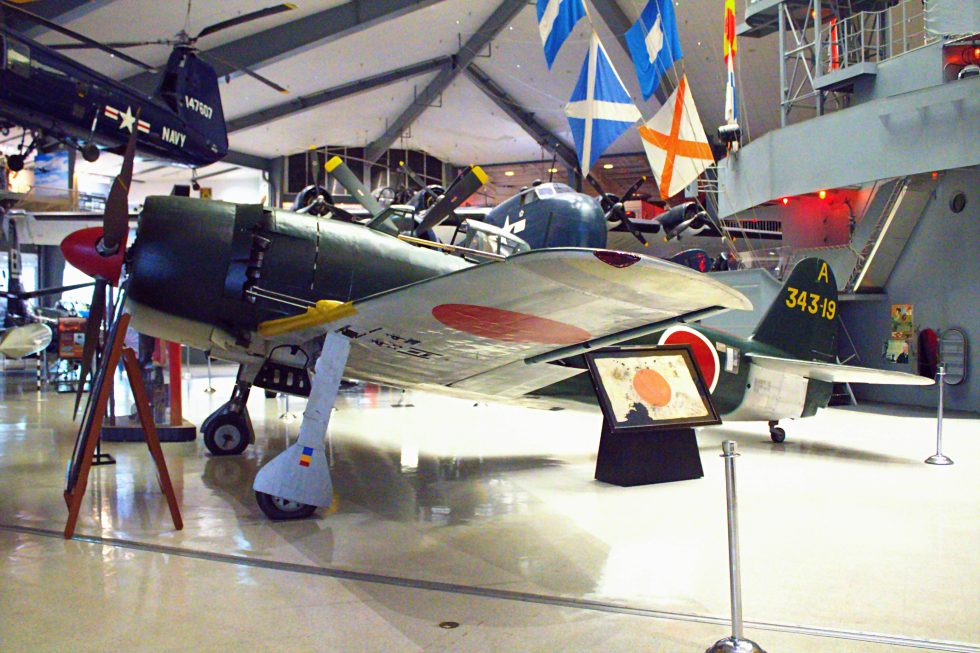
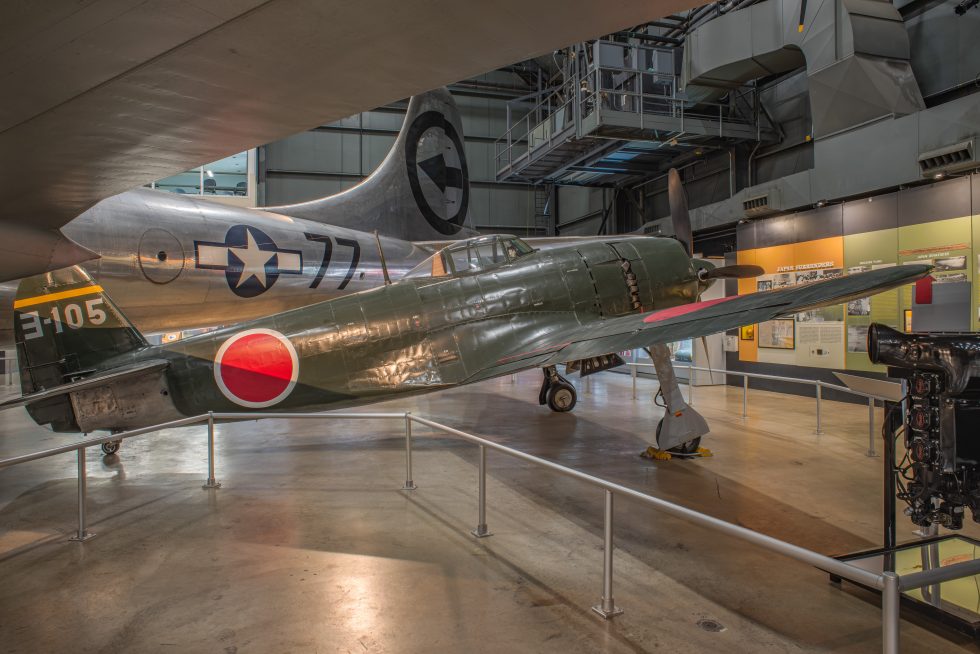
Closing caveat and survivors. Production totals differ between authorities: about 97 Kyofu, about 1,007 N1K1-J and between 406 and 428 N1K2-J depending on the source, for roughly 1,500 to 1,530 aircraft across the family — a figure that should be set against the 10,000-odd Zeros Japan built. Seven original airframes survive and none is airworthy; there are no flying reproductions. Four are N1K2-J Shiden Kai: serial 5128, tail code A343-19, at the National Naval Aviation Museum, NAS Pensacola, Florida; serial 5312 at the National Museum of the United States Air Force, Dayton, Ohio, which spent years as playground equipment in San Diego and corroded badly before it was donated in 1959; serial 5341, tail code A343-35, owned by the National Air and Space Museum, restored by the Champlin Fighter Museum at Falcon Field, Mesa, Arizona in return for display rights, and now at the Steven F. Udvar-Hazy Center, Chantilly, Virginia; and one raised from the Bungo Channel on 14 July 1979 after ditching there on 24 July 1945, displayed at the Shiden-Kai Exhibition Hall in Nanreku Misho park at Ainan, Ehime prefecture, and re-restored to static condition in 2019. Three are N1K1 Kyofu floatplanes: serial 514 in National Air and Space Museum storage at the Paul E. Garber facility, Suitland, Maryland; serial 562 at the National Museum of the Pacific War, Fredericksburg, Texas; and serial 565, long displayed at Willow Grove, Pennsylvania, then stored at Pensacola, now being restored by American Aero Services at New Smyrna Beach, Florida for the American Heritage Museum at Stow, Massachusetts. An eighth airframe, a Shiden-Kai shot down on 21 April 1945, was lifted from the sea off Akune, Kagoshima prefecture on 8 April 2026 with its engine, propeller, forward fuselage and complete wings and cannon but no rear fuselage, and is being desalinated for eventual memorial display.
From float fighter to museum survivor
The Kyofu floatplane
Kawanishi develops the N1K1 Kyofu (“Rex”) float fighter; its prototype flies on 6 May 1942, seeding the land-fighter idea.
Shiden first flight
The N1K1-J Shiden landplane prototype flies on 27 December 1942 — fast and heavily armed, but plagued by its long telescoping landing gear.
Into service, and a redesign
The N1K1-J enters Navy service; on 31 December 1943 the low-wing N1K2-J Shiden-Kai flies, curing the gear problem and simplifying production.
Genda’s Blade forms
Captain Minoru Genda reforms the 343rd Kokutai, concentrating veteran aces around the new Shiden-Kai for home defence.
The Kure air battle
343 Kokutai’s Shiden-Kai fight US carrier aircraft over the Kure / Bungo Strait area in the unit’s first major action — both sides take real losses.
Too few, too late
Engine unreliability and B-29 raids throttle output; only about 1,435 of all Shiden types are ever built.
War’s end
Japan surrenders on 15 August 1945; surviving Georges are grounded and handed over, several shipped to the US for evaluation.
Into the museums
Preserved and recovered examples are restored for display; today about four survive, two of them wearing 343 Kokutai markings — none airworthy.
From the cockpit: twelve Shiden-Kai stories
From the water to the runway
A floatplane fighter that traded its floats for a fight over the home islands.
Read the full story
The impossible landing gear
A mid-wing borrowed from a seaplane forced some of the strangest legs of the war.
Read the full story
Shiden-Kai: the fix that made a great fighter
Drop the wing, shorten the legs, cut the parts — a better aircraft emerged.
Read the full story
The Homare’s broken promise
A near-2,000-horsepower engine that too often did not deliver.
Read the full story
Flaps with a mind of their own
A blob of mercury gave the George a turn that surprised Allied pilots.
Read the full story
Four cannon in the wings
Heavy, all-cannon firepower built to kill Hellcats and B-29s.
Read the full story
Genda’s Blade
Japan gathered its best surviving pilots into one elite squadron.
Read the full story
No easy victory
The day American carrier pilots met an enemy that fought back.
Read the full story
Kaneyoshi Muto and the legend
One of Japan’s great aces — and a story that outgrew the facts.
Read the full story
A fighter that could meet the best
One of the few late-war Japanese fighters not simply outclassed.
Read the full story
Too few, too late
A first-class fighter the factories could never build enough of.
Read the full story
Four survivors, none that fly
From wartime frontline to quiet museum halls.
Read the full story
The Shiden-Kai in pictures
The Shiden-Kai on film
We are still sourcing verified, high-authority archive footage of the N1K Shiden-Kai worth embedding here — video coming soon.
Where the Shiden-Kai served
The record, honestly told
The Shiden-Kai reached the front late and in small numbers, so its combat history is narrow but pointed. Its reputation rests less on a big tally than on a simple fact: in the hands of the 343rd Kokutai in 1945, it was one of the few Japanese fighters that could still trade blows with the best American types. Japanese victory claims from those battles are high and best treated as claims — both sides lost aircraft.
Compare the combat record of every military aircraft. Figures as of August 2026.
Everything people ask about the N1K Shiden-Kai
Can I fly in an N1K Shiden-Kai?
What does “Shiden” and “Shiden-Kai” mean, and why “George”?
Was the N1K really developed from a floatplane?
How good was the Shiden-Kai against American fighters?
What were the automatic combat flaps?
How many were built, and why so few?
What was the 343rd Kokutai?
Are any Shiden-Kai still around today?
You can’t fly the Shiden-Kai.
These, you can.
Some legends only live in museums — others are fuelled and waiting. MiGFlug has put civilians in real military jet cockpits since 2004.
 Fly the L-39 AlbatrosThe world’s most-flown jet trainer — aerobatics included
 Fly the F-104 Starfighter“The missile with a man in it”
 Fly the MiG-21The Cold War’s most-produced jet
 Fly the T-33 Shooting StarAmerica’s first jet trainer
 Fly the DH VampireA piece of early jet history
 Fly the S.211Agile Italian jet trainer
 Fly the MB-326The classic Aermacchi jet
 Fly the MiG-15The Soviet legend of the Korean War
Continue the tour
Every fact, checked
- Smithsonian National Air and Space MuseumMuseum history and specifications; source for the “powerful but temperamental” Homare and the automatic combat flaps.
- National Museum of the U.S. Air ForceFact sheet for the restored Dayton airframe and its markings.
- CombinedFleet.com — Imperial Japanese Naval AviationDetailed engine, armament and production totals (~1,435), with full specifications.
- HistoryOfWar.orgDevelopment history, the landing-gear problem, first-flight dates and variant armament.
- Aces Flying High — The SurvivorsSurvivor list with serials, museums, markings and non-airworthy status.
- Pacific Wrecks — review of Sakaida’s Genda’s BladeEntry point to the standard English history of 343 Kokutai.
- ArmedConflicts.com — Kaneyoshi MutoAce biography, victory total and the reality behind the February 1945 lone-fight legend.
- Naval-History.netReference for the 1945 home-islands air campaign context.
Standard print reference: Henry Sakaida & Koji Takaki, Genda’s Blade: Japan’s Squadron of Aces — 343 Kokutai.