
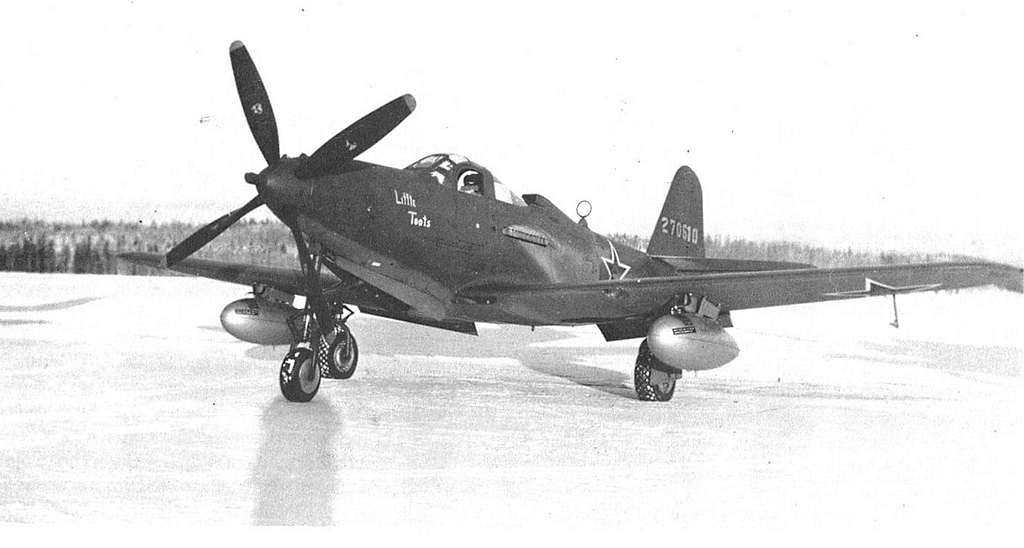
P-63 Kingcobra
The fighter America built and Russia flew
Bell’s mid-engined follow-on to the Airacobra — a cannon-nosed fighter the USAAF didn’t want, sent by the thousand to the Soviet Union, and turned into the strangest gunnery target ever flown.
The Kingcobra: an American fighter with a Soviet heart
The P-63 Kingcobra was Bell Aircraft’s second attempt at the same radical idea. Its predecessor, the P-39 Airacobra, had mounted its engine behind the pilot and fired a cannon through the propeller hub — a layout that gave superb forward visibility and a hard-hitting nose, but left the Airacobra gasping at altitude. The Kingcobra kept the concept and fixed the flaws.
A new laminar-flow wing, a more powerful Allison V-12 and better supercharging gave the P-63 the height and performance the Airacobra lacked. The essentials remained gloriously odd: the engine sat behind the cockpit, a long driveshaft ran forward beneath the pilot’s seat to a nose gearbox and propeller, a 37 mm cannon fired through the spinner, and the pilot climbed in through car-style doors.
And yet, at home, almost nobody wanted it. By the time the Kingcobra was ready, the USAAF had all the Mustangs and Thunderbolts it needed. The P-63 never flew combat in American hands — a first-rate fighter with no war to fight.
The Soviet Union solved that problem. Roughly three-quarters of all Kingcobras — some 2,400 aircraft — went east under Lend-Lease. Soviet pilots had already fallen in love with the Airacobra’s cannon and low-altitude punch, and they took to the bigger, better P-63 as well. It served in the Far East during the Soviet drive into Manchuria against Japan in August 1945.
Then there was the Pinball. The strangest Kingcobras never carried guns at all: the RP-63 was a heavily armoured flying target, fitted with sensors and hit-registering lights, so that air gunners could fire frangible bullets at a real, maneuvering fighter and see their hits flash. No other combat aircraft was ever built to be shot at on purpose.
France flew the P-63 over Indochina into the early 1950s, and 3,303 were built in all. The Kingcobra never became a household name, but it was a capable, characterful fighter that found its fame far from the country that built it.
01Why the Kingcobra mattered: the right fighter, the wrong air force
The P-63 is a study in how much context decides an aircraft’s fate. On its own terms it was a genuine improvement over the Airacobra — faster, higher-flying and better armed — but it arrived into a US Army Air Forces already swimming in superb fighters, and so was judged surplus at home.
Handed to the Soviet Union, the same aircraft slotted perfectly into a doctrine built around low-altitude fighting and heavy nose cannon. The Kingcobra is a reminder that “good” is never absolute for a warplane: it is always good for a particular war, flown by a particular air force.
How Bell perfected its mid-engine fighter
Fixing the Airacobra
The P-39 had been fast and hard-hitting down low but hopeless at altitude. For the Kingcobra, Bell fitted a new laminar-flow wing, a more powerful Allison engine and better supercharging, curing the altitude problem while keeping everything that had made the Airacobra distinctive.
Engine behind the pilot
Like the Airacobra, the Kingcobra hid its V-12 behind the cockpit, with a long driveshaft running forward beneath the pilot’s seat to a nose gearbox and propeller. The layout freed the nose for a heavy cannon and gave superb visibility — and the pilot boarded through automobile-style side doors.
A cannon through the spinner
The Kingcobra’s main weapon was a 37 mm cannon firing straight through the propeller hub, backed by four .50-calibre machine guns and a useful bomb load. It was a nose built to smash aircraft, tanks and river craft alike.
02The Pinball: a fighter engineered to be shot at
The oddest Kingcobra of all carried no guns. The RP-63 “Pinball” was a flying gunnery target: its skin was thickened into heavy armour, its cockpit and vitals protected, and it was wired with sensors and lights so that when trainee air gunners hit it with special frangible (breakable) bullets, the strikes would register and the aircraft would flash. It let gunners practise against a real, evading fighter — a role no other combat aircraft has ever filled.
Bell P-63 Kingcobra — by the numbers
Airframe & performance
- Bemanning
- 1
- Lengte
- 9.96 m (32 ft 8 in)
- Spanwijdte
- 11.68 m (38 ft 4 in)
- Leeggewicht
- ~2,890 kg (6,375 lb)
- Max takeoff weight
- ~4,760 kg (10,500 lb)
- Max speed
- ~660 km/h (410 mph) at 25,000 ft
- Serviceplafond
- ~13,100 m (43,000 ft)
- Bereik
- ~720 km (450 mi); more on drop tanks
Powerplant, armament & programme
- Motor
- Allison V-1710-117 V-12, ~1,800 hp
- Bewapening
- 1 × 37 mm M10 cannon (hub) + 4 × .50 in MGs; up to ~680 kg (1,500 lb) of bombs
- First flight
- 7 December 1942
- Built
- 3,303 (1943–1945)
- Operators
- Soviet Union, United States, France
- Cost per flight hour
- Not recorded — retired after WWII / early 1950s
- Variants
- P-63A / P-63C; RP-63 “Pinball” manned target
03A fighter shaped by Lend-Lease
Because the vast majority of Kingcobras were built for export to the Soviet Union, much of the type’s service data comes from Soviet rather than American use. Figures vary between the P-63A and the uprated P-63C, and between standard fighters and the heavily modified RP-63 targets, so the numbers above are representative of the type rather than any single mark.
From surplus fighter to Soviet workhorse
From Airacobra to Kingcobra
Bell reworks its mid-engine fighter with a new wing and more power. The first XP-63 prototype flies on 7 December 1942, a year to the day after Pearl Harbor.
Built for a war it won’t fight
Production begins in October 1943, but the USAAF — already well supplied with Mustangs and Thunderbolts — declines to use the Kingcobra in combat.
Lend-Lease to the Soviet Union
About three-quarters of all Kingcobras — some 2,400 aircraft — are shipped east to the Soviet VVS, which puts them straight to work.
The Pinball target
The RP-63 “Pinball” manned flying target enters US training service, letting air gunners fire frangible rounds at a real, maneuvering fighter.
War against Japan
Soviet Kingcobras fly in the Far East during the invasion of Manchuria in the final days of the Second World War.
Postwar service
France operates the P-63 over Indochina into the early 1950s before the type is retired.
Eight chapters in the Kingcobra’s odd career
An engine behind the pilot
The Kingcobra inherited the Airacobra’s radical layout: the engine sat behind the cockpit, driving the propeller through a long shaft beneath the pilot.
The full story
The fighter the USAAF didn’t want
By the time the P-63 was ready for service, the US Army Air Forces had all the fighters it needed — and quietly declined to send the Kingcobra into combat.
The full story
Three-quarters went to Russia
Rather than waste a good aircraft, the United States shipped most Kingcobras to the Soviet Union under Lend-Lease.
The full story
A fighter built to be shot at
The strangest Kingcobras carried no guns at all — they were armoured flying targets, designed to be fired on by trainee gunners.
The full story
Kingcobras over Manchuria
In the final days of the Second World War, Soviet P-63s went into action in the Far East against Japan.
The full story
The truth about the 37 mm gun
The Kingcobra is often called a “tank buster,” but the reality of its big hub cannon is more nuanced.
The full story
France’s postwar Kingcobras
After the war the P-63 found one more operator — France, which flew it over Indochina into the early 1950s.
The full story
From Airacobra to Kingcobra
The P-63 was the last and best of Bell’s cobra-family fighters — the end of a distinctive American design line.
The full story
The Kingcobra in pictures
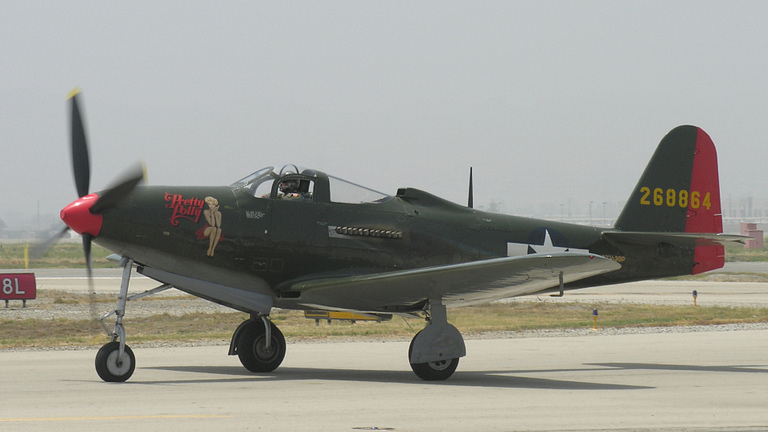
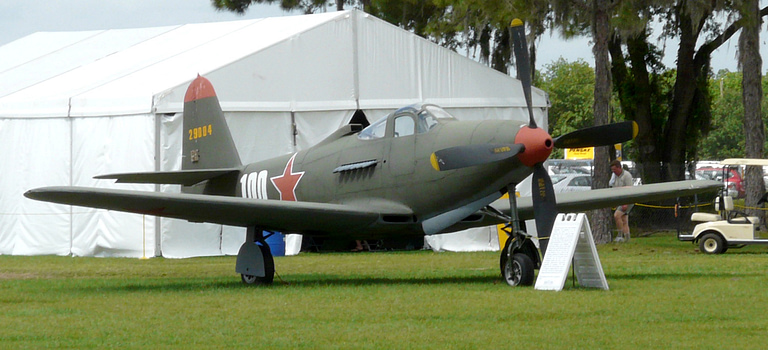
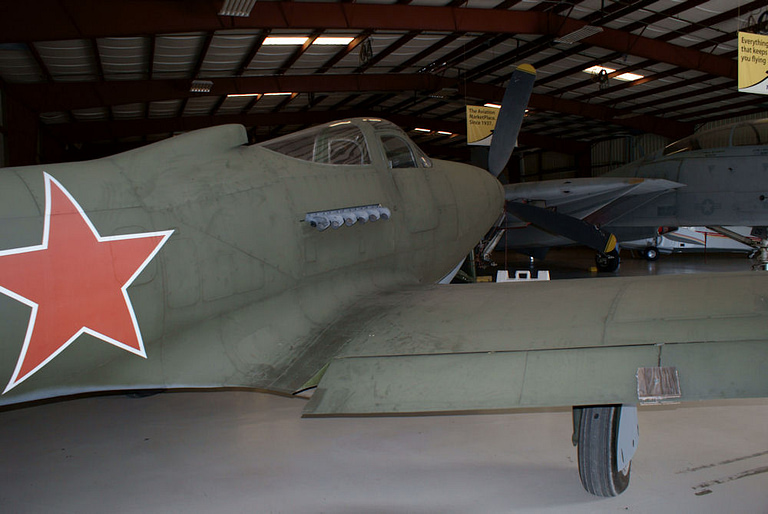
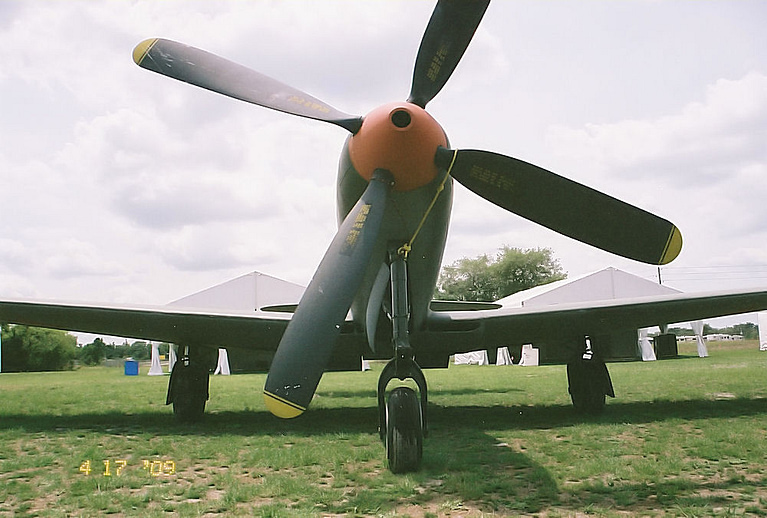
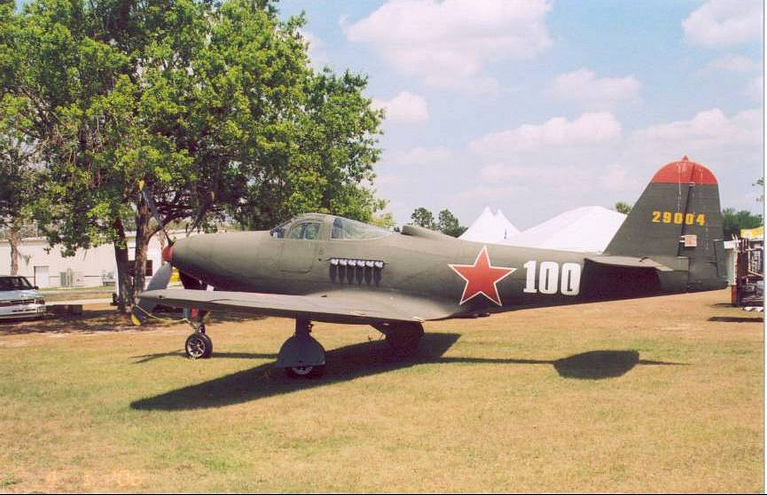
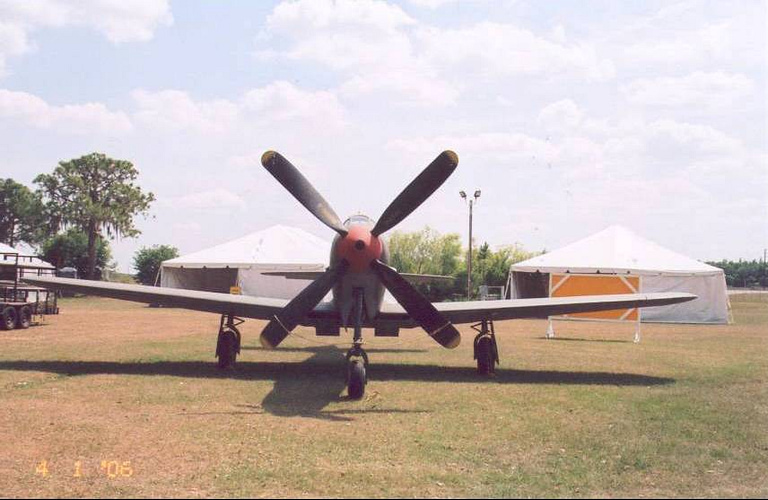
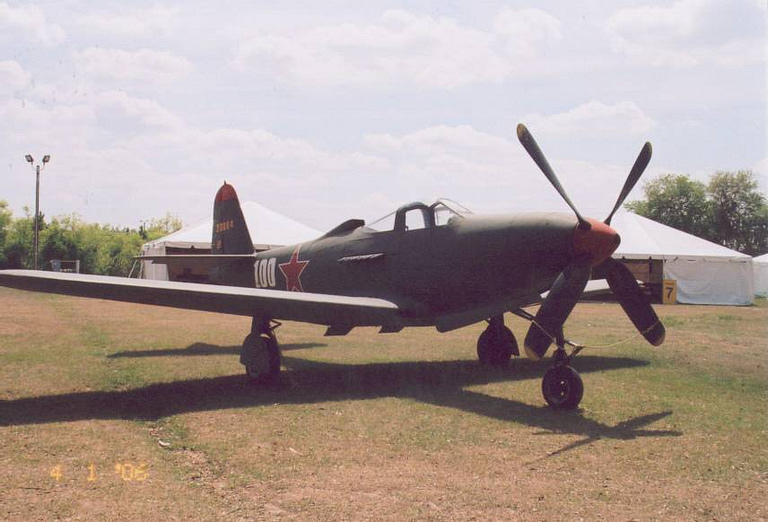
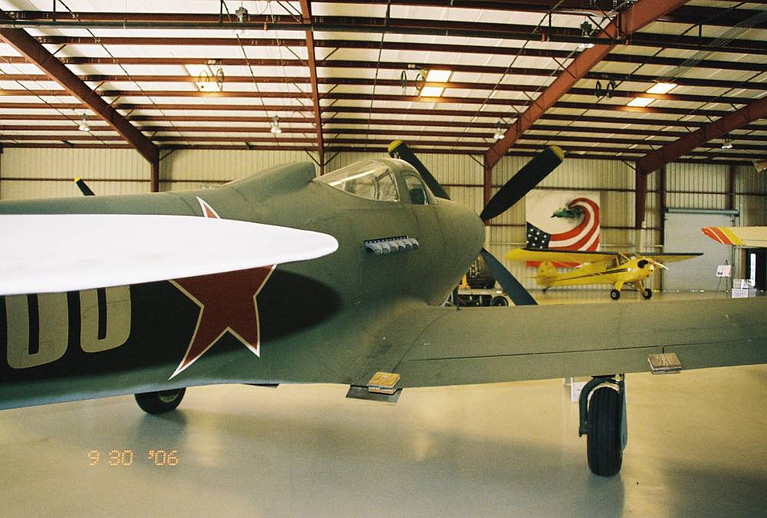
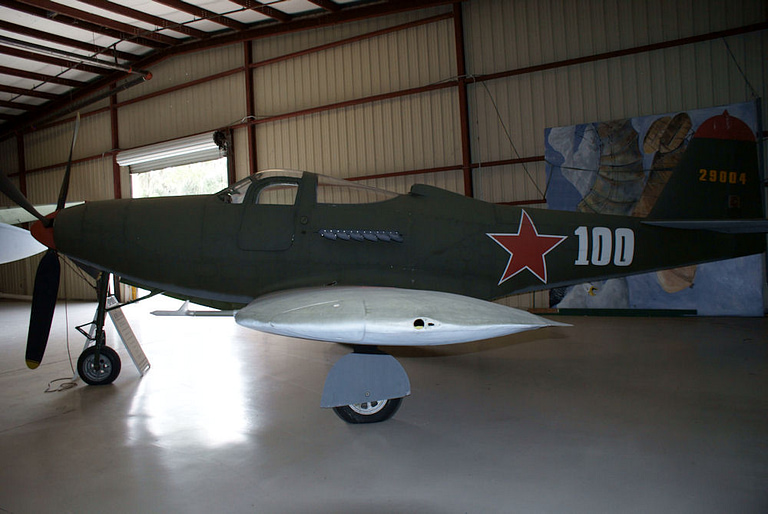
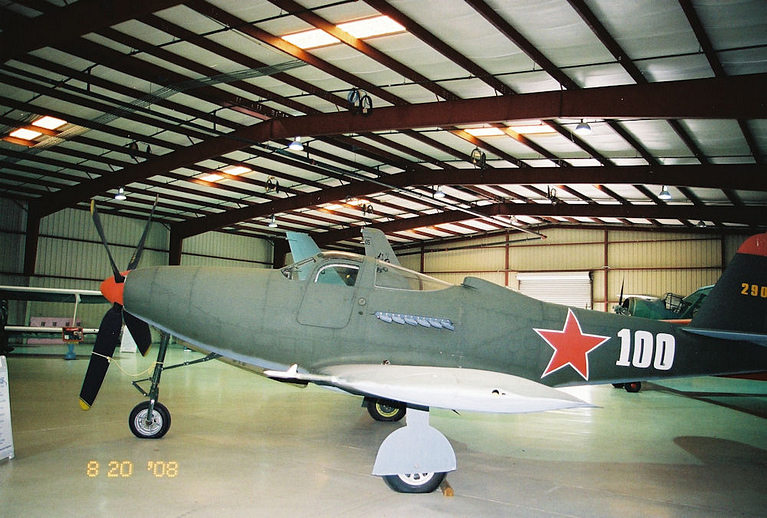
See the Kingcobra up close
Was the Kingcobra secretly one of the best dogfighters of the war? This detailed technical history digs into the P-63’s design, performance and its curious career as an American fighter flown mostly by the Soviet Union.
Video: “P-63 King Cobra, Best US WW2 Dogfighter?” by Greg’s Airplanes and Automobiles (~188,000 views). Embedded via YouTube.
Where the Kingcobra fought
The Kingcobra, by the numbers
The P-63 has one of the strangest combat records of any major wartime fighter: it flew almost no missions for the country that built it, and most of its war service was in Soviet hands, in a theatre and a style of fighting far removed from Bell’s drawing board in New York State. Its numbers tell a story less of aces and kills than of production, Lend-Lease and adaptation.
Soviet combat records for the P-63 are incomplete and sometimes contradictory; the figures above reflect commonly cited production and delivery totals rather than a detailed tally of sorties or victories.
Bell P-63 Kingcobra — questions & answers
Can you fly a Bell P-63 Kingcobra today?
A small number of P-63s remain airworthy and appear at airshows in the United States, but there are no public Kingcobra flights. If you want to fly a real fighter yourself, MiGFlug offers cockpit experiences in genuine jet fighters you can actually strap into.
Why didn’t the USAAF use the P-63 in combat?
By the time the Kingcobra entered production in 1943, the US Army Air Forces was already well supplied with P-51 Mustangs and P-47 Thunderbolts, which had the range and high-altitude performance it needed. The P-63 offered no decisive advantage, so it was passed to Lend-Lease rather than into American combat units.
What was the RP-63 “Pinball”?
The RP-63 was a heavily armoured, unarmed Kingcobra used as a manned flying gunnery target. Trainee air gunners fired frangible bullets that broke apart on impact, and sensors and lights registered each hit — letting crews practise against a real, maneuvering fighter.
Did the Soviet Union like the P-63?
Yes. Soviet pilots had already embraced the earlier P-39 Airacobra, and they took to the larger, higher-performing Kingcobra as well. Most P-63s served with the Soviet VVS, and they saw action in the Far East against Japan in August 1945.
What was the difference between the P-39 and the P-63?
The P-63 was a larger, more powerful development of the P-39 with a new laminar-flow wing and better supercharging, curing the Airacobra’s weak high-altitude performance while keeping its mid-engine layout and 37 mm hub cannon.
You can’t fly a Kingcobra — but you can fly a fighter jet
The Kingcobra’s war belongs to history, but the thrill of flying a real fighter doesn’t. With MiGFlug you can strap into a genuine jet — from the L-39 Albatros to a MiG-29 at the edge of space — with an experienced fighter pilot beside you.
 Fly the L-39 AlbatrosThe world’s most-flown jet trainer — aerobatics included
 Fly the F-104 Starfighter“The missile with a man in it”
 Fly the MiG-21The Cold War’s most-produced jet
 Vlieg met de T-33 Shooting StarAmerica’s first jet trainer
 Fly the DH VampireA piece of early jet history
 Fly the S.211Agile Italian jet trainer
 Fly the MB-326The classic Aermacchi jet
 Fly the MiG-15The Soviet legend of the Korean War
Related aircraft
Where these facts come from
- National Museum of the U.S. Air ForceKingcobra type history & surviving airframe
- Vintage Aviation News — P-63 first flightDevelopment & first-flight history
- San Diego Air & Space MuseumArchive photography of Bell aircraft
- War History Online — P-63 KingcobraSoviet Lend-Lease service overview
Figures are drawn from museum and reference sources and cross-checked; where sources differ, the most commonly cited value is given. Performance and production figures varied between the P-63A, P-63C and the modified RP-63 target aircraft.