
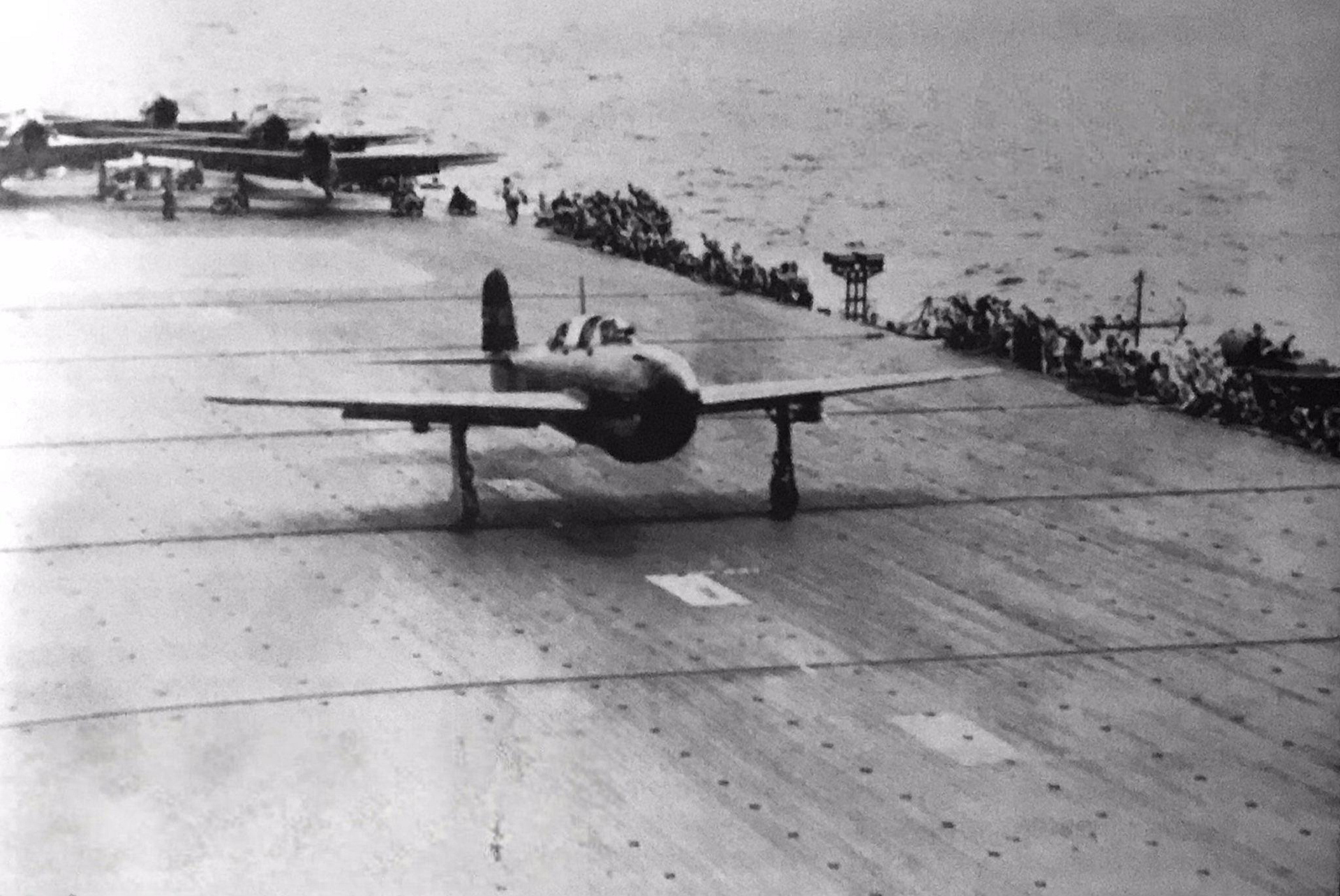
Yokosuka D4Y Suisei
“Judy”
The fastest carrier dive bomber of the Pacific War — a sleek, inline-engined “Comet” built for speed, undone by its temperamental engine, and expended at the end in kamikaze fire.
The Yokosuka D4Y Suisei: built for speed, betrayed by its engine
By the late 1930s the Imperial Japanese Navy wanted a carrier dive bomber that could outrun the fighters sent to stop it. The fixed-gear Aichi D3A “Val” then in service was rugged but slow, and the Navy’s planners looked to Germany for a faster shape. In 1938 Japan bought examples of the Heinkel He 118 dive bomber; the sole imported machine was destroyed in testing, but its clean, liquid-cooled lines pointed the way. The Navy’s own Yokosuka arsenal (the Kugisho) was tasked with a sleek, fast successor, and the result — first flown in December 1940 — was named Suisei, “Comet.” The Allies would call it “Judy.”
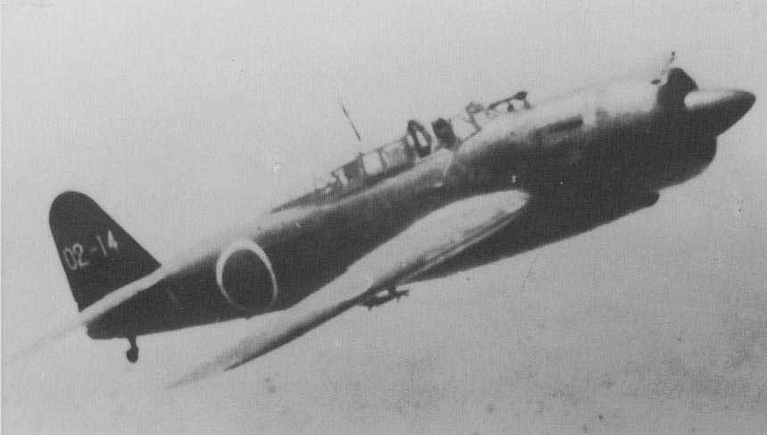
What made the D4Y unusual was its engine. Almost every Japanese naval aircraft used an air-cooled radial; the Suisei instead carried an Aichi Atsuta, a licence-built version of the German Daimler-Benz DB 601 inverted-V12. The narrow inline let designers wrap a slender, low-drag fuselage around it, and the D4Y became the fastest carrier dive bomber of the war, touching around 580 km/h. It was so fast and long-legged that its combat debut was not as a bomber at all: two D4Y1-C reconnaissance machines flew from the carrier Sōryū at Midway in June 1942 — and went down with her when she was sunk.
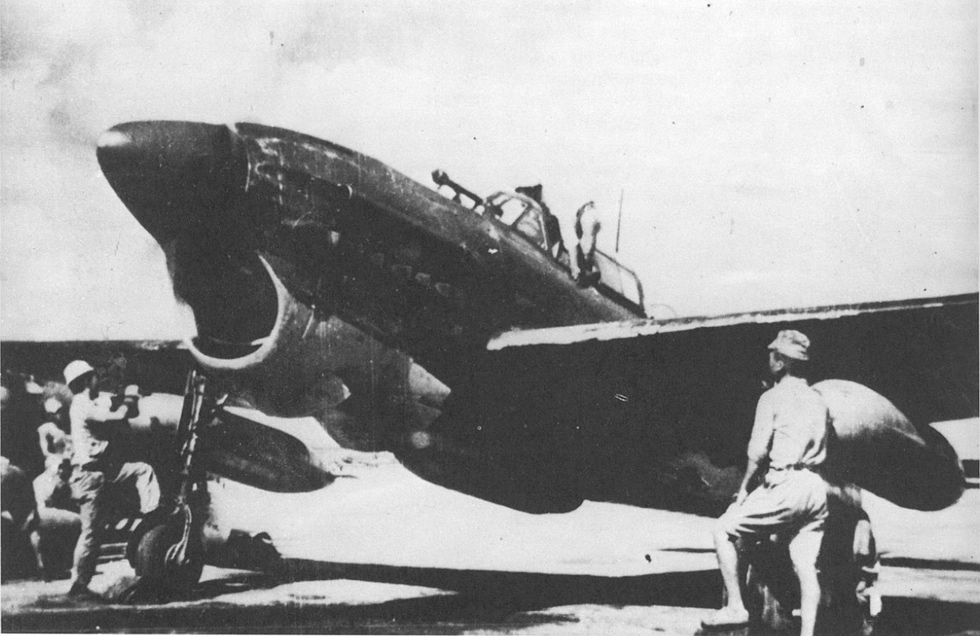
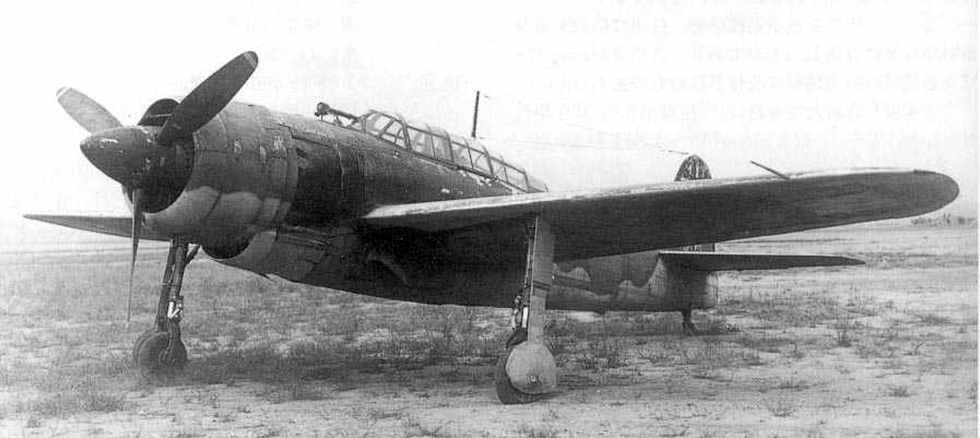
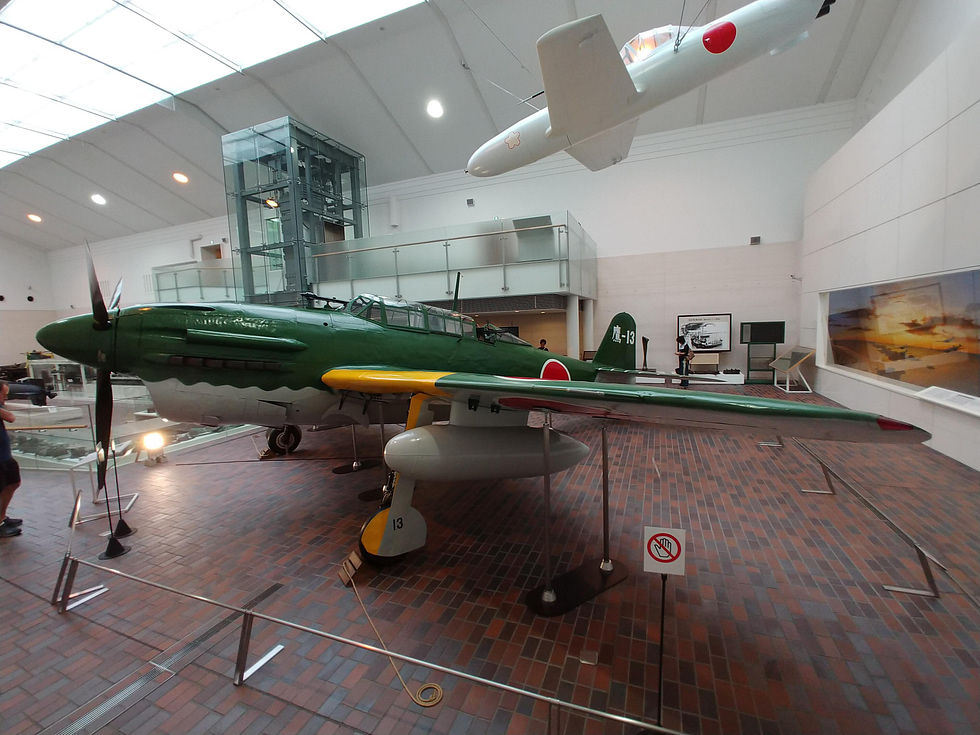
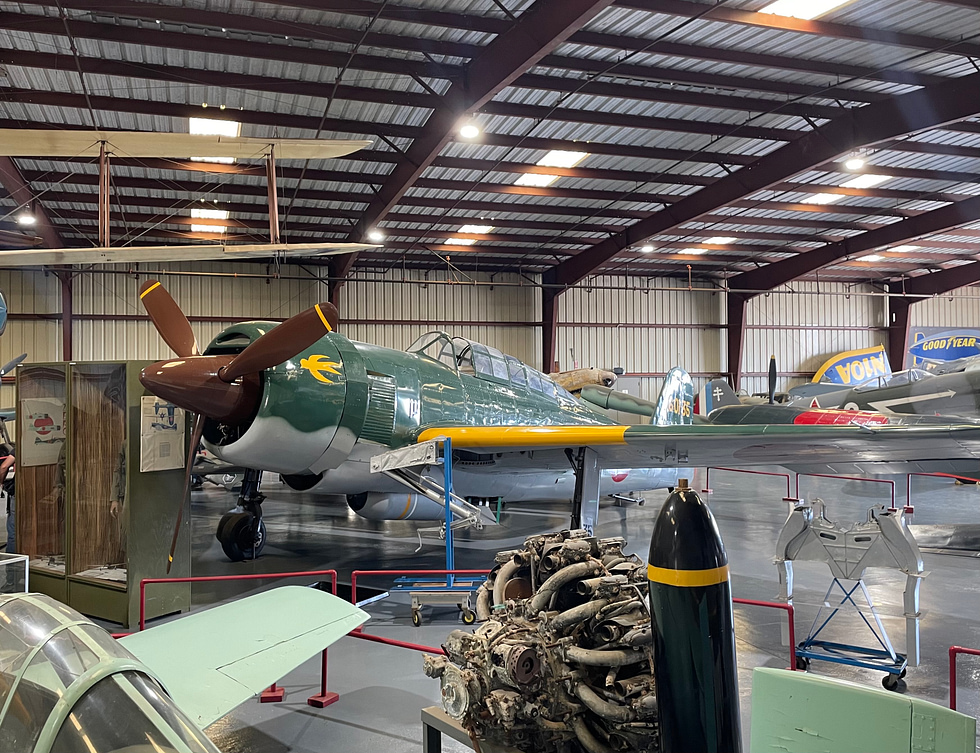
The speed came at a price. The Atsuta was notoriously unreliable: hard to build, hard to maintain, and often unserviceable in the field, where Japan lacked the precision industry the German engine demanded. Early D4Y1s also suffered wing flutter in the dive, delaying the true dive-bomber version until 1943. To escape the engine altogether, the later D4Y3 En D4Y4 abandoned the inline for a conventional Mitsubishi Kinsei radial — less elegant, blunter in the nose, but dependable.
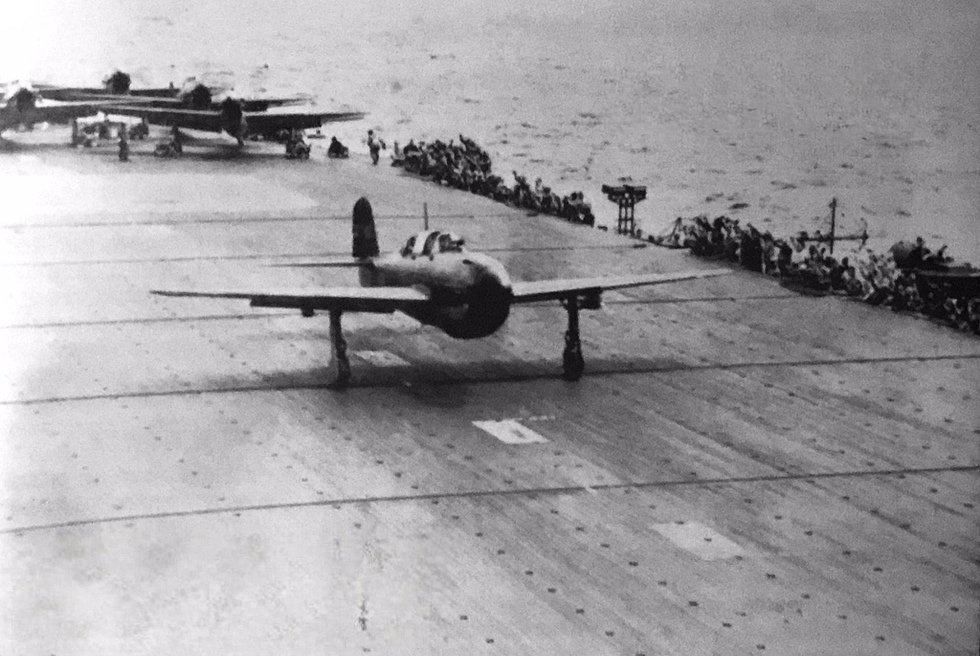
By the time the Suisei was available in numbers, the war had turned. At the Battle of the Philippine Sea in June 1944, scores of D4Ys were thrown against the US fleet and cut down by radar-directed fighters and proximity-fused flak in the rout later nicknamed the “Marianas Turkey Shoot.” Yet the type could still bite: in October 1944 a single D4Y put one bomb through the deck of the light carrier USS Princeton and doomed her. As trained crews and fuel ran out, surviving Suiseis were turned into kamikaze aircraft. The very last Japanese air sortie of the war, on 15 August 1945, was a group of D4Ys led by Vice Admiral Matome Ugaki into the sea off Okinawa.
01The Yokosuka D4Y’s German bloodline: how the Heinkel He 118 shaped Japan’s Comet
In 1938 the Imperial Japanese Navy purchased the Heinkel He 118, a liquid-cooled monoplane dive bomber that had lost Germany’s own competition to the Ju 87 Stuka. The single imported airframe was wrecked in trials, but the Navy had already seen what it wanted: a clean, fast, inverted-V12 layout utterly unlike the fat radials of the D3A. The Yokosuka arsenal used that inspiration — together with a licence for the Daimler-Benz DB 601 engine — to design a slender all-new aircraft. The exact degree of Heinkel influence is debated, but the DB 601 licence and the He 118’s aerodynamic thinking are the reasons the Suisei looked and flew so differently from every other Japanese carrier bomber.
What makes the D4Y Suisei special
A liquid-cooled inline in a sea of radials
Alone among Japan’s carrier bombers, the D4Y was built around an Aichi Atsuta — a licence-built Daimler-Benz DB 601 inverted-V12. The slim inline let designers draw a low-drag fuselage barely wider than the pilot, and an internal bomb bay kept the belly clean. The payoff was speed: roughly 580 km/h, faster than the Allied dive bombers it faced and quick enough to be used as a fleet scout.
The engine that broke the Comet
The Atsuta demanded German-grade precision manufacturing Japan could not sustain in wartime. Engines arrived late, ran rough and were often unserviceable in the field. Whole squadrons sat grounded for want of working powerplants. The fix was radical: the D4Y3 En D4Y4 threw out the inline entirely for a dependable Mitsubishi Kinsei radial — blunter and slightly slower, but reliable.
Fast and long-legged — and unarmored
To stay light and fast the Suisei carried no armor and no self-sealing fuel tanks. Speed was its defence. That worked early on, but by 1944 — against radar-directed Hellcats and proximity-fused flak — an unprotected, lightly armed dive bomber burned easily. The same fragility that made it fast made it desperately vulnerable in a defended sky.
02The Yokosuka D4Y’s engine trouble: why Japan abandoned the inline Atsuta
The Aichi Atsuta was a fine engine on paper — a licensed DB 601 giving 1,200 hp in the D4Y1 and around 1,400 hp in the D4Y2. In practice it was a maintenance nightmare. The DB 601 relied on close machining tolerances and quality alloys that wartime Japanese industry, starved of materials and skilled labour, struggled to reproduce. Serviceability rates were poor and spare engines scarce. Rather than keep fighting the inline, Yokosuka re-engined the aircraft with the air-cooled Mitsubishi Kinsei 62 radial (~1,560 hp) to create the D4Y3. The nose grew fatter and top speed dipped slightly, but the radial could actually be kept running — the difference between an aircraft on the flight deck and one in the hangar.
03The Yokosuka D4Y2-S night fighter: the Comet sent up against the B-29
As American B-29s began night raids on Japan, a handful of Suiseis were converted into improvised night fighters as the D4Y2-S. The bomb bay and rear gun made way for an obliquely mounted 20 mm cannon — a “Schräge Musik”-style upward-firing weapon meant to be walked up into a bomber’s belly from below. Without airborne radar and short on high-altitude performance, the type was never an effective interceptor, but it is a telling snapshot of a Navy improvising with whatever airframes it had left.
Yokosuka D4Y Suisei: full specifications
Airframe & Performance
- Bemanning
- 2 (pilot & observer/gunner)
- Lengte
- 10.22 m
- Spanwijdte
- 11.50 m
- Hoogte
- 3.30 m
- Max takeoff weight
- ~4,657 kg
- Max speed
- 579 km/h (D4Y2) · 552 km/h (D4Y1)
- Kruissnelheid
- ~425 km/h
- Serviceplafond
- ~10,700 m
- Bereik
- ~1,465 km · further as a scout with drop tanks
- Bomb load
- 560 kg (one 500 kg bomb internally); up to ~800 kg
Propulsion, Armament & Production
- Engine (D4Y1/D4Y2)
- Aichi Atsuta (licensed DB 601) inverted-V12
- Power
- ~1,200 hp (Atsuta 12) · ~1,400 hp (Atsuta 32)
- Engine (D4Y3/D4Y4)
- Mitsubishi Kinsei 62 radial · ~1,560 hp
- Bewapening
- 2 × fixed 7.7 mm + 1 × flexible rear 7.92/13 mm
- First flight
- December 1940
- Built
- ~2,038 (1940–1945)
- Unit cost
- No reliable public figure
- Cost per flight hour
- No reliable figure exists
04The Yokosuka D4Y’s cost: why no reliable price exists
The D4Y was a wartime state product of the Imperial Japanese Navy, built by the Yokosuka arsenal and Aichi under a command economy, never sold on any open market. No credible flyaway unit price, and certainly no cost-per-flight-hour figure, survives in the public record — the accounting simply was not kept or published in those terms, and much of Japan’s wartime documentation was destroyed in 1945. Any precise dollar or yen figure attached to a Suisei today should be treated as guesswork. What can be said is qualitative: the inline Atsuta made early Suiseis expensive and labour-intensive to keep flying, which is a large part of why Japan switched later airframes to the cheaper, simpler radial.
From carrier scout to kamikaze: the D4Y Suisei’s war
A German blueprint
Japan imports the Heinkel He 118 and a Daimler-Benz DB 601 engine licence, seeding the design of a fast, inline-engined dive bomber.
First flight
The prototype Suisei flies in December 1940 — a slender machine unlike any other Japanese carrier bomber.
Debut at Midway — as a scout
Two D4Y1-C reconnaissance aircraft operate from the carrier Sōryū at Midway and are lost when she is sunk in June.
Dive bomber at last
After wing-flutter fixes, the D4Y1 enters service as a full dive bomber; the radial-engined D4Y3 follows to escape the troublesome Atsuta.
The Philippine Sea
Massed D4Ys are flung at the US fleet and slaughtered by radar-directed fighters and proximity flak in the “Marianas Turkey Shoot.”
USS Princeton
A single D4Y plants one bomb through the flight deck of the light carrier USS Princeton, triggering fires that sink her.
USS Franklin crippled
Off Japan, a lone dive bomber — commonly attributed to a D4Y — puts two bombs into USS Franklin, causing one of the US Navy’s worst carrier disasters.
The last sortie
Vice Admiral Matome Ugaki leads a final flight of D4Ys on a kamikaze mission off Okinawa — the last Japanese air attack of the war.
From the cockpit: twelve D4Y Suisei stories
A comet born from a German loser
The Heinkel He 118 lost Germany’s dive-bomber contest — then shaped Japan’s fastest carrier bomber.
Read the full story
Two Comets go down with Sōryū
The D4Y’s first combat use was as a scout — and both machines were lost with their carrier.
Read the full story
Why the bomber flew as a spy
Wing flutter in the dive kept the D4Y out of its intended role for over a year.
Read the full story
The Atsuta that grounded squadrons
A German engine Japan could not reliably build kept the fastest dive bomber in the hangar.
Read the full story
Radial rescue: the D4Y3
Japan gave up on the elegant inline and bolted on a dependable radial instead.
Read the full story
Into the Turkey Shoot
Scores of Suiseis were thrown at the US fleet — and cut down almost to a machine.
Read the full story
One bomb, one carrier
A single D4Y put one bomb through Princeton’s deck — and that was enough.
Read the full story
The carrier that would not die
A lone dive bomber — commonly attributed to a D4Y — nearly destroyed one of America’s biggest carriers.
Read the full story
The D4Y2-S against the B-29
A dive bomber pressed into service as a makeshift night fighter over Japan.
Read the full story
Speed instead of armor
The Suisei carried no protection at all — a gamble that stopped paying off.
Read the full story
The Comet as a weapon
As crews and fuel ran out, surviving Suiseis were turned into guided bombs.
Read the full story
Ugaki’s last flight
The war’s final Japanese air sortie was flown by Suiseis into the sea off Okinawa.
Read the full story
The D4Y Suisei in pictures
The Blackbird in motion
Real Engineering: The Insane Engineering of the SR-71 Blackbird — 10 million views, the definitive technical breakdown.
Where the D4Y Suisei fought
The D4Y Suisei: the record that defines it
The Suisei’s war is a story of speed against overwhelming odds. It was the fastest carrier dive bomber of the conflict, yet it arrived in numbers just as Japanese naval air power collapsed. Its greatest blows were struck not in massed raids but by lone aircraft that slipped through — and, at the very end, by aircraft flown deliberately into their targets.
Compare the combat record of every military aircraft. Figures as of August 2026.
Everything people ask about the D4Y Suisei
Can I fly in a Yokosuka D4Y Suisei?
How fast was the D4Y Suisei?
Why is the D4Y called “Judy”?
What engine did the D4Y use?
Did a D4Y ever sink an American aircraft carrier?
How many D4Y Suisei survive today?
Was the D4Y used for kamikaze attacks?
You can’t fly the D4Y Suisei.
These, you can.
Some legends only live in museums — others are fuelled and waiting. MiGFlug has put civilians in real military jet cockpits since 2004.
 Fly the L-39 AlbatrosThe world’s most-flown jet trainer — aerobatics included
 Fly the F-104 Starfighter“The missile with a man in it”
 Fly the MiG-21The Cold War’s most-produced jet
 Vlieg met de T-33 Shooting StarAmerica’s first jet trainer
 Fly the DH VampireA piece of early jet history
 Fly the S.211Agile Italian jet trainer
 Fly the MB-326The classic Aermacchi jet
 Fly the MiG-15The Soviet legend of the Korean War
Continue the tour
Every fact, checked
- History of War — Yokosuka D4Y Suisei (“Judy”)Variant history, engine details, production totals and combat use.
- Naval Encyclopedia — Yokosuka D4Y SuiseiDesign origins, the Atsuta-to-Kinsei switch and operational record.
- Planes of Fame Air Museum — D4Y3 Model 33 SuiseiThe surviving restored airframe and its history.
- Naval History and Heritage CommandUSS Princeton and USS Franklin damage and loss records.
- Imperial War MuseumsPacific carrier warfare and Japanese naval aviation context.
- Osprey — Yokosuka D4Y “Judy” UnitsUnit-level operational history of the Suisei in the Combat Aircraft series.
- Vintage Aviation NewsThe rebirth of the Planes of Fame Suisei and the type’s rarity.
- Smithsonian National Air and Space MuseumReference for Japanese naval aircraft of the Second World War.