
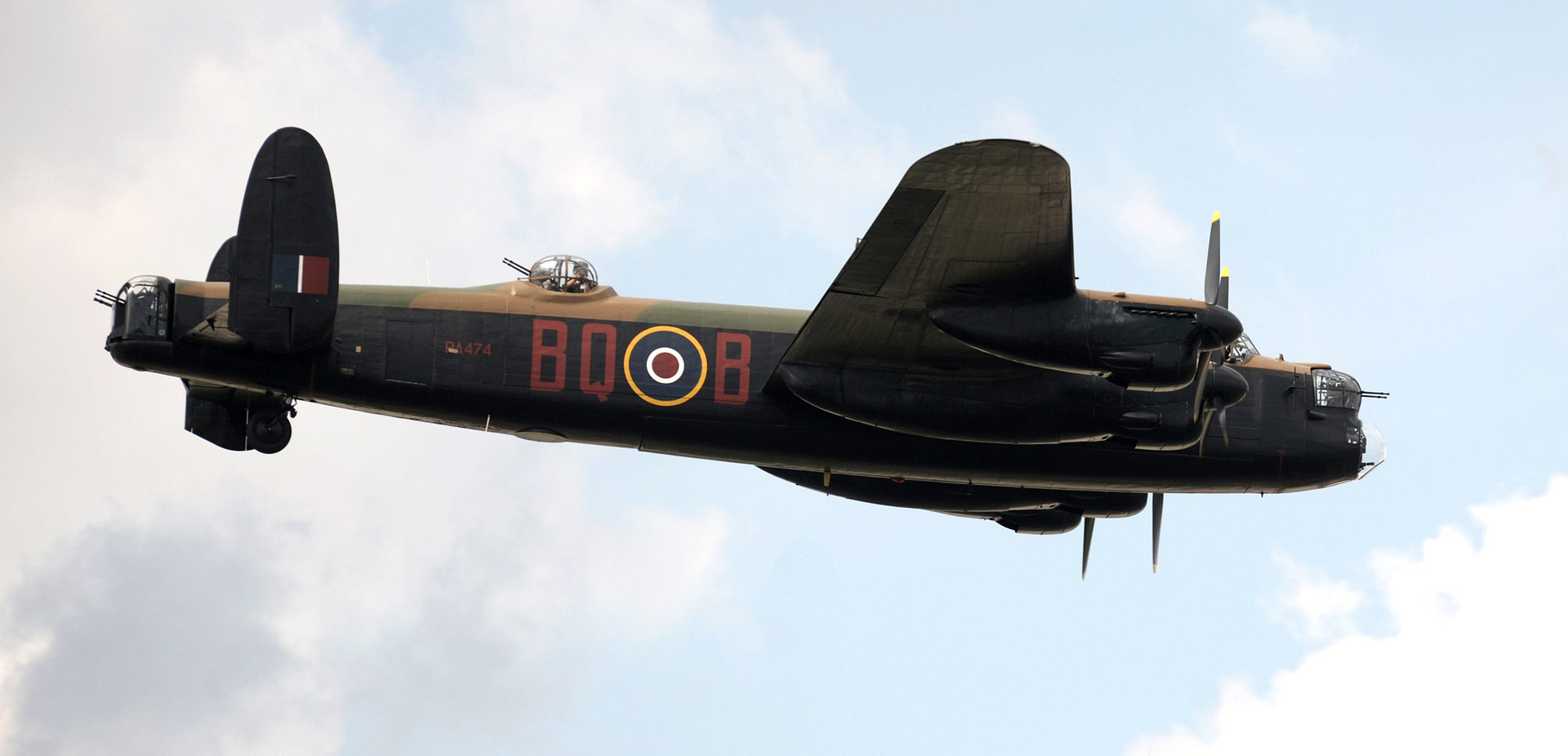
Avro Lancaster
“Lanc”
The four-Merlin heavy bomber that carried RAF Bomber Command’s night offensive over Germany — and the only aircraft able to drop the war’s biggest bombs, from the Dambusters’ bouncing bomb to the 22,000 lb Grand Slam.
The Avro Lancaster: from a failed twin to Bomber Command’s finest
The Lancaster was born out of failure. Avro’s previous heavy, the twin-engine Manchester, was a sound airframe crippled by its Rolls-Royce Vulture engines, which were underpowered and chronically unreliable. Rather than abandon the design, chief designer Roy Chadwick stretched its wing and hung four proven Rolls-Royce Merlins on it. The re-engined machine — briefly called the Manchester III — first flew on 9 January 1941 and transformed a disappointment into what many regard as the finest heavy bomber of the war.
Entering service with No. 44 Squadron in late 1941 and flying its first operations in March 1942, the Lancaster quickly became the mainstay of RAF Bomber Command’s night area-bombing campaign against Germany. It was fast for its size, could climb high with a heavy load, and above all it had a long, unobstructed bomb bay that no other Allied bomber could match — a feature that would define its career.
That bomb bay let the Lancaster carry the largest weapons of the war: the 4,000 lb “Cookie” blockbuster, and Barnes Wallis’s earthquake bombs — the 12,000 lb Tallboy and the 22,000 lb Grand Slam, the heaviest bomb dropped in the conflict. Specially modified Lancasters flew the war’s most famous precision raids: the Dambusters attack on the Ruhr dams in May 1943, with Wallis’s bouncing “Upkeep” bomb, and the sinking of the battleship Tirpitz with Tallboys in November 1944.
The cost was terrible. RAF Bomber Command lost around 55,573 aircrew killed — of every hundred men who served, roughly 45 never came home. A Lancaster completed, on average, only about 21 operations before it was lost, against a standard tour of 30. Those figures should temper any celebration of the aircraft: it was a superb machine flown by very young men into some of the deadliest skies of the war.
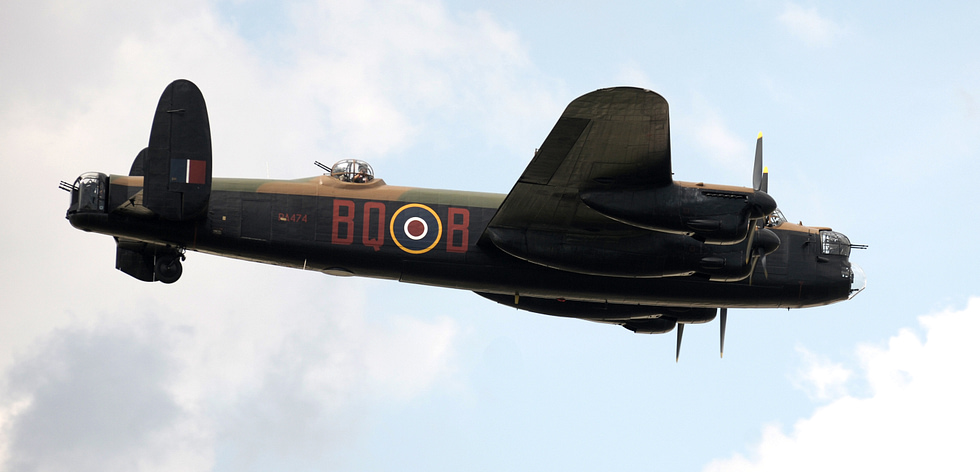
Sommige 7,377 Lancasters were built in Britain and Canada. After 1945 many were converted for maritime reconnaissance and air-sea rescue, and the type served on with the RAF into the mid-1950s and with foreign air forces — notably France — into the 1960s. Today only two remain airworthy: the Battle of Britain Memorial Flight’s PA474 in Britain and “Vera” in Canada.
01The Avro Lancaster’s origins: how the failed Manchester became a four-engine legend
Avro built the twin-engine Manchester to a 1936 specification, but its Rolls-Royce Vulture engines — two Peregrine blocks on a common crankcase — overheated, threw connecting rods and never delivered their promised power. The Manchester was withdrawn from operations in 1942 after a short, troubled career. Roy Chadwick’s answer was simple and inspired: keep the fuselage, fit a new, longer-span wing, and replace the two troublesome Vultures with four reliable Merlins.
The prototype, BT308, flew from Ringway on 9 January 1941 in the hands of test pilot H.A. “Sam” Brown. The change was dramatic: where the Manchester had been marginal, the four-Merlin aircraft was powerful, stable and able to lift enormous loads. Renamed the Lancaster, it went from first flight to the backbone of Bomber Command in barely two years.
What makes the Lancaster special
Four Merlins and a 33-foot bomb bay
Swapping two failing Vultures for four Rolls-Royce Merlins gave the Lancaster the power and altitude the Manchester lacked. Chadwick paired that with a long, unobstructed bomb bay nearly 33 ft long — uninterrupted by structure — so the aircraft could carry loads, and single bombs, that no other Allied heavy could lift. Normal loads ran to 14,000 lb; the bay could be adapted for far more.
Built for the night
As Bomber Command’s mainstay, the Lancaster was equipped for blind night navigation and bombing. Radio-navigation aids Gee En Oboe, and later the H2S ground-mapping radar, guided crews and Pathfinder marker aircraft to German cities through darkness and cloud. Its flexible bay carried the classic area-bombing mix of one 4,000 lb Cookie plus canisters of incendiaries.
The only lifter for the earthquake bombs
The Lancaster was the sole aircraft able to deliver Barnes Wallis’s trio of special weapons: the spinning Upkeep bouncing bomb of the Dams Raid, the 12,000 lb deep-penetration Tallboy, and the 22,000 lb Grand Slam — the heaviest bomb of the war, carried by specially lightened B.I Special aircraft with their bomb doors removed.
02The Avro Lancaster’s bomb bay: why it could carry what nothing else could
American heavies such as the B-17 split their loads between smaller bomb cells around the wing spar. The Lancaster’s bay was different: a single clear run nearly 33 ft long, unobstructed by structure, that could be reconfigured for very large stores. That is why, when Bomber Command needed to drop the 12,000 lb Tallboy or the 22,000 lb Grand Slam, the Lancaster was the only aircraft in the Allied inventory that could do it — a capability that shaped the entire late-war campaign of precision attacks on hardened targets.
03The Avro Lancaster’s special weapons: Upkeep, Tallboy and Grand Slam
Barnes Wallis reasoned that a bomb which punched deep underground before detonating could shake a target apart — the “earthquake” effect. The 12,000 lb Tallboy, first used by 617 Squadron in June 1944, and the 22,000 lb Grand Slam proved him right: on 14 March 1945 a Grand Slam brought down the Bielefeld railway viaduct that 54 conventional raids had failed to destroy. Its designated weight of 22,000 lb is often quoted at a filled weight nearer 21,500 lb. Earlier, Wallis’s cylindrical Upkeep bouncing bomb — spun backwards and dropped at 60 ft and 232 mph — breached the Ruhr dams in May 1943.
Avro Lancaster B.I: full specifications
Airframe & Performance
- Bemanning
- 7 (pilot, flight engineer, navigator, bomb aimer, wireless operator, 2 gunners)
- Lengte
- ~21.18 m (69 ft 6 in)
- Spanwijdte
- 31.09 m (102 ft)
- Hoogte
- ~6.25 m (20 ft 6 in)
- Leeggewicht
- ~16,700 kg
- Max takeoff weight
- ~30,800 kg (68,000 lb)
- Max speed
- ~450 km/h (~280 mph)
- Serviceplafond
- ~24,500 ft (~7,470 m)
- Bereik
- ~2,700 km typical (varies with load)
- Bomb load
- up to ~10,000 kg (22,000 lb Grand Slam, B.I Special)
Propulsion & Systems
- Engines
- 4 × Rolls-Royce Merlin XX/22/24 V12
- Power (each)
- ~1,280–1,640 hp (by mark)
- Defensive armament
- 8 × .303 in Browning MGs (nose, dorsal, tail turrets)
- Navigation / radar
- Gee, Oboe, H2S (Pathfinder-equipped)
- First flight
- 9 January 1941
- Introduced
- 1942
- Built
- ~7,377 (1941–1946)
- Unit cost
- ~£45,000–50,000 (wartime estimate)
- Cost per flight hour
- No reliable modern figure
04The Avro Lancaster’s cost: what a wartime heavy bomber was worth
As a wartime state product built in vast numbers, the Lancaster never carried a market price; period figures put a complete aircraft in the region of £45,000–50,000 in mid-1940s money, though that varied with contract, factory and fit and should be read as an order-of-magnitude estimate, not a firm quote. No credible modern cost-per-flight-hour figure exists for the type. Keeping the two surviving airworthy Lancasters flying today is an expensive, specialist undertaking — the Battle of Britain Memorial Flight’s PA474 entered a deep, multi-year overhaul in late 2025.
From the Manchester to the last flypast
Four engines instead of two
With the twin-engine Manchester failing, Roy Chadwick re-engineers it with a longer wing and four Rolls-Royce Merlins — the “Manchester III.”
First flight
Prototype BT308 flies from Ringway on 9 January, piloted by H.A. “Sam” Brown. The type is renamed Lancaster.
Into service — and the Augsburg raid
First operations in March. On 17 April, twelve Lancasters make a daring daylight low-level strike on Augsburg; Sqn Ldr John Nettleton wins the Victoria Cross.
The Dambusters
On the night of 16–17 May, 617 Squadron breaches the Möhne and Eder dams with Barnes Wallis’s bouncing bomb. Wg Cdr Guy Gibson receives the Victoria Cross.
Mynarski, Tallboy and D-Day
Lancasters pound invasion targets; the 12,000 lb Tallboy enters use in June. On 12 June, gunner Andrew Mynarski dies trying to save a trapped crewmate — a posthumous VC.
The Tirpitz sinks
On 12 November, 617 and IX Squadron Lancasters catch the battleship Tirpitz in a Norwegian fjord and capsize her with Tallboys.
Grand Slam
On 14 March, 617 Squadron drops the first 22,000 lb Grand Slam — the war’s largest bomb — felling the Bielefeld viaduct that had survived 54 earlier raids.
Peace, then retirement
Postwar Lancasters fly maritime reconnaissance and air-sea rescue; France operates about 54 into the 1960s. The RAF retires its last Lancasters in the mid-1950s.
The last two flyers
Of 7,377 built, only two remain airworthy: the BBMF’s PA474 “City of Lincoln” in Britain and “Vera” at the Canadian Warplane Heritage Museum.
Twelve Lancaster stories, from the Dams Raid to the last two flyers
From failure to legend
The Lancaster was born from the failed twin-engine Manchester and its ruined Vulture engines.
Read the full story
Operation Chastise, the Dambusters
On 16–17 May 1943, 617 Squadron breached the Ruhr dams with a bouncing bomb.
Read the full story
Guy Gibson VC
Gibson circled the Möhne under fire to draw flak away from his attacking crews.
Read the full story
Sinking the Tirpitz
Lancasters flying from Scotland capsized the battleship Tirpitz with Tallboys.
Read the full story
Tallboy and Grand Slam
Barnes Wallis’s deep-penetration bombs shook targets apart from below.
Read the full story
The 4,000 lb Cookie
The blast-heavy Cookie blew buildings open so incendiaries could take hold.
Read the full story
Andrew Mynarski VC
A Canadian gunner died trying to free his trapped rear gunner from a burning Lancaster.
Read the full story
Nettleton’s Augsburg raid
A daring daylight low-level strike deep into Germany cost seven of twelve aircraft.
Read the full story
“G for George”
A veteran RAAF Lancaster of some 90 sorties now stands in Canberra.
Read the full story
Seven young men
A Lancaster was flown by seven men, average age about 22, in an unheated aluminium tube.
Read the full story
A tour of thirty
On average a Lancaster lasted about 21 operations — a tour was thirty.
Read the full story
The last two flyers
Only two of 7,377 Lancasters still fly — one in Britain, one in Canada.
Read the full story
The Lancaster in pictures
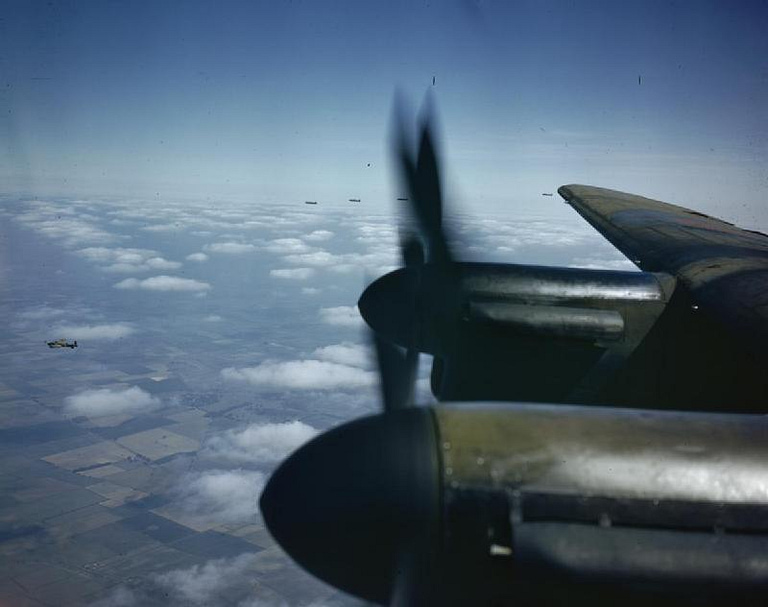
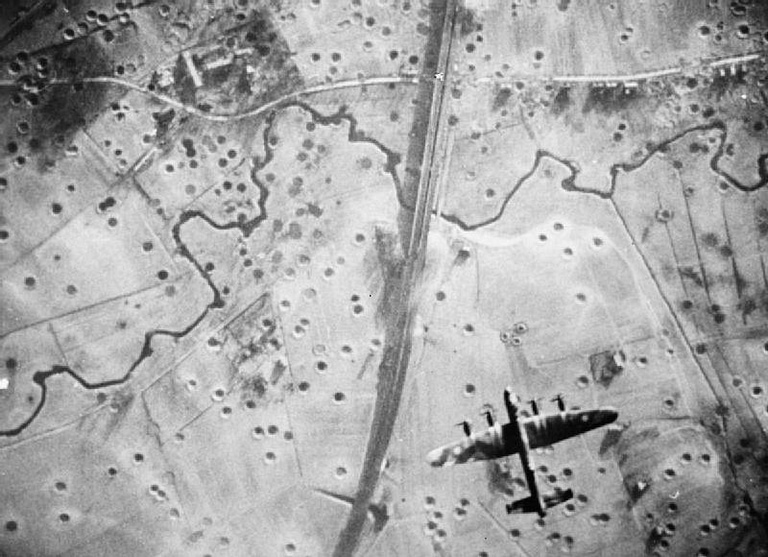

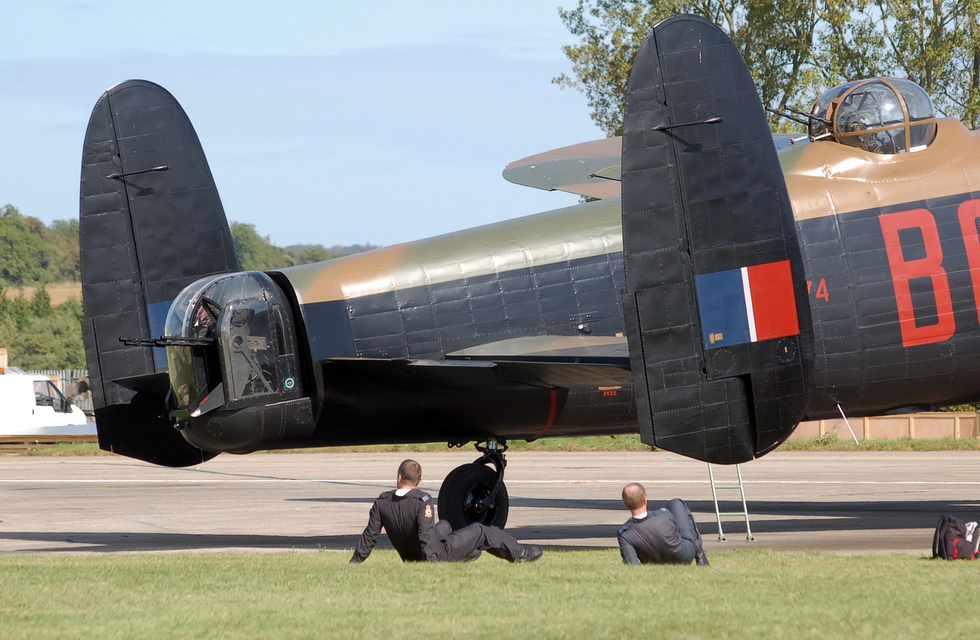
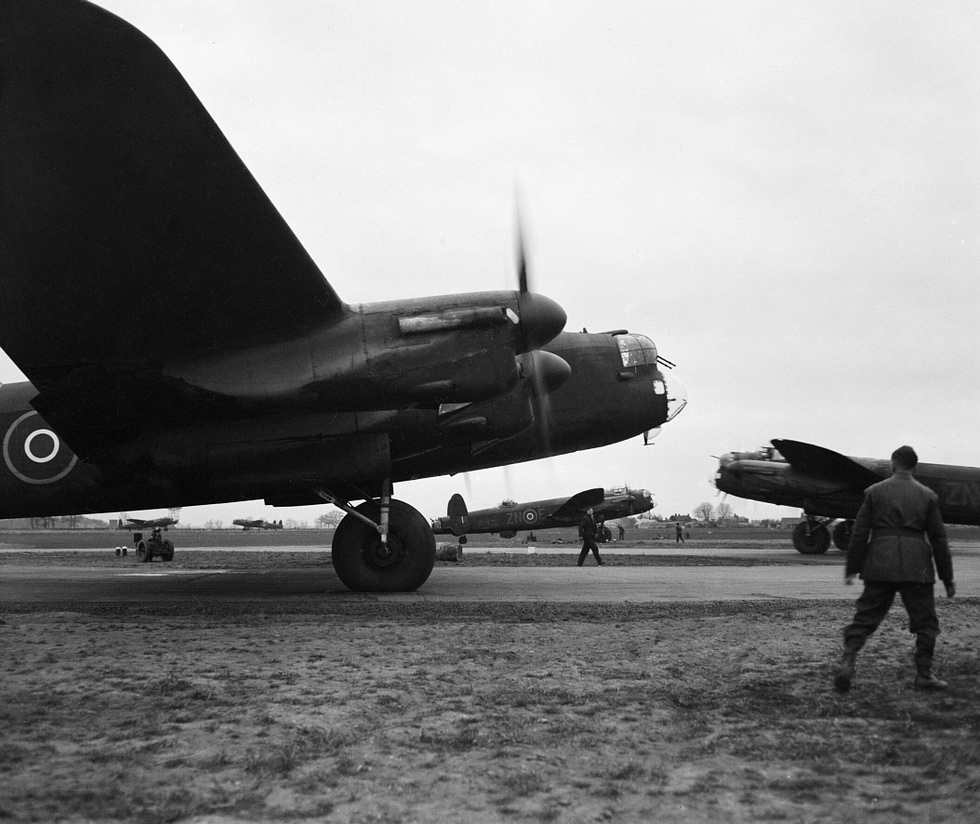
The Lancaster in motion
Video coming soon — we are sourcing a high-quality archive film of the Avro Lancaster to feature here.
Where the Lancaster flew
The score that defines the Lancaster
The Lancaster’s record is written not in air-to-air kills but in bomb tonnage and in the war’s most famous precision raids — and in a heavy human cost that must be remembered soberly. It flew more sorties and dropped more bombs than any other British heavy, and it alone could carry the special weapons that sank the Tirpitz and breached the Ruhr dams.
Around 3,400–3,700 Lancasters were lost on operations — a loss rate of roughly 2.4%, the lowest of any Bomber Command heavy, yet still a grievous toll. Compare the combat record of every military aircraft. Figures as of July 2026.
Everything people ask about the Avro Lancaster
Can I fly in an Avro Lancaster?
How many Lancasters are left flying?
What bombs could the Lancaster carry?
What was the Dambusters raid?
How many Lancasters were built, and how many were lost?
What engines did the Lancaster use?
What is the difference between the Lancaster and the Manchester?
You can’t fly the Lancaster.
These, you can.
Some legends only live in museums — others are fuelled and waiting. MiGFlug has put civilians in real military jet cockpits since 2004.
 Fly the L-39 AlbatrosThe world’s most-flown jet trainer — aerobatics included
 Fly the F-104 Starfighter“The missile with a man in it”
 Fly the MiG-21The Cold War’s most-produced jet
 Vlieg met de T-33 Shooting StarAmerica’s first jet trainer
 Fly the DH VampireA piece of early jet history
 Fly the S.211Agile Italian jet trainer
 Fly the MB-326The classic Aermacchi jet
 Fly the MiG-15The Soviet legend of the Korean War
Continue the tour
Every fact, checked
- RAF Museum — Avro LancasterAuthoritative overview: Chadwick, the Manchester origin, first flight, 7,377 built, and the “21 operations” figure.
- Imperial War Museums — The Dambusters RaidDefinitive account of Operation Chastise, the Upkeep bomb, Gibson and the casualties.
- RAF Memorial Flight Club — Sinking the TirpitzOperation Catechism: the squadrons, the Tallboys and the loss of the battleship.
- Bomber Command Museum of Canada — LossesStatistics: 156,192 Lancaster sorties, 3,677 lost, a 2.4% loss rate, and the overall casualty figures.
- Australian War Memorial — “G for George”The RAAF Lancaster of 460 Squadron, its operational career and its preservation in Canberra.
- RAF Museum — Andrew Mynarski VCThe 419 Squadron gunner’s sacrifice on 12 June 1944 and his posthumous Victoria Cross.
- Key Aero (Aeroplane) — French post-war LancastersThe Aeronavale’s maritime-patrol Lancasters, in service from 1952 into the 1960s.
- Canadian Warplane Heritage Museum — Lancaster “Vera”FM213, the Mynarski Memorial Lancaster — one of only two airworthy in the world.