
Convair B-58 Hustler
The first Mach 2 bomber
A needle-nosed delta that flew at twice the speed of sound with a nuclear weapon slung under its belly — dazzling, record-breaking, brutally expensive and dangerous, and gone from service after barely a decade.
The bomber that flew too fast for its own good
In the early 1950s the US Air Force wanted a bomber that could outrun everything in the sky. The answer, from Convair in Fort Worth, Texas, was one of the most radical aircraft of the age: the B-58 Hustler, de first operational bomber able to sustain Mach 2 — twice the speed of sound. It first flew on 11 November 1956 and entered service with Strategic Air Command in 1960. Nothing that came before it looked or flew remotely like it.
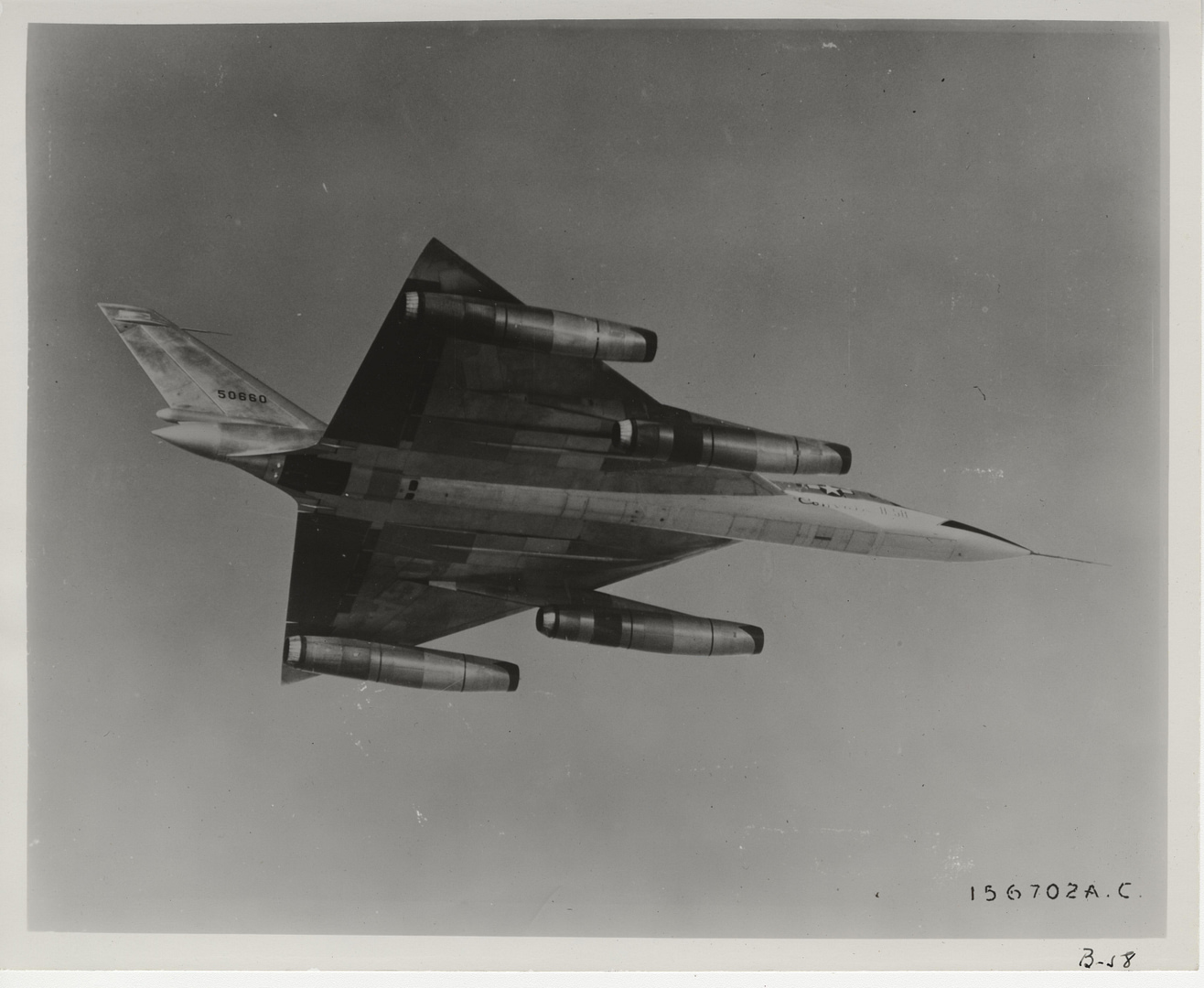
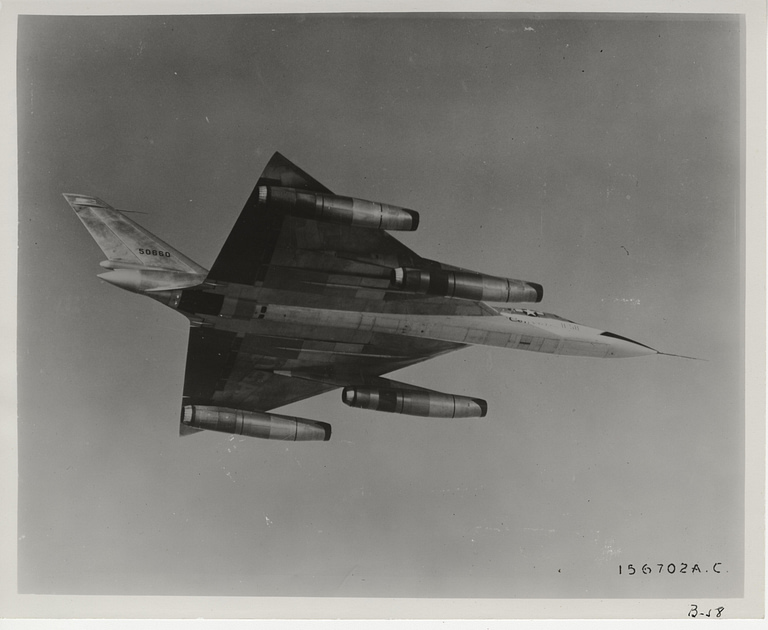
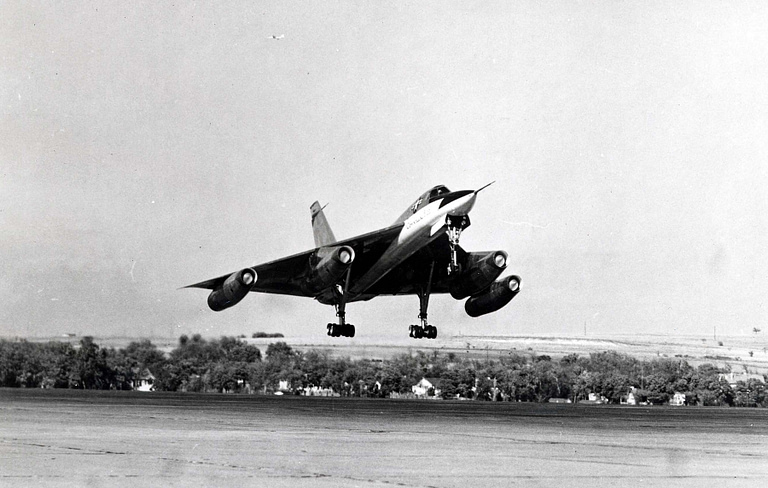
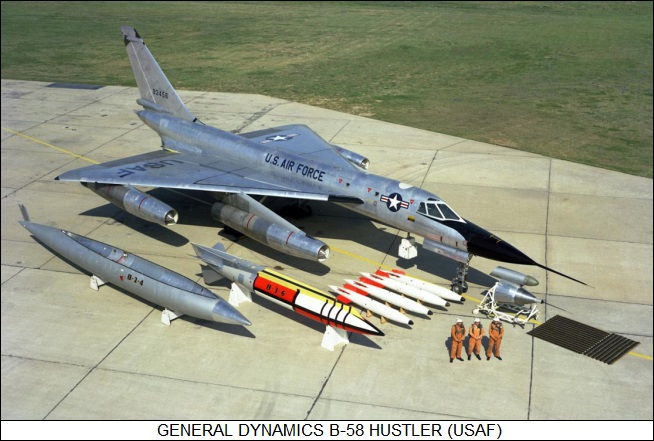
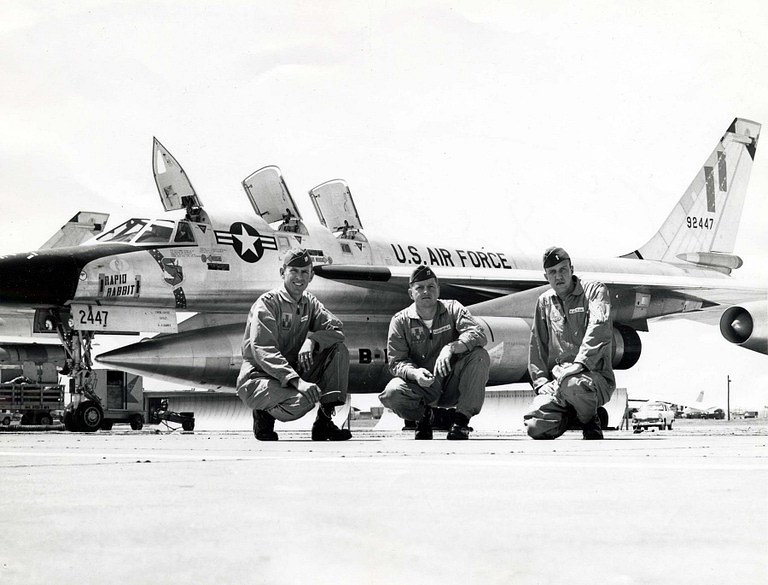
To reach Mach 2, Convair threw out the rulebook. The Hustler used a sharp delta wing, an area-ruled “wasp-waist” fuselage and four General Electric J79 afterburning turbojets slung under the wing. There was almost no room inside for fuel or a bomb bay, so Convair hung an enormous jettisonable pod beneath the fuselage that carried the extra fuel En the nuclear weapon in one droppable package. A crew of three — pilot, navigator-bombardier and defensive systems operator — sat in tandem in a jet packed with the most advanced systems money could buy.
And it was money — enormous amounts of it. The B-58 was extravagantly expensive to buy and to fly, roughly three times the operating cost of the subsonic B-52 it was meant to complement. It was also dangerous: demanding to fly, unforgiving of mistakes, and prone to fatal accidents. Of 116 built, 26 were lost in crashes. Worse, by the time it was operational the mission it was built for was disappearing: Soviet surface-to-air missiles made high-altitude supersonic penetration a death sentence, and intercontinental ballistic missiles were taking over the nuclear-strike role. Defense Secretary Robert McNamara ordered the type retired, and by January 1970 — barely a decade after entering service — every Hustler was gone.
01The Convair B-58 Hustler’s origins: how America built its first Mach 2 bomber
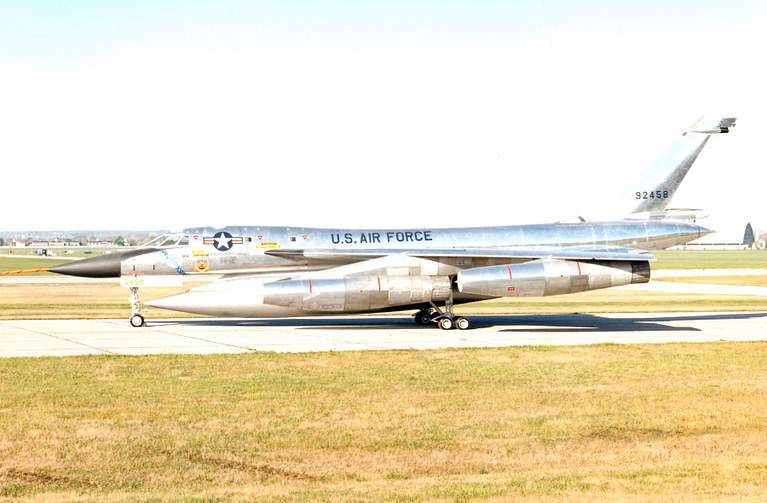
The Hustler grew out of early-1950s Air Force studies for a supersonic strategic bomber, which Convair won in 1952. Convair — already the delta-wing specialist behind the F-102 and F-106 interceptors — proposed a bomber shaped like a scaled-up delta fighter. To beat the transonic drag rise it applied Richard Whitcomb’s newly discovered area rule, pinching the fuselage where the wing joined it. To save weight and internal volume, the fuel and the weapon were moved outside the aircraft entirely, into a droppable belly pod.
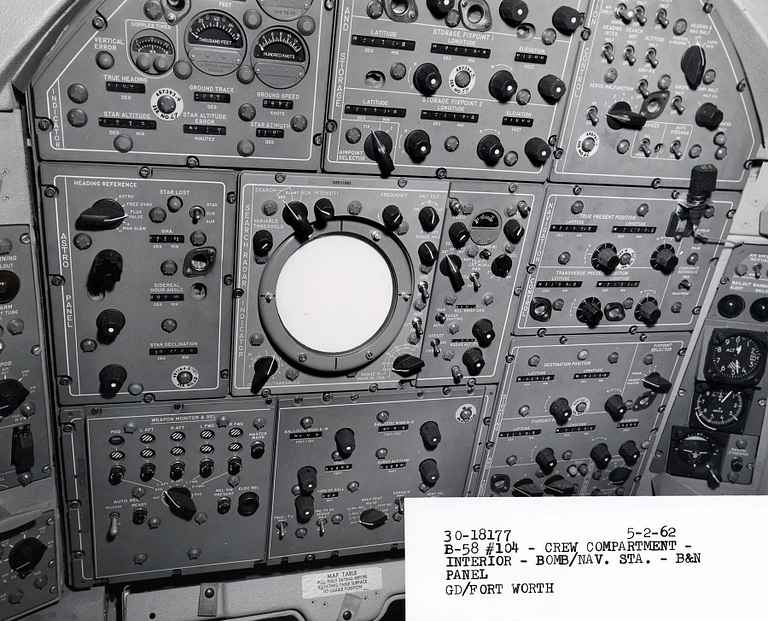
The result was a technological tour de force that pushed 1950s engineering to its limits: stainless-steel honeycomb skins, an early inertial navigation and bombing system, and a needle nose that could touch Mach 2. It also pushed cost and complexity to their limits, and that tension — astonishing performance against ruinous expense and a shrinking mission — defined the Hustler’s whole short life.
What makes it special
A delta wing built for the Mach 2 dash
The Hustler’s sharply swept delta wing — thin, broad and low-drag — let it cruise at Mach 2, twice the speed of sound and far faster than any bomber before it. The same planform that made Convair’s F-102 and F-106 interceptors supersonic was scaled up to bomber size, trading the docile handling of a straight wing for raw high-altitude speed.
Four General Electric J79 turbojets
Power came from four GE J79 afterburning turbojets in individual underwing pods — the same engine family that powered the F-104 Starfighter and F-4 Phantom. Each produced roughly 69 kN (15,600 lbf) in afterburner. Podding the engines separately kept them clear of the slim, area-ruled fuselage and made a Mach 2 four-engine bomber possible.
The droppable fuel-and-weapon pod
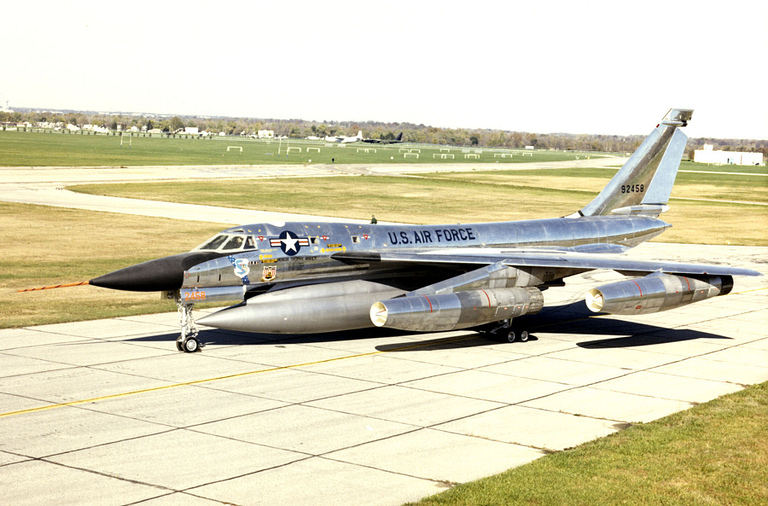
The Hustler’s slender body left no room for a conventional bomb bay, so it carried a huge jettisonable centreline pod holding both extra fuel En the nuclear weapon. Burn the fuel, drop the pod on the target, and the jet flew home lighter and faster. Married to the area-ruled fuselage, it was one of the boldest packaging ideas in bomber design.
02The B-58 Hustler’s delta wing and area rule: shaping an airframe for Mach 2
Flying at Mach 2 meant defeating the violent drag rise that builds around the speed of sound. Convair used two tools. The first was the delta wing: thin in section, deeply swept, and structurally efficient, it gave low supersonic drag and enough internal volume in the wing roots for structure and systems. The second was Richard Whitcomb’s area rule, which says the aircraft’s total cross-sectional area should change smoothly from nose to tail. That is why the Hustler’s fuselage is pinched into a “wasp waist” where the wing meets it — the narrowing offsets the wing’s bulk so the combined area grows gently. The airframe itself was exotic: much of the skin was stainless-steel and aluminium honeycomb sandwich, light and stiff enough to survive the heat and loads of sustained supersonic flight.
03The B-58 Hustler’s droppable pod: fuel and a nuclear weapon in one jettisonable package
Because the area-ruled fuselage had almost no internal volume, Convair put the mission load outside the aircraft. The original MB-1 pod was a single large streamlined body carried on the centreline that held both fuel and a nuclear weapon; the crew burned the pod’s fuel on the way to the target, then released the whole pod. Later the two-component TCP (two-component pod) split fuel and weapon so the empty lower fuel tank could be dropped separately, improving range and flexibility. It was an elegant idea with real drawbacks — the pod was heavy, drag-producing and complex, and a jet that had dropped it had also dropped much of its fuel. But it was the only way to give a Mach 2 delta the range and payload of a strategic bomber.
Full specifications
Figures are for the production B-58A. Contested or variable values (ceiling, range, cost) are hedged; performance depended heavily on pod configuration, fuel and refuelling.
Airframe & Performance
- Bemanning
- 3 (pilot, navigator-bombardier, defensive systems operator)
- Lengte
- 29.5 m (96 ft 9 in)
- Spanwijdte
- 17.3 m (56 ft 10 in)
- Hoogte
- 8.9 m (31 ft 5 in)
- Max takeoff weight
- ~80,240 kg (~163,000 lb)
- Max speed
- ~Mach 2 (~2,120 km/h / ~1,320 mph at altitude)
- Serviceplafond
- ~19,300 m (~63,000 ft)
- Bereik
- ~7,600 km with pod, air-refuelable (varies with load)
Propulsion, Payload & Cost
- Engines
- 4 × GE J79-GE-5 afterburning turbojets
- Thrust (each)
- ~69 kN (~15,600 lbf) with afterburner
- Weapon load
- Nuclear weapon + fuel in droppable pod; later free-fall bombs; 1 × 20 mm T-171 radar-directed tail cannon
- First flight
- 11 November 1956
- Service
- 1960–1970 (SAC)
- Built
- 116 (including 30 test / pre-production)
- Unit cost
- ~US$33.5 million with R&D amortised (early 1960s, commonly cited estimate)
- Cost per flight hour
- ~3× the B-52’s operating cost (widely cited, estimate)
04The Convair B-58 Hustler’s cost: why the Hustler was too expensive to keep
The B-58 is one of the classic examples of an aircraft priced out of its own mission. It was extraordinarily complex — exotic materials, an early inertial nav-and-bombing system, four engines and a droppable pod — and it cost accordingly. When the huge research-and-development bill is spread across the small fleet, the effective per-aircraft cost is frequently cited at around US$33 million in early-1960s money, and the type reportedly cost roughly three times as much to operate as the B-52. For a jet with short range, a small payload and a mission that Soviet missiles were rapidly closing off, that price was impossible to justify. Treat any single dollar figure as an order-of-magnitude estimate rather than an audited number — but the direction is not in doubt: the Hustler was gorgeous, brilliant and unaffordable.
From delta dream to early retirement
Convair wins the contract
The US Air Force selects Convair’s delta-wing proposal for a supersonic strategic bomber, drawing on the company’s F-102/F-106 delta experience.
First flight
The prototype XB-58 makes its maiden flight on 11 November 1956 at Fort Worth, Texas — the start of the Mach 2 bomber era.
Enters SAC service
The B-58A reaches operational service with Strategic Air Command, the first bomber in the world able to sustain Mach 2.
New York–Paris record — and tragedy
“The Firefly” sets the first supersonic Atlantic crossing on 26 May, winning the Mackay and Harmon Trophies — then crashes at the Paris Air Show days later, killing its crew.
Bendix Trophy dash
On 5 March a Hustler flies Los Angeles–New York–Los Angeles, setting three speed records in one flight and winning the Bendix and Mackay Trophies.
Tokyo to London
A B-58 flies Tokyo–London in 8 hours 35 minutes at an average of about 938 mph, taking the Harmon Trophy — a record that still stands.
McNamara orders retirement
Judging the Hustler too costly and its mission overtaken by missiles, Defense Secretary Robert McNamara directs that the fleet be withdrawn.
Retired after a decade
By January 1970 the last B-58s are withdrawn from service — one of the shortest front-line careers of any Cold-War bomber.
Twelve B-58 Hustler stories
The delta that became a bomber
Convair scaled up its delta-fighter know-how into a Mach 2 bomber.
Read the full story
First to sustain Mach 2
No bomber before it could cruise at twice the speed of sound.
Read the full story
The wasp waist
Its pinched fuselage is the area rule made visible.
Read the full story
A weapon you dropped with the fuel
The Hustler carried its bomb and much of its fuel outside the jet.
Read the full story
Nineteen world records
The Hustler rewrote the record books for speed and distance.
Read the full story
The Firefly’s triumph and tragedy
A record-setting jet crashed at the Paris Air Show, killing its crew.
Read the full story
Coast to coast and back
One 1962 flight set three speed records at once.
Read the full story
A record that still stands
The Tokyo-to-London run has never been beaten.
Read the full story
A jet that bit back
The Hustler was fast, unforgiving and often fatal.
Read the full story
Three men, three cockpits
Pilot, bombardier and defence operator sat in a row.
Read the full story
Overtaken by the missile
Soviet SAMs and ICBMs erased the mission it was built for.
Read the full story
Gone in a decade
Retired by 1970, the Hustler had one of the shortest bomber careers.
Read the full story
The Hustler in pictures
The B-58 Hustler in motion
A curated video feature for the B-58 Hustler is coming soon. In the meantime, explore the photo gallery above and the operations map below.
Where the B-58 flew
The record that defines it
The B-58 Hustler never fired a shot in anger. Built as a nuclear penetrator for a war that never came, it served through the 1960s on Strategic Air Command alert but was never used in combat — and its high-altitude Mach 2 mission was rendered obsolete by Soviet missiles before it could ever be flown for real. Its true record is written in the record books: the Hustler set roughly nineteen world records for speed and distance, winning the Bleriot, Thompson, Mackay, Bendix and Harmon Trophies. That glory came at a steep price — a punishing accident rate that destroyed 26 of the 116 aircraft built, several during record attempts.
Compare the combat record of every military aircraft. Figures as of July 2026.
Everything people ask about the B-58 Hustler
Can I fly in a B-58?
Why was the B-58 the first Mach 2 bomber?
What was the droppable pod under the B-58?
Was the B-58 ever used in combat?
Why did the B-58 have such a short career?
What records did the B-58 set?
How many B-58 Hustlers are left?
You can’t fly the B-58.
These, you can.
Some legends only live in museums — others are fuelled and waiting. MiGFlug has put civilians in real military jet cockpits since 2004.
 Fly the L-39 AlbatrosThe world’s most-flown jet trainer — aerobatics included
 Fly the F-104 Starfighter“The missile with a man in it”
 Fly the MiG-21The Cold War’s most-produced jet
 Vlieg met de T-33 Shooting StarAmerica’s first jet trainer
 Fly the DH VampireA piece of early jet history
 Fly the S.211Agile Italian jet trainer
 Fly the MB-326The classic Aermacchi jet
 Fly the MiG-15The Soviet legend of the Korean War
Continue the tour
Every fact, checked
- National Museum of the U.S. Air Force — Convair B-58A HustlerOfficial specifications, crew, service history and the droppable pod.
- B-58 Hustler Association — Trophies & RecordsThe full list of world records and trophies, with dates and crews.
- The Aviation Geek Club — “The Firefly” and the Le Bourget crashThe 1961 New York–Paris record and the fatal Paris Air Show accident.
- The Aviation Geek Club — the 1962 Bendix Trophy flightThe Los Angeles–New York–Los Angeles round-trip record of March 1962.
- War History Online — The Convair B-58 HustlerDevelopment, the first operational Mach 2 bomber, and why it was retired.
- Vintage Aviation News — Surviving B-58 HustlersThe preserved airframes and where to see a Hustler today.
- National Security Journal — 26 of 116 lost in ten yearsThe accident rate, dangerous handling and short service life.
- 19FortyFive — Mach 2, but retired while the B-52 flies onCost, obsolescence and the contrast with the enduring B-52.