
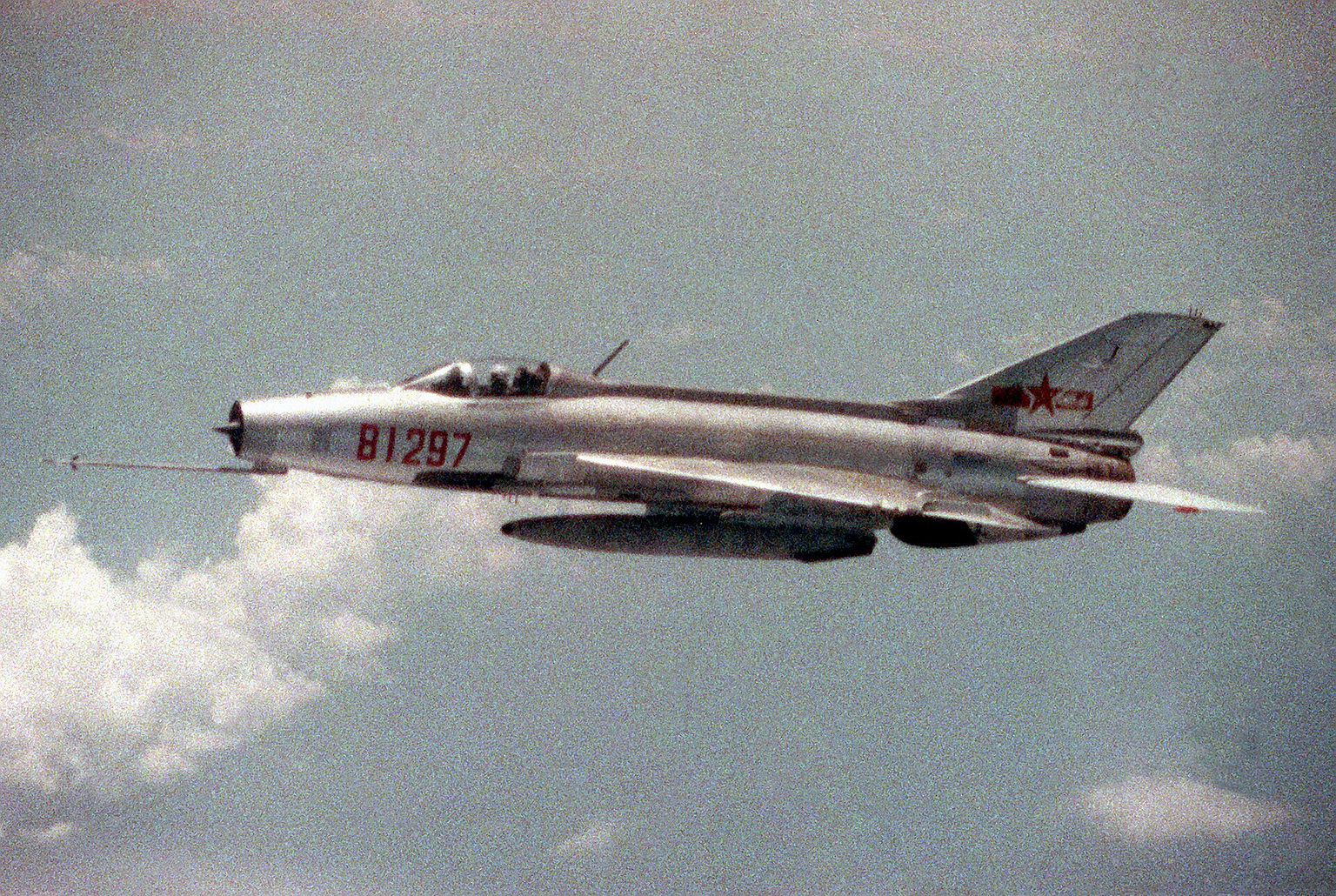
Chengdu J-7 / F-7
China’s MiG-21
The Soviet MiG-21, licence-built in China and then developed far beyond the original — reverse-engineered during the Sino-Soviet split, exported around the world as the F-7, and still the last MiG-21-lineage fighter in front-line service.
China’s MiG-21 — built from a blueprint the Soviets took back
In 1961, at the very end of a decade of Soviet-Chinese friendship, Moscow agreed to licence China to build its newest lightweight fighter, the Mikoyan-Gurevich MiG-21F-13. Within months the Sino-Soviet split hardened into open estrangement, Soviet advisers went home, and the promised technical package arrived incomplete. Rather than abandon the project, Chinese engineers at Shenyang and later Chengdu reverse-engineered much of the aircraft and its engine from a handful of sample airframes and partial drawings.
The Chinese version first flew on 17 January 1966 and entered service as the J-7. Progress was then badly disrupted by the Cultural Revolution, and a genuinely mature, reliable aircraft only emerged in the late 1970s and 1980s. But from that point China did something the Soviet Union never did with the MiG-21: it kept developing the design for another thirty years — new wings, new engines, Western and then indigenous avionics — and sold it across the world as the F-7.
That is the key thing to understand about the J-7. It began as a MiG-21, but it is not simply a copy frozen in the 1960s. Roughly 2,400 were built over an extraordinary 47-year production run, the double-delta J-7E and radar-equipped J-7G gave it capabilities the original never had, and export F-7s equipped some fifteen air forces. As Russia, India and others retired their Fishbeds, the J-7/F-7 became the last MiG-21-lineage fighter still guarding front lines.
01How the J-7 differs from the MiG-21 it started as
The earliest J-7 was very close to the Soviet MiG-21F-13: a single 30 mm cannon, a simple ranging radar and the MiG-21’s awkward forward-hinged canopy. Over the following decades China pulled the design steadily away from that starting point. The J-7II introduced a conventional rearward-opening canopy and a zero-zero ejection seat; export F-7M/P variants added Western avionics such as GEC-Marconi head-up displays; the J-7E replaced the pure delta with a more efficient double-delta wing that markedly improved manoeuvrability and range; and the final J-7G carried a small pulse-Doppler radar and modern PL-8/PL-9 missiles.
The result is a family that shares the MiG-21’s DNA and silhouette but diverged into its own line — developed longer, exported more widely and flown later than the Soviet original. This exhibit covers that Chinese line; for the Soviet aircraft it grew from, see the separate MiG-21 Fishbed exhibit.
What makes the J-7 special
A delta wing on a Chinese-built engine
The J-7 kept the MiG-21’s tailed-delta layout, but China had to build the powerplant itself. The Liyang WP-7, and later the more powerful WP-13, were domestic afterburning turbojets developed from the Soviet Tumansky R-11/R-13 — China’s first mass-produced supersonic engines and a major industrial milestone. Late models give roughly 64 kN of thrust in reheat, enough for about Mach 2.
The double-delta wing and better avionics
The biggest break from the MiG-21 came with the J-7E of the early 1990s, whose new double-delta (“cranked”) wing improved sustained turn, take-off and range. Avionics climbed from a simple ranging radar to Western export packages and finally the pulse-Doppler radar of the J-7G, giving a limited all-aspect capability — and a helmet-mounted sight — the original Fishbed never had.
Cheap, simple and built to export
Above all the J-7/F-7 was designed to be light, simple and inexpensive — an easy-to-fly, easy-to-maintain point-defence fighter that a modest air force could actually afford. That philosophy made it China’s best-selling combat aircraft, giving budget air forces across Asia and Africa supersonic capability for a fraction of the price of a Western jet.
02The J-7’s engines: China’s first supersonic turbojets
When Soviet support ended, China not only had to reverse-engineer the MiG-21’s airframe but also its Tumansky engine. The resulting Wopen WP-7, built at Liyang and Guizhou, was the country’s first mass-produced afterburning supersonic turbojet; the later WP-13 raised thrust and reliability. Getting these engines into series production was as significant for Chinese industry as the airframe itself, and the experience fed directly into later indigenous programmes.
03From F-7 to JF-17: the Super-7 that became a new fighter
In the late 1980s Chengdu worked with the US firm Grumman on a deeply modernised F-7 known as Super-7 of Sabre II, with a solid nose radar and side air intakes. The 1989 arms embargo ended American involvement, but the concept survived and was reworked with a Russian engine into the JF-17 Thunder, co-developed with Pakistan. In that sense the F-7’s export success produced a genuine successor — see the separate JF-17 Thunder exhibit.
Full specifications
Representative figures for a late single-seat variant (J-7G-class). Sources vary; contested values are given as ranges.
Airframe & Performance
- Bemanning
- 1 (2 in JJ-7 / FT-7 trainer)
- Lengte
- ~14.9 m
- Spanwijdte
- ~8.3 m (double-delta wing)
- Hoogte
- ~4.1 m
- Leeggewicht
- ~5,300 kg
- Max takeoff weight
- ~9,100 kg
- Max speed
- ~Mach 2.0 (~2,175 km/h)
- Serviceplafond
- ~17,500–18,200 m
- Gevechtsradius
- ~600–850 km (config-dependent)
Propulsion & Systems
- Motor
- 1 × Liyang WP-13F turbojet
- Thrust
- ~64 kN with afterburner
- Radar
- Ranging radar; pulse-Doppler on J-7G
- Cannon
- 2 × 30 mm Type 30-1
- Missiles
- PL-2 / PL-5 / PL-7 / PL-8 / PL-9 AAMs
- Hardpoints
- 4–5 (underwing + centreline)
- First flight
- 17 January 1966
- Built
- ~2,400 (1966–2013)
- Unit cost (export)
- ~US$2–5 million (estimate)
04The J-7’s cost: why the price is only an estimate
As a Chinese state product sold mostly through government-to-government deals, the J-7/F-7 has no firm published flyaway price. Export F-7s were widely reported at roughly US$2 million in the 1980s, with later upgraded versions often quoted around $3–5 million — figures that should be read as order-of-magnitude estimates rather than official numbers. No reliable public cost-per-flight-hour figure exists for the type. Whatever the exact sum, the aircraft’s selling point was clear: supersonic capability at a fraction of the cost of a Western fighter.
From licensed copy to global export fighter
The licence — and the split
The USSR agrees to licence China to build the MiG-21F-13, but the Sino-Soviet split soon cuts off technical support, leaving China to reverse-engineer much of it.
First Chinese flight
The Chinese-built prototype flies on 17 January 1966; the aircraft enters service as the J-7 the following year.
The J-7II matures
An improved J-7II with a rearward-opening canopy, zero-zero ejection seat and better engine becomes the mainstream production baseline.
The export drive
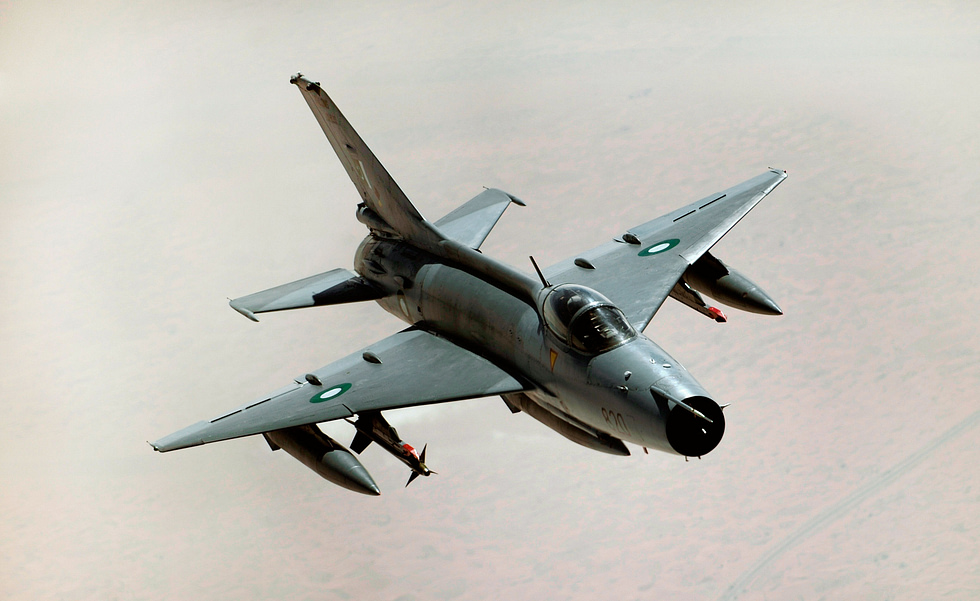
China markets the F-7M Airguard with Western avionics; Pakistan becomes the largest foreign buyer, later fielding the F-7P and F-7PG “Skybolt.”
The double-delta J-7E
The J-7E introduces a new double-delta wing, improving agility and range; it equips the PLAAF’s “August 1st” aerobatic display team.
The final J-7G
The J-7G, with a small pulse-Doppler radar and modern missiles, becomes the last and most capable Chinese version.
Production ends
Chinese production closes after roughly 2,400 aircraft and a 47-year run, with the final F-7BGI export batch delivered to Bangladesh.
The last Fishbeds
China retires its J-7s in earnest as J-10, J-16 and J-20 arrive, but export F-7s fly on — the last MiG-21-lineage fighters in front-line service.
Twelve stories from the J-7’s long life
The fighter China built from a torn-up deal
When Moscow walked out, Beijing built the MiG-21 anyway.
Read the full story
The canopy that opened the wrong way
Early J-7s inherited the MiG-21’s hazardous forward-hinged canopy.
Read the full story
China’s first supersonic engine
Copying the MiG-21 meant copying its engine too.
Read the full story
When an American firm tried to rebuild China’s MiG-21
A late-1980s deal to modernise the F-7 ended up seeding a new fighter.
Read the full story
The double-delta and the August 1st team
A new wing turned a twitchy interceptor into a display aircraft.
Read the full story
Skybolt: Pakistan’s Chinese MiG-21
Pakistan became the F-7’s biggest foreign champion.
Read the full story
F-7s on both sides of a war
Chinese MiG-21 copies flew for rival air forces at once.
Read the full story
China’s best-selling fighter
Some fifteen air forces bought the F-7.
Read the full story
From Harare to Khartoum
The F-7 became many African air forces’ first jet fighter.
Read the full story
The F-7’s accident record
Like the MiG-21, the F-7 is unforgiving to fly.
Read the full story
The last MiG-21 still on the front line
A design first flown in 1955 still guards borders today.
Read the full story
The PLAAF says goodbye to the J-7
China is closing out its own MiG-21 era.
Read the full story
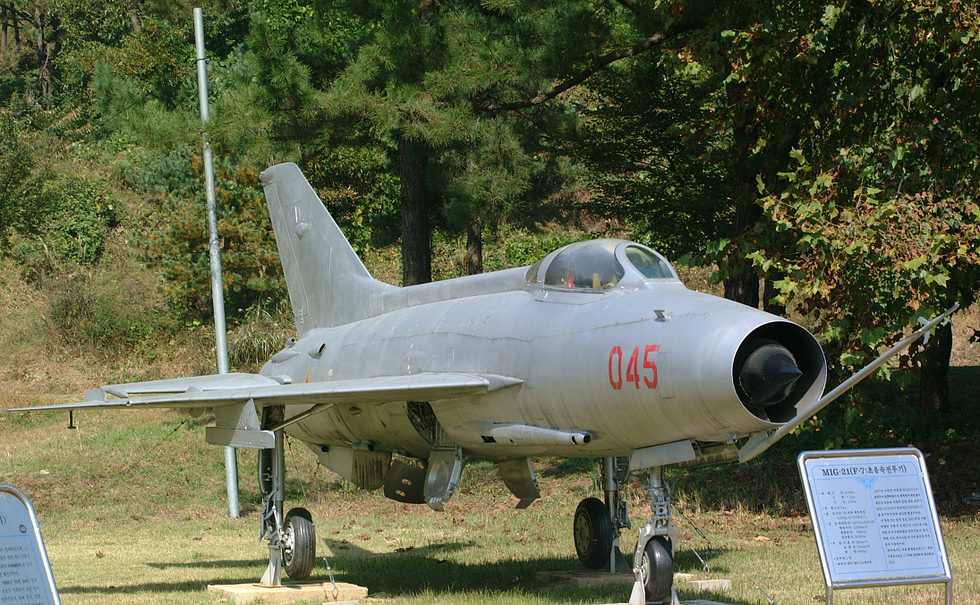
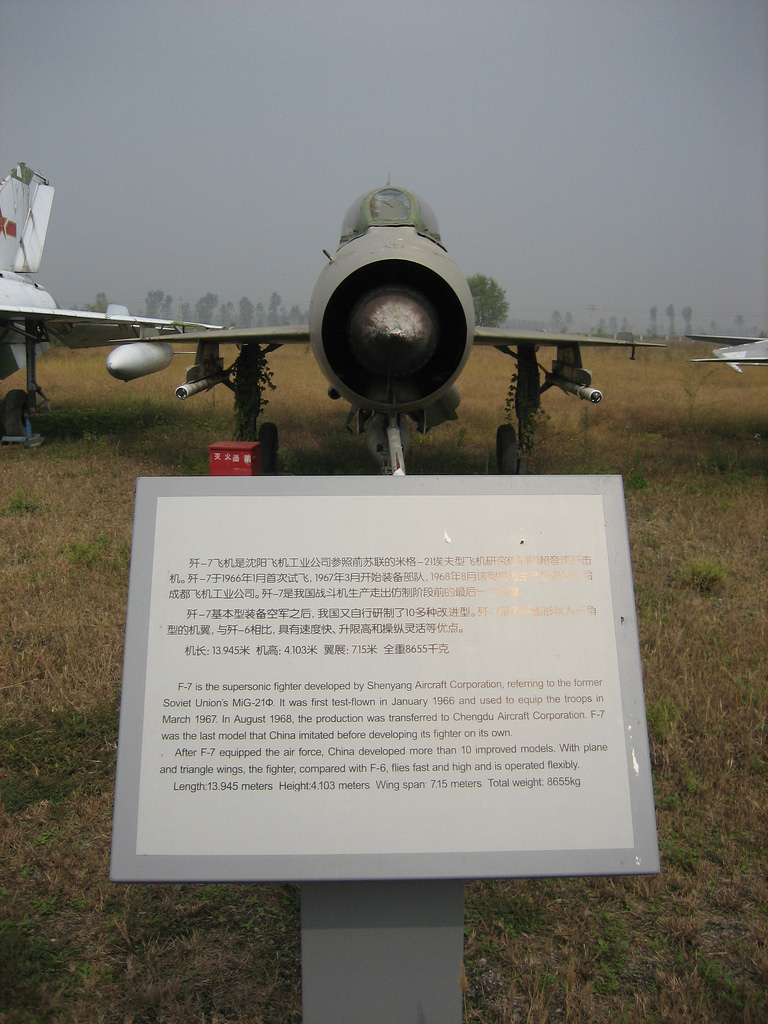
The J-7 and F-7 in pictures
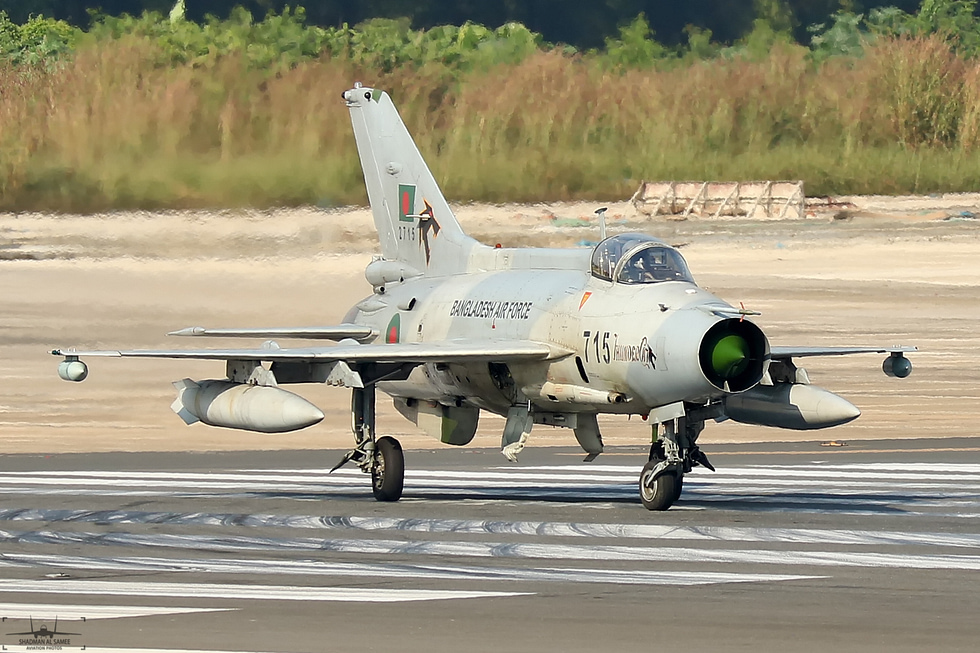
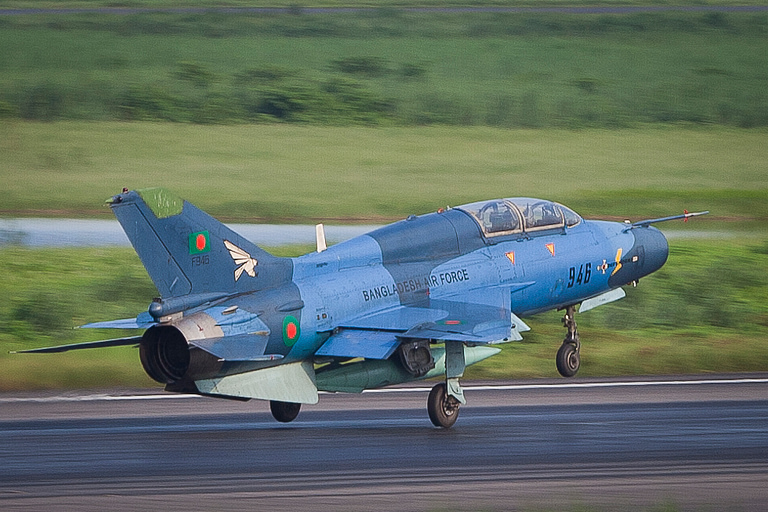
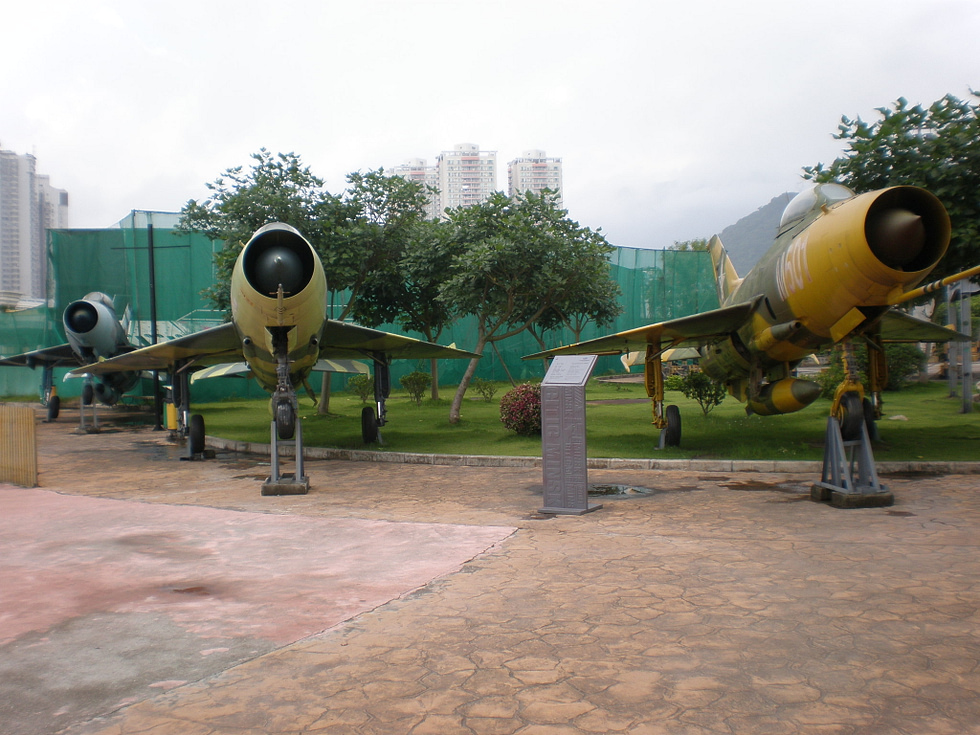
The J-7 in motion
A dedicated video feature for the Chengdu J-7 / F-7 is coming soon. In the meantime, explore the stories, specifications and operations map above.
The Chengdu J-7 in motion
European Defense — one of the most-watched Chengdu J-7 films on YouTube.
Where the J-7 and F-7 fly
A quiet workhorse, not a famous ace
The J-7/F-7 has no celebrated air-to-air record. In Chinese service it spent decades on point-defence alert; abroad it flew air-defence, border-patrol and ground-attack missions for a long list of export users, several of them in internal wars. Any specific kill claims for the type are poorly documented and should be treated with caution. Its real significance is measured differently — in numbers built, air forces equipped, and sheer longevity.
Compare the combat record of every military aircraft. Figures as of July 2026.
Everything people ask about the J-7 / F-7
Can I fly in a J-7?
Is the J-7 the same as the MiG-21?
How is the J-7 different from the MiG-21?
How many were built?
How fast is the J-7?
Who used the J-7 and F-7?
Is the J-7 still in service?
What replaced the J-7?
You can’t fly the J-7.
These, you can.
Some legends only live in museums — others are fuelled and waiting. MiGFlug has put civilians in real military jet cockpits since 2004.
 Fly the L-39 AlbatrosThe world’s most-flown jet trainer — aerobatics included
 Fly the F-104 Starfighter“The missile with a man in it”
 Fly the MiG-21The Cold War’s most-produced jet
 Vlieg met de T-33 Shooting StarAmerica’s first jet trainer
 Fly the DH VampireA piece of early jet history
 Fly the S.211Agile Italian jet trainer
 Fly the MB-326The classic Aermacchi jet
 Fly the MiG-15The Soviet legend of the Korean War
Continue the tour
Every fact, checked
- GlobalSecurity.org — J-7 (Jianjiji-7) / F-7Development history, reverse-engineering after the Sino-Soviet split and service overview.
- GlobalSecurity.org — J-7 / F-7 variantsReference for the J-7I through J-7G and F-7 export variant progression.
- AirVectors (Greg Goebel) — MiG-21 & Chinese J-7Detailed technical history of the Chinese J-7 line within the wider MiG-21 family.
- Military Factory — Chengdu J-7 / F-7Specifications, production totals and operator list.
- Airforce Technology — J-7 / F-7 Fighter AircraftAirframe, engine and armament data for the type and its export models.
- The Aviation Geek ClubFeatures on the J-7’s MiG-21 lineage, the Super-7/JF-17 story and PLAAF retirement.
- 19FortyFiveAnalysis of the J-7 as the last MiG-21-lineage fighter and China’s phase-out.
- Military Watch MagazineCoverage of continued F-7/JF-17 manufacture and export operators.