
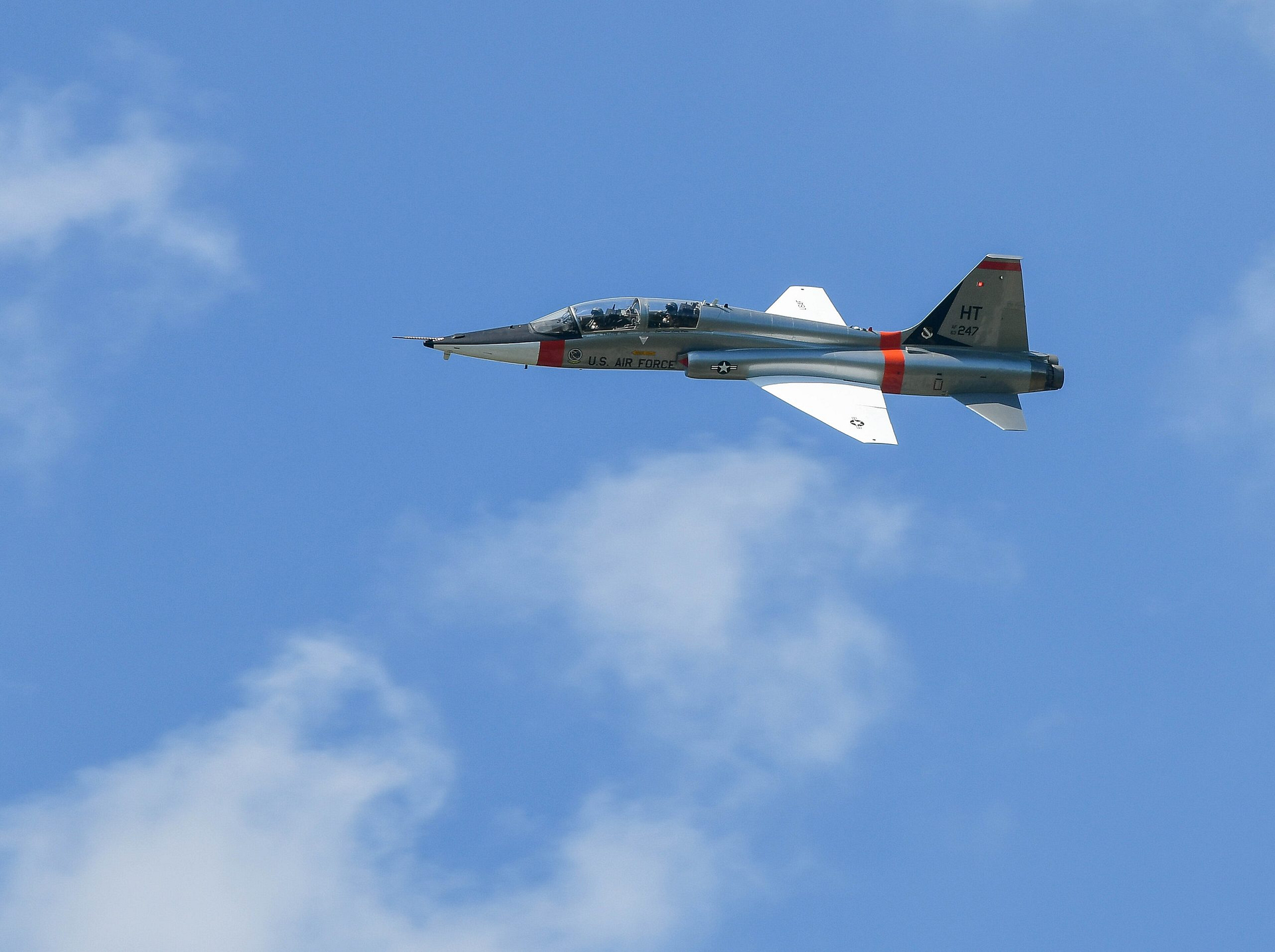
Northrop T-38
“Talon”
The world’s first supersonic trainer — a sleek, twin-engine jet that has taught American fighter and astronaut pilots to fly fast for more than sixty years, and still wears NASA’s white paint today.
The jet that taught the West to go supersonic
By the mid-1950s the fighters entering service — the F-100, F-104 and their kin — could all fly faster than sound. The trainers feeding pilots into them could not. Student aviators were making the leap from subsonic jets straight into supersonic front-line aircraft, and the accident reports showed it. What the U.S. Air Force needed was a trainer that flew like the fighters it fed.
Northrop’s answer grew out of a private venture. Designer Edgar Schmued and his team had drawn up a lightweight fighter, the N-156, built around two compact General Electric J85 turbojets. From that same airframe family Northrop developed a two-seat trainer, the T-38 Talon, with a slim, area-ruled “coke-bottle” fuselage, a razor-thin wing and tandem cockpits. It first flew on 10 April 1959 and entered Air Training Command service in March 1961 — the world’s first supersonic trainer.
The Talon was fast, honest and cheap to run, and it stuck. Between 1959 and 1972 Northrop built 1,187 of them, and the type became the backbone of USAF advanced pilot training for generations. It also went to work far beyond the training pattern: NASA adopted a fleet of white Talons to keep astronauts current and to chase spacecraft, the USAF Thunderbirds flew it through the fuel-conscious late 1970s, and allied air forces sent their pilots to fly it. More than six decades on, upgraded T-38C and T-38M Talons are still flying — now finally on track to be replaced by the Boeing T-7A Red Hawk.
01The Northrop T-38 Talon’s origins: how a lightweight fighter became the world’s first supersonic trainer
The Talon shares its DNA with the F-5 Freedom Fighter. Both descend from Northrop’s N-156 project of the mid-1950s, a deliberately small, simple design built around a pair of General Electric J85 engines. The single-seat version became the F-5; the two-seat, unarmed version became the T-38.
That fighter heritage is the whole point. Because the Talon accelerates, climbs and handles much like the supersonic jets students would graduate to, it closed the dangerous gap between subsonic trainers and Mach-2 front-line aircraft. The area-ruled fuselage — pinched at the waist to cut transonic drag — let a modestly powered aircraft slip past the speed of sound cleanly. The formula worked so well that the basic design has never really needed replacing, only re-winging and re-wiring.
What makes it special
Twin J85s and an area-ruled body
Two General Electric J85-GE-5 afterburning turbojets — each about 3,850 lbf (17 kN) in reheat — give the light Talon a superb thrust-to-weight ratio. Paired with the area-ruled, wasp-waisted fuselage and a thin, short-span wing, they let it reach Mach 1.3 and climb at over 33,000 ft per minute, on a fraction of a fighter’s fuel.
Built to fly like a fighter
Tandem cockpits, a fighter’s control response and genuine supersonic performance mean students learn on an aircraft that behaves like the jets they will graduate to. That is exactly why it endured: the T-38 bridged the gap between subsonic trainers and Mach-2 front-line fighters, and stayed the standard advanced trainer for over sixty years.
NASA’s white rocket
Since the 1960s NASA has flown a fleet of white T-38s to keep astronauts flight-current, ferry crews and act as chase planes. Their sharp handling makes them ideal for staying sharp between spaceflights — the Talon has carried nearly every American astronaut generation from Gemini to the Space Shuttle and beyond.
02The T-38 Talon’s engines: why two small J85s were the right choice
The General Electric J85 is a tiny engine — barely a metre long — but with afterburner it produces roughly 3,850 lbf of thrust for very little weight. Two of them give the sub-13-tonne Talon a thrust-to-weight ratio close to a contemporary fighter, which is why it can go supersonic and climb so hard while burning far less fuel than the jets it trains pilots for. The same J85 powers the Talon’s single-seat cousin, the F-5, and remained in production for decades — cheap, rugged and easy to maintain, exactly what a training fleet needs.
03The T-38 Talon’s long career: upgrades, ageing airframes and the T-7A replacement
Keeping a 1960s design safe into the 2020s has meant constant modernisation. The T-38C Pacer Classic and avionics upgrades added a glass cockpit, HUD and modern navigation; Turkey’s T-38M programme re-winged and re-avioniced its fleet. Even so, the airframes are old, and a run of accidents drove structural and ejection-seat improvements. The U.S. Air Force has selected the Boeing T-7A Red Hawk as the Talon’s successor; until enough arrive, upgraded T-38s keep flying, making the type one of the longest-serving aircraft in U.S. service.
Full specifications
Airframe & Performance
- Bemanning
- 2 (instructor & student, tandem)
- Lengte
- 14.14 m (46 ft 4.5 in)
- Spanwijdte
- 7.70 m (25 ft 3 in)
- Hoogte
- 3.92 m (12 ft 10.5 in)
- Max takeoff weight
- ~12,090 kg (26,660 lb)
- Max speed
- Mach 1.3 · ~1,380 km/h at altitude
- Klimsnelheid
- ~170 m/s (33,600 ft/min)
- Serviceplafond
- ~16,760 m (55,000 ft)
- Bereik
- ~1,835 km (1,140 mi)
- First flight
- 10 April 1959
Propulsion, Production & Cost
- Engines
- 2 × General Electric J85-GE-5
- Thrust (each)
- ~3,850 lbf (17 kN) with afterburner
- Bewapening
- None (AT-38B carried practice ordnance)
- Entered service
- March 1961 (USAF Air Training Command)
- Built
- 1,187 (1959–1972, Hawthorne, CA)
- Main variants
- T-38A, AT-38B, T-38C, NASA T-38N, Turkish T-38M
- Unit cost
- ~$756,000 (1961, est.)
- Cost per flight hour
- Commonly estimated ~$8,000 (figures vary widely)
04The T-38 Talon’s operating costs: what an hour of supersonic training costs
The Talon was designed to be cheap, and by fast-jet standards it still is. Its 1961 flyaway price is usually given as around $756,000, and its two small J85 engines sip fuel next to a front-line fighter. Published cost-per-flight-hour figures nonetheless range widely — from roughly $5,000 to over $11,000 depending on the year, the variant and how each study counts maintenance on an ageing fleet; a figure around $8,000 per hour is often quoted. Treat any single number as an estimate: like most military operating costs, it is a moving target rather than a fixed price, and the rising cost of keeping 1960s airframes flying is a big part of why the T-7A is on the way.
From Century Series to the Space Shuttle
The N-156 concept
Northrop begins a lightweight, twin-J85 design that will branch into the F-5 fighter and the T-38 trainer.
First flight
Test pilot Lewis Nelson lifts the prototype Talon off at Edwards AFB on 10 April — the first supersonic trainer takes to the air.
Enters service
The T-38A joins USAF Air Training Command; Jacqueline Cochran sets a string of women’s world records in a Talon the same year.
NASA takes the Talon
NASA begins operating white T-38s for astronaut proficiency and chase duties — a role it still fills today.
Production ends
The 1,187th and last Talon rolls out of Northrop’s Hawthorne plant after thirteen years of production.
Thunderbirds era
After the 1973 oil crisis the USAF Thunderbirds fly the economical T-38 for eight display seasons.
Rebuilt for the 21st century
Pacer Classic and T-38C avionics upgrades give the fleet glass cockpits and fresh structure to fly on for decades more.
Enter the Red Hawk
The USAF picks the Boeing T-7A Red Hawk to succeed the Talon; upgraded T-38s keep training pilots until it arrives in force.
From the flight line: twelve Talon stories
One airframe, two aircraft
The T-38 and the F-5 Freedom Fighter are twins from Northrop’s N-156 project.
Read the full story
Ten April at Edwards
Test pilot Lewis Nelson took the prototype supersonic on an early flight.
Read the full story
Jackie Cochran’s Talon records
The legendary aviator set a batch of women’s world records in a T-38 in 1961.
Read the full story
The white Talons
NASA’s fleet of white T-38s has kept astronauts current since the Gemini era.
Read the full story
The See and Bassett crash
A NASA T-38 accident cost the lives of two Gemini astronauts.
Read the full story
Thunderbirds go economical
The USAF display team flew the fuel-sipping Talon for eight seasons.
Read the full story
The AT-38B
An armed Talon taught new fighter pilots to shoot and bomb before their front-line jets.
Read the full story
Sheppard and ENJJPT
Allied air forces send their fast-jet students to fly the Talon in Texas.
Read the full story
Turkey’s T-38M
Turkey rebuilt its Talons into modern T-38M jets that still fly today.
Read the full story
Pacer Classic
A structural rebuild programme bought the fleet decades of extra service.
Read the full story
The pilots it made
Most American fighter and astronaut pilots of the jet age trained on the Talon.
Read the full story
Enter the Red Hawk
The Boeing T-7A will finally take the Talon’s place.
Read the full story
The Talon in pictures
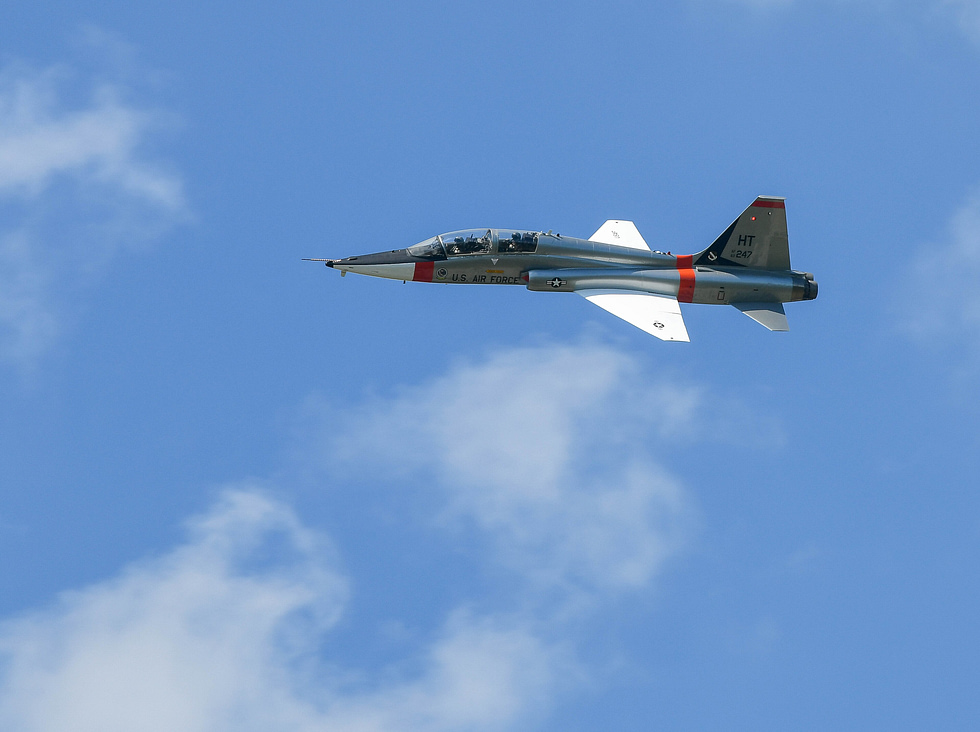
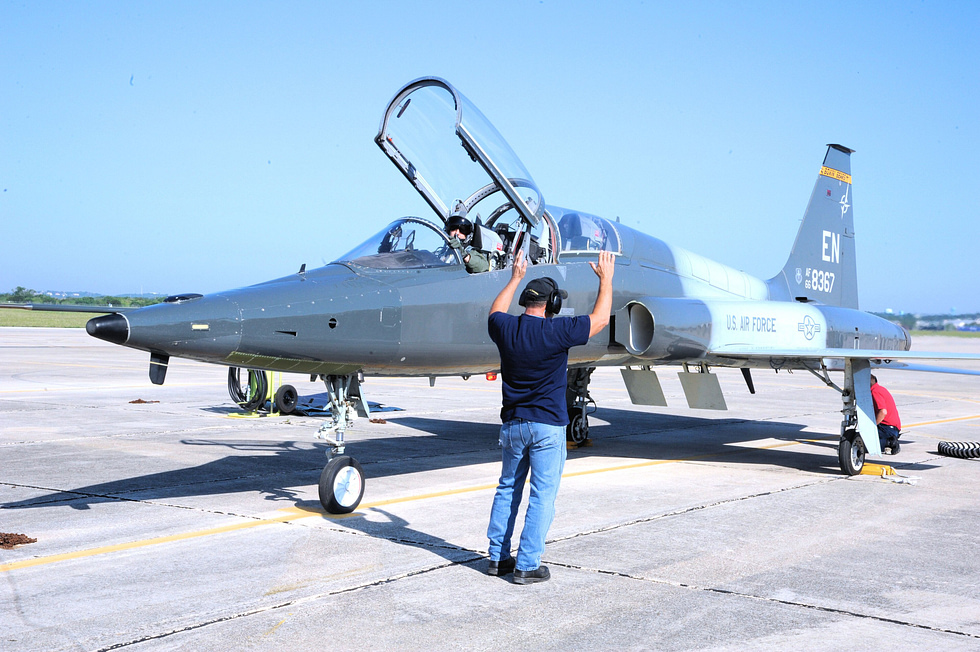
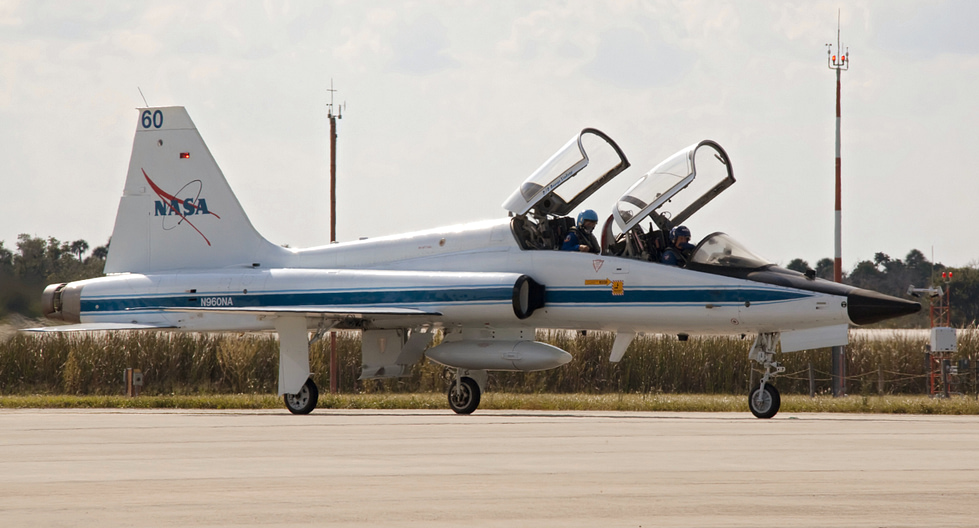
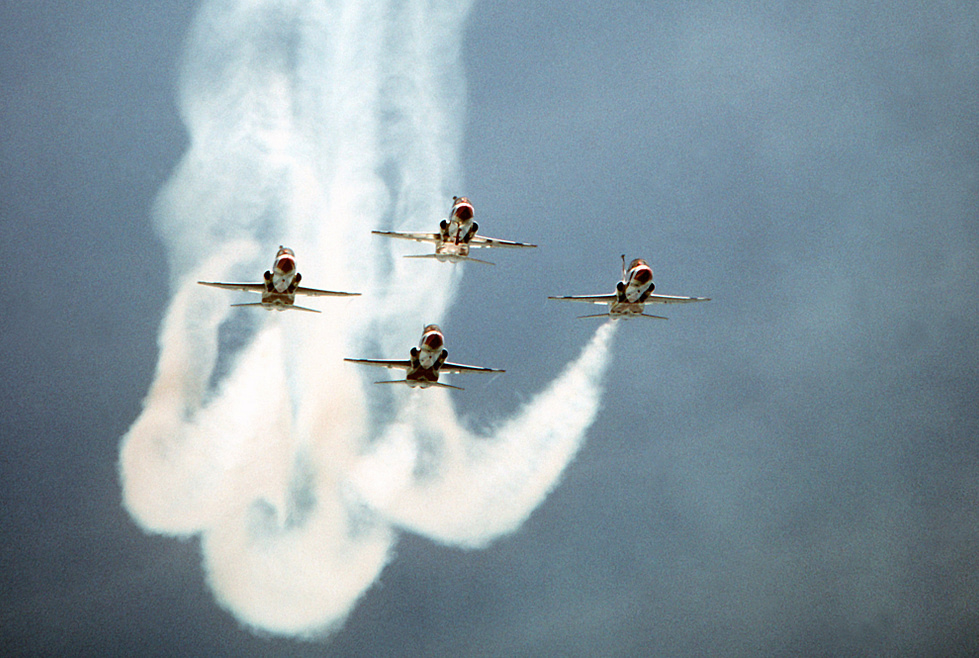
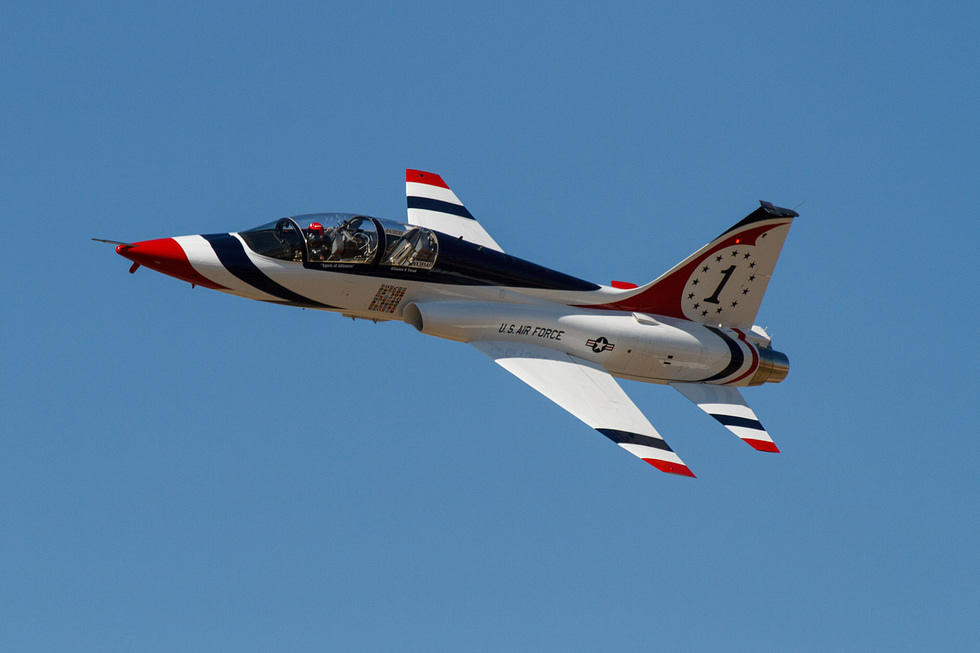
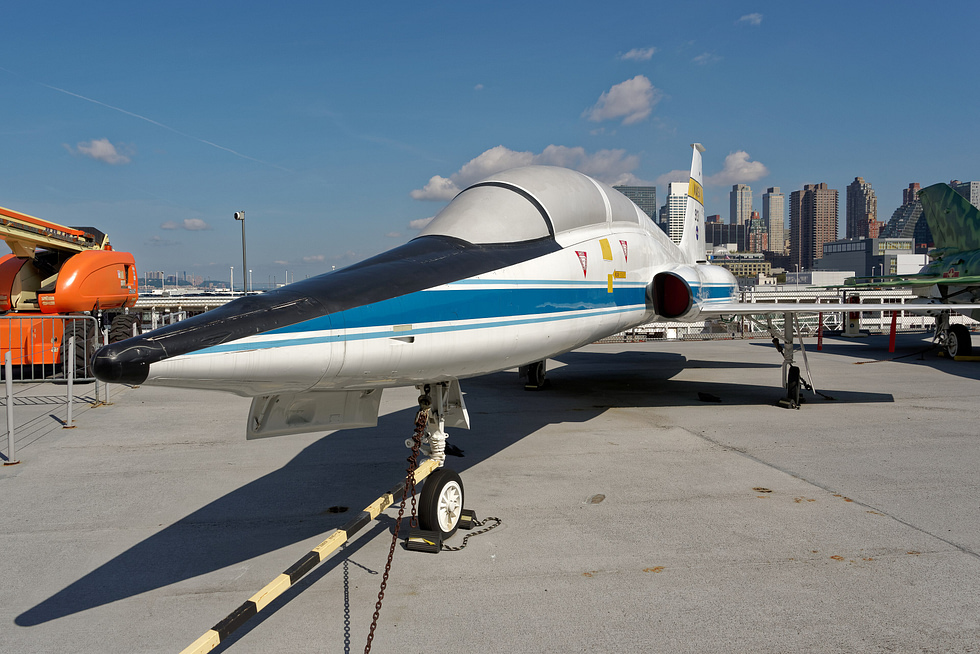
The Talon in motion
NBC News · Take a seat in the cockpit of NASA’s T-38 jet. A close look at why the space agency still flies the Talon to keep its astronauts sharp between missions.
Where the Talon flies
The numbers that define it
The T-38 never fired a shot in anger — that was never its job. Its record is measured in longevity, output and the aircrew it produced: more than a thousand built, six decades on the flight line, and the great majority of American jet-age fighter and astronaut pilots trained on its wings.
The Talon trained the pilots who flew almost every American combat jet of the era — compare their combat records aircraft by aircraft.
Everything people ask about the T-38 Talon
Can I fly in a Northrop T-38 Talon?
How fast is the T-38 Talon?
Why is the T-38 called the first supersonic trainer?
Does NASA still use the T-38?
What is the difference between the T-38 and the F-5?
How many T-38 Talons were built?
Is the T-38 still in service, and what will replace it?
You can’t fly the T-38 Talon.
These, you can.
Some legends only live in museums — others are fuelled and waiting. MiGFlug has put civilians in real military jet cockpits since 2004.
 Fly the L-39 AlbatrosThe world’s most-flown jet trainer — aerobatics included
 Fly the F-104 Starfighter“The missile with a man in it”
 Fly the MiG-21The Cold War’s most-produced jet
 Vlieg met de T-33 Shooting StarAmerica’s first jet trainer
 Fly the DH VampireA piece of early jet history
 Fly the S.211Agile Italian jet trainer
 Fly the MB-326The classic Aermacchi jet
 Fly the MiG-15The Soviet legend of the Korean War
Continue the tour
Every fact, checked
- National Museum of the U.S. Air Force — T-38A TalonOfficial fact sheet: history, dimensions, performance and service.
- NASANASA’s T-38 fleet, astronaut proficiency flying and chase operations.
- Smithsonian National Air and Space MuseumNorthrop T-38 Talon collection record and background.
- This Day in Aviation — 10 April 1959First flight details, test pilot, engines and production figures.
- Northrop Grumman — company historyThe N-156 / T-38 / F-5 design family and Talon production.
- FAI records databaseJacqueline Cochran’s 1961 world records set in a T-38.
- Boeing — T-7A Red HawkThe Talon’s selected USAF replacement.
- Military Factory — T-38 TalonOperator list and variant reference (USA, Germany, Turkey, Taiwan, Portugal, South Korea).