
Handley Page Victor
Crescent-winged V-bomber & tanker
The third and fastest of Britain’s three V-bombers — a nuclear-deterrent aircraft with a unique crescent wing that found a vital second life as the RAF’s aerial tanker, and fed the epic Black Buck raids of the 1982 Falklands War.
The V-bomber that became the RAF’s lifeline
When Britain set out to build an airborne nuclear deterrent after the Second World War, it hedged its bets. The 1947 specification B.35/46 asked for a jet bomber able to carry an atomic weapon to a distant target at high altitude and high speed — and rather than gamble on one design, the RAF ordered three. The Vickers Valiant came first as an insurance policy, the delta-winged Avro Vulcan followed, and the third and most technically ambitious was Handley Page’s HP.80 Victor. Together they became the V-Force, the aircraft that carried Britain’s bomb through the tensest years of the Cold War.
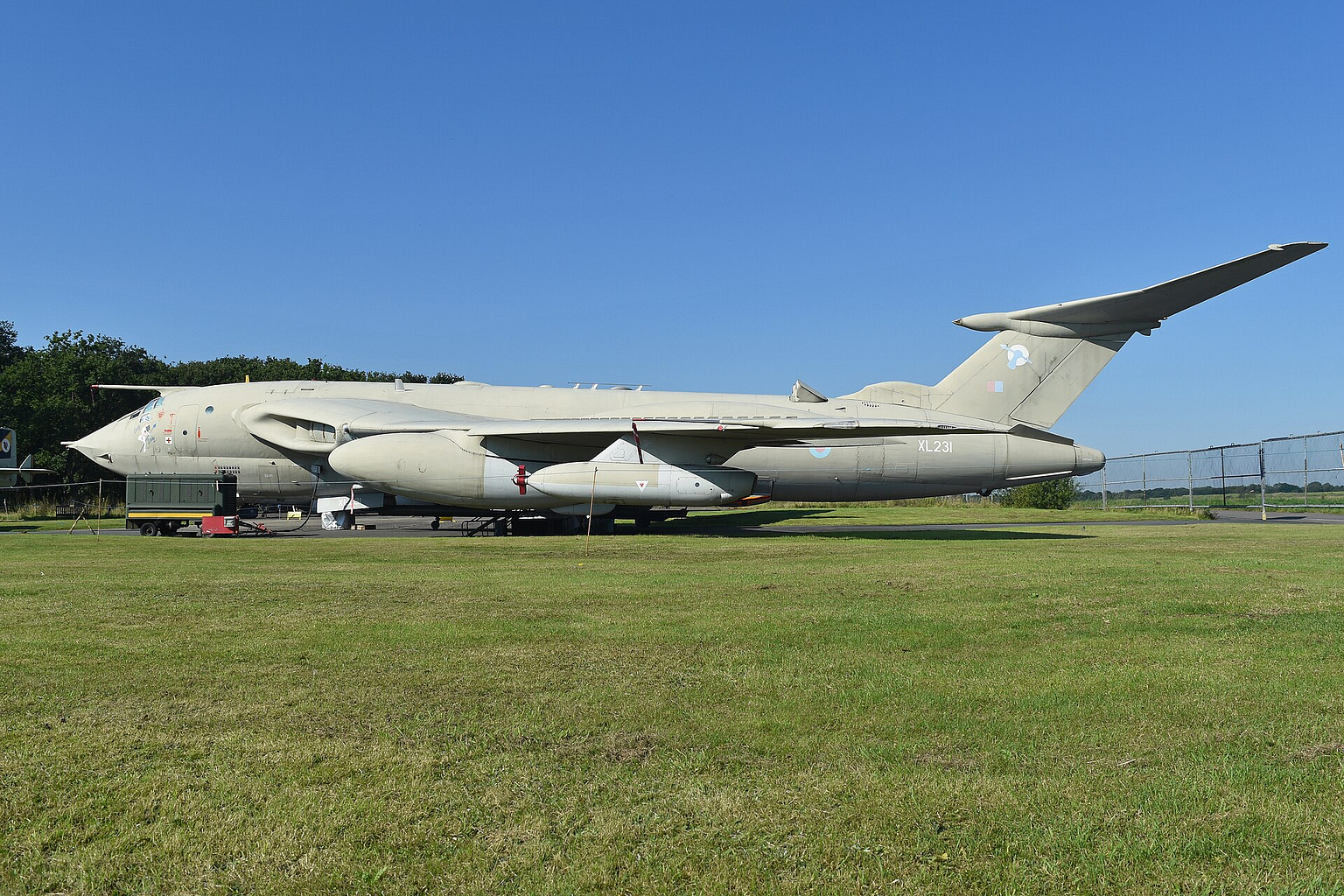
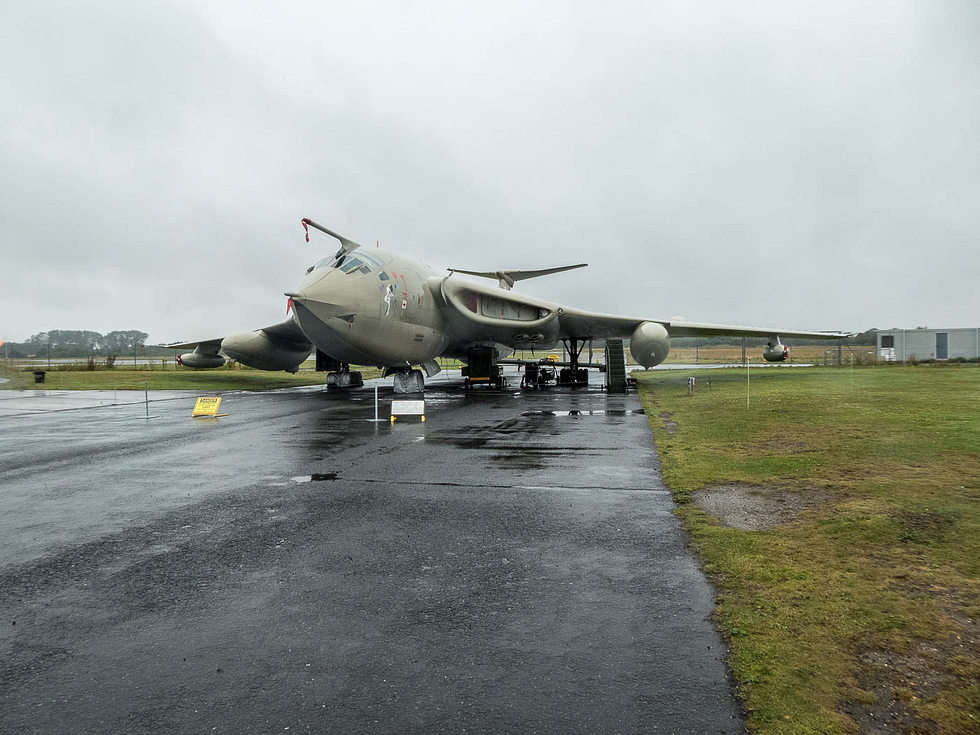
The Victor’s signature was its crescent wing — a graceful, compound-swept shape, sharply angled at the root and progressively straighter toward the tip. Designed under Godfrey Lee, the crescent kept a nearly constant critical Mach number across the whole span, letting the big bomber cruise efficiently at high subsonic speed. The prototype first flew on Christmas Eve 1952; the B.1 entered RAF service in 1958, and the definitive B.2, with more powerful Rolls-Royce Conway engines and a longer wing, could operate above 55,000 feet — for a time beyond the reach of Soviet interceptors.
As a bomber the Victor carried Britain’s free-fall nuclear weapons and, from the mid-1960s, the Blue Steel rocket-powered standoff missile, sitting Quick Reaction Alert ready to scramble within minutes. But surface-to-air missiles pushed the whole V-Force down to low level, and in 1969 the strategic nuclear deterrent passed to the Royal Navy’s Polaris submarines. That might have ended the story — except the Victor found a second career. With the Valiant tanker fleet grounded by fatigue in 1965, surplus Victors were rebuilt as K.2 aerial-refuelling tankers, and it was in that role that the type became indispensable.
Its finest hour came in 1982. During the Falklands War the RAF mounted Operation Black Buck — the longest bombing raids attempted to that date — and it was a fleet of Victor tankers, refuelling each other and the lone Vulcan in a vast relay across the South Atlantic, that made it possible. The Victor went on to serve through the 1991 Gulf War before the last aircraft retired on 15 October 1993, closing 35 years of service and the story of Handley Page’s final aircraft.
01The Handley Page Victor’s crescent wing: how Handley Page chased high-subsonic efficiency
The crescent wing is the Victor’s defining feature and one of the boldest aerodynamic ideas of the early jet age. Instead of a single sweep angle, the wing used three: heavily swept and thick at the root, then reducing in both sweep and thickness toward the tip. The goal was to hold the critical Mach number — the speed at which airflow over the wing first goes supersonic and drag rises sharply — roughly constant from root to tip, so the whole wing reached its limit together rather than the thin outer sections stalling drag-wise first.
The payoff was efficient cruise at high subsonic speed and a genuinely large, deep wing root in which to bury fuel and undercarriage. The Victor became the fastest of the three V-bombers, credited with cruising around Mach 0.92, and a B.1 is reported to have exceeded the speed of sound in a shallow dive in 1957 — then the largest aircraft to have done so. The crescent shape was complex and expensive to build, and no other production aircraft ever copied it, but it gave the Victor its unmistakable silhouette.
What makes it special
The crescent wing, chasing efficiency
Godfrey Lee’s crescent wing used three sweep angles — steep at the root, shallow at the tip — to keep the critical Mach number constant across the span. That let the Victor cruise efficiently at high subsonic speed and made it the fastest of the three V-bombers, credited around Mach 0.92. A B.1 reportedly went supersonic in a shallow dive in 1957, the largest aircraft to do so at the time.
From nuclear bomber to vital tanker
When Polaris submarines took over the deterrent in 1969, the Victor was not scrapped — it was reborn. Rebuilt as the K.2 three-point tanker, it could pass up to about 34,000 kg of fuel through hose-and-drogue pods. This second life made it the backbone of RAF long-range operations for another two decades, from the Falklands to the Gulf.
Blue Steel and the Quick Reaction Alert
At the peak of the Cold War, Victors stood Quick Reaction Alert at eastern English bases, ready to scramble in minutes carrying free-fall H-bombs or the rocket-powered Blue Steel standoff missile — a weapon meant to be launched tens of miles short of a heavily defended target. Operating above 55,000 ft, the Victor was, for a while, very hard to catch.
02The Handley Page Victor’s second life: why a bomber became the RAF’s most important tanker
The Victor’s conversion to a tanker began as an emergency. In January 1965 the entire Vickers Valiant fleet — then the RAF’s tanker force — was grounded when fatigue cracks were found in the wing spars. The RAF urgently rebuilt six Victor B.1As as two-point tankers, and the first rushed conversion flew that April with 55 Squadron operational by May. Full three-point K.1 and later K.2 tankers followed, the K.2 converted from the more powerful B.2 airframes.
It proved an inspired reuse. The Victor had the range, the fuel capacity and the high-subsonic speed that made it an ideal tanker for fast jets, and the type went on to out-serve its bomber career by years. Without the Victor tanker fleet, neither the Black Buck raids of 1982 nor the RAF’s Gulf War contribution in 1991 would have been possible — a nuclear bomber that ended up keeping everyone else in the air.
03The Handley Page Victor’s nuclear years: Blue Steel, high altitude and the move to low level
As first conceived, the V-Force doctrine was simple: fly high and fast, above the reach of defences, and drop the bomb. The Victor B.2, cruising above 55,000 feet, was built for exactly that. But the 1960 loss of a U-2 to a Soviet surface-to-air missile shattered the assumption that altitude meant safety, and the whole V-Force was forced down to low-level penetration, hugging the terrain to slip under radar.
To keep the deterrent credible the Victor carried Blue Steel, a rocket-powered standoff missile with a thermonuclear warhead that could be launched short of the target so the bomber never had to overfly the most dangerous defences. It was a stopgap: the planned longer-range Skybolt was cancelled, and by 1969 the deterrent role passed entirely to Polaris. The Victor’s front-line nuclear career was relatively short — but it spanned the most dangerous years of the Cold War.
Full specifications
Airframe & Performance (B.2)
- Equipe
- 5 (2 pilots, 2 navigators, air electronics officer)
- Comprimento
- 35.05 m (114 ft 11 in)
- Envergadura
- 36.58 m (120 ft)
- Altura
- 8.57 m (28 ft 1½ in)
- Max takeoff weight
- ~101,150 kg (223,000 lb)
- Max speed
- ~Mach 0.92 (~1,010 km/h at altitude)
- Teto de serviço
- ~17,000 m (~56,000 ft)
- Faixa
- ~7,400 km (~4,600 mi)
Propulsion, Load & Cost
- Engines
- 4 × Rolls-Royce Conway turbofan (~17,250 lbf each)
- Bomb load
- Up to ~15,900 kg (35 × 1,000 lb) or 1 nuclear weapon / Blue Steel
- Tanker fuel transfer (K.2)
- Up to ~34,000 kg via 3-point hose-and-drogue
- First flight
- 24 December 1952 (B.2: February 1959)
- Built
- 86 (including 2 prototypes, 1952–1963)
- Unit cost
- No reliable modern figure (1950s programme)
- Cost per flight hour
- No reliable public figure
04The Handley Page Victor’s operating costs: why no reliable price exists
The Victor was a 1950s British state defence programme, procured in small numbers under Cold War secrecy, so a clean, comparable flyaway unit price simply is not part of the public record — and any figure quoted today would need heavy inflation adjustment across seventy years to mean anything. No credible cost-per-flight-hour figure for the type exists in authoritative open sources either, so we do not quote one. What is well documented is that only 86 were built, that the crescent wing was complex and costly to manufacture, and that the tanker conversions extended the fleet’s value far beyond its original bomber role. Treat any precise dollar figure attached to a Victor as an estimate.
From nuclear deterrent to Gulf War tanker
The V-bomber requirement
Specification B.35/46 calls for a high-altitude jet nuclear bomber; the RAF orders three designs — Valiant, Vulcan and Handley Page’s HP.80 Victor.
First flight
The crescent-winged prototype WB771 flies on Christmas Eve 1952.
Enters RAF service
The Victor B.1 joins the V-Force with No. 10 Squadron, carrying Britain’s free-fall nuclear weapons.
The B.2 arrives
The definitive B.2, with Rolls-Royce Conway engines and a longer wing, enters service and can operate above 55,000 ft.
Blue Steel on QRA
Victors stand Quick Reaction Alert armed with the rocket-powered Blue Steel standoff nuclear missile.
Emergency tanker role
With the Valiant tanker fleet grounded by fatigue, Victors are rushed into service as aerial-refuelling tankers.
Deterrent passes to Polaris
The strategic nuclear role moves to Royal Navy Polaris submarines; surplus B.2s are rebuilt as K.2 tankers.
Operation Black Buck
A relay of Victor tankers refuels the lone Vulcan across the South Atlantic to bomb Port Stanley — the most complex tanking operation of its day.
Gulf War swan song
Eight Victor K.2s fly tanker support in Operation Granby with a reported 100% availability rate.
The last Victor
No. 55 Squadron disbands at RAF Marham on 15 October 1993, retiring the last of Handley Page’s V-bombers.
From the V-Force: twelve Victor stories
Third of the three V-bombers
Britain hedged its nuclear bet by ordering Valiant, Vulcan AND Victor.
Read the full story
The crescent wing
Godfrey Lee’s three-angle wing kept the whole span at its efficient limit.
Read the full story
A Christmas Eve first flight
The prototype WB771 took to the air on 24 December 1952.
Read the full story
The tail that ripped off
An early prototype was lost when fatigue tore its tailplane away.
Read the full story
The bomber that went supersonic
A Victor B.1 reportedly broke the sound barrier in a shallow dive.
Read the full story
Four minutes to scramble
Victor crews lived on Quick Reaction Alert, ready to launch at a moment’s notice.
Read the full story
Blue Steel
The Victor carried a rocket-powered nuclear missile meant to be fired short of the target.
Read the full story
Rescued by a rival’s failure
The Valiant’s sudden grounding handed the Victor a whole new career.
Read the full story
Bomber turned fuel-giver
Made surplus as a bomber, the Victor became indispensable as a tanker.
Read the full story
The Black Buck relay
It took a fleet of Victor tankers to put one Vulcan over Port Stanley.
Read the full story
7,000 miles in one flight
A Victor radar-mapped the vast South Atlantic ahead of the task force.
Read the full story
The Gulf and the finale
The Victor bowed out with a near-perfect record in Desert Storm.
Read the full story
The Victor in pictures
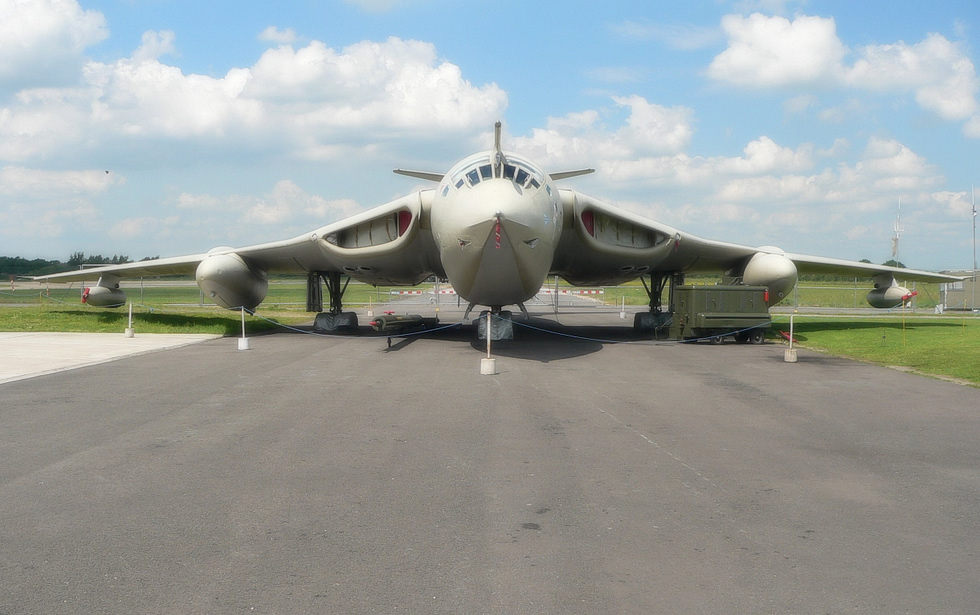
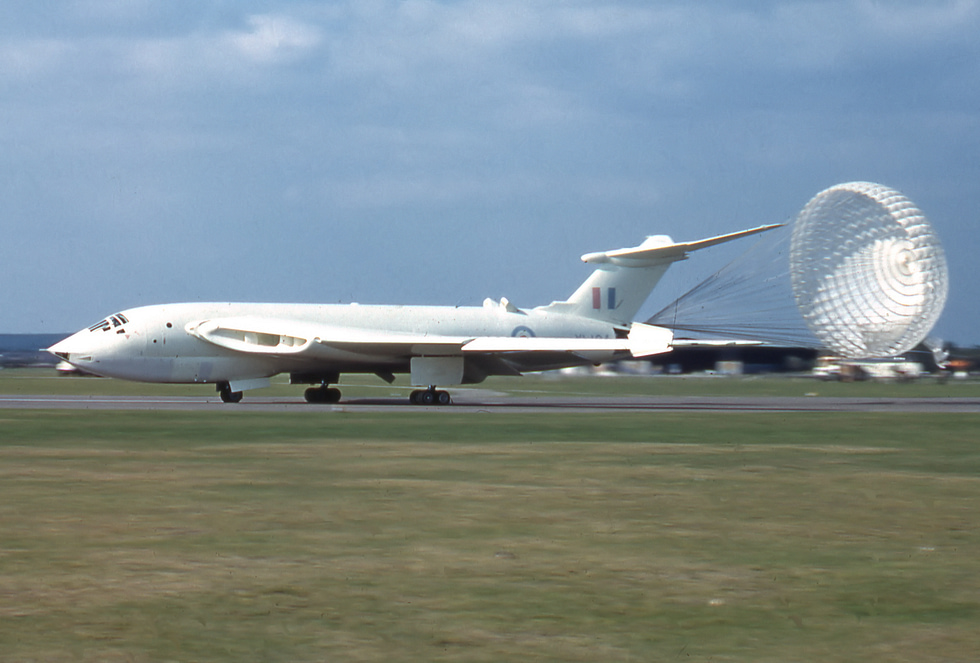
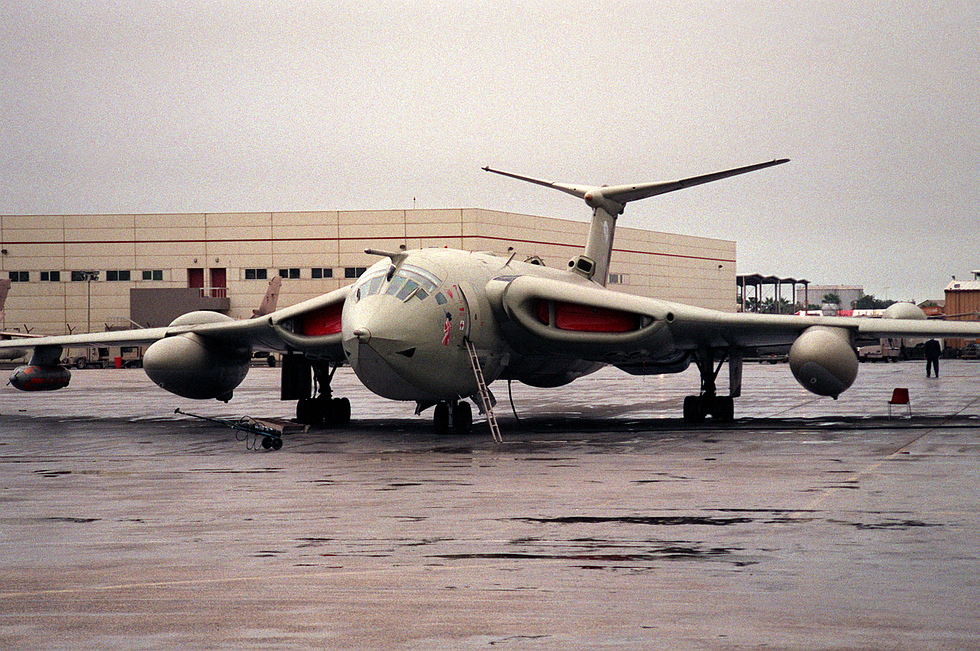
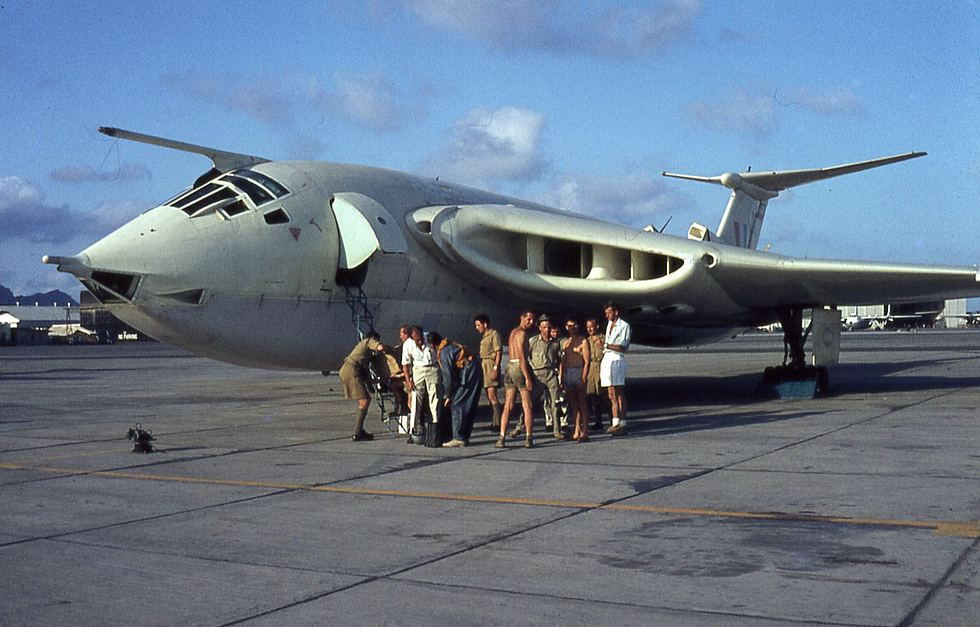
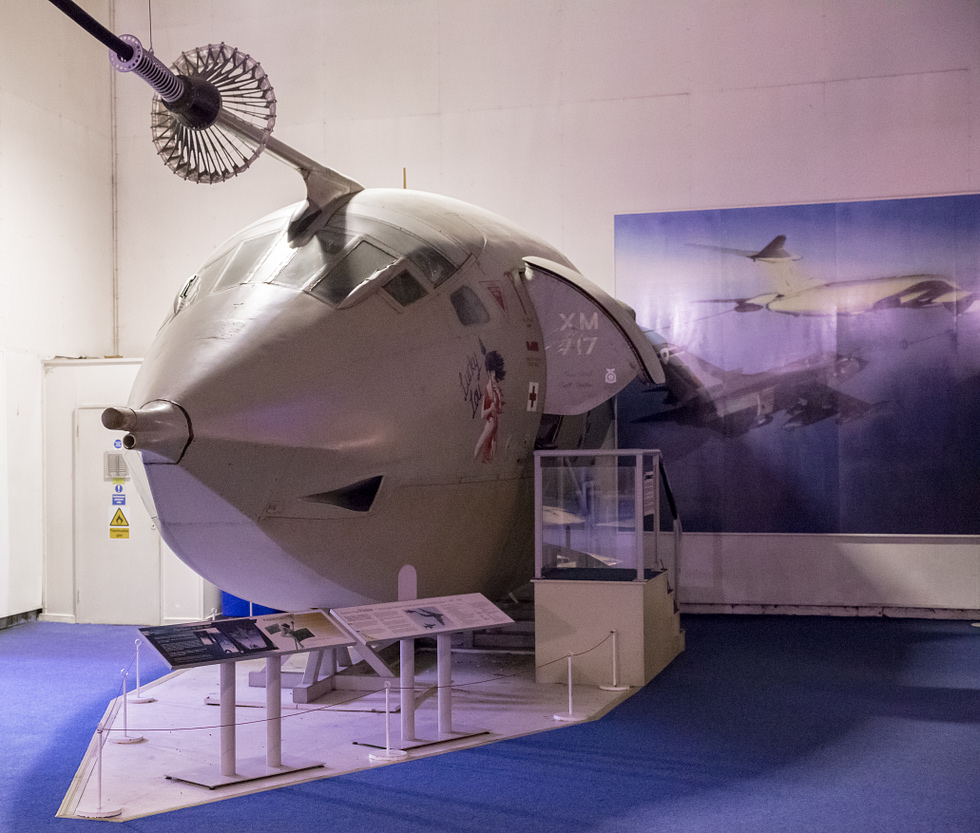
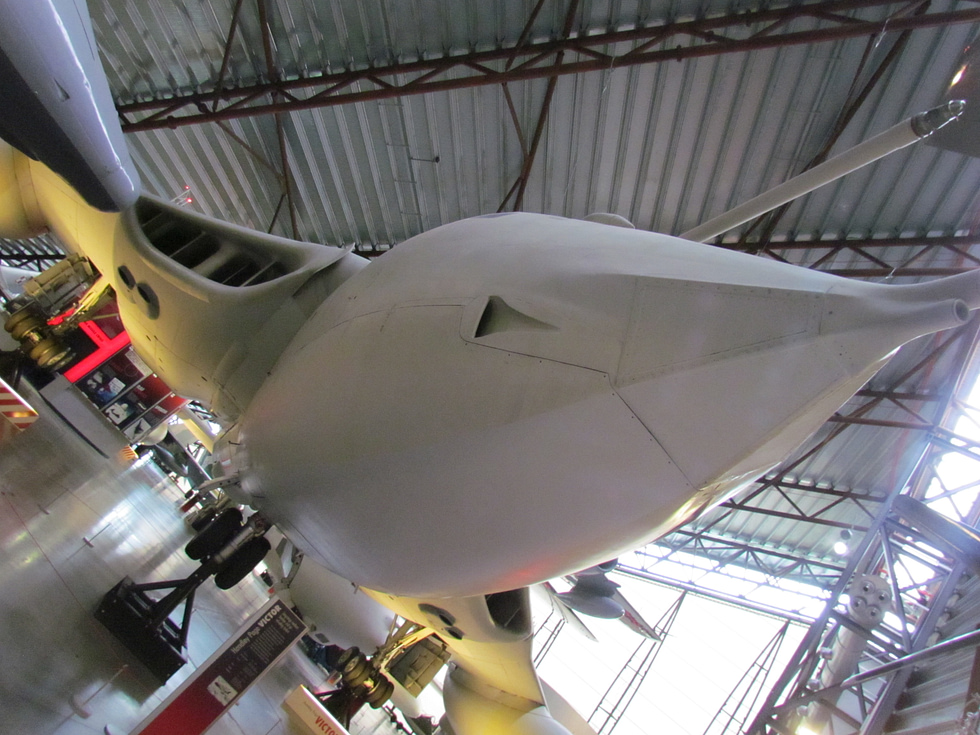
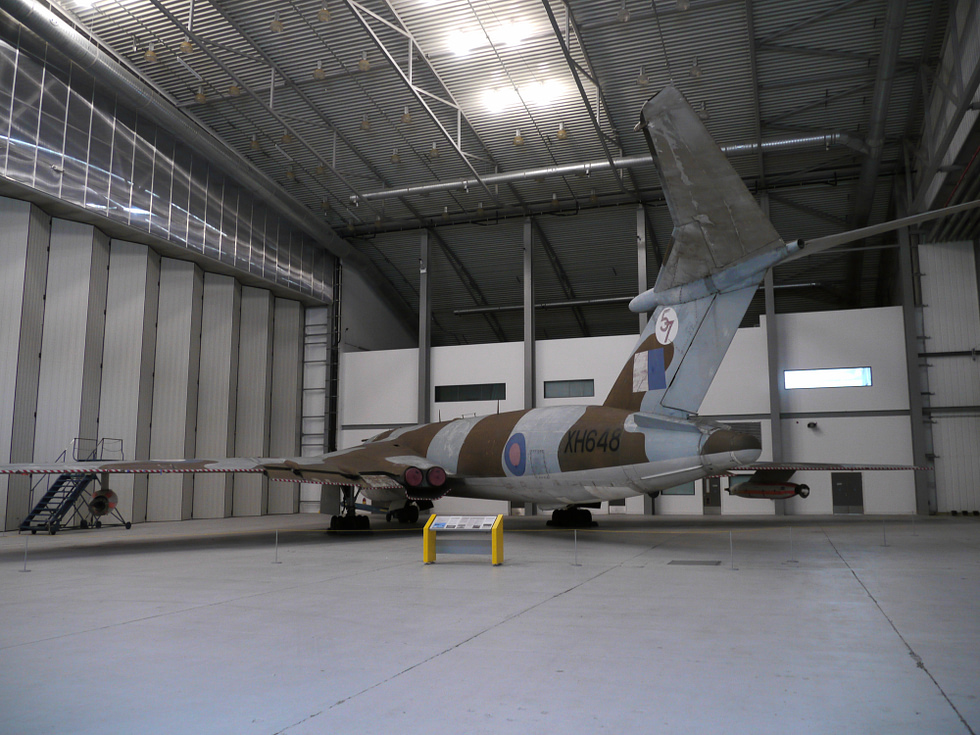
The Victor in motion
A hand-picked Handley Page Victor documentary is coming soon to this exhibit. In the meantime, explore the photo gallery above and the full combat record and operations map below.
Where the Victor served
The score that defines it
The Victor never fought as a bomber in anger — its nuclear weapons were, thankfully, never used, and by the time Britain went to war in the South Atlantic it was flying as a tanker. Its combat legacy is written not in bombs dropped but in the operations it made possible: above all the Black Buck raids of 1982, where a fleet of Victor tankers reached across the South Atlantic to put a single Vulcan over Port Stanley in the most complex aerial-refuelling operation of its day.
Compare the combat record of every military aircraft. Figures as of July 2026.
Everything people ask about the Victor
Can I fly in a Handley Page Victor?
What were the three V-bombers?
Why did the Victor have that unusual crescent wing?
Why was the Victor turned into a tanker?
What was the Victor’s role in the Falklands War?
How fast was the Victor?
What weapons did the Victor carry?
When did the Victor retire?
You can’t fly the Victor.
These, you can.
Some legends only live in museums — others are fuelled and waiting. MiGFlug has put civilians in real military jet cockpits since 2004.
 Fly the L-39 AlbatrosThe world’s most-flown jet trainer — aerobatics included
 Fly the F-104 Starfighter“The missile with a man in it”
 Fly the MiG-21The Cold War’s most-produced jet
 Pilote o T-33 Shooting StarAmerica’s first jet trainer
 Fly the DH VampireA piece of early jet history
 Fly the S.211Agile Italian jet trainer
 Fly the MB-326The classic Aermacchi jet
 Fly the MiG-15The Soviet legend of the Korean War
Continue the tour
Every fact, checked
- RAF Museum — Air-to-air refuelling in the Falklands WarThe Victor tanker relay behind Operation Black Buck and the scale of the refuelling plan.
- Royal Air Force — 40th Anniversary of Op Black BuckOfficial RAF account of the Black Buck raids and the tanker support that enabled them.
- Thunder & Lightnings — Handley Page Victor historyDetailed development, variants, tanker conversion, Falklands and Gulf War service.
- AirVectors — The Handley Page VictorDesign, the crescent wing, Blue Steel and the bomber-to-tanker story.
- Yorkshire Air Museum — Victor K.2 “Lusty Lindy”Preserved, fast-taxi-able Victor K.2 at Elvington and its service history.
- Federation of American Scientists — VictorThe Victor in Britain’s nuclear forces: V-Force role, Blue Steel and QRA.
- Vulcan to the Sky Trust — Operation Black BuckThe Vulcan and Victor tanker plan for the 1982 Falklands raids.
- MiGFlug Afterburner — The Handley Page Victor: nuclear bomber turned tankerMiGFlug’s own feature on the Victor’s crescent wing and its two careers.