

Lockheed Hudson
An American airliner drafted into war: the twin-engine patrol bomber that put Britain’s first big US-built aircraft over the grey North Sea — and became the plane that made a U-boat surrender.
The Lockheed Hudson: an airliner sent to war over the sea
The Lockheed Hudson began life not as a warplane but as a sleek American airliner. When Britain needed maritime patrol aircraft faster than its own factories could build them, Lockheed rebuilt a civil transport into a bomber in a matter of months — and in doing so gave the Royal Air Force one of the first major American-built aircraft it would take to war.
In the spring of 1938, with war in Europe looking increasingly likely, a British Purchasing Commission travelled to the United States looking for aircraft that American industry could deliver quickly and in quantity. Britain’s own aircraft factories were straining to meet the RAF’s needs, and Coastal Command — the neglected “Cinderella Service” tasked with watching the sea approaches to the British Isles — was desperately short of modern, long-range aircraft. Lockheed, then a relatively small company, saw an opportunity. Rather than design a bomber from scratch, its engineers took the Model 14 Super Electra, a fast and modern civil airliner already in production, and rapidly reworked it into a military patrol bomber. The result was the Model 414, which the RAF would name the Hudson.
The transformation was remarkably quick. Lockheed’s team, reportedly working around the clock, mocked up a bomber version of the Super Electra — adding a glazed bomb-aimer’s nose, a bomb bay, gun positions and, on RAF aircraft, a power-operated dorsal gun turret — and presented it to the British commission. An initial order was placed in 1938, and deliveries began the following year. It was, by the standards of the day, an enormous foreign order, and it mattered for reasons that went well beyond the aircraft itself: it was one of the first large American military aircraft contracts placed by Britain, a significant pre-Lend-Lease purchase that helped tool up United States industry for the vast wartime production effort that would follow. Historians commonly point to the Hudson as an early thread in the industrial partnership that would eventually arm much of the Allied war effort.
“They took an airliner, cut a bomb bay into it, bolted on a turret, and sent it out over the North Sea to hunt submarines. It should not have worked as well as it did.”A common characterisation of the Hudson’s improvised origins — paraphrased; the sentiment is widely echoed in histories of Coastal Command.
Powered by two big radial engines — most marks used the Wright R-1820 Cyclone, though later variants such as the Mk IV and Mk VI switched to the Pratt & Whitney R-1830 Twin Wasp — the Hudson was fast, sturdy and, crucially, available. It carried a crew of around five or six: pilot, co-pilot/navigator, radio operator, and gunners. Its defensive armament typically included a Boulton Paul dorsal turret with two .303-inch machine guns on RAF aircraft, plus fixed nose guns and, on many aircraft, beam and ventral positions. In the bomb bay it could carry bombs or, more importantly for its Coastal Command work, depth charges for attacking submarines.
From 1939 the Hudson became the backbone of RAF Coastal Command’s early war effort. It flew endless, gruelling maritime patrols over the North Sea and the Atlantic: convoy escort, anti-submarine sweeps, reconnaissance, and the grim, vital work of watching for German warships and U-boats slipping out into the shipping lanes. It was not glamorous flying — hours of grey sea and grey sky, far from land, in an aircraft that had started life carrying airline passengers — but it was some of the most important work of the war. The Hudson would go on to serve in almost every theatre and in almost every role imaginable: bomber, patrol aircraft, transport, trainer, air-sea rescue platform, and clandestine special-duties aircraft ferrying secret agents into occupied Europe.
01Why the Lockheed Hudson was built from an airliner — and why that was a strength, not a compromise+
Designing a warplane from a civil airliner sounds like a shortcut born of desperation, and in part it was. But the Model 14 Super Electra was an unusually good starting point. It was already a modern, all-metal, twin-engine monoplane with retractable landing gear and a reputation for speed — in 1938 a Super Electra had carried Howard Hughes and his crew around the world in record time, a feat that gave the airframe a certain celebrity. Its speed and range were exactly the qualities Coastal Command needed, and because the type was already in production, Lockheed could deliver in quantity almost immediately.
The airliner heritage did impose limits. The Hudson’s fuselage was relatively narrow, its bomb load modest compared with purpose-built medium bombers, and early marks were sometimes criticised as underpowered when heavily loaded. Pilots had to respect its handling on one engine. But for the long-endurance ocean patrol role, the trade was a good one: the Hudson was fast enough to have a chance against enemy aircraft, roomy enough to carry a useful crew and equipment fit, and reliable enough to spend hour after hour over water. The airliner DNA that some saw as a weakness was, in practice, much of the reason the aircraft could be fielded so quickly and used so flexibly.
02The Hudson’s place in history: Britain’s first big American warplane and the road to Lend-Lease+
The Hudson’s real historical weight lies less in any single mission than in what it represented. When Britain ordered it in 1938, the United States was still officially neutral and its aircraft industry was a fraction of the size it would become. Large British (and French) orders for aircraft like the Hudson injected money, urgency and scale into American factories, helping to expand tooling, workforces and production know-how well before the United States entered the war. This early, cash-based purchasing — Britain largely paid for these first aircraft directly, before the Lend-Lease Act of 1941 changed the terms — is often described by historians as a crucial step in transforming American industry into the “Arsenal of Democracy.”
The Hudson was among the first American combat aircraft to see large-scale operational service with the RAF, and it helped establish the pattern of Anglo-American aircraft co-operation that would later bring types like the Catalina, the B-24 Liberator, the Mitchell and the Mustang into British and Commonwealth service. In that sense the unassuming Hudson, converted from an airliner, sits near the beginning of one of the most consequential industrial relationships of the twentieth century.
How the Lockheed Hudson was built for the long war over water
Fast radial engines, an airliner’s clean airframe, a power-operated turret and a bay full of depth charges: the Hudson blended civil and military engineering into a patrol aircraft that could fight, search and endure.
Two radial engines for speed and reach
Most Hudsons were powered by two Wright R-1820 Cyclone nine-cylinder radials of roughly 1,100 horsepower each; later marks used Pratt & Whitney R-1830 Twin Wasp engines. The airliner-derived airframe made the type fast for its class — around 397 km/h (246 mph) for the Mk I — and gave it the range for long ocean patrols, though heavily loaded early marks were sometimes called underpowered.
A power turret and a bay for depth charges
RAF Hudsons carried a Boulton Paul dorsal turret with two .303-inch Browning machine guns, plus fixed forward-firing guns and beam positions — heavy defensive fit for a converted airliner. The internal bay could hold bombs or depth charges, typically up to around 1,400 lb (roughly 640 kg), the anti-submarine weapon that defined its Coastal Command career.
Built to be adapted
The Hudson’s roomy, accessible fuselage made it endlessly convertible. The same basic aircraft served as bomber, long-range reconnaissance platform, transport, navigation trainer, air-sea rescue aircraft — famously carrying an airborne lifeboat — and clandestine special-duties machine. Few wartime types were pressed into so many different jobs.
03The Lockheed Hudson’s engines and performance: fast for a patrol aircraft, thirsty when heavy+
Performance figures for the Hudson vary by mark and source, so they should be treated as approximate. The Mk I is commonly quoted at a maximum speed of around 397 km/h (246 mph) and a range of roughly 3,150 km (about 1,960 miles) on internal fuel, with a service ceiling in the region of 7,600 m (about 25,000 ft). Later marks with Twin Wasp engines offered somewhat different performance and better high-altitude behaviour.
The recurring criticism was that a fully loaded Hudson — bombs or depth charges aboard, tanks full for a long patrol — could feel underpowered, particularly on take-off and single-engine handling. Coastal Command crews learned the aircraft’s limits and flew it accordingly. Against that, its speed in the patrol role gave it a fighting chance against the enemy aircraft it might meet over the sea, and its reliability over long distances made it a trusted mount for crews who might be six or seven hours from the nearest friendly coast.
04The Lockheed Hudson’s armament and equipment: guns, turret, bombs and the airborne lifeboat+
Defensive armament evolved across the marks and between operators, but a representative RAF Hudson carried two fixed forward-firing .303-inch machine guns for the pilot, a Boulton Paul dorsal turret with two more .303s, and additional beam and ventral guns on many aircraft. This was a notably heavy defensive fit for an aircraft of its size and origin, reflecting the reality that Coastal Command Hudsons often operated alone and might have to fight off marauding fighters or return fire from a surfaced submarine.
Offensively, the Hudson’s bomb bay could carry bombs for light bombing work or depth charges for anti-submarine attacks. As the war progressed, Hudsons were fitted with ASV (air-to-surface vessel) radar to find surfaced U-boats and ships at night and in poor visibility, and some carried rockets. One of the aircraft’s most humane innovations was the airborne lifeboat: a powered, self-righting boat slung under an air-sea rescue Hudson and parachuted down to ditched aircrew, dramatically improving the chances of survival for men down in the cold sea.
From Super Electra to A-29: how the Lockheed Hudson developed
The Hudson was not a single aeroplane but a family, evolving through British and American marks as engines, armament, radar and roles changed. Here is how the type grew from a converted airliner into a mature patrol bomber.
The line began with the Lockheed Model 14 Super Electra, a fourteen-passenger commercial transport that first flew in 1937. It was advanced for its day — all-metal, twin-engined, with Fowler flaps that gave it good short-field performance — and it was fast. When the British Purchasing Commission came looking in 1938, Lockheed’s designers, led by a team working at extraordinary speed, produced the Model 414: a Super Electra with a redesigned nose for a bomb-aimer, an internal bomb bay, provision for guns and, on British aircraft, a dorsal gun turret. The RAF named it Hudson, after the English navigator Henry Hudson, in keeping with its practice of naming American types after historical figures and places.
British marks followed one another as the war demanded. The Hudson Mk I and Mk II used Wright Cyclone engines with two-blade and later three-blade propellers respectively. The Mk III introduced more power and added ventral and beam gun positions. The Mk IV was the first to use the Pratt & Whitney Twin Wasp engine, and the Mk V returned to a Twin Wasp with detail improvements, while the Mk VI was a further Twin Wasp variant, many supplied under Lend-Lease. Across these marks the Hudson gained radar, better guns, and equipment for its widening range of roles, though the fundamental airframe changed little — a testament to how sound the original conversion had been.
05The Lockheed Hudson’s British marks: Mk I through Mk VI explained+
The RAF’s Hudson marks are distinguished chiefly by their engines and equipment, and the details vary between sources, so the following is a general guide rather than a definitive register. The Mk I was the initial production version with Wright R-1820 Cyclone engines and two-blade propellers; the Mk II was broadly similar with three-blade constant-speed propellers. The Mk III added more powerful Cyclones and extra gun positions, becoming one of the most numerous and capable marks. The Mk IV switched to the Pratt & Whitney R-1830 Twin Wasp, an engine that suited high-altitude work; the Mk V was another Twin Wasp variant with detail changes; and the Mk VI, many delivered under Lend-Lease, continued the Twin Wasp line. Reconnaissance, general-purpose, transport and air-sea rescue sub-variants proliferated as the type was adapted, and individual airframes were often modified in service well beyond their nominal mark.
06The Lockheed Hudson in American service: A-28, A-29, AT-18 and PBO+
When the United States entered the war, it took the Hudson into its own forces, sometimes by taking over aircraft from British contracts. The United States Army Air Forces designated the Twin Wasp-powered version the A-28 and the Cyclone-powered version the A-29, using them for coastal patrol, light bombing and training; a number were passed to other Allied air forces. A dedicated gunnery-trainer conversion was designated the AT-18. The United States Navy operated the type as the PBO-1, and it was a PBO of squadron VP-82 that is widely credited with sinking the first German U-boat destroyed by American forces, off Newfoundland in March 1942. The American Hudson thus mirrored the British experience: a quick, available patrol bomber that filled a gap until purpose-built types arrived in quantity.
07The Lockheed Hudson’s name: why the RAF called it Hudson+
The Royal Air Force had a long-standing convention of naming its American-supplied aircraft after people and places associated with North America or with exploration and history. Lockheed’s earlier Model 10 Electra derivatives and the later Lockheed types followed this pattern, and the Model 414 was named Hudson — a name usually associated with the English navigator and explorer Henry Hudson, after whom Hudson Bay and the Hudson River are also named. The naming underlines the aircraft’s transatlantic character: an American machine, given an English name evoking exploration, sent to patrol the very northern seas that Henry Hudson himself had sailed centuries before. Later Lockheed patrol types for the RAF, such as the larger Ventura, continued the Anglo-American naming tradition.
Lockheed Hudson specifications, dimensions and cost data
Figures below are representative of the early RAF marks (chiefly the Hudson Mk I) and vary between variants and sources; treat them as approximate.
| Tipo | Twin-engine maritime patrol bomber and reconnaissance aircraft |
|---|---|
| Origin | United States (Lockheed), built for the RAF and Allied air forces |
| Derived from | Lockheed Model 14 Super Electra airliner (Model 414) |
| Equipe | Typically 5–6 |
| Comprimento | ~13.5 m (44 ft 4 in) |
| Envergadura | ~19.96 m (65 ft 6 in) |
| Altura | ~3.6 m (11 ft 10 in) |
| Max speed | ~397 km/h (246 mph) — Mk I; varies by mark |
| Faixa | ~3,150 km (~1,960 mi) on internal fuel (approx.) |
| Teto de serviço | ~7,600 m (~25,000 ft) (approx.) |
| First flight | 1938 |
| Number built | Around 2,900 (figures commonly cited near 2,941; sources vary) |
| Engines | Two Wright R-1820 Cyclone radials (~1,100 hp each); some marks used Pratt & Whitney R-1830 Twin Wasp |
|---|---|
| Configuration | Two-blade to three-blade variable-pitch propellers, low-wing monoplane |
| Defensive guns | Typically two fixed nose .303-in + Boulton Paul dorsal turret (two .303-in) + beam/ventral guns (varies) |
| Bomb / depth-charge load | Up to ~1,400 lb (~640 kg) of bombs or depth charges (approx.) |
| Sensors (later marks) | ASV air-to-surface radar; some fitted with rockets |
| Unit cost | Not reliably recorded (WWII) |
| Cost per flight hour | Not reliably recorded (WWII) |
| Programme cost | Not reliably recorded (WWII) |
| Fleet flight hours | Not reliably recorded (WWII) |
11Lockheed Hudson variants: from the Mk I to the A-28, A-29 and PBO+
The Hudson was produced in a long series of marks and designations. The RAF operated the Mk I through Mk VI, differing chiefly in engines, propellers, armament and equipment: early Cyclone-engined marks gave way to Twin Wasp variants, and radar and improved defensive fits were added over time. When the United States Army Air Forces adopted the type, it received the designations A-28 (Twin Wasp) and A-29 (Cyclone), used for patrol, bombing and training, while a trainer version was designated AT-18. The United States Navy operated the type as the PBO-1, and it was a Navy PBO that scored some of America’s earliest U-boat successes after the US entered the war. Exact production totals for each sub-variant vary between sources, so any single figure should be read as approximate.
12The Lockheed Hudson’s operating costs: why the numbers were never really recorded+
Unlike modern aircraft, whose cost-per-flight-hour figures are tracked in exhaustive detail, wartime aircraft like the Hudson were not costed in the way a museum audience today might expect. Production ran under emergency contracts and, from 1941, under Lend-Lease, where “cost” was a matter of wartime accounting rather than a simple sticker price. Operating costs — fuel, maintenance man-hours, spares, engine overhauls — were absorbed into the vast, opaque budgets of national air forces at war. For that reason the honest entry for the Hudson’s unit cost, cost per flight hour and programme cost is simply “not reliably recorded.” What can be said is that the Hudson was valued precisely because it was quick to build and available in quantity at a time when those things mattered more than any ledger.
The Lockheed Hudson through the war: a timeline
A British Purchasing Commission visits the United States seeking aircraft. Lockheed reworks its Model 14 Super Electra airliner into a patrol bomber, the Model 414; Britain places a large order and names it the Hudson.
Deliveries to the RAF begin, equipping Coastal Command squadrons. On 8 October 1939 a Hudson is credited with helping destroy a German flying boat over the North Sea — often cited as one of the first RAF air victories of the war and, some say, the first by an American-built aircraft.
In February a Hudson locates the German ship Altmark off Norway, carrying British merchant-navy prisoners, triggering the Altmark Incident. Through 1940 Hudsons fly relentless patrols as the war at sea intensifies.
On 27 August a Hudson of No. 269 Squadron attacks and forces the surrender of the submarine U-570 south of Iceland — famously the only occasion a U-boat effectively surrendered to an aircraft. It is later commissioned into the Royal Navy as HMS Graph.
The USAAF adopts the type as the A-28 and A-29 and the US Navy as the PBO-1; a Navy PBO sinks a U-boat early in 1942. In the Pacific, Australian, New Zealand and Dutch Hudsons fight the advancing Japanese over Malaya, Singapore and the East Indies.
Hudsons serve as bombers, patrol aircraft, transports, trainers, air-sea rescue platforms carrying the airborne lifeboat, and clandestine special-duties aircraft inserting agents into occupied Europe. Radar-equipped marks hunt U-boats by night.
With better aircraft available, the Hudson is retired from front-line service in the later 1940s. A number survive today in museums — notably in Australia and at the RAF Museum — though few have been restored and few, if any, remain airworthy.
The Lockheed Hudson across the theatres: from the North Sea to the South Pacific
No single front defined the Hudson. It fought the U-boats of the North Atlantic, hunted warships off Norway, defended the sea approaches to three continents, and made a last stand against Japan over the islands of the South-West Pacific. This is how the type’s war unfolded, theatre by theatre.
When the first Hudsons reached RAF Coastal Command in 1939, the Command was, in the words of many historians, the poor relation of the Royal Air Force — under-equipped, under-appreciated, and facing a task of enormous strategic importance. Britain lived or died by the sea. If the U-boats and surface raiders could sever the Atlantic convoy routes, the country would be starved of food, fuel and the weapons of war. The Hudson, arriving in numbers just as the shooting started, gave Coastal Command something it had badly lacked: a modern, fast, long-ranged aircraft that could actually reach out over the water and stay there. For the first two years of the war it was, more than any other single type, the backbone of Britain’s maritime air effort.
The pattern of that effort was set early. Hudsons flew reconnaissance sweeps across the North Sea, watching the exits from German and Norwegian waters through which raiders and submarines had to pass. They escorted convoys, orbiting for hours over the merchant ships as a visible deterrent — a U-boat that saw an aircraft overhead had to dive, and a submerged U-boat was slow, half-blind and unable to shadow a convoy effectively. They attacked when they could, with bombs early on and, increasingly, with purpose-built depth charges that were far more effective against submarines. And they reported: the sightings, the weather, the movements of enemy ships that let the Admiralty and the rest of Coastal Command respond. Much of this work never made the headlines, but it was the daily substance of the Battle of the Atlantic.
As the war widened, so did the Hudson’s map. In the Mediterranean and over the Western Desert, Hudsons of the RAF and the South African Air Force flew maritime reconnaissance and anti-shipping strikes against Axis convoys supplying the armies in North Africa. In the Bay of Bengal and over the Indian Ocean, Hudsons watched for Japanese raiders. But it was in the South-West Pacific that the type fought its most desperate battles, in the hands of the air forces of Australia, New Zealand and the Netherlands East Indies. There, in the catastrophic opening months of the Pacific war, outnumbered Hudson crews threw themselves against the Japanese tide over Malaya, Singapore, Timor and New Guinea, often flying to near-certain destruction to slow an enemy who could not be stopped. The Hudson’s story is therefore not one story but many, linked by a single, adaptable airframe.
13The Lockheed Hudson and the Battle of the Atlantic: convoy escort and the U-boat war+
The Battle of the Atlantic was the longest continuous campaign of the Second World War, and the Hudson was in it from the first day to the last. Its contribution came in two forms. The first, and least visible, was deterrence and reporting: simply by being over a convoy, a Hudson forced any nearby U-boat to submerge, robbing it of the speed and vision it needed to attack. The second was direct attack. Early bombs were poor anti-submarine weapons — many bounced off the water or failed to explode at the right depth — but the introduction of properly fused depth charges, dropped in a shallow straddle across a diving submarine, gave Hudsons a real killing capability.
The critical problem was the “mid-Atlantic gap,” the stretch of ocean beyond the range of shore-based aircraft where U-boats could hunt convoys without fear of air attack. Shorter-ranged types like the Hudson could not close that gap alone — that would take very-long-range aircraft such as the Liberator — but around the coasts, in the Western Approaches, off Iceland and along the convoy routes within reach of land, the Hudson was a constant, wearing presence that made the U-boats’ work harder, slower and more dangerous. It is impossible to separate the Hudson’s account from the wider Allied air effort, but the type was unquestionably one of the workhorses that helped turn the Atlantic battle.
14The Lockheed Hudson’s ASV radar: hunting U-boats in darkness and fog+
For most of the first years of the war, an aircraft could only attack what its crew could see — and a U-boat on the surface at night, or in the frequent murk of the northern seas, was effectively invisible. The answer was airborne radar. Hudsons were among the aircraft fitted with early ASV (air-to-surface vessel) radar, which could detect the metal hull of a surfaced submarine at a distance, day or night, in clear weather or foul. The tactical effect was profound: U-boats had relied on surfacing at night to recharge batteries and move at speed, believing the darkness kept them safe. Radar-equipped patrol aircraft took that safety away.
The technology was crude by later standards, its picture cluttered and hard to read, and it set off a long technical duel as the Germans fielded radar detectors and the Allies changed frequencies. But the principle — that an aircraft could find and attack a submarine it could not see with the naked eye — changed the war at sea, and the Hudson was one of the types that helped prove it in service. Combined with the searchlight-equipped aircraft that could illuminate a target in the final seconds of an attack, radar turned the night from the U-boat’s ally into its enemy.
15The Lockheed Hudson in the Pacific: the desperate defence of 1941–42+
When Japan struck in December 1941, the Hudson squadrons of the Royal Australian Air Force and their Dutch and British allies were among the first into action — and among the first to suffer. RAAF Hudsons attacked the Japanese invasion convoys approaching Malaya, pressing home their strikes against overwhelming fighter and anti-aircraft opposition. Over the following weeks and months, as Singapore fell and the Japanese swept south through the Netherlands East Indies, Hudson crews flew reconnaissance and strike missions against odds that grew steadily more hopeless. Losses were severe; whole squadrons were worn down. Some aircraft and crews escaped to Australia to continue the fight over New Guinea and the Timor Sea.
The Pacific Hudson story includes acts of extraordinary courage. Crews attacked warships and airfields knowing their chances of return were slim, and some individual actions became legendary within the RAAF. The type also flew the vital, unglamorous work of watching Australia’s northern approaches and supporting the long, grinding campaign to halt and then reverse the Japanese advance. If the North Atlantic Hudson was a patient hunter of submarines, the Pacific Hudson was often a sacrificial striker, thrown against a stronger enemy in the war’s darkest hours — and the men who flew it are remembered accordingly.
16The Lockheed Hudson as transport, trainer and rescue aircraft: the type’s other wars+
Combat was only part of the Hudson’s service. Its roomy, airliner-derived fuselage made it a natural transport and communications aircraft, ferrying passengers, mail and freight around the sprawling geography of the war. Many Hudsons ended their careers as navigation and gunnery trainers, teaching the crews who would go on to fly four-engined heavies; the USAAF’s dedicated trainer version was designated the AT-18. And in the air-sea rescue role, the Hudson carried the airborne lifeboat — a powered boat dropped by parachute to men down in the water — that saved the lives of aircrew who would otherwise have perished in the cold sea.
This versatility is central to understanding why the Hudson mattered. It was never the fastest, the best-armed or the longest-ranged aircraft in the sky, and purpose-built types eventually replaced it in front-line combat. But few aircraft could do so many different jobs so competently, and fewer still were available in useful numbers at the exact moment they were needed most. The Hudson’s greatest quality was that it could be turned to almost any task and would do it reliably — the mark of a genuinely useful aeroplane rather than a spectacular one.
The Lockheed Hudson’s war, told through the moments that made its name
Twelve stories from the Hudson’s career — some famous, some almost forgotten, several worth hedging where the records disagree. Scroll to explore.
The Hudson that found the Altmark
How a patrol aircraft helped free 299 British prisoners
In February 1940 the German tanker Altmark was making for home along the Norwegian coast, hidden in neutral waters and carrying nearly 300 British merchant seamen — prisoners taken from ships sunk by the raider Graf Spee. Finding her was the problem. RAF Coastal Command Hudsons, flying reconnaissance along the Norwegian coast, are widely credited with spotting the Altmark and helping fix her position for the Royal Navy. The destroyer HMS Cossack then cornered the ship in Jøssingfjord and boarded her, and a boarding party’s shout of “The Navy’s here!” became one of the war’s early morale-boosting phrases. Accounts of exactly which aircraft first sighted the ship vary, so the Hudson’s precise role is best stated carefully — but the type’s part in the search is well established, and the episode showed how a patrol aircraft’s eyes could change events at sea.
The rescue caused a diplomatic storm, since HMS Cossack had entered Norwegian territorial waters to free the prisoners, and it is sometimes cited among the events that pushed Norway toward the wider war that engulfed it weeks later. For the Hudson crews, it was an early, concrete demonstration that patient reconnaissance flying could produce results that changed the map of the war.
The U-boat that surrendered to an aeroplane
U-570, the submarine captured by an aircraft
It is one of the strangest episodes of the war at sea. On 27 August 1941, south of Iceland, a Hudson of No. 269 Squadron caught the newly commissioned submarine U-570 on the surface. The Hudson attacked with depth charges, and the shaken, inexperienced crew — believing themselves trapped and unable to dive safely — displayed a white flag of surrender. The Hudson circled, calling in support, until surface ships could reach the scene and take the submarine in tow. It is famously remembered as the only occasion on which a U-boat effectively surrendered to an aircraft. The captured boat was taken into Royal Navy service and commissioned as HMS Graph, where Allied engineers studied her secrets. The details are dramatic enough that they are worth stating plainly and sourcing carefully, but the core of the story is firmly documented.
The capture had lasting value beyond the propaganda coup. As HMS Graph, the former U-570 was studied in detail by the Royal Navy, yielding intelligence on German submarine design and even being sent on operational patrols against her former comrades — a rare instance of a captured enemy warship turned against its builders.
First blood over the North Sea
An early RAF victory — and, some say, the first by a US-built aircraft
Barely a month into the war, on 8 October 1939, a Hudson operating over the North Sea was involved in the destruction of a German Dornier Do 18 flying boat. The engagement is frequently described as one of the first aerial victories won by the RAF in the Second World War, and — because the Hudson was American-built — often specifically as the first enemy aircraft shot down by a US-built aeroplane in the war. As with many “firsts,” the exact wording matters and sources differ on the precise claim, so it is best hedged: what is clear is that a converted American airliner drew some of the earliest Coastal Command blood of the war, a striking symbol of how quickly the Hudson had been thrown into the fight.
The engagement is usually associated with the Hudson squadrons then forming the vanguard of Coastal Command’s modernisation, and it came at a moment when every early success mattered for morale. As with many wartime firsts, competing claims exist and the precise wording is disputed, but the symbolism — an American-built aircraft in RAF colours drawing early blood — was not lost on contemporaries.
Six hours of grey sea
What Coastal Command patrol work was really like
For every famous action there were thousands of patrols that ended with nothing to report — and that was the point. Coastal Command’s Hudsons flew long, cold, monotonous sorties over the North Sea and the Atlantic, escorting convoys and sweeping the approaches for submarines. A crew might spend six or seven hours staring at empty water, navigating by dead reckoning far from land, alert for the tell-tale feather of a periscope or the dark sliver of a surfaced U-boat. The work was exhausting and dangerous: engine failure over the sea, sudden weather, or an encounter with enemy fighters could be fatal, and rescue was far from certain. Yet this unglamorous endurance flying was decisive. By forcing U-boats to stay submerged and slow, and by escorting the convoys that kept Britain fed and armed, the Hudson and its crews helped win the long, grinding Battle of the Atlantic.
Navigation was largely a matter of dead reckoning over a featureless ocean, with a single error compounding over hundreds of miles; a lost or iced-up aircraft far from land had little margin. The men who flew these sorties rarely fired a shot, yet their vigilance underpinned everything the surface fleet and the convoys did.
The Hudson that dropped a lifeboat
The airborne lifeboat and the men it saved
One of the Hudson’s most humane roles was air-sea rescue. Ditched aircrew — bomber men down in the North Sea, fighter pilots out of fuel — faced death from cold and exhaustion in the water long before a surface vessel could reach them. The answer was the airborne lifeboat: a powered, self-righting wooden boat, complete with engines, sails, food and survival gear, slung beneath a modified Hudson and dropped by parachute to men in the water. Once aboard, survivors could motor or sail toward safety rather than simply wait to be found. It was an ingenious piece of engineering carried by an aircraft whose roomy airliner airframe made such adaptations possible, and it turned many likely deaths into rescues. The airborne lifeboat became one of the quiet success stories of Coastal Command’s war.
The airborne lifeboat was, famously, designed with input from the yacht designer Uffa Fox, and it turned the Hudson’s roomy airframe into a genuine life-saver. Dropped accurately, it gave ditched crews shelter, propulsion and supplies — the difference between a long wait for rescue and quiet death from exposure in the North Sea.
Agents in the moonlight
Hudsons on clandestine missions into occupied Europe
The Hudson’s range, load and reliability made it a natural choice for special-duties work: the secret flights that inserted and recovered agents of organisations such as the Special Operations Executive (SOE) into and out of German-occupied Europe. Flying low by moonlight to rough, improvised landing strips marked out by resistance workers with a handful of torches, special-duties Hudsons of squadrons such as No. 161 carried agents, radios, weapons and documents behind enemy lines and brought people back out again. It was perilous, precise flying, navigated by map and stopwatch deep into hostile territory, and it depended on an aircraft that could carry a useful load a long way and get down and up again from a farmer’s field. That the same type patrolled the Atlantic by day and landed spies in France by night says much about the Hudson’s versatility.
Where the tiny Lysander could land a single agent on a short strip, the larger Hudson could carry a heavier load of people and stores over a longer range, complementing the smaller aircraft on the RAF’s clandestine routes into occupied Europe. The flights demanded pinpoint navigation and iron nerve, deep into hostile airspace with no margin for error.
Australia’s Hudsons against Japan
The first Commonwealth shots in the Pacific war?
The Royal Australian Air Force was an early and enthusiastic Hudson operator, using the type for maritime patrol across the approaches to Australia and Malaya. When Japan struck in December 1941, RAAF Hudsons were among the first Allied aircraft in action in the Pacific: Hudson crews attacked Japanese invasion convoys off Malaya and the Netherlands East Indies, and some accounts credit RAAF Hudsons with firing some of the first Commonwealth shots of the Pacific war — a claim best hedged, as such “firsts” are disputed. What is not in doubt is the ferocity of the fighting or its cost. Outnumbered and often outmatched, RAAF Hudson squadrons pressed home attacks against overwhelming Japanese air and naval strength over Malaya, Singapore, Timor and New Guinea, suffering heavy losses in the desperate defensive battles of 1941–42.
RAAF Hudson squadrons such as No. 1 and No. 8 were thrown into the Malayan campaign and suffered grievously, and individual acts of valour during those doomed weeks entered Australian air-force legend. The type went on to serve throughout the New Guinea and Timor campaigns as the tide slowly turned.
The airliner that flew around the world
Howard Hughes, the Super Electra, and the Hudson’s civilian roots
The Hudson’s ancestor was a celebrity in its own right. In July 1938 the millionaire aviator Howard Hughes and a crew of four flew a Lockheed Model 14 Super Electra around the Northern Hemisphere in a little over three and a half days, shattering the record for a round-the-world flight and turning the sleek twin into front-page news. That same airliner design — fast, modern and already in production — was the basis for the Hudson. There is a neat irony in it: an aircraft built to carry passengers in comfort and to set peacetime speed records was, within months, cutting bomb bays and gun turrets into its fuselage and heading out over the North Sea to hunt submarines. The Hudson never entirely lost its airliner manners, and pilots often remarked on how civilised it felt compared with purpose-built bombers.
Hughes and his crew circled the Northern Hemisphere in a little over three and a half days in July 1938, and the record cemented the Super Electra’s reputation for speed just as the British were choosing it as the basis for a bomber. The Hudson never entirely shed that airliner poise, which is partly why crews found it so pleasant to fly on long patrols.
America’s first U-boat kill from the air
The PBO-1 and Ensign Tepuni’s Atlantic success
When the United States entered the war, the Hudson was already in American service — the US Navy flew it as the PBO-1. On 1 March 1942, off Newfoundland, a PBO-1 of squadron VP-82, reportedly flown by Ensign William Tepuni, attacked and sank the submarine U-656. It is widely cited as the first German U-boat sunk by United States forces in the war, and an early demonstration that the same converted airliner giving the RAF such service could serve American crews just as well. As with several Hudson “firsts,” the precise wording — first by US aircraft, first US kill of a U-boat — should be stated carefully, but the sinking itself is well documented and marks the Hudson’s place at the start of America’s own Battle of the Atlantic.
The victim, U-656, went down off Newfoundland on 1 March 1942, and the action announced that the United States, too, would fight the U-boats from the air. That the aircraft responsible was a Hudson — already a veteran of British service — underlined how thoroughly the type had become an Allied common denominator.
New Zealand’s Hudsons in the islands
Patrol and strike work across the South Pacific
The Royal New Zealand Air Force operated Hudsons heavily in the South Pacific, where the type’s range and endurance suited the vast distances between island bases. RNZAF Hudson squadrons flew maritime reconnaissance, convoy escort and bombing missions in the campaigns across the Solomon Islands and the surrounding seas, searching for Japanese shipping and supporting Allied operations as the tide of the Pacific war slowly turned. For a small air force fighting across an ocean, the Hudson was a workhorse: available, reliable and adaptable, filling patrol and strike roles until more specialised aircraft arrived. New Zealand’s Hudson crews shared the same grinding, dangerous over-water flying as their Coastal Command counterparts half a world away, only under a tropical sun rather than a North Sea sky.
RNZAF Hudsons operated in support of the long campaign in the Solomon Islands, flying reconnaissance and strike missions across seas contested by the Japanese. For a small nation fighting across vast Pacific distances, the type’s endurance and reliability made it a genuine workhorse until more specialised aircraft arrived.
Canada’s Hudsons and the ferry route
Guarding the western Atlantic — and flying the ocean to get there
Canada was a major Hudson operator, using the type for anti-submarine patrol and reconnaissance over the western Atlantic approaches, where U-boats hunted the convoys forming up off Halifax and Newfoundland. The Hudson also played a part in one of the war’s logistical breakthroughs: the ferrying of American-built aircraft across the Atlantic by air rather than by ship. Beginning in 1940, Hudsons were among the types flown across the ocean from Newfoundland to Britain, proving that mass transatlantic delivery flights were possible and helping to establish the ferry organisation that would move thousands of aircraft to the war. For the Royal Canadian Air Force, the Hudson was both a patrol aircraft guarding the sea lanes and a pioneer of the air bridge that helped keep Britain supplied.
From late 1940, Hudsons were among the first aircraft flown across the Atlantic in the pioneering ferry flights from Newfoundland to Britain, proving that mass delivery by air was possible. The organisation that grew from those flights would move thousands of aircraft to the war, and the Hudson helped show the way.
Dutch Hudsons over the Indies
The last-ditch defence of the Netherlands East Indies
The military air arm of the Netherlands East Indies operated Hudsons in the doomed defence of the archipelago against the Japanese onslaught of early 1942. Alongside Australian, British and American units, Dutch Hudson crews attacked Japanese invasion fleets and airfields across the East Indies, flying against odds that grew more hopeless by the week as island after island fell. Many were lost; some surviving aircraft and crews escaped to Australia to fight on. The Hudson’s service with the Netherlands, China and Brazil is a reminder of just how widely the type was spread among the Allied and associated air forces — an American airliner-turned-bomber that ended up flying in the colours of a remarkable number of nations. Precise Dutch fleet numbers are uncertain and should be treated as approximate.
Flying alongside Australian, British and American units, the air arm of the Netherlands East Indies pressed its Hudsons against the Japanese onslaught until resistance collapsed; some surviving crews and aircraft escaped to Australia to fight on. Precise Dutch numbers are uncertain and should be treated as approximate.
The Lockheed Hudson in photographs
Genuine wartime and museum photographs of the Hudson. Click any image to enlarge. All images are credited to their sources on Wikimedia Commons.
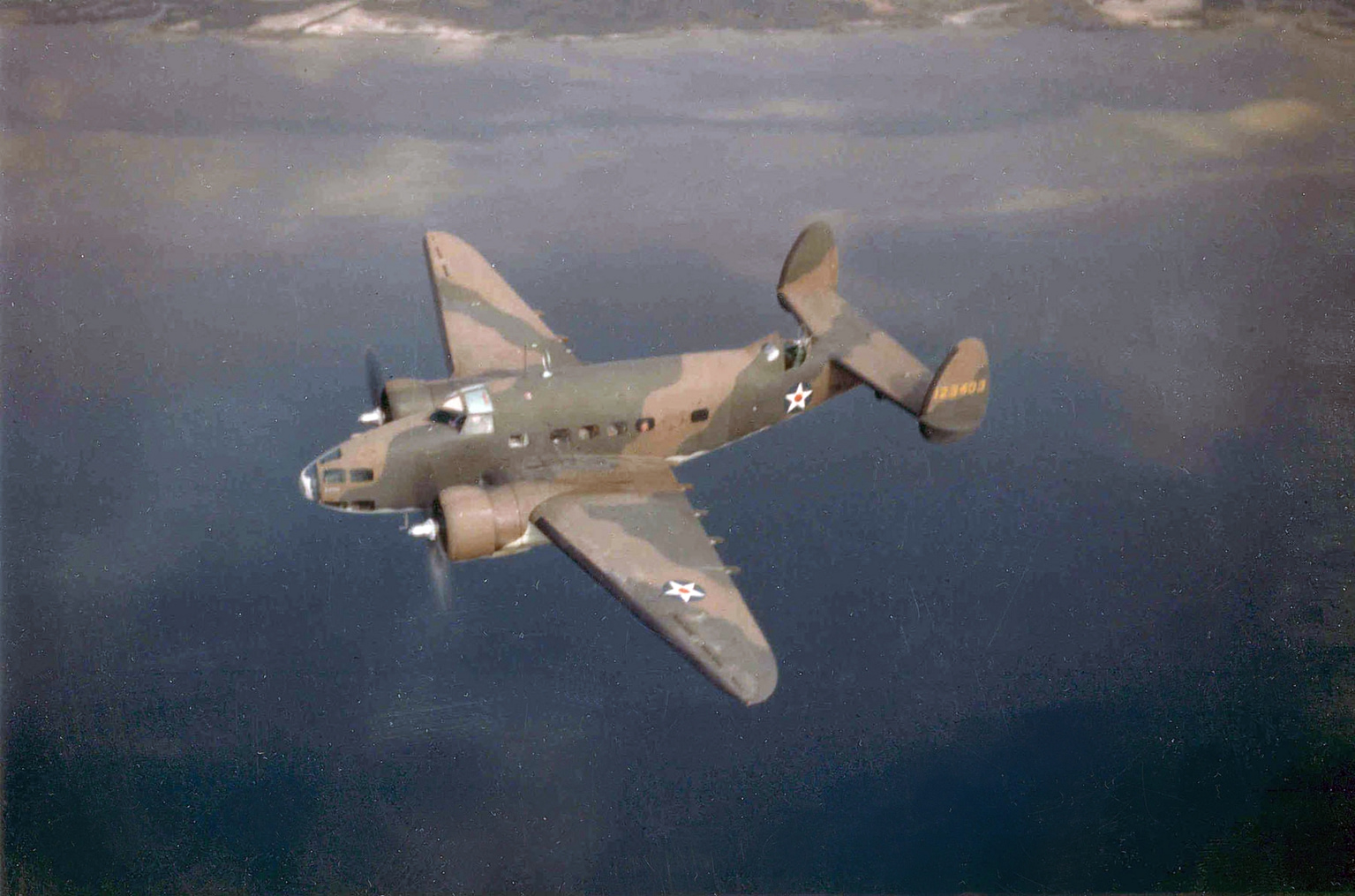
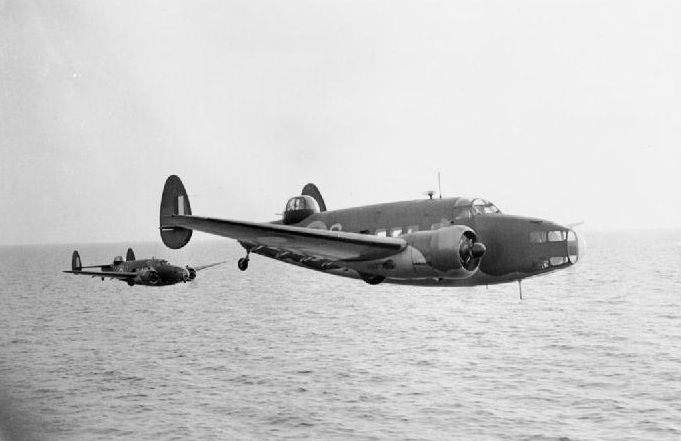
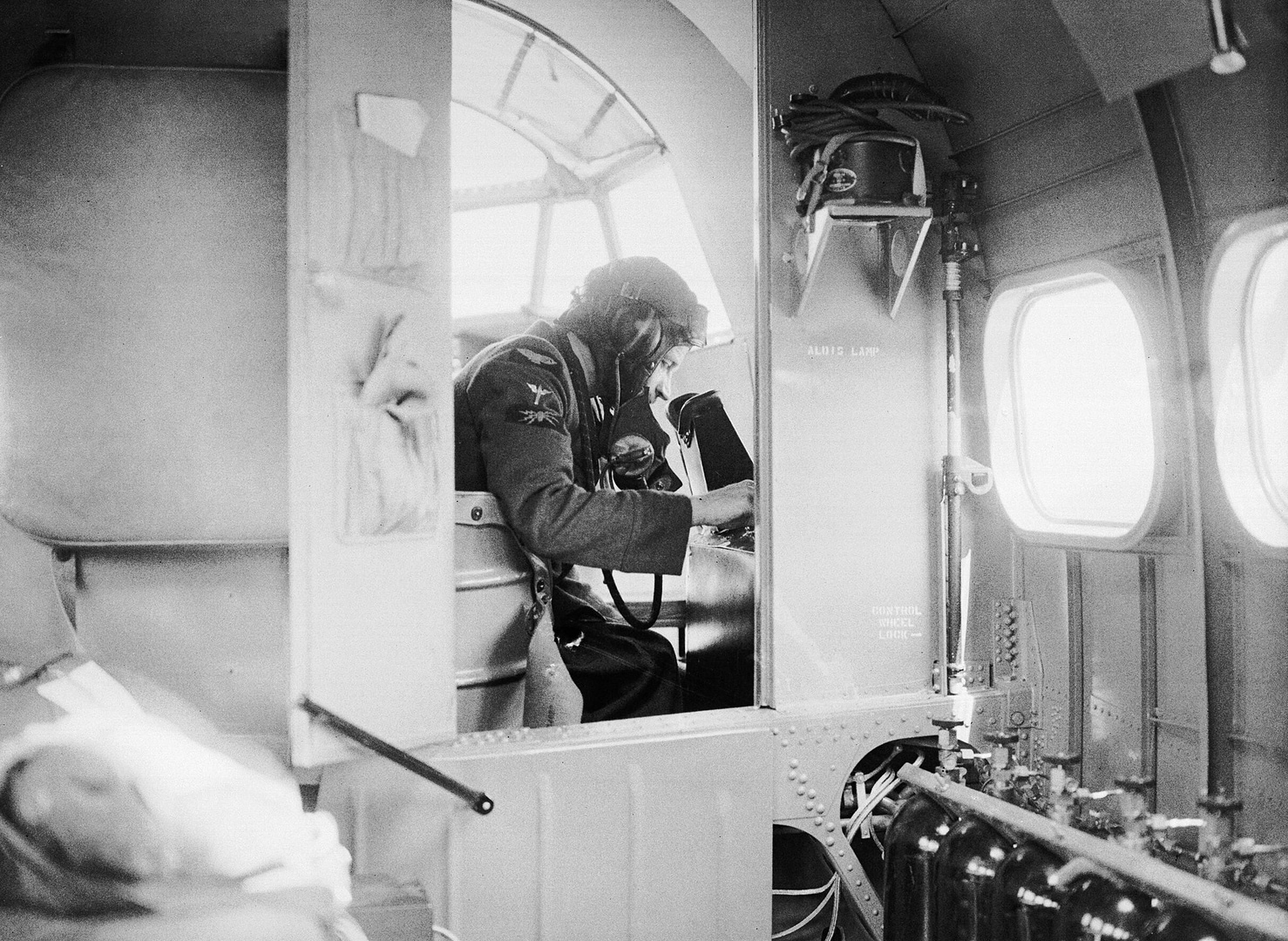
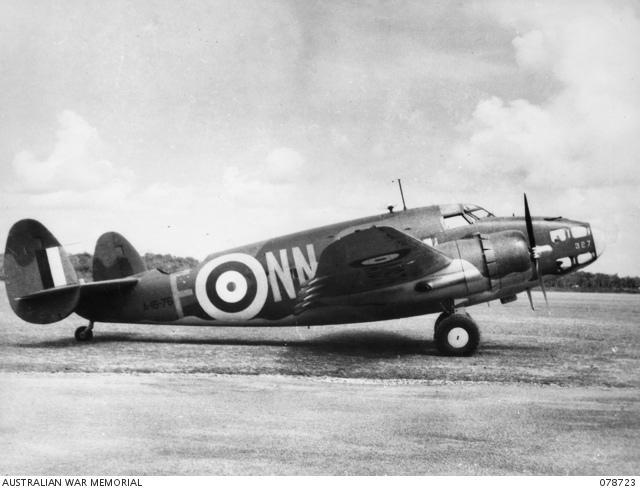
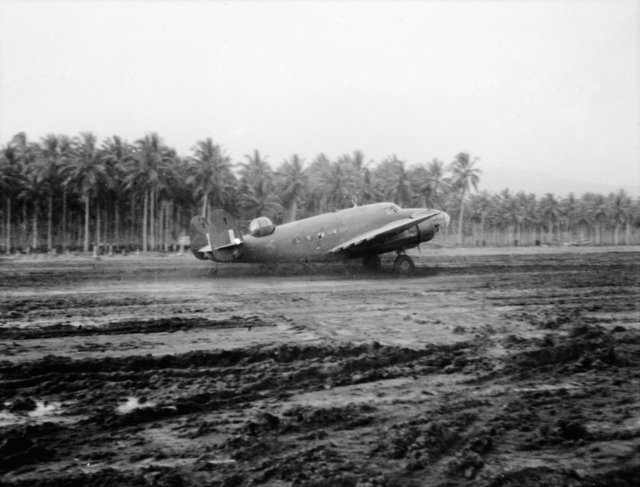
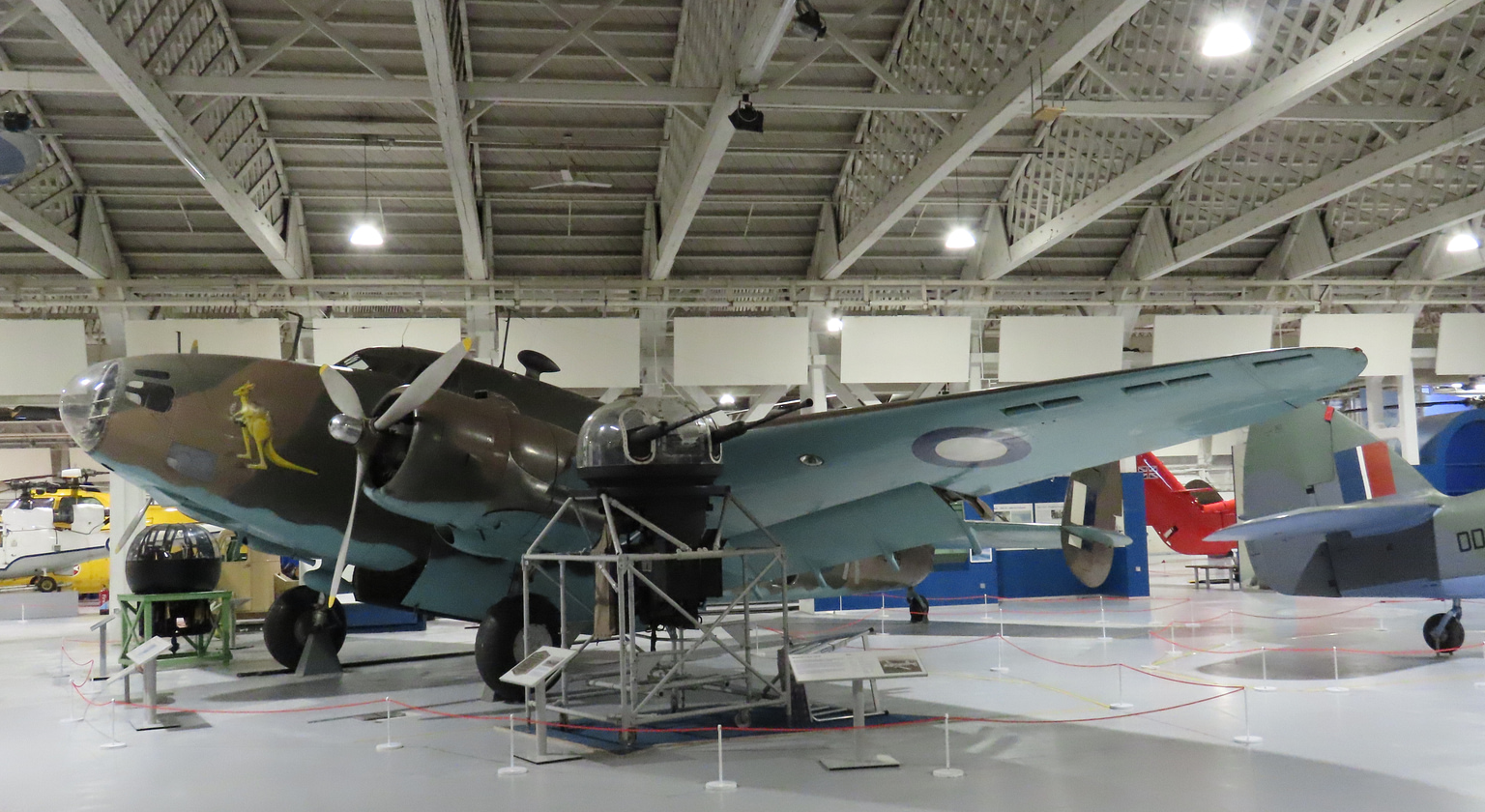
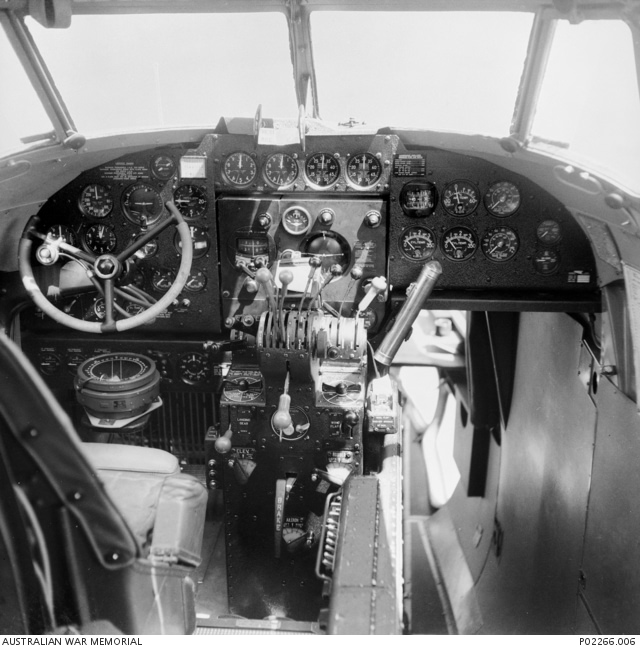
The Lockheed Hudson on film: a preserved survivor
“WW2 Lockheed Hudson bomber at Temora” by the Historical Aviation Film Unit — an authoritative warbird documentary channel — showing a genuine preserved Hudson (approx. 49,000 views at time of writing). A rare chance to see and hear the type that few, if any, examples fly today.
Where the Lockheed Hudson served: an operations map
The Hudson’s origin, its wartime theatres, the Commonwealth and Allied air forces that flew it, and where survivors are found today. Toggle the categories and hover a country for detail.
Categories are approximate and hedged where sources vary. “WWII Service & Theatres” marks the seas and lands where Hudsons saw action (a theatre, not the operating nation); “Commonwealth & Allied Operators” marks the air forces that flew the type; “Surviving Airframes” marks countries with known survivors on display.
The Lockheed Hudson by the numbers
Surviving Lockheed Hudsons around the world
Of the roughly 2,900 Hudsons built, only a small number survive, scattered across a handful of countries. Locations and restoration states change over time, so the following should be read as an indicative snapshot rather than a definitive register — always check with the individual museum before planning a visit.
The largest concentration of surviving Hudsons is in Austrália, fittingly for a nation whose air force flew the type so hard in the Pacific. Aircraft and substantial remains are preserved by Australian aviation museums and heritage groups, and the RAAF’s own museum holdings and associated collections have long included Hudson material. Some Australian survivors have been the subject of long-running restoration projects, occasionally reaching taxiing condition; airworthy status, where claimed, should always be verified as it can change.
In Nova Zelândia, where the RNZAF was a major operator, Hudson survivors and restoration projects are cared for by the country’s active warbird and aviation-heritage community — the same community whose film-makers have documented the type on the ground and, occasionally, in motion. In the Reino Unido, the Royal Air Force Museum preserves a Hudson, allowing visitors to see the aircraft that gave Coastal Command its early backbone. Survivors and stored airframes also exist in North America, reflecting the type’s service with the USAAF, the US Navy and the RCAF, though several are static exhibits or long-term restoration projects rather than complete display aircraft.
What no country can currently offer with any certainty is a routinely flying Hudson. Unlike some more numerous warbirds, the Hudson survived in numbers too small, and in condition too worn, for a thriving airworthy population to emerge. That rarity is part of what makes the survivors precious: each is a tangible link to the airliner-turned-warplane that patrolled the oceans, and to the tens of thousands of Allied aircrew who flew it. If you want to stand beside one, a museum is the place — and if you want the feeling of military flight itself, that is where MiGFlug’s flyable jets and warbirds come in.
17Why so few Lockheed Hudsons survive: attrition, obsolescence and scrap+
The scarcity of Hudson survivors has several causes. Wartime attrition was heavy: as a front-line patrol and strike aircraft flying long over-water sorties and desperate Pacific missions, the Hudson suffered significant combat and operational losses. Those that survived the war were, by 1945, thoroughly obsolete — outclassed by purpose-built patrol aircraft and worn out by hard use. Like most wartime types produced in their thousands, the vast majority were simply scrapped in the late 1940s, their aluminium far more valuable as raw metal than as museum pieces at a time when few thought to preserve them.
The Hudson also lacked the post-war civilian afterlife that saved some transports and trainers, and it never acquired the glamour that led enthusiasts to rescue fighters like the Spitfire or Mustang in large numbers. By the time warbird preservation became a serious movement, only a handful of Hudsons and Hudson remains were left to save. That handful, lovingly maintained by museums and volunteers, is what survives today.
Lockheed Hudson: your questions answered
Can I fly in a Lockheed Hudson?
No — not in any practical sense. The Lockheed Hudson is a retired Second World War aircraft. A number survive in museums, notably in Australia and at the RAF Museum in the United Kingdom, but only a few have been restored, and few if any are kept airworthy; there is no readily bookable flight in a Hudson today. However, you can fly in genuine military aircraft right now. MiGFlug offers real flights in military jets and warbirds — from jet trainers to supersonic fighters — with an experienced pilot. If the Hudson’s story has you wanting to feel military flight for yourself, see what is actually flyable at migflug.com/flights-prices.
Was the Lockheed Hudson American or British?
Both, in a sense. The Hudson was designed and built in the United States by Lockheed, derived from the American Model 14 Super Electra airliner. But it was ordered by and named for Britain: it was one of the first major American-built aircraft procured for and operated by the Royal Air Force, a significant pre-Lend-Lease purchase in 1938 that also helped expand US aircraft production. It later served the United States Army Air Forces (as the A-28/A-29) and Navy (PBO-1) as well.
Was the Hudson really based on an airliner?
Yes. Lockheed developed the Hudson rapidly from its Model 14 Super Electra, a modern civil airliner already in production — the same design that Howard Hughes flew around the world in record time in 1938. Engineers added a bomb-aimer’s nose, a bomb bay, gun positions and a dorsal turret to turn the transport into a patrol bomber. The airliner heritage is a large part of why the Hudson could be delivered so quickly and adapted to so many roles.
Did a U-boat really surrender to a Lockheed Hudson?
Yes — this is one of the war’s genuinely remarkable stories. On 27 August 1941, south of Iceland, a Hudson of No. 269 Squadron attacked the submarine U-570 on the surface with depth charges. Its inexperienced crew, believing they could not dive safely, surrendered; the Hudson circled until surface ships arrived to take the boat in tow. It is famously the only occasion a U-boat effectively surrendered to an aircraft. The captured submarine was taken into Royal Navy service as HMS Graph.
What engines and armament did the Hudson have?
Most Hudsons used two Wright R-1820 Cyclone radial engines of roughly 1,100 horsepower each; some later marks used Pratt & Whitney R-1830 Twin Wasp radials. A representative RAF Hudson carried fixed nose machine guns, a Boulton Paul dorsal turret with two .303-inch guns, and often beam or ventral guns, plus a bay for bombs or depth charges of up to about 1,400 lb (640 kg). Later marks added ASV radar for finding surfaced submarines. All figures vary by mark and should be treated as approximate.
How many Lockheed Hudsons were built?
Around 2,900 — sources commonly cite a figure near 2,941, though totals for individual sub-variants vary, so any single number is best treated as approximate. They served with the RAF, the RAAF, RCAF and RNZAF, the Netherlands East Indies air arm, the United States Army and Navy, and other operators including China and Brazil.
Are any Lockheed Hudsons still flying today?
Very few, if any. Several Hudsons survive in museums — with notable examples in Australia and at the RAF Museum — and a small number have been restored to display or, occasionally, taxiing condition. Airworthy Hudsons are extremely rare, and this should be stated cautiously as restorations and their status change over time. For a hands-on taste of historic and modern military flight that you can actually book, see migflug.com/flights-prices.
What was the Lockheed Hudson’s role in Coastal Command?
The Hudson was, for the first years of the war, the backbone of RAF Coastal Command. It flew maritime reconnaissance, convoy escort, anti-submarine patrol and anti-shipping strikes over the North Sea and the Atlantic, forcing U-boats to dive, reporting enemy movements, and attacking submarines and ships with bombs and depth charges. Later marks carried ASV radar to find surfaced U-boats at night. It also served as a transport, trainer, air-sea rescue aircraft and clandestine special-duties machine.
Why is the Lockheed Hudson historically significant?
Its significance is threefold. Industrially, it was one of the first major American military aircraft ordered by Britain, a pre-Lend-Lease purchase that helped expand the US aircraft industry before America entered the war. Operationally, it helped define land-based maritime patrol and anti-submarine tactics and gave Coastal Command a modern aircraft at a critical moment. And in famous incidents, a Hudson helped locate the German ship Altmark in 1940 and, in 1941, forced the submarine U-570 to surrender, the only time a U-boat effectively surrendered to an aircraft.
You can’t fly the Hudson — but these, you can
The Hudson belongs to the museums now. But the feeling of real military flight — the climb, the G, the horizon rolling over — is still very much bookable. MiGFlug puts civilians in the back seat of genuine jets and warbirds with professional pilots. Here are a few places to start.
Life aboard a Lockheed Hudson: the men and the machine
Behind every patrol was a crew of five or six, sealed for hours inside a converted airliner over a hostile sea. Understanding who they were and what they endured is central to understanding the Hudson itself.
A typical RAF Coastal Command Hudson carried a crew of around five to six: a pilot, a second pilot or navigator, a wireless (radio) operator, and one or two air gunners, with roles often overlapping as crews cross-trained to cover casualties and fatigue. On the long patrols that were the Hudson’s daily work, these men shared a cramped, noisy, cold aluminium tube, droning through cloud and rain far out over the ocean, each with a job that could not lapse for an instant. The pilot flew and fought the aircraft; the navigator kept a running plot of a position that could not be checked against any landmark; the wireless operator maintained the lifeline of radio contact and listened for the signals that might vector them onto a target or, in extremis, guide rescuers to them; and the gunners watched the empty sky for the fighter that might fall on them without warning.
The dangers were many and varied, and only some of them involved the enemy. Weather over the North Atlantic and North Sea was a constant threat — icing, storms, fog closing over the home airfield after a seven-hour sortie. Mechanical failure over water, in an aircraft that could be a handful on one engine when heavily loaded, was frequently fatal. Navigation errors could leave a crew lost over a featureless ocean with fuel running down. And always there was the possibility of sudden combat: an interception by enemy fighters, the flak of a surfaced U-boat fighting back, the disorientating violence of a low-level attack run at wave-top height. Coastal Command’s casualties, spread across years of unglamorous patrol flying, were heavy, and many were never found.
Yet crews spoke of the Hudson with a certain affection. Its airliner heritage made it relatively comfortable and pleasant to fly, a real advantage on sorties measured in hours rather than minutes. It was trusted to bring them home across long stretches of sea, and for the men who flew it, that reliability counted for a great deal. The Hudson’s war was not a story of glory but of endurance — of ordinary aircrew doing extraordinary things, patrol after patrol, in an aircraft that asked a lot of them and, more often than not, delivered.
18The Lockheed Hudson’s crew roles: who did what on a Coastal Command patrol+
The exact crew composition varied by role, mark and operator, but the core functions were consistent. The pilot (aircraft captain) flew the aircraft and directed the crew, making the split-second decisions of an attack run. The navigator — sometimes doubling as bomb-aimer in the glazed nose — was responsible for getting the aircraft to its patrol area and, crucially, back home, working with charts, compass and dead reckoning over a sea with no signposts. The wireless operator handled all radio communication, sending position reports and sighting reports and receiving orders, and often operated additional equipment as it was fitted. The air gunners manned the Boulton Paul dorsal turret and any beam or ventral guns, and served as extra pairs of eyes on the long search. On anti-submarine work, the whole crew became a hunting team: spotting a wake, identifying a target, and pressing home a depth-charge attack in the few seconds before a submarine could dive.
19The Lockheed Hudson’s colours, markings and camouflage+
Hudson colour schemes reflected the type’s roles and theatres. Coastal Command aircraft typically wore maritime camouflage designed to blend with sea and sky — dark upper surfaces over white or light undersides, the white intended to make an aircraft harder for a surfaced U-boat’s lookouts to spot against a bright sky. As the anti-submarine war intensified, specialised schemes were adopted to reduce the chances of a U-boat sighting an approaching aircraft in time to dive. In other theatres and roles the Hudson wore standard temperate or desert land schemes, or transport and training markings. National insignia, squadron codes and serials followed the conventions of each operating air force. The details are a specialist study in themselves, and enthusiasts and modellers should consult dedicated references, as schemes changed through the war and varied between marks and operators.
20The Lockheed Hudson in Allied service worldwide: an aircraft of many flags+
Few aircraft of the Second World War flew under so many flags. Beyond its principal users — the RAF, the RAAF, the RCAF and the RNZAF — the Hudson served the military air arm of the Netherlands East Indies, the South African Air Force in the Mediterranean and East African theatres, and the United States Army Air Forces and Navy. Aircraft also reached China, where they served against the Japanese, and Brazil, which used the type for coastal patrol in the South Atlantic. Portugal received a number of transferred aircraft, and other nations operated small quantities in various roles. This remarkable spread reflects both the scale of Hudson production and the aircraft’s usefulness as a general-purpose patrol and transport machine. Exact fleet numbers for the smaller operators are uncertain and vary between sources, so any figures should be treated as approximate and hedged accordingly. The common thread is that a single American design, born from an airliner and named by the British, ended up serving the Allied and associated cause across virtually every ocean and continent touched by the war.
The Lockheed Hudson’s legacy: the quiet workhorse of the sea war
The Hudson never captured the public imagination like the Spitfire or the Lancaster. But its influence — industrial, operational and human — ran deep, and it deserves to be remembered as more than a footnote.
The Hudson’s first legacy is industrial. As one of the earliest large American military aircraft ordered by Britain, it helped kick-start the expansion of the United States aircraft industry that would, within a few years, out-produce every other nation on earth. The money and urgency of those early British and French contracts built factories, trained workers and proved that American industry could deliver combat aircraft in quantity — lessons that paid off enormously once the United States itself went to war. In the long arc that runs from a small pre-war Lockheed to the vast “Arsenal of Democracy,” the Hudson stands near the beginning.
Its second legacy is operational. The Hudson helped define how land-based aircraft would fight submarines and protect shipping — the tactics of convoy escort, the value of persistent air presence, the use of depth charges and, crucially, of radar to find surfaced U-boats. Those lessons, learned in Hudsons over the North Sea and the Atlantic, shaped maritime patrol aviation for the rest of the war and beyond. Lockheed itself would go on to build a long line of maritime patrol aircraft, culminating decades later in types like the P-2 Neptune and P-3 Orion; the Hudson was the company’s first real step onto that path.
The third and most important legacy is human. Tens of thousands of aircrew from Britain, Australia, Canada, New Zealand, the Netherlands, the United States and beyond flew and fought in Hudsons, and many died in them — over the grey North Sea, in the flames of the Malayan and East Indies campaigns, and in accidents that were the everyday risk of wartime flying. They flew an aircraft that had begun life carrying passengers, adapted it to a dozen deadly tasks, and used it to do essential work in the least glamorous corners of the war. The Hudson’s memorial is not a single famous action but the sum of countless patrols, strikes, rescues and secret flights — the quiet, unending labour that helped win the war at sea.
Today the survivors are few. A handful of Hudsons rest in museums, principally in Australia, New Zealand and the United Kingdom, where visitors can stand beneath the wing of the airliner-that-went-to-war and imagine the cold ocean patrols. Restorations continue, slowly, and the status of any airworthy example should always be checked, as it changes over the years. But whether or not a Hudson ever flies again, its place in history is secure: the American airliner that became Britain’s first great imported warplane, and the aircraft that once made a U-boat give up the fight.
Sources & further reading on the Lockheed Hudson