
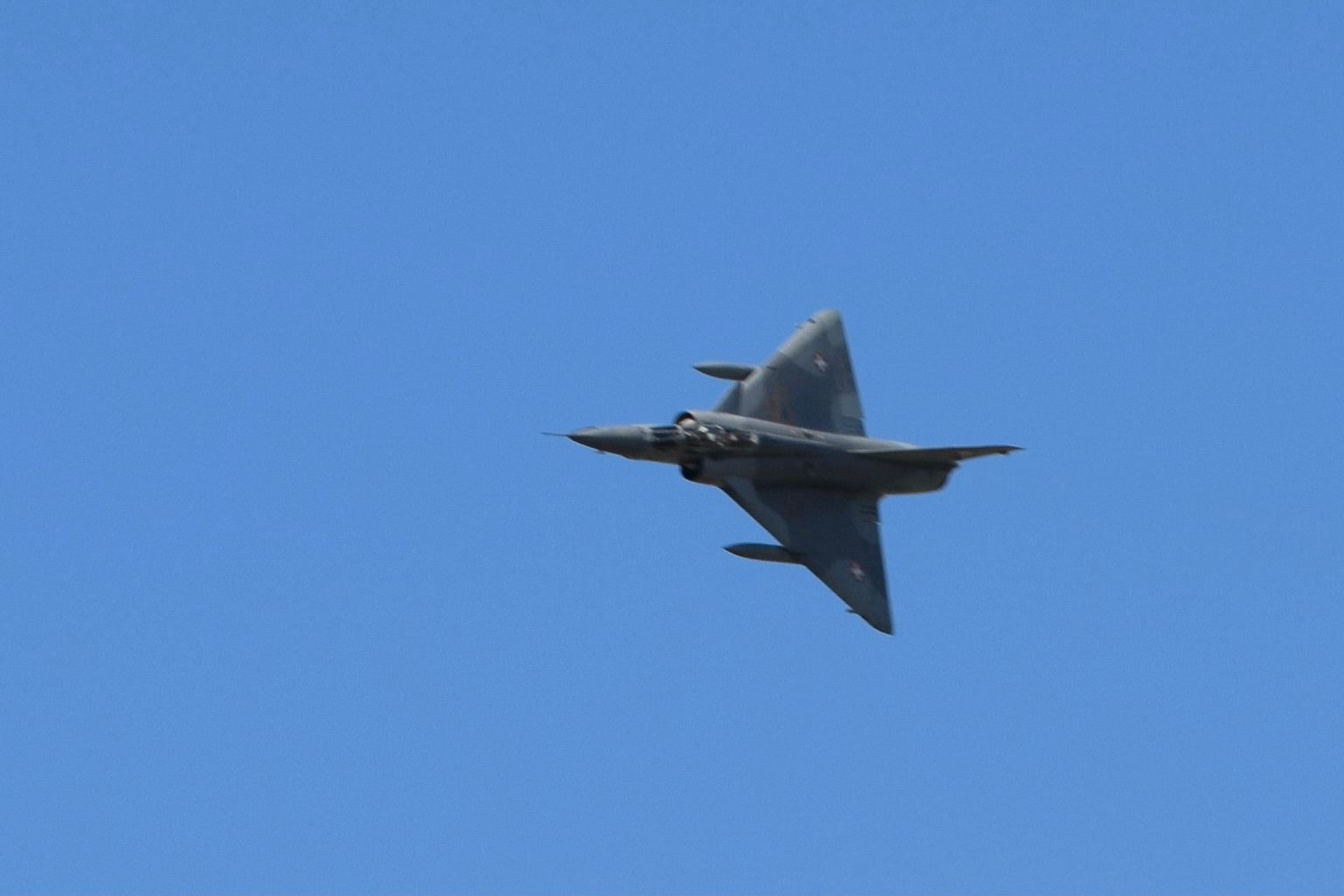
Dassault Mirage III / Mirage 5
The Delta That Won a War in Six Days
France’s tailless delta became one of the Cold War’s most successful fighters — a Mach-2 interceptor that led Israel to victory in 1967, fought from the Falklands to the Border War, spawned the Nesher and the Kfir, and armed some 21 nations across five continents.
The Mirage III: France’s Mach-2 delta
The Mirage III was France’s answer to a 1953 requirement for a lightweight, all-weather supersonic interceptor. Dassault’s tailless research aircraft, the MD.550 Mystère-Delta, first flew in June 1955; refined and re-engined, it pointed the way to the definitive prototype. The Mirage III 001 first flew on 17 November 1956, and in May 1958 the Mirage IIIA became the first Western European aircraft to sustain Mach 2 in level flight. The production Mirage IIIC entered Armée de l’Air service on 19 December 1961.
Its signature is the pure, tailless low-set delta wing with a leading-edge sweep near 60°. The delta gave a large wing area, generous internal fuel, a strong simple structure and superb high-speed, high-altitude performance — at the cost of high induced drag, rapid energy bleed in hard turns, and high take-off and landing speeds. Some variants carried a jettisonable SEPR liquid-fuel rocket booster for a rapid zoom-climb to intercept altitude.
The design spawned a huge family. The Mirage 5 was a simplified clear-weather ground-attack export version, the nose radar deleted for more fuel and ordnance; the Mirage 50 added the more powerful Atar 9K50. About 1,400+ Mirage III/5/50 were built in roughly 90 versions, serving some 21 nations — licence-produced in Australia, Switzerland and Belgium, and the direct basis for Israel’s IAI Nesher and, with a US J79 engine, the IAI Kfir.
01The Mirage III’s legend: how a French delta became the free world’s most battle-proven fighter
The Mirage III’s reputation was forged not over France but over the Middle East. On 5 June 1967, Israeli Mirage IIICJ deltas spearheaded Operation Focus, gutting Arab air forces on the ground and then sweeping the skies in the Six-Day War. Israeli Mirages went on to rack up scores of kills through the War of Attrition, becoming the free world’s most famous MiG-killer — and export orders poured in on the strength of it.
When France embargoed arms to Israel in 1969, Tel Aviv reverse-engineered the Mirage 5 into the home-built Nesher, which fought in the 1973 Yom Kippur War, and then the re-engined Kfir. The same airframe defined Cold War air defence for Switzerland, Australia and apartheid-era South Africa, and fought Britain’s Sea Harriers over the Falklands in 1982. Few Western fighters of the era travelled so far or fought so widely.
What makes the Mirage III special
The tailless delta wing
A large-area thin delta with ~60° leading-edge sweep gave the Mirage III outstanding Mach-2 speed, a high service ceiling, generous internal fuel and a rugged structure with no separate tailplane. The trade-off was aerodynamic: high induced drag, fast energy bleed in hard turns, no flaps (the trailing edge is all elevons) and consequently high take-off, approach and landing speeds — brilliant in the vertical, punished in a slow turning fight.
The SNECMA Atar 9 turbojet
A single Atar 9C afterburning turbojet (~60 kN with reheat) fed by two side intakes with movable half-cone “souris” centrebodies that managed shock waves for efficient supersonic flow. Robust, easy to maintain and widely licence-built, the Atar made the Mirage cheap to operate and export. Later Mirage 50s and upgrades used the more powerful Atar 9K50.
A simple, robust Mach-2 interceptor
The Mirage III packed genuine Mach-2 capability into an affordable, maintainable, easily-exported airframe. An optional jettisonable SEPR rocket booster could be fitted under the fuselage for a rapid zoom-climb to high-altitude targets — a neat, low-tech performance boost typical of the aircraft’s pragmatic design philosophy.
02The Mirage III’s delta: brilliant fast, brutal slow
The pure delta is a straight-line and high-altitude star but a handful in a knife-fight. With no flaps, the Mirage III had to land fast and nose-high, needed a long take-off run, and drained its energy quickly in hard, sustained turns. Pilots learned to fight it in the vertical and in a slashing high-speed pass, and never to bleed it slow. It is the exact opposite trade-off from a tailed delta like the MiG-21, which kept a tailplane and flaps to tame those landing speeds — but the Mirage’s clean delta was faster and simpler, and it sold to the world on that promise.
03The Mirage III’s rocket booster: a low-tech shortcut to altitude
To reach high-flying bombers fast, the Mirage III could carry a jettisonable SEPR liquid-fuel rocket motor under its belly for a searing zoom-climb. It was a pragmatic, low-tech answer to a hard problem — extra altitude performance bolted onto an affordable airframe rather than designed in at great expense. Together with the licence-built Atar and the clean delta, it captured the Mirage’s whole philosophy: genuine Mach-2 interception, done cheaply enough that some 21 air forces could buy and sustain it.
Full specifications (Mirage IIIE)
Airframe & Performance
- Equipe
- 1
- Comprimento
- ~15.0 m
- Envergadura
- ~8.22 m
- Max takeoff weight
- ~13,500 kg
- Max speed
- Mach 2.2 · ~2,350 km/h at altitude
- Teto de serviço
- ~17,000 m
- Wing
- Tailless delta, ~60° sweep
- Number built
- ~1,400+ Mirage III/5/50 (Dassault: 1,401)
Propulsion & Armament
- Motor
- 1 × SNECMA Atar 9C afterburning turbojet
- Thrust
- ~60 kN (~13,200 lbf) with reheat
- Boost (optional)
- Jettisonable SEPR liquid-fuel rocket
- Guns
- 2 × 30 mm DEFA 552 cannon
- Missiles
- 1 × Matra R.530; 2 × R.550 Magic / AIM-9
- First flight
- 17 November 1956
- Into service
- 19 December 1961 (Mirage IIIC)
- Unit cost
- ~US$1–2 million (1960s, indicative)
04The Mirage III’s cost and spec figures: why the numbers vary
There is no single authoritative unit-cost figure for the Mirage III. It was built across roughly 90 versions over three decades, and export prices varied enormously by variant, year and customer; period estimates cluster in the low single-digit millions of US dollars (1960s money), but treat these as indicative only. The performance figures shift by source and sub-variant too — maximum take-off weight is quoted anywhere from ~12,700 kg to ~13,500 kg, and the service ceiling from ~17,000 m to ~20,000 m. The values above are rounded to the Mirage IIIE and should be read as representative rather than exact.
Seven decades of the Mirage III
Mystère-Delta flies
Dassault’s MD.550 tailless proof-of-concept makes its first flight on 25 June, pointing the way to the delta.
Mirage III 001
The definitive prototype first flies on 17 November at Melun-Villaroche.
First to Mach 2 in Europe
In May the Mirage IIIA sustains Mach 2 in level flight — a Western European first.
Enters service
The Mirage IIIC interceptor joins the Armée de l’Air on 19 December.
The Six-Day War
Israeli Mirage IIICJ deltas lead Operation Focus and dominate the air, making the type’s reputation.
Embargo and the Nesher
France embargoes Israel; Israel begins building its home-grown Mirage 5 copy, the Nesher (first flight September).
The Yom Kippur War
Mirage IIIs and Neshers fight across Sinai and the Golan, claiming large numbers of Arab aircraft.
Falklands
Argentine Mirage IIIs and Israeli-built Daggers fight British Sea Harriers over the South Atlantic.
The long fade-out
Switzerland retires the Mirage IIIS in 2003; Pakistan keeps upgraded Mirage III/5 (Project ROSE) flying into the 2020s.
From the flight line: twelve Mirage III stories
The Delta That Won a War in Six Days
On 5 June 1967 Israeli Mirage deltas opened the Six-Day War and swept the skies.
Read the full story
Dagger vs Harrier over the Falklands
In 1982 Argentine Mirages and Israeli-built Daggers fought the Royal Navy’s Sea Harriers.
Read the full story
The Embargo That Built the Nesher
France froze arms to Israel in 1969; Israel simply built its own Mirage.
Read the full story
From Nesher to Kfir
Israel married the Mirage 5 airframe to a US J79 engine to create the Kfir.
Read the full story
Switzerland’s Cavern Mirages
Neutral Switzerland flew licence-built Mirages from mountainside caverns until 2003.
Read the full story
Australia Builds Its Own
Australia licence-built the GAF Mirage IIIO, then sold 50 to Pakistan.
Read the full story
The Pure-Delta Bargain
The tailless delta was a rocket in a straight line, a handful in a turn.
Read the full story
Pakistan’s Forever Fighter
Project ROSE turned a 1960s interceptor into a 21st-century workhorse.
Read the full story
South Africa’s Border War Delta
SAAF Mirages flew hard over Angola and Namibia, then became the Atlas Cheetah.
Read the full story
First to Mach 2 in Europe
In May 1958 the Mirage IIIA held Mach 2 in level flight — a European first.
Read the full story
The Rocket-Boosted Interceptor
A jettisonable SEPR rocket gave the Mirage a searing zoom-climb.
Read the full story
The Jet That Sold Everywhere
About 1,400+ Mirages in 90 versions served 21 nations on five continents.
Read the full story
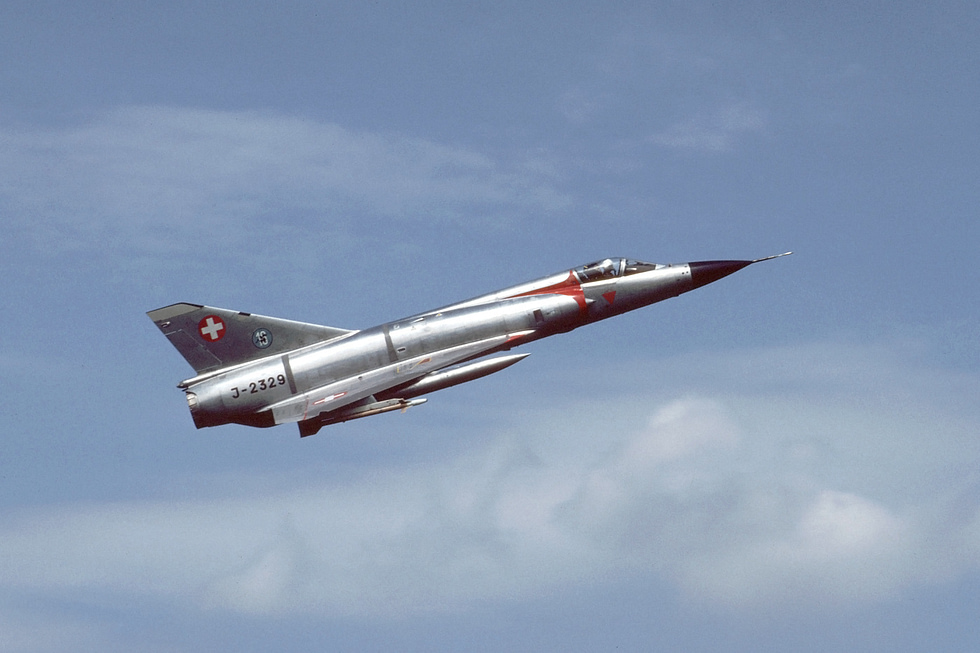
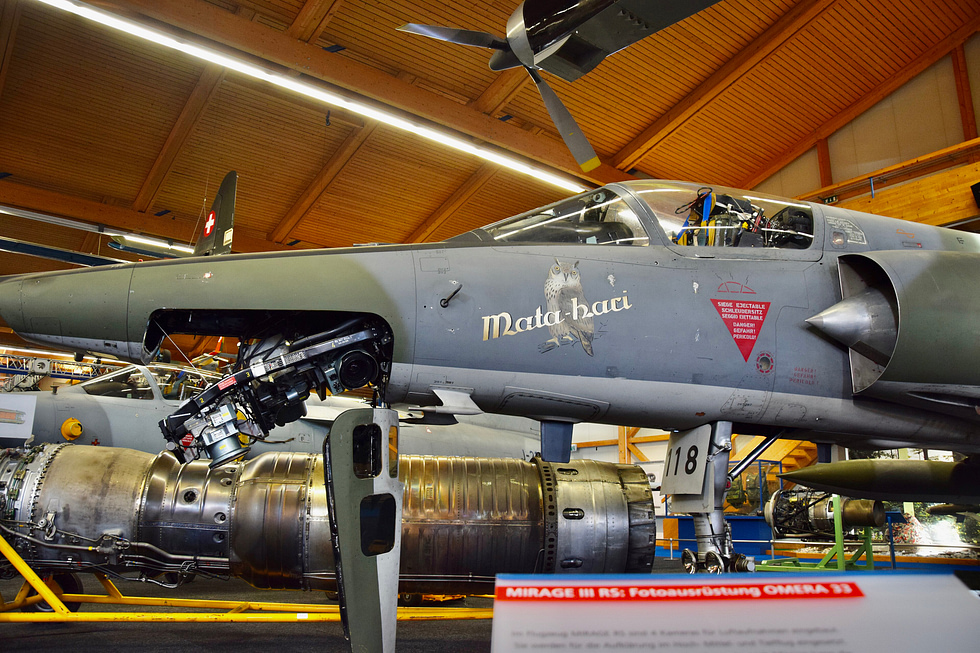
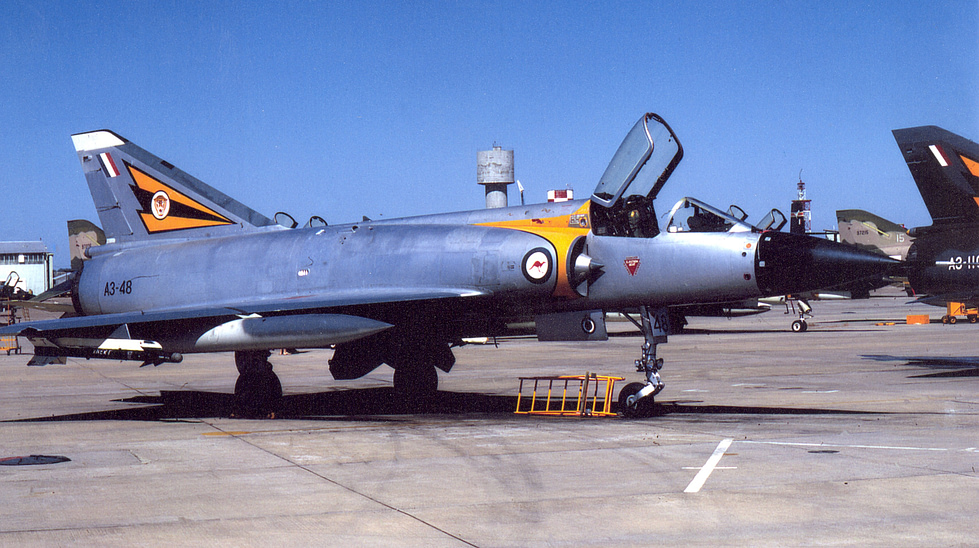
The Mirage III in pictures
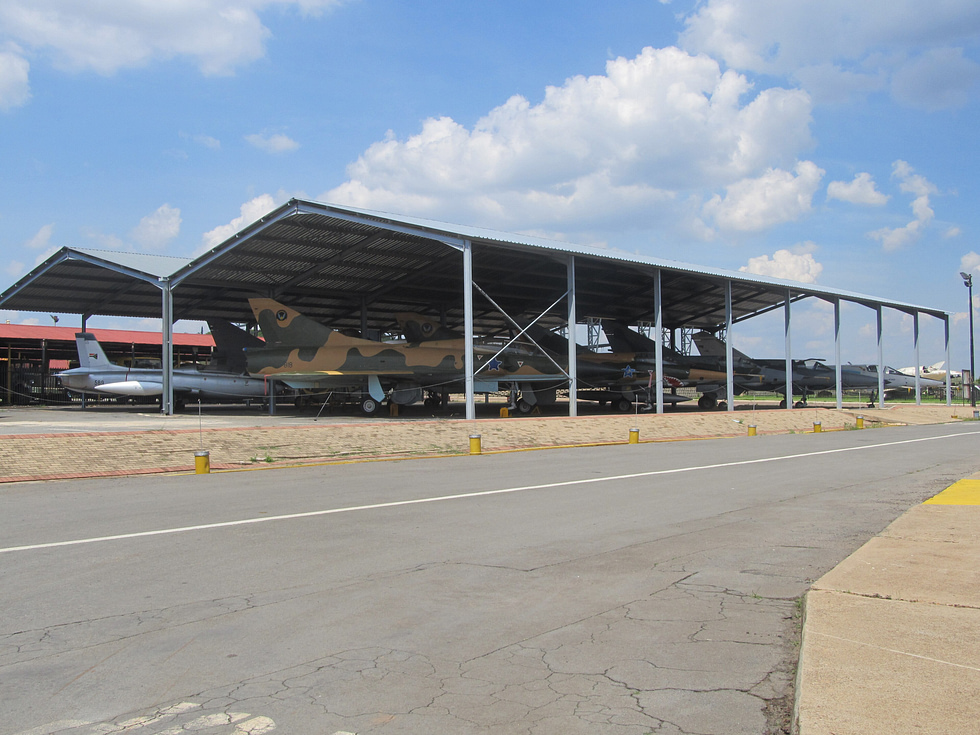
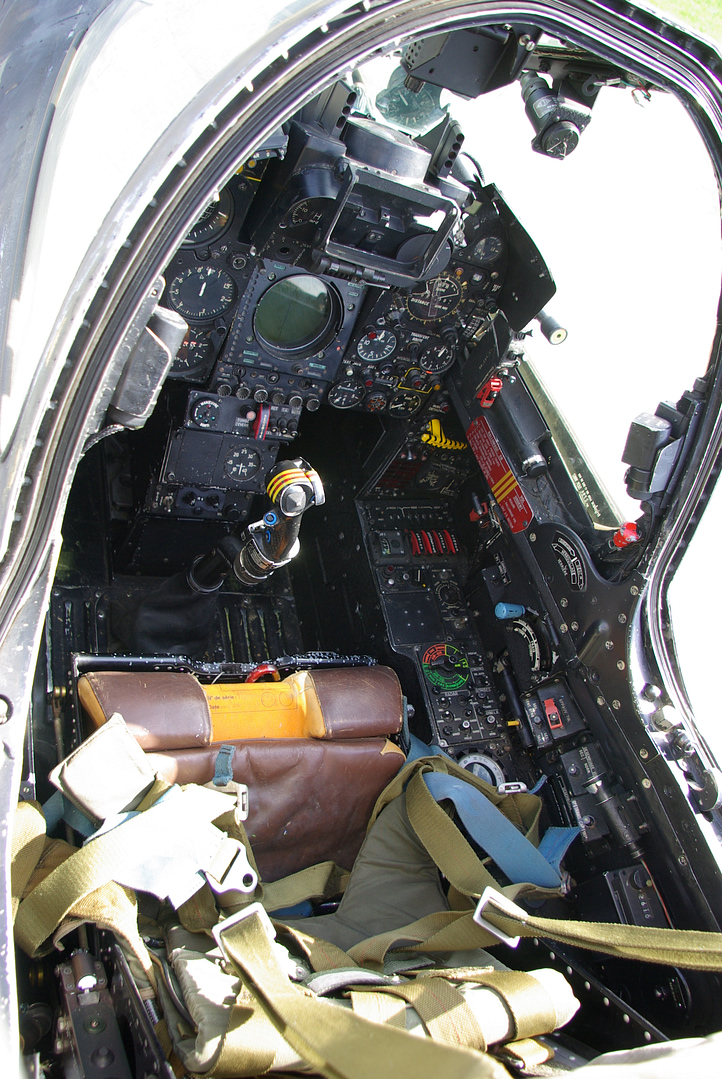
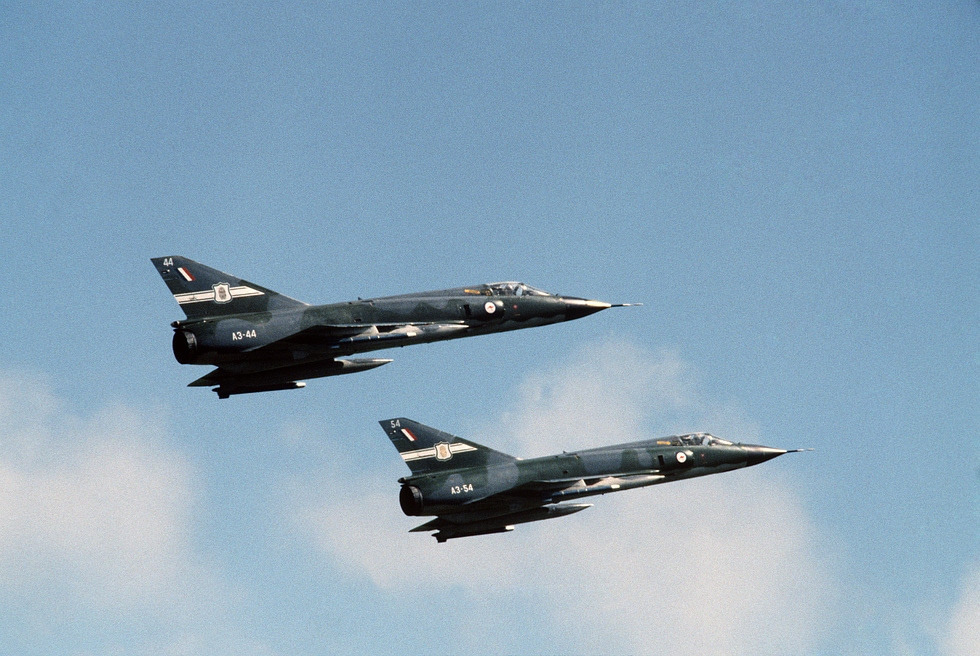
The Mirage III in motion
A dedicated Mirage III video is coming soon — we’re verifying the clip and its embed rights before adding it here.
The Mirage III / 5 in motion
Not A Pound For Air To Ground — one of the most-watched Mirage III / 5 films on YouTube.
Where the Mirage III flew
One of the Cold War’s most battle-proven deltas
The Mirage III fought from the Middle East to the South Atlantic across four decades, and its published kill/loss tallies are fiercely contested between national and independent sources — always cite them as claims, not settled scores. What is beyond dispute is the breadth of its fighting career.
Compare the combat record of every military aircraft. Figures as of July 2026.
Everything people ask about the Mirage III
Can I fly in a Mirage III?
How fast is the Mirage III?
Is it hard to fly because of the delta wing?
Is the Mirage III still in service?
What’s the difference between the Mirage III and the Mirage 5?
How is it linked to the Kfir?
How many were built?
Mirage III vs MiG-21?
You can’t fly the Mirage III.
These, you can.
Some legends only live in museums — others are fuelled and waiting. MiGFlug has put civilians in real military jet cockpits since 2004.
 Fly the L-39 AlbatrosThe world’s most-flown jet trainer — aerobatics included
 Fly the F-104 Starfighter“The missile with a man in it”
 Fly the MiG-21The Cold War’s most-produced jet
 Pilote o T-33 Shooting StarAmerica’s first jet trainer
 Fly the DH VampireA piece of early jet history
 Fly the S.211Agile Italian jet trainer
 Fly the MB-326The classic Aermacchi jet
 Fly the MiG-15The Soviet legend of the Korean War
Continue the tour
Every fact, checked
- Dassault Aviation — official Mirage III pageManufacturer history, production numbers and variant overview.
- GlobalSecurity.org — Mirage IIIDevelopment, design and service background.
- MilitaryFactory.com — Mirage III specificationsAirframe and performance data cross-check.
- FlyaJetFighter.com — Falklands 1982Sea Harrier vs Argentine Mirage III and Dagger.
- GlobalMilitary.net — Mirage III / 5 / 50Specifications and operator list (2026).
- Military Watch MagazinePakistan’s Mirage upgrades and Project ROSE.
- Smithsonian MagazineThe air war in the Falklands.
- Fighter-Planes.com — Mirage IIISpecs, history and combat record.