
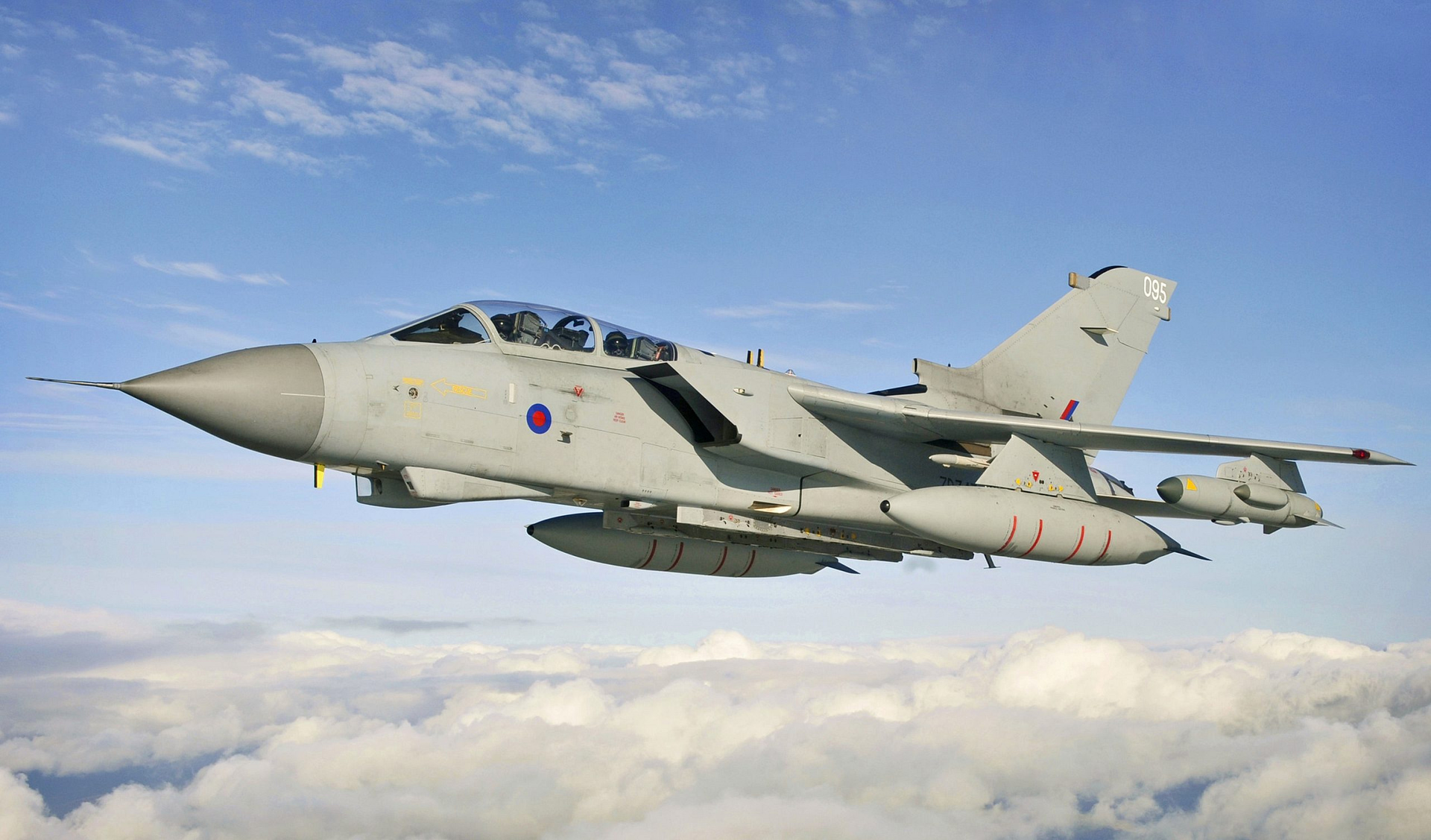
Panavia Tornado
IDS · ADV · ECR
Europe’s Cold War strike jet — a tri-national, variable-geometry swing-wing bomber built to punch through Warsaw Pact defences at treetop height and hit its target on the first pass, in any weather, day or night.
One jet, three nations, a whole continent to defend
By the late 1960s, several European air forces faced the same problem and none could afford to solve it alone. Britain, West Germany and Italy all needed a fast, all-weather strike aircraft able to fly under Soviet radar, cross the Iron Curtain at low level and hit airfields and bridges deep in Warsaw Pact territory. In 1968 they launched the Multi-Role Combat Aircraft (MRCA) programme, and in 1969 founded Panavia Aircraft GmbH — a consortium of British, German and Italian firms — to build it.
The answer was the Tornado: a compact, two-seat jet with a variable-geometry “swing” wing that spread wide for slow, short-field takeoff and swept back sharply for a Mach-capable low-level dash. The prototype first flew from Manching, Germany, on 14 August 1974, and the type entered service with the RAF and Luftwaffe in 1979–80. Roughly 990 were built before production ended in 1998.
Two very different families grew from the same airframe. The IDS (Interdictor/Strike) — the RAF’s GR1 and later GR4 — was the low-level bomber the programme was really about. From it Britain developed the stretched ADV (Air Defence Variant), the Tornado F3 interceptor built to guard UK airspace, while Germany and Italy fielded the ECR for radar-hunting defence suppression. The Tornado went on to fight in every major Western air campaign from 1991 to 2019.
01Why the Panavia Tornado was almost impossible to build — and got built anyway
A three-nation weapons programme is a political minefield: every partner wants work-share, a say in the design, and an aircraft tuned to its own doctrine. The MRCA nearly collapsed several times — the Netherlands, Belgium and Canada dropped out early, and Britain, Germany and Italy each wanted something slightly different. The compromise was a single flexible airframe that could be a low-level strike bomber, an interceptor or a defence-suppression platform depending on the fit-out.
Work was split by stake: Britain and West Germany held 42.5% each, Italy 15%, mirrored in the engine consortium Turbo-Union. That the partners delivered a genuinely capable aircraft — on a scale no single European nation could have managed — made the Tornado the template for later joint programmes like the Eurofighter Typhoon and the A400M.
What makes the Tornado special
The variable-geometry “swing” wing
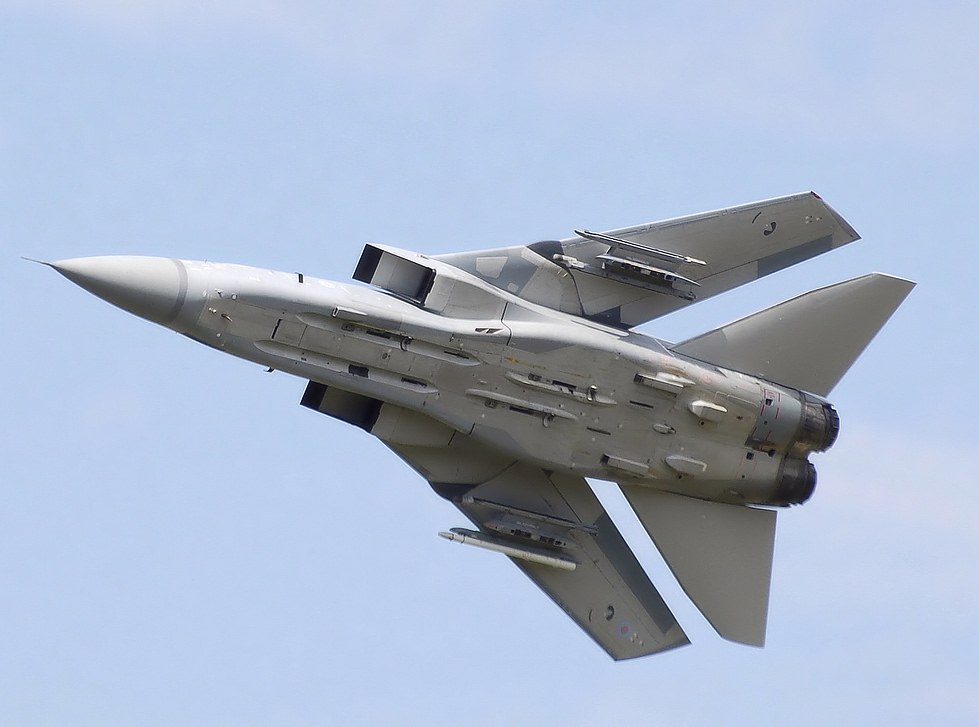
The Tornado’s wings pivot in flight from about 25° spread to 67° swept. Spread wide, the wing gives the lift and low speed needed to operate from short, damaged runways; swept back, it becomes a clean, low-drag dart for a high-speed run at treetop height. One airframe therefore does two contradictory jobs — short-field flexibility and a stable, punishing low-level dash — that a fixed wing cannot.
Terrain-following, blind first-pass attack
The strike Tornado pairs a ground-mapping radar with a dedicated terrain-following radar, letting it fly automatically at 60 m in cloud, fog or dark while hugging the contours of the ground. Coupled to an inertial navigation and computing system, it was built to reach a target it had never seen and hit it accurately on the first pass, in any weather — the core promise of the whole programme.
Twin RB199 turbofans with thrust reverser
Power comes from two Turbo-Union RB199 three-shaft afterburning turbofans — a compact, fuel-efficient design giving roughly 71 kN each in reheat. Uniquely for a fighter, the RB199 has an integrated thrust reverser, so the Tornado can slam to a stop on a short, wet or battle-damaged strip — a decisive advantage for an aircraft meant to keep flying after its airfields were hit.
02The Tornado’s two-man crew: why the navigator mattered as much as the pilot
The Tornado was always a two-seat aircraft: a pilot in front and a navigator (in RAF service, the “nav”; elsewhere a weapon systems officer) behind. Low-level all-weather strike is a two-person job — at 900 km/h and 60 m, one crew member flies the jet while the other runs the radar, navigation, targeting and defensive systems. The back-seater managed the terrain-following approach, found and designated the target, and worked the electronic-warfare kit, freeing the pilot to concentrate on not flying into the ground. It is a division of labour the single-seat strike fighters that replaced the Tornado now hand to software.
03IDS, ADV and ECR: three Tornados from one airframe
O IDS (Interdictor/Strike) is the original low-level bomber — the RAF’s Tornado GR1, later upgraded to the GR4, plus the German, Italian and Saudi strike jets. The ADV (Air Defence Variant), the RAF’s Tornado F3, is a stretched interceptor with a longer fuselage, a bigger radar and long-range missiles, built to defend UK airspace against Soviet bombers rather than to attack ground targets. The ECR (Electronic Combat/Reconnaissance) is a German and Italian defence-suppression variant that hunts enemy radars with anti-radiation missiles. Same wing, same engines — three very different missions.
Full specifications — Tornado IDS
Baseline note: the figures below describe the Tornado IDS in the RAF’s mid-life-updated GR4 form, the standard the strike fleet flew for its last two decades and the one with the best-documented published data. Deltas for the stretched ADV / F3 interceptor and the German ECR in grey. Where the Bundeswehr’s own published data for its IDS differs from the reference works, both figures are given rather than one being quietly preferred.
Dimensions & weights
- Equipe
- 2 in tandem — pilot and navigator; no single-seat Tornado was ever built
- Comprimento
- 16.72 m (54 ft 10 in); ADV 18.68 m (61 ft 3 in) after a 1.36 m plug behind the cockpit; the Bundeswehr publishes 17.23 m for its own IDS
- Wingspan, wings forward
- 13.91 m (45 ft 8 in) at 25° sweep
- Wingspan, mid sweep
- 11.58 m (38 ft 0 in) at 45° sweep
- Wingspan, wings swept
- 8.56 m (28 ft 1 in) at 67° sweep
- Sweep range
- 25° to 67°, pilot-selected (automatic sweep on the ADV / F3 only)
- Altura
- 5.95 m (19 ft 6 in)
- Área da asa
- 26.6 m² (286 sq ft) — strikingly small for the weight, which is the whole point of the design
- Peso vazio
- 13,890 kg (30,620 lb); ADV about 14,500 kg (31,970 lb)
- Combustível interno
- ~6,350 kg (~14,000 lb); the ADV plug added a further "Tank 0" of 200 imperial gallons
- Maximum external load
- ~9,000 kg (~19,800 lb) across seven stations, never carried at full fuel
- Peso máximo de decolagem
- 27,215 kg (60,000 lb); ADV 27,986 kg (61,700 lb); the Bundeswehr quotes 28.5 t for the German IDS
- Store stations
- 7 — three under the fuselage, four on swivelling wing pylons that rotate to stay aligned as the wing sweeps (the inner wing pylons also carry shoulder rails for two short-range air-to-air missiles each)
- Wing loading
- 767 kg/m² (157 lb/sq ft) at maximum take-off weight — among the highest of any combat aircraft, and deliberately so
Performance
- Maximum speed, altitude
- 2,400 km/h (1,491 mph), Mach 2.2 at 9,000 m — only with the variable intake ramps working. They were inhibited on most IDS airframes, which caps them nearer Mach 1.9; the ADV kept them
- Maximum speed, low level
- Mach 1.3 (about 1,590 km/h / 990 mph at sea level) — the Bundeswehr’s published figure for its IDS
- Typical attack run speed
- 480–600 kn (890–1,110 km/h; 550–690 mph) on the terrain-following leg
- Terrain-following set clearance
- as low as 60 m (200 ft), flown hands-off by the autopilot in cloud and at night
- Teto de serviço
- 15,240 m (50,000 ft)
- Combat radius, lo-lo-lo
- ~926 km (~575 mi), Panavia’s own figure for the all-low-level profile
- Combat radius, hi-lo-hi
- ~1,574 km (~978 mi)
- Ferry range
- 3,890 km (2,417 mi) with drop tanks; 4,265 km (2,650 mi) for the ADV on four tanks
- Combat air patrol endurance
- 2 hours at 560–740 km (350–460 mi) from base — an ADV / F3 figure, and the reason the interceptor existed
- Take-off run
- 900 m (2,950 ft) at typical strike weight, wings at 25° with full flap and slat
- Landing run
- 370 m (1,215 ft) using the thrust reversers — German insistence on austere-strip performance drove this
- Load factor limits
- +7.5 / −3 g
- Thrust-to-weight
- 0.77 at maximum take-off weight — a bomber’s number, not a fighter’s
Propulsion & systems
- Engines
- 2 × Turbo-Union RB199-34R Mk 103 afterburning three-spool turbofans (Mk 104 with lengthened reheat pipes on the ADV / F3; uprated Mk 105 on Luftwaffe ECRs only)
- Thrust, each
- 43.8 kN (9,850 lbf) dry, 76.8 kN (17,270 lbf) with reheat. Sources disagree: Jane’s gives the ADV’s Mk 104 as 40.5 kN (9,105 lbf) dry and 73.5 kN (16,520 lbf) reheat, and the Bundeswehr publishes 41.0 kN (9,220 lbf) and 69.0 kN (15,510 lbf) for its own aircraft
- Thrust reversers
- Clamshell buckets in both nozzles, deployed on touchdown. Testing showed they destabilise the aircraft badly enough that nose-wheel steering had to be augmented through the yaw damper to keep the landing roll straight
- Fuel and refuelling
- ~6,350 kg internal plus up to four drop tanks; bolt-on probe on the starboard forward fuselage for the IDS, fully retractable probe on the ADV — which is why the ADV lost its port cannon
- Attack radar
- Texas Instruments dual radar in one nose: a ground-mapping and target-fixing set alongside a separate dedicated terrain-following radar, so the aeroplane could navigate, attack and hug the ground at the same time (ADV instead carries the Marconi / Ferranti AI.24 Foxhunter, 20 targets tracked at up to 160 km — and it was years late and badly troubled)
- Navigation
- Ferranti FIN1010 three-axis inertial platform with Doppler; GPS and laser inertial added by the GR4 update and Germany’s ASSTA programmes
- Targeting and sights
- Laser Ranger and Marked Target Seeker in the nose; TIALD pod rushed into service in 1991; Litening III and RAPTOR on the GR4; wide-angle head-up display, night-vision-compatible cockpit and forward-looking infrared from the GR4 update
- Defensive aids
- Sky Shadow jammer pod to port and BOZ-100 / BOZ-107 chaff and flare dispenser to starboard on RAF and Saudi aircraft; Cerberus II/III and later the Tornado Self-Protection Jammer on German aircraft; radar warning receivers throughout
- assentos ejetáveis
- 2 × Martin-Baker Mk 10A, zero-zero
- First flight
- Prototype P.01 on 14 August 1974; ADV prototype 27 October 1979; first GR4 4 April 1997
- Service entry
- First aircraft delivered to the tri-national training unit at RAF Cottesmore on 1 July 1980; No. IX (B) Squadron became the world’s first front-line Tornado unit in June 1982
- Number built
- ~990 of all marks (Panavia’s own figure; 992 including every prototype and pre-series airframe is also widely quoted). Production ran 1979 to 1998
04What did a Tornado cost to buy and fly?
Because the Tornado was a government-to-government programme delivered across three nations over two decades, no single clean flyaway price exists in the public record. Contemporary estimates for the upgraded RAF GR4 put the airframe in the region of £17–20 million, but the figure varies widely with fit, batch and how development costs are shared out. Operating costs are similarly hard to pin down: a twin-engine, two-crew jet with a heavy maintenance burden is expensive to run, and published cost-per-flight-hour numbers are inconsistent. Treat any precise dollar or pound figure attached to a Tornado as an estimate, not a sourced fact.
Armament & payload
The Tornado was built around one weapon it barely used and finished its life carrying weapons nobody had imagined for it
The Tornado IDS was designed to fly under Warsaw Pact radar at night and in cloud and put runway-cracking submunitions, cluster bombs or a nuclear weapon onto a Soviet airfield, and the JP233 dispenser is the purest expression of that idea: two enormous pods on the shoulder pylons, 30 concrete-cratering SG-357 charges and 215 HB-876 area-denial mines in each, dispensed while flying straight and level along the runway. It worked, and it was withdrawn in 1998 because the mines became illegal under the Ottawa Treaty. What replaced it was an entirely different arsenal — Storm Shadow, Brimstone, Paveway IV, RAPTOR — fitted to an airframe designed twenty years earlier for the opposite kind of war, and fitted well enough that the RAF kept the type in action over Iraq and Syria until 2019. Clearances differ sharply by nation: the RAF fleet is British-weapon-centred, German aircraft carry Kormoran, Taurus and HARM, Italian aircraft carry HARM and JDAM, and only German and Italian Tornados remain certified for United States B61 nuclear bombs under NATO nuclear sharing.
Gun
- Mauser BK-27 27 mm revolver cannon, 180 rounds per gun, about 1,700 rounds per minute — a weapon designed for this aeroplane that went on to arm the Gripen, the Typhoon and the Alpha Jet
- The Tornado IDS and RAF GR1 carried two, buried low in the forward fuselage on either side
- O GR4 kept only one, on the starboard side: the mid-life update put the forward-looking infrared turret where the port cannon had been
- The GR1A and GR4A reconnaissance jets gave up both guns to make room for the sideways-looking infrared sensors of the TIRRS installation
- The ADV / F3 also has one, having lost the port gun to the retractable refuelling probe; the German ECR carries none at all
Air-to-air
- AIM-9 Sidewinder (B, G and L) on shoulder rails either side of the inner wing pylons — self-defence only on the strike jets
- AIM-132 ASRAAM replaced the Sidewinder on the RAF GR4
- IRIS-T on German IDS and ECR aircraft
- Skyflash semi-active radar missile, four carried semi-recessed under the fuselage — the ADV / F3 only, and the reason the fuselage was stretched at all
- AIM-120 AMRAAM added to the F3 by the Capability Sustainment Programme, at first without the mid-course datalink the missile needs to be used properly
Air-to-surface guided
- Storm Shadow stand-off cruise missile, two carried — RAF and Italian aircraft; fired in anger over Iraq in 2003 and against a Syrian chemical weapons site in April 2018
- Brimstone and dual-mode Brimstone anti-armour missiles, three to a launcher and up to twelve carried; the GR4’s signature weapon over Afghanistan, Libya and Iraq
- ALARM anti-radiation missile, up to nine, with a loiter-and-descend mode no other Western anti-radiation missile had — a British weapon, RAF and Saudi only
- AGM-88 HARM on German and Italian ECR aircraft, and on Italian A-200s: 236 fired by German Tornados over Kosovo in 1999 and 115 by Italian aircraft in the same campaign
- Kormoran and Kormoran 2 anti-ship missiles (German Navy, then Luftwaffe), Sea Eagle on the RAF’s 26 GR1B conversions and Saudi aircraft, Taurus KEPD 350 stand-off missile on German aircraft
Bombs
- JP233 airfield denial dispenser, two carried, each with 30 SG-357 cratering submunitions and 215 HB-876 mines. Withdrawn in 1998 when Britain signed the Ottawa Treaty; it would also be prohibited today under the Convention on Cluster Munitions
- MW-1 multi-purpose dispenser on German aircraft — a heavier, wider-swathe equivalent firing submunitions sideways from a slab under the fuselage
- Paveway II and Enhanced Paveway II in the 1,000 lb class; Paveway III and Enhanced GBU-24 in the 2,000 lb class for hardened targets
- Paveway IV 500 lb dual-mode bomb, brought to the GR4 in 2009 and the everyday weapon of its last decade; JDAM on German and Italian aircraft
- BL755 cluster bombs and plain 1,000 lb retarded bombs on the GR1; WE.177 tactical nuclear bombs until 1998, and United States B61 bombs on German and Italian aircraft to this day
Rockets
- None. No unguided rocket pod was ever a service fit on any Tornado in any air force
- The omission was deliberate rather than an oversight: an aircraft whose job was a single high-speed pass through defended airspace at 200 ft has no use for a weapon that requires a shallow dive and a second run
- The area-attack job that rockets do elsewhere was given to the JP233 and MW-1 dispensers, and later to Brimstone
- For strafing, the Tornado had the Mauser; RAF crews fired more than 3,000 rounds of 27 mm over Afghanistan alone
Pods & other stores
- Sky Shadow electronic countermeasures pod to port, paired with a BOZ-100 or BOZ-107 chaff and flare dispenser to starboard — the standard RAF and Saudi fit, always carried as a pair
- Cerberus II and III jammer pods and later the Tornado Self-Protection Jammer on German aircraft
- TIALD from 1991, then Litening III designator pods; the RAPTOR stand-off reconnaissance pod on the GR4, and RecceLite on Italian ECRs which lack the German aircraft’s internal sensors
- 1,500-litre and 2,250-litre drop tanks, up to four; a buddy-buddy refuelling store was cleared on the RAF GR1
- The two inner wing pylons swivel with the wing so that stores stay aligned with the airflow at any sweep angle — an elegant piece of engineering that is easy to miss in photographs
Three typical loadouts
- Airfield denial, Operation Granby 1991
- Two JP233 dispensers on the shoulder pylons, two 1,500-litre tanks, two AIM-9L, Sky Shadow and BOZ. Flown at night at 200 ft along an Iraqi runway. The crews’ complaint was not the anti-aircraft fire but the light: the submunitions detonating behind them lit the aircraft up like a flare.
- Medium-altitude precision strike, Operation Shader
- Two Paveway IV, three Brimstone on a single launcher, Litening III designator pod, two 2,250-litre tanks, ASRAAM, Sky Shadow and BOZ. Flown at 20,000 ft and above for hours at a time — the exact opposite of what the aeroplane was designed to do, and what it spent its last fifteen years doing.
- Suppression of enemy air defences, Luftwaffe ECR
- Two AGM-88 HARM on the fuselage stations, two IRIS-T for self-defence, two drop tanks, Cerberus jammer and BOZ dispenser. No gun, because the German ECR does not have one. This is the mission the Tornado is still flying for Germany in 2026, because nothing else in the Luftwaffe does it.
Sourcing caveat: weapon fits follow Panavia and BAE Systems statements, Royal Air Force and Bundeswehr equipment pages, and the standard reference works. The popular account of 1991 needs correcting rather than repeating — press reporting at the time, and a great deal of writing since, held that Tornados were being shot down while dispensing JP233. They were not. Of the six RAF Tornados lost during Desert Storm, four went down delivering unguided 1,000 lb bombs, one was lost trying to deliver laser-guided bombs, and only one was carrying JP233: ZA392, which flew into the ground roughly 10 miles after a successful delivery with no enemy fire reported, an apparent controlled-flight-into-terrain accident. JP233 attacks were nonetheless suspended six days into the war, partly because the Iraqi Air Force had stopped flying and the runways no longer mattered, and the RAF force moved to medium altitude and laser-guided weapons for the rest of the campaign — a mid-war change of tactics that the GR4 update was then built around.
Variants
Three nations built one aeroplane in two quite different shapes, and only the strike version was any good
The Tornado exists in two families that share about 80 per cent of their parts and almost nothing of their purpose. The IDS — interdictor / strike — is the aircraft the programme was actually for: a two-seat, variable-geometry, terrain-following bomber that could reach a Warsaw Pact airfield at night in weather that grounded everything else. Britain, West Germany and Italy all bought it, Saudi Arabia became the only export customer, and it was good enough that the Royal Saudi Air Force stopped doing low-level training in its F-15Es because the Tornado did it better.
The ADV — air defence variant, the RAF’s F2 and F3 — was a British-only requirement bolted onto a shared airframe. Stretched by 1.36 m to fit four Skyflash under the belly, given a longer radome, automatic wing sweep and a retractable refuelling probe, it was a superb long-endurance patroller of the North Sea gap and a poor fighter anywhere else. Its Foxhunter radar was so late that the first aircraft flew with concrete ballast in the nose, nicknamed "Blue Circle" after a brand of cement. The ECR, meanwhile, is the type’s quiet success: a purpose-built defence-suppression aircraft that Germany and Italy still fly.
- Tornado IDS (1979–1998; ~780 built across all nations)
- The baseline two-seat interdictor and strike aircraft, with the twin Mauser cannon, ground-mapping and terrain-following radars and the swivelling wing pylons.
- Tornado GR1 (RAF; 228 delivered from 5 June 1979)
- The British IDS, with the Laser Ranger and Marked Target Seeker and clearance for JP233, BL755 and the WE.177 nuclear bomb.
- Tornado GR1B (26 conversions, from 1994)
- Anti-shipping conversion carrying up to four Sea Eagle missiles, replacing the Buccaneer at Lossiemouth. Initially it could not track ships with its own radar and relied on the missile’s seeker.
- Tornado GR1A / GR4A (30 GR1A: 16 new-build, 14 rebuilds)
- Reconnaissance version with the internal TIRRS infrared system in place of both cannon. When the RAF moved to medium altitude the internal sensors became useless and the aircraft flew RAPTOR pods like any other GR4.
- Tornado GR4 (142 rebuilt, 1996–2003)
- The mid-life update, approved in 1994 explicitly on 1991 lessons: forward-looking infrared in place of the port gun, wide-angle head-up display, night-vision cockpit, GPS, and the wiring for Storm Shadow, Brimstone, Paveway III and RAPTOR. Later the CUSP package added Paveway IV and a datalink to 59 aircraft.
- Tornado ECR (35 new-build German from 21 May 1990; 16 Italian conversions)
- Electronic combat and reconnaissance: an emitter locator system, HARM missiles and, in German aircraft, the uprated RB199 Mk 105 and an infrared imaging system. No cannon. Italian ECRs lack the internal reconnaissance fit and carry RecceLite pods instead.
- Tornado F2 (RAF; 18 built, first flight 5 March 1984)
- The interim ADV, with IDS-standard Mk 103 engines, four fixed sweep settings, two Sidewinder rails and, for want of a working Foxhunter, ballast in the nose. Withdrawn from 1986 and put straight into storage.
- Tornado F3 (147 RAF, 24 Saudi, 24 leased to Italy 1995–2004)
- The definitive interceptor: Mk 104 engines with longer reheat pipes, four underwing Sidewinder stations, automatic wing sweep, Link 16. Later gained AMRAAM and ASRAAM, and a dozen aircraft gained ALARM as the unofficial "EF3" for the 2003 Iraq campaign.
- Tornado A-200 / EA-200 (Italy; 100 IDS delivered, 18 converted to ECR)
- Italian service designations. Eighteen A-200s were given a mid-life update from 2003 with GPS, laser inertial navigation and clearance for Storm Shadow, JDAM and Paveway III.
- Tornado IDS and ADV, Royal Saudi Air Force (96 IDS and 24 ADV delivered under Al Yamamah)
- The only export sale. The ADVs were retired in 2006 and bought back by Britain; the IDS fleet was upgraded from 2005 to something close to GR4 standard and remains in service.
Closing caveat, and why there is no operator chart on this page: the Tornado is in a genuine run-out and current fleet numbers cannot be responsibly published. Britain retired the GR4 on 1 April 2019 and the F3 in March 2011. Germany is the only operator publishing a current figure — the Bundeswehr’s own equipment page states 85 PA-200 Tornados with the operational and training wings out of a total inventory of 93, with replacement by F/A-18E/F, EA-18G and Eurofighter decided in 2020 and running through the late 2020s. Italy is down to a single operational unit, 155° Gruppo at Ghedi, after 154° Gruppo converted to the F-35A in July 2025, and publishes no total. Saudi Arabia has published nothing current at all; the last defensible figure is 81 IDS in service in December 2018. Every recent per-country number circulating for Italy and Saudi Arabia traces back to aggregator sites with visible errors, so rather than dress those up as a chart, the numbers that can be stood behind are stated here in prose and the rest are left out.
From Cold-War compromise to last combat sortie
The MRCA is launched
Britain, West Germany and Italy agree to jointly develop a Multi-Role Combat Aircraft after larger European programmes collapse.
Panavia is founded
Panavia Aircraft GmbH and the Turbo-Union engine consortium form, splitting work 42.5/42.5/15 between the UK, Germany and Italy.
First flight
The first prototype flies from Manching, Germany, on 14 August — the swing-wing MRCA finally in the air.
Enters service
The Tornado IDS enters RAF and Luftwaffe service; Italy follows in 1981. The strike variant reaches the front line.
The F3 interceptor
The stretched Air Defence Variant, the Tornado F3, enters RAF service to guard UK airspace against Soviet bombers.
Combat debut — the Gulf War
RAF, Italian and Saudi Tornados fly low-level strikes against Iraqi airfields; six RAF GR1s are lost in the campaign.
Kosovo to Libya
Tornados strike in Kosovo (1999) and Iraq (2003), then fire Storm Shadow cruise missiles over Libya in 2011.
Anti-ISIS & RAF retirement
RAF GR4s fly precision Brimstone and Paveway strikes against ISIS, then retire in 2019 after 40 years. Germany, Italy and Saudi Arabia fly on.
From the cockpit: twelve Tornado stories
The jet nobody could build alone
Britain, Germany and Italy pooled money and industry to build a strike jet none could afford solo.
Read the full story
The swing-wing bargain
Wings that spread for short runways and swept back for a Mach low-level dash.
Read the full story
Airborne over Bavaria
The first Tornado prototype flew from Manching, Germany, on 14 August 1974.
Read the full story
Down in the weeds with JP233
On the first nights of Desert Storm, RAF Tornados attacked Iraqi airfields at extreme low level.
Read the full story
Buddy-lasing with the Buccaneer
Once the Iraqi threat eased, Tornados climbed to medium level and bombed with laser guidance.
Read the full story
The F3 that guarded Britain
The stretched Tornado F3 stood alert for decades against Soviet and Russian bombers.
Read the full story
The radar-hunting ECR
Germany and Italy fielded the ECR to find and kill enemy air-defence radars.
Read the full story
Over Kosovo
Italian, German and British Tornados flew strike and SEAD missions in the 1999 Kosovo campaign.
Read the full story
3,000 miles to strike
RAF Tornados flew from England to Libya and back to fire Storm Shadow cruise missiles.
Read the full story
Precision to the last
In its final campaign the Tornado struck ISIS with Brimstone and Paveway to minimise civilian harm.
Read the full story
The Saudi Tornados
Saudi Arabia became the largest export operator and has used the type in combat.
Read the full story
Farewell to the Tonka
After 40 years the RAF retired the Tornado in 2019; Germany and Italy fly on.
Read the full story
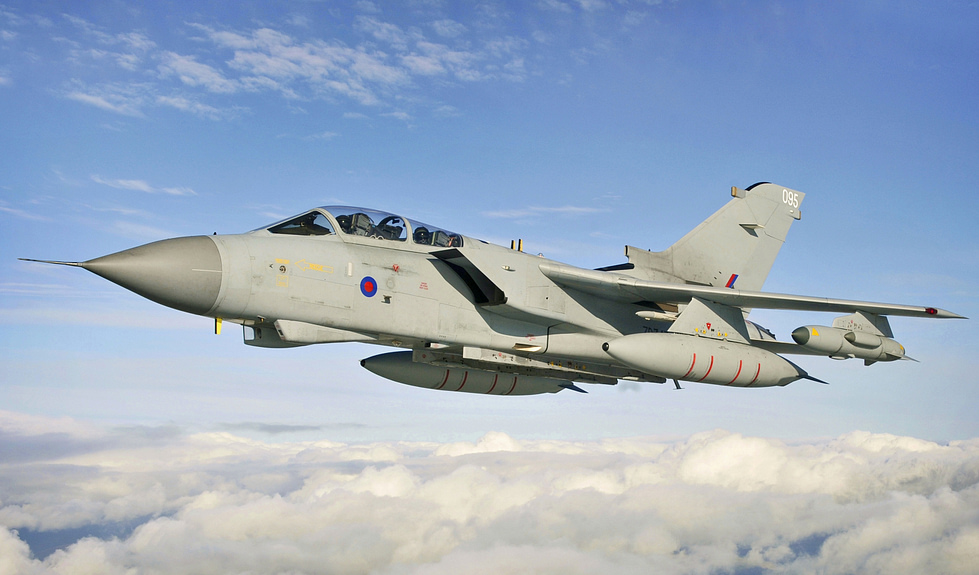
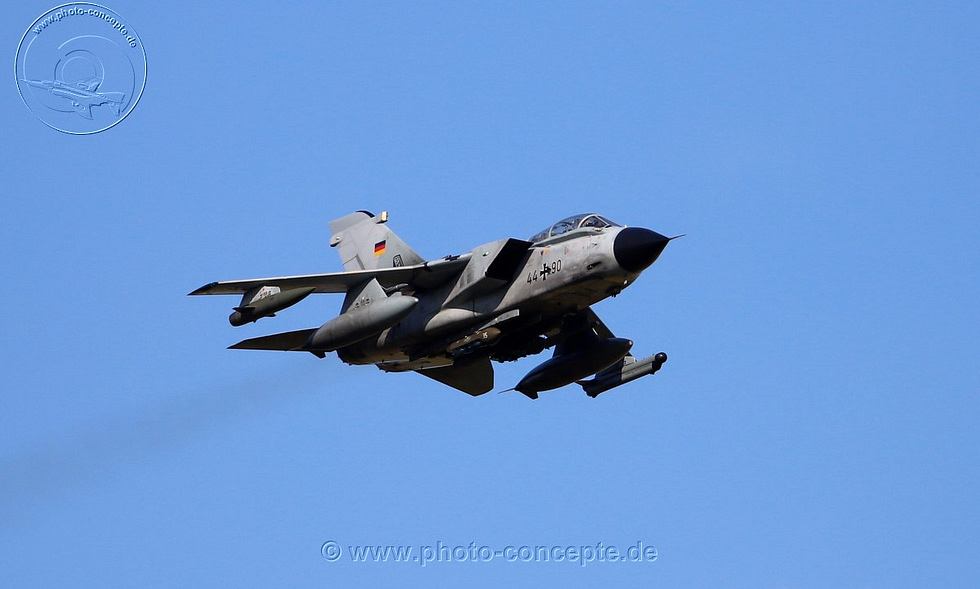
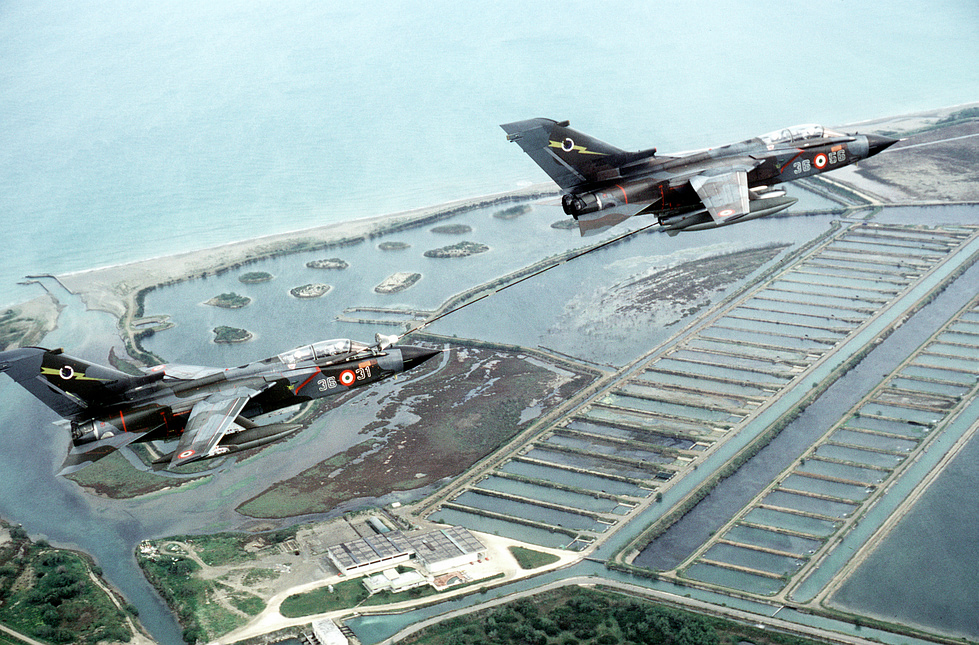
The Tornado in pictures
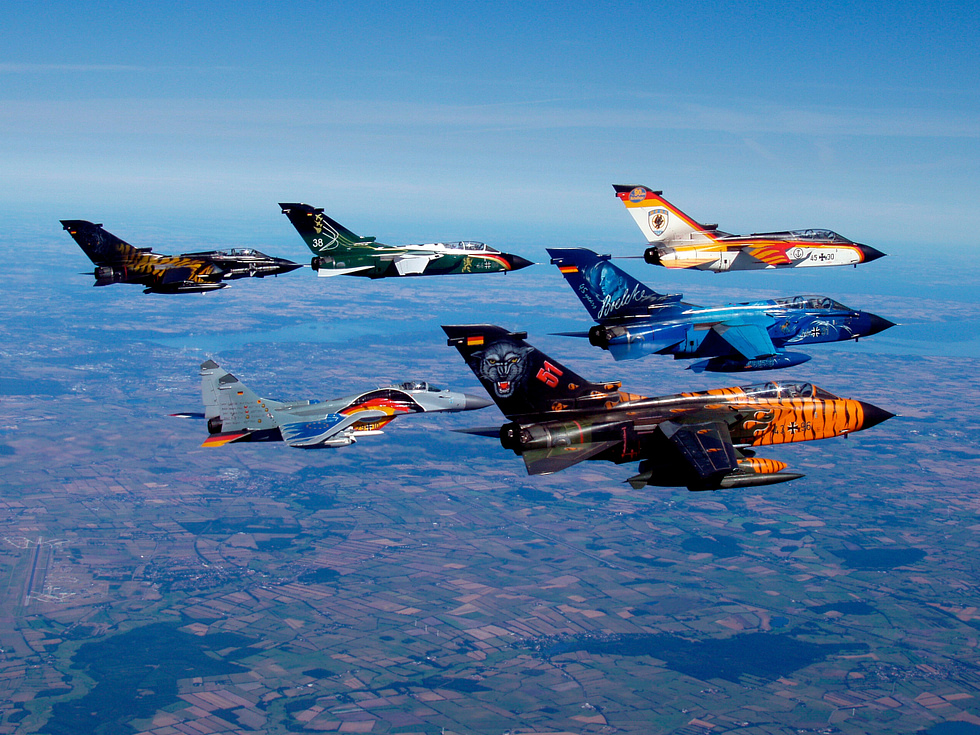
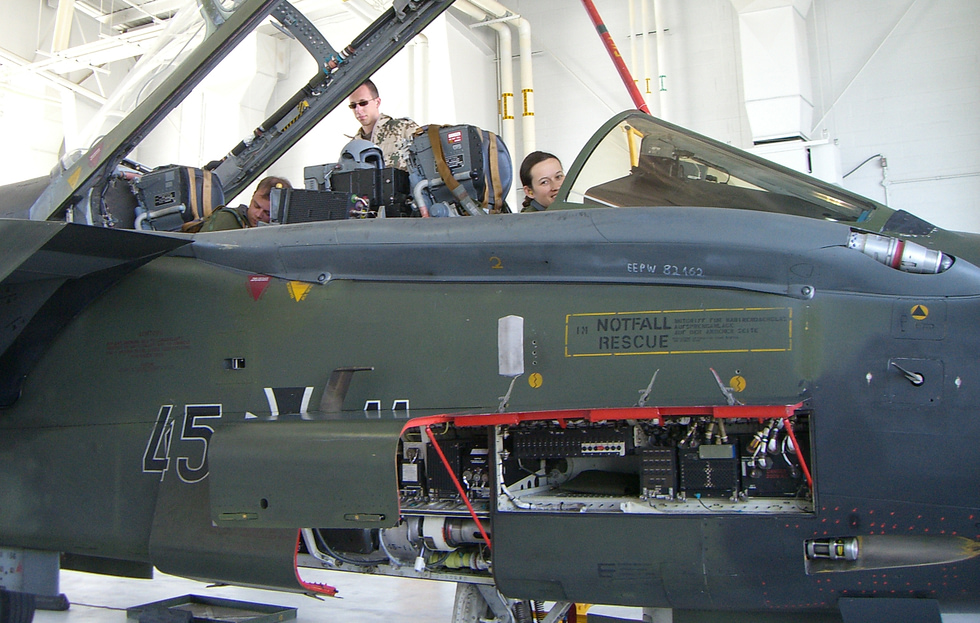
The Tornado in motion
Video coming soon. A curated Panavia Tornado documentary embed will be added here — low-level swing-wing footage, RB199 reheat departures and the type’s combat history.
The Tornado ADV in motion
Imperial War Museums — one of the most-watched Tornado ADV films on YouTube.
Where the Tornado flew
The score that defines it
The Tornado was a bomber, not a dogfighter — its record is written in strike missions, not air-to-air kills. Across nearly three decades it flew in every major Western air campaign, evolving from a Cold-War runway-cratering bomber into a precision-strike aircraft. Its most dangerous days were the low-level airfield attacks of the 1991 Gulf War; its most refined, the discriminating anti-ISIS strikes that closed its RAF career.
Compare the combat record of every military aircraft. Figures as of July 2026 and, for contested actions, reported rather than confirmed.
Everything people ask about the Tornado
Can I fly in a Tornado?
How fast is the Tornado?
Why does the Tornado have swing wings?
What is the difference between the IDS, GR4, ADV/F3 and ECR?
What weapons did the Tornado carry?
Is the Tornado still in service?
What replaced the Tornado?
You can’t fly the Tornado.
These, you can.
Some legends only live in museums — others are fuelled and waiting. MiGFlug has put civilians in real military jet cockpits since 2004.
 Fly the L-39 AlbatrosThe world’s most-flown jet trainer — aerobatics included
 Fly the F-104 Starfighter“The missile with a man in it”
 Fly the MiG-21The Cold War’s most-produced jet
 Pilote o T-33 Shooting StarAmerica’s first jet trainer
 Fly the DH VampireA piece of early jet history
 Fly the S.211Agile Italian jet trainer
 Fly the MB-326The classic Aermacchi jet
 Fly the MiG-15The Soviet legend of the Korean War
Continue the tour
Every fact, checked
- The Aviationist — Panavia TornadoOverview of the programme, variants and operational history.
- MTU Aeroreport — Fifty years of the TornadoThe RB199 engine, the Turbo-Union consortium and the thrust reverser.
- Global Aviation Resource — Farewell Tornado (Gulf War)First-hand account of the 1991 JP233 low-level attacks and the shift to medium level.
- FlightGlobal — How the RAF’s Tornados made a storming contributionGR4 combat record: Libya, Afghanistan, anti-ISIS and the 2019 retirement.
- The War Zone — British Tornados and the JP233The runway-denial weapon and the danger of the low-level airfield attacks.
- Imperial War Museums — RAF Tornados in the Gulf WarThe Tornado’s role and losses in the 1991 air campaign.
- RAF Air Historical Branch — First Gulf War studyOfficial RAF analysis of Tornado operations and lessons from 1990–91.
- Fighter-Planes.com — Panavia Tornado IDS/ADV/ECRReference specifications and variant breakdown.