
Hawker Hart
Sydney Camm’s classic light bomber — so fast when it appeared that it could outrun the RAF’s own fighters, and the head of one of the largest and most influential aircraft families Britain ever built.
The Story
The Hawker Hart: the bomber that outran the fighters
The Hawker Hart is one of the most important aircraft in the history of the Royal Air Force — not for what it did in battle, which was modest, but for what it represented and for the vast family it founded. A two-seat light bomber designed by Sydney Camm and first flown in 1928, it was so fast when it entered service that it could comfortably outrun the RAF’s own front-line fighters, a state of affairs so embarrassing that it directly spurred the development of faster interceptors. From that single design sprang an entire dynasty of derivatives, and the design thinking behind it led, in time, to the Hurricane. Few aircraft have been so quietly consequential.
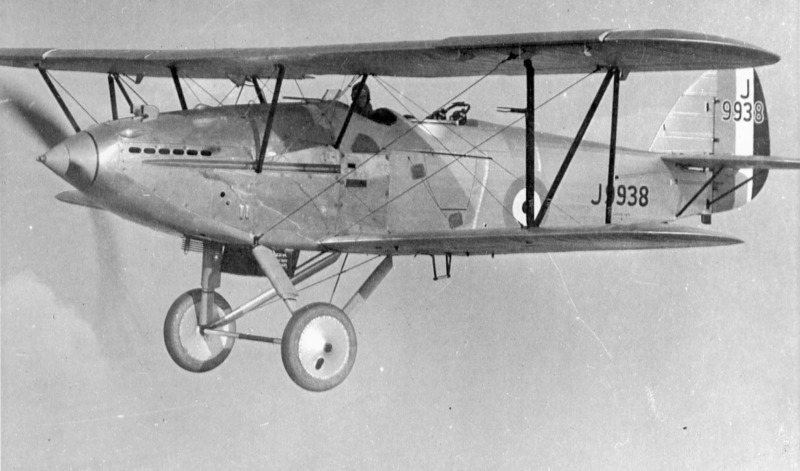
The Hart emerged from a 1926 Air Ministry requirement for a fast day bomber, and Camm’s response was a clean, elegant biplane built around the new Rolls-Royce F-series engine, soon named the Kestrel. The combination was inspired. The Kestrel was a compact, powerful liquid-cooled V-12, and Camm wrapped it in an aerodynamically refined airframe with a slim nose and tidy lines. The result was a light bomber that flew at nearly 185 miles per hour — extraordinary for the late 1920s, and faster than the fighters then defending British skies.
The speed came from obsessive attention to drag. Camm and his team pared away the excrescences that cluttered contemporary biplanes, faired the undercarriage and the engine installation neatly, and gave the Hart a clean, purposeful silhouette. There was no single trick, just careful aerodynamic housekeeping applied throughout — and the cumulative effect was a biplane that slipped through the air far more easily than its rivals. It was a lesson in how much performance could be won by refinement alone.
“A bomber faster than the fighters meant to stop it — the Hart embarrassed the RAF into building better interceptors.”— the Hart’s place in history, in a sentence
That speed had real consequences. In the annual air exercises of the early 1930s, Hart bombers repeatedly evaded the biplane fighters sent to intercept them, because the fighters simply could not catch them. For an air force whose fighters were supposed to protect the country, being outpaced by its own light bomber was a wake-up call. It helped drive the requirements that produced faster interceptors — including Camm’s own Hawker Fury, the first RAF fighter to exceed 200 miles per hour — and ultimately fed the urgency behind the monoplane fighters of the later 1930s.
There was a deeper current here too. The 1930s were the decade of the anxious belief that ‘the bomber will always get through’, and an aircraft that demonstrated a bomber could simply outrun its interceptors gave that fear concrete form. The Hart was, in a small way, part of the argument that reshaped British air policy in the years before rearmament — a standing reminder that fighter development could not be allowed to lag behind the bomber, a lesson that would matter enormously by 1940.
As an aircraft in its own right, the Hart was a two-seater: a pilot in front and an observer/gunner behind, the latter with a ring-mounted machine gun to defend the tail, plus a fixed forward-firing gun for the pilot and a modest load of bombs beneath the wings. It was pleasant to fly, strong, and well liked by its crews. Above all it was produced in enormous numbers by the standards of the interwar RAF — around a thousand Harts, and, across the whole family of derivatives, several thousand aircraft. Demand was so great that Hawker could not build them all itself, and production was shared among other British manufacturers, including Armstrong Whitworth, Gloster and Vickers.
It is the family that makes the Hart truly remarkable. The basic design proved so sound and so adaptable that Hawker spun it into an extraordinary range of variants, each tailored to a different job. The Hawker Hind was an improved light bomber that served as an interim type while the RAF waited for monoplanes. The Hawker Demon was a two-seat fighter version. The Hawker Audax was an army co-operation aircraft, working closely with ground forces. The Hardy and the Hector filled general-purpose and army co-operation roles, and the Osprey was a navalised version for the Fleet Air Arm. Together these aircraft equipped a huge proportion of the RAF and Commonwealth air forces through the 1930s.
For Hawker, the Hart family was also a commercial triumph. The steady stream of orders for Harts, Hinds, Demons, Audaxes and the rest kept the company’s factories busy and profitable through the lean Depression years, when many aircraft firms struggled to survive. That financial strength, and the deep design experience the programme built up, put Hawker in an ideal position when rearmament came and the great orders for the Hurricane followed. The Hart did not just shape aircraft; it helped shape the company that would build a war-winner.
This adaptability, and the sheer numbers involved, made the Hart family the backbone of the interwar RAF. Through the 1930s Harts and their relatives served as the standard light bombers, army co-operation aircraft and, crucially, as training aircraft. The Hart Trainer in particular became a vital tool for teaching a whole generation of RAF pilots, giving thousands of aircrew their grounding on a fast, capable machine. In an era of tight budgets and slow expansion, the Hart family did an enormous share of the RAF’s everyday flying.
Those who flew it remembered the Hart fondly. It was fast enough to be exciting, docile enough to be forgiving, and beautifully balanced in the air — an aeroplane that flattered its pilots and made the learning of advanced flying a pleasure rather than a trial. In an age of open cockpits and hands-on flying, the Hart was widely reckoned one of the nicest aircraft of its generation to handle, and that reputation is part of why it is still so warmly regarded today.
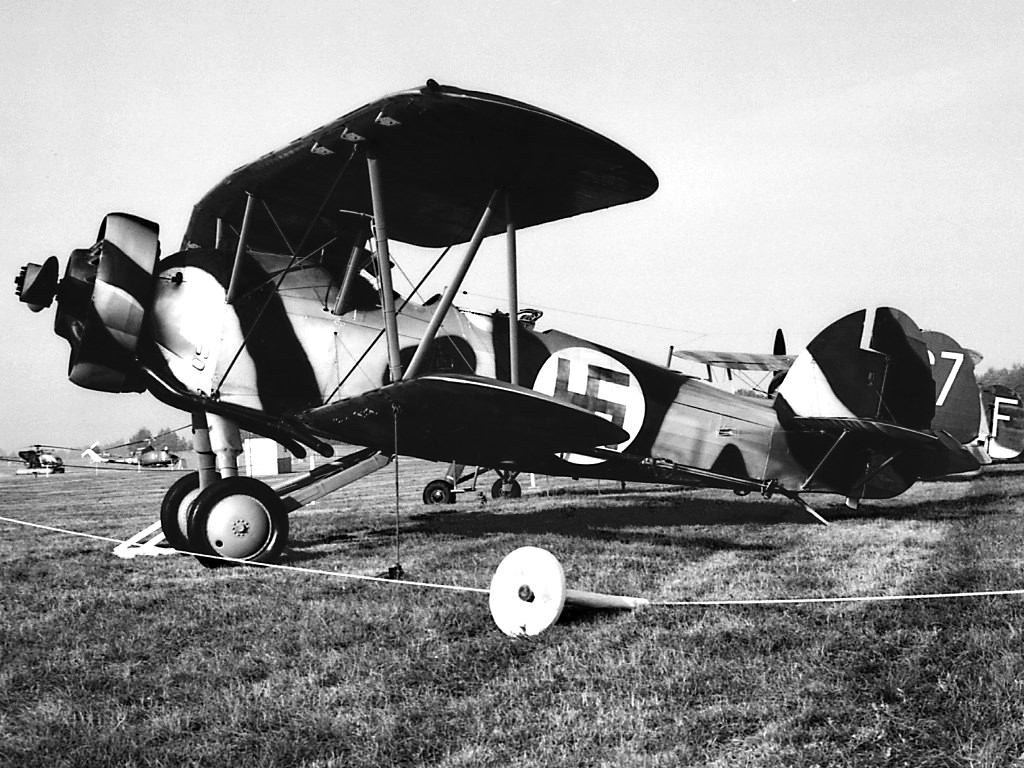
The Hart was also a considerable export success, spreading Camm’s design far beyond Britain. It was sold to and licence-built by several nations: Sweden built it domestically as the B 4, and Hart-family aircraft served with Yugoslavia, Estonia, South Africa, Egypt, Persia, India, Canada and others. From Scandinavia to the Middle East to southern Africa, the Hart and its derivatives became a familiar sight, a testament to the strength of the original design and to Britain’s aviation-export reach in the interwar years.
Its combat record, by contrast, was limited — and it is only honest to say so. By the outbreak of the Second World War the Hart and most of its relatives were obsolete, and had been relegated to training and second-line duties. Where the family did see action, it was mostly on the fringes: army co-operation and policing work on the North-West Frontier of India between the wars, and some early-war operations in East Africa and the Middle East against Italian forces, where obsolescent Hart-family aircraft were pressed into service for want of anything better. These were brave but minor episodes; the Hart was never a front-line combat aircraft of the war itself.
The Hart’s deepest importance is as an ancestor. The experience Sydney Camm and Hawker gained with the Hart — its aerodynamics, its structure, and above all the partnership with Rolls-Royce and its liquid-cooled engines — fed directly into Camm’s next great designs. The line of thinking that began with the fast, clean Hart biplane and continued through the Fury led, in a few short years, to the Hawker Hurricane, the monoplane fighter that would help win the Battle of Britain. In that sense the unassuming Hart is one of the founding aircraft of Britain’s wartime air power.
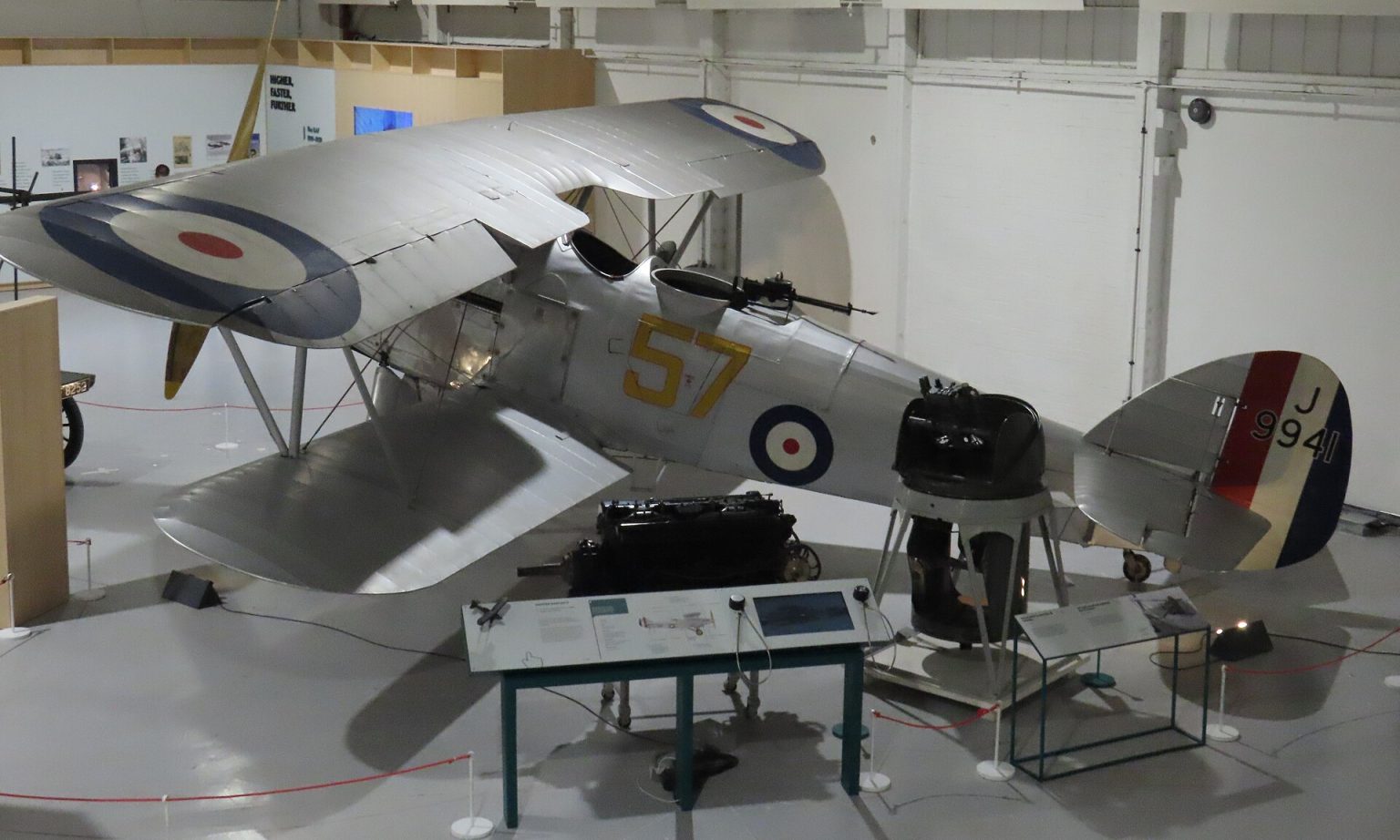
Today the Hart is remembered and preserved with real affection. Original aircraft survive in Britain, including at the RAF Museum, and in Sweden, and the closely related Hind flies with the Shuttleworth Collection, letting modern audiences see and hear a Kestrel-engined Hawker biplane in the air. For an aircraft whose fame rests on speed, adaptability and lineage rather than on combat glory, the Hawker Hart has earned an enduring and well-deserved place in aviation history — the elegant light bomber that outran the fighters, and founded a dynasty.
01Sydney Camm’s design+
The Hart was designed by Sydney Camm, Hawker’s brilliant chief designer, in response to a 1926 Air Ministry requirement for a fast day bomber. Camm produced a clean, aerodynamically refined two-seat biplane of great elegance, and the result set new standards for speed in its class.
The Hart was one of the designs that made Camm’s reputation, and it established the design philosophy — clean lines, careful attention to drag, and close integration with Rolls-Royce engines — that he would carry forward through the Fury and, ultimately, to the Hurricane. It marked the beginning of one of the most productive partnerships in British aviation, between Camm at Hawker and the engine-makers at Rolls-Royce.
02The Rolls-Royce Kestrel engine+
The Hart was built around the Rolls-Royce Kestrel, a compact, powerful liquid-cooled V-12 that was one of the finest aero-engines of its day. The pairing of Camm’s clean airframe with the Kestrel’s power was the key to the aircraft’s remarkable speed.
The Kestrel was hugely important in its own right: it powered a whole generation of British aircraft and, crucially, it was the engine on which Rolls-Royce developed the expertise that led to the Merlin, the engine of the Spitfire and Hurricane. The Hart, as one of the Kestrel’s most important applications, was thus part of a lineage of British liquid-cooled engines that ran straight through to the decisive fighters of the Second World War.
03Faster than the fighters: the RAF policy shock+
The Hart’s most famous characteristic was that, when it entered service, it was faster than the RAF’s own front-line fighters. In the air exercises of the early 1930s, the fighters sent to intercept the Hart bombers frequently failed to catch them — a deeply awkward situation for an air force whose fighters were supposed to be able to shoot such bombers down.
This was more than an embarrassment; it had real consequences for policy. It underlined the need for faster interceptors and helped drive the requirements that produced aircraft like Camm’s own Hawker Fury — the first RAF fighter past 200 mph — and, further ahead, the monoplane fighters of the late 1930s. In a real sense, the Hart’s speed helped push the RAF toward the modern fighters it would need in 1940.
04The two-seat light bomber and its armament+
The Hart was a two-seat aircraft: a pilot in the forward cockpit and an observer/gunner behind him. This layout suited the day-bomber and reconnaissance roles, giving a second crewman to navigate, observe and defend the aircraft’s vulnerable tail.
Its armament was typical of the era: a single fixed, forward-firing machine gun for the pilot, synchronised to fire through the propeller, and a flexible machine gun on a ring mount in the rear cockpit for the observer. Beneath the wings it could carry a modest load of bombs. It was not heavily armed by later standards, but for a fast day bomber of the late 1920s and early 1930s the combination was well judged.
05Large-scale production and many manufacturers+
The Hart was built in large numbers by the standards of the interwar RAF — around a thousand of the basic bomber, and, across the entire family of derivatives, several thousand aircraft in all. This made it one of the most numerous British military aircraft of its era.
Demand was so great that Hawker could not meet it alone, and production was subcontracted to other British aircraft firms, including Armstrong Whitworth, Gloster and Vickers. This spreading of production across several manufacturers was a significant feature of the programme, and it helped sustain the British aircraft industry through the lean years between the wars. Few interwar types kept so many factories busy.
06The Hawker Hind+
The Hawker Hind was an improved development of the Hart, produced as an interim light bomber to equip RAF squadrons while they waited for the new monoplane bombers coming into service in the later 1930s. It featured a more powerful Kestrel, a cut-down rear cockpit for a better field of fire, and other refinements.
The Hind was built in substantial numbers and served widely, both at home and abroad, and many were later passed to training units or to overseas air forces. It is one of the best-remembered members of the Hart family, not least because an airworthy Hind flies today with the Shuttleworth Collection — one of the very few Hart-family aircraft still flying anywhere in the world.
07The Hawker Demon: the fighter version+
The Hawker Demon was a two-seat fighter version of the Hart. The idea grew directly out of the Hart’s embarrassing speed: if the bomber was so fast, a fighter based on the same airframe might make an effective interceptor, with a second crewman’s rear gun adding defensive firepower. The Demon was fitted with additional forward-firing guns and a more powerful engine.
The two-seat fighter concept had real limitations — the weight of the second crewman and his gun cost performance — but the Demon served a useful interim role in RAF fighter squadrons in the early-to-mid 1930s. It is a good example of how the adaptable Hart airframe was pressed into role after role, filling gaps in the RAF’s inventory as the service waited for more modern designs.
08The Hawker Audax and army co-operation+
The Hawker Audax was an army co-operation version of the Hart, adapted to work closely with ground forces — artillery spotting, reconnaissance, message-dropping and light attack in support of the army. It was distinguished by equipment for that role, including a message hook and a modified exhaust for better forward view.
The Audax was widely used, both at home and across the British Empire, and it was one of the most numerous of the Hart derivatives. Army co-operation was a major RAF role in the interwar years, particularly for imperial policing, and the adaptable Hart airframe proved ideal for it. The Audax and its relatives did a great deal of this unglamorous but essential work.
09Hardy, Hector and the naval Osprey+
The Hart family extended further still. The Hawker Hardy was a general-purpose version developed for service in the Middle East, ruggedised for hot-and-high conditions and desert operations. The Hawker Hector was an army co-operation aircraft powered by the Napier Dagger engine rather than the Kestrel, giving it a distinctive appearance.
The Hawker Osprey was a navalised version for the Fleet Air Arm, serving as a carrier-borne spotter-reconnaissance aircraft and fighter, with folding wings and the ability to operate as a floatplane. Together with the Hart, Hind, Demon and Audax, these variants show just how far Camm’s original design was stretched — a single basic aircraft adapted for bombing, fighting, army co-operation, general duties and naval work.
10Exports and licence production+
The Hart family was a notable export success. Sweden built the Hart under licence as the B 4, producing it domestically for the Swedish Air Force, and Hart-family aircraft were sold to or operated by a range of other nations — among them Yugoslavia, Estonia, South Africa, Egypt, Persia, India and Canada.
South Africa is a particularly interesting case: it built a locally adapted version of the Audax, the Hartbees, for its own air force. This spread of the design across Scandinavia, the Middle East, Africa, South Asia and beyond reflects both the quality of Camm’s design and the strength of Britain’s aviation-export business between the wars. For a great many of these countries, a Hart-family aircraft was among their first modern military types.
11The RAF light-bomber backbone+
Through the 1930s the Hart and its derivatives were the backbone of the Royal Air Force. As the standard light bomber, the Hart equipped a large number of bomber squadrons at home and overseas, and its many variants filled the army co-operation, general-purpose and even fighter roles across the service.
This was the era of the RAF’s slow interwar expansion, and the Hart family did a huge share of the everyday work — the routine flying, the exercises, the imperial policing — that kept the peacetime air force functioning. No single type was more central to the RAF of the early-to-mid 1930s. When the great expansion of the late 1930s came, and monoplanes began to arrive, it was the Hart family that had held the line in the years before.
12A key training type+
One of the Hart’s most valuable and lasting roles was as a trainer. The Hart Trainer, a dual-control version, became a standard advanced trainer for the RAF, and huge numbers of pilots learned their craft on it. Fast, capable and representative of front-line aircraft, it was an excellent stepping stone for aircrew moving up to operational types.
As the RAF expanded rapidly in the run-up to the Second World War, this training capacity was crucial. A whole generation of British and Commonwealth pilots — many of whom would go on to fly Spitfires, Hurricanes and bombers in the war — got much of their advanced flying training on Hart-family aircraft. In this quiet way, the Hart contributed directly to the trained aircrew Britain would need so badly after 1939.
13Limited combat: an honest note+
It is important to be honest about the Hart’s combat record: it was limited. The type’s main service was in the peaceful interwar years, and by the outbreak of the Second World War the Hart and most of its relatives were obsolete and had been withdrawn to training and second-line duties.
Where Hart-family aircraft did see action, it was mostly on the margins: army co-operation and policing operations on the North-West Frontier of India between the wars, and some early-war operations in East Africa and the Middle East, where obsolescent Harts, Hinds, Audaxes and Hardys were pressed into service against Italian forces for want of anything more modern. These were genuine but minor combat episodes. The Hart’s importance rests on its role as the interwar RAF’s backbone and design ancestor, not on a war record — and it would be misleading to claim otherwise.
Design & Engineering
How the Hart was built: speed through elegance
Sydney Camm wrapped the compact, powerful Rolls-Royce Kestrel in an exceptionally clean biplane airframe — and produced a light bomber faster than the fighters meant to catch it.
Camm’s clean biplane
An aerodynamically refined two-seat biplane by Sydney Camm — slim, low-drag and elegant, setting new speed standards for its class.
Kestrel V-12 power
The compact, powerful Rolls-Royce Kestrel — the engine that made the Hart fast, and an ancestor of the war-winning Merlin.
An adaptable airframe
A design so sound it spawned bombers, fighters, army co-operation and naval variants — the head of a huge family of derivatives.
Specifications
Hawker Hart specifications: dimensions, performance and cost
Baseline note: the figures describe the Hawker Hart day bomber in its standard RAF form with the Rolls-Royce Kestrel IB, the version that entered service in February 1930 and accounts for the bulk of the 1,004 Harts built. Deltas for the Hart Trainer and the tropicalised sub-types are in grey. Two boundary conditions before reading any Hart table. First, the Hart is the parent of a family, not a series of marks: the Demon, Audax, Hardy, Hind, Hector, Osprey, Nimrod and Hartbees are separate aircraft types derived from it, with their own specifications, their own service entries and their own production totals, and figures for them migrate into Hart columns constantly. Nothing below describes any of them. Second, the two commonest Hart performance sets disagree and both are in wide circulation: 185 mph at 13,000 ft with a 22,800 ft ceiling and a 430-mile range in one, 184 mph at 5,000 ft with a 21,350 ft ceiling and a 470-mile range in the other. The difference is probably the Kestrel IB against a later Kestrel and a light against a loaded airframe, but no source consulted states which condition it is quoting, so both are given.
Dimensions & weights
- Crew
- 2 — pilot and observer/gunner in tandem open cockpits
- Length
- 8.94 m (29 ft 4 in)
- Wingspan
- 11.35 m (37 ft 3 in), upper and lower wings of near-equal span, single-bay bracing
- Height
- 3.18 m (10 ft 5 in)
- Wing area
- 32.47 m² (349.5 sq ft)
- Aerofoil
- RAF 28
- Empty weight
- 1,148 kg (2,530 lb)
- Maximum take-off weight
- 2,085 kg (4,596 lb)
- Wing loading at maximum weight
- 64.2 kg/m² (13.1 lb/sq ft) — high for a biplane of the period, and part of why it was fast
- Power loading at maximum weight
- 3.97 kg/hp (8.8 lb/hp)
- Bomb load
- 236 kg (520 lb) on underwing carriers — widely rounded to 500 lb; 520 lb is the figure the specifications give
- Structure
- fuselage of rolled steel and duralumin tube, bolted rather than welded, fabric covered; metal-spar wings with fabric covering — Hawker's patented construction, and the reason the type was cheap to repair
- Undercarriage
- fixed divided mainwheels on a split axle with a tailskid; spatted on some later family members but not on the standard Hart
Performance
- Maximum speed
- 298 km/h at 4,000 m (185 mph at 13,000 ft) — 184 mph at 5,000 ft in the other common set
- Prototype J9052, 1928
- 283 km/h (176 mph) in level flight, against an Air Ministry requirement of 257 km/h (160 mph)
- Bristol Bulldog II, the RAF's front-line fighter in 1930
- 286 km/h (178 mph) — slower than the bomber it was supposed to intercept
- Armstrong Whitworth Siskin IIIA, the other 1930 fighter
- 251 km/h (156 mph) — not in the same conversation
- Hawker Fury I, the answer, in service 1931
- 333 km/h (207 mph)
- Time to 3,050 m
- 8 minutes 30 seconds (to 10,000 ft)
- Service ceiling
- 6,900 m (22,800 ft) — 21,350 ft in the alternative set
- Stalling speed
- 72 km/h (45 mph)
- Range
- 690 km (430 miles) — 470 miles quoted elsewhere
- Endurance
- roughly 2 hours 45 minutes at economical cruise on internal fuel
- Hawker Demon, the fighter made from this bomber
- about 293 km/h (182 mph) — the Demon was quicker than the Hart mainly in climb and in what it could do once it got there, not in a straight line
Propulsion & systems
- Engine
- 1 × Rolls-Royce Kestrel IB, supercharged liquid-cooled V-12, 391 kW (525 hp)
- Displacement
- 21.25 litres (1,296 cu in)
- Why the Kestrel mattered
- it was compact, it was tidy at the front, and it let Camm draw the fine nose entry the Hart is recognised by. A radial of the same power would have cost the aircraft most of its speed advantage
- Later engines in the family
- Kestrel X and Kestrel V in derivatives; the Hind that succeeded the Hart used the 640 hp Kestrel V
- Cooling
- radiator mounted beneath the nose and retractable into the fuselage, lowered for climb and ground running and raised in cruise
- Propeller
- two-blade fixed-pitch wooden
- Gun synchronisation
- Constantinesco-Colley hydraulic gear — the C.C. gear, standard on every British aircraft with a synchronised gun from November 1917 through to the Gloster Gladiator of 1937, so the Hart's installation was already thirteen years old when the type entered service and worked perfectly well
- Observer's mounting
- Scarff No. 2 ring in the rear cockpit
- Airframe philosophy
- Hawker's bolted tubular construction, which is why the Hart beat the Avro Antelope for the contract: the two were close on performance and the Hart was far cheaper to maintain, which in the British defence budget of 1929 settled it
- Tropical fit
- Hart (India) and Hart (Special) with desert equipment, survival gear, larger radiators and provision for a spare wheel
- Bomb carriers
- underwing racks; no internal bay, no crew access to the stores in flight
- Trainer conversion
- dual controls, revised centre of gravity and a modified fin; 526 built as Hart Trainers, more than half as many again as the Hawker-built bombers
14The Hart family: a summary of the derivatives+
Few aircraft have founded so large a family. From the basic Hart light bomber came the Hind (improved bomber), the Demon (two-seat fighter), the Audax (army co-operation), the Hardy (general-purpose, Middle East), the Hector (army co-operation, Napier Dagger engine) and the Osprey (naval spotter-fighter), along with dedicated trainer versions and numerous export sub-types.
Taken together, these variants amounted to several thousand aircraft and touched almost every role the RAF and Fleet Air Arm needed in the 1930s. The Hart family is one of the classic examples in aviation of a single sound design being stretched, adapted and multiplied to fill an entire air force’s requirements — a remarkable achievement of engineering economy.
15The Hawker Hart’s cost: what the records show+
As with most interwar military aircraft, there is no reliable, transparent public figure for the Hart’s unit cost, cost per flight hour or total programme cost. It was procured through British Air Ministry contracts over many years and from several manufacturers, and consistent lifetime cost data across the sprawling family simply does not exist in a usable form.
Rather than repeat an invented number, we list the cost fields here as “not reliably recorded.” What can be said is that the Hart was regarded as relatively economical for its capability — part of why it was ordered in such quantity — and that spreading production across several firms and stretching one design into many variants was, in itself, a cost-effective way to equip an air force on interwar budgets.
16The design lineage to the Hurricane+
The Hart’s greatest legacy is as a design ancestor. The experience Sydney Camm and Hawker accumulated with the Hart and its fighter sibling the Fury — in aerodynamics, in structure, and above all in working with Rolls-Royce’s liquid-cooled engines — fed directly into Camm’s next generation of designs.
The evolutionary line runs clearly: from the fast, clean Hart biplane, through the Fury, to the Hawker Hurricane, the monoplane fighter that formed the backbone of RAF Fighter Command in the Battle of Britain. The Kestrel, likewise, was the engine on which Rolls-Royce developed the knowledge that produced the Merlin. In both airframe design and engine, the Hart stands near the head of the line that led to Britain’s decisive wartime fighters.
17Survivors and where to see them+
A number of Hart-family aircraft survive, preserved chiefly in Britain and Sweden — the two countries most associated with the type. In Britain, original Harts and related aircraft are held by the Royal Air Force Museum, and in Sweden preserved examples of the licence-built B 4 can be seen in the national air-force collection.
Most excitingly, the closely related Hawker Hind flies with the Shuttleworth Collection in England, giving modern audiences the rare chance to see and hear a Kestrel-engined Hawker biplane in the air. For an aircraft of its age and modest combat record, the Hart family is unusually well represented among survivors — a reflection of the affection and historical importance it commands.
Armament & payload
The Hart's armament was ordinary, and that is precisely what makes its speed remarkable
One synchronised Vickers, one Lewis on a Scarff ring, 520 lb of bombs under the wings: this is the armament of a 1918 two-seater, and the Hart carried it unchanged into RAF service in February 1930 and out again in 1938. Sydney Camm did not make the Hart formidable, he made it fast, and he did it by drawing a clean airframe around a compact engine rather than by adding anything. The consequence was an aeroplane whose bomb load was unremarkable, whose guns were a decade out of date, and which the Royal Air Force's own fighters could not intercept. There is a further irony in the gun fit worth stating: the Hart flew fast enough that the slipstream over an open rear cockpit made the hand-held Lewis difficult to aim, which is one reason the Demon eventually got a powered turret. Fit varied by sub-type and theatre — the Hart (India) and Hart (Special) carried desert and survival equipment that the home-based aircraft did not, the Trainer carried no armament at all, and the Demon and the other family members are separate aircraft with separate armament that is not described here.
Gun
- 1 × fixed forward-firing 0.303 in Vickers, synchronised by the Constantinesco-Colley hydraulic gear, mounted in the port side of the fuselage and fired by the pilot
- 1 × 0.303 in Lewis on a Scarff No. 2 ring in the rear cockpit, drum-fed from 97-round pans
- Two rifle-calibre guns was the standard British two-seater fit of 1918 and it was still the standard fit in 1930; nothing about the Hart's armament was modern, only its airframe
- The Demon fighter conversion is where the gun fit was actually addressed: twin forward Vickers, and later a Fraser-Nash hydraulically assisted turret for the gunner because the Hart's slipstream at 180 mph made a hand-held Lewis nearly unusable
- That last detail is the honest measure of the type's speed: it flew fast enough to defeat its own defensive armament
Air-to-air
- None, and none existed. The first operational air-to-air missiles reached service in the mid-1950s, more than a decade after the last Hart was struck off
- But this is the card where the Hart's real story sits, because the aeroplane created an air-to-air problem rather than solving one
- In the 1931 air exercises the RAF found that the only aircraft that could reliably intercept a Hawker Hart was another Hawker Hart. The Bulldog and Siskin, its own front-line fighters, could not catch it
- The Air Ministry's response was the Hawker Demon: the Hart itself converted into a two-seat fighter, with twin forward guns, a cut-down rear cockpit and a supercharged Kestrel. A fighter derived from the bomber it was built to intercept, which is as neat an inversion as interwar procurement produced
- The longer response was the Hawker Fury, and after it the monoplane fighters. The Hart is a direct cause of the RAF's 1930s fighter programme
Air-to-surface guided
- None. No guided air-to-surface weapon existed while the Hart was in service
- The first used in action were the German Fritz X and Henschel Hs 293 in 1943, the year the Hart was formally declared obsolete
- Bombing was visual, from a simple sight, with the observer directing the pilot onto the target and releasing by cable
- There was no electrical release provision and no internal bay; everything hung under the wings in plain air
Bombs
- Up to 520 lb (236 kg) on underwing carriers — typically four 112 lb bombs, or two 250 lb, or a mix with small anti-personnel bombs
- The load is trivial by 1940 standards and was entirely adequate for what the Hart actually did, which was colonial air policing against targets with no air defence
- In India and on the North-West Frontier the Hart flew against tribal positions in the Waziristan operations, and in the Middle East on the standing imperial policing commitment; the technique was low-level attack with small bombs and the forward gun
- Swedish volunteers of F 19 used four Harts as dive bombers in northern Finland between January and March 1940 — an aircraft never designed for the role, flown that way because nothing else was available
- No internal stowage: a hung-up bomb stayed hung up until somebody on the ground dealt with it
Rockets
- None. Not carried, not trialled, not proposed
- Britain's 3-inch rocket projectile did not reach operational squadrons until 1942, by which date the Hart was a training and communications aircraft
- The wings were fabric over metal spars and would have needed structural work to take rails
- Ground attack was flown with bombs and the single forward Vickers throughout the type's service life
Pods & other stores
- Camera for reconnaissance work, and a message pick-up hook on army co-operation sorties
- Desert and tropical equipment on the Hart (India) and Hart (Special): survival kit, water, larger radiator, spare wheel — the fit that made the type usable on the Frontier
- Long-range fuel tanks for ferry flights across the Middle East and India
- Dual controls on the 526 Hart Trainers, the variant in which most RAF pilots of the Battle of Britain generation first flew a service type
- Target-towing and communications equipment on the aircraft that survived into the war as second-line machines
Three typical loadouts
- Home day-bomber squadron sortie, 1931
- Four 112 lb bombs on the underwing carriers, one synchronised Vickers with the pilot, one Lewis on the Scarff ring, full fuel. Flown in the annual air exercises against fighters that could not catch it, which is how the RAF discovered its problem.
- North-West Frontier policing sortie, Hart (India), mid-1930s
- Small bombs in numbers rather than a few large ones, forward Vickers loaded, tropical radiator, water and survival kit aboard, a spare wheel strapped on. Low level, hot and high, against people with rifles — and against terrain that killed more Harts than any enemy did.
- Hart Trainer at a Flying Training School, 1938
- Dual controls, no guns, no bombs, full fuel. By this date the Hart had left the front line, and this is what almost every surviving airframe was doing when war broke out: teaching the pilots who would fly Hurricanes.
Sourcing caveat. Bomb load is quoted as 520 lb in the specifications and rounded to 500 lb in most narrative accounts; the specific mixes given above are typical rather than authoritative, since RAF bomb carriers of the period accepted several combinations and squadron practice varied. Ammunition provision for the Vickers and the Lewis is not stated in any source consulted. The 1931 air exercise finding — that only a Hart could catch a Hart — is reported consistently in the secondary literature but is a summary of exercise outcomes rather than a quoted document, and should be read as the RAF's own conclusion at the time rather than as a measured comparison. The comparative fighter speeds given in the grid are catalogue maxima for those types and are offered as an order-of-magnitude comparison, not as a like-for-like flight test.
Variants
One 1928 design became eight aircraft types and several thousand airframes, and forced the RAF to build better fighters
The Hawker Hart is the most consequential British aeroplane of the interwar decade that nobody outside aviation has heard of. Sydney Camm designed it to Specification 12/26 as a two-seat day bomber and gave it two things: Hawker's bolted tubular structure, which made it cheap to build and cheaper to repair, and a Rolls-Royce Kestrel, whose compact block let him draw the clean nose the aircraft is recognised by. The prototype flew at 176 mph against a 160 mph requirement. Production aircraft reached 184 to 185 mph. The Bristol Bulldog, which the RAF had just adopted as its front-line fighter, managed 178 mph, and the Siskin it replaced managed 156.
What followed is the point of the whole story. In the 1931 air exercises the Royal Air Force discovered that the only aircraft in its inventory that could reliably intercept a Hawker Hart was another Hawker Hart. Its bomber was faster than its fighters, and everyone could see it. The immediate fix was the Hawker Demon — the Hart itself, given twin forward guns and a cut-down rear cockpit and reclassified as a two-seat fighter. A fighter derived from the bomber it was created to shoot down is an inversion that ought to be embarrassing, and instead it worked well enough that 305 were built. The proper fix was the Hawker Fury, at 207 mph, and after it the monoplane fighter programme that produced the Hurricane. The Hart is a direct cause of the aircraft that won the Battle of Britain, by having been too good for the fighters that came before them.
The family it founded is the other measure of it. From that one airframe came the Demon fighter, the Audax and Hardy army co-operation aircraft, the Hind day bomber, the Hector, the naval Osprey and Nimrod, and the South African Hartbees — separate types with separate specifications, all sharing the Hart's structure and most of its lines, running to several thousand airframes and keeping Hawker solvent through the leanest years the British aircraft industry has had. And the operational record should be stated without flattery. The Hart's combat service was colonial air policing: the North-West Frontier of India and the standing imperial commitment in the Middle East, flown against people with rifles. It was withdrawn from British front-line service in 1938, it was thoroughly obsolete by 1939, and its war was fought as a trainer and a communications hack. Only the South African Hartbees saw action after 1940, in East Africa. The type was formally declared obsolete in 1943.
- Hart prototype J9052 (1928, 1)
- Sydney Camm's answer to Specification 12/26 for a two-seat high-performance day bomber. First flown June 1928, 176 mph against a 160 mph requirement. Selected in April 1929 over the Avro Antelope and the de Havilland Hound — on maintenance cost, not on performance.
- Hart day bomber (1930–36, 1,004 built in total including all Hart sub-types)
- The production aircraft, in service from February 1930 with No. 33 Squadron. Built by Hawker (234), Armstrong Whitworth (456), Vickers (226) and Gloster (46) — a subcontracting spread that says how urgently the RAF wanted them.
- Hart Trainer (1932 onward, 526)
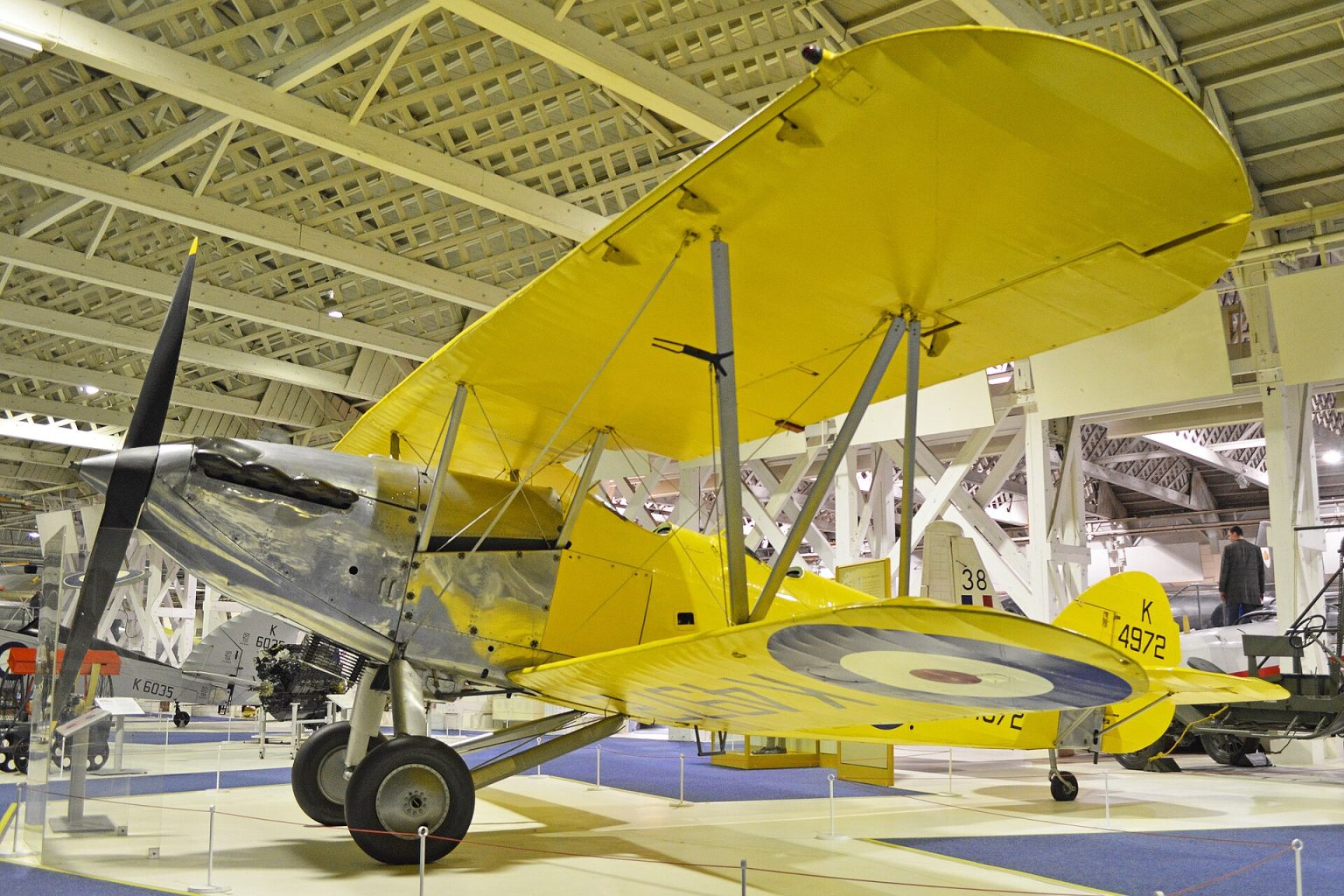
- Dual-control conversion with revised centre of gravity and a modified fin. More Hart Trainers were built than Hawker built bombers, and the Trainer outlived the bomber in service by years; the RAF Museum's surviving aircraft is one.
- Hart (India) (1931 onward)
- Tropicalised for the North-West Frontier: desert equipment, survival gear, larger radiator, provision for a spare wheel. The version that did the type's real operational work.
- Hart (Special) (1935 onward)
- Middle East tropical version built on Audax airframes with Kestrel X engines. The designation is a nuisance in the literature because it sits on the boundary between the Hart and the Audax.
- Hart (C) (1930s, small numbers)
- Communications aircraft with the armament removed, used to move senior officers around the empire.
- Hart B 4, Sweden (1934–37, ~42 licence-built plus 4 bought)
- Four bought from Hawker, the remainder built by ASJA under licence; production is quoted as 42 in most sources and as low as 15 in others. Four served with the volunteer F 19 in northern Finland during the Winter War as dive bombers.
- Hartbees, South Africa (1935–38, ~65)
- Ground-attack derivative for the South African Air Force, a handful supplied by Hawker and the rest built locally. Flew operationally in East Africa in 1940–41, the last combat use of anything in the Hart line.
- Hawker Demon (separate type, 1933–37, ~305)
- A separate aircraft, not a Hart mark. The Hart converted into a two-seat fighter: twin forward Vickers, cut-down rear cockpit, supercharged Kestrel, and later a Fraser-Nash turret. It exists because the RAF could not intercept the Hart with the fighters it had.
- Hawker Audax and Hardy (separate types, 1932–37)
- Separate aircraft. The Audax was the army co-operation version with a message pick-up hook and a longer exhaust; the Hardy was the tropicalised general-purpose development of the Audax. Both are Hart-derived and neither is a Hart.
- Hawker Hind and Hector (separate types, 1935–38)
- Separate aircraft. The Hind was the Hart's direct replacement as day bomber, with the 640 hp Kestrel V and a cut-down rear cockpit, built as an interim until the monoplanes arrived. The Hector was an Audax development with a Napier Dagger.
- Hawker Osprey and Nimrod (separate types, 1932–35)
- Separate aircraft. The Osprey was the navalised Hart for the Fleet Air Arm, with folding wings, arrester gear and float provision; the Nimrod was the naval fighter of the same lineage. Together with the land types the family ran to several thousand airframes from one 1928 design.
Survivors, stated precisely. Two original Hawker Hart airframes are known to be on public display, and neither is airworthy. Hart Trainer K4972, built and first flown in April 1932, is at the Royal Air Force Museum Midlands at Cosford, in the Test Flight hangar — an original airframe, not a composite or a reproduction. A Swedish-built Hart B 4, works number 52 and Swedish Air Force serial 714, built by ASJA in 1937, is at the Flygvapenmuseum at Malmen near Linköping; it is an original airframe but is displayed in Finnish markings it never wore, since it did not serve with F 19 in Finland. Beyond those two, no original Hart is known to survive anywhere and no reproduction has been built. The airworthy Hawker biplanes flying today — notably the Shuttleworth Collection's Hind — are different types of the same family and are not Harts, however similar they look; this substitution is common in captions and is worth guarding against. Production totals: 1,004 Harts of all sub-types, built by Hawker (234), Armstrong Whitworth (456), Vickers (226) and Gloster (46), with 526 of the total completed as Hart Trainers, plus Swedish and South African licence production quoted at about 42 and about 65 respectively. From roughly sixteen hundred airframes in the Hart line alone, two survive.
Timeline
The Hawker Hart through the years
The Air Ministry issues a requirement for a fast day bomber; Sydney Camm at Hawker begins the design that becomes the Hart.
The Hart prototype flies for the first time, powered by the Rolls-Royce Kestrel — and proves astonishingly fast.
In RAF exercises, Hart bombers outrun the fighters sent to intercept them, spurring the development of faster interceptors.
The Hart enters service as the RAF’s standard light bomber, beginning a decade of central importance.
The Demon fighter, Audax army co-operation aircraft and Osprey naval variant appear, along with export and trainer versions.
Sweden builds the Hart as the B 4, and Hart-family aircraft serve with Yugoslavia, Estonia, South Africa, Egypt, Persia, India and Canada.
The improved Hawker Hind enters service as an interim light bomber, bridging the gap to the coming monoplanes.
As monoplanes arrive, the Hart family is increasingly relegated to training and second-line duties, where it trains a generation of aircrew.
Obsolescent Hart-family aircraft see marginal combat in East Africa and the Middle East before being fully withdrawn.
Harts survive in Britain and Sweden, and a related Hind flies with the Shuttleworth Collection.
Stories & Eyewitnesses
The Hawker Hart in stories: the moments that defined it
A bomber faster than the fighters, a Kestrel-powered Camm design, a huge family of derivatives, wide exports and a direct line to the Hurricane — the Hart’s history through the moments that stuck.
CammA designer’s breakthrough
Sydney Camm’s clean, fast biplane.
The Hart was designed by Sydney Camm to a 1926 fast-day-bomber requirement — an elegant, low-drag biplane that set new speed standards.
It helped make Camm’s reputation and began his line toward the Hurricane.
KestrelThe Rolls-Royce V-12
The engine that made it fast.
The compact, powerful Rolls-Royce Kestrel gave the Hart its remarkable speed — and was the engine on which Rolls-Royce built toward the Merlin.
Airframe and engine, both ancestors of the war-winners.
Too FastOutran the fighters
The bomber the fighters couldn’t catch.
In early-1930s exercises, Hart bombers repeatedly evaded the RAF fighters sent to intercept them — because the fighters simply weren’t fast enough.
An embarrassment that drove the RAF to build faster interceptors.
Two-SeaterPilot and gunner
A fast day bomber with a rear gun.
The Hart carried a pilot and an observer/gunner, with a fixed forward gun, a flexible rear gun and a light bomb load.
Well judged armament for a fast day bomber of its era.
Mass-BuiltMany factories
Around a thousand Harts, and more.
Demand was so great that production was shared among Hawker, Armstrong Whitworth, Gloster and Vickers — around a thousand Harts, thousands in the family.
Few interwar types kept so many British factories busy.
The HindThe improved bomber
An interim light bomber — still flying.
The Hawker Hind was an improved Hart bomber, bridging the gap to the monoplanes. An airworthy Hind flies today with the Shuttleworth Collection.
One of very few Hart-family aircraft still airborne anywhere.
The DemonThe fighter version
A two-seat fighter from the bomber.
The Demon turned the fast Hart into a two-seat fighter — the logical answer to a bomber that outran the fighters.
A useful interim interceptor for early-1930s RAF squadrons.
The AudaxWorking with the army
Army co-operation across the Empire.
The Audax adapted the Hart for army co-operation — spotting, reconnaissance and light attack in support of ground forces.
One of the most numerous derivatives, vital for imperial policing.
A Whole FamilyHardy, Hector, Osprey
One design, every role.
The Hardy (Middle East), Hector (Napier Dagger engine) and naval Osprey extended the family into general-purpose and Fleet Air Arm duties.
A single design stretched to fill an entire air force’s needs.
ExportedAcross the world
Sweden’s B 4 and many more.
Sweden built the Hart as the B 4, and Hart-family aircraft served Yugoslavia, Estonia, South Africa, Egypt, Persia, India and Canada.
South Africa even built its own Audax variant, the Hartbees.
BackboneThe RAF’s workhorse
The standard 1930s type — and trainer.
Through the 1930s the Hart family was the backbone of the RAF, as light bomber, army co-operation aircraft and, crucially, advanced trainer.
It trained a generation of pilots who would fly in the war.
HonestLittle combat
A peacetime backbone, not a war hero.
By WWII the Hart was obsolete; its combat was marginal — the NW Frontier between the wars, and early-war East Africa and the Middle East.
Its importance is as interwar backbone and design ancestor, not a war record.
AncestorThe road to the Hurricane
Camm’s line to the war-winner.
The design and engine experience from the Hart and Fury led, in a few years, straight to the Hawker Hurricane.
The unassuming Hart is one of the founding aircraft of Britain’s wartime air power.
Photo Gallery
The Hawker Hart in photographs
Museum, archival and preserved-aircraft photographs of the Hawker Hart and its relatives, each credited to its source and licence. Click any photo to enlarge.
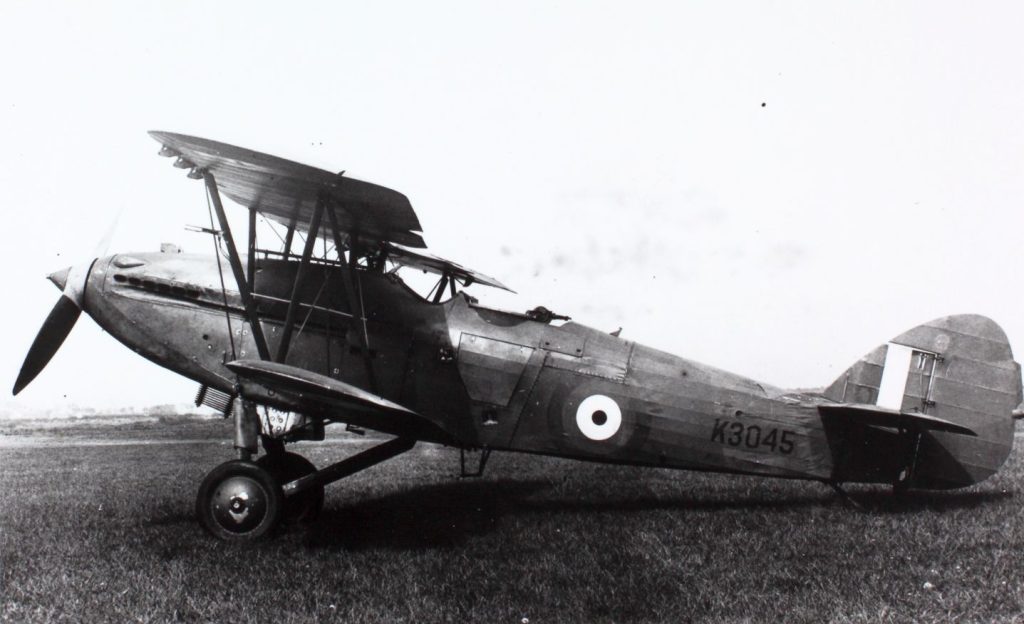
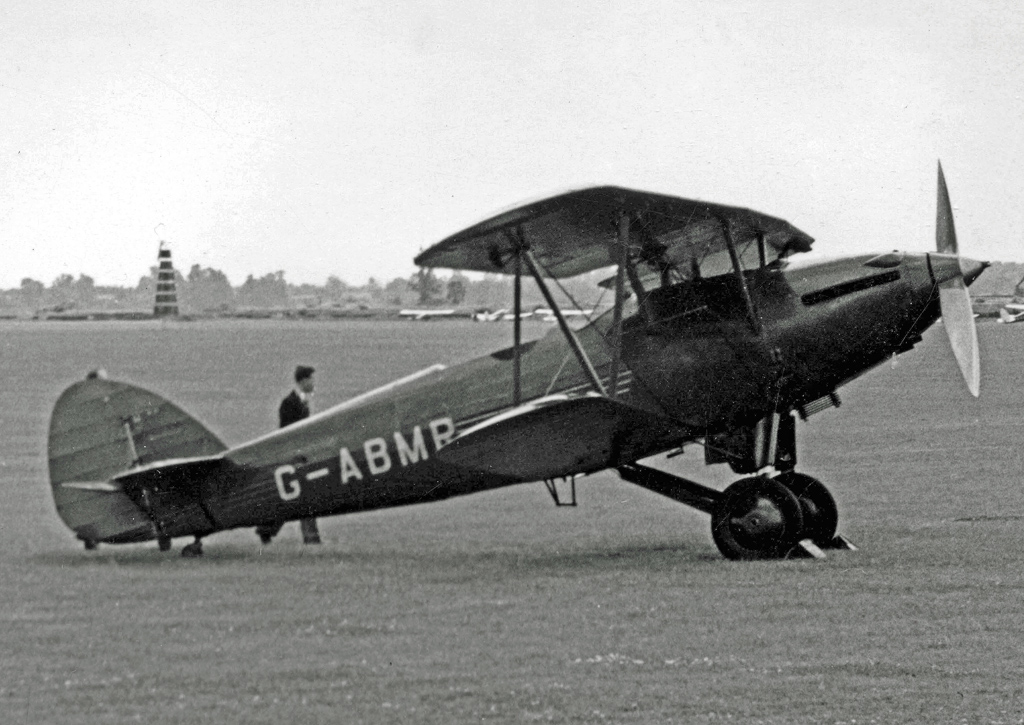
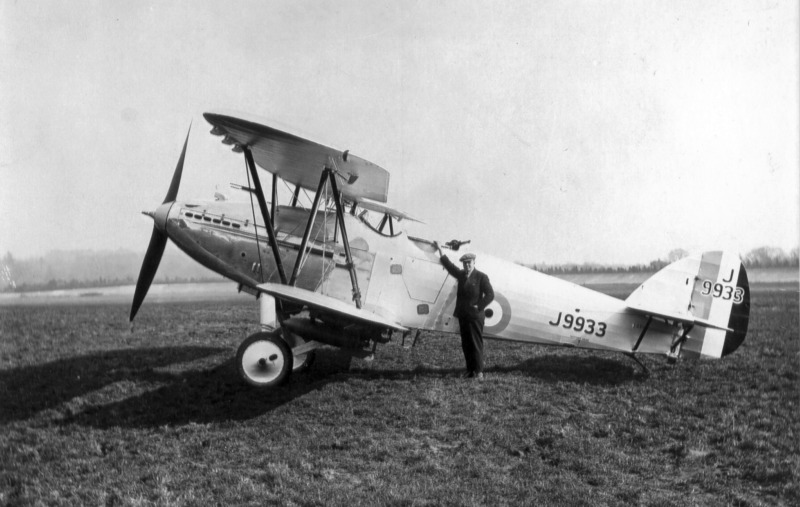
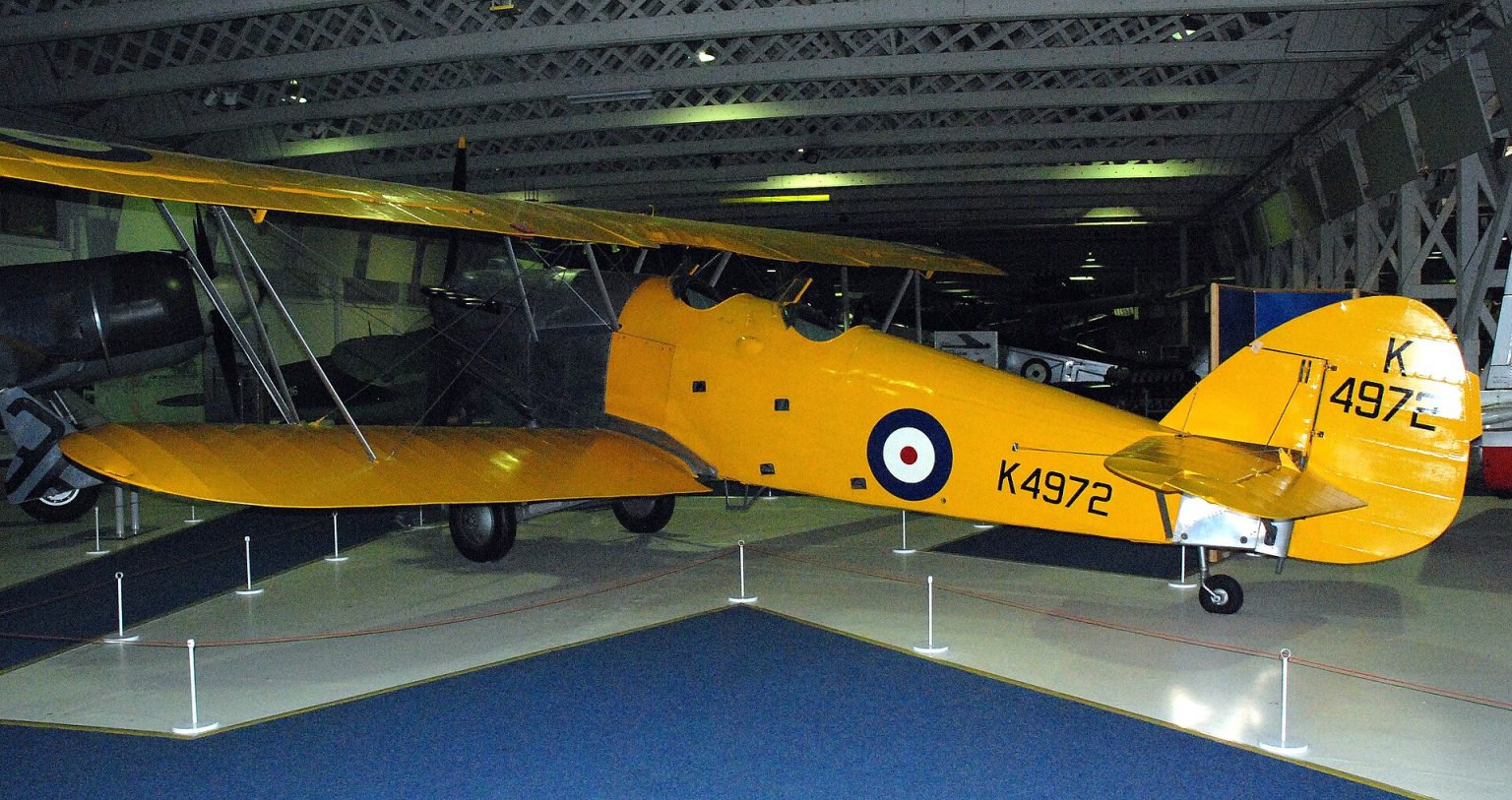
On Film
The Hawker Hart on video: the elegant interwar bomber
A look at the Hawker Hart — Sydney Camm’s fast light bomber, its remarkable family of derivatives and its place in RAF history.
“Hawker Hart | The Bomber That No Fighter Could Catch” by Rex’s Hangar (approx. 118,000 views at time of writing; running time ~18 minutes) — a documentary on the Hawker Hart, its speed, its family and its legacy.
Operations Overview
Where the Hawker Hart flew: an operator map
Designed and built in Britain and flown by the RAF, the Hart family was also a wide export success, serving air forces across Europe, the Middle East, Africa and beyond. Because the former Yugoslavia no longer exists, its role is shown on modern Serbia. Hover or tap a country for detail.
Categories: Design, Manufacture & RAF Service (United Kingdom) · Export & Licence Operators (Sweden, Yugoslavia [shown on Serbia], Estonia, South Africa, Egypt, Iran/Persia, India, Canada) · Surviving Airframes (United Kingdom & Sweden). The Hart family had many operators; the map shows well-documented ones.
Service Record
The Hart’s record: a backbone and an ancestor
The Hart’s significance lies in its speed, its enormous family, its central place in the interwar RAF and its direct design line to the Hurricane.
Questions & Answers
Hawker Hart: your questions answered
Can I fly in a Hawker Hart?
No — there is no bookable Hawker Hart flight experience, and MiGFlug does not offer one. The Hart is a rare interwar type; the survivors are museum aircraft, and while the closely related Hawker Hind flies with the Shuttleworth Collection, it is not a passenger ride. If what you actually want is the real thing — strapping into a genuine military aircraft and flying it — you very much can do that today in other types. MiGFlug arranges flights in real fighter jets and warbirds around the world. Start here: migflug.com/flights-prices.
Why is the Hawker Hart historically important?
The Hart matters for three reasons. It was so fast when introduced that it could outrun the RAF’s own fighters, which forced the development of faster interceptors. It founded an enormous family of derivatives — the Hind, Demon, Audax, Hardy, Hector and Osprey — that formed the backbone of the interwar RAF. And Sydney Camm’s design experience with the Hart, together with the Rolls-Royce Kestrel engine, led directly toward the Hawker Hurricane and the Merlin.
Was the Hawker Hart really faster than the RAF’s fighters?
Yes — that is one of the most famous facts about it. When the Hart entered service around 1930, it was faster than the biplane fighters then defending Britain, and in air exercises the fighters repeatedly failed to catch the Hart bombers. This was a genuine embarrassment for the RAF, and it helped drive the requirements for faster interceptors, including Camm’s own Hawker Fury and, further ahead, the monoplane fighters of the late 1930s.
What aircraft were part of the Hart family?
The Hart founded one of the largest aircraft families in British history. The main relatives were the Hawker Hind (improved light bomber), the Demon (two-seat fighter), the Audax (army co-operation), the Hardy (general-purpose, Middle East), the Hector (army co-operation with a Napier Dagger engine) and the Osprey (naval spotter-fighter), plus dedicated trainers and many export versions. Across the whole family, several thousand aircraft were built.
Did the Hawker Hart see combat?
Only in a limited way, and it is only honest to say so. The Hart served mainly in the peaceful interwar years and was largely obsolete by the Second World War. Its combat was marginal: army co-operation and policing on the North-West Frontier of India between the wars, and some early-war operations in East Africa and the Middle East, where obsolescent Hart-family aircraft were used against Italian forces for want of anything better. Its importance is as the interwar RAF’s backbone and design ancestor, not as a combat aircraft.
Who operated the Hawker Hart?
The Hart’s main operator was the Royal Air Force, but it was a wide export success. Sweden built it under licence as the B 4, and Hart-family aircraft served with Yugoslavia, Estonia, South Africa, Egypt, Persia, India, Canada and others. South Africa even produced its own version of the Audax, the Hartbees. For many of these nations, a Hart-family aircraft was among their first modern military types.
How is the Hart connected to the Hurricane?
Through its designer and its engine lineage. Sydney Camm designed both the Hart and, a few years later, the Hawker Hurricane, and the aerodynamic, structural and engine-integration experience he gained with the Hart and its fighter sibling the Fury fed directly into the Hurricane’s design. The Rolls-Royce Kestrel that powered the Hart was also the engine on which Rolls-Royce developed the knowledge that produced the Merlin, the Hurricane’s engine. The Hart stands near the head of that line.
Was the Hawker Hart a good aircraft?
Yes — it was an excellent aircraft for its time and role. It was fast, elegant, pleasant to fly, strong and highly adaptable, which is exactly why it was built in such numbers, spun into so many variants and exported so widely. Its limited combat record does not diminish it: the Hart was designed as a peacetime light bomber and it excelled at that and at training, while its design lineage makes it one of the most influential British aircraft of the interwar era.
Fly For Real
You can’t fly the Hawker Hart — but these, you can
No Hawker Hart is a bookable ride today. The urge behind it — to strap into a real aircraft and actually fly — is very much still bookable. MiGFlug puts you in genuine fighters and warbirds around the world.
Fighter Jet Flights
Take the controls of a real ex-military jet with an experienced pilot.
Warbird experiences
Fly in a genuine piston-engined warbird from the golden age of aviation.
All flights are operated by MiGFlug’s vetted partners with professional pilots. Browse every option and current pricing at migflug.com/flights-prices. MiGFlug does not operate Hawker Hart flights — no bookable example exists.
Related Aircraft
If the Hawker Hart interests you, explore these
Sources & Further Reading
Where this Hawker Hart history comes from
Note on figures: dimensions, performance and production numbers for the Hawker Hart vary between sources and by variant, and are hedged here as approximate; the figures given are for the basic Hart light bomber. Cost fields are listed as not reliably recorded because trustworthy interwar procurement cost data is not available. The Hart saw only limited combat and was largely obsolete by the Second World War; this profile is careful not to overstate its war record, and rests its importance on the type’s interwar service, its large family of derivatives and its design lineage. Yugoslavia no longer exists as a state; on the map, its role is shown on modern Serbia. Surviving Hart-family aircraft are preserved in the UK and Sweden, and a related Hind flies with the Shuttleworth Collection.