
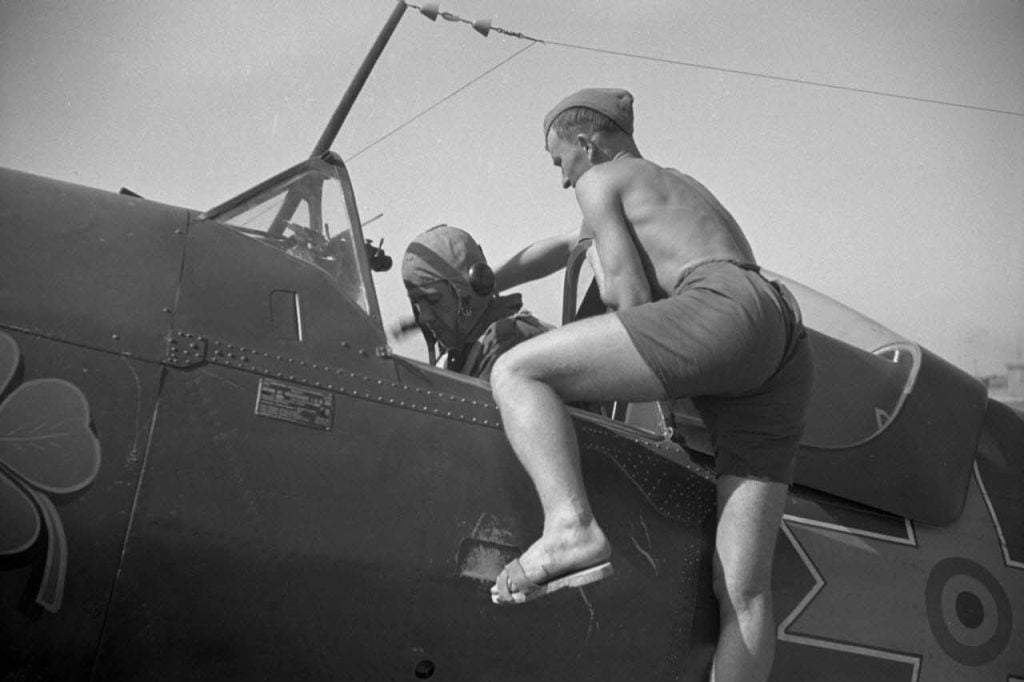
IAR 80
Romania's own home-grown WWII fighter — designed and built at Brașov, it fought on the Eastern Front and defended the Ploiești oil refineries.
The IAR 80: how a small nation built its own modern fighter
The IAR 80 is one of the genuine curiosities of the Second World War: a competitive, home-designed monoplane fighter produced not by one of the great industrial powers but by Romania, at the Industria Aeronautică Română (IAR) works in Brașov. When it first flew in 1939 and entered service from 1941, it put the Royal Romanian Air Force among the small handful of nations flying a modern, indigenous, all-metal fighter of its own making.
Romania in the 1930s had a real aircraft industry, but it leaned on foreign designs — most importantly the Polish PZL P.24, a gull-winged fighter that IAR built under licence. Rather than start from a blank sheet, IAR's engineers did something clever and pragmatic: they kept the parts of the P.24 that already worked and were already tooled for, and grafted onto them something entirely modern. The result borrowed the P.24's wings and much of its tail and rear fuselage, but married them to a new, sleek, stressed-skin monocoque forward fuselage housing a retractable undercarriage and a Romanian-built radial engine.
That engine was the IAR K14 — a licence-built version of the French Gnome-Rhône 14K twin-row radial, produced in Brașov and delivering somewhere in the region of 870 to 1,025 horsepower depending on the mark. It gave the little fighter a top speed commonly cited at around 510 km/h, agility that pilots liked, and — crucially for a country that had to make its own spares — an engine it could build and maintain itself.
When it appeared, the IAR 80 was a real fighter, not a curiosity — broadly in the class of a Hawker Hurricane or an early Bf 109E, and a genuine achievement for Romanian industry.
It is easy, in hindsight, to be condescending about the IAR 80. It should not be. In 1941, on the metrics that mattered — speed, climb, manoeuvrability, firepower — it was competitive with the front-line fighters it was likely to meet, and in some respects it was a nicer aeroplane to fly than the machines flying alongside it. Contemporary comparisons to the Hurricane and the early Messerschmitt Bf 109E are reasonable; the IAR 80 was agile, sturdy and well-liked by its pilots.
What it could not do was keep up with the pace of wartime development. Romania's industry was small, production was measured in hundreds rather than thousands, and there was little slack to fund a stream of major upgrades. Armament was steadily increased — from an initial battery of four machine guns to six, and later to a heavier fit including two 20 mm cannon — and the closely-related IAR 81 added a dive-bombing and fighter-bomber capability. But by 1943–44 the fighter was facing American heavy bombers with long-range escort fighters, and against the latest Allied types it was increasingly outclassed.
The IAR 80's war was fought on two very different fronts. From 1941 it went east with the German advance into the Soviet Union, flying over Odessa, into the Crimea, and eventually over the disaster at Stalingrad. Then, as the American strategic bombing campaign reached south-eastern Europe, IAR 80s were thrown into the home defence of the Ploiești oil refineries — the single most important fuel source for the German war effort — including the famous low-level Operation Tidal Wave raid of 1 August 1943, when Romanian fighters and flak tore into a formation of USAAF B-24 Liberators.
In August 1944 Romania changed sides. Overnight the IAR 80's enemies became its allies and the Luftwaffe its enemy, and the surviving fighters flew their final missions against the Germans. By then the type was thoroughly obsolescent, and after the war the remaining airframes were run on as trainers and conversion hacks before being scrapped. No complete original IAR 80 survives today — a fact that says as much about the aircraft's obscurity as about its history.
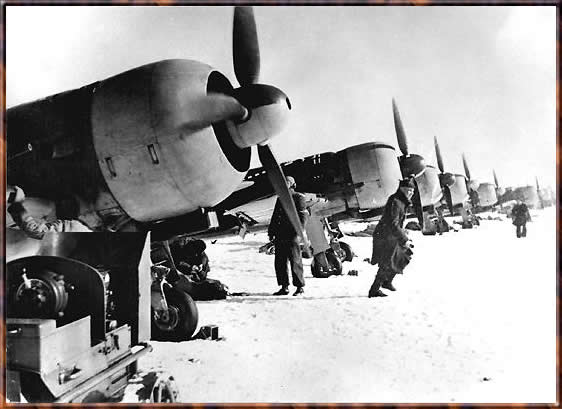
There is a national dimension to the IAR 80 that pure performance figures miss. For Romania it was a point of pride — visible proof that the country could design and build a modern combat aircraft rather than simply assemble other nations’ designs under licence. That symbolism outlived the aircraft itself, and the IAR 80 remains a touchstone in the history of Romanian aviation and engineering.
It is also worth being clear about what the IAR 80 was not. It was not a war-winning super-fighter, not built in decisive numbers, and not the equal of the best 1944 fighters. Its significance is more interesting than that: it is the story of a modest industrial nation making the most of limited means to field a genuinely competitive fighter at the moment it mattered most, and then flying that fighter honourably through a war that turned against it.
01Why Romania built the IAR 80 instead of buying a foreign fighter
By the late 1930s Romania needed a modern monoplane fighter and had three broad options: keep buying foreign designs, licence-build someone else's modern fighter, or design its own. Foreign purchases were expensive, politically fraught and vulnerable to supply being cut off in wartime — exactly what a small country could not risk when its air force guarded strategic assets like the Ploiești oilfields.
IAR already had the industrial base: it was licence-building the PZL P.24 and its Gnome-Rhône engine, so the tooling, skills and supply chain for a radial-engined fighter existed. Designing a new fighter around those existing components was the fastest, cheapest and most self-sufficient route to a modern aircraft. It also meant Romania could build and repair the whole machine, engine included, without depending on anyone else — a decisive advantage once the war closed borders.
Strategic autonomy was the deciding factor. Romania sat astride the Ploiești oilfields, a resource so vital that it made the country a target the moment war came. A home-built fighter meant the air force guarding that resource could never be grounded by an arms embargo, a blockade or a supplier changing sides — a lesson smaller nations learned repeatedly in the 1930s.
02The IAR 80's clever PZL P.24 ancestry
The IAR 80 is often described as an original design, and in its most important respects it was — but its lineage is worth being honest about. IAR built the Polish PZL P.24 under licence, and when it designed the IAR 80 it reused the P.24's wings and much of its tail surfaces and rear fuselage structure, mating them to an all-new, streamlined, stressed-skin forward fuselage with a retractable undercarriage and an enclosed cockpit.
This was engineering pragmatism of the best kind. Rather than reinvent parts that already worked and were already in production, IAR concentrated its effort where modernity mattered most — aerodynamics, structure and the engine installation. The result looked and flew like a thoroughly modern fighter, even though parts of it traced their ancestry to an older gull-winged design.
The P.24 itself was a capable gull-winged fighter and a successful export design, so the components IAR inherited were sound. What dated them was configuration rather than quality; by grafting them onto a modern fuselage IAR effectively skipped a development generation, arriving at a low-wing monoplane without having to design and test an entirely new wing and tail from scratch.
03How good was the IAR 80, really?
Judged against the moment it entered service, the IAR 80 was a credible front-line fighter — commonly rated as broadly comparable to a Hawker Hurricane or an early-model Bf 109 in speed and manoeuvrability, and liked by the pilots who flew it. For a country of Romania's size and industrial weight to field such an aircraft entirely of its own manufacture was a real accomplishment.
The honest caveat is that "competitive in 1941" is not the same as "competitive in 1944". The IAR 80 was not developed at the pace of the major powers' fighters, it was built only in the hundreds, and by the later war years it was outclassed by the newest Allied types it had to face over Romania. Its reputation rests on being good when it mattered and being built at all — not on having stayed at the cutting edge.
Reputation is also a matter of who writes the history. Because the IAR 80 served on the losing side, was built in small numbers and left no airworthy survivor, it slipped into obscurity after 1945 in a way that better-documented Allied fighters did not. Recent scholarship and enthusiast research have done much to restore its standing as a genuinely capable early-war fighter.
What the IAR 80 got right: modern where it mattered, thrifty everywhere else
The IAR 80 was an exercise in getting a lot of fighter out of limited industrial means. Its designers spent their innovation budget where it counted — the fuselage, the aerodynamics and the engine installation — and reused proven, already-tooled components everywhere else.
Where a great power could afford to design every part afresh, IAR could not, and did not pretend otherwise. The genius of the IAR 80 is how modern it managed to look and fly despite that constraint. The forward fuselage was genuinely up to date; the rest was sensible, sturdy and cheap to build and repair.
The following three features explain why the aircraft was competitive in 1941 — and why it remained buildable and maintainable by Romanian industry throughout the war.
A modern stressed-skin forward fuselage
The heart of the IAR 80's modernity was its new all-metal, stressed-skin monocoque forward fuselage — smooth, streamlined and fitted with a retractable undercarriage and enclosed cockpit. It was a clean break from the fabric-and-strut fighters of a few years earlier, and it is what gave the aircraft its modern lines and its speed.
The Romanian-built IAR K14 radial
Power came from the IAR K14, a licence-built Gnome-Rhône 14K twin-row radial made in Brașov, giving roughly 870–1,025 hp depending on the mark. Building the engine at home meant Romania could produce, maintain and repair the complete fighter without relying on foreign supply — a decisive strategic advantage in wartime.
Proven wings and tail from the PZL P.24
To save time and tooling, IAR reused the wings and much of the tail and rear fuselage of the PZL P.24 it already built under licence. These were known, trusted structures; concentrating new design effort elsewhere let IAR field a modern fighter far faster and more cheaply than a clean-sheet design would have allowed.
Rugged, repairable and forgiving
Air-cooled radial power and sturdy construction made the IAR 80 tolerant of battle damage and rough forward strips, and pilots found it forgiving to fly. For an air force that could not easily replace either aircraft or trained pilots, an easy-to-maintain, easy-to-fly fighter was a quiet but real strategic asset.
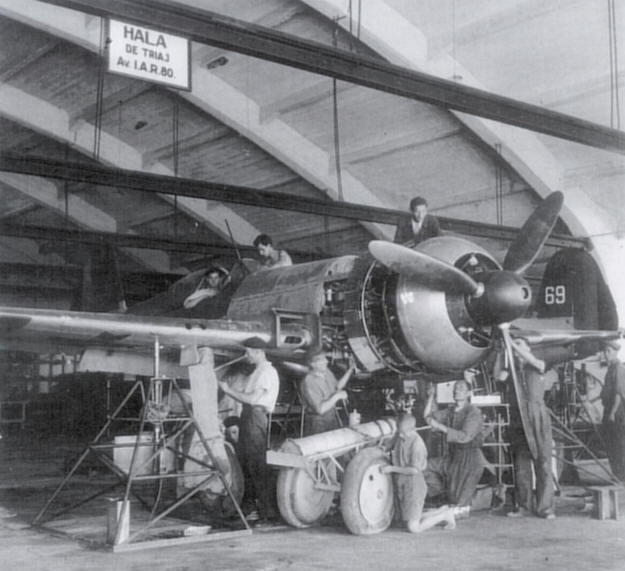
The manufacturing story matters too. Building the IAR 80 at Brașov meant developing and sustaining the jigs, skilled labour and quality control needed for stressed-skin construction — capabilities that did not simply appear, but had to be grown. That the IAR works could turn out hundreds of modern all-metal fighters, engines included, is itself a measure of how far Romanian industry had come by the early 1940s.
04The IAR 80's growing gun armament, mark by mark
Early IAR 80s carried a battery of rifle-calibre machine guns — commonly cited as four — which was adequate against 1941 opposition but light for the war that was coming. As the type developed, the armament was progressively increased: later machines carried six machine guns, and heavier fits introduced 20 mm cannon, with the definitive fighter variants mounting two cannon alongside machine guns.
The trend reflected the reality the IAR 80 was being asked to face: increasingly well-protected aircraft and, over Ploiești, four-engined American bombers that demanded real hitting power to bring down. Exact gun fits vary between sources and sub-variants, so specific figures should be treated as representative rather than definitive.
The move to cannon mattered most over Ploiești. Rifle-calibre machine guns could damage a B-24 but rarely destroy one quickly; 20 mm cannon shells, with their explosive punch, gave the IAR 80 a realistic chance of knocking a four-engined bomber out of formation in a single firing pass — exactly what home-defence interception demanded.
05The IAR 81: turning the fighter into a dive-bomber
The IAR 81 was the fighter-bomber and dive-bomber development of the basic design. Fitted with racks and, in dive-bomber form, the ability to carry a bomb load, it let Romania use its home-built fighter for ground attack on the Eastern Front as well as air defence. The IAR 80 and IAR 81 are usually counted together when quoting production totals.
The two designations blur into one another across sub-variants, and different sources divide the production run between them differently — one reason the commonly quoted total of "around 450" aircraft should be read as an approximation covering the whole family.
Dive-bombing placed heavy stresses on the airframe and demanded good handling at high speed and steep angles, which the IAR 81 reportedly managed well. The variant let Romania field a single basic type in both the fighter and the attack role, simplifying training, spares and maintenance for an air force that could not afford a wide inventory of specialised aircraft.
06Why the IAR 80 fell behind after 1941
Nothing about the IAR 80 was bad; it was simply overtaken. The fighters it was compared with in 1941 were themselves developed relentlessly through the war, gaining power, speed and firepower with each year. Romania's smaller industry could not match that pace, and could not fund a comparable stream of new marks while also building the aircraft in quantity.
By the time IAR 80s were defending Ploiești against massed American raids, they were meeting the latest USAAF escort fighters — aircraft a generation ahead. The IAR 80 remained a useful interceptor in skilled hands, but the technological gap only widened as the war went on.
The comparison that hurt most was with escort fighters. When American heavy bombers began arriving over Romania with long-range fighter escort, the IAR 80 found itself not just chasing fast, high-flying bombers but also fending off fighters designed a full generation later. No amount of pilot skill could fully close a gap measured in hundreds of horsepower and thousands of feet of ceiling.
The IAR 80 in combat: Odessa, Stalingrad, and the guns over Ploiești
The IAR 80 fought a war of two halves. For three years it flew alongside Germany against the Soviet Union; then, over the oilfields of its own country, it turned to face the Americans — before finally, in 1944, turning again to fight the Germans.
When Romania joined the German invasion of the Soviet Union in June 1941, the IAR 80 went to war almost immediately. Romanian fighter groups flew it in the fighting around Odessa, over the Black Sea coast and into the Crimea, and it was present through the long, grinding campaign that led to the catastrophe at Stalingrad. In this role it was a conventional front-line fighter — escorting, intercepting and, in its IAR 81 form, dive-bombing and strafing.
On the Eastern Front the IAR 80 acquitted itself well against the Soviet types it met in 1941–42, when it was still broadly a match for its opponents. Romanian pilots flying it claimed a respectable tally, and the aircraft's agility and sturdiness suited the fluid, low-level air war over the steppe.
But the IAR 80's most famous chapter was defensive, and it was fought over home soil. Ploiești, north of Bucharest, was the largest source of natural oil available to the Axis — and therefore one of the most important strategic targets in Europe. When the United States Army Air Forces came for it, IAR 80s were among the fighters sent up to stop them.
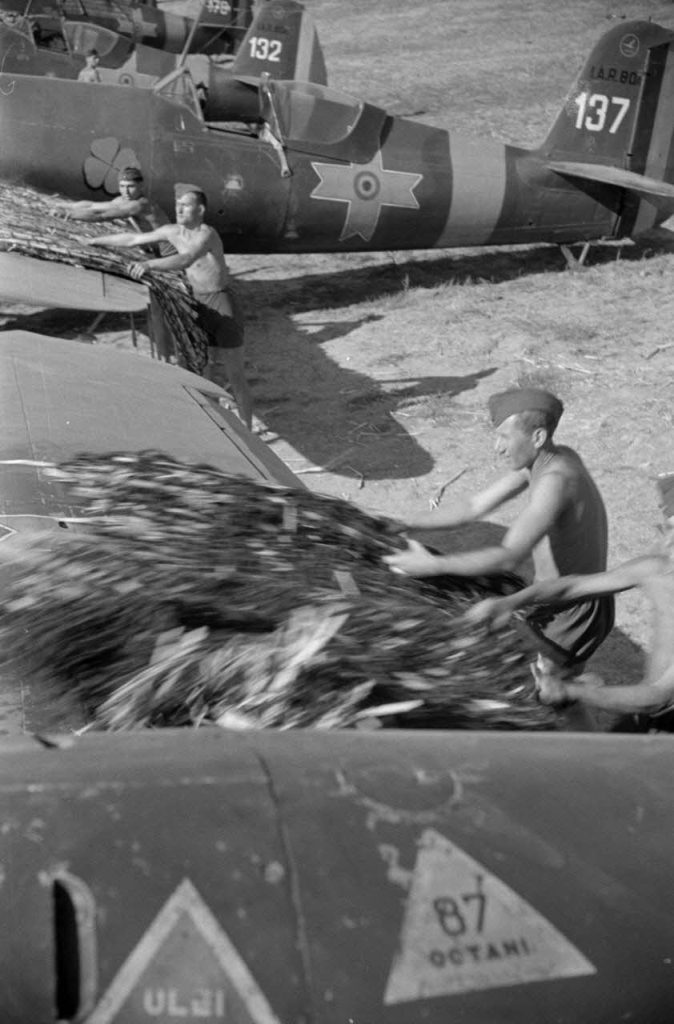
The most dramatic clash came on 1 August 1943, during Operation Tidal Wave — the audacious low-level USAAF raid on the Ploiești refineries by B-24 Liberators. Flying at rooftop height into heavy flak and defending fighters, the American formation suffered severe losses; Romanian IAR 80s were among the interceptors that engaged the low-flying bombers, and the raid became a byword for both American courage and the ferocity of the Ploiești defences.
Through 1943 and 1944 the IAR 80 continued to defend Romanian airspace against a mounting American bombing campaign, now escorted by long-range fighters. It was in these battles that the type's age told most heavily: brave and well-flown, but increasingly outmatched by the latest Allied aircraft.
Then, in August 1944, Romania broke with the Axis and joined the Allies. The IAR 80's surviving pilots turned their guns on their former partners, flying against German forces in the closing months of the war. It was a fittingly strange end for a fighter that had already fought two very different enemies over two very different fronts.
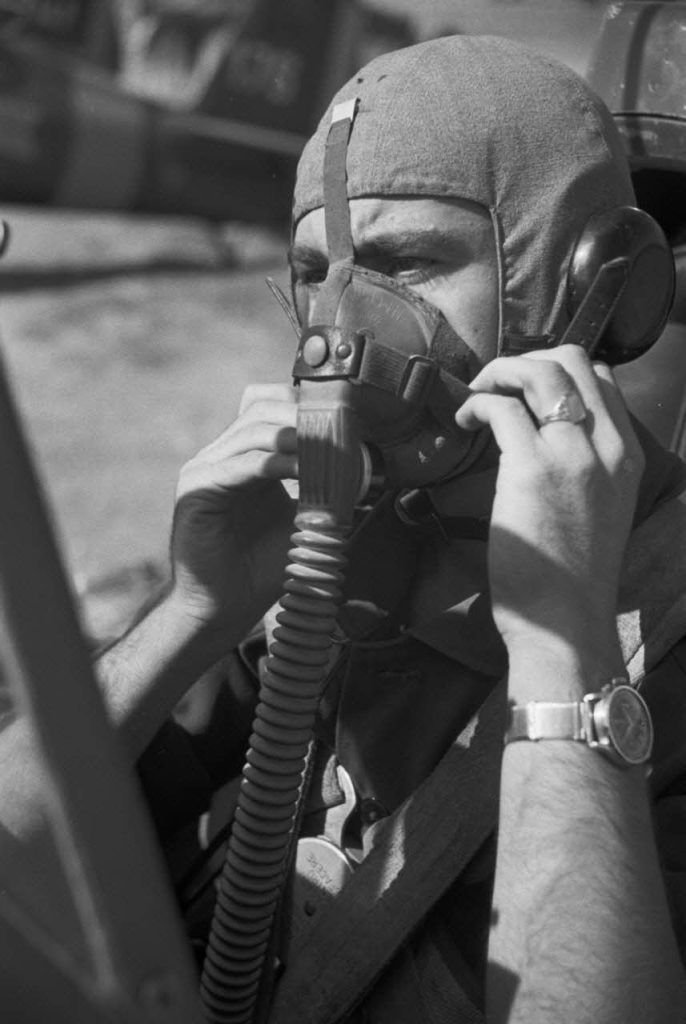
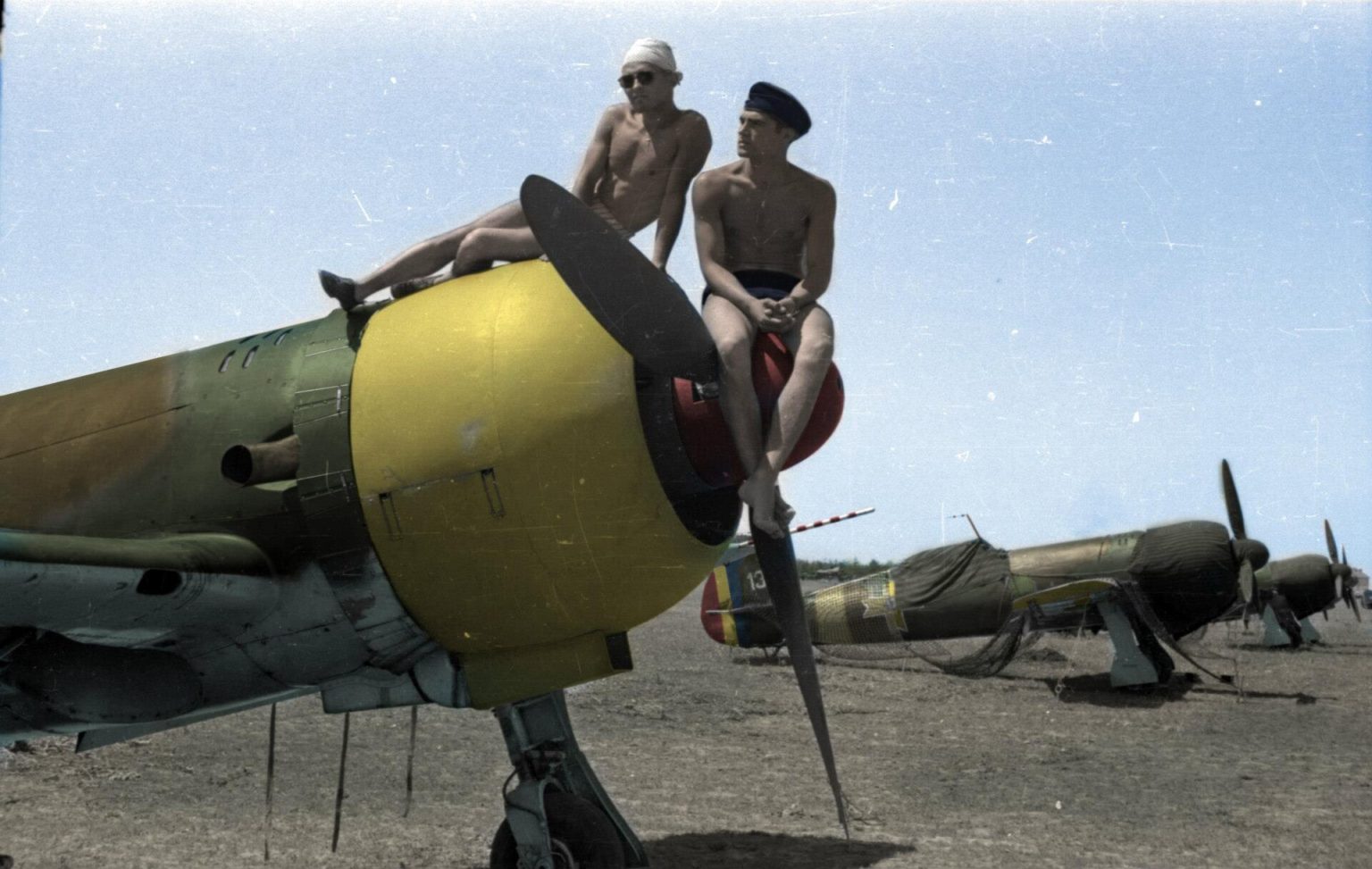
Behind the campaigns were the pilots and ground crews who made the aircraft work. The photographs that survive — many taken by German war correspondents attached to Romanian units — show a young, capable force servicing and flying the IAR 80 in the field, from the dust of the Eastern Front to the home airfields ringing Ploiești. Their individual stories are only partly recorded, and wartime claims attributed to them should be read with due caution, but the images make the human scale of the IAR 80’s war vivid.
07The IAR 80 over Ploiești and Operation Tidal Wave
Operation Tidal Wave, on 1 August 1943, sent nearly 180 USAAF B-24 Liberators against Ploiești at very low level, hoping to slip under the radar and hit the refineries by surprise. The plan miscarried: the defenders were alert, the flak was intense, and fighters — including Romanian IAR 80s — fell on the bombers. American losses were severe, with dozens of aircraft and hundreds of aircrew lost.
Ploiești remained a magnet for Allied bombing through 1944, and IAR 80 units were repeatedly committed to its defence. Precise claims and losses from these battles vary between sources; what is not in doubt is that home defence of the oilfields was the IAR 80's defining combat role.
Tidal Wave has become the most-remembered single action associated with the IAR 80, but it was one day in a longer campaign. Through 1944 the American Fifteenth Air Force returned to Ploiești again and again at high altitude, and the defenders — flak, German fighters and Romanian IAR 80s alike — fought a grinding battle of attrition until the oilfields were finally overrun that summer.
08The IAR 80 on the Eastern Front, 1941–44
From the opening of Operation Barbarossa the IAR 80 served over the southern sector of the Eastern Front — Odessa, the Black Sea littoral, the Crimea and the approaches to Stalingrad. In 1941–42, when it was still competitive, it performed creditably as an escort and interceptor, and in IAR 81 form as a dive-bomber and ground-attack aircraft.
As Soviet fighter quality rose and the strategic tide turned, the IAR 80 was gradually pulled back toward home defence. Its Eastern Front record is genuine but should be read with the usual caution about wartime claim figures, which are difficult to verify.
The southern sector suited the IAR 80’s strengths. Much of the air fighting there took place at low and medium altitude, where the fighter’s agility counted for more than outright ceiling, and the fluid front lines rewarded a rugged aircraft that could operate from rough forward strips and absorb battle damage.
09August 1944: when the IAR 80 changed sides
Romania's coup of 23 August 1944 took the country out of the Axis and into the Allied camp almost overnight. For the IAR 80 it meant an abrupt reversal: the Luftwaffe, until yesterday an ally, was now the enemy, and the surviving Romanian fighters flew their last combat missions against German forces in Romania and beyond.
By this point the IAR 80 was thoroughly obsolescent, and its front-line career was nearly over. After the war the remaining aircraft were relegated to training and second-line duties before being withdrawn and, ultimately, scrapped.
The switch was politically seismic and militarily abrupt. Romanian and German aircraft that had shared airfields days earlier were now enemies, and pilots who had spent three years fighting the Soviets suddenly found themselves on the same side as them. For the IAR 80 it was a fittingly strange coda to an already unusual career.
IAR 80 full specifications: engine, performance and armament
Figures for the IAR 80 vary noticeably between sources and between sub-variants, and no official standardised data set is widely agreed. Values below are broadly representative of a mid-production IAR 80; those marked est. are estimates and should be treated with caution.
One practical caution runs through all of these figures: the IAR 80 was produced in a series of sub-variants over several years, its equipment and weights changed as it developed, and much of the surviving technical documentation is fragmentary. Where sources disagree, this page favours the commonly cited middle figure and flags it as an estimate rather than presenting a single number as definitive.
Baseline: the IAR 81C of 1943—44, construction numbers 301—450. At 150 airframes it is the largest single block IAR built, it is the mark that fought the Fifteenth Air Force over Ploiești, and it is the only one that carried a gun battery anyone in 1944 would have called modern. Deltas for the earlier 80, 80A, 80B, 80C and 81 series are in grey. Two warnings before the figures. First, published maximum speeds for this mark run from 485 to 550 km/h, and the high end is not credible: 550 km/h on 1,025 hp at three tonnes would put a 1943 radial-engined taildragger level with a Hurricane II on a quarter less power. Second, the wing loading of 132.35 kg/m² repeated in almost every English table is 2,250 kg divided by 17 m² — an early short-wing weight against a late long-wing area. At the 81C's own maximum take-off weight the figure is 178 kg/m².
Dimensions & weights
- Crew
- 1
- Wingspan
- 11.00 m (36 ft 1 in) the long wing, introduced on the IAR 80B in 1942 to house heavier guns. The original short wing of the IAR 80 and 80A spanned 10.50 m (34 ft 5 in)
- Length
- 8.97 m (29 ft 5 in) some Romanian tables give 8.90 m (29 ft 2 in). The first prototype was shorter still; the rear fuselage was stretched in 1939 to rebalance the aircraft around the heavier K14 IIIc36 engine
- Height
- 3.60 m (11 ft 10 in) Antoniu gives 3.535 m (11 ft 7 in); the difference is tail attitude, not structure
- Wing area
- 17.00 m² (183 sq ft) IAR 80A short wing 16.1 m² (173 sq ft); IAR 80B 16.5 m² (178 sq ft). The wing grew twice, both times to make room for guns rather than for lift
- Empty weight
- 2,200 kg (4,850 lb) IAR 80A 1,980 kg (4,365 lb); the first fifty IAR 80s about 1,780 kg (3,924 lb). The type put on 420 kg in three years and never got a bigger engine to carry it
- Normal loaded weight
- 2,745 kg (6,052 lb) full internal fuel, full ammunition, no external stores
- Maximum take-off weight
- 3,030 kg (6,680 lb) with the centreline 250 kg bomb or two wing drop tanks
- Wing loading
- 178 kg/m² (36.5 lb/sq ft) at maximum take-off weight; 161 kg/m² (33.0 lb/sq ft) at normal loaded weight. The widely reprinted 132.35 kg/m² (27.1 lb/sq ft) belongs to an early, lighter, short-winged aeroplane and should not be attached to the 81C
- Power loading
- 2.96 kg/hp (6.5 lb/hp) at maximum take-off weight — the single number that explains the aircraft's late-war career better than any other
- Structure
- the tail unit and the rear fuselage were semi-monocoque, taken essentially unchanged from the licence-built PZL P.24; the section from the firewall back to the cockpit was new and was a welded steel-tube frame skinned in duralumin the shorthand "all-metal monocoque fighter" that appears in most English references is a simplification of a genuinely hybrid airframe
- Wings
- low-mounted, all-metal, tapered with rounded tips and a very slightly forward-swept trailing edge; small flaps inboard, ailerons outboard to the tips. Derived from the earlier IAR 24 monoplane, not from the Savoia-Marchetti SM.79 the SM.79 wing story is an urban legend: the SM.79B licence was signed on 1 October 1938, about a year after the IAR 80 prototype was completed
- Undercarriage
- wide-track main legs retracting inward into the wing, with a non-retractable tailskid on production aircraft. The wide track made it forgiving on the rough grass strips it lived on, in Bessarabia and in Romania alike
- Cockpit
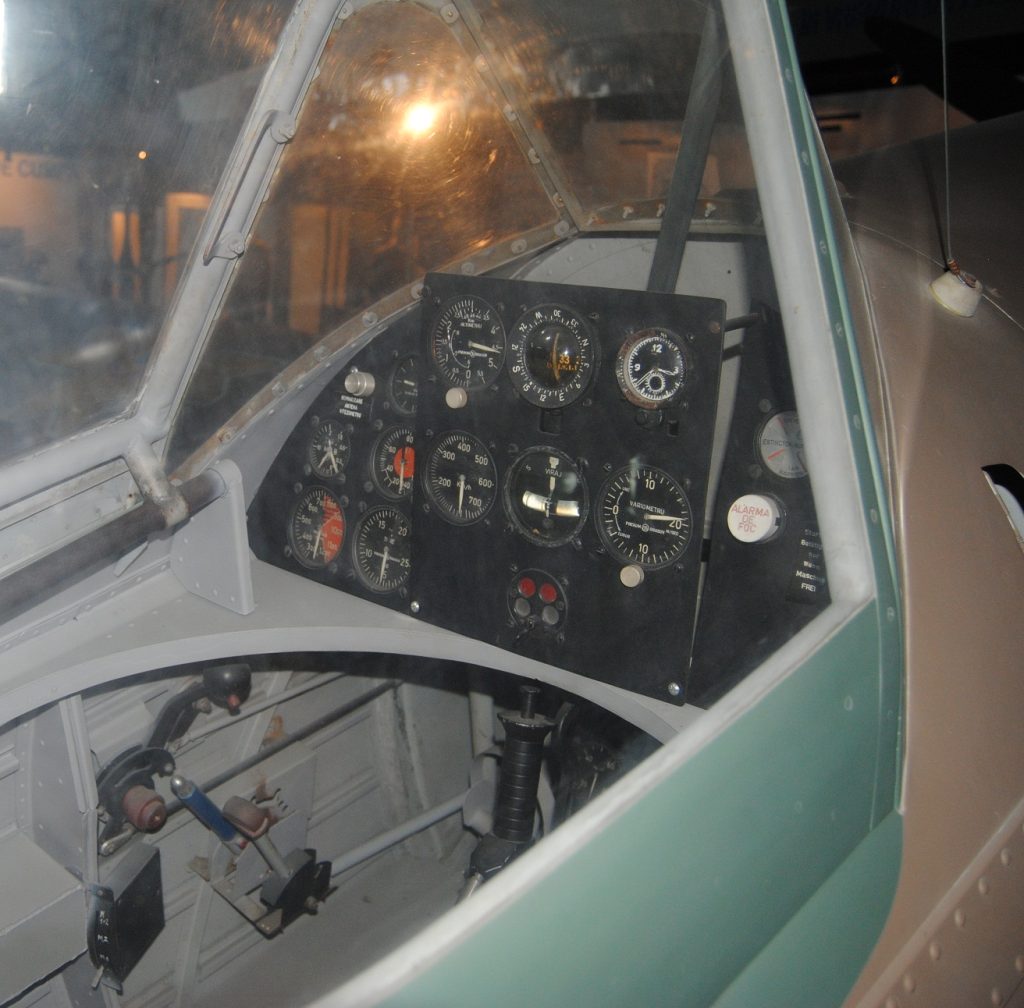
- rearward-sliding bubble canopy, exceptional all-round view, and a seat set so far aft that forward visibility over the long radial cowling while taxiing was worse than on most taildraggers. The seat was raised slightly during development to claw some of it back
Performance
- Maximum speed
- 510 km/h (317 mph) at about 4,000 m (13,100 ft). This is the best-attested figure and it belongs to the lighter marks. Romanian data for the IAR 80B give 505 km/h (314 mph) at 4,700 m (15,400 ft), and worldwar2.ro gives 485 km/h (301 mph) at 5,000 m for the initial IAR 80. The 550 km/h (342 mph) often quoted for the 81C is not supported by anything the engine could do
- Best speed recorded
- 524 km/h (326 mph) at 5,350 m (17,550 ft) — IAR 80 no. 2 on test, 16 December 1940. A single aircraft, lightly loaded, on a good day
- Speed at sea level
- 427 km/h (265 mph) at nominal power low down it was quick and it turned, which is exactly why 10 June 1944 went the way it did
- Rate of climb
- 14.1 m/s (2,780 ft/min) at sea level for the IAR 80A; 13.9 m/s (2,740 ft/min) for the heavier 80B
- Time to 5,000 m
- 4 min 41 s to 7 min 00 s to 5,000 m (16,400 ft), depending on mark and load. The prototype managed 6 minutes in 1939, which was respectable then; the 81C at the top of that spread was climbing on borrowed time in 1944
- Service ceiling
- 10,000 m (32,800 ft) for the 81C 10,500 m (34,450 ft) is quoted for the 80A and 80B, and the 1939 prototype reached 11,000 m (36,100 ft). The aircraft got heavier, not more powerful
- Range
- 730 km (454 miles) on internal fuel short even by 1941 standards, and a real limitation on the Eastern Front
- Ferry range
- about 1,330 km (826 miles) with two 100 litre wing drop tanks Romanian sources give about 1,030 km (640 miles) for the IAR 80B on the same fit
- Against the Bf 109E
- a Luftwaffe major who flew it in March 1941 reported it 20—30 km/h (12—19 mph) slower, equal in the climb to 5,000 m, equal in the turn, worse over the nose, and clearly beaten in the dive because it had no automatic propeller pitch control. His verdict was "a fighter adequate to modern needs" — which in March 1941 it was
- Against the P-38 below 2,000 m
- competitive and then some. On 10 June 1944 the IAR 81Cs of Grupul 6 caught dive-bombing Lightnings at and below 600 m over Ploiești and the Americans lost 22 aircraft that day, nine of them to the IARs
- Against the P-51 above 6,000 m
- hopeless. The Mustangs of the 31st Fighter Group escorting the heavies on 21 April 1944 were 150 km/h faster where the fight took place, and the ARR lost 14 IARs and 11 pilots in one afternoon
- Handling
- light, agile, honest, and by every account a pleasure. The Luftwaffe evaluation opened with "take-off and landing are very good", which for a 1,000 hp radial single-seater on grass was not a small thing. No published take-off or landing run figures for the production aircraft could be traced
Propulsion & systems
- Engine
- one IAR K14 IVc32 1000A, a 14-cylinder two-row air-cooled radial of 38.673 litres (2,360 cu in), bore and stroke 146 × 165 mm (5.75 × 6.50 in), dry weight 540 kg (1,190 lb). A licence-built Gnome-Rhône 14K Mistral Major, made at IAR Brașov — a contract IAR won in the 1930s after losing the fighter competitions themselves, and which kept its design office alive
- Rated power
- 1,000 hp (746 kW) at 3,200 m (10,500 ft), 1,025 hp (764 kW) for take-off, and 1,100 hp (820 kW) at emergency setting at 2,700 m (8,860 ft)
- Earlier engines
- prototype: K14 IIIc32, 870 hp (649 kW). Updated prototype: K14 IIIc36, 930 hp (693 kW), heavier, which forced the rear-fuselage stretch. Aircraft 21 to 50: K14 IVc32, 960 hp (716 kW). From the IAR 80A: the 1000A
- Supercharging and drive
- single-speed centrifugal supercharger and 2:3 reduction gearing. One speed is the whole problem: the engine had a single critical altitude, and above about 5,000 m the aeroplane simply ran out of everything
- Engines built
- 430 of the K14 IVc32 1000A were delivered for the IAR 80 and 81 — an independent corroboration of a production run of roughly 450 airframes
- Propeller
- three-blade metal variable-pitch unit. Wikipedia's data table calls it constant-speed; the German test pilot who flew it in 1941 explicitly complained that it lacked an automatic pitch regulator, and that is the more specific testimony. It cost the aeroplane the dive
- Fuel
- about 450 litres (99 imp gal, 119 US gal), roughly 324—330 kg (714—728 lb), in fuselage tanks; the updated prototype carried 455 litres. Self-sealing tanks were introduced after the eleventh IAR 80C, in late 1942 — two years into the war
- Protection
- armoured windscreen glass and seat-back armour from the IAR 80A of 1941; thicker seat-back armour and the self-sealing tanks from late 1942. There was never anything to protect the pilot from ahead except the engine, which against a B-24's nose turret was not enough
- Gunsight
- the first twenty aircraft were delivered with iron ring-and-bead sights, a genuinely startling fact for a 1941 monoplane fighter. From the twenty-first airframe a Goerz GM2 reflector sight was fitted, built under licence by Întreprinderea Optică Română as the Telereflex. Guns were harmonised to converge 250 m (273 yd) ahead
- Radio
- a persistent weakness on the early marks and one of the reasons the IAR 80B mattered: new sets went in with the longer wing in 1942. Before that, Romanian fighter formations largely fought by hand signal
- The engines that never came
- a BMW 801 would have been worth 600 hp more and IAR engineers calculated at least 600 km/h (373 mph), but Germany could spare neither engines nor jigs. A Daimler-Benz DB 601Aa borrowed from a Bf 109E was fitted to IAR 80 no. 13 and flown once, on 21 April 1941; the vibration was so bad the pilot barely got it down, and it never flew again. A 1,475 PS (1,085 kW, 1,455 hp) DB 605A in IAR 81C no. 326 in the summer of 1943 transformed the aircraft on paper, and Germany had no engines to sell
- Production
- 450 airframes, construction numbers 1 to 450, built at Brașov between 1940 and 30 September 1944 Dan Antoniu's 2014 figure. Totals of 448 and of 346 also circulate widely; 346 appears to count only aircraft accepted into ARR fighter units and to omit later blocks, and the fact that the serial sequence reached 450 is hard to reconcile with it
Values marked est. are estimates; production, speed and armament figures differ between sources and sub-variants and are hedged accordingly. The "around 450 built" total covers the whole IAR 80 / IAR 81 family and is itself an approximation.
10The IAR 80's cost: why the numbers simply aren't there
Unlike modern jets, whose unit price and cost per flight hour are tracked to the last figure, the IAR 80 belongs to a wartime economy under occupation-era pressures for which reliable, comparable cost data was never published and largely does not survive. Romania built the aircraft itself, partly to avoid the cost and dependency of foreign purchases, but the actual programme cost, unit cost and operating cost per hour are not reliably recorded.
What can be said is qualitative: building the whole aircraft — airframe and engine — domestically was cheaper and more strategically secure for Romania than importing fighters, which is a large part of why the IAR 80 was built at all. Any specific monetary figure quoted today should be regarded as unverified.
The broader point is that the IAR 80 was cheap in the currency that mattered to Romania: independence. Every airframe and engine built at Brașov was one the country did not have to buy abroad with scarce hard currency or scarcer political goodwill, and one it could keep flying regardless of what happened to its alliances.
11IAR 80 and IAR 81 variants explained
The family evolved through a series of sub-variants that progressively changed armament, equipment and role. Broadly, the IAR 80 line ran from early machine-gun-armed fighters through heavier-armed marks adding cannon, while the IAR 81 designation covered the fighter-bomber and dive-bomber versions capable of carrying bombs.
Because the sub-variant designations overlap and different sources allocate production between them differently, exact per-variant build numbers are uncertain. Treat any breakdown as approximate.
Collectors and historians still argue over exactly how many of each sub-variant were completed, and surviving factory records are incomplete. For the general reader the useful takeaway is simpler: the IAR 80 evolved steadily rather than in dramatic leaps, gaining guns, equipment and a ground-attack capability while keeping the same basic, recognisable airframe.
12The IAR K14 engine in detail
The IAR K14 was a Romanian-built version of the French Gnome-Rhône 14K "Mistral Major", a two-row, 14-cylinder air-cooled radial. Produced under licence at Brașov, it delivered on the order of 870–1,025 hp across its variants and was the single most important enabler of the IAR 80 — because it let Romania build a complete fighter, engine included, without depending on imports.
Radial engines of this type were rugged and tolerant of battle damage, well suited to a fighter that would spend much of its war over contested ground.
The Gnome-Rhône 14K was licence-built by several countries in the 1930s, which speaks to how sound a design it was. In Romanian hands it gave the IAR 80 dependable, if never spectacular, power — enough to make the fighter competitive in 1941, but without the growth potential of the liquid-cooled engines that pushed the best Allied and German fighters to ever-higher speeds later in the war.
13How the IAR 80 handled in the air
Pilots generally rated the IAR 80 as pleasant, responsive and manoeuvrable — an easy aircraft to fly well and forgiving enough for the rapidly-trained pilots a wartime air force had to produce. Its agility was a genuine asset in the turning fights typical of the Eastern Front in 1941–42.
As with all such reputations, individual accounts differ, and the aircraft's later reputation suffered simply because it was pitted against much newer opponents. Judged in its own moment, it was well liked.
Good handling had a tactical payoff. A forgiving, manoeuvrable fighter let relatively inexperienced Romanian pilots hold their own in their first combats and survive long enough to become veterans — an underrated advantage for an air force that could not match its larger opponents in training hours or replacement aircraft.
14Why "around 450" is the honest production figure
Production totals for the IAR 80 and IAR 81 are quoted variously in the literature, and the commonly cited figure of roughly 450 aircraft is best understood as a round approximation covering the entire family rather than a precise count. Wartime record-keeping, post-war losses of documentation, and the blurring of variant designations all contribute to the uncertainty.
What matters more than the exact number is the scale: the IAR 80 was built in the hundreds, not the thousands — enough to equip Romania's fighter arm, but far too few to keep pace with the major powers.
It is worth remembering the scale involved. Germany built more than 30,000 Bf 109s and Britain over 14,000 Hurricanes. Against those totals, a few hundred IAR 80s underline both the ambition and the limits of the Romanian effort — a real, modern fighter, but one a small nation could only ever field in modest numbers.
15Where the IAR 80 sits among its contemporaries
Placed beside the fighters it was designed to meet, the 1941 IAR 80 stands up well: broadly in the performance class of a Hawker Hurricane or early Bf 109E, agile and adequately armed for its moment. That it was designed and built by a small nation makes the comparison more, not less, impressive.
The gap opened later. Against 1944-era Allied fighters the IAR 80 was outclassed, as almost any 1941 design would have been. Its place in history is as a competent, home-grown fighter that did real work in its prime — not as a world-beater.
Placed on a timeline rather than a spec sheet, the IAR 80’s story is that of many 1939–41 fighters: excellent when new, steadily eclipsed thereafter. The difference is that most such designs came from major powers with the resources to replace them. Romania had to keep flying its one indigenous fighter to the end — which is precisely what makes the IAR 80 memorable.
16Reading the IAR 80’s contested combat statistics
Any figures for the IAR 80’s victories and losses should be handled with real caution. Wartime claims were made in the heat of combat, often could not be confirmed, and were recorded by an air force whose archives were later disrupted by regime change, war damage and decades of Cold-War secrecy. Numbers that circulate today are best treated as indicative rather than exact.
What is reasonably well established is the shape of the record rather than its precise arithmetic: the IAR 80 was an effective interceptor in 1941–43, it inflicted meaningful losses on both Soviet aircraft in the east and American bombers over Ploiești, and its own losses mounted as the opposition improved. Where this page gives a number, it is rounded and flagged; where sources conflict sharply, it prefers to describe the pattern instead.
17How the IAR 80 was actually built at Brașov
The IAR works at Brașov combined airframe and engine production on a scale unusual for a country of Romania’s size. Building a stressed-skin monocoque fighter demanded precise jigs, sheet-metal skills and quality control that had to be developed and sustained locally, alongside the licence production of the IAR K14 engine. The two together made the IAR 80 a genuinely national product rather than an assembly job.
That industrial base was both the aircraft’s enabler and its ceiling. It was capable enough to turn out hundreds of modern fighters, but it could not match the vast, specialised production lines of the major powers, nor fund the constant redesign that kept their fighters current. The IAR 80’s modest production run is, in that sense, a direct reflection of the factory that built it.
18The Romanian pilots who flew the IAR 80
The IAR 80 was flown by the fighter groups of the Royal Romanian Air Force (Aeronautica Regală Română), and several of Romania’s most successful wartime pilots flew it at some point in their careers, often moving between the IAR 80 and German types such as the Bf 109. Individual scores and postings are recorded unevenly, and specific victory tallies attributed to named pilots vary between sources.
Rather than repeat contested personal statistics, it is fairer to note the general picture: a small, capable cadre of Romanian fighter pilots fought a long war on multiple fronts with the IAR 80 and its stablemates, and their experience — hard-won over Odessa, the Crimea and Ploiești — was one of the air force’s most valuable and least replaceable assets.
19The IAR 80 against American escort fighters
The hardest test the IAR 80 faced came late, over its own country. As the United States Army Air Forces stepped up the bombing of Ploiești in 1944, the raids increasingly arrived with long-range escort fighters — aircraft designed years after the IAR 80 and superior in speed, altitude and often numbers. Intercepting escorted heavy bombers is one of the most demanding tasks in air warfare, and it exposed the IAR 80’s age.
Romanian pilots nonetheless pressed home their attacks, and the defence of Ploiești remained costly for the Americans throughout. But the strategic outcome was never really in doubt: an obsolescent fighter, however well flown, could delay and bloody a modern bomber offensive without stopping it, and the oilfields were eventually overrun on the ground.
20Why no complete IAR 80 survived the war
The absence of a single complete original IAR 80 today is striking, and it has several causes. The type was built only in the hundreds, it served on the losing side for most of the war, and combat, accidents and hard use consumed many airframes. Those that survived to 1945 were obsolete, of no interest to a post-war air force re-equipping with other types, and were run on briefly before being scrapped.
Post-war Romania had neither the incentive nor, under the circumstances of the late 1940s, the inclination to preserve a symbol of the wartime regime’s air force. By the time the aircraft’s historical value was appreciated, the originals were long gone — which is why surviving IAR 80 material today amounts to relics, components and documentation rather than a whole aeroplane.
21The IAR 80 reproduction and replica project
Because no original survives, keeping the IAR 80 tangible has fallen to reproduction. A replica/reproduction project has worked to recreate the aircraft using surviving drawings, photographs and relics, aiming to give Romania back a physical example of its most important indigenous fighter. Such projects are painstaking and slow, and details of scope and status vary in the available accounts.
Whatever its exact form, the effort speaks to the IAR 80’s enduring place in Romanian aviation memory. A reproduction can never carry the provenance of a genuine survivor, but it can restore the shape and presence of an aircraft that would otherwise exist only in photographs — and remind a modern audience that Romania once designed and built a fighter of its own.
22The IAR 80 next to the Bf 109 and the Hurricane
The two aircraft the IAR 80 is most often measured against are the Hawker Hurricane and the Messerschmitt Bf 109, both of which it shared skies with. Against the 1940–41 versions of those fighters the IAR 80 stands up honestly: comparable in speed, competitive in manoeuvrability, and adequately armed for the period. It was not obviously inferior to the fighters it first met in combat.
The divergence came from development. The Bf 109 in particular was pushed through mark after mark to the end of the war, gaining power and firepower the IAR 80 could not match. Comparing a static IAR 80 with an ever-improving Bf 109 is therefore unfair to the Romanian design in the late war and flattering to it in the early war; the honest verdict is “a genuine contemporary that could not keep developing.”
23The IAR 80’s legacy in Romanian aviation
The IAR 80’s direct military legacy was short — it did not spawn a dynasty of successors, and post-war Romania re-equipped with foreign designs. But its significance as a milestone endured: it proved that Romanian engineers and workers could conceive, build and field a modern combat aircraft, and it remains the benchmark against which the country’s wartime aviation achievement is measured.
For enthusiasts and historians it has become a favourite precisely because it is an underdog — a competent, indigenous fighter from an unexpected source, largely forgotten for decades and now increasingly appreciated. That rediscovery, more than any single battle, is the IAR 80’s lasting legacy.
24The IAR 80’s undercarriage, cockpit and equipment
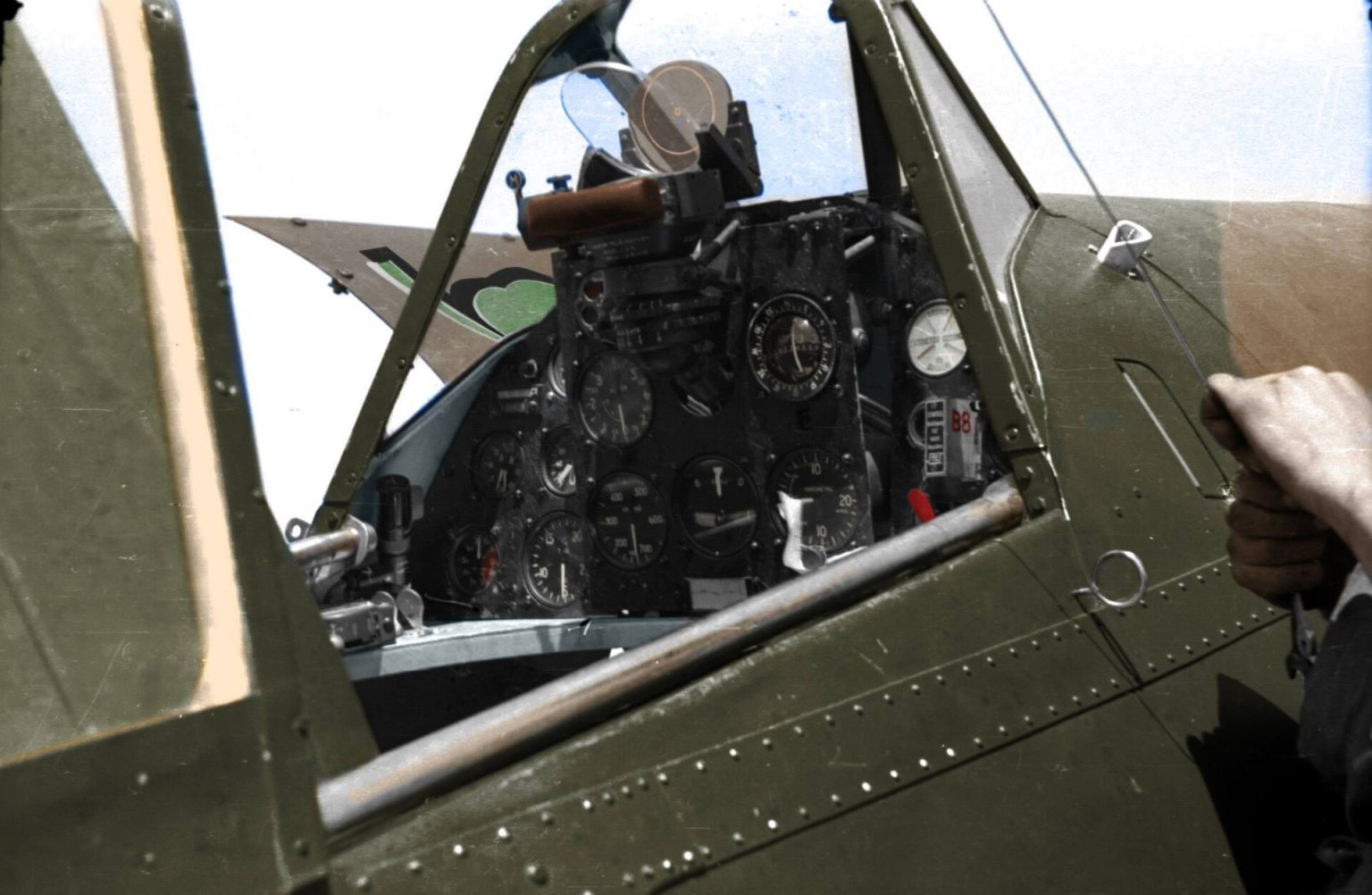
Among the features that marked the IAR 80 as modern were its retractable undercarriage and enclosed cockpit — both departures from the fixed-gear, open-cockpit fighters of only a few years earlier. Retracting the wheels reduced drag and helped the fighter reach its quoted speeds, while the enclosed canopy improved pilot comfort and high-altitude capability, important for the home-defence interceptions over Ploiești.
Cockpit equipment was conventional for a European fighter of the period: a reflector or telescopic gunsight, basic flight and engine instruments, and oxygen equipment for altitude work — the last visible in the wartime photographs of Grupul 9 pilots adjusting their masks before a sortie. Detailed fits changed across sub-variants and are not documented uniformly.
25Colours and markings of the IAR 80
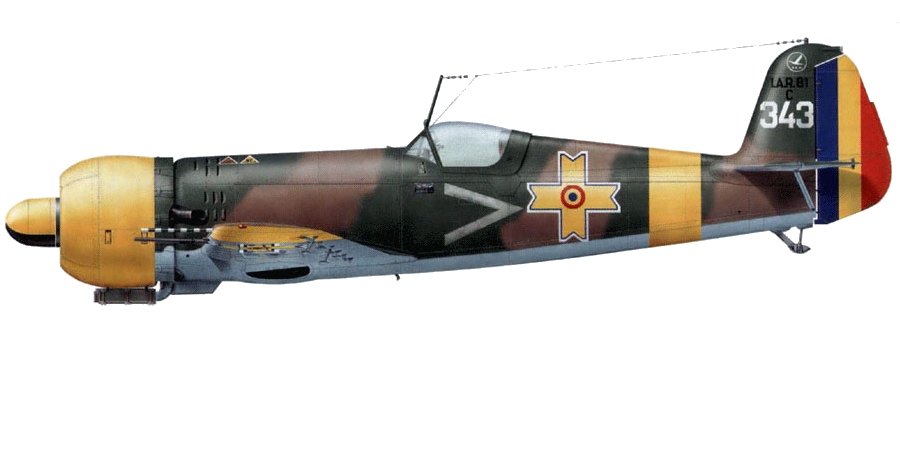
Royal Romanian Air Force IAR 80s typically wore the Michael’s Cross national insignia — a distinctive yellow-bordered blue cross — which set them apart visually from the German aircraft they flew alongside. During the campaigns on the Eastern Front, aircraft also carried the yellow theatre markings used by Axis air forces in that theatre to reduce friendly-fire incidents.
Camouflage schemes evolved over the war and varied between units and sub-variants, generally following contemporary European practice of disruptive upper surfaces over light undersides. As with much else about the type, precise colours and unit markings are debated among researchers and modellers, and surviving colour references are limited.
26The IAR 80 in the wider Romanian air war
The IAR 80 did not fight alone. It formed part of a Royal Romanian Air Force that also operated German types such as the Bf 109 and He 111, Italian aircraft, and a range of older machines, and Romanian pilots frequently converted between the IAR 80 and imported fighters as supplies and priorities shifted. The home-built fighter was one important component of a mixed, hard-pressed force.
That context matters for judging the IAR 80 fairly. Its burdens — the Eastern Front, the defence of Ploiești, and finally the war against Germany — were shared across the whole air force, and its achievements and losses are best understood as part of Romania’s larger, and ultimately tragic, wartime aviation effort.
27What it was like to fly the IAR 80
Surviving accounts and secondary histories generally describe the IAR 80 as an honest, pleasant fighter to fly: responsive on the controls, manoeuvrable, and free of vicious handling traits, with the sturdy, forgiving character typical of a good radial-engined fighter. Pilots converting to it seem to have adapted quickly, which mattered for an air force under constant pressure to produce new fighter pilots.
Its limitations in the air were those of its era and its power: like most 1941-generation fighters it lost ground to newer, more powerful opponents at high altitude and high speed later in the war. But within the envelope where it was designed to fight, it was, by the testimony that survives, a genuinely likeable aircraft — a point on which sources are unusually consistent.
28The IAR 80 in models, art and popular history
For an aircraft with no complete survivor, the IAR 80 has a surprisingly healthy afterlife in scale models, profile art and enthusiast literature. Model kits of the type let hobbyists build the fighter in its various markings, and specialist aviation publishers have devoted articles and monographs to it, steadily pulling it out of the obscurity it fell into after 1945.
This popular rediscovery is part of why the IAR 80 is worth a museum page of its own. It is exactly the kind of overlooked, off-the-beaten-track aircraft — competent, unusual and national in character — that rewards a closer look, and that a well-known fighter’s fame can unfairly overshadow.
29What the IAR 80’s designation actually means
The name is straightforwardly descriptive: “IAR” is the manufacturer, Industria Aeronautică Română, and “80” is the type number in the company’s sequence of designs. The closely related fighter-bomber carried the next number, IAR 81. Unlike many aircraft, the IAR 80 never acquired a widely-used popular nickname, which is part of why it is usually known simply by its factory designation.
That plainness is fitting for an aircraft whose whole character was practical rather than glamorous. It was a working fighter built to a purpose by a national industry, and its name reflects exactly that — no marketing, just the maker and the number.
30The IAR 80 as a symbol of self-reliance
Strip away the specifications and the IAR 80’s deeper significance is about independence. In an age when most small and medium powers flew whatever the great manufacturing nations would sell them, Romania chose to design and build a modern fighter itself — accepting a smaller, less-developed aircraft in exchange for the ability to produce, arm and maintain it without foreign permission.
That trade-off is the real lesson of the IAR 80. It was never going to out-produce or out-develop the fighters of the major powers, but it gave Romania something those imports never could: a combat aircraft that was wholly its own. For a small nation guarding a resource the whole war was fighting over, that was a choice with real strategic logic — and it produced one of the more remarkable indigenous fighters of the Second World War.
Armament & payload
The IAR 80 spent its entire career catching up on firepower, and reached a modern battery only in 1943
Almost every mark change in this aircraft's history is a gun change. The prototype flew with two Belgian FN-Browning 7.92 mm machine guns; the production model was designed for six, and got four, because the German invasion of Belgium in May 1940 cut off the supplier and Romania had no substitute. The IAR 80A finally mounted its six only after April 1941, when Germany released captured FN stocks — and even then guns were being stripped out of PZL fighters and observation aircraft to fill the wings. Combat over the Soviet Union showed that six rifle-calibre guns were not enough, so 13.2 mm FN Brownings were taken out of Romanian SM.79 bombers and fitted in a lengthened wing; when those ran out, Romania bought 20 mm MG FF/M cannon from Ikaria; when the MG FF proved a drum-fed weapon with sixty rounds and a poor muzzle velocity, it bought the belt-fed Mauser MG 151/20. That final fit — two cannon and two machine guns, all in the wings, none synchronised — is the one that met the Fifteenth Air Force. Ammunition loads, and sometimes the calibre itself, differ between sources: several English references call the light guns 7.7 mm, and the IAR 80 Fly Again archive contradicts itself on which serial block carried the 13.2 mm guns. Figures below follow the Romanian archival material where it can be checked.
Gun
- IAR 81C, the definitive fit: two 20 mm Mauser MG 151/20 with 175 rounds each and two 7.92 mm FN-Browning with 700 rounds each, all wing-mounted and unsynchronised, electrically cocked and belt-fed from both sides
- MG 151/20 cyclic rate 780—800 rounds/min unsynchronised, muzzle velocity 700 m/s (2,300 ft/s); the 20 × 82 mm round with the Minengeschoss thin-walled high-explosive shell was the only thing in the Romanian inventory that could reliably break a four-engined bomber
- Earlier fits, in order: two FN 7.92 mm (prototype); four (cn 1—50); six (cn 51—180 and 231—240) with 400 rounds a gun; four 7.92 mm plus two 13.2 mm FN Browning; four 7.92 mm plus two 20 mm MG FF/M Ikaria (cn 241—290)
- The 13.2 mm FN carried 300 rounds a gun on the IAR 80A block and 350 on the 81A block — twelve and fourteen seconds of firing at about 1,080 rounds/min, at 800—850 m/s. It was a Browning heavy machine gun of Belgian manufacture, not a cannon, whatever some tables say
- The MG FF/M was drum-fed with sixty rounds a gun and left at 600 m/s (1,970 ft/s): about seven seconds of fire, and a shell that dropped noticeably at range. It was a stopgap and everyone knew it
Air-to-air
- None. No guided air-to-air weapon existed in any air force while the IAR 80 was in service; the first operational example, the American AIM-9B Sidewinder, was a dozen years away
- Interception in 1944 meant climbing for twenty minutes to reach a B-17 or B-24 stream at 6,000—7,000 m, arriving slow, and making one pass with four wing guns
- The IAR was badly suited to that. Its single-speed supercharger left it gasping exactly where the bombers cruised, and its guns were in the wings, converging at 250 m, which is a poor arrangement for firing at a heavy bomber from dead astern
- Against Soviet fighters at medium altitude in 1941—43 the same aeroplane was a genuinely dangerous opponent, and its record against the I-16 and early Yaks is the honest measure of the design
Air-to-surface guided
- None, and no Romanian aircraft of the war carried anything of the kind
- The only guided air-to-surface weapons in service during the type's career were the German Fritz X and Henschel Hs 293, both anti-shipping weapons, both operational from 1943, and neither ever released to Romania
- Ground attack in an IAR 81 meant a shallow dive, a bomb thrown clear by a swinging cradle, and four guns
- That is what it did after 23 August 1944, when Romania changed sides and the surviving IARs went to work on German and Hungarian columns in Transylvania
Bombs
- One 225 kg (496 lb) bomb on a hinged centreline cradle that swung the weapon clear of the propeller arc — the standard dive-bomber solution of the period. Later documents give the load as a German 250 kg (551 lb) SC250
- Two 50 kg (110 lb) SC50 bombs on underwing racks, added after the first forty IAR 81s
- Delivery was a shallow dive from about 3,000 m to 1,000 m (9,800 to 3,300 ft) at around 470 km/h (292 mph). There were no dive brakes and no dive-bombing sight worth the name
- Pilots disliked it. The cradle's drag cost real performance and the aircraft they were flying was already marginal; almost every batch of dive-bomber IAR 81s was quietly delivered as fighters with the cradle removed
- Maximum external load is usually given as about 480 kg (1,058 lb), but the type almost never flew with a full one
Rockets
- None. No air-launched rocket was fitted to any IAR 80 or 81 in Romanian service, in either the Axis or the Allied phase of the war
- This was not a limit of the era. The Soviet aircraft the IARs fought in 1941 carried RS-82 rockets, and by 1944 the Luftwaffe fighters flying beside them over Ploiești carried Werfer-Granate 21 mortars against bomber boxes
- Romania had no rocket of its own and Germany released none. The IAR 81C attacked bomber formations with 175 cannon rounds a gun and nothing else
- Rocket fits shown on this aircraft in flight simulations and games are inventions; treat them as such
Pods & other stores
- Two 100 litre (22 imp gal, 26 US gal) drop tanks on the underwing racks, from the last twenty IAR 80Bs onwards. They roughly doubled the radius and turned a short-legged interceptor into something that could escort
- No gun pods, no camera pods, no airborne interception radar, no reconnaissance fit. Romania flew dedicated types for those roles
- The hinged bomb cradle of the IAR 81 was the only substantial external fitting the airframe ever carried, and it was removed from most of the aircraft built to take it
- No drop tank, rack or pod was ever fitted to the postwar IAR 80DC trainers, which flew clean and mostly unarmed
Three typical loadouts
- Eastern Front fighter patrol, Grupul 8 Vânătoare, 1942
- IAR 80A, six 7.92 mm FN-Browning with 400 rounds a gun, clean. In June 1942 the group had three squadrons of twelve aircraft each on the Don, and this is the configuration in which the type did its best work — medium altitude, against I-16s and early Yaks, where 510 km/h and a good turn were still a competitive hand. On 12 September 1942 over Stalingrad the group's IARs and the Bf 109s of Grupul 7 claimed seven Yaks for two IARs lost.
- Low-level defence of the refineries, 1 August 1943
- IAR 80B with six guns including two 13.2 mm, and IAR 80C with four 7.92 mm and two MG FF/M, no external stores. Operation Tidal Wave brought 178 B-24s to Ploiești at treetop height, and it is worth being exact about why the Romanians did well that day: the Liberators came in low, where the IAR was fast, manoeuvrable and in its element, rather than at 7,000 m where it was not. Escadrilele 61 and 62 of Grupul 6 and the new Escadrila 45 of Grupul 4 flew alongside Bf 109Gs and Bf 110s. Fifty-one B-24s were lost in total, most to flak and to the raid's own catastrophic navigation; Romanian pilots claimed 25 certain and probable for two losses, and Romanian records confirm ten B-24s and two probables to the fighters as a whole. The IARs did not destroy the raid, and they did not need to.
- Ground attack against the Germans, Transylvania, September 1944
- IAR 81C, two MG 151/20 and two 7.92 mm, one 250 kg SC250 on the centreline cradle or two 50 kg bombs under the wings. After King Michael's coup of 23 August 1944 Grupul 6 moved to Turnișor and flew for the Allies against its former partners; on 23 September eight IAR 81s of Escadrila 59 fought Fw 190s near Turda and claimed four for two losses. Within weeks the IARs were pulled off fighter work altogether and left to ground support, and on 8 October Grupul 6 handed its aircraft to Grupul 2 and went to Târgșoru to convert to the Bf 109G.
Sourcing: gun fits, ammunition loads and serial blocks follow the IAR 80 Fly Again archive of Romanian factory and Air Sub-Secretariat documents, cross-checked against Antoniu and Cicoș and against Brînzan. Where that archive is internally inconsistent — it assigns construction numbers 241—290 both to the 13.2 mm and to the MG FF fits in different articles — the entry says so rather than picking one. Victory and loss claims on all sides of the 1943—44 Ploiești fighting are contested in the ordinary way: for 10 June 1944 the Romanians claimed 24 for three losses, the Americans claimed 11, and American loss records confirm 22 P-38s lost that day with nine attributed to the IARs. Herbert Hatch of the 71st Fighter Squadron became an ace in a day in that fight and identified his opponents as Fw 190s; they were IAR 81Cs.
Variants
Eleven designations, one airframe, and a firepower problem that drove nearly every one of them
The IAR 80 has an unusually legible development history, because almost nothing about it changed except the guns. There is no new engine, no new wing planform, no redesigned tail. Ion Grosu's team at Brașov flew the prototype on 12 April 1939 in the hands of Captain Dumitru Popescu, beat the Heinkel He 112 in a competitive evaluation later that year, and then spent five years fitting progressively heavier weapons into progressively larger wings on the same aeroplane.
That is the tragedy of the type, and it deserves stating plainly. In 1939 the IAR 80 was a genuinely good aircraft — a monocoque-tailed, retractable-gear, bubble-canopied monoplane from a country with no fighter industry to speak of, roughly the equal of a Hurricane I and within 30 km/h of a Bf 109E. By 1944 it was flying the same airframe on the same 1,000 hp engine against Mustangs. IAR knew this from mid-1941 and tried repeatedly to fix it, and every attempt died on the same rock: Germany would not sell engines it needed itself. Romania built an adequate fighter and was then denied the one component that would have kept it adequate.
Construction numbers run 1 to 450 in a single sequence across all marks, which is why the modern airworthy reconstruction project has taken the number 451.
- IAR 80 prototype (1937—39, 1 aircraft)
- Begun late 1937 with an open cockpit and the 870 hp K14 IIIc32; first flew 12 April 1939. Rebuilt during 1939—40 with the 930 hp IIIc36, a stretched rear fuselage to restore the centre of gravity, a larger wing, a strut-free tail and the bubble canopy. In that form it beat the He 112 and won an order for 100.
- IAR 80 (cn 1—50, delivered November 1940 to April 1941)
- First production block. Designed for six guns, delivered with four because FN Herstal had been overrun. Iron sights on the first twenty, Goerz GM2 reflector sights thereafter; the 960 hp K14 IVc32 from the twenty-first aircraft. Entered service February 1941 with Grupul 8 Vânătoare.
- IAR 80A (cn 51—180 and 231—240, from mid-1941)
- The six-gun aeroplane at last, with armoured windscreen, seat-back armour and the 1,025 hp K14 1000A. The extra power exceeded what the fuselage had been designed for and the first 95 needed a duralumin reinforcing belt behind the cockpit until the structure was redesigned. Eight were ready for the invasion of the Soviet Union on 22 June 1941.
- IAR 80B (55 aircraft, delivered June to September 1942)
- Lengthened wing housing two 13.2 mm FN Brownings alongside four 7.92 mm, plus new radios — the most useful single change the type ever received. Twenty of the 55 were airframes laid down as IAR 81As and finished as fighters; those twenty could carry a 50 kg bomb or a 100 litre drop tank under each wing.
- IAR 81 (50 ordered mid-1941, 40 delivered as dive-bombers)
- An IAR 80A with a hinged centreline cradle for a 225 kg bomb, built because Germany kept deferring delivery of the Ju 87 Romania actually wanted. Underwing 50 kg racks were added after the fortieth aircraft. Grupul 6 flew them in support of Panzergruppe Hoth's relief attempt towards Stalingrad on 12 and 13 December 1942.
- IAR 81A (two batches, 1942 and May 1943; none completed as ordered)
- The 80B treatment applied to the dive-bomber — 13.2 mm guns, same production line, distinguished only by the bomb cradle. The first batch was cancelled and finished as 80B fighters; the second batch of ten was overtaken when Germany finally released Ju 87s, and was also delivered as fighters. A designation that describes almost no aircraft in the form intended.
- IAR 80C (ordered as 60 IAR 81B, cn 241—290, December 1942 to April 1943)
- Built around two 20 mm MG FF/M cannon bought from Ikaria — a German-built licence version of the Swiss Oerlikon FF — which needed another wing redesign. Ordered as dive-bombers, delivered without the cradle as fighters and redesignated. Self-sealing tanks and better seat armour from the eleventh aircraft.
- IAR 81C (cn 301—450, 150 aircraft; ordered May 1942, February 1943 and January 1944)
- The definitive mark and the largest block. Two belt-fed Mauser MG 151/20 replacing the drum-fed MG FF, with two 7.92 mm retained. Delivered as fighters with the cradle removed. These are the aircraft that fought the Fifteenth Air Force, and the aircraft Herbert Hatch mistook for Fw 190s on 10 June 1944.
- IAR 80M and IAR 81M (mid-1944, number unknown)
- Not new aircraft but a rearmament programme: surviving 80A, 80B, 80C and 81 airframes brought up to the 81C standard of two MG 151/20 and two 7.92 mm, to simplify a supply chain that by then held four different gun fits. Around thirty construction numbers in the 91—174 range are documented as converted; how many were completed in total is not known.
- IAR 80DC (from 1949, small number, withdrawn late 1952)
- The postwar afterlife. With the front-line aircraft replaced by La-9s and Il-10s in 1949, the lowest-time airframes had the fuel tank ahead of the cockpit removed and a second seat put in its place, making a tandem advanced trainer. They lasted about three years before Yak-11s and Yak-18s displaced them. Their significance is not operational: parts of a DC are the only substantial IAR 80 material anyone has been able to put back on public display.
- Exports and licence production (none)
- There were none. Every IAR 80 and 81 was built at Brașov and served with the Royal Romanian Air Force alone. No foreign air force operated the type, no licence was ever granted, and no export designation exists — unusual for a Second World War fighter of this size of production run, and a direct consequence of Romania never being able to build more than it needed itself. Two DB-engined testbeds, IAR 80 no. 13 with a DB 601Aa in April 1941 and IAR 81C no. 326 with a DB 605A in the summer of 1943, are the only significant one-off conversions.
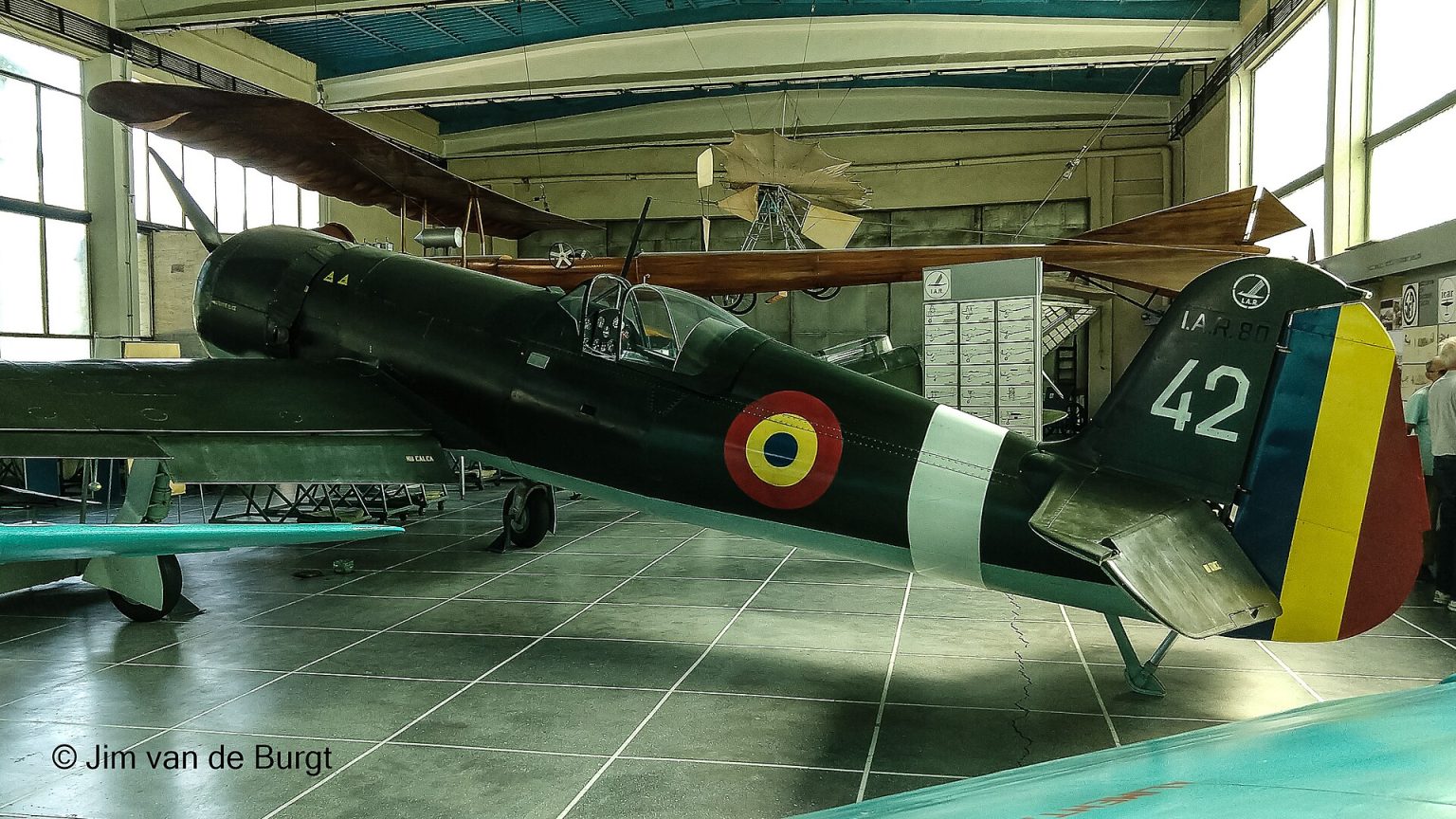
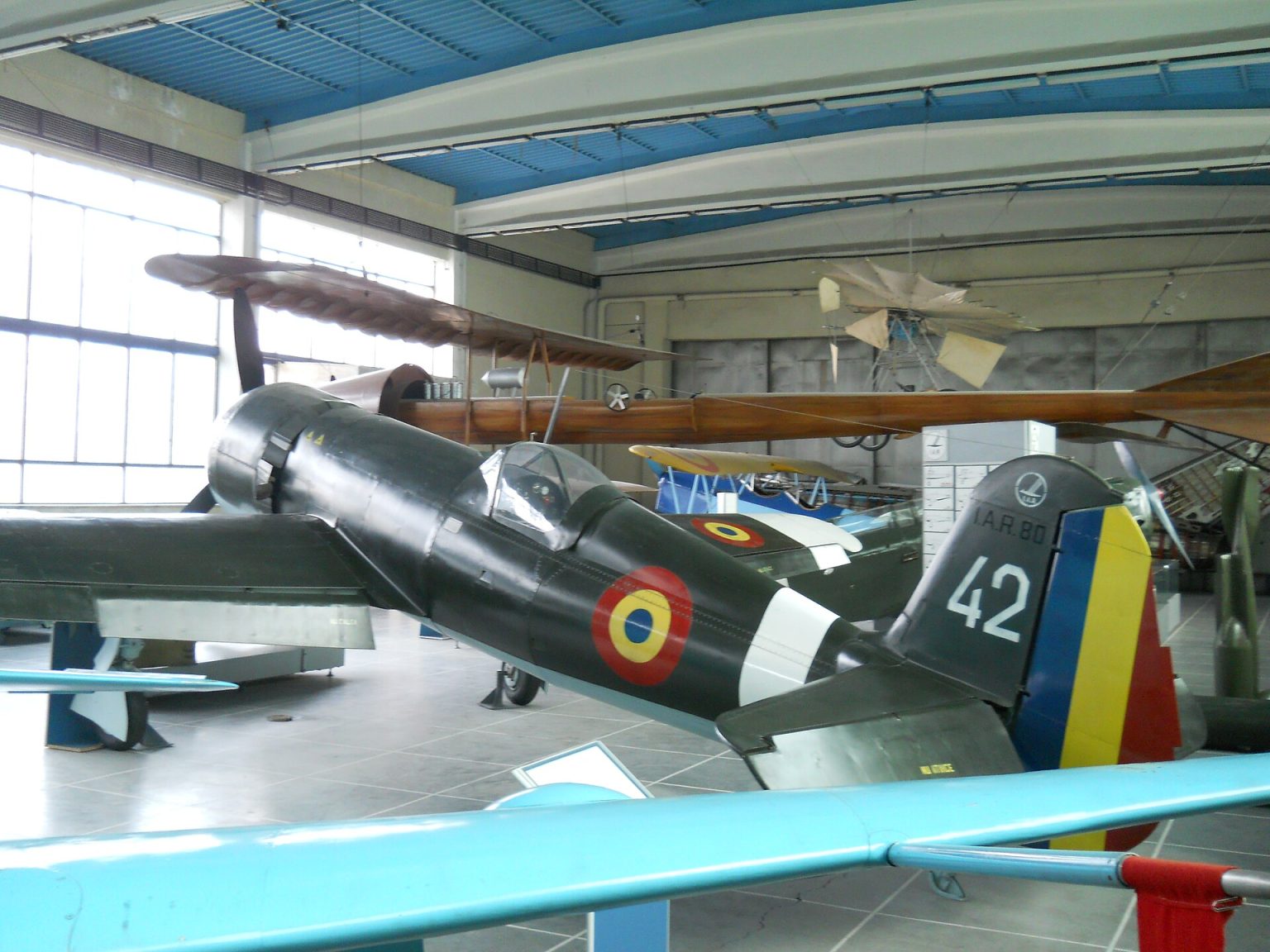
Survivors: none. Not one original IAR 80 or 81 airframe exists anywhere in the world. Every remaining aircraft was scrapped after the Soviet-backed reorganisation of the Romanian air force, and the type has no equivalent of the shed-find or the Russian lake recovery that has saved so many of its contemporaries. Three static replicas are on public display — one shown at the Mihail Kogălniceanu airshow near Constanța in 1941—44 markings, one at the National Military Museum in Bucharest, and one at the National Aviation Museum on the former Pipera airfield. Only the last has any claim on original material: it was assembled around components recovered from IAR 80DC two-seat trainers, and it is therefore a reconstruction incorporating genuine parts rather than a replica pure and simple. None of the three is an airframe that flew in service. Since 2020 the Fly Again association has been building an airworthy aircraft from surviving factory drawings and recovered components, to be flown as IAR 80FA carrying construction number 451, the next number after the last one IAR ever completed. It has not yet flown.
The IAR 80 from drawing board to scrapyard, year by year
Romania looks for a modern fighter With an ageing fighter force, Romania licence-builds the Polish PZL P.24 and the Gnome-Rhône radial engine at IAR in Brașov — the industrial base a home-grown fighter would need.
A new fighter takes shape IAR engineers design a modern monoplane around the proven P.24 wings and tail, a new stressed-skin forward fuselage, retractable undercarriage and the Romanian-built IAR K14 radial.
First flight The IAR 80 prototype flies for the first time, demonstrating performance broadly competitive with contemporary European fighters.
Development and orders Testing and refinement continue and production orders follow, though Romania’s limited industry keeps numbers modest.
Service entry and war in the East The IAR 80 enters service with the Royal Romanian Air Force. Romania joins the German invasion of the USSR and the fighter sees combat over Odessa almost at once.
Across the Eastern Front IAR 80s and 81s fight over the Black Sea coast, the Crimea and toward Stalingrad, still broadly a match for the Soviet fighters they meet.
The IAR 81 and heavier guns The IAR 81 fighter-bomber/dive-bomber variant enters use and armament is progressively increased, up to 20 mm cannon on later fits.
Operation Tidal Wave During the audacious low-level USAAF B-24 raid on the Ploiești refineries, IAR 80s are among the interceptors that engage the American bombers amid ferocious flak.
Guarding Ploiești As American bombing of the oilfields intensifies, IAR 80 home-defence sorties multiply — but against escorted heavy bombers the type is increasingly outclassed.
Romania changes sides After the coup of 23 August 1944 Romania joins the Allies; surviving IAR 80s turn their guns on their former German allies.
War’s end Thoroughly obsolescent, the IAR 80 is withdrawn from front-line service as the war closes.
Trainers, then scrap Remaining airframes serve as trainers and hacks before being scrapped. No complete original IAR 80 survives.
Heavier armament arrives Cannon-armed IAR 80 variants enter service, giving the fighter a realistic chance of downing four-engined American bombers over Ploiești.
The last front-line battles IAR 80s fight both the American bombing of Ploiești and, after 23 August, German forces — the fighter’s final combats before withdrawal.
Relics and a replica Relics and components are preserved (National Military Museum, Bucharest) and a reproduction/replica project keeps the design’s memory alive.
Twelve things worth knowing about the IAR 80
Scroll through the essentials of Romania’s home-built fighter — its origins, its war and its legacy.
A fighter of one’s own
Most small nations flew imported fighters. Romania chose to design and build its own — a bold, self-reliant decision that produced the IAR 80. For a country used to flying imported designs, that self-reliance was as much a statement of national capability as a military decision.
Built on the PZL P.24
IAR reused the wings and tail of the Polish P.24 it built under licence, mating them to a new modern fuselage — clever engineering on a budget. The trick let IAR reach a modern low-wing monoplane without designing an entirely new wing and tail from scratch.
Made in Brașov
The IAR K14 radial was a licence-built Gnome-Rhône 14K produced in Romania, letting the country build and repair the whole aircraft at home. It meant no embargo or blockade could ever ground the fighter for want of a foreign engine.
Competitive in 1941
On entering service the IAR 80 was broadly in the class of a Hurricane or early Bf 109E — a genuine front-line fighter, not a curiosity. Contemporary comparisons to the Hurricane and early Bf 109E are entirely reasonable.
Well liked
Romanian pilots found the IAR 80 agile, sturdy and forgiving — an aircraft that flew nicely and rewarded the men who flew it. A forgiving fighter also helped rapidly-trained wartime pilots survive their first combats.
War over the steppe
From 1941 the fighter fought over Odessa, the Crimea and toward Stalingrad alongside the German advance into the Soviet Union. At the low and medium altitudes typical there, its agility counted for a great deal.
From four to cannon
Armament grew across variants — from four machine guns to six, and later to a heavier fit including two 20 mm cannon. Heavier guns mattered most over Ploiești, where only real hitting power could fell a B-24.
Enter the IAR 81
The IAR 81 turned the fighter into a dive-bomber and fighter-bomber, adding ground-attack punch to the family. One basic type in two roles simplified training and spares for a small air force.
Defending Ploiești
The IAR 80’s defining role was defending the vital Ploiești refineries against American heavy-bomber raids in 1943–44. The oilfields were the Axis’s single most important fuel source, and thus a prime target.
1 August 1943
During the low-level USAAF raid on Ploiești, IAR 80s engaged B-24 Liberators amid some of the fiercest air defences in Europe. Operation Tidal Wave became a byword for both American courage and the ferocity of the defences.
Switching sides
After August 1944 Romania joined the Allies, and the IAR 80’s last missions were flown against its former German partners. Overnight the Luftwaffe became the enemy and the Soviets, until yesterday the foe, the ally.
No survivor, but not forgotten
No complete original IAR 80 exists today; relics are preserved and a reproduction project keeps Romania’s indigenous fighter in memory. Renewed interest from historians and modellers has restored much of its reputation.
The IAR 80 in photographs
Wartime images of Romania’s home-built fighter alongside preserved airframes and relics. Click any photo to enlarge. Every image is credited to its source and licence.
The IAR 80 on video
A concise, well-sourced documentary on Romania’s indigenous fighter — its origins, design and combat career — from an established military-aviation history channel.
“The IAR-80/81; Romanian Rumbler” by Ed Nash’s Military Matters — an established aviation-history channel specialising in obscure and overlooked aircraft (~127,000 views at time of writing). A rare dedicated documentary on the type.
Where the IAR 80 flew: Brașov, the Eastern Front and the skies over Ploiești
The IAR 80 was essentially never exported — this map traces its origin in Romania, the WWII theatres where it fought, the adversaries it faced, and where its relics survive today. Categories are hedged; hover or tap a country for detail.
The IAR 80 by the numbers
The IAR 80's record is difficult to quantify precisely: wartime claim and loss figures are contested, production totals vary between sources, and variant boundaries blur. The figures above are deliberately rounded and hedged. Its historical significance rests less on statistics than on being a competitive, wholly indigenous fighter fielded by a small nation.
Read the figures above as a portrait rather than an audit: they capture the IAR 80’s character — an indigenous fighter, competitive when new, worked hard on two fronts by a small air force — more faithfully than any single contested statistic could.
IAR 80: your questions answered
Can I fly in an IAR 80?
No. No complete original IAR 80 survives anywhere, there is no airworthy or bookable example, and it was a single-seat fighter with no second seat in any case. However, you can fly in several genuine, combat-capable military jets today with MiGFlug — see the current options at migflug.com/flights-prices.
Was the IAR 80 really designed and built in Romania?
Yes. The IAR 80 was designed and built by Industria Aeronautică Română (IAR) at Brașov and is a genuinely indigenous design — a rare case of a small nation fielding a competitive, modern, home-built monoplane fighter. That said, it pragmatically reused components of the PZL P.24 that IAR already built under licence.
Was the IAR 80 based on the PZL P.24?
Partly. IAR reused the wings and much of the tail and rear fuselage of the Polish PZL P.24 — which it license-produced — and married them to an all-new, modern stressed-skin forward fuselage, retractable undercarriage and a Romanian-built IAR K14 radial engine. It is best described as a new design that cleverly built on proven parts.
Was the IAR 80 any good?
When it appeared around 1941 it was genuinely competitive — commonly rated as broadly comparable to a Hawker Hurricane or an early Messerschmitt Bf 109E, agile and well-liked by its pilots. It was gradually outclassed by newer Allied types as the war went on, but its early-war standing was a real achievement for Romanian industry.
What engine did the IAR 80 use?
The IAR K14 — a Romanian licence-built version of the French Gnome-Rhône 14K twin-row radial, producing roughly 870–1,025 hp depending on the variant. Building the engine domestically let Romania produce and maintain the whole aircraft without relying on imports.
How fast was the IAR 80?
Top speed is commonly cited at around 510 km/h, though figures vary between sources and sub-variants and some later marks are quoted higher. Treat the number as approximate.
What armament did the IAR 80 carry?
It started with a battery of machine guns — commonly cited as four — which grew to six, and later fits added two 20 mm cannon. The closely related IAR 81 could also carry bombs as a fighter-bomber and dive-bomber. Exact fits vary by variant.
Where did the IAR 80 see combat?
On two very different fronts: the Eastern Front against the Soviet Union (over Odessa, the Crimea and toward Stalingrad) from 1941, and the home defence of the Ploiești oil refineries against USAAF heavy-bomber raids in 1943–44. After August 1944 it fought against German forces.
Did IAR 80s fight American bombers?
Yes. Defending the Ploiești oilfields, IAR 80s engaged USAAF B-24 Liberators — most famously during the low-level Operation Tidal Wave raid of 1 August 1943, one of the costliest American bombing missions of the war.
Did Romania really switch sides during WWII?
Yes. After the coup of 23 August 1944 Romania left the Axis and joined the Allies. The IAR 80’s surviving aircraft then flew their final missions against their former German allies.
How many IAR 80s were built?
Approximately 450, counting the IAR 80 and IAR 81 together — but production figures vary between sources and the variant boundaries blur, so this total should be read as an approximation.
Does any original IAR 80 survive today?
No complete original IAR 80 is known to survive. Relics and components are preserved (notably at the National Military Museum in Bucharest), and a reproduction/replica project has worked to recreate the aircraft. Its rarity reflects the type’s obscurity and post-war scrapping.
Was the IAR 80 exported to other countries?
Essentially no. The IAR 80 was used almost exclusively by Romania’s own air force and was not meaningfully exported — one reason it remains far less known than its contemporaries.
What is the difference between the IAR 80 and the IAR 81?
The IAR 80 was the fighter; the IAR 81 was the fighter-bomber and dive-bomber development, fitted to carry a bomb load for ground attack. The two are usually counted together in production totals.
What does IAR stand for?
IAR stands for Industria Aeronautică Română — the Romanian Aeronautical Industry, the state aircraft manufacturer based at Brașov that designed and built the IAR 80 (and licence-produced the PZL P.24 and its engine before it).
Who designed the IAR 80?
The IAR 80 was designed by the engineering team at Industria Aeronautică Română in Brașov, drawing on the company’s experience licence-building the PZL P.24. Individual designers are credited variously in different sources, so it is safest to describe it as the work of IAR’s own design office rather than a single named engineer.
Was the IAR 80 used after the Second World War?
Only briefly and in secondary roles. The surviving aircraft were obsolete by 1945 and were relegated to training and liaison duties before being withdrawn and scrapped in the immediate post-war years. None was preserved intact.
Why is the IAR 80 so little known today?
It was built in small numbers, served mainly on the losing side, was not exported, and left no complete survivor — a combination that kept it out of the popular histories and airshow circuits that made other WWII fighters famous. Renewed interest from historians and enthusiasts has raised its profile in recent years.
How does the IAR 80 compare to the Bf 109 and the Hurricane?
Against the 1940–41 versions of both, the IAR 80 was broadly competitive — similar in speed, agile, and adequately armed. Its problem was development: the Bf 109 in particular kept improving through the war, while the IAR 80 could not, so the gap widened as the conflict went on.
Did the IAR 80 have any serious weaknesses?
Its main limitations were those of its generation and its modest power: as the war progressed it was outrun and outclimbed at high altitude by newer Allied fighters, and its radial engine lacked the growth potential of the best liquid-cooled powerplants. Early on, some marks were also relatively lightly armed until cannon were added.
What happened to the IAR 80 after Romania joined the Allies in 1944?
The surviving aircraft flew their last combat missions against German forces in the closing months of the war. By 1945 the type was obsolete; the remaining airframes were used for training and second-line duties before being withdrawn and scrapped.
Can I see an IAR 80 in a museum today?
There is no complete original IAR 80 on display anywhere, because none survived. Relics, components and documentation are preserved — notably at the National Military Museum in Bucharest — and a reproduction/replica of the aircraft has been built to represent the type.
Fly a real fighter with MiGFlug
The IAR 80 survives only as museum relics and a reproduction project, and it was a single-seat fighter — so there is no airworthy original to book a flight in. What you can do is strap into a genuine, combat-capable jet fighter with MiGFlug and fly it yourself.