
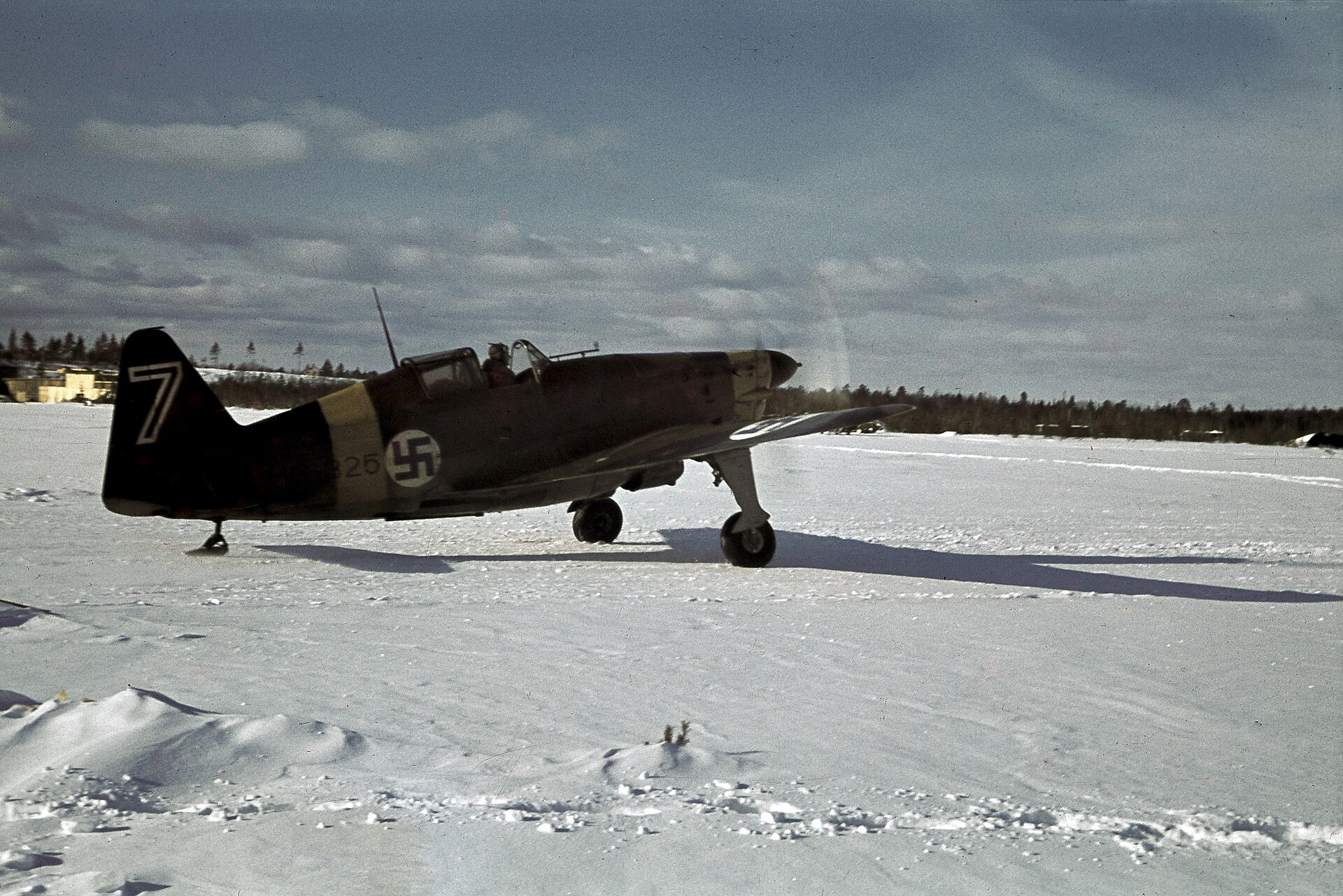
Morane-Saulnier MS.406
France's most-produced fighter at the outbreak of the Second World War — rugged, nimble and cannon-armed, but underpowered and slow. Outclassed by the Messerschmitt Bf 109E in 1940, it found a better life abroad: licence-built in Switzerland and famously re-engined in Finland.
Key facts
Morane-Saulnier MS.406: the numbers at a glance
The story
The Morane-Saulnier MS.406: the numbers were there, the performance wasn't
When Germany attacked in the West in May 1940, more French fighter pilots went to war in the Morane-Saulnier MS.406 than in any other type. That was the problem: France's most numerous fighter was also one of its slowest, and it met the Luftwaffe's best at a disadvantage it could rarely overcome.
The MS.406 was, on paper, a modern fighter: a low-wing monoplane with a retractable undercarriage, an enclosed cockpit, and an engine-mounted 20 mm cannon firing through the propeller hub. Compared with the biplanes and fixed-gear machines that had filled French squadrons only a few years earlier, it was a genuine leap forward, and France built it in numbers no previous French fighter had approached — more than a thousand airframes, enough to equip the bulk of the fighter arm by 1939.
But the aircraft that reached the squadrons was a compromise, and the compromises showed. Its Hispano-Suiza 12Y engine gave only around 860 horsepower — modest even by 1938 standards and feeble by 1940 — and its construction, which used bonded plywood-and-alloy skinning over a metal frame, was robust and cheap to build but heavier and draggier than the all-metal stressed skins of its rivals. The result was a top speed of only about 486 km/h, at a time when the Messerschmitt Bf 109E was approaching 560. In the pitiless arithmetic of air combat, that fifty-to-seventy kilometres an hour was very nearly everything.
Here honesty matters more than affection. The MS.406 was not a bad aeroplane, and its pilots did not think of it as one. It was strong, it turned well, it was pleasant and forgiving to fly, and it could absorb damage and get its pilot home. In a turning fight, flown well, it could trouble a careless opponent. But it could not dictate a fight to a well-flown Bf 109E, which could climb away, dive away and come back on its own terms whenever it chose. Against a faster enemy who holds the initiative, courage and good handling buy survival, not victory — and the MS.406's war was largely a war of survival.
The record of May and June 1940 bears this out with brutal clarity. MS.406 units fought hard across the whole campaign and claimed on the order of 175 to 190 German aircraft shot down. But they paid a terrible price: of the roughly 400 MS.406s lost in six weeks, around 150 fell to enemy fighters and ground fire, perhaps another hundred were destroyed on the ground in air raids, and the rest were burned by the French themselves to keep them out of German hands as airfield after airfield was overrun. Those claim-and-loss figures are wartime estimates and should be read as ranges, but the shape of the story is not in doubt: the MS.406 fought, and the MS.406 was outclassed.
France knew it. Even as the MS.406 was rolling out of the factories, work was already well advanced on its replacement, the far superior Dewoitine D.520 — faster, better armed and a genuine match for the Bf 109E. The tragedy of 1940 is partly that the D.520 arrived in numbers too small to matter, which meant the burden of the fighting fell on the older, slower Morane. The MS.406 was the fighter France actually had, in quantity, when the blow fell — and being the fighter you actually have is a very different thing from being the fighter you need.
And yet the MS.406's story does not end in the wreckage of the Battle of France. This is where it becomes genuinely interesting, and where it diverges from almost every other defeated fighter of 1940. Abroad, in the hands of two small air forces with very different problems to solve, the same basic design was taken further than France ever took it — and in one case turned into something markedly better than the original.
Switzerland had bought a licence before the war and built the type as the D-3800, then developed it with more power and better detailing into the D-3801, a genuinely useful fighter that served the Swiss Air Force for years and, in one airframe, still flies today. Finland, fighting for its life against the Soviet Union, took its MS.406s and re-engined them with captured Russian Klimov engines to create the "Mörkö-Morane" — the Bogeyman Morane — a faster, harder-hitting machine that finally gave Finnish pilots an aircraft worthy of their skill. The fighter that had failed France succeeded, in modest but real ways, for the neutrals and the outnumbered.
That is the honest arc of the MS.406, and it is the one this page tells: a competent, likeable, thoroughly ordinary fighter that France built in numbers it could not make count, that was outclassed in the one battle everyone remembers, and that quietly earned a better reputation everywhere except the country that designed it. It is not the story of a war-winner. It is the more useful, and in some ways more human, story of an aircraft that was simply not quite good enough at the worst possible moment — and of the people who made the best of it anyway.
Strip away the hindsight and a fair judgement remains. The MS.406 was the aircraft that dragged the French fighter arm into the monoplane age and gave it mass — the first French fighter built in four figures, the machine on which a whole generation of French pilots learned modern air fighting. That it was outdated almost as soon as it arrived is not a moral failing of the aeroplane; it is the fate of any design caught on the wrong side of the ferocious pace of late-1930s fighter development. The MS.406 had the misfortune to be exactly average in a year when average was fatal.
For a museum, that makes it unusually worth studying. It is easy to admire the winners; it is more instructive to look closely at the aircraft that was ordinary, numerous and outclassed, because that describes the majority of the machines that actually filled the world's air forces in 1940. The MS.406 is the honest face of the fighter revolution — not the Spitfire or the 109 at the top of the curve, but the sound, unspectacular design in the middle of it, doing its best against opponents that were simply a step ahead.
01The Morane-Saulnier MS.406's origins: France's leap into the monoplane age+
The MS.406 was France's answer to a 1934 requirement for a modern single-seat interceptor to replace the biplanes and parasol monoplanes then in service. Morane-Saulnier, a firm with a long line of parasol-wing fighters and trainers behind it, responded with the MS.405 — a clean, low-wing monoplane with a retractable undercarriage and an enclosed cockpit, features that were still novel in French service. The prototype first flew on 8 August 1935.
Development was cautious and, by the standards of the arms race then accelerating in Germany, slow. The MS.405 was refined into the production MS.406, and the type entered service from 1938 as France scrambled to modernise. It was ordered in large numbers — well over a thousand — and built both by Morane-Saulnier and by the nationalised SNCAO combine at Nantes-Bouguenais, becoming the first French fighter to be produced in four figures.
The irony was already present at birth. By the time the MS.406 was pouring off the lines in quantity, the engine and airframe technology it embodied had been overtaken. It was a sound design executed a couple of years too late to be competitive — a recurring theme in the French aircraft industry of the period, which grasped the right ideas but could not turn them into modern aircraft fast enough.
02The Morane-Saulnier MS.406's fatal flaw: too little power, too much drag+
Every weakness of the MS.406 traces back to two linked shortcomings: not enough engine, and not clean enough an airframe. Its Hispano-Suiza 12Y-31 produced around 860 horsepower — respectable in the mid-1930s, but well short of the 1,000-plus horsepower engines that drove the Bf 109E, Spitfire and Hurricane by 1940. With less power to spend, the design could not afford to be draggy, and yet it was.
The culprit was partly the construction. To ease mass production, the MS.406 used a material called Plymax — thin plywood bonded to a light-alloy backing — for much of its skinning, over a metal framework. It was strong, cheap and forgiving to build and repair, but it produced a surface that was heavier and less aerodynamically clean than the flush-riveted stressed-metal skins of the best contemporaries. The retractable radiator under the belly, extended for cooling, added still more drag at exactly the wrong moments.
Add it up and the MS.406 topped out around 486 km/h — genuinely slow for a 1940 front-line fighter. It also climbed indifferently and accelerated poorly, so its pilots could neither run from a Bf 109E nor easily catch one. The airframe was fundamentally sound; there was simply not enough power driving it, and too much drag holding it back. That is the whole tragedy of the aircraft in a single sentence, and every account of its 1940 combat record is a footnote to it.
Design & engineering
How the Morane-Saulnier MS.406 was built to fight
A sturdy, cheaply-built airframe wrapped around a modest engine and an excellent hub-firing cannon — the MS.406's design was sensible, mass-producible and, by 1940, a generation behind where it needed to be.
The MS.406 was designed around two competing priorities that pulled against each other for its entire career: it had to be a modern monoplane fighter, and it had to be something the French aircraft industry could actually build in quantity. The second priority won more arguments than the first. The result was an aircraft full of pragmatic, production-friendly choices — a proven engine, a well-understood cannon, part-composite construction — that made it easy to build and maintain but left it underpowered and slightly draggy. It was, in the most literal sense, a good-enough fighter: adequate in every respect, outstanding in none, and outstanding was what 1940 demanded.
The moteur-canon: a cannon through the hub
The MS.406's best feature was its gun. A single 20 mm Hispano-Suiza HS.404 cannon sat between the cylinder banks of the engine and fired through the hollow propeller shaft — accurate, needing no synchronisation, and hard-hitting. It was one of the finest aircraft cannon of the war, and the MS.406 carried it years before most rivals had anything comparable.
A modest Hispano-Suiza 12Y
Power came from a liquid-cooled Hispano-Suiza 12Y-31 V-12 of about 860 hp. It was reliable and widely licensed, but it was simply not powerful enough for 1940, and it was the single biggest reason the MS.406 was slow. Everything the airframe did well, the engine undid by not doing enough.
Plymax: robust, cheap, and draggy
Much of the skin was Plymax — plywood bonded to light alloy — over a metal frame. It made the aircraft strong, easy to build and easy to repair on rough airfields, but heavier and less clean than the flush-metal skins of the best contemporaries. Toughness came at the cost of speed.
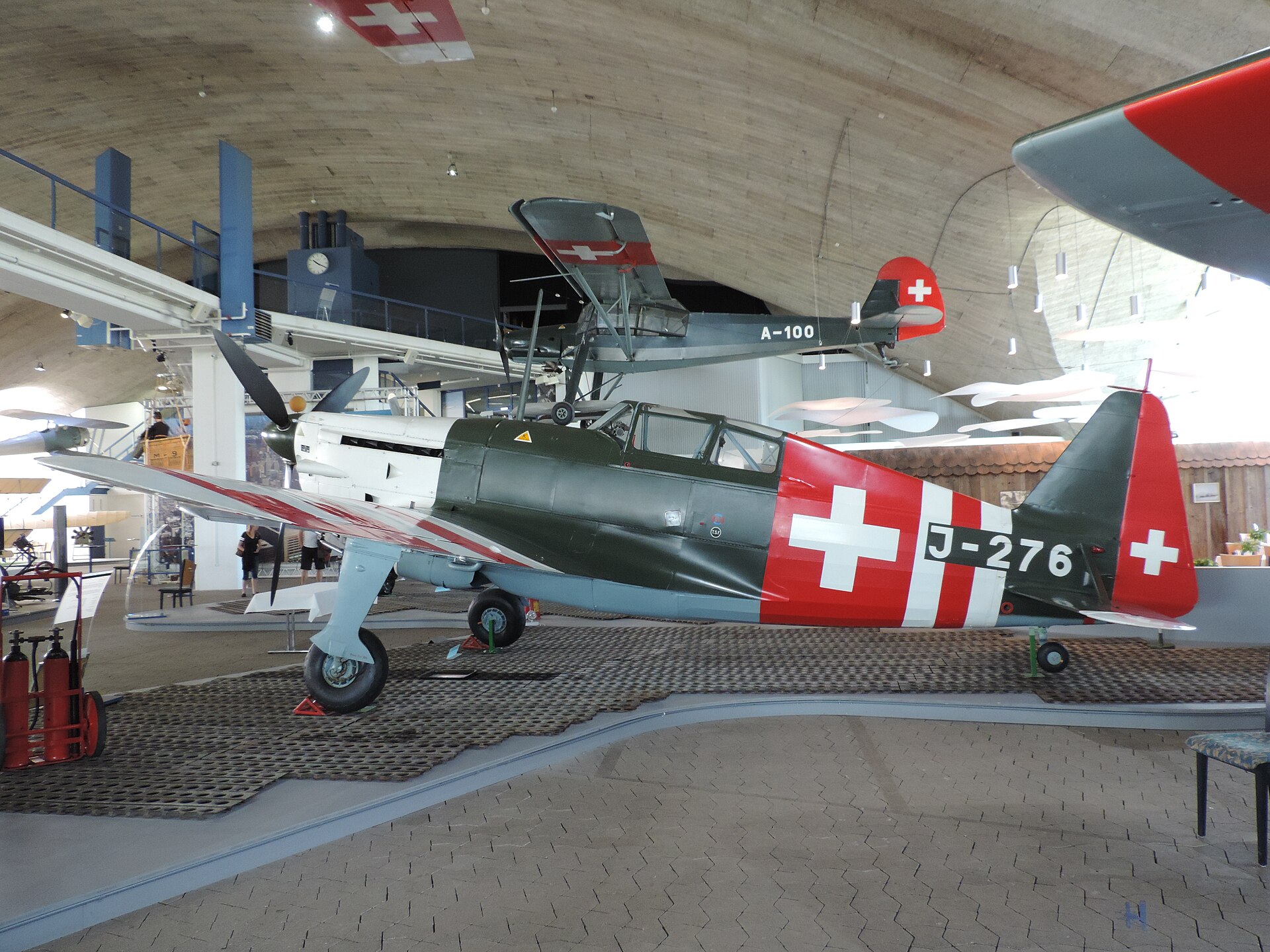
03The Morane-Saulnier MS.406's engine: the Hispano-Suiza 12Y that held it back+
The Hispano-Suiza 12Y was a liquid-cooled V-12 of about 36 litres, developed through the 1930s and licensed around the world — versions or derivatives powered Soviet, Swiss, Czech and other fighters. Its defining virtue, and the reason French fighters were built around it, was that it was designed from the outset to mount a cannon in the vee between its cylinder banks, firing through a hollow propeller shaft. That single feature gave the MS.406 its excellent centreline gun.
In the MS.406 the engine appeared as the 12Y-31, giving roughly 860 horsepower. That was the problem. The Rolls-Royce Merlin and Daimler-Benz DB 601 that drove the Spitfire and Bf 109 were already producing well over a thousand horsepower, and climbing. The MS.406 was trying to fight a 1,000-horsepower war with an 860-horsepower engine, and no amount of clever design could close that gap.
The maddening thing is that the 12Y had real growth in it — as Switzerland and Finland would both prove. The Swiss developed a more powerful version for their D-3801, and the Finns bypassed the 12Y entirely by fitting a captured Soviet Klimov M-105, itself a licensed descendant of the very same Hispano-Suiza engine. In both cases more power transformed the aircraft. France simply never fitted a strong-enough engine to its own MS.406s in time, and so never saw what the airframe could really do.
There is a genuine lesson here about the difference between a bad design and a starved one. The MS.406 airframe was not the problem; it was demonstrably capable of much more once adequately powered. What defeated it in French service was an engine that was merely adequate in an era when adequate was a death sentence — and an industry that could not deliver a better one quickly enough. Give the same airframe the engine it deserved, as the neutrals and the Finns did, and a mediocre fighter became a useful one.
04The Morane-Saulnier MS.406's guns: a superb cannon and two rifle-calibre MGs+
The MS.406's armament was a study in contrasts. Its main weapon was outstanding: a single 20 mm Hispano-Suiza HS.404 automatic cannon, mounted as a moteur-canon between the engine's cylinder banks and firing through the propeller hub. Because it sat on the centreline and needed no interrupter gear, it was accurate and free of synchronisation losses, and a single 20 mm hit could be decisive. The HS.404 was one of the great aircraft guns of the war, later adopted by the British and Americans in vast numbers.
Backing it were just two 7.5 mm MAC 1934 machine guns, one in each wing. Here the aircraft showed its limits. Two rifle-calibre machine guns were a light secondary battery even by 1940 standards — fewer than the four of some rivals and far fewer than the eight of the British fighters — so once the cannon's roughly sixty rounds were gone, the MS.406 pilot was left with a distinctly modest punch. Ammunition discipline was not optional; it was survival.
The overall firepower was therefore "good gun, thin backup". A skilled pilot who could place his cannon rounds was well armed; one forced into a prolonged, snapshot-heavy dogfight could find himself under-gunned as his cannon emptied. It was a French speciality — a heavy, accurate centreline weapon paired with a light machine-gun supplement — and it worked best exactly when the aircraft's poor speed made it hardest to achieve: in a clean, controlled firing pass rather than a desperate scramble.
05The Morane-Saulnier MS.406's structure and systems: strong, simple, survivable+
The MS.406 was built as a low-wing cantilever monoplane with a wide-track, inward-retracting undercarriage that made it steady on the rough grass fields of 1940. Its structure combined a metal framework with Plymax skinning — the plywood-and-alloy laminate that gave it strength and reparability at the cost of aerodynamic cleanliness. It was, above all, a tough aeroplane: it could be flown hard, landed roughly and patched up quickly, qualities that mattered enormously as French squadrons retreated across a collapsing front.
The cockpit was enclosed under a framed sliding canopy — itself a modern touch in a French service still full of open cockpits — and gave a reasonable view over a fairly long nose. A distinctive feature was the retractable belly radiator, which the pilot extended for cooling and retracted to cut drag; managing it was part of flying the aircraft well. Pilots generally found the MS.406 comfortable, honest and easy to fly, which made it a fine conversion trainer as well as a fighter.
What the MS.406 lacked, by 1940 standards, was protection of the modern kind. Early aircraft went to war with little armour and non-self-sealing tanks, though this was improved as the type matured. It is a reminder that the MS.406 was conceived in the mid-1930s, before the full lessons of the Spanish Civil War had been absorbed, and it entered its great battle carrying some of the assumptions of an earlier, gentler idea of air fighting into a war that had moved on.
That toughness, though, is a real part of the story and should not be undersold. An aircraft that survives rough handling, keeps flying after taking hits and can be repaired by tired mechanics on a muddy field has a value that never shows up in a top-speed figure. The MS.406 kept French squadrons in the fight, sortie after sortie, under conditions that would have grounded a more delicate machine — and in the chaos of 1940 that dogged serviceability was one of the few things working in France's favour.
06The Morane-Saulnier MS.406 versus the Bf 109E: an honest comparison+
There is no kind way to frame this comparison: against the Messerschmitt Bf 109E, the MS.406 was outclassed. The 109E was roughly 60 to 70 km/h faster in level flight, climbed far better, and could dive and zoom away almost at will. It also carried a heavier, cannon-armed battery. In every measure that lets a fighter choose whether to fight — speed, climb, the initiative — the German aircraft held the advantage.
What the MS.406 could do was turn. Like many slower, lightly-loaded fighters it could out-turn a Bf 109E in a sustained horizontal fight, and its centreline cannon was accurate. A disciplined MS.406 pilot who could force a turning engagement, or catch a careless opponent, could and did score. But he could not compel the fight; a 109 pilot who kept his speed up and fought in the vertical could disengage whenever he wished and re-attack on his terms.
The honest summary is not parity but disadvantage — a robust, manoeuvrable fighter giving away too much speed and climb to a superior opponent. That the MS.406 achieved as much as it did in 1940 says a great deal about the skill and courage of its pilots, and rather less about the aircraft. It is the difference between the D.520, which could meet the 109E on close to even terms, and the MS.406, which met it at a real and persistent disadvantage.
07The Morane-Saulnier MS.406 and the Dewoitine D.520: the fighter France wished it had more of+
To understand the MS.406's place in 1940, compare it not only with its enemies but with its French successor. The Dewoitine D.520 was the aircraft the MS.406 should have been: roughly 45 to 50 km/h faster, better armed, all-metal and more robustly modern, and genuinely competitive with the Bf 109E. Where the MS.406 met the Germans at a disadvantage, the D.520 met them on close to even terms.
The catch was numbers. France had more than a thousand MS.406s in service but only a single fully operational groupe of D.520s when Germany attacked. So the burden of the fighting fell overwhelmingly on the older, slower Morane, while the better Dewoitine was still trickling out of the factories. Many units were caught mid-conversion, flying a mix of the two types, never reaching full strength on either before the campaign overtook them.
It is a cruel pairing to study. The MS.406 was the fighter France had in quantity but that was not good enough; the D.520 was the fighter that was good enough but that France did not have in quantity. Between them they sum up the French fighter tragedy of 1940 more completely than either does alone — and it is why the two aircraft are best understood, and best displayed, side by side. You can read the D.520's own story on its Dewoitine D.520 page.
Specifications
Morane-Saulnier MS.406 — full specifications
Figures are for the main production MS.406 and are rounded; where sources disagree, the common range is given. Treat all performance and production numbers as period estimates.
Baseline: the production M.S.406 C.1 with the Hispano-Suiza 12Y-31 as delivered to the Armée de l'Air between January 1939 and March 1940 — the only version that matters numerically, since roughly a thousand of the 1,077 French-built aircraft were of this standard. Deltas for the M.S.410, for the Swiss D-3800 and D-3801, and for the Finnish Mörkö-Morane are in grey. Two warnings before the figures. First, the published maximum speed varies between 486 and 490 km/h and the height at which it was reached is given as 4,500 m by nearly everyone; service aircraft with worn engines, radio masts and gun blisters did not see either number. Second, the wing area is quoted as 16.00 m² in the French official data and as 17.10 m² in several English-language references, which changes every derived wing-loading figure by seven per cent. Both are shown.
Dimensions & weights
- Crew
- 1
- Wingspan
- 10.62 m (34 ft 10 in) some sources round to 10.61 m; the wing was a light-alloy two-spar structure and the span was never changed, through every French, Swiss and Finnish mark
- Length
- 8.17 m (26 ft 10 in) D-3801: 8.17 m unchanged; Mörkö-Morane: lengthened at the nose by the deeper Klimov cowling and the relocated oil cooler
- Height
- 2.83 m (9 ft 3 in) several references give 3.25 m (10 ft 8 in); the difference is almost certainly tail-down versus rigging attitude, and no source states which
- Wing area
- 16.00 m² (172.2 sq ft), French figure 17.10 m² (184.1 sq ft) appears widely in English-language tables
- Empty weight
- 1,895 kg (4,178 lb) D-3801: about 2,124 kg (4,683 lb) empty, the price of a heavier engine and belt feeds
- Loaded weight
- 2,540 kg (5,600 lb) normal maximum 2,720 kg (5,997 lb); D-3801 maximum 2,725 kg (6,008 lb)
- Wing loading
- 158.8 kg/m² (32.5 lb/sq ft) at normal loaded weight on 16.00 m² 148.5 kg/m² (30.4 lb/sq ft) if the 17.10 m² figure is used — either way, light for 1940, which is why it turned well and climbed indifferently
- Power loading
- 2.95 kg/hp (6.5 lb/hp) at 860 hp the Bf 109 E-3 carried 2.28 kg/hp (5.0 lb/hp). That single ratio explains most of what happened in May 1940
- Fuselage
- welded steel-tube and duralumin frame, the forward section metal-panelled, the rear covered in Plymax — a thin duralumin sheet bonded to a thicker plywood backing cheap, easy for semi-skilled labour and repairable in the field, but heavier and less stiff than stressed light alloy, and a structural dead end by 1939
- Wings
- light-alloy two-spar structure, Plymax-skinned, with fabric-covered ailerons and hydraulically operated split flaps the drum-fed wing machine guns needed external blisters, which cost speed; Swiss and later French belt feeds deleted them
- Undercarriage
- hydraulically retracted main legs folding inward into the wing, with a fixed tailwheel a narrow track and no great tolerance for rough grass; Finnish operation from frozen fields was hard on it
- Protection
- none as first delivered: no back armour, no bulletproof windscreen, unprotected tanks. Rear armour and partly self-sealing tanks were retrofitted from the winter of 1939—40, but not to every aircraft pilots complained about this before the shooting started, and it killed some of them once it had
Performance
- Maximum speed
- 490 km/h (304 mph) at 4,500 m (14,760 ft) 486 km/h (302 mph) is the more commonly cited figure and probably the more honest one for a service aircraft
- Speed at 2,000 m
- 452 km/h (281 mph) at 2,000 m (6,560 ft)
- Rate of climb
- 13 m/s (2,560 ft/min) initial D-3801: about 15 m/s (2,950 ft/min); Mörkö-Morane better still
- Time to 4,000 m
- 5 min 16 s to 4,000 m (13,120 ft)
- Service ceiling
- 9,400 m (30,840 ft) Mörkö-Morane: raised to about 12,000 m (39,370 ft) from roughly 10,000 m (32,800 ft), the single largest gain of that rebuild
- Range
- 1,100 km (685 miles) at 66 per cent power combat range ~720 km (~450 miles)
- Endurance
- about 2 h 30 min at economical cruise derived from published range and fuel; adequate for point defence, useless for anything else
- Stalling speed
- 160 km/h (99 mph) clean; 135 km/h (84 mph) with flaps down
- Dive limit
- tested to 730 km/h (454 mph) — the Plymax airframe was strong and the aircraft was placarded generously it still could not run away downhill from a Bf 109 E, which simply accelerated faster on more power
- Against the Bf 109 E-3
- 570 km/h (354 mph) at 5,000 m — 80 km/h faster on the best M.S.406 figures, and the gap widens above 5,000 m where the German engine kept its power and the Hispano did not. Popular accounts round the deficit to 100 km/h; 80 to 100 km/h is the defensible range
- Against its French contemporaries
- Dewoitine D.520 535 km/h (332 mph), Bloch MB.152 509 km/h (316 mph), Curtiss H-75 500 km/h (311 mph). The Morane was the slowest French single-seat fighter in front-line service in May 1940, and there were more of it than of all the others
- Handling
- widely and consistently praised: light on the controls, honest at the stall, forgiving, an easy conversion for a pilot off a Dewoitine D.510 every memoir says the same thing — a delightful aeroplane and an inadequate weapon
Propulsion & systems
- Engine
- one Hispano-Suiza 12Y-31, 60° V-12, liquid-cooled, geared and supercharged, arranged as a moteur-canon with the cannon breech between the cylinder banks
- Power
- 860 hp (641 kW) at 3,250 m (10,660 ft); 830 hp (619 kW) for take-off the Daimler-Benz DB 601 A in the Bf 109 E gave 1,100 hp (820 kW). The 12Y was a fine design of 1932 asked to do a 1940 job
- Supercharger
- single-stage, single-speed centrifugal this, and not the airframe, is why the aeroplane fell apart above 5,000 m: the DB 601 had a barometrically regulated hydraulic drive and held its power where the fighting was
- Propeller
- three-blade Chauvière 351M or Ratier 1607 variable-pitch, with a hollow shaft for the cannon Swiss aircraft used the fully adjustable Escher-Wyss EW-V3, worth real climb performance; the Mörkö-Morane used the Soviet VISh-61P
- Cooling
- ventral radiator, retractable into the fuselage in level flight and lowered for climb and ground running worth roughly 8 km/h over the fixed installation of the M.S.405, and one more hydraulic system to fail. The M.S.410, the D-3801 and every later Swiss mark reverted to a fixed radiator and lost nothing worth having
- Fuel
- ~400 litres (~88 imp gal / ~106 US gal) internal, in a fuselage tank behind the pilot; published capacities differ between sources no drop tank was ever fitted to a French service aircraft
- Gun installation
- the 20 mm HS.404 sat in the vee of the engine and fired through the hollow propeller shaft, fed by a 60-round drum; the two 7.5 mm MAC 1934 wing guns were drum-fed with 300 rounds each and needed external blisters no synchronisation gear of any kind was required, which was the whole attraction of the moteur-canon layout
- Gun heating
- none the wing guns froze reliably above about 6,000 m (19,700 ft), and pilots reported jams at the moment of firing more often than any other complaint. Swiss and Finnish belt-fed installations with heating fixed this; France ran out of time
- Radio
- fitted, and disliked. Sets were unreliable, poorly maintained and in some units effectively absent, so formations fought by hand signal a recurring theme in French fighter units in 1940 and not specific to the Morane
- Swiss engine
- Saurer-built HS-51, a licensed Hispano-Suiza 12Y-51 of 1,060 hp (790 kW), driving the D-3801 to 534 km/h (332 mph) — the same airframe made competitive by 200 more horsepower. Crankshaft bearing failures nearly killed the programme in 1942—43
- Finnish engine
- Klimov M-105P of 1,100 hp (820 kW), a Soviet licensed development of the same Hispano 12Y, taken from captured stocks, with a Messerschmitt Bf 109 G oil cooler and a new cowling the Mörkö-Morane reached 525 km/h (326 mph), about 64 km/h faster than the aircraft it was built from
08Every major Morane-Saulnier MS.406 variant and derivative explained+
MS.405 — the pre-production prototypes and small first series (from 1935), which established the layout and led to the definitive fighter.
MS.406 — the main production version with the 12Y-31 engine, the HS.404 hub cannon and two MAC 1934 wing guns. The overwhelming majority of French airframes were this model.
MS.410 — a modestly improved wartime development with a fixed radiator, four machine guns instead of two and other refinements; only a limited number were completed before the fall of France.
EFW D-3800 (Switzerland) — the Swiss licence-built MS.406, produced from the late 1930s with local improvements.
EFW D-3801 (Switzerland) — a substantially developed version with a more powerful Hispano-Suiza 12Y engine (~1,000 hp) and better detailing; a genuinely useful fighter that served the Swiss Air Force into the 1950s.
Mörkö-Morane (Finland) — Finnish MS.406/410s re-engined with captured Soviet Klimov M-105P engines of around 1,100 hp, giving markedly higher speed and better performance; 41 were converted.
The variant story is, tellingly, the reverse of most fighters: the French original was the weakest member of the family, and the aircraft only reached its potential once foreign operators fixed its central flaw by giving it more power. The MS.406's most interesting descendants do not carry French markings at all.
09The Morane-Saulnier MS.406's operating costs: what a 1940 fighter really cost+
There is no reliable per-hour operating figure for the MS.406, and any precise number quoted for it should be treated with suspicion. It was built by a French aircraft industry that was being nationalised and mobilised at the same time, in 1938–39 francs, under a system whose accounting was then shattered by defeat and occupation. No consistent "cost per flight hour" series survives, so we record it honestly as not reliably documented.
What can be said is qualitative — and here the MS.406 actually looks good. It was deliberately designed to be cheap and easy to mass-produce: a proven engine, orthodox layout, and the Plymax construction that let it be built and repaired quickly with less-specialised labour. Its whole reason for existing was to give France a modern fighter in large numbers at an affordable price, and in that narrow industrial sense it succeeded where more ambitious designs did not — it was the first French fighter built in four figures.
The bitter irony is that its cheapness was bound up with its mediocrity. The same production-friendly choices that made it affordable — the modest engine, the composite skinning — were exactly the choices that made it slow. France got a great many fighters for its money, and they were not good enough. As a single-seat, single-engine fighter its fuel, crew and maintenance demands were broadly in line with contemporaries like the Bf 109E and Hurricane rather than with heavy twins, so when we eventually fold the MS.406 into the museum's cost-comparison tool, the honest place to put it is clear: an inexpensive, mass-produced fighter whose low cost was both its point and its problem.
Armament & payload
The M.S.406 carried a good gun and not enough of anything else
The armament was the one genuinely modern thing about the aeroplane. A 20 mm Hispano-Suiza HS.404 firing through the propeller hub was a heavier and better-aimed weapon than anything a Bf 109 E carried on the centreline, and it needed no synchronisation gear at all. The trouble was everything around it: sixty rounds in a drum, which is about six seconds of firing; two rifle-calibre MAC 1934 machine guns whose drums bulged into the airflow and whose actions froze above roughly 6,000 m; and no gun heating, no belt feed and no reserve. French pilots in 1939—40 complained far more about jammed and frozen guns than about being outrun, which is telling, because they were also being outrun. Nothing at all hung under the wings: no bomb, no rocket, no tank, no pod, on any French-built aircraft in any operator's service. Every figure below is the standard M.S.406 C.1 establishment. The M.S.410, the Swiss D-3800 and D-3801 and the Finnish rebuilds all changed the armament, and are noted where they do.
Gun
- One 20 mm Hispano-Suiza HS.404 moteur-canon, mounted between the cylinder banks and firing through the hollow propeller shaft, with a 60-round drum — roughly six seconds of fire at about 600 rounds per minute
- Two 7.5 mm MAC 1934 machine guns, one in each wing, 300 rounds each — about thirteen seconds at 1,350 rounds per minute. Drum-fed, which is why each one sat under an external blister
- The guns had no heating. Above about 6,000 m they froze, and the failure rate at altitude was the single most common complaint in French squadron reports
- The M.S.410 replaced the pair of drum-fed wing guns with four belt-fed MAC 1934s of 550 rounds each, deleted the blisters and added heating. Five complete aircraft and about 74 conversions existed by the armistice
- Swiss D-3800s had belt-fed Swiss-built guns from the start and never suffered the freezing problem. The Mörkö-Morane carried a German MG 151/20 where one could be found, and a Soviet 12.7 mm Berezin UB where one could not
Air-to-air
- None, and none existed. The first guided air-to-air missile to enter service, the American AIM-9B Sidewinder, was sixteen years away when the M.S.406 went to war
- Interception meant a stern or beam attack pressed to short range with the cannon, because sixty rounds does not permit sighting shots
- The HS.404 was effective when it worked: French Moranes accounted for Dornier Do 17s and Heinkel He 111s in the spring of 1940, and the type's best days were against bombers rather than fighters
- Against the Bf 109 E it was a losing proposition regardless of armament, because the Morane could neither climb to the fight nor disengage from it
- In Finnish hands the same gun stayed useful into 1944, largely because Finnish pilots picked their engagements and the Morane was flown as an ambush aircraft rather than a patrol fighter
Air-to-surface guided
- None. Nothing of the kind existed anywhere during the aircraft's operational life
- The first guided air-to-surface weapons used in action, the German Fritz X and Henschel Hs 293, appeared in 1943, by which date every French M.S.406 had been destroyed, captured or grounded
- Ground attack by Moranes, where it happened at all, meant strafing with the cannon and machine guns
- Finnish Mörkö-Moranes flew ground-attack and reconnaissance sorties in the Lapland War of 1944—45 with guns only
Bombs
- None. No bomb rack, no shackle and no provision for one is recorded on any French production M.S.406
- This was a deliberate specification choice: the C.1 requirement was for a single-seat interceptor and nothing else, and the wing was built to carry two guns and a fuel tank
- It left the Armée de l'Air with over a thousand fighters that could contribute nothing to the ground battle in May 1940, at a moment when the ground battle was the only battle that mattered
- Only the last Swiss derivative, the one-off D-3803 of 1945, was given provision for about 200 kg (441 lb) of external ordnance. It arrived a decade after the design and was cancelled in favour of surplus P-51D Mustangs
Rockets
- None, on any mark, in any air force, at any point in the type's career
- Not a limitation of the period: Soviet Polikarpov I-153 biplanes carried eight RS-82 rockets in the same winter that Finland took delivery of its first Moranes
- The absence follows directly from the absence of any external stores provision at all on the wing
- By the time rocket armament was routine, the surviving airframes were trainers
Pods & other stores
- Nothing was carried externally. No drop tank, no gun pod, no camera installation, no radar, on any French aircraft
- The only external excrescences were the two wing-gun blisters covering the ammunition drums, and they were a drag penalty rather than a store
- The retractable ventral radiator was the aircraft's one clever piece of external engineering, and every successful derivative abandoned it for a fixed one
- Finnish reconnaissance work in 1944—45 was flown with hand-held cameras; there was no reconnaissance conversion of the airframe
- The short combat radius that followed from having no drop tank confined the type to point defence, which suited Switzerland and Finland far better than it suited France in May 1940
Three typical loadouts
- Standard interception, Groupe de Chasse over the Meuse, May 1940
- One HS.404 with 60 rounds, two MAC 1934 with 300 rounds each, full internal fuel, no external stores, radiator lowered for the climb and retracted on the run in. This is the only loadout the overwhelming majority of M.S.406 sorties were ever flown in, because it is the only one the aircraft had.
- Winter interception, Lentolaivue 28, Finland, 1941—44
- Same guns, belt-fed and heated where M.S.410 wings had been fitted, flown from dispersed forest strips against Soviet bombers and reconnaissance aircraft. Finnish practice was to climb early, sit above the track and make one pass; the aircraft was not asked to do anything it could not do, and the results were correspondingly better than in France.
- Mörkö-Morane, Lentolaivue 28 and the Lapland War, 1944—45
- One MG 151/20 or a Berezin UB in the nose, four belt-fed MAC 1934 in the wings on M.S.410-standard aircraft, Klimov M-105P at 1,100 hp, no external stores. Three aircraft were operational before the September 1944 armistice and Lieutenant Lars Hattinen took three victories with them; the rest of the fleet arrived in time for ground attack and reconnaissance against the Germans in Lapland.
Ammunition figures are the French establishment and were not always met in the field; Finnish and Swiss loads differed with the gun installation fitted. Rates of fire and firing times are calculated from published cyclic rates and are approximate.
Variants
The Morane got good only after France stopped building it
The M.S.406 is one of the clearest cases in aviation history of an adequate airframe strangled by an inadequate engine. Switzerland took the same wing, the same fuselage and the same gun, fitted a licensed Hispano-Suiza of 1,060 hp, deleted the retractable radiator and the drum feeds, and produced in the D-3801 a fighter that did 534 km/h and stayed in Swiss service until 1948. Finland went further, hung a captured Soviet Klimov M-105P on the nose and got 525 km/h and 12,000 m out of an aeroplane the Germans had sold them as scrap. Both were done with fewer resources than France had in 1939.
The production numbers themselves need a caveat. The most careful accounting gives 1,077 French-built aircraft — about 1,000 for the Armée de l'Air and 77 for export — with 1,037 delivered by the armistice; other references give 1,081, and totals of about 1,176 usually include Swiss licence production. All of these are in the right region, and none of them should be quoted to the last airframe.
- M.S.405 (1935—38, two prototypes and 16 pre-production)
- The starting point. The first prototype flew on 8 August 1935 with Michel Détroyat at the controls and a fixed undercarriage; the second, with a 12Ycrs and retractable gear, not until 20 January 1937 and was lost with its pilot on 29 July 1938. Fixed radiator, heavier wing, Plymax skinning throughout.
- M.S.406 C.1 (1938—40, ~1,077 built)
- Lighter wing structure and the retractable ventral radiator, worth about 8 km/h. First production aircraft flew 29 January 1939; peak output reached 147 aircraft in August 1939 and eleven a day by that September, when 535 were already in squadron service — more than any other French fighter. Production wound down in March 1940.
- M.S.410 (1940, five new-build and about 74 conversions)
- The fix that came too late: four belt-fed and heated MAC 1934s, no gun blisters, a fixed radiator, ejector exhausts and a revised windscreen, for 509 km/h at 4,000 m. About 150 sets of wings were finished; the aircraft to put them on were not.
- M.S.411, M.S.412 and M.S.450 (1939—40, one each)
- Successive re-engining experiments — the 1,000 hp 12Y-45, the 1,050 hp 12Y-51 and finally the 1,300 hp 12Z. Each would have transformed the aeroplane; none reached production before June 1940. The M.S.412 became the basis of the Swiss D-3801.
- M.S.406H and D-3800 (Switzerland, 1938—42, two patterns and 84 built)
- Two French-built pattern aircraft arrived in September 1938 and April 1939; EKW then built eight pre-production and 74 series aircraft, the last delivered on 29 August 1940, with two more assembled from spares in 1942. Saurer-built engines, an Escher-Wyss EW-V3 fully adjustable propeller and belt-fed guns without blisters. Used as trainers after the war and finally scrapped in 1954.
- D-3801 (Switzerland, 1940—48, 224 built)
- The aeroplane the M.S.406 should have been. Prototype October 1940; 1,060 hp Saurer HS-51, fixed radiator, revised exhausts, 534 km/h. Crankshaft bearing failures nearly stopped the programme — sixteen aircraft in 1942 and one in 1943 — before the problem was cured in 1944. Two hundred and seven were built to 1945 and seventeen more in 1947—48; withdrawn from fighter duty in 1948 when Switzerland bought surplus Mustangs, and flown as trainers and target tugs until 1959.
- D-3802 and D-3803 (Switzerland, 1944—46, twelve and one)
- The M.S.450 line finished in Swiss hands: the D-3802 with a 1,250 hp Saurer YS-2 reached 630 km/h and served in small numbers with Fliegerstaffel 17; the single D-3803 with a 1,500 hp YS-3, a cut-down rear fuselage, three 20 mm cannon and a bomb load reached 680 km/h at 7,000 m. Both were overtaken by cheap surplus P-51Ds.
- Mörkö-Morane (Finland, 1943—45, 41 converted)
- Aarne Lakomaa's rebuild around the captured Klimov M-105P, with a new cowling, a Bf 109 G oil cooler, a VISh-61P propeller, a strengthened airframe and German or Soviet nose armament. The prototype MS-631 first flew in the winter of 1943 — sources give both 25 January and 4 February — and was 64 km/h faster than the aircraft it replaced. Only three were operational before the armistice of September 1944; the programme was stopped in March 1945.
- M.S.430 and M.S.435 (1937—39, small numbers)
- Two-seat trainer derivatives with a fuselage plug and radial engines — a 390 hp Salmson 9AG and a 550 hp Gnome-Rhône 9K respectively. Peripheral to the story but part of the family.
- Export and captured aircraft (1939—43)
- Turkey took 45 in 1939—40, at least 30 of them diverted from a Polish order and still wearing Polish stencilling, and had relegated them to training by 1943. Twelve ordered by Nationalist China in 1938 reached Haiphong and were taken over by French Indochina, where they fought Thai aircraft in December 1940. Finland bought 46 M.S.406s and eleven M.S.410s from Germany by 1943, on top of the 30 delivered in February 1940. Germany passed about 48 to Croatia in 1943 and others to Italy. Poland ordered 160, Yugoslavia 25 and Lithuania around 13 to 20; not one was delivered.
Survivors: no complete French-built M.S.406 is known to exist anywhere. Every airframe on public display is Swiss. The aircraft shown as an M.S.406 at the Musée de l'Air et de l'Espace at Le Bourget is a D-3801, as is the example at the Flieger-Flab-Museum in Dübendorf and the airworthy HB-RCF flown in Switzerland by the Association Morane Charlie Fox, which returned to the air in 1996. These are original airframes rather than reproductions, but they are not M.S.406s. Finland scrapped its entire Morane fleet in 1952 and nothing from it survives; France's aircraft were destroyed, captured or expended by 1943.
Operators
The Morane-Saulnier M.S.406 was France’s fighter of 1940, and Switzerland and Finland kept improving it long after France had lost.
More than 1,000 M.S.406s equipped the Armée de l’Air in 1939–40, and after the armistice Germany passed captured aircraft to Finland, Croatia and Italy. The Swiss licence-built D-3800 and developed the D-3801, D-3802 and D-3803 with Swiss engines and armament, flying them to 1959, while Finland re-engined its survivors with captured Klimov engines as the Mörkö-Morane. Swiss totals vary with how pre-series and spares-built aircraft are counted; Turkish deliveries are quoted as 30 or 45.
In service with
- No current military operator
- —
Formerly operated by
- French Air ForceFrance · about 1,074 M.S.405/406 built; Armée de l’Air fighter groups in the Battle of France, then Vichy units in Syria, North Africa and Indochina
- ~1,000 · 1939–1942
- Swiss Air ForceSwitzerland · 2 M.S.406H, 84 D-3800, 224 D-3801 (17 built from spares 1947–48), 12 D-3802 and 1 D-3803; fighters to 1948, trainers and target tugs to 1959
- ~320 · 1939–1959
- Polish Air Force in FrancePoland · at least 91 French-owned aircraft flown by Polish sections and training units before the armistice
- ~90 · 1940–1940
- Finnish Air ForceFinland · 30 M.S.406 from France in 1940, 46 more and 11 M.S.410 via Germany; 41 rebuilt as Mörkö-Morane, scrapped 1952
- 87 · 1940–1948
- Air Force of the Independent State of CroatiaCroatia · ex-French aircraft supplied by Germany
- 48 · 1943–1945
- Turkish Air ForceTurkey · 45 quoted, at least 30 originally built for Poland; withdrawal date not recorded
- 45 · 1940–
- French Navy AéronavaleFrance · small number for shore-based fighter units; count not reliably recorded
- — · 1939–1940
- LuftwaffeGermany · captured M.S.406/410 used as fighter trainers; others passed to Finland, Croatia and Italy
- — · 1940–
- Regia AeronauticaItaly · ex-French aircraft passed on by Germany, used as trainers; count not reliably recorded
- — · 1943–1943
- Vichy French Air ForceFrance · M.S.406 groups in Syria, North Africa and Indochina under the armistice regime; strength not reliably recorded
- — · 1940–1942
10 operators, 0 current. Dates are first delivery to last retirement, and the basis of the quantity column is stated above. Air forces with a MiGFlug Order of Battle page are linked (8 so far); the rest follow as the database grows.
In the cockpit
Flying the Morane-Saulnier MS.406: handling, cockpit and the pilot's view
Pilots liked the MS.406 more than its combat record suggests they should have — because the things it did well, it did genuinely well. It was just asked to do the one thing it could not: keep up.
Honest and forgiving
The MS.406 was docile and predictable, with gentle stall behaviour and no vicious habits. That made it easy to convert onto and safe to fly hard in a turning fight — and an excellent trainer, a role it filled long after it was obsolete as a fighter.
A tight, steady turn
Lightly loaded and strong, the MS.406 turned well and made a stable gun platform for its accurate hub cannon. In a sustained horizontal fight it could trouble faster opponents — if only it could force them to turn with it.
Slow, and always behind
The modest engine meant sluggish acceleration and climb and a low top speed. Its pilots could not run from a Bf 109E and could rarely catch one, so they fought perpetually on the back foot, reacting rather than dictating.
Climb into an MS.406 and the layout is conventional and unintimidating: an enclosed sliding canopy, a reasonable view over a long cowling, and controls placed sensibly to hand. A quirk was the retractable belly radiator, wound out for cooling and wound in to reduce drag — one more thing for the pilot to manage, and a small window into the aircraft's constant, losing battle against its own drag. Early aircraft offered little armour protection, a legacy of the mid-1930s thinking that shaped the design.
In the air the aircraft rewarded smoothness and punished impatience. It could be flung around confidently because it warned before it stalled and recovered cleanly, and its accurate cannon repaid a pilot who set up a steady firing pass. But every fight was shadowed by the same limitation: with so little speed and climb in hand, the MS.406 pilot could seldom choose when to engage or break off. He fought the war his enemy allowed him to fight.
Perhaps the fairest testimony is what happened when the MS.406's pilots finally got better aircraft. Those who converted to the Dewoitine D.520 described the change as a liberation — the same familiar, honest handling, but now with the speed and punch to fight back instead of merely survive. It was not that the MS.406 flew badly; it is that it flew pleasantly while being outrun, and its pilots knew exactly what they were missing.
There is a psychological dimension to this that the performance figures miss. A pilot who cannot dictate the fight, who knows the enemy can leave and return at will, flies under a particular strain — every engagement is on borrowed terms, every disengagement is at the enemy's discretion. That the MS.406's aircrew kept attacking, kept scoring, and kept the pressure on the Luftwaffe under those conditions is a considerable tribute to their morale and training. The aircraft asked its pilots to be braver than the machine deserved, and by and large they were.
None of this redeems the MS.406 as a war-winner, and it should not. But it does explain the odd affection in which the type is held. It was the honest, likeable, hard-working fighter that carried the French fighter arm on its back through the worst weeks of 1940 — not because it was good enough, but because it was there, and because its pilots trusted it to do everything within its modest power, which is exactly what it did.
In context
The Morane-Saulnier MS.406 among its 1940 contemporaries
Set beside the fighters it fought with and against, the MS.406 sits firmly at the bottom of the table for speed and power — which is precisely why its pilots had such a hard war.
| Morane-Saulnier MS.406 | ~486 km/h; 1 × 20 mm + 2 × 7.5 mm MGs; ~860 hp |
|---|---|
| Messerschmitt Bf 109E | ~560 km/h; 2 × 20 mm + 2 × 7.9 mm (typical); ~1,100 hp |
| Supermarine Spitfire Mk I | ~580 km/h; 8 × 7.7 mm MGs; ~1,030 hp |
| Hawker Hurricane Mk I | ~520 km/h; 8 × 7.7 mm MGs; ~1,030 hp |
| Dewoitine D.520 | ~535 km/h; 1 × 20 mm + 4 × 7.5 mm MGs; ~900 hp |
| Fiat G.50 / Macchi C.200 | ~470–500 km/h; 2 × 12.7 mm MGs; ~840–870 hp |
| Speed | Bottom of the group — slower than every major opponent except the early Italian monoplanes, and well behind the Bf 109E and Spitfire. |
|---|---|
| Firepower | Good hitting power from the accurate 20 mm hub cannon, but a thin two-gun backup — lighter overall than most rivals. |
| Power | The weakest engine of the front-line group, the root cause of its speed and climb deficit. |
| Verdict | Outclassed for performance; saved in combat only by toughness, agility and the skill of its pilots. |
The honest reading of this comparison is unflattering but important: the MS.406 was, on the numbers, the weakest of the major 1940 monoplane fighters it regularly met. It gave away speed to everything except the earliest Italian monoplanes, climbed poorly, and carried a lighter total armament than most. Only in the turn, and in the quality of its single cannon, did it hold its own — and neither of those advantages lets a fighter choose its battles.
What the table cannot show is that the MS.406 fought anyway, in numbers, and did real damage. Its pilots claimed on the order of 175 to 190 German aircraft in the Battle of France, a meaningful tally wrung out of an inferior machine by aggressive, skilful flying. But they did so at a punishing loss rate, and no amount of courage could convert local successes into a battle the aircraft was equipped to win. The comparison explains, better than any narrative, why the MS.406's 1940 was a story of heavy loss for modest gain.
Place the MS.406 in this museum's wider collection and the point sharpens. Set against the Spitfire and Bf 109 it is visibly a step behind; set against the D.520 it is the older, slower cousin; set against the Italian biplanes and early monoplanes it fought in the south, it was competitive. It belongs to the broad middle of the 1940 fighter generation — the numerous, ordinary, outclassed machines that did most of the actual fighting and are least remembered for it. That is exactly why it repays a close and honest look.
One further point of context deserves making. The MS.406 fought the first-line fighters of 1940 — the Bf 109E above all — and against that opponent it was outmatched. It never had to face, in French hands, the even deadlier fighters that came later. Judged against the aircraft it actually met, in the year it actually fought, it was already behind; judged against the whole sweep of the war it would have been hopelessly obsolete. The MS.406 was a fighter of the very start of the war, and its brief front-line moment was over almost before the conflict had properly begun.
Timeline
The Morane-Saulnier MS.406: a service record in dates
Stories & eyewitnesses
The Morane-Saulnier MS.406 in twelve stories
The fighter that finally filled the squadrons
For all its faults, the MS.406 did something no French fighter had done before.
Read the story
When the MS.406 reached mass production it became the first French fighter ever built in four figures — more than a thousand airframes, enough to re-equip the bulk of the Armée de l'Air's fighter arm with a modern monoplane. For a French aircraft industry that had struggled to modernise, that was a genuine achievement.
The tragedy was hidden inside the triumph. France finally had numbers, but the aircraft filling those squadrons was already outclassed. Quantity had arrived; quality had not kept pace.
Early warnings over the frontier
Before the storm broke, the MS.406 was already learning it was too slow.
Read the story
Through the winter of 1939–40, MS.406 units flew patrols and skirmishes along the Franco-German border. Encounters with Bf 109s were sobering: French pilots found they could not catch the Germans, nor easily escape them, and that their aircraft's one real edge was the turn.
These were not yet the great battles, but they were an unmistakable warning. The men who would fly the MS.406 in May 1940 already knew, from experience, exactly what they were up against.
Outnumbered and outrun
When the real fighting came, the MS.406 met it head-on and paid for it.
Read the story
From 10 May 1940 the MS.406 groupes were thrown into a losing battle across the whole front. They escorted, intercepted and strafed, tangling constantly with Bf 109s and Bf 110s while their airfields were bombed beneath them. They fought hard and scored, but the loss rate was crippling.
By the armistice some 400 MS.406s were gone — a large share of them destroyed on the ground or burned to avoid capture as the front collapsed. It was the aircraft's defining, and its most painful, chapter.
One good gun against the odds
The MS.406's hub cannon was the equal of anyone's — when it could be brought to bear.
Read the story
Firing through the propeller hub, the 20 mm HS.404 needed no synchronisation and put its rounds exactly where the nose pointed. A short, accurate burst could down a bomber or fighter, and French pilots learned to make each of their sixty rounds count.
It was the one area where the MS.406 conceded nothing. The problem was never the gun; it was getting a slow aircraft into a firing position against a faster foe.
The Morane's Winter War
Far from France, the MS.406 fought a very different, and more successful, war.
Read the story
Finland received its first MS.406s during the Winter War of 1939–40 and threw them straight into action against the Soviet Union. Against the cautious, poorly-coordinated Soviet air arm of that period, Finnish Morane pilots scored heavily and lost few aircraft, building a kill ratio the type never approached in French hands.
It was partly the opposition and partly the flying, but it planted a seed: the Finns came to value the sturdy little Morane, and they were the ones who would later transform it.
The neutral who improved it
Switzerland bought the design — then made it better than France did.
Read the story
Switzerland licence-built the MS.406 as the D-3800 and used it to guard its neutral airspace, occasionally engaging aircraft of both sides that strayed over Swiss territory in 1940. Unimpressed by the original's performance, Swiss engineers then developed the far better D-3801, with a more powerful engine and cleaner detailing.
The result was a genuinely useful fighter that served the Swiss Air Force for years — proof of what the airframe could do once it was given the power France never fitted.
The Bogeyman Morane
Finland's engineers performed the transplant France never attempted.
Read the story
Chronically short of spare Hispano-Suiza engines but sitting on a stock of captured Soviet Klimov M-105s — themselves descendants of the same Hispano design — Finnish engineers grafted the more powerful Russian engine onto the Morane airframe. The result, nicknamed the "Mörkö-Morane" or Bogeyman Morane, was far faster and harder-hitting than the original.
Forty-one were converted, and they fought Soviet aircraft into 1944 with a confidence the French MS.406 pilots of 1940 could only have envied. It was the Morane at last made good.
An export order in the shadow of war
Neutral Turkey, too, bought the Morane on the eve of the storm.
Read the story
Turkey ordered around thirty MS.406s, delivered in early 1940 as it built up its air force while trying to stay out of the war. In Turkish service the type was a training and second-line fighter rather than a front-line combatant, and it served quietly away from the great battles.
It is a small footnote, but a revealing one: on the eve of the war the MS.406 was modern enough to be a credible export fighter for the world's cautious neutrals — which makes its swift eclipse in front-line combat all the more striking.
The fighters that never got airborne
Many MS.406s were lost without ever meeting an enemy in the air.
Read the story
A grim share of the MS.406's 1940 losses came not in combat but on the ground: aircraft caught by bombing at their airfields, abandoned as fields were overrun, or deliberately burned by retreating French crews to keep them from the enemy. Perhaps a quarter of all losses were destroyed this way.
It is a reminder that an aircraft's fate is often decided by the campaign around it, not by its qualities in a dogfight. The MS.406's war was lost on the ground as much as in the air.
A long second career teaching pilots
Too slow to fight, the MS.406 was ideal for teaching men to.
Read the story
The very qualities that failed the MS.406 in combat — its docile, forgiving handling and sturdy construction — made it an excellent trainer. After 1940 many surviving French, and later foreign, aircraft spent their days converting pilots onto modern monoplane fighters rather than fighting.
It was an unglamorous but valuable role, and it kept the type flying and useful long after it had been outclassed as a weapon of war.
The Morane after the fall
Defeat did not quite end the MS.406's French service.
Read the story
After the June 1940 armistice, surviving MS.406s passed to Vichy France, which operated them in metropolitan France and North Africa alongside the newer D.520. Increasingly obsolete, they were used for defence, patrol and training rather than serious front-line work.
It was a quiet, diminished afterlife for a fighter that only months earlier had been the mainstay of the French fighter arm — the type gently fading from the front line it had briefly filled.
Robust, likeable — and not enough
Ask the men who flew it and the same honest verdict returns.
Read the story
French pilots did not despise the MS.406; they trusted it, flew it hard and got results with it. But they knew it was too slow, and their relief on converting to the D.520 says everything. The MS.406 was a sound, sturdy, pleasant fighter that arrived a generation short of the performance the moment demanded.
That is the fair epitaph: not a bad aircraft, but an outclassed one — the honest, ordinary face of the fighter revolution, caught doing its best against opponents a step ahead.
What is left to see today
A handful of Moranes, in three countries, keep the story alive.
Read the story
Genuine MS.406s are rare, but survivors exist: an example at the Musée de l'Air et de l'Espace at Le Bourget, a Finnish Mörkö-Morane preserved in Finland, and Swiss D-3800/D-3801s in Switzerland — one of which, a D-3801, has been kept airworthy and flown at airshows in recent decades.
Between them these aircraft let visitors judge the whole family in the metal — the flawed French original and the better machines the neutrals and the Finns made of it.
In action
The Morane-Saulnier MS.406, campaign by campaign
A hard, losing battle over France in 1940 — and, at the same time and afterwards, a more successful and stranger war in the hands of Finland and Switzerland. This is where the MS.406 actually fought.
The Phoney War (September 1939 – April 1940). France went to war in September 1939 with the MS.406 as its most numerous fighter, and the quiet months that followed gave it an early, unwelcome education. Patrols and skirmishes along the frontier repeatedly showed that the Morane could neither catch nor outrun the Bf 109, and that its survival depended on the turn and on not being caught at a disadvantage. The lessons were logged in blood in ones and twos, but they were unmistakable, and they set the tone for what was to come.
The Battle of France (May–June 1940). This was the MS.406's real war, and it was brutal. From 10 May the type's groupes fought across the entire front — escorting bombers, intercepting raids, strafing advancing columns — in constant contact with a faster, better-climbing enemy. They claimed on the order of 175 to 190 German aircraft, a genuine achievement against the odds, but the cost was ruinous: around 400 MS.406s were lost in six weeks. Crucially, only about 150 of those fell to enemy aircraft and flak in the air; roughly a hundred were destroyed on the ground by bombing, and the remainder were burned by the French themselves as airfields were overrun. That breakdown is the aircraft's whole 1940 in one statistic — a fighter that held its own just often enough in the air to be creditable, swept away by a campaign being lost on the ground.
The geography of the collapse made everything worse. As the German breakthrough drove deep into France, MS.406 units were forced into constant retreat, abandoning one airfield after another and losing serviceable aircraft simply because there was no time to recover or repair them. Fighting while retreating is the hardest thing an air force can be asked to do, and doing it in an outclassed aircraft is harder still. That the Morane groupes kept flying and kept scoring under those conditions says a great deal about their pilots — and nothing that could alter the outcome.
The Finnish Winter War (1939–40). While France's Moranes struggled, Finland's fought a strikingly different war. Receiving its first MS.406s during the Winter War against the Soviet Union, the Finnish Air Force found the sturdy little fighter well suited to its needs. Against the cautious and poorly-coordinated Soviet air arm of that period, Finnish Morane pilots ran up a favourable kill ratio and grew genuinely fond of the type — the same aircraft, in different circumstances and different hands, delivering a very different result.
The Continuation War and the Mörkö-Morane (1941–44). When Finland resumed fighting the Soviet Union in 1941, its Moranes were increasingly outclassed by newer Soviet types — the same problem France had faced. Finland's answer was ingenious: re-engine the airframe with captured Soviet Klimov M-105 engines to create the faster Mörkö-Morane. Reaching squadrons from 1943, the rebuilt fighter finally had the performance to meet Soviet aircraft on better terms, and it fought on until Finland left the war in 1944 — the MS.406's most successful combat chapter, flown under a foreign flag with a Russian engine.
Swiss and Vichy service (1940 onward). Switzerland used its licence-built D-3800s to police its neutral airspace, and developed them into the improved D-3801 that served for years afterward. Vichy France operated surviving MS.406s in metropolitan France and North Africa in second-line roles until the type faded away. None of these was a great combat campaign, but together they extended the MS.406's active life well beyond the six weeks in 1940 that define its reputation.
Taken together, these scattered fronts make an unusual record. The same basic fighter was crushed over France, triumphed modestly over Finland, guarded neutral Switzerland, and was reborn with a Soviet engine to fight the Soviets — a spread of fortunes that says as much about circumstances, opponents and engines as about the aircraft itself. The MS.406 was the same machine in every case; what changed was everything around it.
The pilots
The men who flew the Morane-Saulnier MS.406
An outclassed fighter in the hands of first-rate pilots — the MS.406's record is, more than most, a story of the people in the cockpit compensating for the machine.
The French groupes of 1940
Most of France's fighter pilots went to war on the MS.406. Units like GC I/2, II/3, III/1 and many others fought the whole Battle of France on the type, scoring steadily against the Luftwaffe while absorbing punishing losses — skill and aggression papering over the aircraft's shortcomings.
The Finnish aces
Finnish pilots made the Morane look far better than it was. Flying against the Soviets in the Winter War and beyond, several ran up notable scores on the MS.406 and its Mörkö derivative, proving what the airframe could achieve with good tactics and, later, a better engine.
The converts to the D.520
Many MS.406 pilots later moved onto the faster Dewoitine D.520 and described the change as a transformation — the same honest handling, but with the speed and punch to fight back. Their relief is the clearest verdict on the Morane's limitations.
France's fighter arm in 1940 was not short of talent, and much of that talent flew the MS.406 because it was the aircraft most units had. Its pilots were, on the whole, well-trained professionals — long-service NCOs and junior officers who had spent the 1930s learning their trade — and they fought their outclassed aircraft with a determination that produced real results against a superior enemy. What they lacked was not skill but a competitive machine, and that shortfall cost many of them their lives.
The Finnish experience is the instructive counterpoint. Finnish pilots, fighting for national survival with a doctrine and tactics well suited to their situation, extracted from the same aircraft a combat record the French never approached. Part of that was weaker opposition, especially in the Winter War; part was superb flying and, later, the decisive advantage of the re-engined Mörkö. But it underlines the central truth about the MS.406: the aircraft set a low ceiling, and how close a pilot came to that ceiling depended enormously on circumstances and skill.
It would be wrong to reduce these men to the aircraft's shortcomings. The French Morane pilots of 1940 fought a hopeless battle with courage and professionalism, and many of the war's later French aces cut their teeth on the type before moving to better machines. The Finns turned it into a genuine success. In both cases the story is the same: good pilots making the most of an ordinary aircraft, which is, in the end, what most of air warfare actually consists of.
There is a quiet dignity in that. The glamorous story of 1940 belongs to the Spitfire and the 109, to the aces and the war-winners. The MS.406's story belongs to the far larger number of pilots who went up in whatever they had, knew it was not quite good enough, and did the job anyway. Remembering them honestly means remembering the aircraft honestly too — not as a hidden gem or a secret war-winner, but as the ordinary mount of extraordinary effort.
10The Morane-Saulnier MS.406 in Finnish hands: the making of a reputation+
No air force did more for the MS.406's reputation than Finland's. Receiving the type during the Winter War of 1939–40, the Finnish Air Force found the Morane sturdy, reliable and well-suited to operating from rough, snow-covered fields, and its pilots used it to claim a large number of Soviet aircraft for modest losses. The favourable kill ratio owed much to the cautious, poorly-led Soviet air arm of the period, but it was also a tribute to Finnish tactics and marksmanship.
The relationship deepened in the Continuation War. As newer Soviet fighters left the standard Morane behind, Finland's engineers performed the transformation the French never attempted, fitting captured Klimov M-105 engines to create the Mörkö-Morane. The rebuilt aircraft, faster and harder-hitting, gave Finnish pilots a machine that could fight the Soviets on far better terms right up to the 1944 armistice. In Finnish memory the Morane is not the outclassed failure of 1940 but a tough, trusted fighter that punched above its weight — a reminder that an aircraft's reputation is written as much by its circumstances as by its specification.
A better life abroad
The Swiss D-3801 and Finnish Mörkö-Morane: the MS.406 made good
The most interesting chapter of the MS.406's story is not French at all. Abroad, two small air forces took the flawed French fighter and, each in their own way, turned it into something better than France ever managed.
The MS.406's central flaw — too little power for its airframe — was not a law of nature. It was a choice France made and then never revisited in time, and both Switzerland and Finland proved it could be fixed. Their solutions were different, but the lesson was identical: give the sturdy little Morane airframe a stronger engine, and a mediocre fighter became a genuinely useful one. That the two most successful members of the MS.406 family wore Swiss crosses and Finnish roundels, not French roundels, is the neatest possible summary of the type's whole career.
Switzerland and the D-3801. Switzerland had acquired a manufacturing licence before the war and built the MS.406 locally as the EFW D-3800, using it to defend its jealously-guarded neutral airspace. Swiss pilots engaged aircraft of both belligerents that violated their skies in 1940, and came away with a clear-eyed view of the design's limitations. Rather than simply operate an outdated fighter, Switzerland developed it: the D-3801 introduced a more powerful Hispano-Suiza 12Y engine of around 1,000 horsepower, along with numerous detail refinements. The result was faster, climbed better and was altogether more competitive — a fighter good enough to serve the Swiss Air Force in front-line and then training roles for well over a decade. Around 280 aircraft of the D-3800/D-3801 family were built in Switzerland, and it is a Swiss D-3801 that today represents the only airworthy member of the entire MS.406 line.
Finland and the Mörkö-Morane. Finland's solution was born of necessity and improvisation, and it is one of the great engineering stories of the war. Chronically short of spare Hispano-Suiza engines but holding a stock of Klimov M-105 engines captured from the Soviets — engines that were themselves licensed descendants of the same Hispano-Suiza 12Y — Finnish engineers grafted the more powerful Russian unit onto the Morane airframe. The rebuilt aircraft, officially a modernised Morane but universally known as the Mörkö-Morane, or "Bogeyman Morane", was dramatically improved: its top speed rose to around 525 km/h, and its firepower and climb improved with it. Forty-one were converted, reaching squadrons from 1943, and they fought Soviet aircraft with a confidence the French Morane pilots of 1940 could only have dreamed of.
Between them, the Swiss and Finnish stories rescue the MS.406 from being merely a cautionary tale. They show that the airframe was fundamentally sound and that its French failure was one of timing and power, not of basic design. They also carry a broader lesson about air power: that a "failed" aircraft is often only an under-developed one, and that in the right hands, with the right engine, the difference between an outclassed fighter and a useful one can be surprisingly small. France built the MS.406 in its thousands and never made it good; Switzerland and Finland built or rebuilt it in mere hundreds and did. It is the most quietly instructive part of the whole story, and it is why any honest account of the MS.406 has to look well beyond the wreckage of 1940.
11The Morane-Saulnier MS.406 abroad: Switzerland, Finland, Turkey and beyond+
Switzerland was the most important foreign operator. Its EFW D-3800 and, especially, the developed D-3801 gave the design the power it always needed; the family served the Swiss Air Force from the late 1930s into the late 1950s, longer than any other MS.406 variant, and provided the type's sole airworthy survivor.
Finland received MS.406s and MS.410s from France (and later ex-German stocks) and fought them through the Winter and Continuation Wars, before creating the re-engined Mörkö-Morane that became the aircraft's best combat version. Finnish service ran from 1939 to the mid-1940s.
Turkey ordered around thirty MS.406s, delivered in early 1940, and used them in training and second-line roles as it maintained its wartime neutrality.
Smaller and more poorly-documented transfers are also reported. A modest number of aircraft were reportedly supplied to China in the late 1930s, and further examples passed between operators during the war years. These footnotes should be treated with caution — the paperwork of the period is patchy — but they underline how widely the MS.406 was exported for so ordinary a fighter, a consequence of it being available, affordable and, briefly, modern enough to attract cautious buyers on the eve of the war.
Legacy
The Morane-Saulnier MS.406: reputation and what it left behind
Why a fighter that was outclassed in its one great battle still matters — and what it teaches about numbers, timing and the pace of technological change.
The enduring lesson of the MS.406 is that mass without performance is a trap. France did something genuinely difficult in the late 1930s: it designed a modern monoplane fighter and built it in quantity, more than a thousand aircraft, enough to re-equip its fighter arm. And it was not enough, because the aircraft that filled those squadrons had been overtaken by the ferocious pace of fighter development. Numbers bought France the appearance of a modern air force without the substance of one, and in 1940 the gap between appearance and substance was measured in dead pilots.
Set against its French successor the point is sharpened. The Dewoitine D.520 showed what a competitive French fighter of 1940 looked like — but France had it only in ones and twos, while it had the outclassed MS.406 in its thousands. The MS.406 is thus the answer to a question the D.520 only poses: what happens when a nation gets the quantity right and the quality wrong. The answer is a brave, losing battle fought by good pilots in an ordinary aircraft, and it is worth studying precisely because it was so much more typical of 1940 than the handful of great fighters everyone remembers.
The MS.406's afterlife abroad complicates and enriches the picture. The same design that failed France succeeded, in its modest way, for Switzerland and Finland, once given the power France never fitted. That is the aircraft's quiet vindication and its sharpest lesson: the airframe was sound, and its failure was one of degree, not of kind. A little more engine, a little sooner, and the MS.406's reputation might have been very different.
In the longer view, the MS.406 was the aircraft that carried the French fighter arm into the monoplane age — the training-ground and the workhorse of a generation of French pilots, many of whom went on to better machines and, later, to the reborn post-war Armée de l'Air. It was not a war-winner and it was not a hidden gem. It was the honest, ordinary, outclassed fighter that did most of the actual fighting in France's darkest air campaign, and there is a particular value in remembering it exactly as it was.
There is a broader lesson here for anyone interested in how nations arm themselves. It is not enough to build modern weapons in large numbers; they have to be modern enough, and they have to keep pace with an enemy who is not standing still. France mistook quantity for readiness and paid for it. The Spitfire and the Bf 109 were not built in greater numbers than the MS.406 in 1940 — but they were fast enough, and being fast enough was the whole game. The MS.406 is the counter-example that proves the rule, and it is the more valuable for being so unglamorous.
Remembered honestly, on those terms, the MS.406 needs no exaggeration to earn its place in this museum. It is the face of the ordinary fighter of 1940 — numerous, likeable, outclassed and brave — and understanding it is essential to understanding the air war as it actually was, rather than as the highlight reel of famous aircraft suggests.
12The Morane-Saulnier MS.406's combat record: how to read the numbers+
You will see the MS.406 credited with figures like "175 confirmed and dozens of probable" victories in the Battle of France, alongside a total of around 400 aircraft lost. These come from French records and post-war research and are the best figures available, but they are estimates and wartime claims, and every air force of the era over-counted victories because two pilots firing at one aircraft, or a "kill" that limped home, both produced optimistic paperwork.
The responsible way to present the MS.406's record is therefore as a range and a trend rather than a scoreboard: on the order of 175 to 190 confirmed claims against the Luftwaffe, for around 400 MS.406s lost — of which only roughly 150 fell to enemy action in the air, the rest being destroyed on the ground or burned to avoid capture. That is a poor exchange, and it should be presented as one. It is genuinely creditable that an outclassed fighter scored at all, but it would be dishonest to dress heavy defeat as anything else. The MS.406's numbers tell the story of a brave, losing fight, and that is exactly how they should be read.
13The Morane-Saulnier MS.406 after 1945: retirement and preservation+
The MS.406 did not long survive the war as an operational aircraft. France scrapped most of its surviving airframes in the aftermath of defeat and liberation, with little appetite for preserving the machines of its darkest hour. Finland retired its Moranes and Mörkö-Moranes after leaving the war in 1944, and only Switzerland kept the family flying in numbers, operating its D-3800s and D-3801s in second-line and training roles into the late 1950s before finally withdrawing them.
What survives today is a small but meaningful set of aircraft in three countries. France's national collection at the Musée de l'Air et de l'Espace at Le Bourget preserves an MS.406, restored to represent the type in French service. Finland preserves a Mörkö-Morane, the re-engined version that is the aircraft's most distinctive combat variant. And Switzerland retains several D-3800/D-3801s, including one D-3801 that has been maintained in airworthy condition and flown at airshows in recent decades — the only member of the entire MS.406 line still capable of flight.
That spread of survivors is oddly fitting. To understand the MS.406 you have to look beyond France, and the preserved aircraft force you to: the flawed French original at Le Bourget, the ingenious Finnish rebuild, and the improved, still-flying Swiss development. Between them they tell the whole honest story of the type — a fighter that France built in vain and that its foreign operators, in small numbers, finally made good.
Preserving these aircraft is a deliberate act of memory, and a thoughtful one. It would be easy to let an outclassed, "unsuccessful" fighter slip out of the record in favour of the famous war-winners. That museums and enthusiasts in three countries have chosen instead to keep the MS.406 alive says something about its real historical value: it is a truer window into the air war of 1940 than any single glamorous fighter, precisely because it was so ordinary, so numerous and so outmatched.
Photographs
The Morane-Saulnier MS.406 in photographs
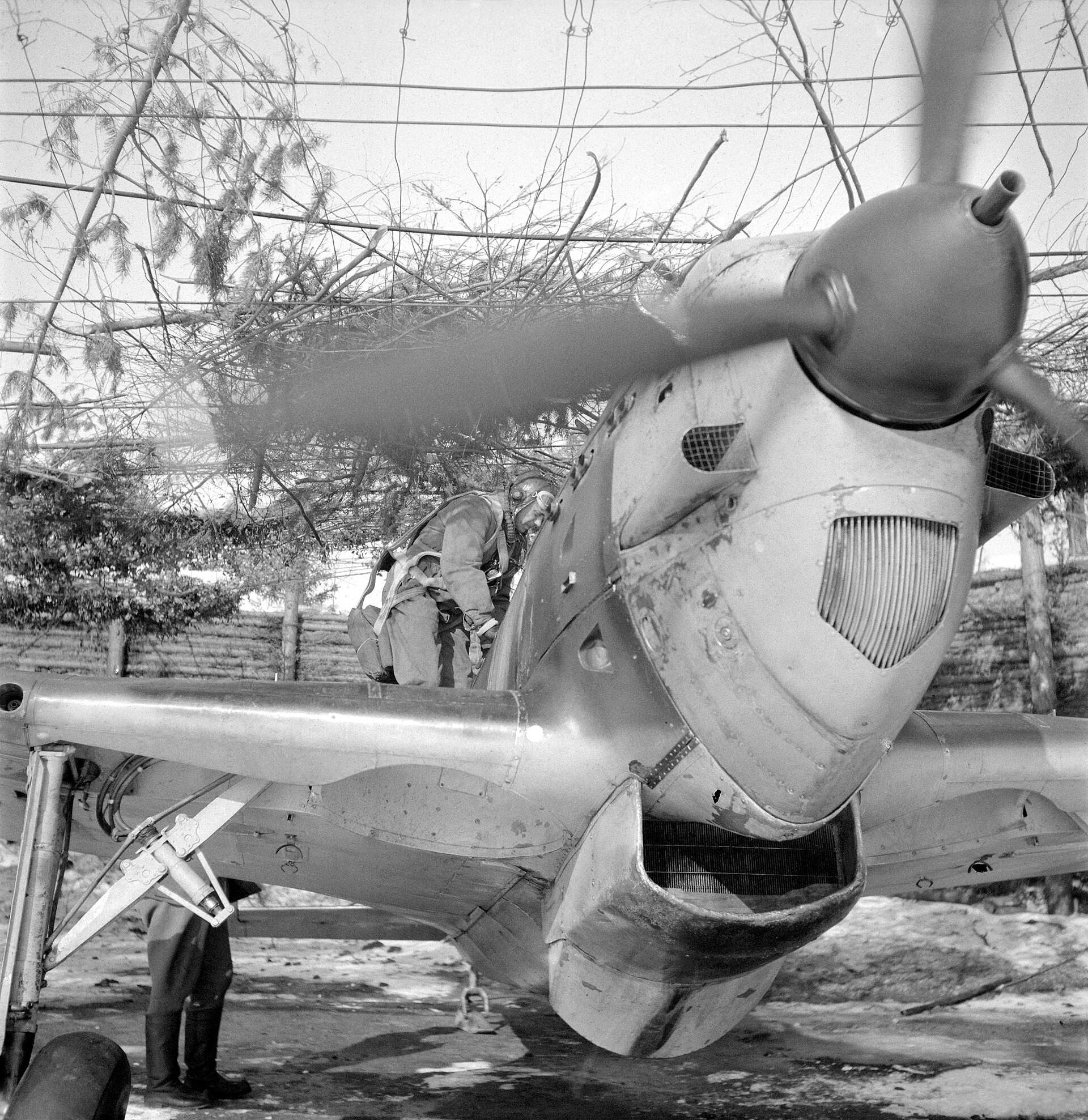
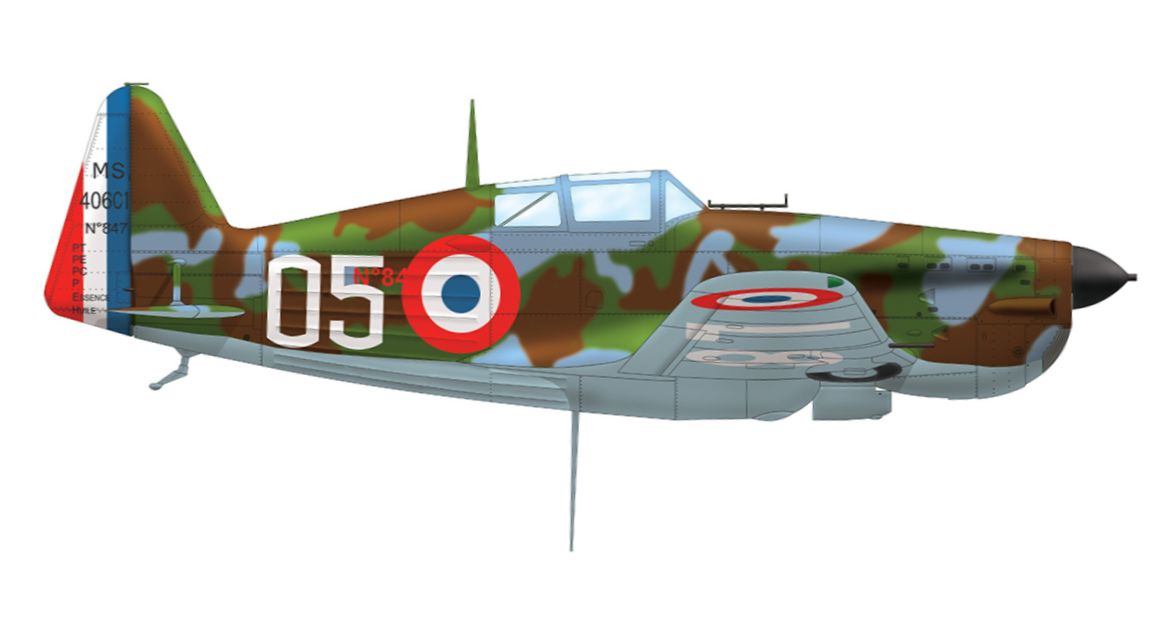
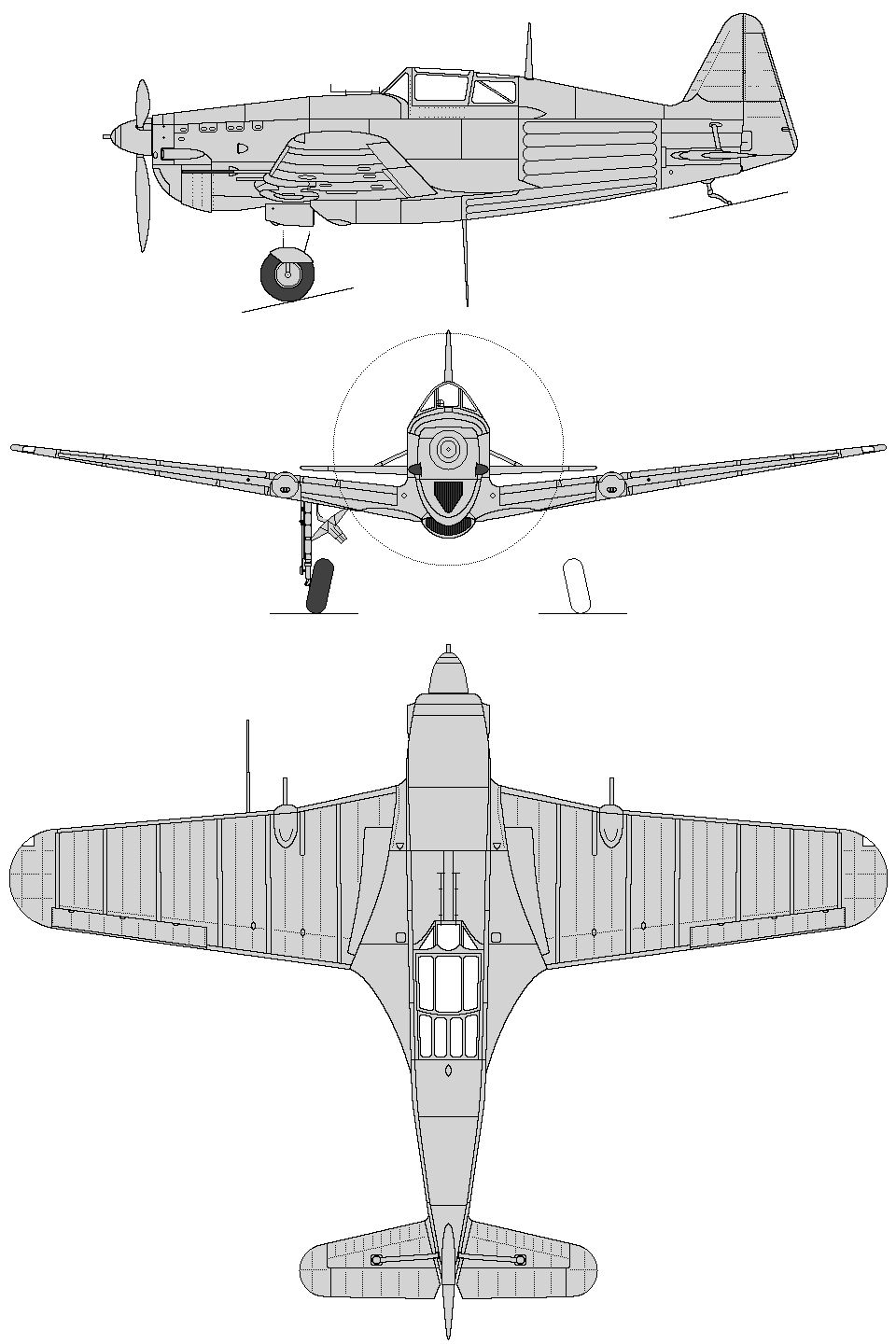
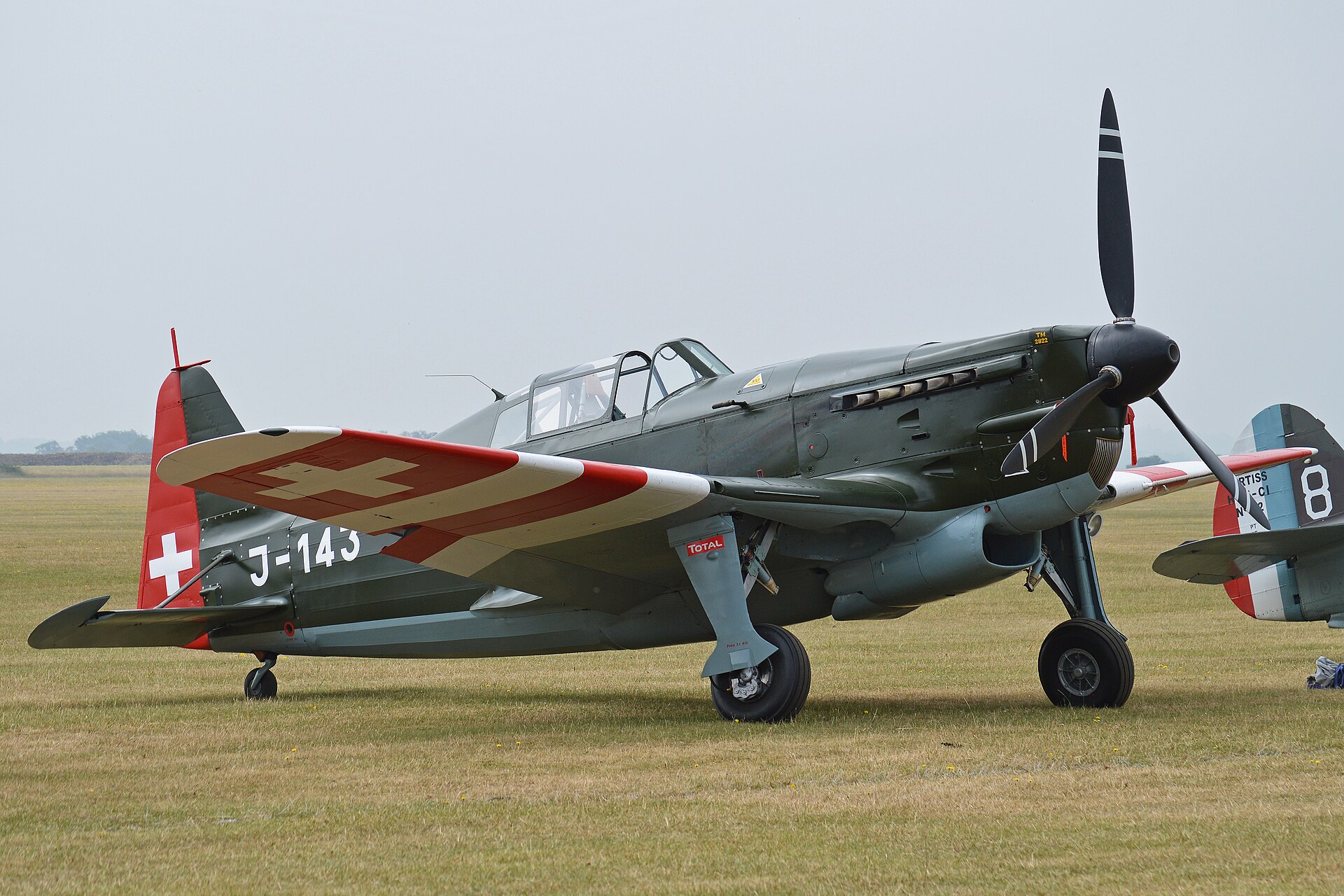
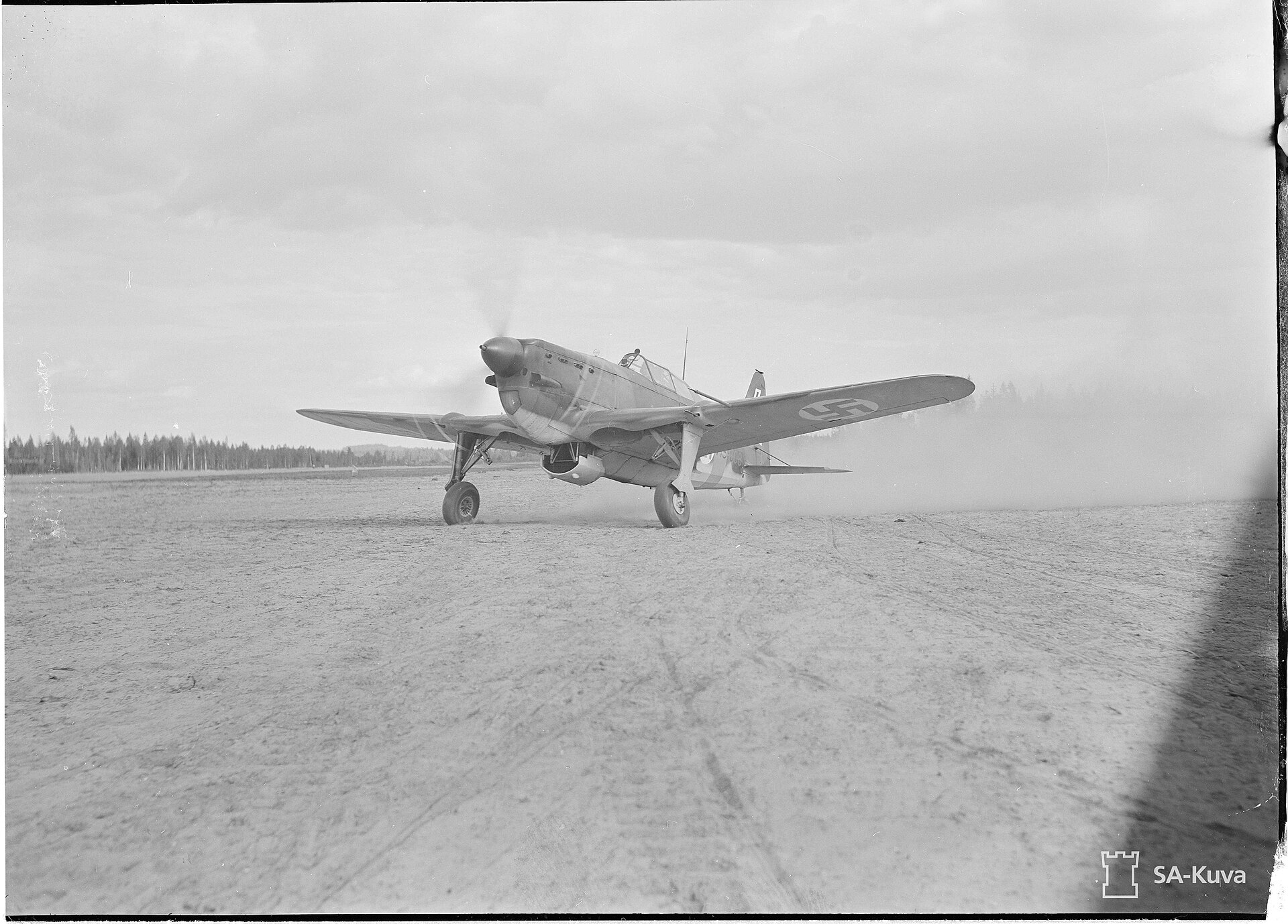
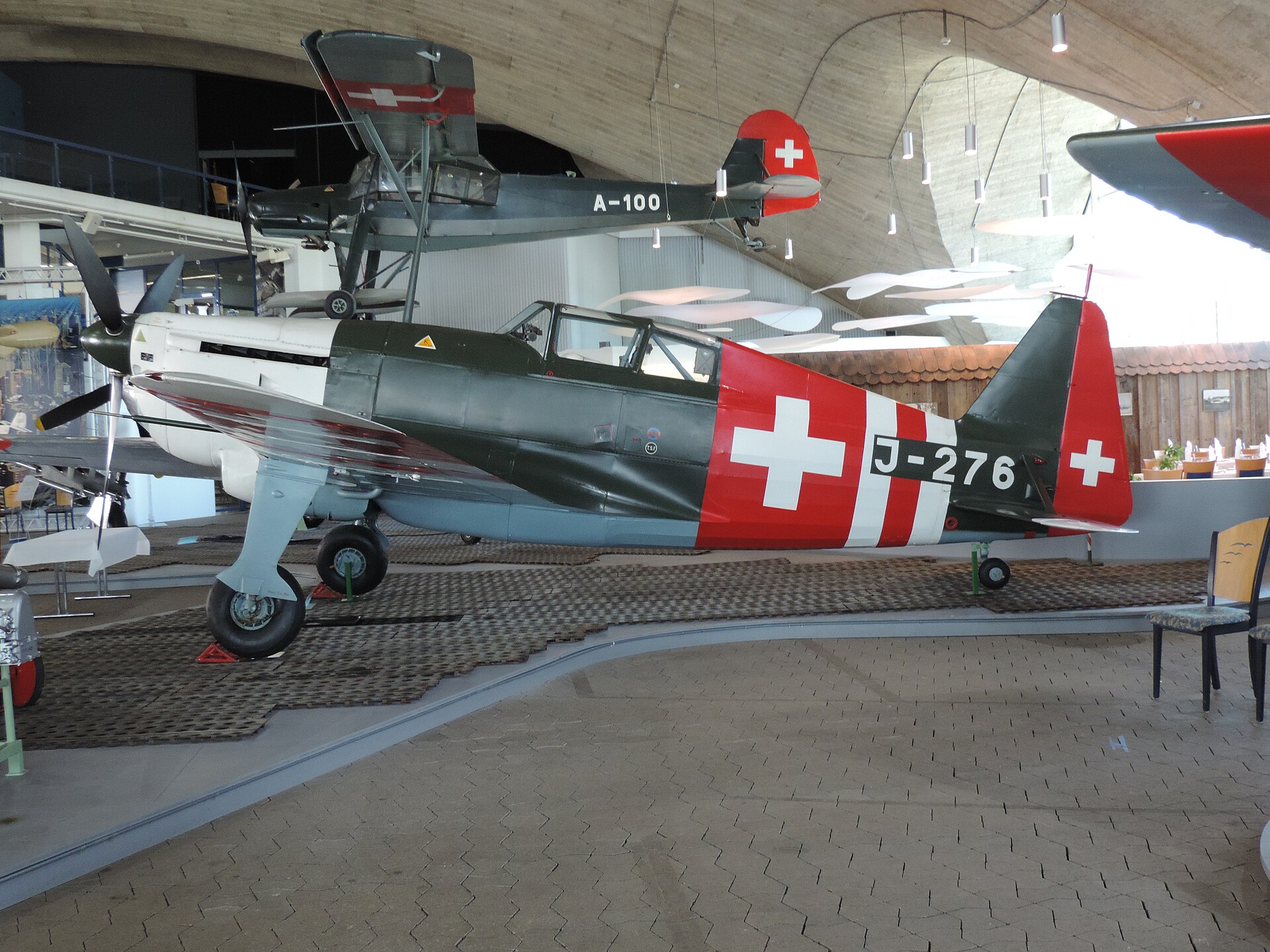
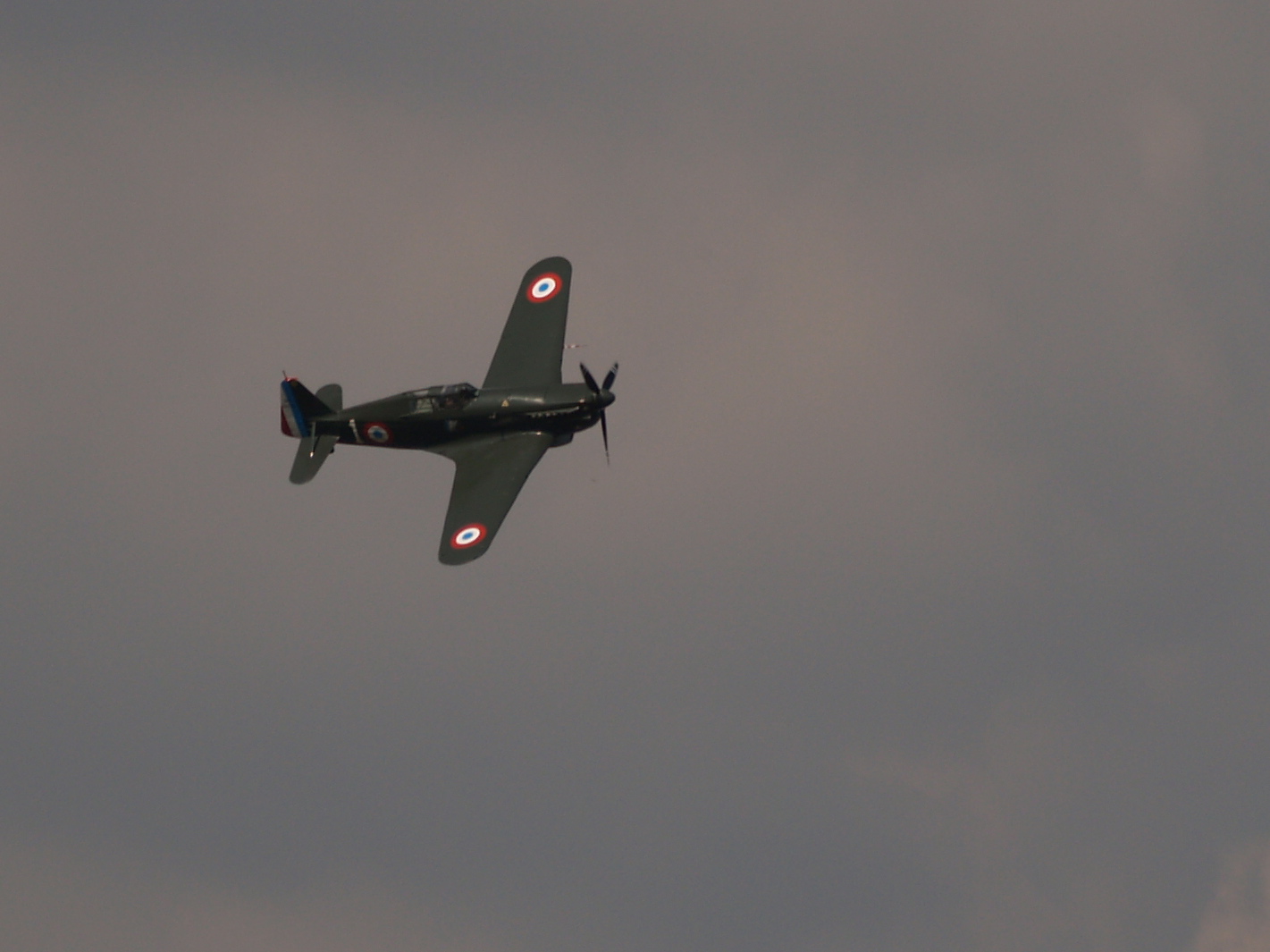
Photographs via Wikimedia Commons under the licences noted in each caption. Period images are in the public domain or released without restrictions; museum and airshow photographs are used under Creative Commons with attribution to their authors.
On film
The Morane-Saulnier MS.406 on film
A close, well-informed look at the actual aircraft — its cockpit, layout and design — from an established aviation-history channel.
"Inside The Cockpit — Morane-Saulnier M.S. 406" by Military Aviation History, an established specialist aviation-history channel with several hundred thousand subscribers. A close, on-aircraft walkaround of the actual Morane’s cockpit, layout and design; any figures quoted in the film should be cross-checked against the sources listed below.
Global footprint
Where the Morane-Saulnier MS.406 flew and fought
France designed and built it in its thousands and flew it in the doomed battle of 1940; Switzerland licence-built and improved it; Finland re-engined it; Turkey and others bought it. Toggle the categories to see the MS.406's surprisingly wide footprint and where survivors remain.
Combat record
The Morane-Saulnier MS.406 by the numbers
All figures are period estimates and wartime claims; scholarly sources differ, and totals should be read as ranges rather than exact counts.
Survivors
Surviving Morane-Saulnier MS.406s on display
Genuine MS.406s are rare, and to see the whole family you have to travel — the flawed French original in France, the ingenious rebuild in Finland, and the improved, still-flying development in Switzerland.
France's example is at the Musée de l'Air et de l'Espace at Le Bourget, north of Paris, where an MS.406 is displayed in French markings among the landmarks of French aviation history. It is the natural place to see the aircraft as France knew it — the outclassed but numerous fighter that carried the Armée de l'Air's fighter arm through the disaster of 1940.
Finland preserves a Mörkö-Morane, the re-engined version fitted with a captured Soviet Klimov engine, in its aviation museum collections. This is the aircraft's most distinctive combat variant, and seeing it is the best way to understand how Finnish ingenuity transformed the flawed original into a genuinely effective fighter.
Switzerland retains several D-3800 and D-3801 aircraft, including examples at the Swiss military aviation collection at Dübendorf. Crucially, one Swiss D-3801 has been kept airworthy and flown at airshows in recent decades — the only member of the entire MS.406 line still capable of flight. Seeing or hearing that aircraft fly is as close as anyone can now come to the sound and presence of a Morane in the air.
That an airworthy MS.406-family fighter exists at all is remarkable, but it is worth being precise about what it is and is not. It is a rare heritage aircraft, flown occasionally at displays by dedicated enthusiasts — not a continuously operating warbird, and certainly not a bookable ride. There is no passenger experience in an MS.406 or a D-3801 anywhere in the world, and there never has been. Any flight is a carefully-managed display of a priceless survivor, not a service you can buy a seat on.
Why so few survivors? The answer is the aircraft's own story of numbers and misfortune. France scrapped its Moranes wholesale after the war, with no wish to preserve the machines of its defeat; Finland retired its own after 1944; and only Switzerland kept the family flying long enough for a meaningful number to survive into the preservation era. The handful that remain are a deliberate act of remembrance — a way of keeping honest company with a fighter whose record is ordinary, brave and instructive in equal measure.
Standing in front of one, the numbers on this page resolve into something human-sized. This is a small, single-seat fighter a person could push by the tail, built to be flung into the sky by young men against a faster, better-armed enemy, its nose filled by an engine that was never quite strong enough and a single, excellent cannon. That modesty is the point. The MS.406 asks to be judged not as a war-winner it never was, but as what it truly was — a sound, likeable, outclassed little fighter, and the aircraft most French pilots actually had when it mattered most.
Q&A
Morane-Saulnier MS.406: your questions answered
Can I fly in a Morane-Saulnier MS.406?
No. Genuine MS.406s survive only in museums, and while one Swiss-built D-3801 development of the type has been kept airworthy and appears at airshows, there is no bookable flight in an MS.406 or D-3801 anywhere — and MiGFlug does not offer one. It is a rare heritage aircraft, not a passenger ride.
The good news is that you genuinely can fly in real fighter aircraft today. MiGFlug arranges flights in jets such as the L-39 Albatros, the Hawker Hunter, the MiG-15 and the MiG-29 — check availability and prices at migflug.com/flights-prices.
Was the Morane-Saulnier MS.406 a good fighter?
It was a mixed bag. The MS.406 was robust, manoeuvrable, pleasant to fly and armed with an excellent 20 mm hub cannon, and it was France's most numerous fighter in 1940. But it was underpowered and slow — only about 486 km/h — which left it outclassed by the Messerschmitt Bf 109E. It was a sound, likeable aircraft that was simply a generation behind on performance at the worst possible moment.
Why was the MS.406 outclassed by the Bf 109?
Mostly because it was too slow. Its Hispano-Suiza 12Y engine gave only around 860 hp, against well over 1,000 hp for the Bf 109E, and its part-plywood construction was heavier and draggier than the German fighter's clean metal skin. The result was a top speed roughly 60–70 km/h lower and much poorer climb, so the 109 could choose when to fight and when to leave. The MS.406 could out-turn a 109E but could rarely force it to turn.
How many Morane-Saulnier MS.406s were built?
Around 1,074 to 1,077 were built in France — sources vary, and roughly 1,064 were taken on charge by the Armée de l'Air. That made it the most-produced French fighter of its day and the first French fighter built in four figures. Switzerland built around 280 more of the D-3800/D-3801 family under licence, and Finland converted 41 to Mörkö-Morane standard.
How fast was the Morane-Saulnier MS.406?
About 486 km/h (roughly 302 mph) at around 5,000 m — commonly cited, and genuinely slow for a 1940 front-line fighter. That was some 60–70 km/h slower than the Bf 109E and Spitfire, and slower even than the Hurricane and the French D.520. The re-engined Finnish Mörkö-Morane was much faster, reaching around 525 km/h. Treat any single figure as an approximation for a wartime aircraft.
What engine and armament did the MS.406 have?
A single liquid-cooled Hispano-Suiza 12Y-31 V-12 of about 860 hp drove it. Its armament was a 20 mm HS.404 cannon mounted in the engine and firing through the propeller hub — accurate and hard-hitting, with about 60 rounds — backed by just two 7.5 mm MAC 1934 machine guns in the wings. The excellent hub cannon was its best feature; the light two-gun backup was a real weakness.
What was the Finnish "Mörkö-Morane"?
The Mörkö-Morane, or "Bogeyman Morane", was Finland's rebuilt MS.406. Short of Hispano-Suiza engines but holding stocks of captured Soviet Klimov M-105 engines (themselves descended from the same Hispano design), Finnish engineers fitted the more powerful Russian engine to the Morane airframe. The result was much faster — around 525 km/h — and harder-hitting; 41 were converted and they fought the Soviets effectively from 1943 until Finland left the war in 1944. It was the MS.406 finally made good.
What was the Swiss D-3801?
The D-3801 was Switzerland's improved, licence-developed MS.406. After building the original as the D-3800, Swiss engineers fitted a more powerful Hispano-Suiza 12Y engine of around 1,000 hp and refined the airframe, producing a genuinely useful fighter that served the Swiss Air Force into the late 1950s. Around 280 of the D-3800/D-3801 family were built, and a single airworthy D-3801 survives today — the only flyable member of the MS.406 line.
Did the MS.406 fight the Messerschmitt Bf 109?
Yes — constantly, and at a disadvantage. During the Battle of France in May–June 1940, MS.406 squadrons repeatedly engaged Bf 109Es and Bf 110s, claiming a number of them. But the 109E was faster, climbed better and held the initiative, so the MS.406 fought most of its battles on the back foot. Its pilots' claims of roughly 175–190 victories came at the cost of around 400 aircraft lost. You can compare the two rivals via our Messerschmitt Bf 109 page.
How does the MS.406 compare to the Dewoitine D.520?
The D.520 was clearly the better fighter — around 45–50 km/h faster, better armed and a genuine match for the Bf 109E, where the MS.406 was outclassed. The catch was numbers: France had more than a thousand MS.406s but only a single fully operational D.520 groupe in May 1940, so the older, slower Morane did most of the fighting. Together they sum up the French fighter tragedy of 1940. See our Dewoitine D.520 page.
Are there any Morane-Saulnier MS.406s left today?
Yes, but only a handful, spread across three countries. France displays an MS.406 at the Musée de l'Air et de l'Espace at Le Bourget; Finland preserves a re-engined Mörkö-Morane; and Switzerland keeps several D-3800/D-3801s, one of which remains airworthy and flies at airshows. None is available for passenger flights, and MiGFlug does not offer an MS.406.
Who built the Morane-Saulnier MS.406?
It was designed and built by Morane-Saulnier, a long-established French aircraft firm, with much of the wartime production carried out by the nationalised SNCAO combine at Nantes-Bouguenais. It was also licence-built abroad, most importantly by Switzerland, whose EFW works produced the D-3800 and the improved D-3801.
You can't fly the Morane-Saulnier MS.406. These, you can.
The MS.406 lives on only in museums, with a single Swiss D-3801 flying at the occasional airshow — but a genuine fighter flight is not a fantasy. MiGFlug puts you in the cockpit of real, flying military jets, from Cold War trainers to supersonic interceptors.
Fighter Jet Flights
Take the controls of a real ex-military jet with an experienced fighter pilot.
L-39 Albatros
The classic jet trainer — aerobatics and low-level fun, in several countries.
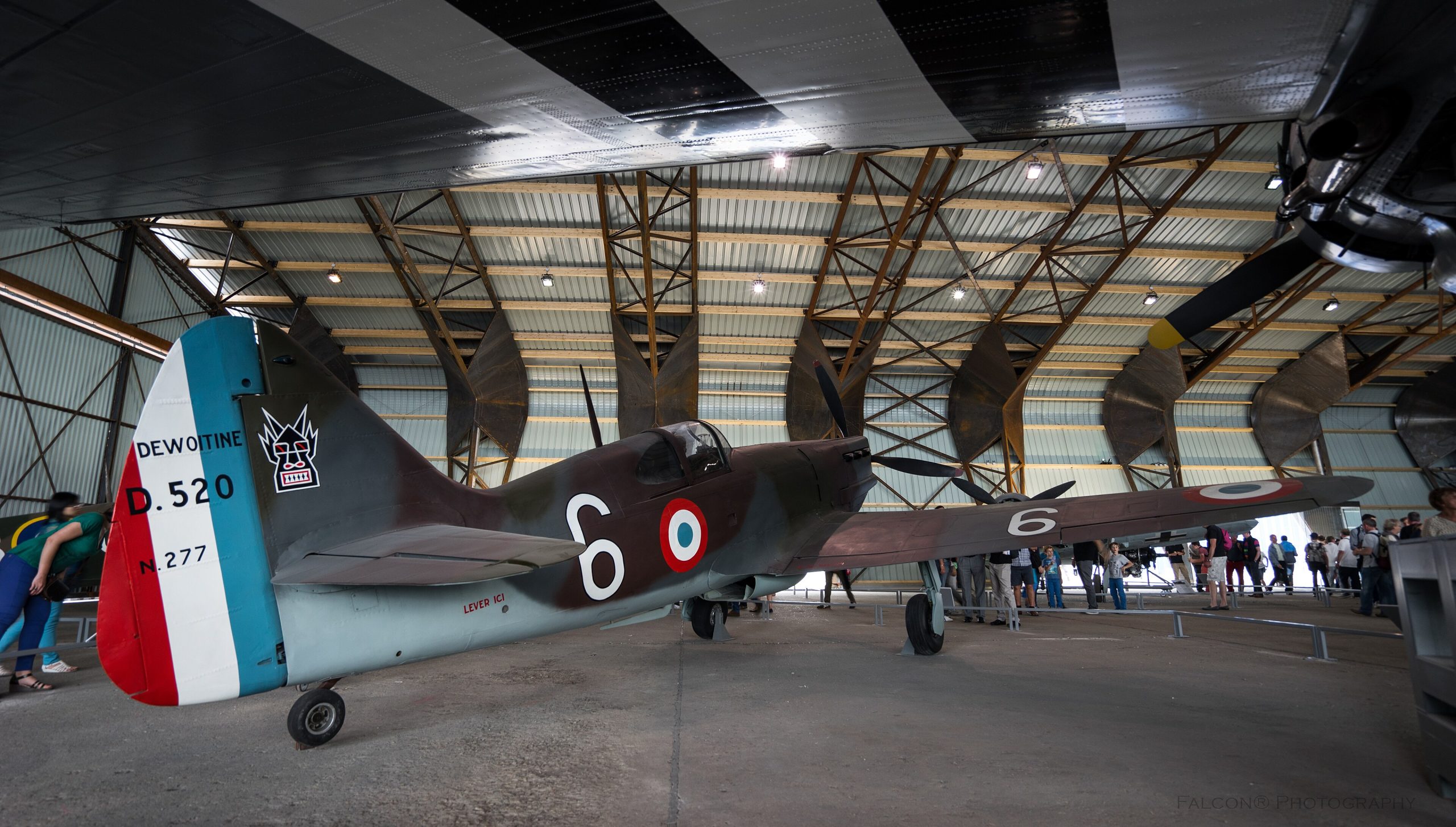
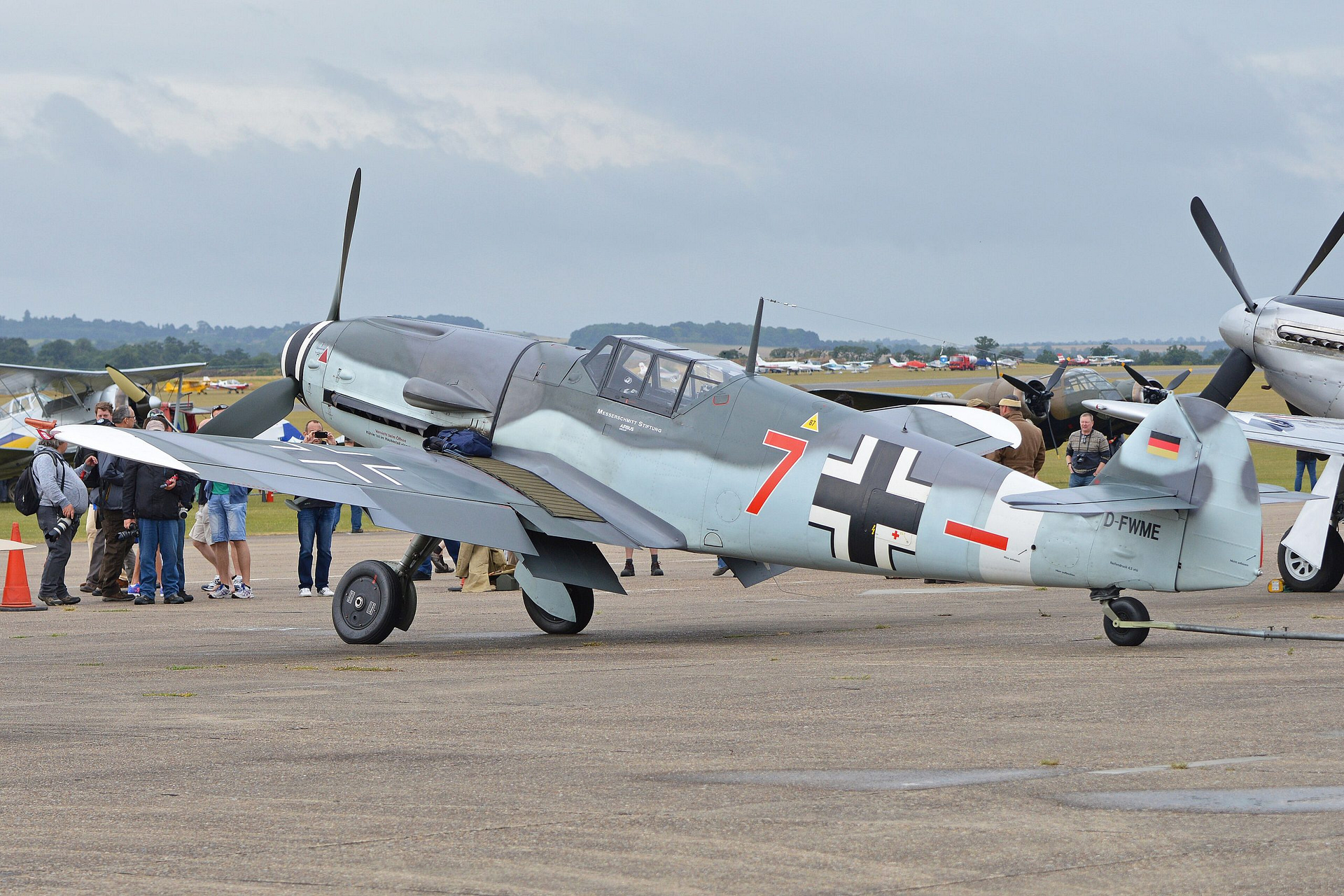
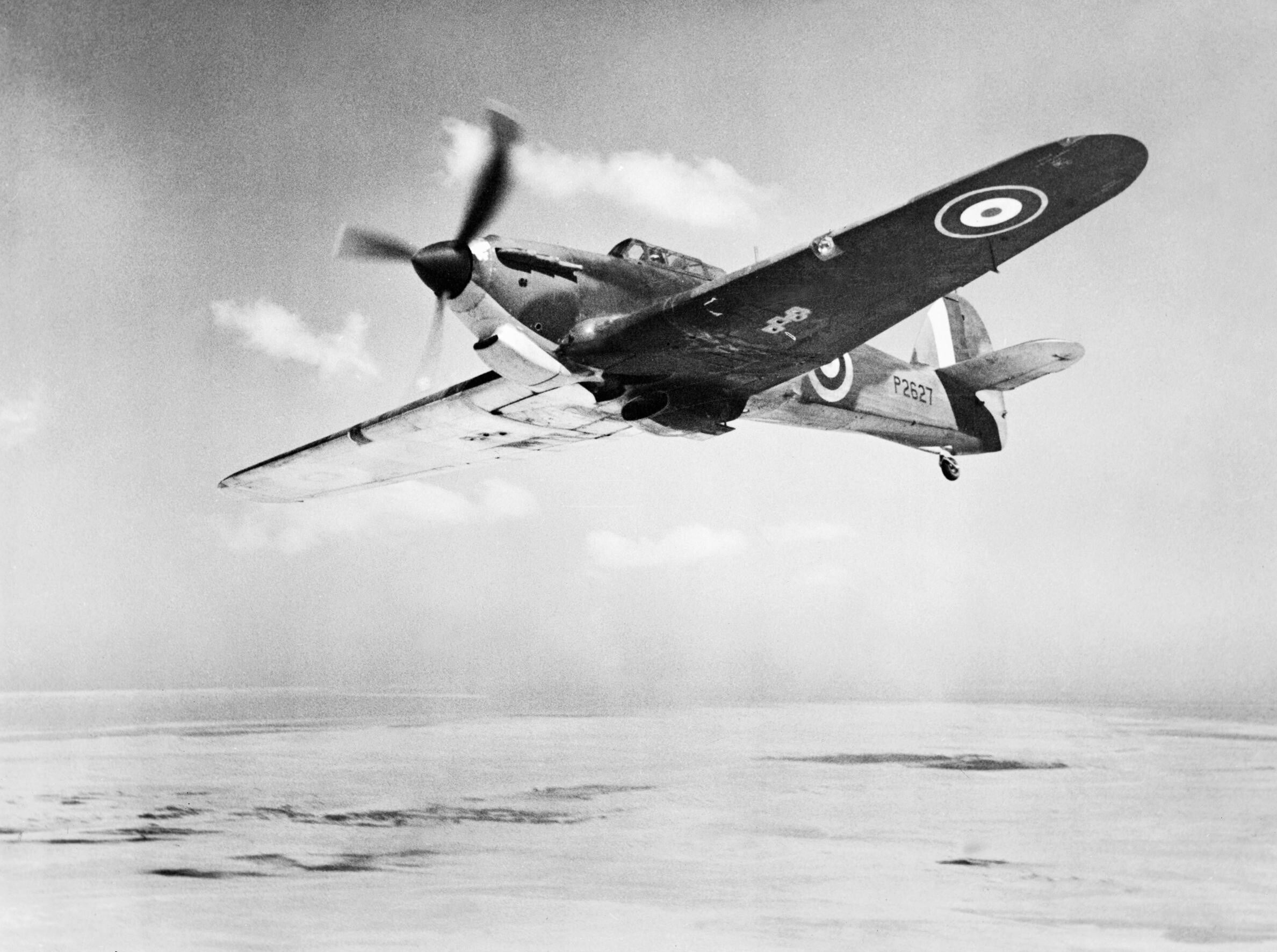
Sources