
Combat record
de Havilland Mosquito — Combat Record
WWII · United Kingdom · First flight 1940 · Retired · Combat-proven: air-to-air
The story behind the numbers
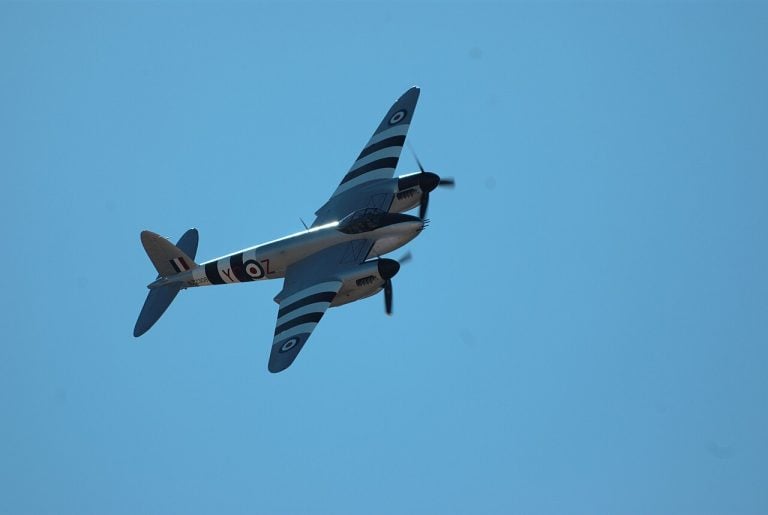
A bomber with no guns became one of the war’s great night fighters — that is the Mosquito’s paradox. Built of wood by furniture makers, faster than the fighters sent to stop it, the ‘Wooden Wonder’ in its radar-equipped night-fighter marks broke the back of the Luftwaffe’s night offensive against Britain and then went hunting German night fighters over their own airfields.
Some 600 of its victories came in darkness, including V-1s and the desperately difficult job of killing Ju 88 intruders in the bomber stream. Luftwaffe crews called the itch of being followed home ‘Moskitopanik’. Its loss rate was the lowest of any RAF bomber type — speed, it turned out, was armour.
Campaign by campaign
| Years | Campaign | Operator | Victories | A2A losses | What happened |
|---|---|---|---|---|---|
| 1942–45 | UK night defence | United Kingdom | ~350 + ~600 V-1s | low | Killed the Luftwaffe’s night raiders over Britain. |
| 1943–45 | Bomber support over Germany | UK (100 Group) | 258 claims | ~70 | Hunted the hunters over their own radio beacons. |
| 1943–45 | Biscay / Norway | UK Coastal Command | ~75 | low | Tsetse and FB.VI strike wings against Ju 88s. |
Go deeper