
Combat record
Su-33 — Combat Record
4th-generation jet · Russia · First flight 1987 · Combat-proven: strikes only
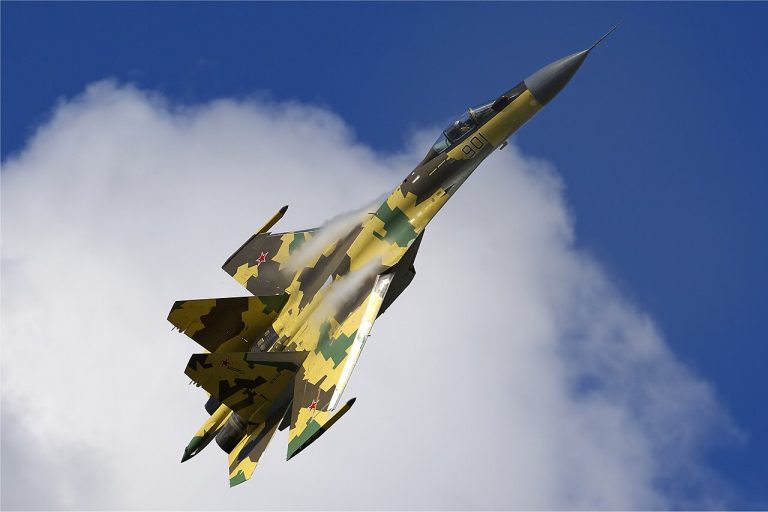
Photo: Oleg Belyakov / Wikimedia Commons (CC BY-SA 3.0)
0Confirmed air-to-air kills
0Air-to-air losses
—No air-to-air engagements
1987First flight
The story behind the numbers
Russia’s carrier Flanker has flown one combat cruise: the Admiral Kuznetsov’s 2016–17 Syrian deployment, which cost the small fleet an aircraft to an arresting-gear failure and moved the air wing ashore — strikes continued from land, air combat never came.
With no catapult, the Su-33 launches light — fuel and missiles traded against a ski-jump — and its two dozen airframes spend their lives defending the fleet’s flag rather than contesting anyone’s sky. The heaviest carrier fighter ever operational remains combat-proven only in the strike column, and barely.
The Su-33’s sole combat deployment produced ground-strike sorties and a carrier-landing accident, but no air-to-air engagements.
Campaign by campaign
| Years | Campaign | Operator | Victories | A2A losses | What happened |
|---|---|---|---|---|---|
| 2016–17 | Syria (Kuznetsov) | Russia | 0 | 0 | Ground-strike sorties only; one aircraft lost to an arrestor-cable failure, not enemy action. |
How we count. Victories are credits recognised by the operating air force, cross-checked against opposing loss records where they exist. Where wartime credits and postwar research genuinely disagree we show the range, not a single number. Friendly-fire and accident losses are not counted as air-to-air losses. Full methodology on the statistics hub.
Go deeper