
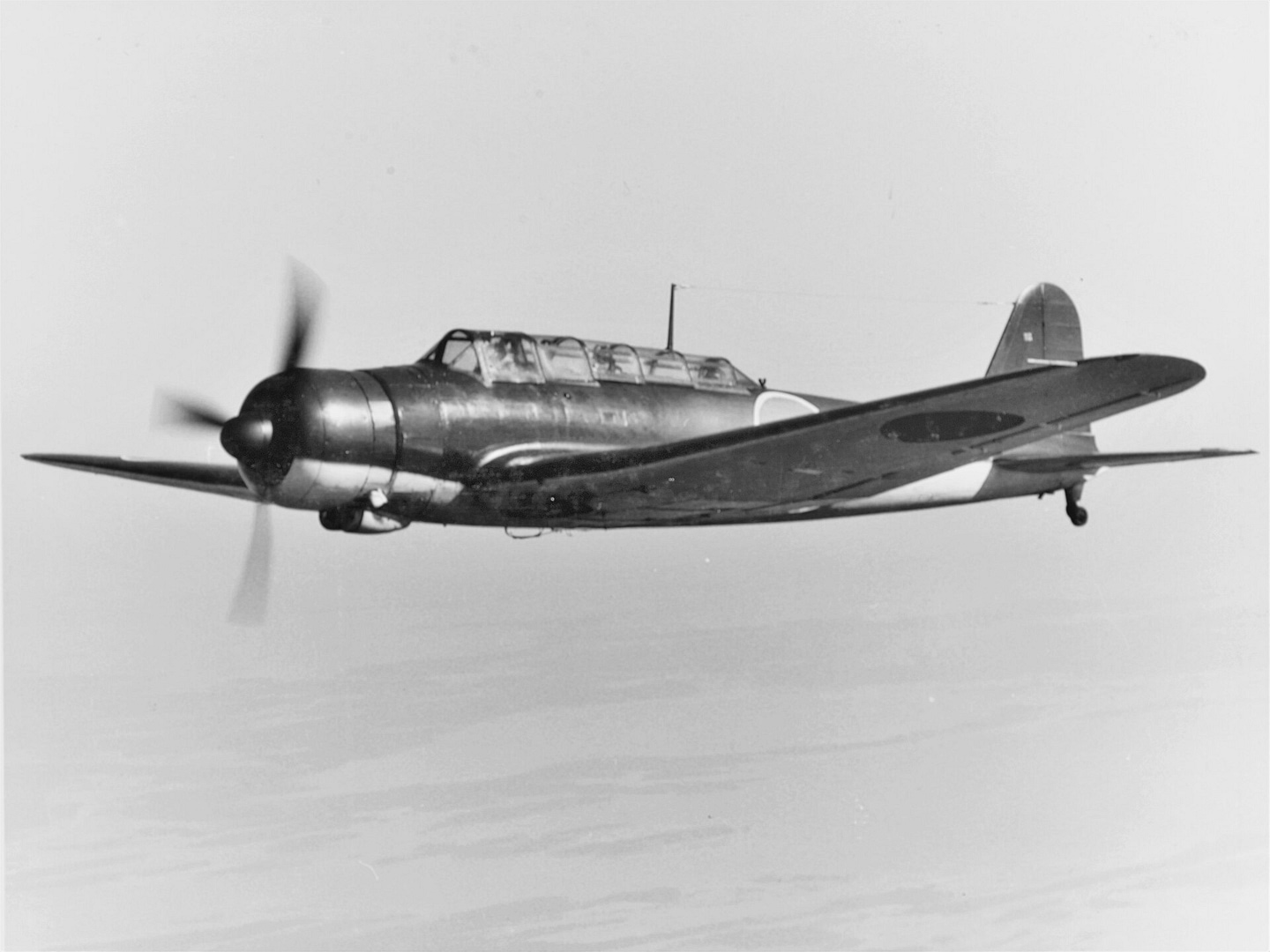
Nakajima B5N
“Kate”
The Imperial Japanese Navy’s carrier torpedo and level bomber — in 1941 the finest carrier attack aircraft in the world, and the machine that delivered the torpedoes and the armour-piercing bomb that devastated Battleship Row at Pearl Harbor.
The best carrier attack aircraft of 1941
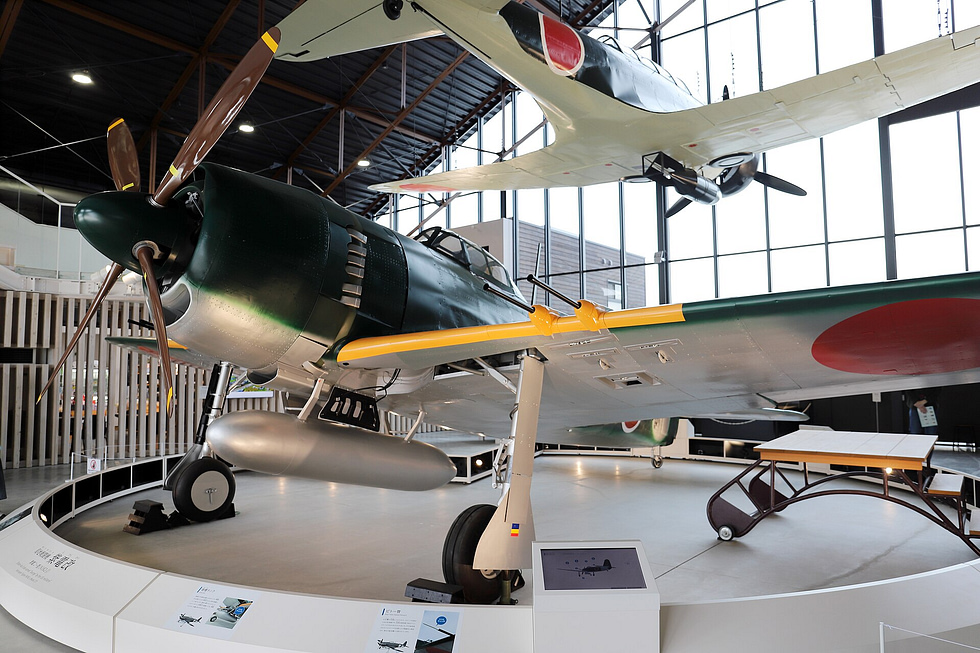
When the Imperial Japanese Navy issued its 1935 requirement for a new carrier attack aircraft, most of the world’s navies still flew torpedoes into battle in fabric-covered biplanes. Nakajima’s answer, the aircraft that became the Navy Type 97 Carrier Attack Bomber — given the Allied reporting name “Kate” — was a generation ahead: an all-metal, low-wing monoplane with a retractable undercarriage, an enclosed cockpit, Fowler-type flaps, a variable-pitch propeller and hydraulically folding wings for carrier stowage. It first flew in January 1937 and entered service in 1938, seeing early combat over China.
By December 1941 the B5N2 — re-engined with the 1,000-hp Nakajima Sakae radial — was, by most accounts, the most capable carrier-borne torpedo bomber in the world, well ahead of contemporary Allied types such as the American Douglas TBD Devastator and Britain’s Fairey Swordfish biplane. It could deliver a single large aerial torpedo or an equivalent load of bombs, and it doubled as a precise high-altitude level bomber, a crew of three working the controls, the navigation and bomb-aiming, and the single defensive gun.
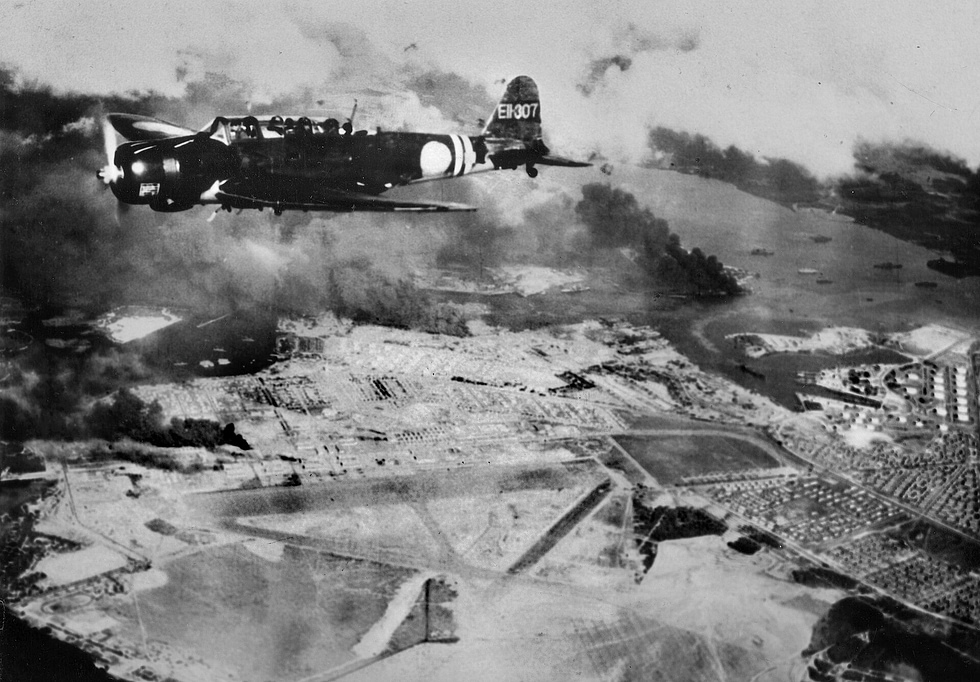
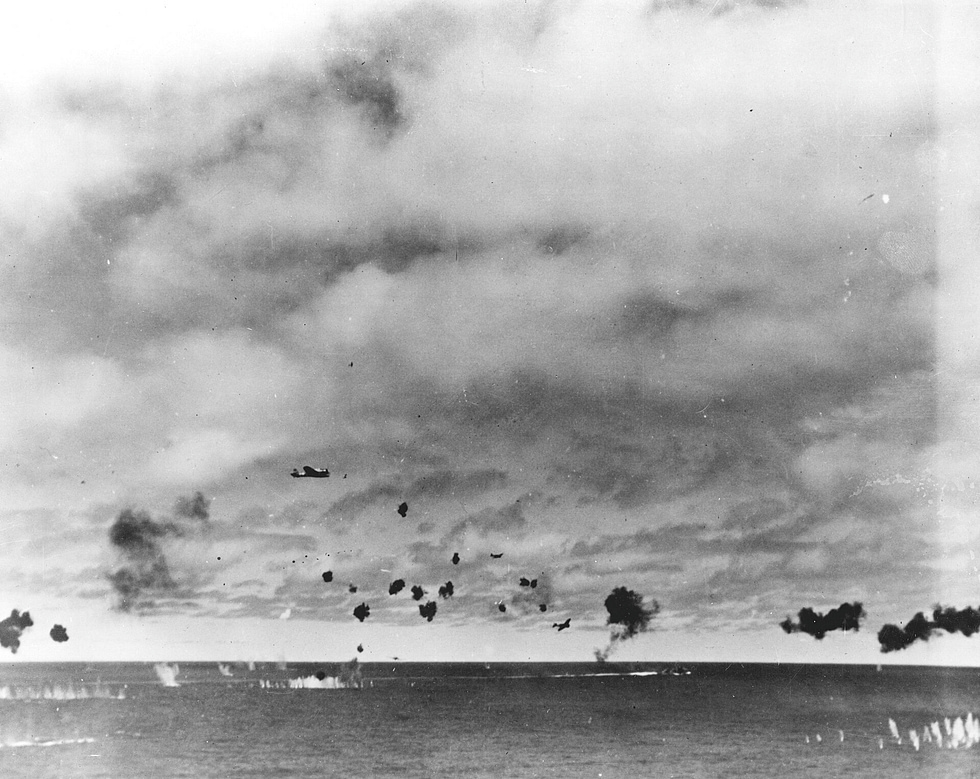
That combination made the Kate central to the opening Japanese victories of the Pacific War. At Pearl Harbor its crews delivered both the shallow-running torpedoes and the armour-piercing bombs that wrecked Battleship Row; over the following year B5N torpedoes and bombs contributed to the sinking of three United States aircraft carriers. Its great weakness was that all of this speed and reach came with almost no protection — a single rifle-calibre machine gun, no armour and no self-sealing tanks — and as Allied fighters and anti-aircraft fire improved, the Kate grew increasingly vulnerable and was gradually superseded by the newer B6N Tenzan.
01The Nakajima B5N Kate’s design leap: why it outclassed Allied torpedo bombers in 1941
The Kate’s advantage in 1941 was not any single feature but the way it combined them. Where the US Navy still flew the Douglas TBD Devastator — a monoplane, but slow and short-ranged — and the Royal Navy relied on the Fairey Swordfish biplane, the B5N brought together a retractable undercarriage, an enclosed cockpit, Fowler flaps, a constant-speed propeller and integral (initially unprotected) fuel tanks in a clean, aerodynamically efficient airframe. Its folding wings let carriers pack more aircraft aboard.
The trade-off was deliberate. Japanese naval doctrine prized range, striking power and pilot skill over survivability, so the Kate carried no armour for its crew and no self-sealing fuel tanks, and only one rear-firing 7.7 mm gun for defence. Against 1941-vintage opposition this was an acceptable gamble; as the war turned and Allied fighters such as the F4F Wildcat and later the F6F Hellcat multiplied, the same design choices made the Kate dangerously exposed.
What makes it special
A world-leading torpedo bomber
First flown in 1937, the B5N married a retractable undercarriage, enclosed cockpit, Fowler-type flaps, a variable-pitch propeller and hydraulically folding wings in one clean monoplane. In 1941 it was widely regarded as the best carrier torpedo bomber in service anywhere — a full generation ahead of the biplanes and slower monoplanes the Allies still flew from their decks.
The Pearl Harbor weapons
At Pearl Harbor the Kate carried two war-winning loads. Its Type 91 aerial torpedoes were fitted with wooden fins so they would not dive into the mud of the shallow harbour, and its level bombers dropped the Type 99 No. 80 armour-piercing bomb — a converted 40 cm (16-inch) battleship shell. One such bomb is credited with detonating the forward magazine of USS Arizona.
Carrier-killer, then obsolete
Over 1942 the Kate’s torpedoes and bombs helped sink the US carriers Lexington, Yorktown and Hornet. But with only one defensive gun, no armour and no self-sealing tanks, losses mounted as Allied fighters improved. The type was progressively replaced by the faster Nakajima B6N Tenzan from 1943–44 and pushed into secondary roles.
02The B5N Kate’s Pearl Harbor bomb: the converted battleship shell that destroyed USS Arizona
The armour-piercing bomb the Kate carried over Pearl Harbor was not a purpose-built weapon but an improvisation of genius and desperation: the Type 99 No. 80 Mark 5, fashioned from an obsolete 40 cm (roughly 16-inch) naval gun shell fitted with fins. Released from high altitude, it could punch through a battleship’s armoured decks before detonating deep inside. At about 08:06 on 7 December 1941, one such bomb is generally credited with reaching a forward magazine aboard USS Arizona; the resulting explosion tore the ship apart and killed more than a thousand of her crew. Precisely which aircraft dropped it, and the exact mechanism, remain debated, but the weapon and the aircraft that delivered it are not in doubt.
03The B5N Kate’s vulnerability: how a world-beater became a target
The qualities that made the Kate so effective in 1941 — light weight, long range, a heavy warload — were bought by leaving out protection. The aircraft carried a single 7.7 mm machine gun for defence, no armour plate for its three-man crew and, initially, no self-sealing fuel tanks. A slow, straight torpedo run at low level made it an easy mark once opposing fighters got among the formation. At Midway in June 1942 and again at Santa Cruz that October, Kate squadrons pressed home their attacks at heavy cost. Japan’s intended successor, the B6N Tenzan, was faster and better armed, but arrived slowly, so the ageing Kate soldiered on in front-line and second-line duties well into the war.
Full specifications
Airframe & Performance (B5N2)
- צוות
- 3 (pilot, observer/navigator/bomb-aimer, radio operator/gunner)
- מֶשֶׁך
- ~10.30 m
- מוּטַת כְּנָפַים
- ~15.52 m (folding)
- גוֹבַה
- ~3.70 m
- משקל ריק
- ~2,280 kg
- Max takeoff weight
- ~4,100 kg
- Max speed
- ~378 km/h (235 mph)
- לָנוּעַ
- ~1,990 km (commonly cited)
- First flight
- January 1937
Propulsion, Armament & Cost
- מָנוֹעַ
- 1 × Nakajima Sakae 11 radial, ~1,000 hp
- Defensive gun
- 1 × 7.7 mm rear-firing machine gun
- Offensive load
- 1 × Type 91 torpedo (~800 kg) or up to ~800 kg of bombs
- Service entry
- 1938
- Built
- ~1,149 (by Nakajima, Aichi & Dai-Juichi)
- Operators
- Imperial Japanese Navy only
- Unit cost
- No reliable public figure
- Cost per flight hour
- No reliable public figure (wartime state production)
04The Nakajima B5N Kate’s cost: why no reliable price exists
The B5N was a wartime product of the Japanese state, built in the late 1930s and early 1940s by Nakajima and, later, by Aichi and the Dai-Juichi naval arsenal. It was never sold on any open market, and Japan’s wartime accounting was not published in a form that yields a clean flyaway unit price or a cost-per-flight-hour figure. Any precise dollar or yen cost attached to a Kate today is, in practice, an estimate or a conversion of fragmentary records rather than a sourced procurement price. What is well established is the production total — roughly 1,149 aircraft across all builders.
From world-beater to war-weary veteran
Requirement issued
The Imperial Japanese Navy calls for a modern carrier attack aircraft to replace its biplane torpedo bombers.
First flight
Nakajima’s prototype flies in January — an advanced monoplane with retractable gear and folding wings.
Enters service
Adopted as the Navy Type 97 Carrier Attack Bomber; sees early combat over China.
The B5N2
A re-engined version with the 1,000-hp Nakajima Sakae radial enters production, becoming the definitive variant.
Pearl Harbor
On 7 December about 140 B5Ns deliver the torpedoes and armour-piercing bombs that devastate Battleship Row.
The carrier battles
Kate torpedoes and bombs help sink USS Lexington (Coral Sea), USS Yorktown (Midway) and USS Hornet (Santa Cruz).
Superseded
The faster Nakajima B6N Tenzan begins to replace the Kate, which shifts to second-line and anti-submarine work.
End of the line
Surviving Kates serve in training, patrol and, in the war’s final months, some kamikaze roles before Japan’s surrender.
Twelve stories from the Kate’s war
A generation ahead
The Kate arrived when most navies still flew fabric biplanes into the torpedo attack.
Read the full story
Why “Kate”?
Allied intelligence gave Japanese aircraft simple Western codenames; the B5N became “Kate.”
Read the full story
The shallow-water torpedo
Pearl Harbor’s shallow water should have made torpedo attack impossible — until the Type 91 was modified.
Read the full story
The bomb that found Arizona
A converted 16-inch battleship shell, dropped from a Kate, is credited with destroying USS Arizona.
Read the full story
Fuchida’s signal
The strike leader who sent the famous “Tora! Tora! Tora!” signal flew in a B5N.
Read the full story
First carrier sunk
At Coral Sea in May 1942, Kate torpedoes helped fatally cripple USS Lexington.
Read the full story
Hiryu strikes back
After US dive bombers wrecked three Japanese carriers, Kates from Hiryu helped cripple USS Yorktown.
Read the full story
The last US carrier it sank
At Santa Cruz in October 1942, Kate torpedoes helped doom USS Hornet.
Read the full story
A slow run for the target
The torpedo attack demanded a long, straight, low-level approach that left the Kate badly exposed.
Read the full story
Not just torpedoes
Beyond the torpedo, the Kate was a precise high-altitude level bomber.
Read the full story
Enter the Tenzan
The Kate’s replacement, the B6N Tenzan, was better but slow to arrive.
Read the full story
Where the Kates went
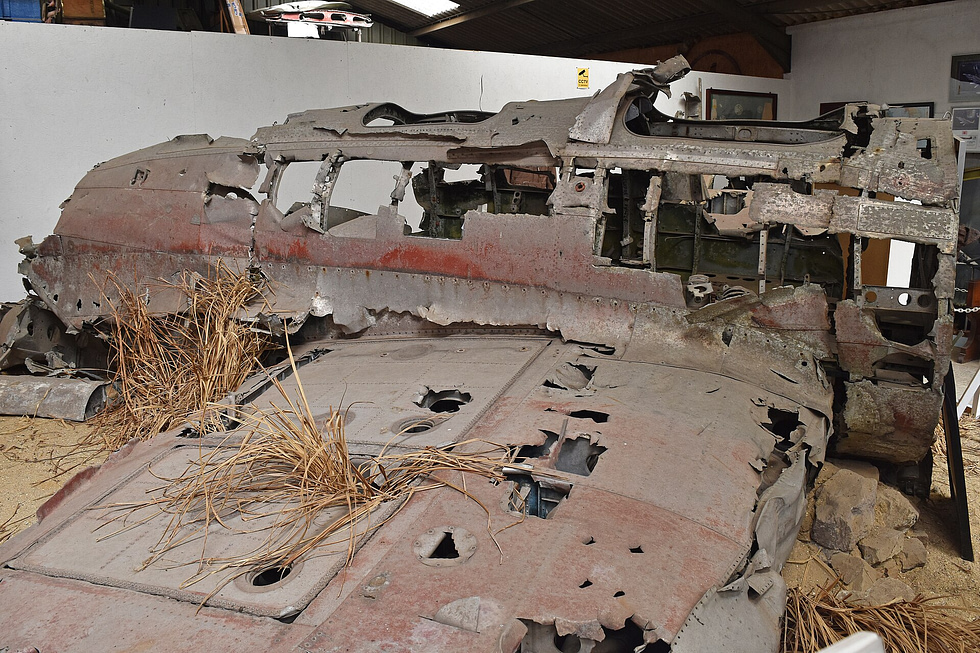
Very few Kates survived the war, and none fly today.
Read the full story
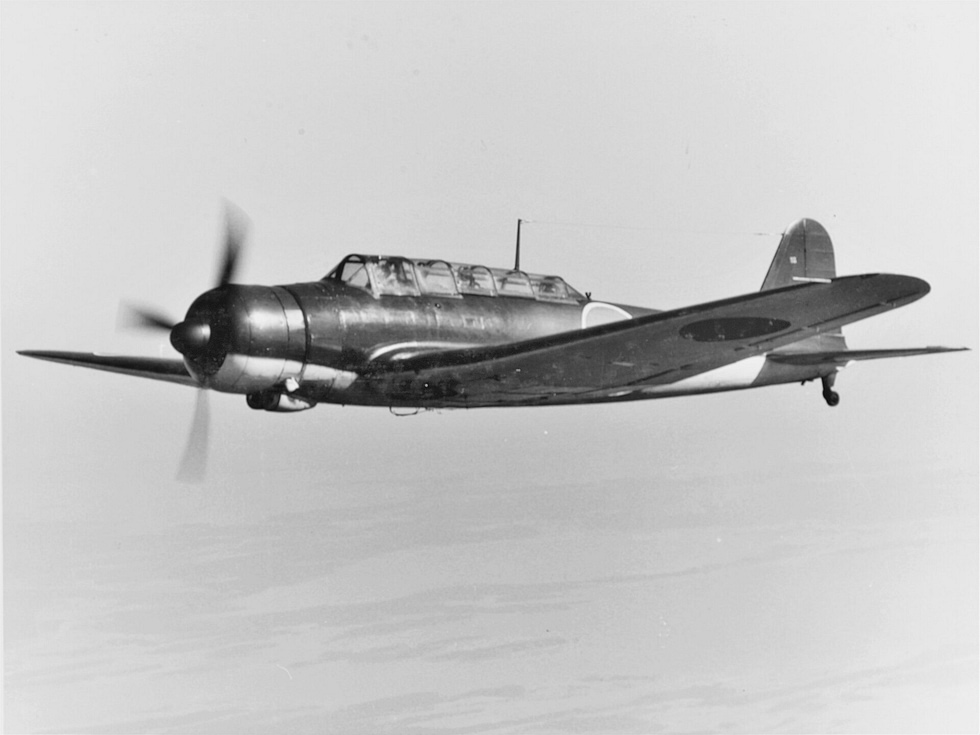
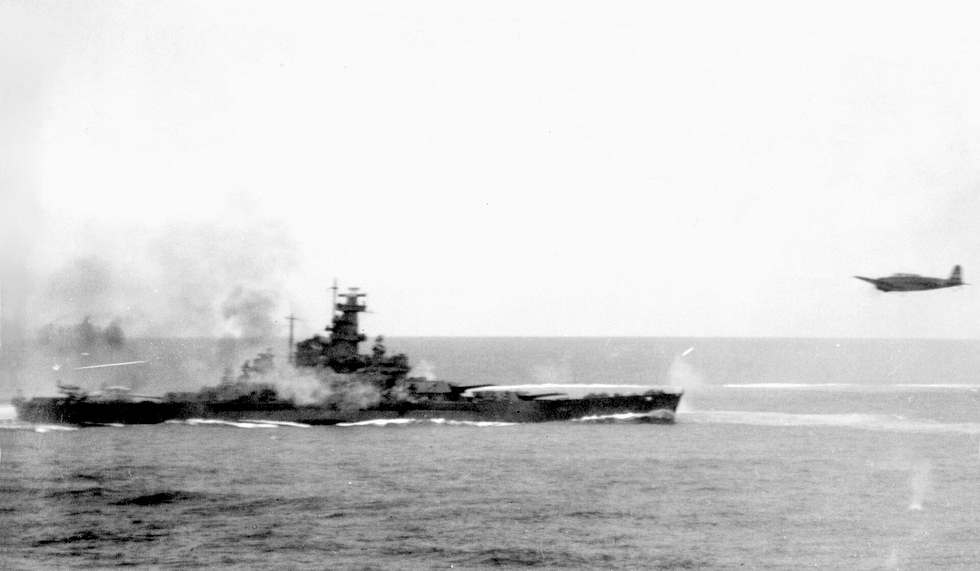
The Kate in pictures
The Kate in motion
A verified, high-authority video feature on the Nakajima B5N is coming soon. We only embed documentary footage from established, high-authority channels, and are still selecting the right one for the Kate.
Where the Kate flew
The score that defines it
The Kate’s record is written not in dogfights but in ships. In the first year of the Pacific War its torpedoes and bombs did more damage to the United States Navy’s capital ships and carriers than any other Japanese aircraft — a run of success that faded as Allied fighters and gunnery caught up.
Compare the combat record of other military aircraft. Figures are best available estimates.
Everything people ask about the B5N Kate
Can I fly in a B5N Kate?
What does “Kate” mean and what is the real name?
Did a B5N really drop the bomb that destroyed USS Arizona?
Which aircraft carriers did the B5N help sink?
Was the B5N a good aircraft?
How many B5Ns were built, and who flew them?
What replaced the B5N Kate?
Are there any B5N Kates left?
You can’t fly the Kate.
These, you can.
Some legends only live in museums — others are fuelled and waiting. MiGFlug has put civilians in real military jet cockpits since 2004.
 Fly the L-39 AlbatrosThe world’s most-flown jet trainer — aerobatics included
 Fly the F-104 Starfighter“The missile with a man in it”
 Fly the MiG-21The Cold War’s most-produced jet
 טסו על ה-T-33 Shooting StarAmerica’s first jet trainer
 Fly the DH VampireA piece of early jet history
 Fly the S.211Agile Italian jet trainer
 Fly the MB-326The classic Aermacchi jet
 Fly the MiG-15The Soviet legend of the Korean War
Continue the tour
Every fact, checked
- Pearl Harbor Aviation MuseumThe B5N2’s role at Pearl Harbor, the modified torpedoes and the armour-piercing bomb.
- The National WWII MuseumThe Pacific carrier battles of 1942 and the loss of Lexington, Yorktown and Hornet.
- Naval History and Heritage CommandUS Navy records of the Pearl Harbor attack and the carrier actions.
- HistoryOfWar.org — Nakajima B5NDevelopment history, variants, production totals and specifications.
- Imperial War MuseumsContext on the Pacific air war and Japanese naval aviation.
- Smithsonian National Air and Space MuseumReference on Japanese naval aircraft design and preserved airframes.
- Military Factory — Nakajima B5NConsolidated specifications and operational summary.
- World War II DatabaseProduction figures, variant data and service timeline.