
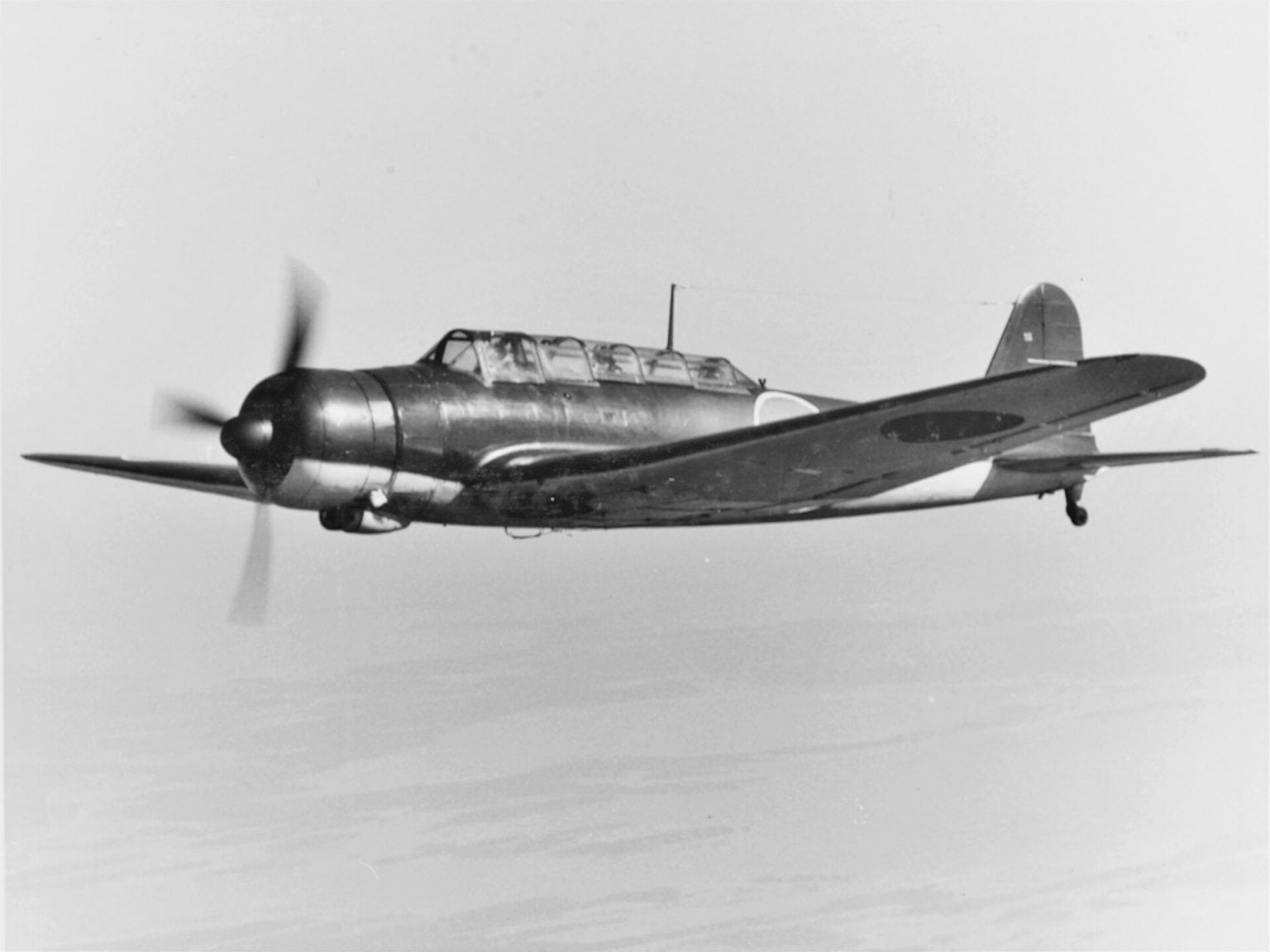
Nakajima B5N
“Kate”
The Imperial Japanese Navy’s carrier torpedo and level bomber — in 1941 the finest carrier attack aircraft in the world, and the machine that delivered the torpedoes and the armour-piercing bomb that devastated Battleship Row at Pearl Harbor.
The best carrier attack aircraft of 1941
When the Imperial Japanese Navy issued its 1935 requirement for a new carrier attack aircraft, most of the world’s navies still flew torpedoes into battle in fabric-covered biplanes. Nakajima’s answer, the aircraft that became the Navy Type 97 Carrier Attack Bomber — given the Allied reporting name “Kate” — was a generation ahead: an all-metal, low-wing monoplane with a retractable undercarriage, an enclosed cockpit, Fowler-type flaps, a variable-pitch propeller and hydraulically folding wings for carrier stowage. It first flew in January 1937 and entered service in 1938, seeing early combat over China.
By December 1941 the B5N2 — re-engined with the 1,000-hp Nakajima Sakae radial — was, by most accounts, the most capable carrier-borne torpedo bomber in the world, well ahead of contemporary Allied types such as the American Douglas TBD Devastator and Britain’s Fairey Swordfish biplane. It could deliver a single large aerial torpedo or an equivalent load of bombs, and it doubled as a precise high-altitude level bomber, a crew of three working the controls, the navigation and bomb-aiming, and the single defensive gun.
That combination made the Kate central to the opening Japanese victories of the Pacific War. At Pearl Harbor its crews delivered both the shallow-running torpedoes and the armour-piercing bombs that wrecked Battleship Row; over the following year B5N torpedoes and bombs contributed to the sinking of three United States aircraft carriers. Its great weakness was that all of this speed and reach came with almost no protection — a single rifle-calibre machine gun, no armour and no self-sealing tanks — and as Allied fighters and anti-aircraft fire improved, the Kate grew increasingly vulnerable and was gradually superseded by the newer B6N Tenzan.
01The Nakajima B5N Kate’s design leap: why it outclassed Allied torpedo bombers in 1941
The Kate’s advantage in 1941 was not any single feature but the way it combined them. Where the US Navy still flew the Douglas TBD Devastator — a monoplane, but slow and short-ranged — and the Royal Navy relied on the Fairey Swordfish biplane, the B5N brought together a retractable undercarriage, an enclosed cockpit, Fowler flaps, a constant-speed propeller and integral (initially unprotected) fuel tanks in a clean, aerodynamically efficient airframe. Its folding wings let carriers pack more aircraft aboard.
The trade-off was deliberate. Japanese naval doctrine prized range, striking power and pilot skill over survivability, so the Kate carried no armour for its crew and no self-sealing fuel tanks, and only one rear-firing 7.7 mm gun for defence. Against 1941-vintage opposition this was an acceptable gamble; as the war turned and Allied fighters such as the F4F Wildcat and later the F6F Hellcat multiplied, the same design choices made the Kate dangerously exposed.
What makes it special
A world-leading torpedo bomber
First flown in 1937, the B5N married a retractable undercarriage, enclosed cockpit, Fowler-type flaps, a variable-pitch propeller and hydraulically folding wings in one clean monoplane. In 1941 it was widely regarded as the best carrier torpedo bomber in service anywhere — a full generation ahead of the biplanes and slower monoplanes the Allies still flew from their decks.
The Pearl Harbor weapons
At Pearl Harbor the Kate carried two war-winning loads. Its Type 91 aerial torpedoes were fitted with wooden fins so they would not dive into the mud of the shallow harbour, and its level bombers dropped the Type 99 No. 80 armour-piercing bomb — a converted 40 cm (16-inch) battleship shell. One such bomb is credited with detonating the forward magazine of USS Arizona.
Carrier-killer, then obsolete
Over 1942 the Kate’s torpedoes and bombs helped sink the US carriers Lexington, Yorktown and Hornet. But with only one defensive gun, no armour and no self-sealing tanks, losses mounted as Allied fighters improved. The type was progressively replaced by the faster Nakajima B6N Tenzan from 1943–44 and pushed into secondary roles.
02The B5N Kate’s Pearl Harbor bomb: the converted battleship shell that destroyed USS Arizona
The armour-piercing bomb the Kate carried over Pearl Harbor was not a purpose-built weapon but an improvisation of genius and desperation: the Type 99 No. 80 Mark 5, fashioned from an obsolete 40 cm (roughly 16-inch) naval gun shell fitted with fins. Released from high altitude, it could punch through a battleship’s armoured decks before detonating deep inside. At about 08:06 on 7 December 1941, one such bomb is generally credited with reaching a forward magazine aboard USS Arizona; the resulting explosion tore the ship apart and killed more than a thousand of her crew. Precisely which aircraft dropped it, and the exact mechanism, remain debated, but the weapon and the aircraft that delivered it are not in doubt.
03The B5N Kate’s vulnerability: how a world-beater became a target
The qualities that made the Kate so effective in 1941 — light weight, long range, a heavy warload — were bought by leaving out protection. The aircraft carried a single 7.7 mm machine gun for defence, no armour plate for its three-man crew and, initially, no self-sealing fuel tanks. A slow, straight torpedo run at low level made it an easy mark once opposing fighters got among the formation. At Midway in June 1942 and again at Santa Cruz that October, Kate squadrons pressed home their attacks at heavy cost. Japan’s intended successor, the B6N Tenzan, was faster and better armed, but arrived slowly, so the ageing Kate soldiered on in front-line and second-line duties well into the war.
Full specifications
Baseline note: the figures below describe the B5N2, adopted in December 1939 as the Type 97 Number 3 Carrier Attack Bomber and redesignated Type 97 Carrier Attack Bomber Model 12 on 7 April 1942. This was the Sakae-engined aircraft that had almost entirely replaced the earlier model in front-line units by December 1941, and it is the machine that flew every operation the type is remembered for. Deltas for the Hikari-engined B5N1 (Number 1, later Model 11), for the two prototypes and for the B5N1-K trainer are given in grey. Authorities disagree on how many were built: Francillon and the standard English literature give 1,149 from three plants, while Japanese sources credit Nakajima’s Koizumi works alone with roughly 1,250 and put the total nearer 1,400. Neither figure is a rounding of the other, and both are quoted below.
Dimensions & weights
- Crew
- 3 — pilot, observer who navigated and aimed the bomb or torpedo, and a radio operator who worked the wireless and manned the rear gun (as in all Imperial Japanese Navy multi-seat aircraft the senior man aboard commanded, which was frequently the observer and not the pilot)
- Length
- 10.30 m (33 ft 10 in) — the fuselage was deliberately kept short so the aeroplane would fit the standard lifts of the Japanese carriers, and that constraint shaped the whole design
- Wingspan
- 15.518 m (50 ft 11 in), against a 10-Shi limit of 16 m
- Folded span
- under 7.5 m (24 ft 7 in) as required by the specification. The hinges were placed so that the wingtips overlapped one another above the cockpit — an elegant answer to a hangar-deck problem that neither the Devastator nor the Swordfish had solved as tidily
- Height
- 3.70 m (12 ft 2 in)
- Wing area
- 37.7 m² (406 sq ft)
- Aerofoil
- NN-5 modified, 16 per cent at the root and 8 per cent at the tip — a thick, high-lift section, because a deck aeroplane has to come aboard slowly whatever else it does
- Structure
- all-metal stressed-skin monoplane with fabric-covered control surfaces — the first all-metal low-wing monoplane the Japanese Navy put on a carrier deck
- Empty weight
- 2,279 kg (5,024 lb); B5N1 2,106 kg (4,643 lb)
- Loaded weight
- 3,800 kg (8,378 lb) in normal strike trim; B5N1 3,700 kg (8,157 lb)
- Maximum weight
- 4,100 kg (9,039 lb) overloaded; B5N1 4,015 kg (8,852 lb). The Japanese tables give an empty weight of 2,200 kg rather than 2,279 kg, a difference that probably reflects what equipment was counted
- Wing loading
- 100.8 kg/m² (20.6 lb/sq ft); B5N1 98.1 kg/m². Modest by 1941 standards, and the reason the aeroplane handled well on and around the deck
- Power loading
- 3.8 kg/hp (8.4 lb/hp); B5N1 4.8 kg/hp — the single largest improvement the Sakae bought, and it went into climb and reliability rather than speed
Performance
- Maximum speed
- 378 km/h (235 mph, 204 kn) at 3,600 m (11,800 ft)
- B5N1 maximum speed
- 370 km/h (230 mph, 199 kn) at 2,000 m (6,600 ft) — a 30 per cent increase in power bought roughly 8 km/h, which tells you the airframe and not the engine was the limit. What the Navy actually got for the change was an engine that did not fail over open water
- Cruising speed
- 259 km/h (161 mph, 140 kn) at 3,000 m (9,800 ft); Japanese tables give 263 km/h at the same height
- Landing speed
- 113 km/h (70 mph, 61 kn) — low enough that a competent naval pilot could put the aeroplane aboard a small carrier at night, which mattered more than any other number here
- Climb to 3,000 m
- 7 min 40 s (9,800 ft); B5N1 7 min 50 s
- Rate of climb
- 6.5 m/s (1,280 ft/min) initial
- Service ceiling
- 8,260 m (27,100 ft) in Francillon; the Japanese tables give 7,640 m (25,070 ft). The higher figure is the one usually quoted in English and the lower one is the Japanese service figure — a real disagreement, not a conversion error
- Range, normal
- 978 km (608 miles, 528 nautical miles); the Japanese tables give 1,021 km
- Range, maximum
- 1,991 km (1,237 miles, 1,075 nautical miles) in overload; the B5N1 is credited with 2,260 km (1,404 miles, 1,220 nautical miles). The older, weaker aeroplane flew further — the Sakae drank more, and the Navy accepted the loss of endurance to get an engine it could trust
- Combat radius, strike
- roughly 460 km (285 miles, 250 nautical miles) with a torpedo and a margin for a deck recovery; derived from the normal range rather than quoted as such in the tables
- Torpedo release envelope
- the Type 91 Kai-2 could be released at 20 m (65 ft) and, after the 1941 modifications, at anything up to the aeroplane’s own maximum of 204 kn (378 km/h) in a power glide. The Devastator was restricted to about 110 kn at 50 ft with the Mark 13, which is the whole argument about 1942 in one line
- Endurance
- the 10-Shi requirement asked for four hours at not less than 135 kn, and the aeroplane comfortably beat it — the reason B5Ns were used as ocean search aircraft as much as strike aircraft
Propulsion & systems
- Engine, B5N2
- 1 × Nakajima NK1B Sakae 11, 14-cylinder two-row air-cooled radial, 1,000 hp (746 kW) for take-off and 970 hp (723 kW) at 3,000 m — the same engine family as the early Zero, and the change was made for reliability over water rather than for speed
- Engine, B5N1
- 1 × Nakajima Hikari 3, 9-cylinder single-row air-cooled radial, 770 hp (574 kW) for take-off and 840 hp (626 kW) at 3,000 m
- Engine, first prototype
- 1 × Nakajima Hikari 2, 700 hp (522 kW) for take-off and 800 hp (597 kW) at 3,500 m; the 10-Shi specification allowed either the Hikari or the Mitsubishi Kinsei, and Nakajima naturally chose its own
- Propeller
- three-blade constant-speed metal unit (the first prototype had a variable-pitch propeller, and the second introduced the constant-speed version that went into production — both were advanced fittings for a 1937 torpedo aeroplane)
- Flaps
- simple slotted flaps on production aircraft. The much-quoted Fowler flaps were fitted only to the first prototype: Navy officers judged the mechanism too complicated to maintain aboard ship, and the second prototype reverted to slotted flaps. The same objection killed the hydraulic wing fold
- Wing folding
- manual, upward, on every production aircraft. The first prototype folded hydraulically and the feature was deleted as a maintenance risk — a rare case of a navy choosing the simpler answer and being right
- Undercarriage
- hydraulically retractable wide-track main gear, the first fitted to a Japanese single-engined production aeroplane, with a fixed tailwheel. A buzzer sounded in the cockpit if the throttle was closed with the gear still up — an admission that retractable gear was new to the service and that pilots would forget
- Fuel and protection
- large integral tanks in the wing. No self-sealing, no fire suppression and no armour for the crew — weaknesses identified in China and consciously not fixed, because the Navy preferred to buy speed with the weight. The B5N2 was 8 km/h faster and just as easy to burn
- Bombing and navigation
- Type 90 bombsight in a long vertical tube at the front left of the observer’s station, with a Type 3 reflector compass mounted on the cockpit framing for over-water navigation; torpedo release lever and a manual bomb release as backup
- Radio
- Type 96 Mark 3 wireless set, later the Type 2 Mark 3, mounted ahead of the radio operator. Fuchida’s signal "To, to, to" and then the codeword Tora tora tora went out from the set of a B5N over Oahu on 7 December 1941
- Radar and magnetic detection
- from 1943, aircraft on convoy escort carried the Type 3 Ku Mark 6 air-to-surface search radar with Yagi aerials, and some carried the KMX magnetic anomaly detector for hunting submerged submarines — primitive by Allied standards, but this was the role in which the obsolete B5N was genuinely useful right to the end
- Production
- 1,149 in the standard English accounting: 669 at Nakajima’s Koizumi works between 1936 and 1941, 200 B5N2 by Aichi at Nagoya and 280 B5N2 by the Dai-Juichi Kaigun Kokusho at Hiro, both between 1942 and 1943. Japanese sources credit Koizumi alone with roughly 1,250 and give a total nearer 1,400 — the two accountings have never been reconciled
04The Nakajima B5N Kate’s cost: why no reliable price exists
The B5N was a wartime product of the Japanese state, built in the late 1930s and early 1940s by Nakajima and, later, by Aichi and the Dai-Juichi naval arsenal. It was never sold on any open market, and Japan’s wartime accounting was not published in a form that yields a clean flyaway unit price or a cost-per-flight-hour figure. Any precise dollar or yen cost attached to a Kate today is, in practice, an estimate or a conversion of fragmentary records rather than a sourced procurement price. What is well established is the production total — roughly 1,149 aircraft across all builders.
Armament & payload
The B5N carried one rifle-calibre machine gun and the two best anti-ship weapons in the Pacific
The B5N’s offensive fit was extraordinary and its defensive fit was contemptible, and both facts are deliberate. The aeroplane could carry either the Type 91 aerial torpedo — which by 1941 had an angular-acceleration roll damper years ahead of anything the Allies fielded, and could be dropped fast and low — or a single 800 kg store, including the Type 99 No. 80 Mark 5 armour-piercing bomb machined from a battleship shell. Against that, the crew had one 7.7 mm Type 92 on a ring in the rear cockpit, fed by hand-loaded 97-round drums.
The Navy knew. The lack of protection had been noted in China and was consciously left alone: officers preferred to spend the weight on performance and outrun the interceptor, a calculation that held against Chinese and early Allied fighters and collapsed the moment the F4F Wildcat began operating in numbers with radar direction. Swapping between torpedo rack and bomb racks was not a quick job either; it needed more than two hours, which is why Nagumo’s rearming decision at Midway cost the time it did. Fits varied: a number of B5N1s carried two fixed 7.7 mm Type 97 guns in the wings, which the B5N2 dropped; the anti-submarine aircraft of 1944 and 1945 carried radar or a magnetic detector and small bombs in place of the torpedo gear; and by 1945 many airframes had had their release gear disconnected altogether for special attack.
Gun
- One flexible 7.7 mm Type 92 machine gun on a ring mount at the rear of the cockpit — a Japanese development of the Lewis, drum-fed with 97 rounds a drum and six drums, 582 rounds in all
- No forward-firing armament on the B5N2. A number of B5N1s were fitted with two fixed 7.7 mm Type 97 guns in the wings for strafing and flak suppression; the feature was not carried over
- No cannon of any calibre was ever fitted, and no heavy machine gun. The type went through the entire war with the defensive armament of a 1932 biplane
- Against an F4F making a high beam pass the rear gun was a gesture. Five of the forty torpedo aircraft were shot down over Pearl Harbor against defences that had barely woken up; against alerted defences the loss rates ran far higher
- The Devastator carried one or two forward guns and one aft, the Avenger a power turret with a 12.7 mm gun. On defensive armament the B5N was the worst of the three, and stayed that way
Air-to-air
- None. The Imperial Japanese Navy had no air-to-air guided weapon, and the B5N carried no air-to-air store beyond the rear gun described above
- The card is kept because the aeroplane’s survival was somebody else’s job. B5N doctrine assumed a Zero escort overhead and D3A dive bombers going in first to suppress the anti-aircraft batteries, so that the slow torpedo aircraft met a distracted ship
- Where the choreography worked it was devastating: Pearl Harbor, Coral Sea, Midway and Santa Cruz were all won by that sequence. Where it failed, the torpedo aircraft were simply killed — at the Eastern Solomons in August 1942 the dive bombers were sent alone to cripple the American carriers first, and the B5Ns never launched at all
- By late 1942 American radar direction was putting Wildcats in front of the strike rather than above the target, and the escort was being stripped away before the torpedo aircraft reached release range. Nothing in the B5N’s armament answered that
Air-to-surface guided
- None in the modern sense. The Type 91 ran a straight gyro course to a depth set before release; there was no homing torpedo, no glide bomb and no radio-controlled store in Japanese carrier service
- The torpedo did, however, carry a genuine piece of automatic control: an anti-rolling controller working on angular acceleration, invented at Yokosuka in the spring of 1941 and cleared in final tests that August. It stopped the weapon rolling on water entry and let it run at 10 m instead of diving to 30 m or more
- The Type 3 Ku Mark 6 radar carried by anti-submarine aircraft from 1943 was a search set for finding a target, not a guidance system; the attack that followed was flown and aimed by eye
- From late 1944 the Navy supplied the missing guidance the other way. In the special-attack role the aeroplane and its crew became the terminal guidance for their own bomb
Bombs
- One Type 91 aerial torpedo on a rack offset to starboard under the fuselage: 848 kg, 45 cm diameter, 5.27 m long, 42 kn to about 2,000 m. The Kai-2 warhead held 276 kg with 204 kg of high explosive
- One Type 99 No. 80 Mark 5 armour-piercing bomb — 744 kg without its tail, roughly 797 kg complete, and a machined 41 cm Type 91 naval shell rather than a bomb. Four inches of forged steel at the nose, 150 mm of armour penetration, and only about 30 kg of Type 91 explosive inside. It was designed to punch through a deck, not to blast
- Alternatively one 800 kg or 500 kg general-purpose bomb, or two 250 kg Type 98 No. 25 land bombs, or six 60 kg bombs. The second Pearl Harbor wave used the 250 kg and 60 kg combination against airfields
- On anti-submarine patrol from 1944 the load was small depth bombs of the Type 2 No. 25 Mark 2 family rather than anything anti-ship
- Changing between the torpedo rack and the bomb racks took over two hours of deck work. This is not trivia: it is the mechanical reason the Japanese carriers at Midway were caught with ordnance on the hangar deck
Rockets
- None. No air-to-surface rocket was ever adopted for the B5N, and no rocket-assisted take-off gear either
- This is a real absence rather than an omission from the record. Japan did field rocket-boosted stores — the Type 3 No. 25 Mark 4 armour-piercing rocket bomb and the Type 3 No. 6 Mark 27 air-to-air rocket bomb both saw service — but neither was a B5N weapon
- The reason is simple enough: a torpedo that would open a fleet carrier below the waterline was a better weapon than any rocket Japan had, and the aeroplane had been designed around carrying one
- By the time rocket stores were common the B5N was flying convoy escort and training sorties, where they would have had nothing to shoot at
Pods & other stores
- Type 90 bombsight in the observer’s station and a Type 3 reflector compass on the cockpit frame — the level-bombing and ocean-navigation fit that made a formation of B5Ns a usable high-altitude bomber
- Type 96 Mark 3 wireless set, later the Type 2 Mark 3, in front of the radio operator; the three-man crew and a long-range set made the B5N a far better search and shadowing aircraft than any single-seater
- Type 3 Ku Mark 6 air-to-surface radar with Yagi aerials on the wings and rear fuselage, fitted to convoy-escort aircraft from 1943
- KMX magnetic anomaly detector for submerged submarines, carried by some of the same aircraft; these machines flew from the Taiyo-class escort carriers and from land bases where Allied fighters were unlikely
- Target-towing gear on B5N1-K trainers. No gun pods, no camera pods and no drop tanks — the wing tanks were integral and large, and the Navy put specialist equipment in specialist types
Three typical loadouts
- Pearl Harbor, torpedo unit, first wave, 7 December 1941
- One Type 91 Kai-2 torpedo with wooden Kyoban stabiliser plates on the tail fins and the new anti-rolling controller, set to run shallow in a harbour some 12 m deep; released from about 20 m at low speed. Forty aircraft under Lieutenant Commander Shigeharu Murata attacked six ships including four battleships. Japanese crews claimed 36 hits, American damage records account for far fewer, and modern reconstructions give roughly thirteen into battleships and four into other ships. Five aircraft were lost.
- Pearl Harbor, level-bombing unit, first wave, 7 December 1941
- One Type 99 No. 80 Mark 5 armour-piercing bomb, dropped in five-aircraft sections from about 3,000 m on the leader’s signal. Forty-nine aircraft, and about eight hits on battleships — a hit rate under a fifth, which is what level bombing was actually worth. One of those eight ended Arizona. The second wave sent fifty-four more B5Ns against the airfields with 250 kg and 60 kg bombs and no armour-piercing rounds at all.
- Convoy escort and anti-submarine patrol, 1944 to 1945
- Type 3 Ku Mark 6 radar or a KMX magnetic detector, small anti-submarine bombs, full fuel and a three-man crew flying long endurance patterns from a Taiyo-class escort carrier or a land base. Unglamorous, and the one job the ageing aeroplane still did well: it had the range, the crew and the endurance, and it was flying where no Hellcat would find it.
Sourcing caveat: Japanese ordnance designations follow naval practice, in which No. 80 means an 800 kg store and No. 25 a 250 kg one. Torpedo and bomb weights differ by a few kilogrammes between sources depending on whether tail assemblies and fittings are counted, and the Pearl Harbor hit totals are genuinely contested rather than merely uncertain — contemporary Japanese claims, wartime American damage reports and modern forensic reconstructions of the wrecks give three different answers.
Variants
The B5N changed its engine once, its designation twice, and its shape hardly at all
The 10-Shi specification of 1935 asked for a carrier attack bomber with the performance of a modern fighter: under 16 m span, folding to 7.5 m, one 800 kg torpedo or an equal bomb load, at least 180 kn at 2,000 m, four hours’ endurance and a crew of three. Nakajima’s team under Katsuji Nakamura answered with the Type K, completed on 31 December 1936 and first flown on 8 January 1937. It reached 230 mph, well past the requirement, and it did so with hydraulic wing folding, Fowler flaps, a variable-pitch propeller and hydraulically retractable undercarriage — a specification the United States Navy would not match in a torpedo aircraft until the Avenger of 1942.
The Navy then took some of it away. Officers worried that so much novelty would be unmaintainable at sea, and the second prototype substituted manual wing folding and simple slotted flaps, added larger integral wing tanks and fitted a constant-speed propeller. That aeroplane beat Mitsubishi’s rival B5M in the November 1937 trials, and both were adopted anyway — the Navy could not separate them on performance, so it bought Nakajima’s as the Number 1 and Mitsubishi’s as the Number 2. The Allied reporting names followed suit: Kate for the Nakajima, Mabel for the Mitsubishi.
After that the design essentially stopped. There was one engine change, from the Hikari to the Sakae, and it bought almost no speed; what it bought was an engine that would not quit six hundred miles from the ship. There was a trainer conversion. There was a radar fit for convoy work. There was never a version with self-sealing tanks, never one with a decent gun, and never a serious redesign — because from 1939 Nakajima’s attention was on the B6N Tenzan that was meant to replace it. The Tenzan was three years late, and the B5N had to fight a war it had stopped being fit for from the middle of 1942.
The record of that decline is worth setting out plainly. In 1941 and early 1942 the type was untouchable when its choreography worked: Pearl Harbor, then the two torpedo hits that crippled Lexington at the Coral Sea on 8 May 1942, then Lieutenant Joichi Tomonaga’s ten aircraft from Hiryu putting two torpedoes into Yorktown at Midway on 4 June for the loss of five including Tomonaga. It is worth noting that the B5N did not actually sink any of the three carriers it is credited with: Lexington was scuttled by an American destroyer, Yorktown was finished by the submarine I-168, and Hornet — hit by torpedoes from Shokaku’s and Junyo’s aircraft at Santa Cruz on 26 October 1942 — had to be sunk by Japanese destroyers with Type 93 torpedoes after American attempts to scuttle her failed. Santa Cruz was also where the type’s luck ran out: Murata, who had led the Pearl Harbor torpedo attack, was killed there, and the carrier torpedo units never recovered. From then on the story is losses in the Philippines in October 1944, convoy escort, training, and kamikaze sorties — a Usa Kokutai aircraft damaged the battleship Tennessee off Okinawa on 12 April 1945, and on 18 August 1945, three days after the surrender broadcast, B5Ns of the Northeast Naval Air Group attacked the Soviet landing convoy at Shumshu in the Kurils, one of them ramming the minesweeper KT-152. That was the last combat sortie flown by Japanese naval aviation.
- Type K (1936–37, prototypes)
- Nakajima’s 10-Shi submission. Hikari 2 of 700 hp, hydraulic wing folding, Fowler flaps, variable-pitch propeller; first flight 8 January 1937. The second prototype deleted the hydraulic fold and the Fowler flaps, added larger integral tanks and a constant-speed propeller, and became the production standard.
- B5N1, Type 97 Number 1 Carrier Attack Bomber (adopted November 1937; renamed Type 97 Model 11 on 7 April 1942)
- First production model, Hikari 3 of 770 hp for take-off. Combat debut over China in 1938 as a land-based level bomber, where it was successful and where its lack of crew and tank protection was noted and not acted upon. Almost entirely out of front-line service by December 1941.
- B5N1 with wing guns (a proportion of B5N1 production)
- Two fixed forward-firing 7.7 mm Type 97 guns in the wings for ground strafing and light flak suppression. Never universal and not carried over to the B5N2, which reverted to a single defensive gun and nothing else.
- B5N1-K, Type 97 Number 1 Training Attack Aircraft (from December 1941; renamed Type 97 Training Attack Aircraft Model 11 in April 1942)
- B5N1 airframes converted for advanced crew training and target towing as the Sakae-engined aircraft displaced them. This is where most surviving B5N1s ended up, and it is the role that kept the type flying long after it stopped being a weapon.
- B5N2, Type 97 Number 3 Carrier Attack Bomber (adopted December 1939; renamed Type 97 Model 12 on 7 April 1942)
- The definitive aircraft: Sakae 11 of 1,000 hp, revised cowling and detail streamlining. Eight kilometres an hour faster and vastly more dependable. This is the aeroplane of Pearl Harbor, the Indian Ocean, Coral Sea, Midway and Santa Cruz.
- B5N2 with radar and magnetic detector (1943–45, field and depot fits)
- Type 3 Ku Mark 6 air-to-surface radar with Yagi aerials, and on some aircraft the KMX magnetic anomaly detector, for convoy escort and submarine hunting from the Taiyo-class escort carriers and from shore. A genuinely useful second career, flown well away from Allied fighters.
- Aichi-built B5N2 (Nagoya, 200 aircraft, 1942–43)
- Second-source production ordered once Nakajima’s Koizumi works had turned to other types. Identical to Nakajima-built aircraft; the Japanese literature does not agree with the English on how many each plant delivered.
- Hiro-built B5N2 (Dai-Juichi Kaigun Kokusho, 280 aircraft, 1942–43)
- Built by the 11th Naval Air Arsenal at Hiro. Between them Aichi and Hiro produced 480 of the 1,149 aircraft in the standard accounting — almost all of them after the type was already obsolescent, and most of them destined for training and escort work rather than carrier decks.
- Mitsubishi B5M1, Type 97 Number 2 Carrier Attack Bomber (1937–40, roughly 125–150 built; renamed Type 97 Model 61 in April 1942)
- Not a B5N variant but its twin: the losing competitor, adopted alongside it because the Navy could not choose. Fixed spatted undercarriage, Kinsei 43 of 1,000 hp, and less vibration than the Nakajima, which some crews preferred. Allied reporting name Mabel; production ended in 1940 and the survivors went to training and patrol work.
- Special-attack conversions (1944–45, unit-level modifications)
- Not a factory variant. Guns, radios and release gear stripped or disconnected, a single bomb fixed in place, and fuel for a one-way flight. The type finished the war in the role it had been least designed for, flown by crews with a fraction of the training of the men who had gone to Oahu.
Survivors: no complete original B5N exists anywhere, and none is airworthy. Two substantial original airframes are preserved, both Model 12. The Wings Museum at Balcombe in West Sussex holds Nakajima construction number 5353, the 339th aircraft built, which served with the 553rd Kokutai as 53-305, was transferred to the Northeast Naval Air Group in October 1944 as H-305, was abandoned on Shumshu in the Kurils at the surrender and recovered by a British collector in 2003. The Pearl Harbor Aviation Museum on Ford Island displays the aircraft coded 302, handed over to New Zealand forces at Vunakanau airfield near Rabaul after the war; most of the airframe is original apart from the nose, port wing and rear fuselage, and it went on show on 18 April 2016. A third airframe, located on the seabed off Tanegashima in 2015 and raised in June 2021, is preserved as a cultural property at Usa in Oita Prefecture, the site of a wartime B5N training base. Two things often mistaken for originals are not: the full-size aircraft displayed since 18 April 2022 at sora Kasai, on the former Uzurano airfield in Hyogo Prefecture, is a modern replica of a Model 11, and every flying "Kate" ever photographed is a converted trainer — stretched North American and Canadian Car and Foundry Harvard fuselages with Vultee BT-13 Valiant components, built by Lynn Garrison and Jack Canary in the Los Angeles area for Tora! Tora! Tora! in 1970 and reused in The Final Countdown and Pearl Harbor. The only film footage of real B5Ns flying comes from the wartime Japanese pictures Hawai Marei oki kaisen of 1942 and Raigekitai shutsudo of 1944.
From world-beater to war-weary veteran
Requirement issued
The Imperial Japanese Navy calls for a modern carrier attack aircraft to replace its biplane torpedo bombers.
First flight
Nakajima’s prototype flies in January — an advanced monoplane with retractable gear and folding wings.
Enters service
Adopted as the Navy Type 97 Carrier Attack Bomber; sees early combat over China.
The B5N2
A re-engined version with the 1,000-hp Nakajima Sakae radial enters production, becoming the definitive variant.
Pearl Harbor
On 7 December about 140 B5Ns deliver the torpedoes and armour-piercing bombs that devastate Battleship Row.
The carrier battles
Kate torpedoes and bombs help sink USS Lexington (Coral Sea), USS Yorktown (Midway) and USS Hornet (Santa Cruz).
Superseded
The faster Nakajima B6N Tenzan begins to replace the Kate, which shifts to second-line and anti-submarine work.
End of the line
Surviving Kates serve in training, patrol and, in the war’s final months, some kamikaze roles before Japan’s surrender.
Twelve stories from the Kate’s war
A generation ahead
The Kate arrived when most navies still flew fabric biplanes into the torpedo attack.
Read the full story
Why “Kate”?
Allied intelligence gave Japanese aircraft simple Western codenames; the B5N became “Kate.”
Read the full story
The shallow-water torpedo
Pearl Harbor’s shallow water should have made torpedo attack impossible — until the Type 91 was modified.
Read the full story
The bomb that found Arizona
A converted 16-inch battleship shell, dropped from a Kate, is credited with destroying USS Arizona.
Read the full story
Fuchida’s signal
The strike leader who sent the famous “Tora! Tora! Tora!” signal flew in a B5N.
Read the full story
First carrier sunk
At Coral Sea in May 1942, Kate torpedoes helped fatally cripple USS Lexington.
Read the full story
Hiryu strikes back
After US dive bombers wrecked three Japanese carriers, Kates from Hiryu helped cripple USS Yorktown.
Read the full story
The last US carrier it sank
At Santa Cruz in October 1942, Kate torpedoes helped doom USS Hornet.
Read the full story
A slow run for the target
The torpedo attack demanded a long, straight, low-level approach that left the Kate badly exposed.
Read the full story
Not just torpedoes
Beyond the torpedo, the Kate was a precise high-altitude level bomber.
Read the full story
Enter the Tenzan
The Kate’s replacement, the B6N Tenzan, was better but slow to arrive.
Read the full story
Where the Kates went
Very few Kates survived the war, and none fly today.
Read the full story
The Kate in pictures
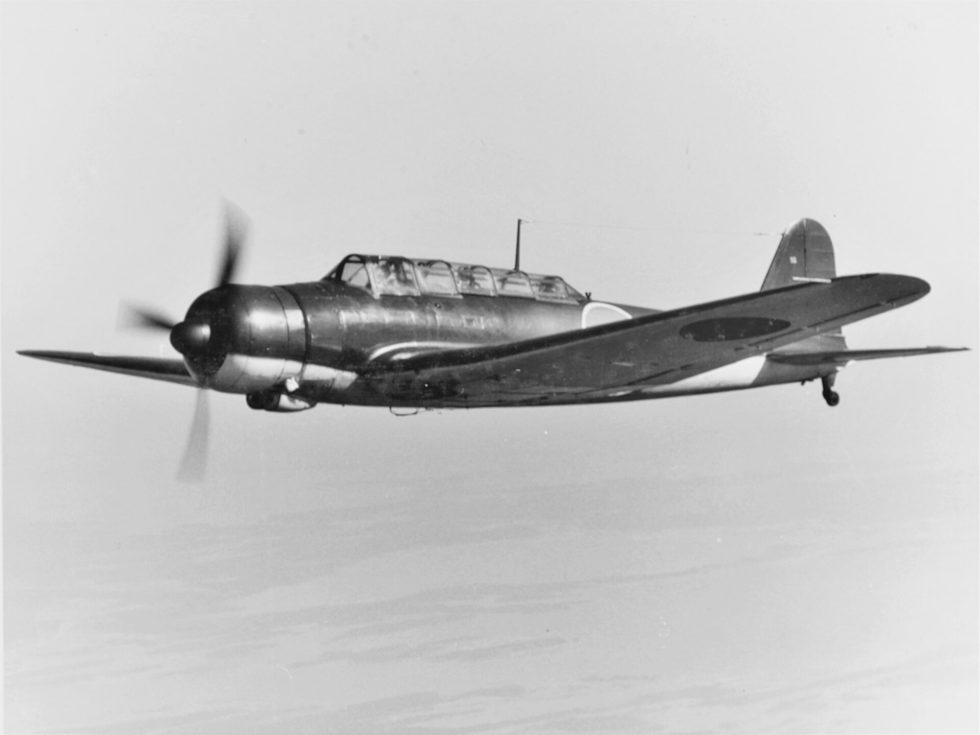
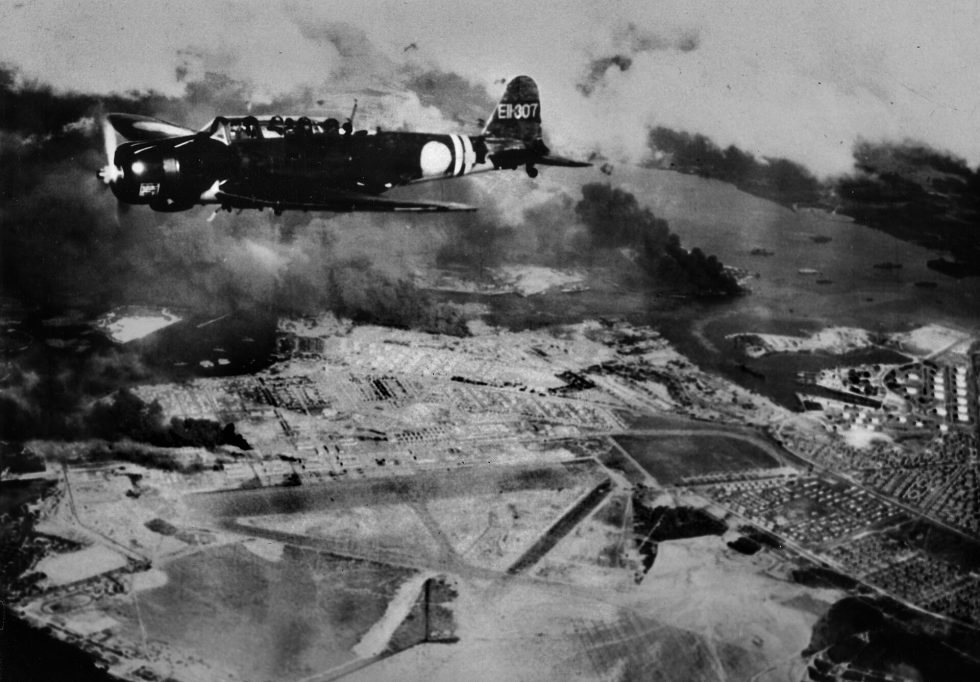
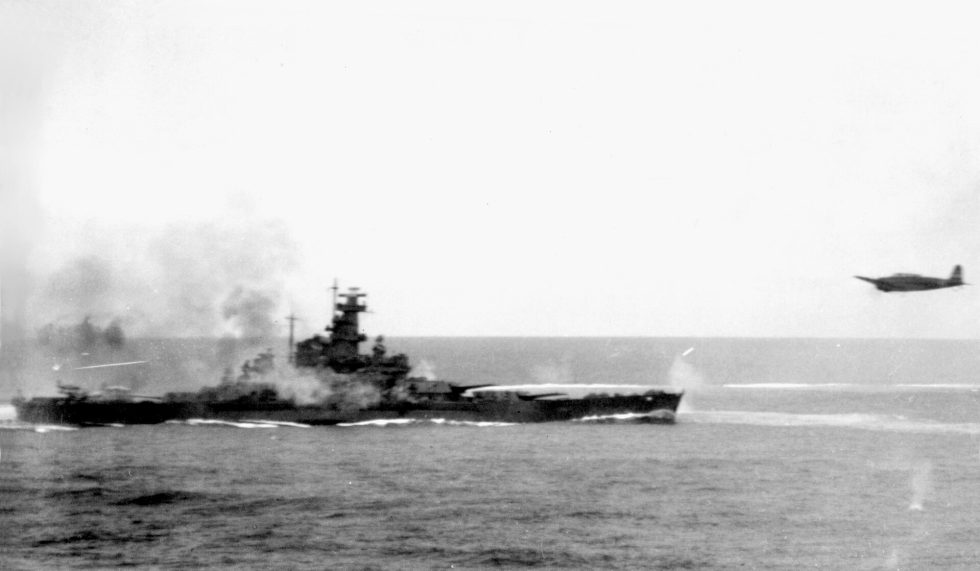
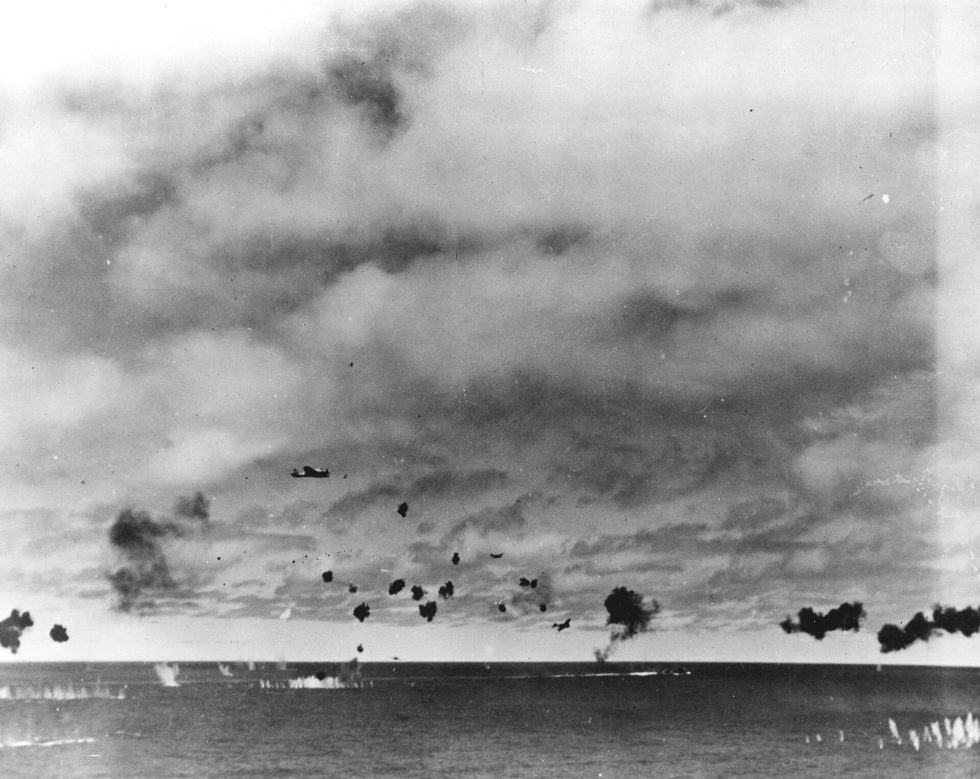
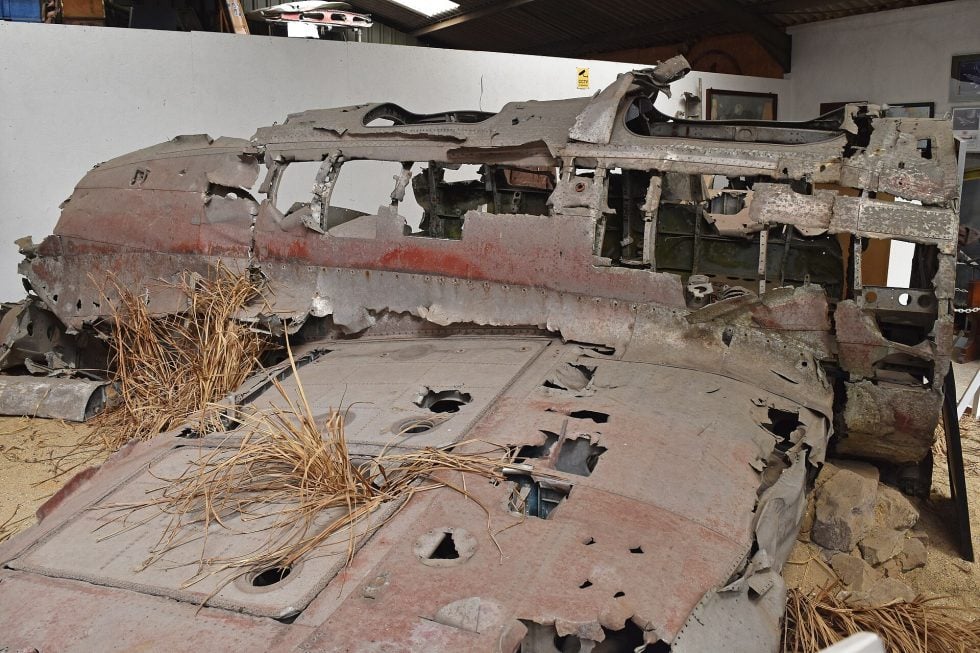
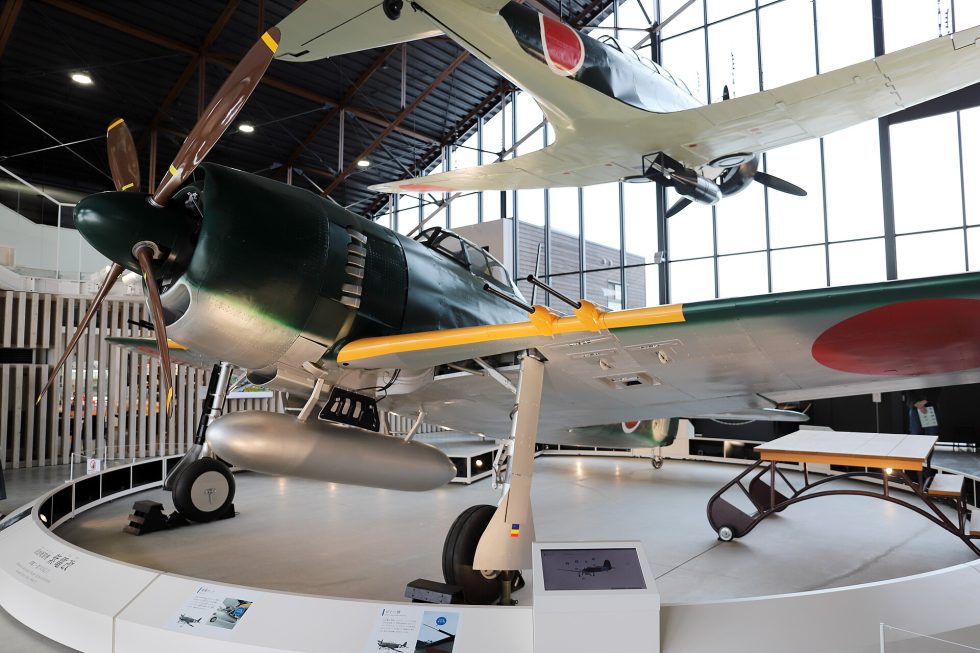
The Kate in motion
A verified, high-authority video feature on the Nakajima B5N is coming soon. We only embed documentary footage from established, high-authority channels, and are still selecting the right one for the Kate.
Where the Kate flew
The score that defines it
The Kate’s record is written not in dogfights but in ships. In the first year of the Pacific War its torpedoes and bombs did more damage to the United States Navy’s capital ships and carriers than any other Japanese aircraft — a run of success that faded as Allied fighters and gunnery caught up.
Compare the combat record of other military aircraft. Figures are best available estimates.
Everything people ask about the B5N Kate
Can I fly in a B5N Kate?
What does “Kate” mean and what is the real name?
Did a B5N really drop the bomb that destroyed USS Arizona?
Which aircraft carriers did the B5N help sink?
Was the B5N a good aircraft?
How many B5Ns were built, and who flew them?
What replaced the B5N Kate?
Are there any B5N Kates left?
You can’t fly the Kate.
These, you can.
Some legends only live in museums — others are fuelled and waiting. MiGFlug has put civilians in real military jet cockpits since 2004.
 Fly the L-39 AlbatrosThe world’s most-flown jet trainer — aerobatics included
 Fly the F-104 Starfighter“The missile with a man in it”
 Fly the MiG-21The Cold War’s most-produced jet
 Fly the T-33 Shooting StarAmerica’s first jet trainer
 Fly the DH VampireA piece of early jet history
 Fly the S.211Agile Italian jet trainer
 Fly the MB-326The classic Aermacchi jet
 Fly the MiG-15The Soviet legend of the Korean War
Continue the tour
Every fact, checked
- Pearl Harbor Aviation MuseumThe B5N2’s role at Pearl Harbor, the modified torpedoes and the armour-piercing bomb.
- The National WWII MuseumThe Pacific carrier battles of 1942 and the loss of Lexington, Yorktown and Hornet.
- Naval History and Heritage CommandUS Navy records of the Pearl Harbor attack and the carrier actions.
- HistoryOfWar.org — Nakajima B5NDevelopment history, variants, production totals and specifications.
- Imperial War MuseumsContext on the Pacific air war and Japanese naval aviation.
- Smithsonian National Air and Space MuseumReference on Japanese naval aircraft design and preserved airframes.
- Military Factory — Nakajima B5NConsolidated specifications and operational summary.
- World War II DatabaseProduction figures, variant data and service timeline.