
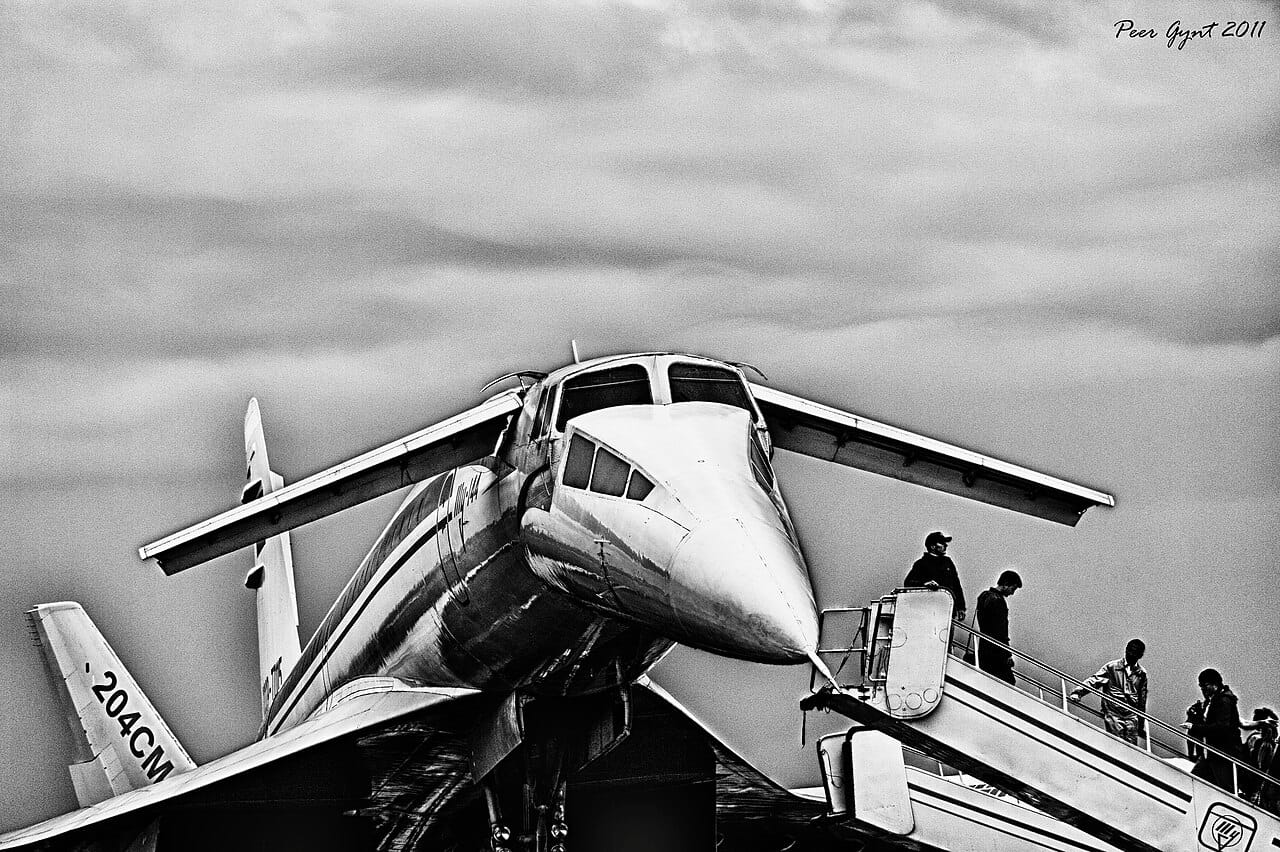
On the afternoon of 3 June 1973, an enormous crowd packs the edges of Le Bourget airfield north of Paris, faces turned up to watch the star of the air show: the Soviet Union’s supersonic airliner, the Tupolev Tu-144. Its pilot, Mikhail Kozlov, has reportedly promised to show the world that his aircraft can out-fly the Anglo-French Concorde. The white delta climbs away steeply, all four engines roaring at full power — and then, impossibly high and impossibly slow, it falters. The nose drops. The jet plunges toward the ground, the pilots fighting it, until the left wing tears clean away. The Tu-144 rolls onto its back, breaks apart, and rains burning wreckage down onto the village of Goussainville below.
Six crew and eight people on the ground died that day, three of them children. In a few seconds, in front of the whole aviation world, the Soviet dream of beating the West to the supersonic age came apart in the Paris sky.
QUICK FACTS
Aircraft: Tupolev Tu-144 — the world’s first supersonic airliner
Nickname: “Konkordski,” for its likeness to Concorde
First flight: 31 December 1968 — two months before Concorde
The disaster: Broke up at the 1973 Paris Air Show, killing 14 people
In service: Passengers only from 1977 to 1978
Built: 16 aircraft
The race the Soviets were determined to win
By the late 1960s, supersonic passenger travel looked like the inevitable future, and two camps were racing for it: the Anglo-French partnership building Concorde, and the Soviet Union, which was desperate to get there first. National pride was on the line on both sides of the Iron Curtain.
And the Soviets did get there first. The Tu-144 made its maiden flight on 31 December 1968 — two months ahead of Concorde. It was the first airliner ever to fly supersonic, the first to reach twice the speed of sound. On paper, the West had been beaten.
“Konkordski”: similar, but not the same
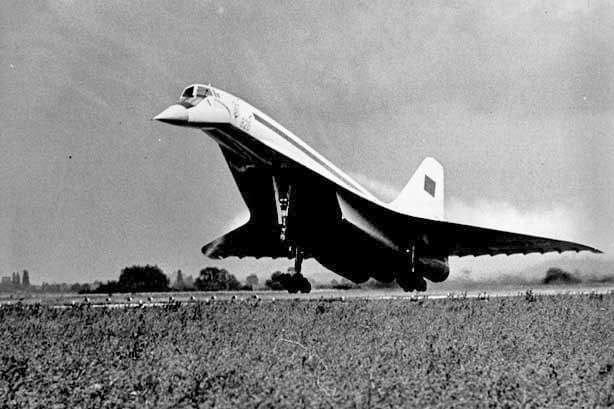
To Western eyes the Tu-144 looked uncannily like Concorde, and the resemblance was no accident. The Soviet Union was widely accused of stealing Concorde’s design secrets through espionage, and the mocking nickname “Konkordski” stuck. But beneath the similar silhouette, the two aircraft were very different machines — and the differences were where the Tu-144’s troubles lived.
Concorde could cruise supersonically on dry thrust alone — a feat called supercruise. The Tu-144 could not: it had to keep its afterburners lit to stay above the speed of sound, drinking fuel at a punishing rate. It also sprouted small retractable “moustache” canards behind the cockpit to help it handle at low speed, and its cabin was so loud that passengers could barely hear each other.
The result was an aircraft that won the race on the calendar but lost it on refinement. Where Concorde was a polished, if extravagant, machine, the Tu-144 was a rushed one — and the pressure to look unbeatable in public would prove deadly.
The crash that was never fully explained
What actually doomed the Tu-144 at Le Bourget has never been settled. The official inquiry reached no firm conclusion. The most enduring theory is that, during its climb, the crew were startled by a French Mirage chase plane sent up to photograph them, and threw the airliner into a violent evasive manoeuvre it could not survive. Some investigators also point to the flight controls having been de-restricted before the display, allowing a more dramatic — and more dangerous — routine.
Whatever the trigger, the politics were delicate: with Cold War prestige and a French airfield both involved, neither side was eager to assign blame, and the full story stayed murky for decades.
Original footage of the Tu-144’s fatal break-up at the 1973 Paris Air Show. (Viewer discretion: this is a real fatal accident.)
A footnote, where it wanted to be a legend
The Tu-144 limped on. It finally began carrying passengers in 1977 on the Moscow–Almaty route, but it was unreliable and uneconomic, and after a second Tu-144 crashed during a test flight in 1978, Aeroflot quietly ended passenger service that same year — after only a few dozen flights. Just sixteen were ever built.
Concorde, by contrast, went on to fly elegantly for twenty-seven years. The Tu-144 — first into the air, first past the sound barrier, first to Mach 2 — is remembered instead for a single catastrophic afternoon in Paris. It is one of aviation’s great cautionary tales: the danger of caring more about being first than about being right.
Sources: FlightGlobal; Bureau of Aircraft Accidents Archives; Radio Free Europe/Radio Liberty; AeroTime; Wikipedia.
Related Questions
What was the Tupolev Tu-144?
The Tupolev Tu-144 was a Soviet supersonic passenger airliner, the world’s first to fly. It made its maiden flight on 31 December 1968, two months before Concorde, and could cruise above twice the speed of sound. Because it closely resembled Concorde, it was nicknamed “Konkordski” in the West.
Did the Tu-144 fly before Concorde?
Yes. The Tu-144 first flew on 31 December 1968, about two months ahead of Concorde’s maiden flight in March 1969. It was also the first airliner to exceed the speed of sound and the first to reach Mach 2, narrowly beating the Anglo-French aircraft to each milestone.
Was the Tu-144 a copy of Concorde?
Not exactly. The two looked alike, and the Soviet Union was widely accused of stealing Concorde design data through espionage, which earned the Tu-144 the nickname “Konkordski.” But the aircraft differed in important ways, including retractable “moustache” canards and engines that needed afterburners to sustain supersonic cruise.
What happened to the Tu-144 at the 1973 Paris Air Show?
On 3 June 1973 a Tu-144 broke apart in mid-air during a demonstration flight at Le Bourget. After a steep climb it stalled, dived, and its left wing tore away, scattering wreckage over the town of Goussainville. All six crew and eight people on the ground were killed, including three children.
What caused the Tu-144 Paris Air Show crash?
The official inquiry never conclusively determined the cause. A leading theory is that the crew suddenly encountered a French Mirage chase aircraft and reacted with a violent evasive manoeuvre. A de-restriction of the flight controls before the display may also have contributed to the fatal dive.
Why did the Tu-144 fail?
The Tu-144 was thirsty, noisy and unreliable. It needed afterburners to cruise supersonically, burning enormous amounts of fuel, and the cabin was punishingly loud. After a second crash in 1978, Aeroflot ended passenger service that same year, having flown only a few dozen passenger flights.
How many Tu-144s were built, and did any survive?
Sixteen Tu-144s were built. The type carried passengers only briefly, from 1977 to 1978, before being relegated to mail and freight and then retirement. Several survive in museums, and in the 1990s one was even revived as a flying supersonic research testbed for NASA.
Related Posts
0 Comments