
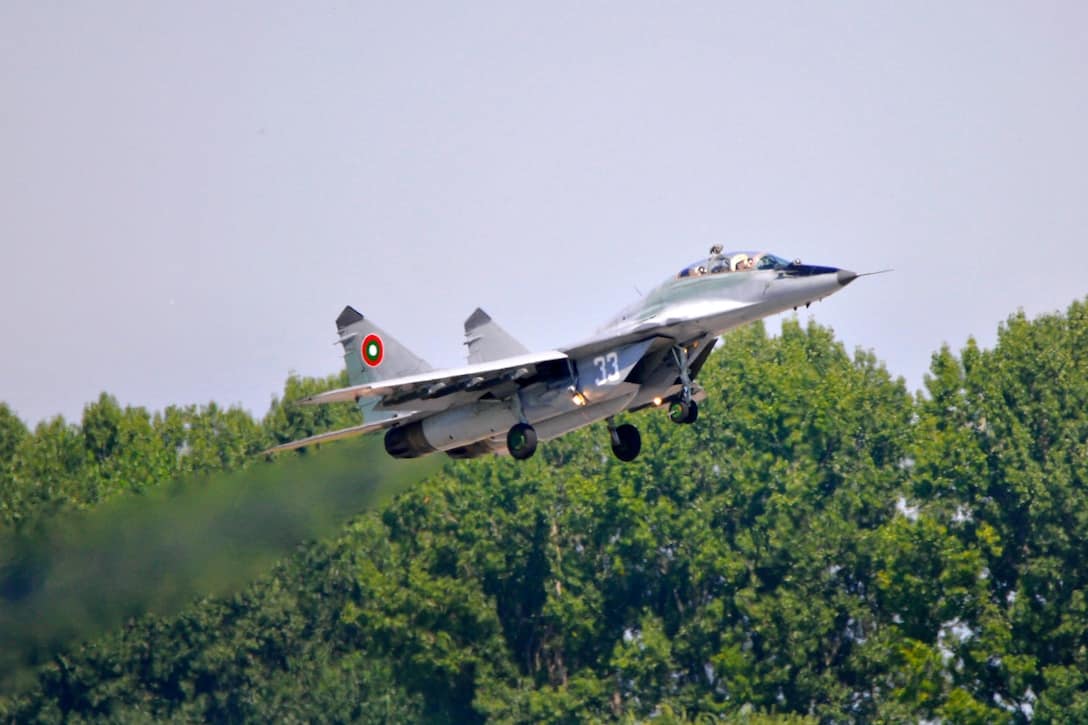
At 1:54pm on June 30, a Bulgarian MiG-29 lit its afterburners and clawed off the runway at Graf Ignatievo. Three minutes later it had formed up on the wing of a civilian Airbus A320 that had just transmitted the four digits every air-defence controller dreads: 7-5-0-0.
That code means one thing — unlawful interference on board. A hijacking. From the Danube to the Black Sea, the alert rippled outward in seconds, pulling in NATO’s southern air command in Spain and, minutes later, two Turkish F-16s waiting on the other side of the border. It was European air policing working exactly as designed, over a threat that, in the end, may never have existed.
- Date: 30 June 2026
- Trigger: Airbus A320 broadcasting squawk 7500 (unlawful interference / hijack)
- Interceptor: Bulgarian Air Force MiG-29 from Graf Ignatievo (3rd Air Base)
- Timeline: MiG airborne 13:54, intercept 13:57, handover by 14:14
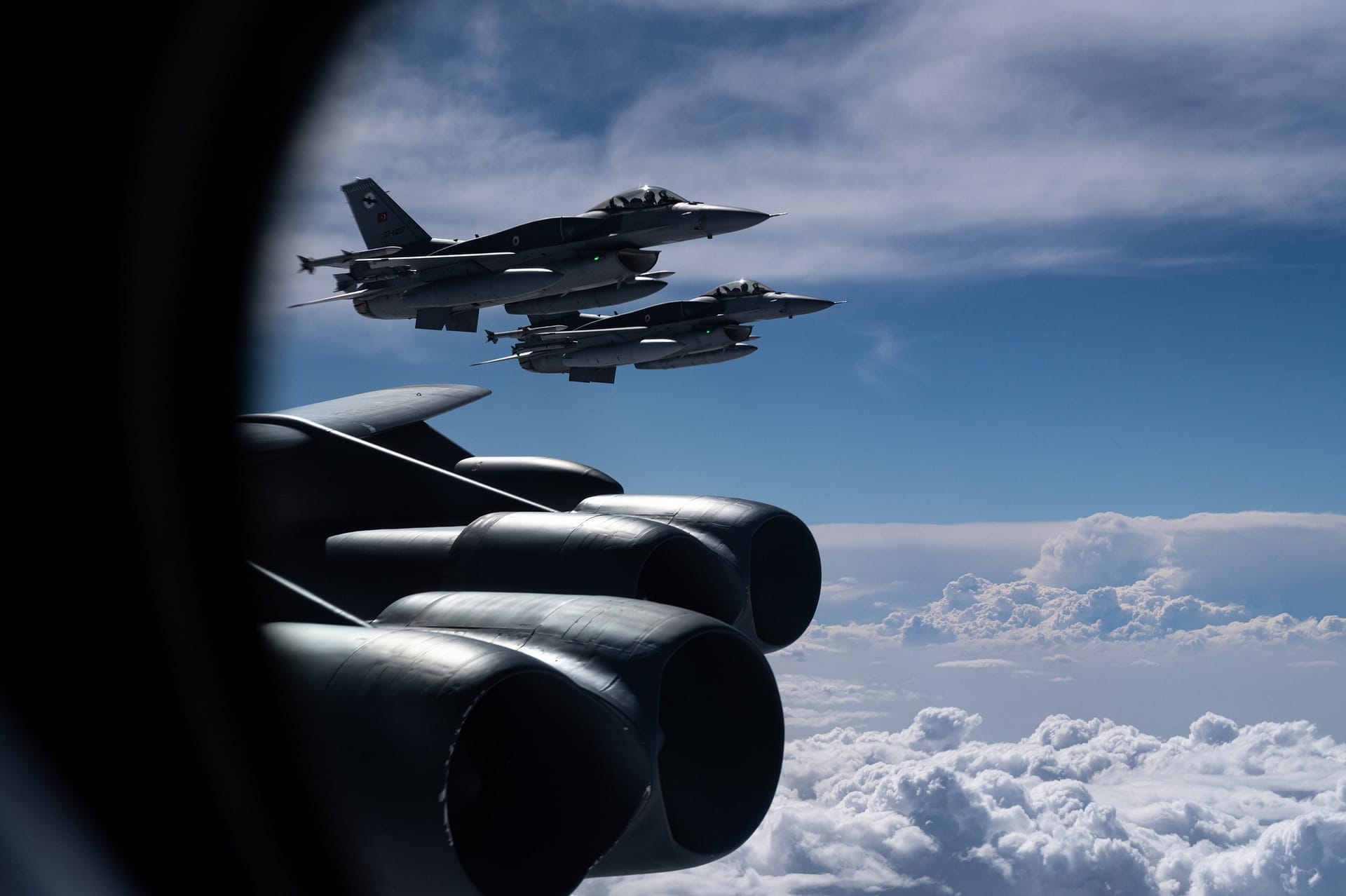
- Handover: Two Turkish Air Force F-16s took the escort at the border
- Cause: Reportedly a faulty transponder sending a false 7500 signal
Four Digits That Move Fighters
The story began not in Bulgarian skies but in Turkish ones. According to Israeli outlet Ynetnews, the A320 — operated by Poland’s LOT and chartered to a private company — was flying from Poland towards Israel when its transponder began squawking 7500 over Turkey. The signal is deliberately blunt: a single setting that tells every controller and air-defence centre within range that the crew may be facing a hijacking, often without the perpetrators knowing the alarm has been raised.
The jet pressed on toward Cyprus. The pilot reportedly insisted the alert had been triggered in error, but error or not, the system does not take chances. The aircraft was refused permission to land at both Cyprus and Tel Aviv’s Ben Gurion Airport, turned back, and eventually put down at Bulgaria’s Burgas airport on the Black Sea coast.
Bulgaria’s Defence Ministry said its Air Policing crews were activated after a tip from the NATO Combined Air Operations Centre at Torrejón in Spain, and in close coordination with it. The MiG-29 detected and intercepted the airliner as it crossed into Bulgarian airspace along the Danube.
A Relay Race Between Two Air Forces
What makes this interception a textbook case is the handover. A hijacked or distressed aircraft does not stop at a national border, and neither does the response. The Bulgarian pilot carried out reconnaissance, interrogation and escort through his country’s airspace — then passed the baton.
The Turkish Air Force, the ministry said, had prepared and sent two F-16 fighters to take over the escort once the Airbus crossed the frontier. By 2:14pm, barely twenty minutes after the MiG first rolled, the aircraft had left Bulgarian airspace and the relay was complete. Two NATO air forces, two very different fighters — a Soviet-era Fulcrum and an American-built Falcon — threading the same airliner across the map without a hitch.
The Workhorse on QRA Duty
The jet that answered the call was a MiG-29 of Bulgaria’s 3rd Air Base at Graf Ignatievo, the country’s sole remaining fighter base. For decades the Fulcrum has been the backbone of Bulgarian quick-reaction alert, standing armed and ready around the clock under NATO’s integrated air-defence system, which is run in the south from the Torrejón centre and overseen by Allied Air Command at Ramstein.
Those MiGs are living on borrowed time. Bulgaria is transitioning to the F-16 Block 70, and the venerable Fulcrums will eventually hand QRA duties to the same type Turkey scrambled on June 30. For now, though, the aging Russian-built fighter is still the one Sofia counts on when the radar lights up.
Much Ado About a Transponder
The coda is almost anticlimactic. Bulgaria’s transport ministry later attributed the whole episode to a technical fault — a transponder transmitting a false signal of unlawful interference. No hijackers, no demands, just a malfunctioning box of electronics that set two air forces in motion.
And that is rather the point. Air policing is judged not by how often the threat is real, but by how fast and how seamlessly the alliance reacts when it might be. On June 30, the answer was: in about three minutes, across two countries, without a single shot. A false alarm, perhaps — but a reassuringly well-rehearsed one.
Sources: The Sofia Globe, Ynetnews, Bulgarian Ministry of Defence, NATO Allied Air Command.
Related Questions
What does squawk 7500 mean?
Squawk 7500 is the universal transponder code a pilot sets to signal unlawful interference on board — in practice, a hijacking. Entering it discreetly alerts air traffic control and air-defence agencies without necessarily tipping off anyone in the cockpit, triggering interceptions and coordinated security responses.
Why did a Bulgarian MiG-29 intercept a civilian airliner?
On June 30, 2026, an Airbus A320 entered Bulgarian airspace while broadcasting squawk 7500, the hijack code. Acting on an alert from NATO’s air operations centre at Torrejón, Bulgaria scrambled a MiG-29 from Graf Ignatievo to detect, identify and escort the aircraft through its airspace as a precaution.
Was the LOT Airbus A320 actually hijacked?
No. Bulgaria’s transport ministry attributed the episode to a technical failure — a faulty transponder that transmitted a false signal of unlawful interference. The pilot reportedly said the alert was triggered in error, and no hijacking took place. The jet ultimately landed safely at Burgas.
Which fighters were involved in the June 30 2026 interception?
A Bulgarian Air Force MiG-29 from the 3rd Air Base at Graf Ignatievo made the initial interception. Once the airliner crossed the border, two Turkish Air Force F-16 fighters took over the escort, completing a cross-border handover between the two NATO members.
How does NATO air policing work?
NATO air policing is a 24/7 peacetime mission in which member states keep armed fighters on quick-reaction alert to identify and, if needed, escort aircraft behaving abnormally. It is coordinated through Combined Air Operations Centres — Torrejón in Spain for the south and Uedem in Germany for the north — under Allied Air Command at Ramstein.
What fighter jets does Bulgaria use?
Bulgaria’s air policing has long relied on Soviet-era MiG-29 “Fulcrum” fighters based at Graf Ignatievo, its only fighter base. The country is now transitioning to the American F-16 Block 70, which will eventually take over quick-reaction alert duties from the aging MiGs.

0 Comments