
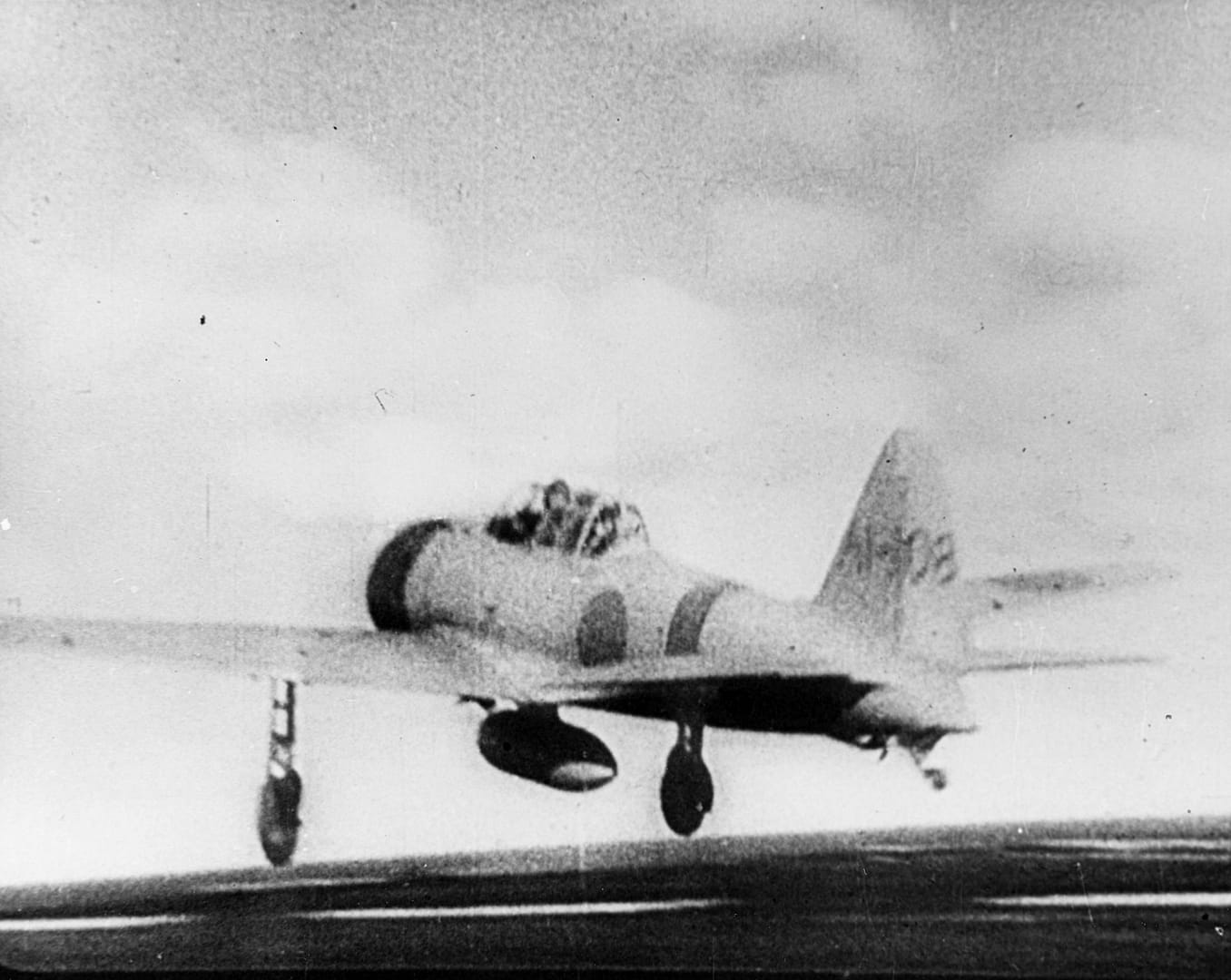
On 7 August 1942, over a island the Americans had invaded that very morning, a .30-calibre bullet passed through Saburō Sakai’s skull. It blinded his right eye and paralysed his left side. He was 560 nautical miles from home, alone, at war, in a fighter with no armour and no autopilot.
What followed is one of the most extraordinary feats of airmanship ever recorded: four hours and forty-seven minutes of flying, half-blind and bleeding, navigating by volcano peaks across open ocean, to a landing at Rabaul so precise his squadron mates initially had no idea anything was wrong. Then he made his mission report, and collapsed.
Quick Facts: Saburō Sakai
| Born | 25 August 1916, Saga Prefecture, Japan — descended from samurai turned farmers |
| Service | Imperial Japanese Navy, 1933–1945; pilot training 1937, first in his class |
| Aircraft | Mitsubishi A5M over China, then the A6M Zero with the Tainan Kōkūtai |
| Victories | Roughly 28 by official Japanese records — up to 64 in Western accounts |
| The wound | 7 August 1942, over Guadalcanal: shot through the skull, flew 4h47m back to Rabaul |
| Died | 22 September 2000, at a US Navy dinner in his honour, aged 84 |
First in His Class
Sakai enlisted at sixteen, scrubbing decks as a battleship gunner before clawing his way into pilot training in 1937 — where he graduated top of his class and received a silver watch from Emperor Hirohito. He shot down his first aircraft over China, was wounded, came back, and by December 1941 was flying the Zero from Formosa in the opening attacks on the Philippines.
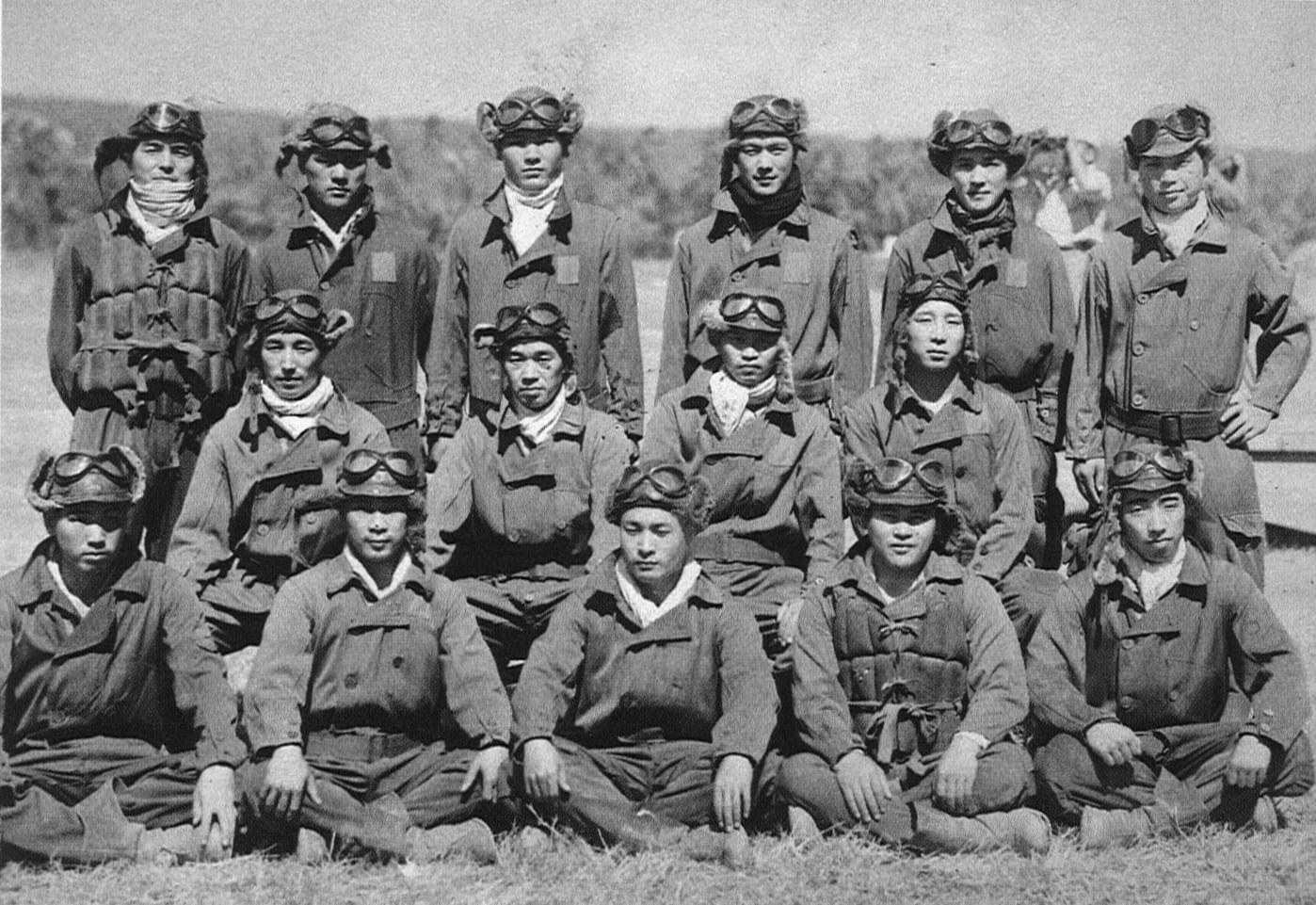
By mid-1942 he was the sharpest blade in the Tainan Kōkūtai at Lae, New Guinea — a unit so dense with talent it flew Sakai alongside Hiroyoshi Nishizawa, Japan’s greatest ace, and Toshio Ōta. The trio became famous as a hunting cell in the vicious air war over Port Moresby.
The Longest Flight
When US Marines stormed ashore at Guadalcanal on 7 August 1942, the Tainan wing launched from Rabaul on one of the longest fighter missions of the war — roughly 560 nautical miles each way. Over the beachhead, Sakai shot down a Wildcat flown by “Pug” Southerland in a duel both men survived to describe, then destroyed a dive bomber. Minutes later he spotted eight aircraft he took for more Wildcats and slid in behind them.
They were Dauntless dive bombers — and every one had a rear gunner. The crossfire caught him in the face. What he did next, he later described with the fatalism of the samurai stories he was raised on:
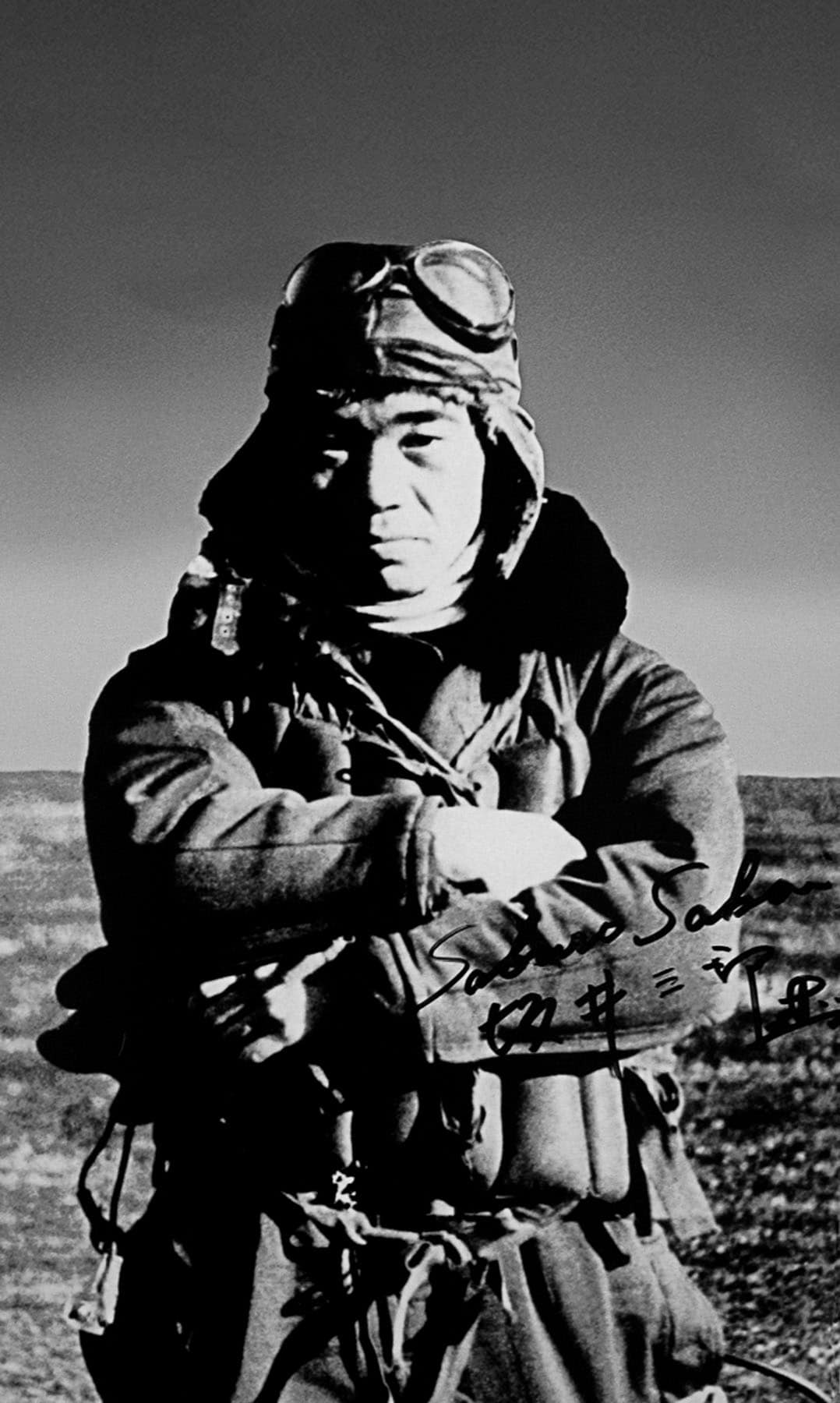
The dive toward a suicide run cleared his head — and with it came the stubborn arithmetic of survival. Flying with his left hand, wounds crusting in the slipstream, fighting unconsciousness by punching his own injured face, he coaxed the Zero home on volcanic landmarks and dead reckoning, circled Rabaul twice, and landed on the second attempt with the fuel gauge on empty. Surgeons in Japan later operated without anaesthesia. The right eye never came back.
The Ace Who Refused to Die — or Kill Again
Half-blind, Sakai argued his way back into a cockpit. Over Iwo Jima in June 1944 he survived a solo brawl with fifteen Hellcats, and in the war’s last weeks he flew night interceptions against B-29s. His postwar reckoning was harsher than any dogfight: he became a lay Buddhist and vowed never to kill another living thing.
He kept the vow for fifty-five years — and spent them building friendships with the men who had shot at him, including Harold “Lew” Jones, the Dauntless gunner whose burst had nearly killed him, whom he met at a 1982 reunion with his shattered flight helmet in hand. On the American bombings that ended the war, the old ace was bluntly unsentimental:
Saburō Sakai died on 22 September 2000 — of a heart attack, at a formal dinner held in his honour by the US Navy at Atsugi. It is hard to write a better final scene: the man shot through the head by American gunners in 1942, going out as the guest of honour of the US Navy, having never killed anything again.
The Forgotten History documentary covers the whole arc in twenty minutes:
And Sakai himself, on camera late in life — worth watching even through the subtitles:
Sources: HistoryNet; Warfare History Network; PBS; Pacific Wrecks; Wikipedia; Sakai & Caidin, Samurai! (1957 — with the usual caveats about Caidin’s embellishments)
Related Questions
Who was Saburō Sakai?
Saburō Sakai (1916–2000) was one of Japan's greatest fighter aces, credited with roughly 28 victories by official Japanese records and up to 64 in Western accounts. Flying the Mitsubishi A6M Zero with the Imperial Japanese Navy, he became famous for surviving a devastating head wound and flying nearly five hours back to base.
How did Saburō Sakai survive being shot in the head?
On 7 August 1942 over Guadalcanal, a .30-calibre bullet passed through Sakai's skull, blinding his right eye and paralysing his left side. Half-blind and bleeding, he flew his Zero for 4 hours and 47 minutes — about 560 nautical miles — navigating by volcano peaks back to Rabaul, delivered his mission report, and then collapsed.
What plane did Saburō Sakai fly?
Sakai flew the Mitsubishi A5M over China early in his career, then the legendary Mitsubishi A6M Zero with the Tainan Kōkūtai. The Zero was fast and agile but lacked armour and self-sealing fuel tanks — a stark contrast to rugged American fighters like the F4U Corsair it faced over the Pacific.
How many aircraft did Saburō Sakai shoot down?
Japanese records credit Sakai with about 28 confirmed victories, while some Western accounts put the figure as high as 64. Exact totals are uncertain because the Imperial Japanese Navy often credited aerial victories to units rather than to individual pilots.
Who did Saburō Sakai fly with?
He flew with the Tainan Kōkūtai, one of the deadliest fighter units Japan ever fielded, alongside Japan's greatest ace Hiroyoshi Nishizawa and Toshio Ōta. Their reputation stands among the most storied fighter pilots of the war on any side, such as Soviet ace Lydia Litvyak.
When did Saburō Sakai die?
Sakai died on 22 September 2000, aged 84, at a US Navy dinner held in his honour — a striking end for a man who had spent the Second World War fighting the US Navy across the Pacific.

0 Comments