
Wie werden Kampfflugzeuge üblicherweise klassifiziert?
Die Kategorisierung von Kampfflugzeuggenerationen ist eine weltweit gebräuchliche Klassifizierung. Sie ist inoffiziell und ungenau, da es kein autorisiertes Klassifizierungskonzept gibt, das auf den Merkmalen und der Leistung der Flugzeuge basiert. Zunächst einmal ist die Grenze zwischen den einzelnen Generationen nicht klar definiert. Der Begriff “Generation” ist jedoch aufgrund seiner Einfachheit sehr verbreitet. Jede Kategorie repräsentiert eine bestimmte Technologieklasse, die in den Flugzeugen zum Einsatz kommt: Avionik, Konstruktion, Triebwerke usw. Eine höhere Generation bedeutet ein technologisch fortschrittlicheres Flugzeug.Wie haben sich Kampfflugzeuge in den letzten 70 Jahren verändert?
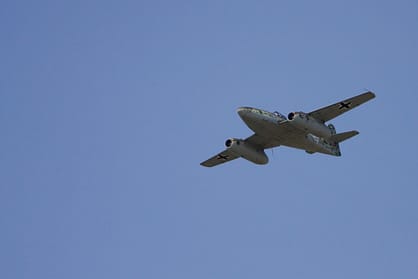
Ein Messerschmitt Me 262 Replik

Eine polnische MiG-15 (Lim-2)
Die Zukunft der militärischen Luftfahrt hat gerade erst begonnen.
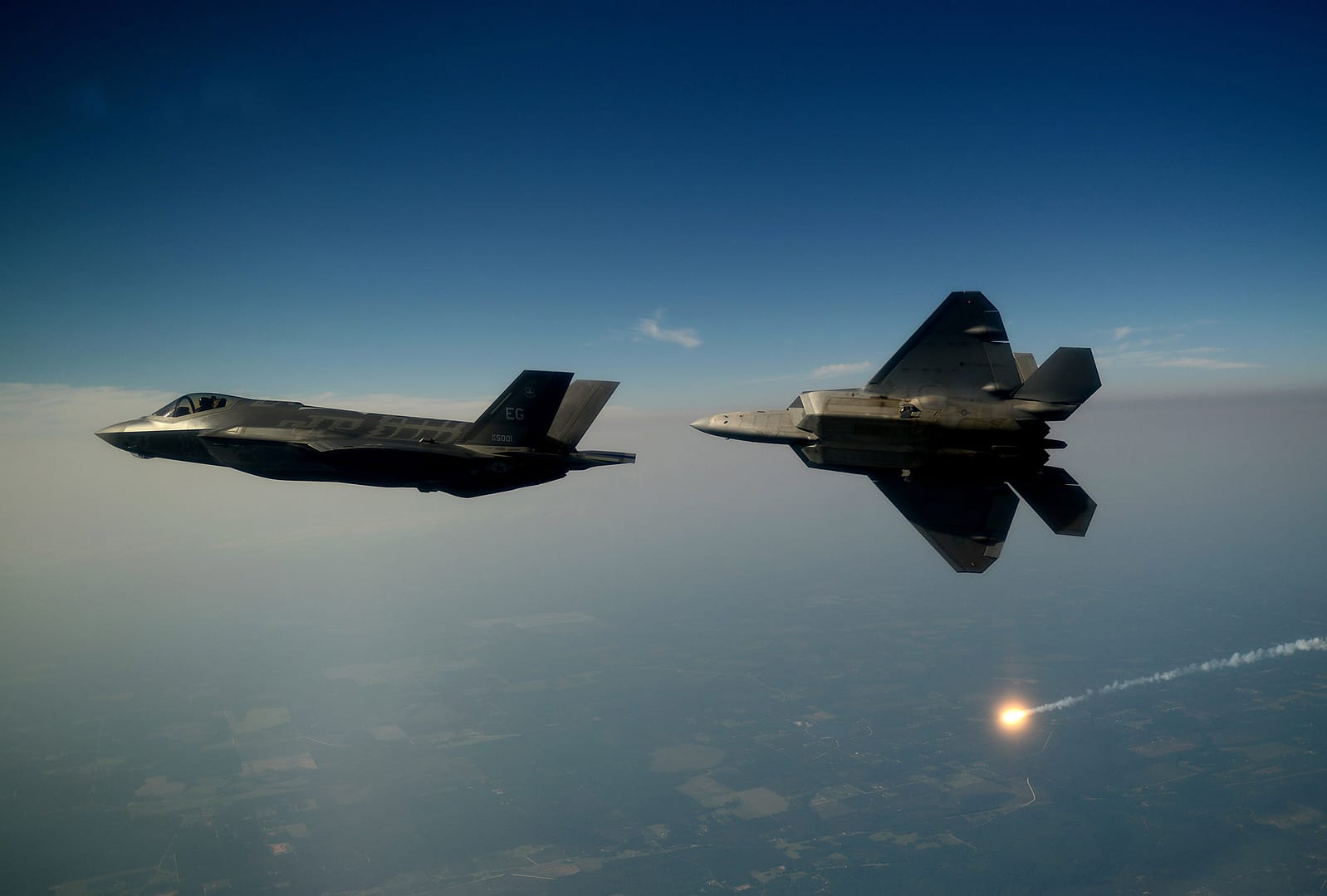
einige Entwicklungsprojekte von fünfte Generation Kampfflugzeuge wurden in Betrieb genommen. Die russische Suchoi T-50 PAK FA, die Lockheed Martin F-35 und die chinesische J-20 Und J-31 befinden sich in einem fortgeschrittenen Entwicklungsstadium. Derzeit nur die Lockheed Martin/Boeing F-22 Raptor Sie befinden sich im aktiven Dienst der US-Luftwaffe. Alle diese Flugzeuge sind für den Einsatz in einem hochtechnisierten und komplexen Kampfumfeld konzipiert. Die verwendeten Luft- und Raumfahrtmaterialien und die neue Technologie verschaffen ihnen die größten Vorteile: Sie sind für Radargeräte unsichtbar und bieten überragende Manövrierfähigkeit. Auch die Avionik ist deutlich fortschrittlicher, ebenso wie neue Kommunikations- und Navigationssysteme, Glascockpits, Hochgeschwindigkeitsnetzwerke und vieles mehr. Die Frage ist, ob diese extrem teuren Kampfflugzeuge in asymmetrischen Konflikten eine wichtige Rolle spielen werden. Möglicherweise werden die meisten Aufgaben von anderen Flugzeugen übernommen. von Drohnen (UAV) übernommen sehr bald. Quellen
- http://www.aerospaceweb.org/question/history/q0182.shtml
- http://www.airforce-magazine.com/MagazineArchive/Pages/2009/October%202009/1009fighter.aspx
- http://www.airpower.maxwell.af.mil/airchronicles/aureview/1984/jan-feb/boyne.html
- http://www.af.mil/news/story.asp?id=123292196
Verwandte Fragen
Welche Generationen von Kampfflugzeugen gibt es?
Die Einteilung in Kampfjet-Generationen ist eine inoffizielle Methode, Kampfflugzeuge nach ihrem technologischen Entwicklungsstand zu klassifizieren. Sie umfasst Avionik, Flugzeugzellenkonstruktion und Triebwerke. Es gibt keinen offiziellen Standard und keine klare Trennlinie zwischen den Generationen, aber der Begriff ist aufgrund seiner Einfachheit populär: Eine höhere Generation bedeutet ein technologisch fortschrittlicheres Flugzeug. Das System umfasst rund sieben Jahrzehnte der Jet-Entwicklung bis hin zu … Kampfflugzeuge der sechsten Generation.
Was war das erste Kampfflugzeug?
Der erste einsatzfähige Düsenjäger war die deutsche Messerschmitt Me 262, die in den letzten Tagen des Zweiten Weltkriegs eingeführt wurde. Als die Geschwindigkeitsgrenzen der propellergetriebenen Kolbenflugzeuge erreicht waren, bot das Strahltriebwerk die einzige Lösung. Die Konstruktion der Me 262 war alles andere als perfekt, aber sie wies den Weg zu einer völlig neuen Ära in der Jagdflugzeugentwicklung.
Was zeichnete die Düsenjäger der ersten Generation aus?
Die erste Generation von Düsenflugzeugen waren Unterschallflugzeuge, die von Mitte der 1940er bis Mitte der 1950er Jahre gebaut wurden und sich vor allem durch ihr Strahltriebwerk auszeichneten. Frühe Modelle ähnelten ihren kolbenmotorgetriebenen Vorgängern mit geraden Tragflächen, ohne Radar, mit Maschinengewehren und ungelenkten Bomben. Spätere Konstruktionen aus dem Koreakrieg, wie die MiG-15 und die North American F-86, erhielten Pfeilflügel und konnten im Sturzflug die Schallmauer durchbrechen.
Was sind Kampfflugzeuge der vierten Generation?
Kampfflugzeuge der vierten Generation sind größtenteils Mehrzweckflugzeuge mit hochentwickelter Avionik und Fly-by-Wire-Flugsteuerung. Fly-by-Wire verbesserte die Manövrierfähigkeit durch gezielte aerodynamische Instabilität, wobei digitale Systeme das Flugzeug permanent stabilisierten und so extreme Manöver wie beispielsweise … ermöglichten. Pugachevs Kobra. Elektronik, Head-up-Displays, Multifunktionsdisplays und Langstreckenradargeräte wurden zur wichtigsten Ausrüstung.
Warum werden manche Kampfflugzeuge als Mehrzweckflugzeuge bezeichnet?
Steigende Kosten und Forschungsschwierigkeiten trieben die Luftstreitkräfte in Richtung Mehrzweckflugzeuge, die Luftüberlegenheit und Bodenangriffe in einem einzigen Flugzeug vereinen. Die McDonnell F-4 Phantom wurde so vielseitig, dass sie als einziges Kampfflugzeug in der Geschichte von allen Teilstreitkräften der US-Streitkräfte eingesetzt wurde. Dieser Trend setzte sich bei den Jets der fünften Generation fort. F-22 und F-35.
Was war das erste Kampfflugzeug mit Senkrechtstartfähigkeit?
Der Hawker Siddeley Harrier Jump Jet war der erste Senkrechtstarter mit Kurzstart- und Landefähigkeit (V/STOL) und ermöglichte so Einsätze ohne konventionelle Start- und Landebahnen. Diese Fähigkeit beeinflusste später die Variante F-35B. Der Harrier entstand in derselben Ära, in der vielseitige Abfangjäger und Jagdbomber entwickelt wurden, während sich die Konstrukteure mit den Anforderungen des Atomzeitalters auseinandersetzten.
Toller Beitrag!
Ich habe es sehr genossen, das zu lesen!
Kurz und bündig, aber eine etwas ausführlichere Beschreibung mit weiteren Details wie der Dienstgipfelhöhe und detaillierteren Konstruktionsspezifikationen wäre wünschenswert. Auch eine Liste der Flugzeuge verschiedener Generationen könnte hinzugefügt werden.
Ich fand das Lesen so toll, dass ich es auf all meinen Social-Media-Kanälen teilen werde, damit es jeder mitbekommt.
Ich liebe diese Geschichte und glaube, ich werde meine Kinder deswegen vielleicht dazu zwingen, Piloten zu werden.