
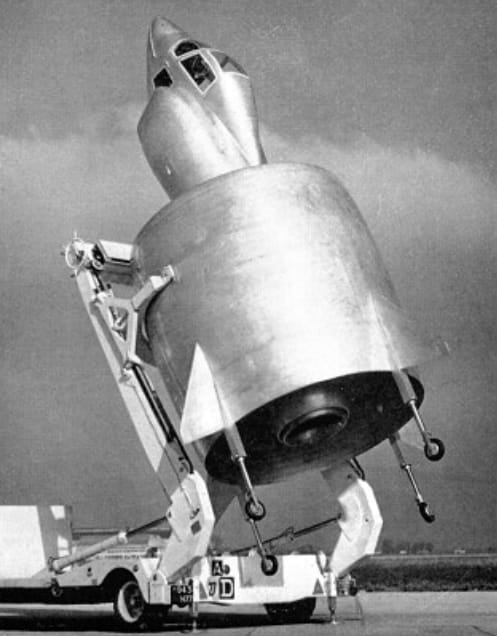
Frankreich, Ende der 1950er Jahre. Bei SNECMA bauten Ingenieure ein Flugzeug ohne erkennbare Flügel – keine lange Spannweite, kein Leitwerk im herkömmlichen Sinne, sondern nur ein Strahltriebwerk, das in einen großen Metallring eingewickelt war und so konstruiert war, dass es auf seinem Leitwerk stehen und senkrecht in den Himmel aufsteigen konnte.
Sie nannten es Coléoptère – französisch für “Käfer”. Es war eine der kühnsten und seltsamsten Flugmaschinen, die das Jet-Zeitalter je hervorgebracht hat, und einige Wochen lang im Jahr 1959 funktionierte sie tatsächlich.
| Flugzeug | SNECMA C.450 Coléoptère |
| Typ | Ringflügel-VTOL-Heckstarter |
| Motor | SNECMA Atar-Turbojet |
| Testpilot | Auguste Morel |
| Schicksal | Einziger Prototyp wurde bei seinem 9. Flug am 25. Juli 1959 zerstört. |
Ein Flügel in Form eines Rings
Das Herzstück der Idee war der Ringflügel – ein ringförmiger, den Rumpf umschließender Flügel, entworfen vom österreichischen Ingenieur Helmut von Zborowski. Theoretisch erfüllte der Ring drei Funktionen gleichzeitig: Er diente als Tragfläche, bildete die Flugzeugstruktur und umhüllte das Triebwerk mit einer glatten, den Luftwiderstand reduzierenden Verkleidung. Angetrieben wurde das Flugzeug von einem SNECMA Atar-Turbojet, derselben Triebwerksfamilie, die auch die französischen Mirage-Kampfflugzeuge antrieb. Die Coléoptère benötigte keine Startbahn – sie stieg senkrecht auf, kippte in den Horizontalflug und landete wieder auf dem Heck.
Es entstand nicht aus dem Nichts. SNECMA hatte das Rohkonzept zunächst auf dem “Atar Volant” getestet, einem fliegenden Prüfstand, der kaum mehr war als ein Motor auf Beinen, der lernte, in der Luft das Gleichgewicht zu halten.
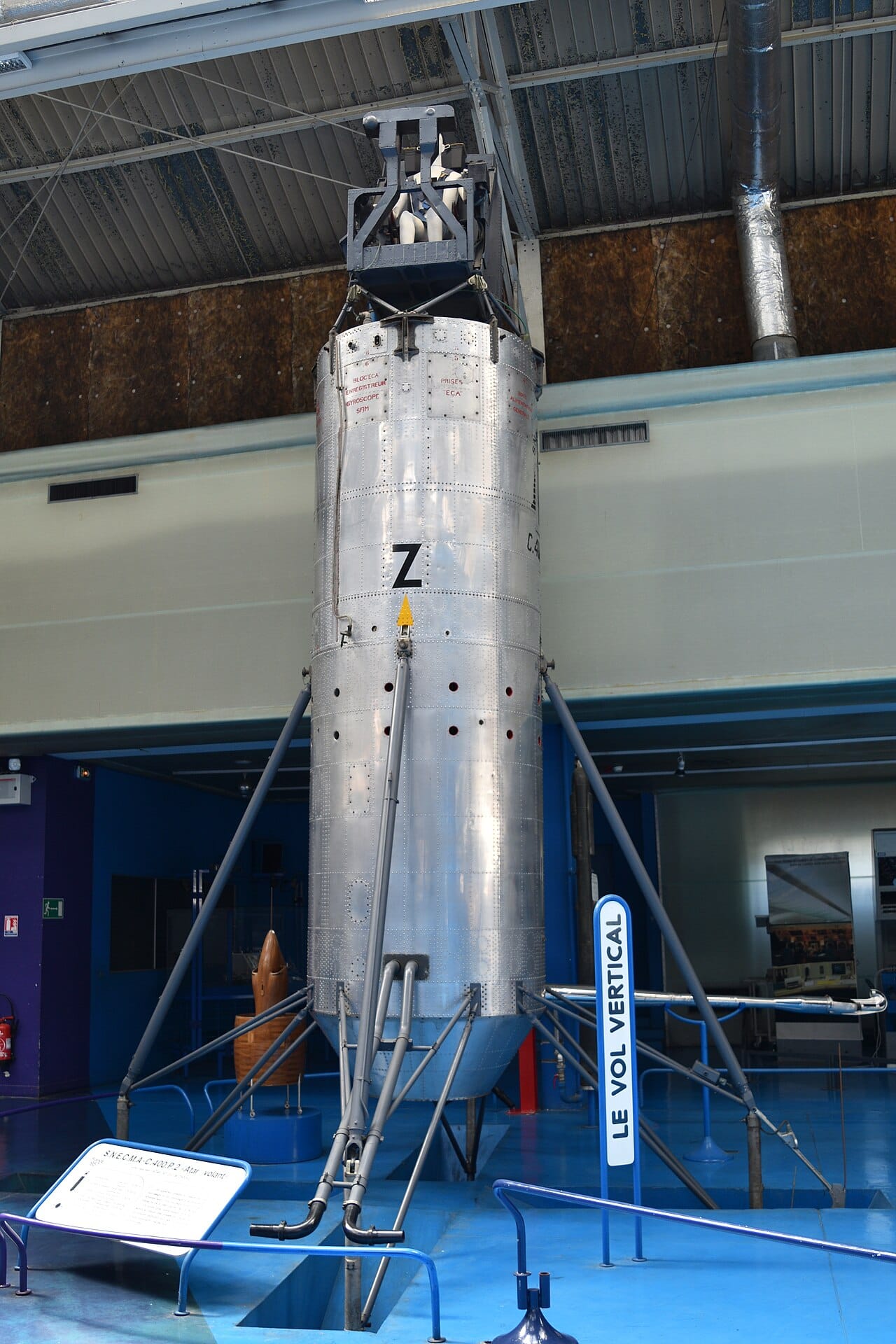
Auf einer Schubsäule stehend
Testpilot Auguste Morel ließ den Coléoptère im April 1959 erstmals an einer Leine schweben, kappte ihn dann Anfang Mai und hielt die Maschine dreieinhalb Minuten lang im freien Schwebeflug – balanciert allein durch ihren eigenen Triebwerksstrahl. In den folgenden Wochen flog er sie immer wieder, stieg auf etwa 800 Meter Höhe und holte jedes Mal mehr aus dem Käfer heraus.
Der entscheidende Faktor war der Übergang. Auf dem Rücken liegend und zum Himmel zeigend, hatte der Pilot kaum einen natürlichen Anhaltspunkt, um zu erkennen, was das Flugzeug tat, als es versuchte, vom Senkrecht- in den Horizontalflug überzugehen. Es war, um es mit den Worten jedes Piloten zu sagen, der mit einem Hecksitzflugzeug zu kämpfen hat, als würde man versuchen, eine Rakete nach Gefühl zu landen – dasselbe brutale Problem, das Amerikas Flugzeug zu Fall brachte. Convair XFY Pogo.
Der neunte Flug
Am 25. Juli 1959, bei ihrem neunten Flug, kam es zum Bruch. Als Morel ein Manöver versuchte, begann die Coléoptère zu rotieren und zu schwanken; desorientiert und in geringer Höhe verlor er die Kontrolle und schleuderte sich mit dem Schleudersitz heraus. Er überlebte, war aber schwer verletzt. Der einzige Prototyp wurde zerstört. Ein zweiter war geplant, doch die Finanzierung blieb aus, und die kurze, aber glanzvolle Karriere des Käfers war beendet.
Der Ringflügel flog nie wieder. Hubschrauber und später Senkrechtstarter wie der Harrier Sie gewann die Debatte darüber, wie man ohne Startbahn starten kann. Doch die Coléoptère bleibt eines der großen und schönsten “Was wäre wenn”-Momente der Luftfahrtgeschichte – ein typisch französisches Meisterwerk der Kühnheit, das kurzzeitig und tatsächlich auf dem Rückgrat stand und flog.
Quellen: Musée de l'Air et de l'Espace; Vertipedia; Wikipedia.
Verwandte Fragen
Was war der SNECMA Coléoptère?
Die SNECMA C.450 Coléoptère (französisch für 'Käfer') war ein revolutionäres französisches Senkrechtstart- und -landeflugzeug der späten 1950er-Jahre. Es besaß weder konventionelle Tragflächen noch ein Leitwerk, sondern lediglich ein Strahltriebwerk, das in einem großen ringförmigen Flügel untergebracht war. Die Konstruktion sah vor, dass das Flugzeug auf seinem Heck stehen und senkrecht in den Himmel steigen konnte. Der einzige Prototyp absolvierte 1959 einige Wochen lang Flugzeit.
Was ist ein Ringflügel?
Ein Ringflügel, ein ringförmiger Flügel, der den Flugzeugrumpf umschließt, ist eine Idee des österreichischen Ingenieurs Helmut von Zborowski. Bei der Coléoptère erfüllte er drei Funktionen gleichzeitig: Er diente als Tragfläche, bildete die Flugzeugstruktur und umhüllte das Triebwerk mit einer glatten, den Luftwiderstand reduzierenden Verkleidung. Nach der Coléoptère wurde dieses Konzept nie wieder erfolgreich eingesetzt.
Was ist ein Hecksitterflugzeug?
Ein Heckstarter ist ein Flugzeug, das senkrecht auf dem Heck aufliegt und landet, bevor es sich zum Horizontalflug neigt. Die Coléoptère war ein Beispiel dafür. Der Übergang vom Senkrecht- zum Horizontalflug stellte das größte Problem dar, da der Pilot, ähnlich wie der amerikanische Pilot, auf dem Rücken lag und kaum Orientierungspunkte hatte. Ryan X-13 Vertijet Sie standen vor derselben desorientierenden Herausforderung.
Was geschah mit dem SNECMA Coléoptère?
Am 25. Juli 1959, bei ihrem neunten Flug, begann die Coléoptère beim Übergang in den Horizontalflug zu rotieren und zu oszillieren. Testpilot Auguste Morel verlor in seiner desorientierten und zu geringen Flughöhe die Kontrolle, rettete sich mit dem Schleudersitz und überlebte schwer verletzt. Der einzige Prototyp wurde zerstört, ein geplantes zweites Flugzeug wurde nie finanziert, und die kurze, aber glanzvolle Karriere des Käfers war beendet.
Warum waren die VTOL-Hecksitzflugzeuge der 1950er Jahre so schwer zu fliegen?
Hecksitzflugzeuge wie die Coléoptère verlangten vom Piloten, den Übergang vom senkrechten zum Horizontalflug nahezu ohne natürliches Gefühl für die Fluglage zu meistern – er musste quasi auf dem Rücken liegen und 'eine Rakete nach Gefühl landen'. Dasselbe brutale Steuerungsproblem führte auch zum Scheitern von Konstruktionen wie der … Focke-Wulf Triebflügel und Amerikas Convair XFY Pogo. Hubschrauber und später Senkrechtstarter lösten das Problem des Senkrechtflugs auf praktischere Weise.
0 Kommentare