
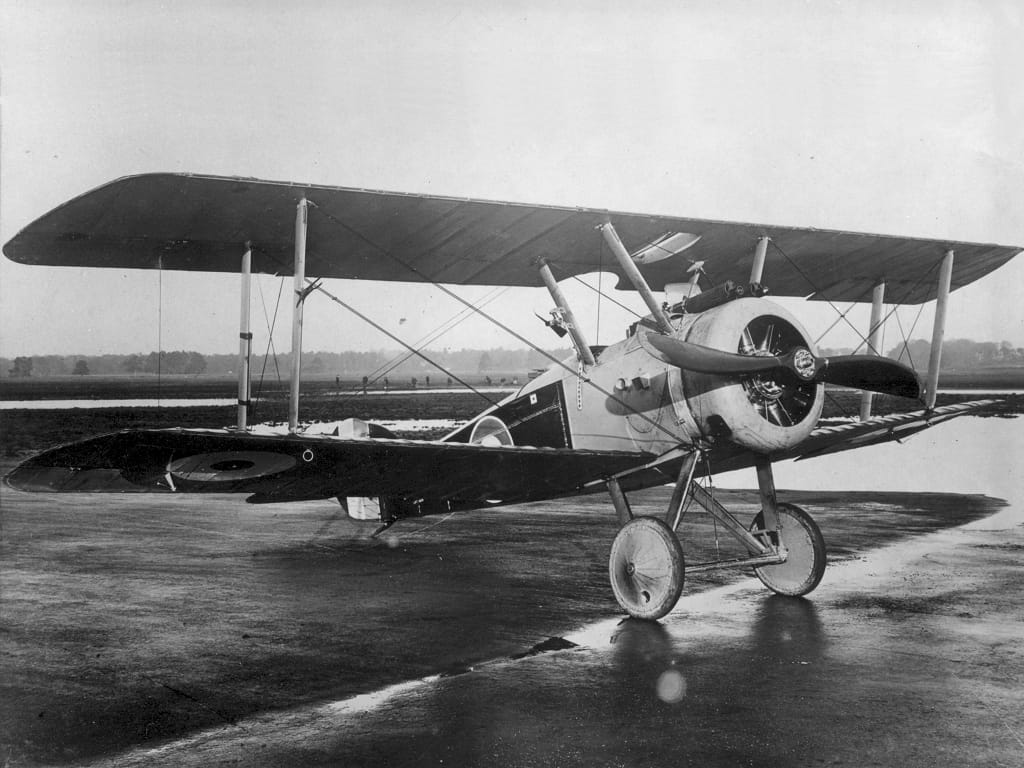
It shot down more enemy aircraft than any other Allied fighter of the First World War — and it killed a horrifying number of the young men sent up to fly it, before they ever met a German. The Sopwith Camel was the finest dogfighter of 1917 and a booby-trap with wings, and the two facts were the same fact. What made it deadly to the enemy made it deadly to the novice. There was no separating them.
Pilots joked, blackly, that the Camel offered three ways to finish your training: a wooden cross, the Red Cross, or a Victoria Cross. It was gallows humour built on real statistics. But master the beast, and you had the most agile fighter in the sky.
| Flugzeug | Sopwith Camel (F.1) |
| Hersteller | Sopwith Aviation Company |
| Erster Flug | 22 December 1916 |
| Motor | Rotary (Clerget, Bentley, Le Rhône) |
| Siege | ~1,294 credited — most of any Allied fighter |
| Gebaut | ~5,490 |
The hump that bit
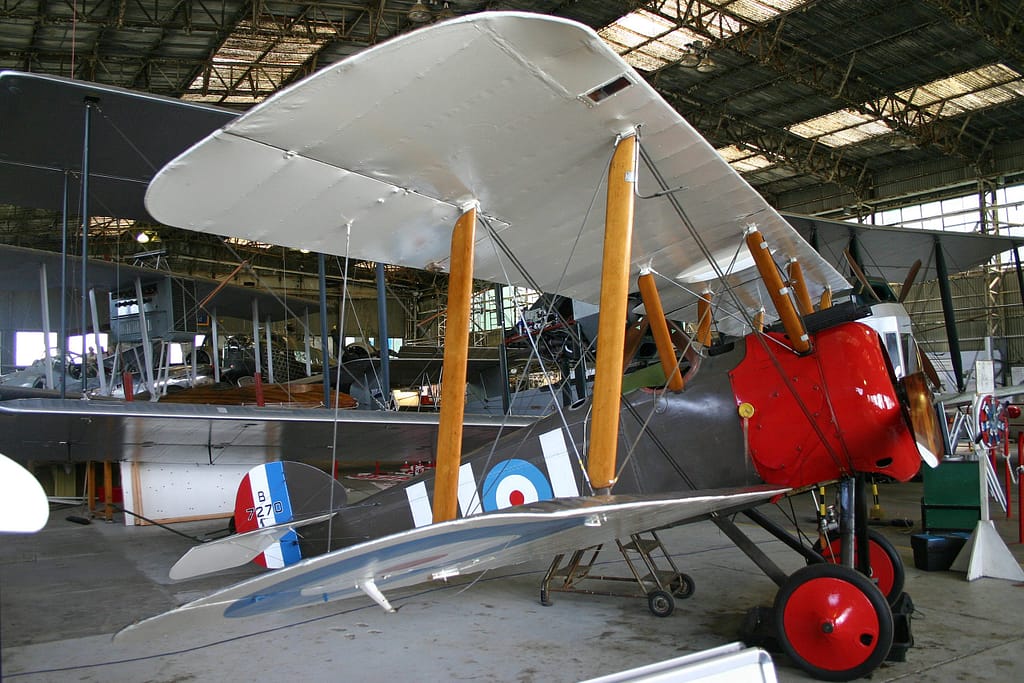
The Camel got its name from the humped fairing over the breeches of its twin Vickers machine guns — the first British fighter to carry two synchronised guns firing through the propeller. Nearly all its weight — engine, guns, fuel, pilot — was packed into the front seven feet of the fuselage. Bolt a spinning rotary engine to the front of that, and you got savage agility and a vicious temper.
The rotary engine’s whole mass spun with the propeller, and the gyroscopic force it generated warped the aircraft’s handling. The Camel turned sluggishly left but snapped to the right astonishingly fast — so fast that pilots sometimes changed heading to the left by hauling three-quarters of the way round to the right. In skilled hands it was witchcraft. In unskilled hands, a mishandled turn dropped instantly into a spin.
The reaper in training
That spin killed. Pupils on their first solos fell out of the sky with grim regularity, victims of a machine that punished the smallest error. One instructor recalled the carnage bluntly.
The fix was a twin-seat trainer with a smaller fuel tank to shift the balance forward. But the underlying truth never changed: the qualities that made the Camel murderous to the enemy demanded a pilot who had genuinely mastered it.
The Baron and the record
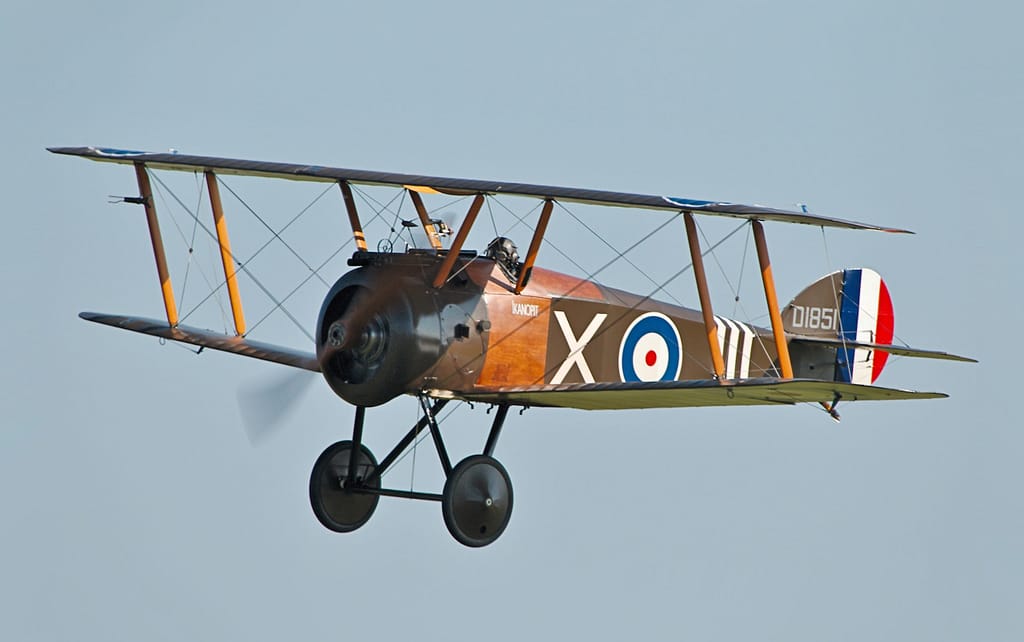
Roughly 5,490 Camels were built, and pilots flying them were credited with some 1,294 victories — more than any other Allied fighter of the war, though, like all First World War claims, the figure is best read as claims rather than confirmed kills. One Canadian ace, Billy Barker, scored 46 of his victories in a single Camel.
The type’s most famous moment is also its most disputed. On 21 April 1918 Captain Roy Brown, flying a Camel, was officially credited with shooting down Manfred von Richthofen — the Red Baron. Modern analysis leans the other way, crediting the single fatal bullet to Australian machine-gunners on the ground. Brown got the record; the Camel got the legend.
By 1918 faster designs were arriving, and the Camel’s reign was brief. But for one blazing year it was the aircraft that ruled the Western Front — if, and only if, it did not kill you first.
Sources: RAF Museum; Imperial War Museum; Smithsonian NASM; standard First World War aviation histories.
0 Kommentare