
Yesterday, we reported on a remarkable letter from the nation's Adjutants General to Congress, demanding the Air Force buy at least 72 — and ideally 100 — new fighters per year to prevent the force from shrinking below the threshold needed to fight a major war. The letter laid out the problem in blunt terms: the US fighter fleet is ageing, shrinking, and heading for a crisis.
Today, we look at the other side of the equation: why the United States, with the most powerful defence-industrial base on earth, cannot build fighters fast enough to meet its own requirements — and what that means for the next war.
The Numbers Don't Work
The Air Force has said for years that it needs to acquire 72 new fighters annually just to hold the fleet steady — replacing jets that age out, crash, or become too expensive to maintain. The current budget buys 45. That is not a rounding error. It is a structural shortfall of 27 aircraft per year, compounding annually, that is hollowing out the force from the inside.
Air Force Vice Chief of Staff General John Lamontagne put it plainly in early June 2026: demand for new aircraft is outstripping what contractors can produce. "No bill can legislate a factory into producing faster than its current capacity allows," he said. The 72-fighter goal, the Air Force acknowledged, "is not currently achievable."
That single sentence should alarm anyone who follows American defence policy. The world's largest air force is publicly admitting that its industrial base cannot build enough fighters to keep the force from shrinking.
El F-35 Bottleneck
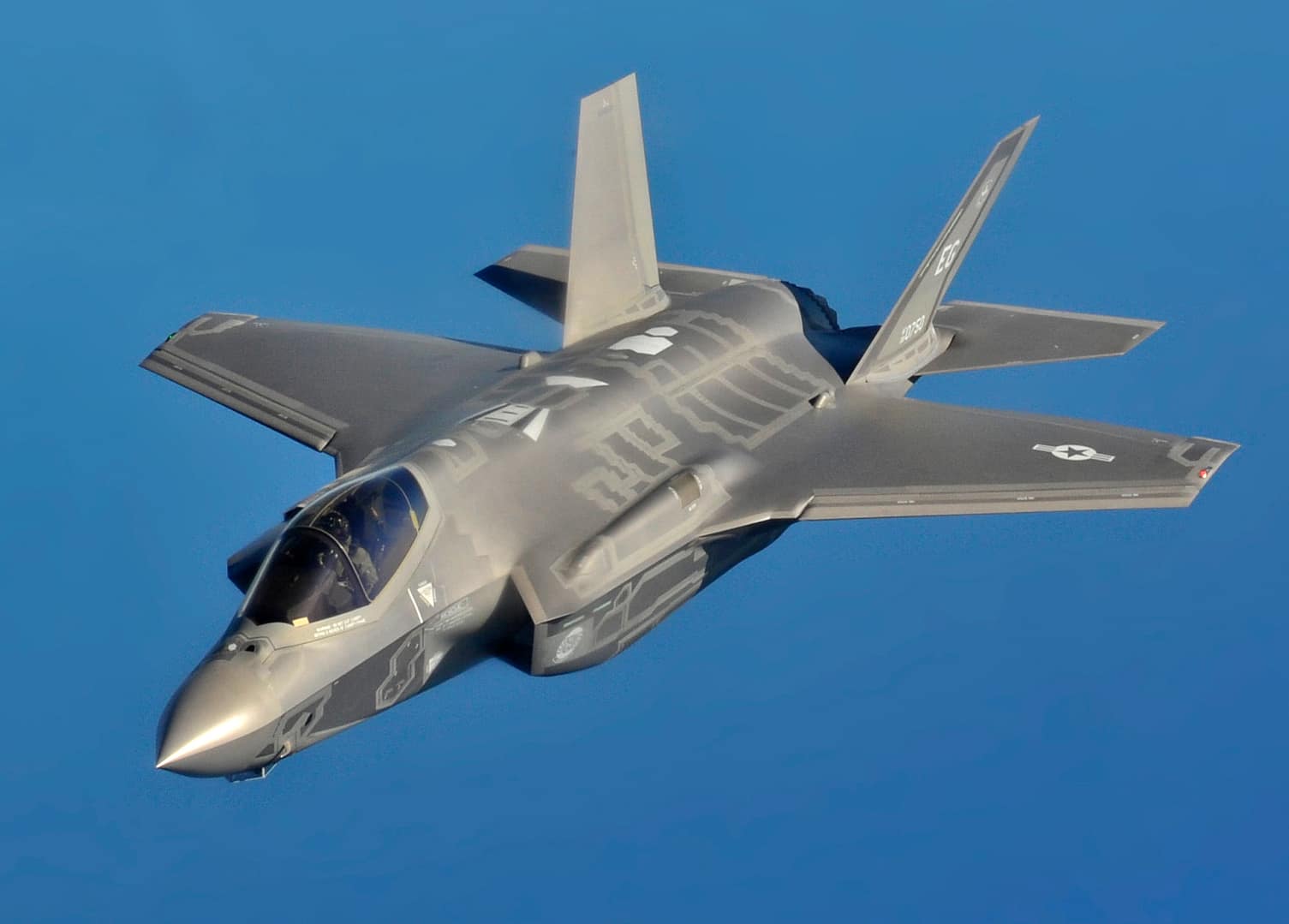
The F-35 Lightning II was supposed to be the answer. A single airframe — in three variants for the Air Force, Navy, and Marines — that would replace the F-16, F/A-18, A-10, and AV-8B simultaneously. Lockheed Martin's Fort Worth plant was designed to produce 156 jets per year at full rate. In 2025, it delivered 191 — a record, but one that masks deep problems beneath the surface.
The Technology Refresh 3 (TR-3) upgrade — the hardware and software package critical to the Block 4 configuration — was originally due in April 2023. It is now expected in 2026, three years late. During that delay, Lockheed continued building airframes that could not be delivered because they lacked the required upgrade. At one point, the company was sitting on more than 100 "undeliverable" jets.
The engine programme is in similar trouble. Every one of the 123 Pratt & Whitney F135 engines delivered in 2024 arrived behind schedule, with an average delay of 238 days. The Government Accountability Office described the situation as "significant risk to operational readiness." Contracts for engine Lots 18 and 19 will not be finalised until spring 2026 — six months late.
And then there is the supply chain. At the start of 2025, Lockheed was waiting for more than 4,000 individual parts and components to complete F-35 production — including 1,600 parts specific to the TR-3/Block 4 avionics upgrade. Some of these are specialised alloys and composites with single-source suppliers. Others are electronic components caught in the same semiconductor supply-chain disruptions that have plagued every defence programme since 2020.
The Bridge Fighter: F-15EX to the Rescue?
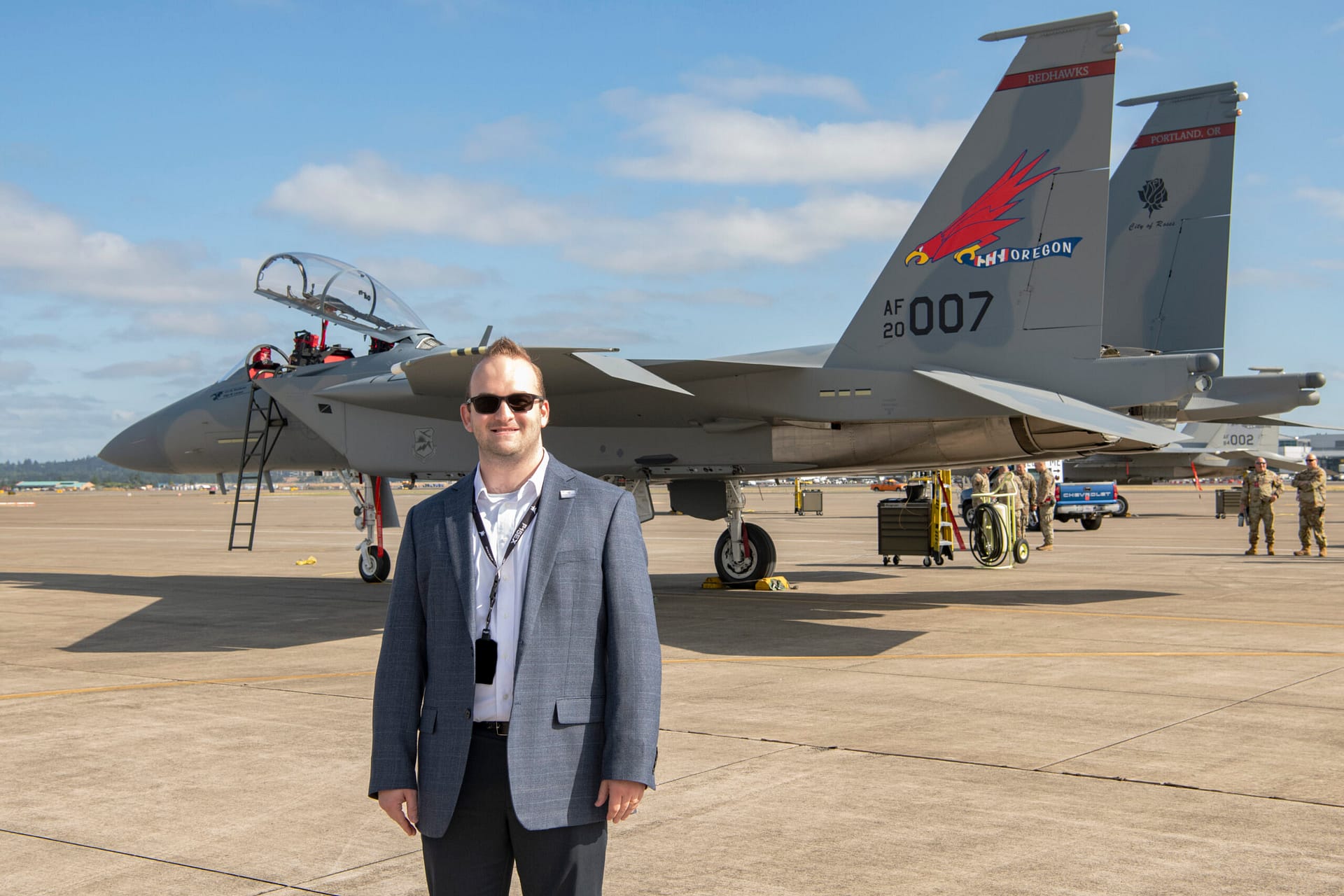
Faced with the F-35's production ceiling, the Air Force has turned to a familiar face: the F-15. Boeing's F-15EX Eagle II — a modernised fourth-generation fighter with new avionics, fly-by-wire controls, and the ability to carry an astonishing 29,500 pounds of weapons — is being procured as a "bridge" to fill the gap while F-35 production ramps up and sixth-generation fighters remain years away.
By mid-2026, the Air Force has increased its planned F-15EX fleet to 267 airframes. Boeing's St. Louis production line can deliver aircraft in months rather than years, and the jet's maintenance infrastructure already exists across hundreds of bases worldwide. It is, in bureaucratic terms, a "low-risk acquisition."
But there is a painful irony here. The F-15EX is not stealthy. In a conflict with China — the scenario that drives virtually all US force planning — a non-stealthy fighter operating in the Western Pacific would face surface-to-air missile systems and enemy fighters specifically designed to detect and destroy aircraft with large radar cross-sections. Buying more F-15EXs keeps the fleet numbers up. Whether it keeps the fleet survivable is a very different question.
The Sixth-Generation Mirage
The situation is made worse by the delay to both sixth-generation fighter programmes. The Air Force's F-47 (formerly NGAD) and the Navy's F/A-XX were supposed to begin entering service in the early 2030s. Both have slipped to the mid-2030s — a pragmatic acknowledgement of what the Pentagon calls "industrial saturation."
The B-21 Raider stealth bomber, the T-7A Red Hawk advanced trainer, the Sentinel ICBM replacement, and dozens of classified programmes are all competing for the same pool of aerospace engineers, precision machinists, and assembly capacity. America's defence-industrial base is not idle — it is overwhelmed.
The result is a fighter fleet that will continue to shrink through at least 2028 before stabilising — if everything goes according to plan. The Air Force's current fighter roadmap projects slow growth in F-35 numbers, a gradual drawdown of legacy F-16s and A-10s, and an increasingly aged force whose average airframe hours climb every year.
The Strategic Question
The fundamental problem is not technical. America knows how to build great fighters. The problem is structural: the defence-industrial base was right-sized for a post-Cold War world where major conflict was assumed to be unlikely. It was designed to produce small numbers of exquisite systems at a profitable pace — not to surge production in response to a peer competitor.
China, by contrast, is producing J-20 stealth fighters at an estimated rate of 100 per year. Its industrial base is expanding, not contracting. In a protracted conflict, the side that can replace losses faster wins. By that measure, the United States is heading into the most dangerous decade in its post-war history with a production rate it already knows is inadequate — and no clear plan to fix it.
The Adjutants General got one thing right in their letter to Congress: this is not a problem that can wait. Every year the gap goes unfilled, the force gets older, smaller, and less capable. And the factories that could close it are already running as fast as they can.
Sources: Air & Space Forces Magazine, Defence Industry Europe, Simple Flying, 19FortyFive
Preguntas relacionadas
How many fighter jets does the US Air Force need to buy each year?
The US Air Force says it needs at least 72 new fighters a year just to hold the fleet steady, and the nation’s Adjutants General have urged Congress to fund up to 100. The current budget buys only 45 — a structural shortfall of 27 aircraft a year that compounds annually.
Why can’t the United States build fighter jets fast enough?
The bottleneck is industrial capacity, not money. In June 2026 Air Force Vice Chief of Staff General John Lamontagne said demand is outstripping what contractors can produce, adding that the 72-fighter goal "is not currently achievable." The world’s largest air force is publicly admitting its industrial base cannot keep the fleet from shrinking.
What is the F-35 TR-3 upgrade?
Technology Refresh 3 (TR-3) is the hardware and software package critical to the F-35’s Block 4 configuration. Originally due in April 2023, it is now expected in 2026 — three years late. During the delay Lockheed Martin kept building airframes it could not deliver, at one point holding more than 100 undeliverable jets.
¿Qué motor impulsa el F-35?
The F-35 Lightning II is powered by the Pratt & Whitney F135 turbofan. Every one of the 123 F135 engines delivered in 2024 arrived late, by an average of 238 days, and the Government Accountability Office warned of significant risk to operational readiness. Supply-chain gaps also left thousands of parts outstanding.
Was the F-35 meant to replace older jets?
Yes. The F-35 was designed as a single airframe in three variants to replace the F-16, F/A-18, A-10 and AV-8B across the Air Force, Navy and Marines. Production delays have undercut that plan, feeding wider debates about how fighter production numbers compare with rivals and next-generation programmes.

0 Comentarios