
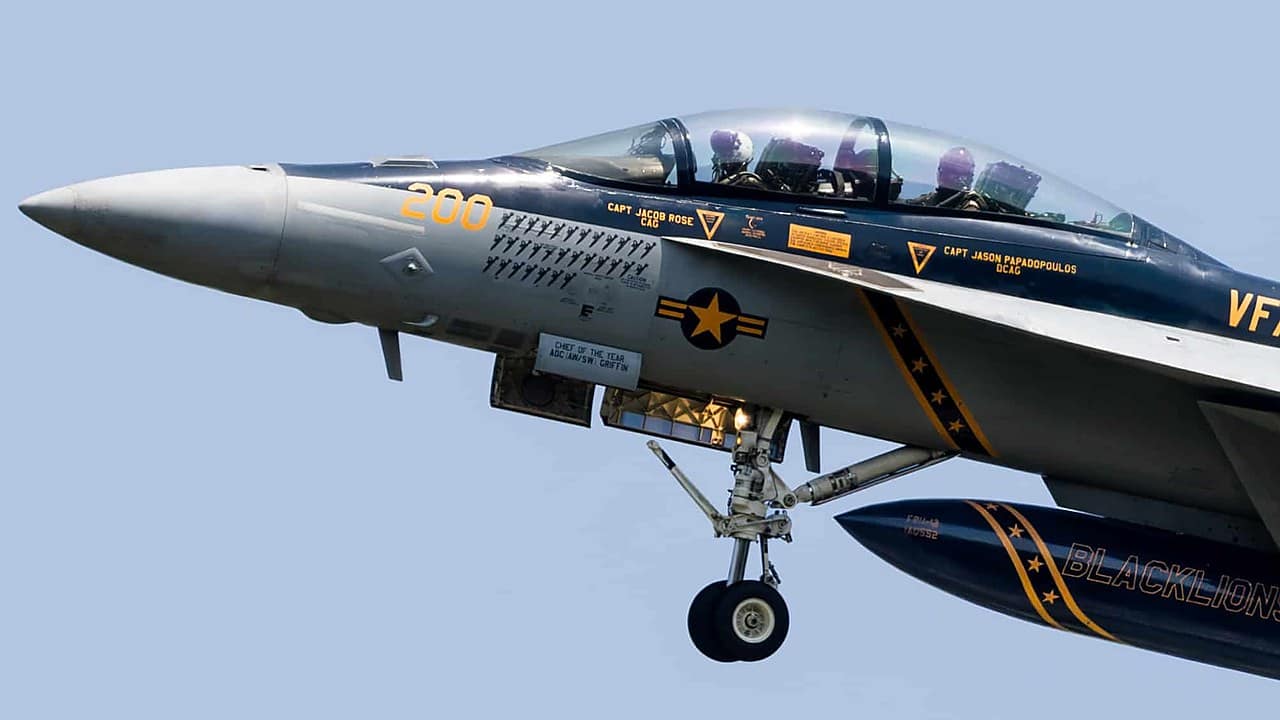
Los aviones de combate llevan diarios. Los llevan escritos con plantillas, justo debajo de la barandilla de la cabina, y si sabes leerlos te dirán exactamente qué tipo de año han tenido las tripulaciones. El 4 de julio, como el Super Hornets Tras el sobrevuelo del 250 aniversario de Estados Unidos en Nueva York, el fotógrafo William Abrams esperaba con un teleobjetivo para capturar las siluetas de las bombas del USS Gerald R. Ford, que fueron recuperadas en la Estación Aeronaval Oceana. Lo que capturó, y que The Aviationist publicó esta semana, es el diario de guerra de dicho ala aérea, escrito silueta a silueta de bomba.
Los aviones pertenecen a los escuadrones que pasaron el último año a bordo del Ford, el portaaviones más nuevo y grande de la Armada estadounidense, participando en los ataques contra Irán. Ahora están de vuelta en casa, y sus morros están cubiertos de nuevas marcas de misión: filas ordenadas de símbolos de armas que registran lo que cada aeronave lanzó en combate.
Datos rápidos
- Fotografías tomadas el 4 de julio de 2026 en la Base Aeronaval de Oceana, durante la recuperación tras el sobrevuelo del 250 aniversario de Estados Unidos sobre Nueva York.
- El F/A-18F del VFA-213 "Black Lions" CAG luce 31 marcas idénticas en forma de bomba, aún no identificadas.
- Otros recuentos del CVW-8: un avión del VFA-37 muestra 4 siluetas de JSOW y 42 de JDAM; el avión del CAG del VFA-87 muestra 11 JDAM.
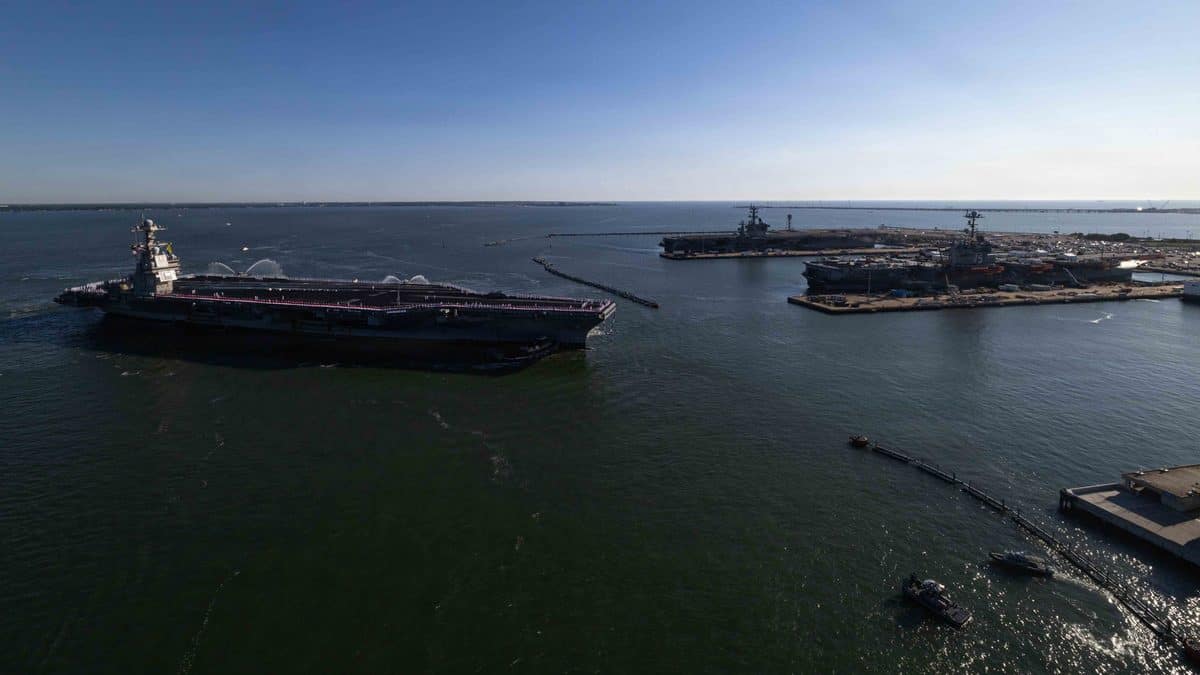
- El USS Gerald R. Ford zarpó el 24 de junio de 2025 y regresó a Norfolk el 16 de mayo de 2026; 326 días, el despliegue de portaaviones estadounidense más largo en más de medio siglo.
- El grupo de ataque combatió en la Operación Furia Épica (Irán) y en la Operación Lanza del Sur (Caribe).
- El Ala Aérea Embarcada 8 registró más de 5760 horas de vuelo y 12 200 despegues (Marina de los EE. UU.).
- El grupo de ataque recibió la Mención Presidencial a la Unidad.
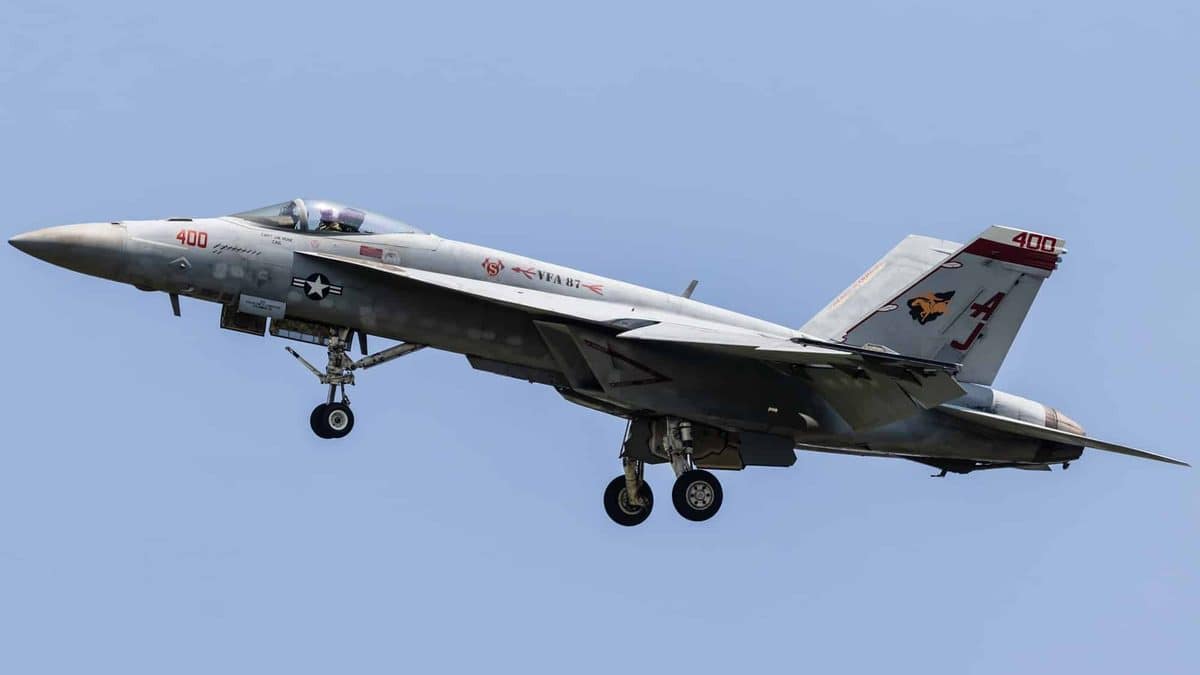
Los recuentos varían de avión a avión, lo que precisamente los hace interesantes. Un F/A-18E gris del VFA-87 muestra cuatro misiles AGM-154 Joint Standoff Weapons; el colorido avión del CAG del escuadrón muestra once bombas guiadas JDAM. Los dos aviones fotografiados del VFA-37 fueron los que más acción tuvieron del grupo: uno lleva cuatro JSOW y la notable cantidad de cuarenta y dos JDAM, el otro cuatro JSOW y diecinueve JDAM. Se informó que las JDAM, tanto en su versión estándar como guiada por láser, fueron unas de las armas más utilizadas en la campaña aérea contra Irán.
Y luego está el enigma. El F/A-18F insignia del VFA-213, los "Black Lions", luce treinta y una marcas idénticas que nadie fuera del escuadrón ha logrado descifrar. Cada una parece mostrar la carcasa de una bomba de la serie Mk-80, la misma que se usa para las JDAM, con un segundo símbolo no identificable pintado encima. Treinta y una marcas de cualquier tipo constituyen un historial de combate impresionante. Treinta y una marcas de algo misterioso son una invitación a visitar todos los foros de aviación de internet.
Lo que realmente hizo el Ala Aérea
Las marcas son los recibos de un despliegue que batió récords que nadie deseaba batir. El USS Ford zarpó de Norfolk el 24 de junio de 2025 para lo que se había planeado como un crucero rutinario por Europa. Regresó a casa 326 días después, el 16 de mayo de 2026, tras el despliegue de portaaviones estadounidense más largo en más de medio siglo. Entre medias, el grupo de ataque fue enviado al Caribe para la Operación Southern Spear y luego a Oriente Medio para la Operación Epic Fury, la campaña contra Irán.
Las propias cifras de la Armada ilustran la carga de trabajo: el buque navegó más de 57 000 millas náuticas y realizó 23 reabastecimientos en el mar, mientras que el Ala Aérea Embarcada 8 acumuló más de 5760 horas de vuelo y 12 200 lanzamientos. "Son casi 80 000 millas navegadas", dijo el almirante Daryl Caudle, jefe de Operaciones Navales, en la ceremonia de bienvenida. "Eso es como dar la vuelta al mundo tres veces: más de 2500 salidas, 12 000 despegues de aeronaves tácticas, más de 200 toneladas de munición lanzadas". El secretario de Defensa, Pete Hegseth, recibió al buque en el muelle y entregó al grupo de ataque la Mención Presidencial a la Unidad, el máximo galardón que puede recibir una unidad militar estadounidense, por su labor en la Operación Furia Épica.
El escuadrón VFA-213 fue protagonista en las imágenes oficiales durante todo el despliegue. Las fotografías del CENTCOM mostraban los F/A-18F biplaza del escuadrón en prácticamente todas las configuraciones posibles: sin combustible para entrenamiento, transportando cinco tanques externos como aviones cisterna para abastecer de combustible a los grupos de ataque, y cargados con misiles JDAM y Laser JDAM para los ataques propiamente dichos. Las marcas de la misión son el resumen; esas fotos fueron los capítulos.
Desde el Memphis Belle hasta el CAG Bird
Pintar el historial de combate en el fuselaje de un avión es una de las costumbres más antiguas de la aviación militar. En la Segunda Guerra Mundial, las tripulaciones de bombarderos estampaban una bomba en el fuselaje por cada incursión superada —las veinticinco del B-17 Memphis Belle se hicieron tan famosas que incluso organizaron una gira para bonos de guerra—, mientras que los pilotos de cazas conmemoraban sus victorias con filas ordenadas de banderas enemigas bajo la cabina. Esta tradición se mantuvo durante las victorias de MiG en Corea y Vietnam, y nunca desapareció del todo; simplemente se adaptó a la era del ataque de precisión, donde el recuento se basa en las armas entregadas en lugar de los aviones derribados.
Sus actuales custodios son exactamente los aviones que cabría esperar. A-10 Jabalíes y F-15E Los Strike Eagle suelen regresar de sus misiones luciendo elaborados diseños en el morro y extensos registros de bombas, misiles y objetivos destruidos. Los escuadrones de la Armada tienden a ser más sobrios, con una gloriosa excepción: el avión del comandante del ala aérea, que por tradición luce los colores más llamativos del escuadrón. Cuando un avión del comandante del ala aérea añade marcas de combate a su librea, como ha sucedido con el VFA-213, el resultado es lo más parecido a un estandarte heráldico que tiene la aviación naval moderna.
Lo que nos lleva de nuevo a esos treinta y un símbolos. La Armada no los ha explicado, y el escuadrón no tiene obligación de hacerlo. Podrían indicar una variante específica de arma, una clase particular de objetivo o algo que nadie fuera de la sala de preparación ha adivinado. Tarde o temprano, alguien de los Leones Negros contará la historia tomando una cerveza, y el misterio se convertirá en un hecho.
Hasta entonces, los propios aviones hablan por sí solos, estacionados bajo el sol de Virginia con un año de guerra pintado en sus morros. Diarios, como decíamos. Y este tenía mucho que contar.
13News Now cubre el tan esperado regreso a casa del grupo de trabajo de Ford en Norfolk.
Fuentes: The Aviationist, Marina de los EE. UU., VPM, Stars and Stripes, USNI News, DVIDS
Preguntas relacionadas
¿Qué significan las marcas de misión en los aviones de combate?
Las marcas de misión son pequeños símbolos pintados con plantilla debajo de la cabina de un avión militar para registrar su historial de combate; cada silueta de bomba suele representar un arma lanzada o una misión realizada. Esta tradición se remonta a generaciones y convierte el morro de cada avión en un diario de guerra público que documenta su despliegue más reciente.
¿Cuánto duró el despliegue del USS Gerald R. Ford entre 2025 y 2026?
326 días: el despliegue más largo de un portaaviones estadounidense en más de medio siglo. El Ford zarpó el 24 de junio de 2025 y regresó a Norfolk el 16 de mayo de 2026, participando en la Operación Furia Épica contra Irán y en la Operación Lanza del Sur en el Caribe.
¿En qué operaciones combatió el grupo de ataque de Ford?
Dos operaciones con nombre: Operación Furia Épica, la campaña de ataques contra Irán, y la Operación Lanza del Sur en el Caribe. El desempeño del grupo de ataque le valió la Mención Presidencial a la Unidad, y sus Super Hornets regresaron a casa luciendo hileras de nuevas marcas de misión.
¿Qué es el USS Gerald R. Ford?
El USS Gerald R. Ford (CVN-78) es el portaaviones más nuevo y grande de la Armada de los Estados Unidos, y el buque insignia de su clase. Su ala aérea, el Ala Aérea Embarcada 8, acumuló más de 5760 horas de vuelo y 12 200 despegues durante el despliegue de 2025-2026, según la Armada de los Estados Unidos.
¿Qué indican las marcas de las bombas en los Ford Super Hornet?
Las fotografías tomadas en la base aérea naval de Oceana el 4 de julio de 2026 muestran un avión del escuadrón VFA-37 con 4 siluetas de bombas JSOW y 42 de bombas JDAM, el avión del comandante del grupo aéreo del escuadrón VFA-87 con 11 bombas JDAM, y un F/A-18F del comandante del grupo aéreo del escuadrón VFA-213 que lleva 31 marcas idénticas en forma de bomba, aún no identificadas, un recuento que tiene a los expertos en aviación especulando.
¿Qué es un JDAM?
La JDAM (Munición de Ataque Directo Conjunto) es un kit de guiado que convierte bombas no guiadas en armas de precisión guiadas por GPS. Es una de las armas aire-tierra más utilizadas en el arsenal estadounidense, y las siluetas de la JDAM predominan en las nuevas marcas de misión de los Super Hornet del escuadrón aéreo de Ford.
¿Dónde se tomaron las fotos del Super Hornet?
En la Estación Aeronaval Oceana, Virginia, el 4 de julio de 2026, mientras los aviones del Ala Aérea Embarcada 8 se recuperaban del sobrevuelo America 250 en Nueva York. El fotógrafo William Abrams capturó las marcas, y The Aviationist publicó las imágenes, recién salidas del aeropuerto. un despliegue condicionado por la confrontación con Irán.
0 Comentarios