
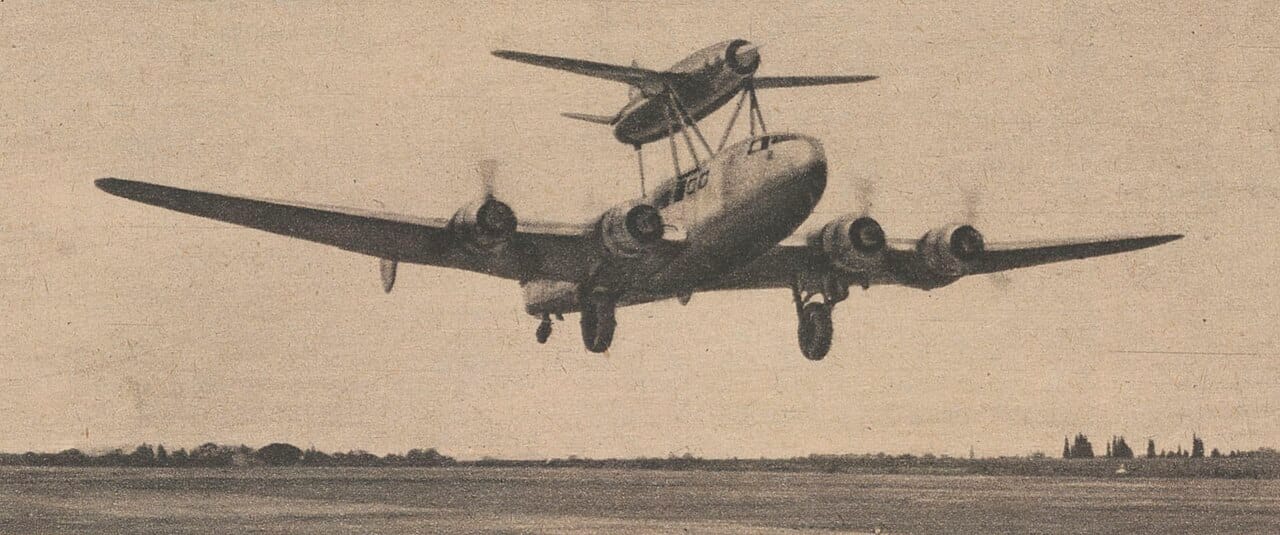
Imagina un avión de combate que no puede despegar. No tiene forma de moverse por sí mismo en la pista, ni de ganar velocidad, ni de elevarse del suelo. Para volarlo, hay que atornillarlo al techo de un avión comercial, izarlo hasta la altitud adecuada y soltarlo; solo entonces, cuando el aire circule por su fuselaje hueco, el motor cobrará vida.
Este era el Leduc, una de las máquinas voladoras más extrañas que Francia haya construido, y uno de los primeros aviones del mundo en volar impulsado únicamente por la potencia bruta de un estatorreactor. Aún más extraña era la disposición de los asientos: el piloto iba tumbado boca abajo, sellado dentro de un cono de cristal en el centro de la entrada de aire del motor, mirando fijamente cómo el flujo de aire aullaba a su alrededor en dirección a la llama.
Fue la obsesión de un ingeniero testarudo, René Leduc, y durante un breve momento en la década de 1950, pareció ser el futuro de la aviación.
• Aeronave: Leduc 0.10: uno de los primeros aviones en volar solo con propulsión de estatorreactor.
• Diseñador: René Leduc; un estatorreactor funcional demostrado en la fábrica de Breguet en 1936.
• El problema: Un estatorreactor no produce empuje en reposo, por lo que la aeronave no podría despegar.
• La solución: transportado en lo alto de un avión de pasajeros de Sud-Est Languedoc y liberado a gran altitud.
• Primer vuelo propulsado por un estatorreactor: 21 de abril de 1949 sobre Toulouse (~680 km/h a media potencia)
• El piloto: Yacía boca abajo en una cápsula frontal acristalada, justo en el centro de la entrada de aire.
• Versión final: El Leduc 0.22 de ala en flecha alcanzó Mach 1.15 en 1957 antes de que el proyecto fuera cancelado en 1958.
Un tubo de estufa con alas
El estatorreactor es el motor a reacción más simple que se pueda imaginar: sin compresor, sin turbina, prácticamente sin piezas móviles. Es poco más que un tubo con una forma específica que utiliza su propia velocidad para introducir aire a presión, donde se añade y quema el combustible. La idea fue patentada por otro francés, René Lorin, en 1913, pero tenía un inconveniente fatal. Un estatorreactor solo produce empuje una vez que ya se mueve a gran velocidad por el aire. Parado en una pista, no hace absolutamente nada.
René Leduc dedicó décadas a lidiar con esa paradoja. En 1933 consiguió una pequeña subvención gubernamental, en 1936 demostró el funcionamiento de un estatorreactor y obtuvo un contrato para construir un avión real basado en él; sin embargo, la Segunda Guerra Mundial interrumpió sus planes. Su prototipo permaneció oculto a los alemanes ocupantes, casi destruido en un bombardeo y no voló hasta años después de la guerra.
El avión que tuvo que ser soltado para volar
Dado que el Leduc 0.10 no podía despegar, Leduc simplemente lo montó en una grúa sobre un avión de pasajeros Languedoc de cuatro motores. La aeronave compuesta ascendería junta; el pequeño avión estatorreactor se soltaría para planear hasta alcanzar la velocidad suficiente para encender su motor. El 21 de abril de 1949, sobre Toulouse, el estatorreactor se encendió en vuelo por primera vez y el Leduc ascendió y maniobró completamente por sus propios medios, alcanzando unos 680 km/h a medio gas. El principio se había demostrado de la forma más audaz posible.
Volando desde el interior del motor
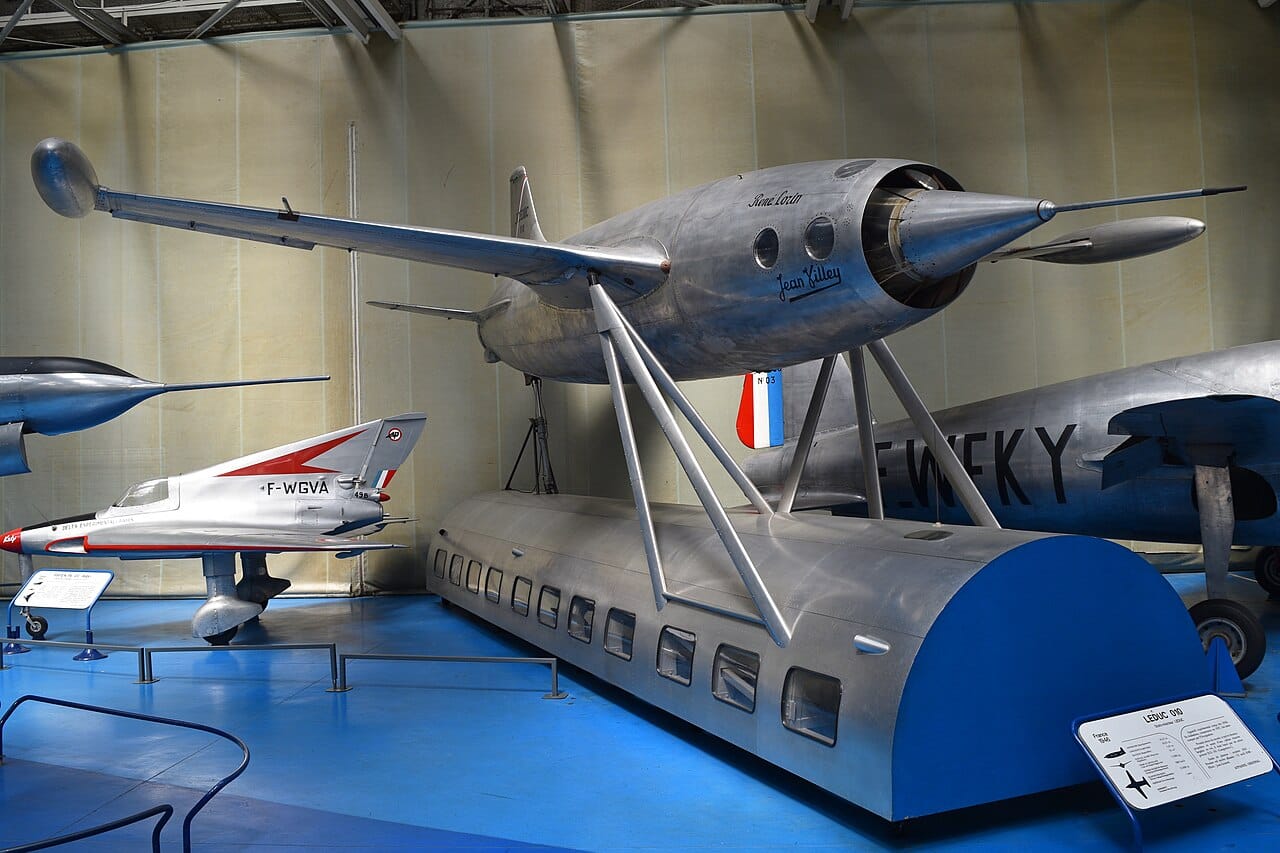
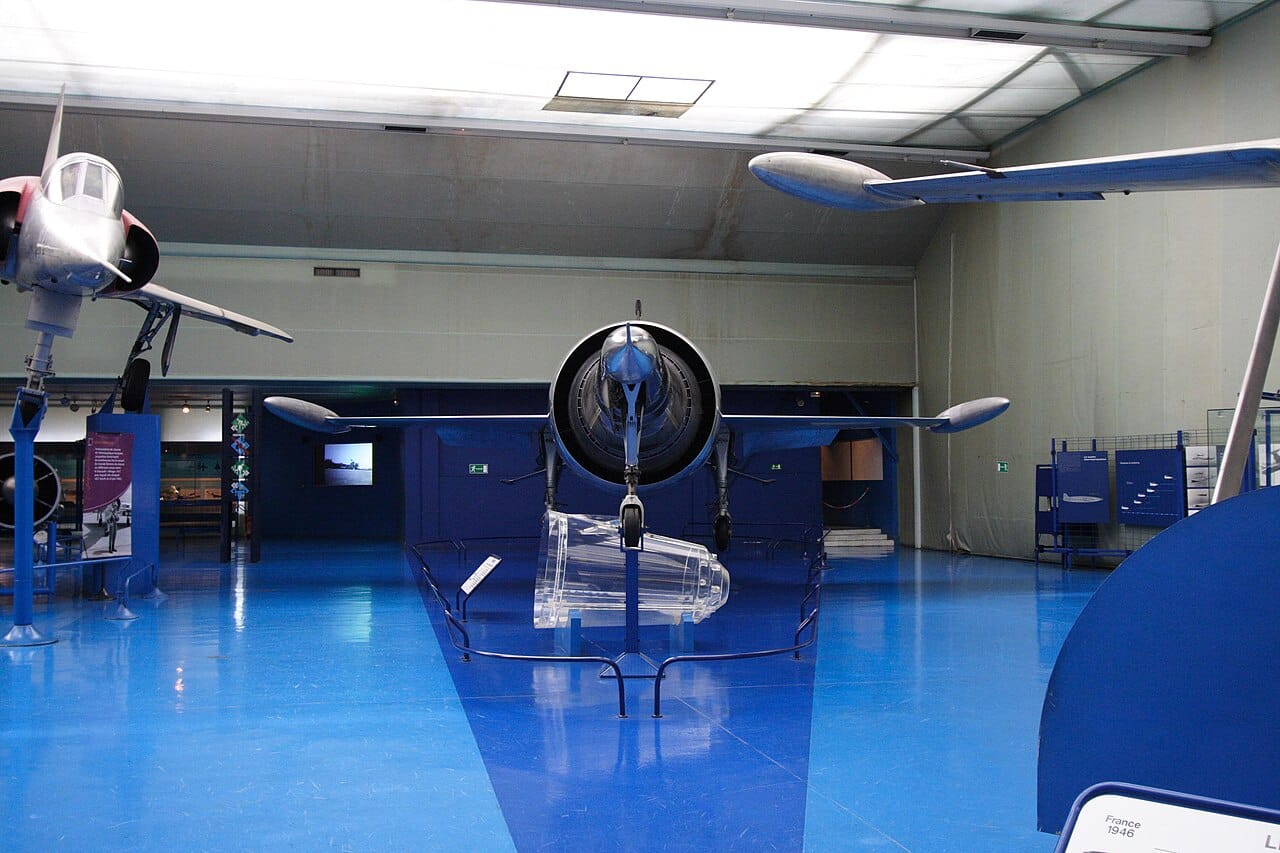
Porque todo el fuselaje era Debido al estatorreactor, no había un lugar convencional para ubicar una cabina. La solución de Leduc fue tan audaz como la propia aeronave: el piloto se reclinaba boca abajo dentro de una sección frontal de doble pared, sellada en una cápsula acristalada en el centro de la entrada de aire, con el aire entrante fluyendo a su alrededor en un anillo. La visibilidad frontal era casi nula, y eyectarse era una pesadilla que nadie quería ni imaginar, pero el avión volaba.
Persiguiendo Mach 2
Los experimentos se volvieron más ambiciosos. El Leduc 0.21 voló más de 250 veces y alcanzó Mach 0.95. Luego llegó la obra maestra de Leduc, el 0.22: un interceptor de ala en flecha que finalmente resolvió el problema del despegue al añadir un turborreactor SNECMA Atar para la pista, manteniendo el estatorreactor para alta velocidad. Un morro eyectable proporcionó al piloto una cápsula de escape. En diciembre de 1957 alcanzó Mach 1.15 y voló más de 140 veces, hasta que un incendio lo destruyó por completo durante el rodaje.
La futura Francia se alejó de
El Leduc no fracasó por sus propios méritos. Francia estaba invirtiendo grandes sumas de dinero en las guerras de Indochina y Argelia, y había aparecido un avión mucho más convencional: el Dassault Mirage, que superaba Mach 2 con un turborreactor de postcombustión convencional, sin la incomodidad del estatorreactor. En febrero de 1958, el gobierno canceló el programa Leduc, y René Leduc nunca volvió a diseñar un avión. Sus singulares aeronaves fueron a parar a los museos: un brillante callejón sin salida de un hombre que la historia se ha apresurado a olvidar.
Fuentes: PlaneHistoria (Vegim Krelani); Wikipedia (Leduc 0.10; Leduc 0.21; Leduc 0.22); Musée de l'air et de l'espace. Las fechas y velocidades se indican según lo reportado; las fuentes difieren ligeramente en algunos detalles.
Preguntas relacionadas
¿Qué era el Leduc 0.10?
El Leduc 0.10 fue un avión experimental francés y uno de los primeros del mundo en volar propulsado únicamente por un estatorreactor. Dado que un estatorreactor no produce empuje en reposo, no podía despegar por sí solo; fue transportado en la parte superior de un avión de pasajeros de Sud-Est Languedoc y liberado a gran altitud. Su primer vuelo propulsado por estatorreactor tuvo lugar el 21 de abril de 1949 sobre Toulouse, alcanzando unos 680 km/h a media potencia.
¿Qué es un estatorreactor y cómo funciona?
Un estatorreactor es el motor a reacción más simple que se pueda imaginar: sin compresor, sin turbina y con apenas piezas móviles. Es esencialmente un tubo con una forma específica que utiliza su propia velocidad para introducir aire a presión, donde se añade y quema el combustible. La idea fue patentada por el francés René Lorin en 1913, pero tiene un inconveniente fatal: no produce empuje hasta que ya alcanza una alta velocidad.
¿Por qué el Leduc no pudo despegar por sí solo?
Debido a que su motor estatorreactor solo genera empuje una vez que la aeronave ya se mueve rápidamente por el aire, al permanecer inmóvil en una pista no producía nada, por lo que el Leduc tenía que ser atornillado a una estructura en la parte superior de un avión de pasajeros Languedoc de cuatro motores, izado a gran altitud y soltado; solo entonces su motor cobraba vida.
¿Quién fue René Leduc?
René Leduc fue un ingeniero francés de gran tenacidad que dedicó décadas al desarrollo del vuelo con estatorreactor. En 1933, obtuvo una pequeña subvención gubernamental; en 1936, demostró el funcionamiento de un estatorreactor y consiguió un contrato para construir un avión basado en él. Su prototipo permaneció oculto a los alemanes ocupantes durante la Segunda Guerra Mundial y no voló con propulsión de estatorreactor hasta 1949.
¿Dónde se sentaba el piloto en el Leduc?
El piloto yacía boca abajo, sellado dentro de una cápsula frontal acristalada situada en el centro exacto de la entrada de aire del motor, con el flujo de aire pasando a su lado hacia la zona de combustión que se encontraba detrás. Otros diseños experimentales también probaron el pilotaje en posición prona, como el Northrop XP-79.
¿A qué velocidad volaba el Leduc?
La versión final, el Leduc 0.22 de alas en flecha, alcanzó Mach 1.15 en 1957. El programa fue cancelado al año siguiente, en 1958, poniendo fin al sueño de René Leduc de un caza puramente estatorreactor tras casi tres décadas de trabajo.
¿Otras aeronaves utilizaban motores estatorreactores?
Sí, Francia en particular siguió experimentando. Grifo Nord 1500 combinó un turborreactor con un estatorreactor y voló más allá de Mach 2, mientras que el avión de guerra alemán Triebflügel Focke-Wulf El concepto propuesto consistía en instalar estatorreactores en las puntas de las alas giratorias.
Publicaciones relacionadas
0 Comentarios