
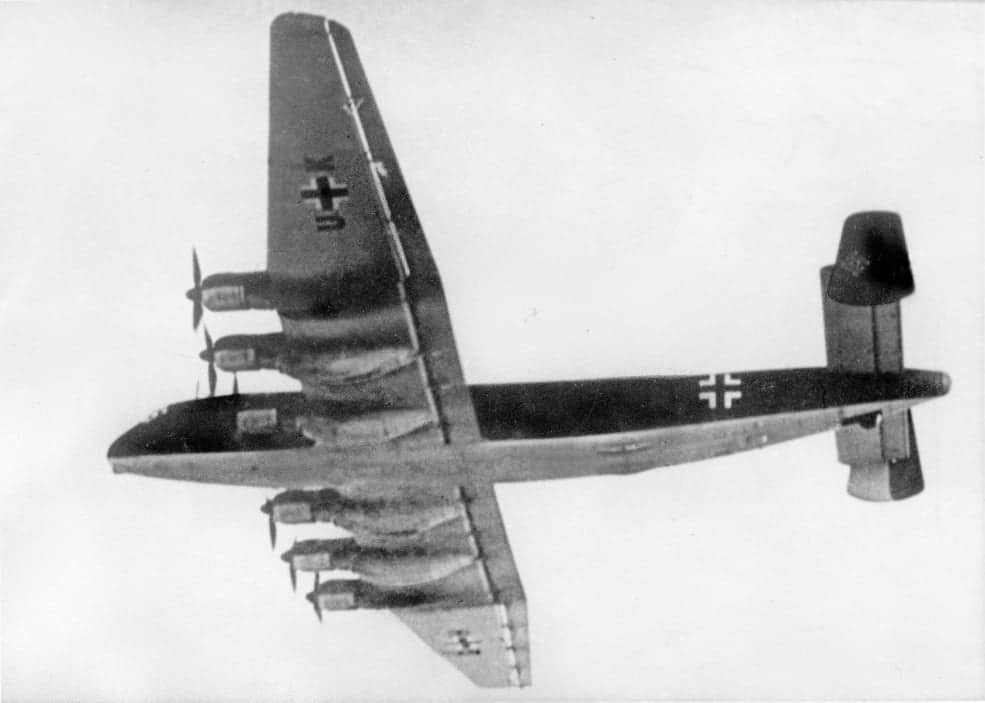
The story is irresistible: in the depths of the Second World War, a colossal six-engine German bomber slips across the Atlantic, flies to within sight of the Manhattan skyline, photographs Long Island, and turns for home before America ever knows it was there. The aircraft was real. The mission, almost certainly, was not.
Le Junkers Ju 390 was one of the largest aircraft the Third Reich ever flew, and the leading candidate to become Hitler's fabled Amerikabomber, a machine built to strike New York. Separating the hard engineering from the enduring myth is worth doing carefully, because the truth is remarkable enough without the fiction.
Informations clés
| Aéronef | Junkers Ju 390 |
| Rôle | Long-range reconnaissance / transport / heavy-bomber prototype |
| Moteurs | Six BMW 801 radials, ~1,700 hp each |
| Envergure | About 50 m (165 ft) |
| Prototypes built | Two (the V1 flew; the V2 is disputed) |
| Origine | Enlarged from the Junkers Ju 290 |
| The New York flight | Unproven legend, no evidence has ever surfaced |
| Destin | Contract for 26 cancelled June 1944; production ended that autumn |
The Machine Was Real
The Ju 390 was no fantasy. Junkers took its four-engine Ju 290 maritime patrol aircraft, stretched the fuselage and lengthened the wing to carry six BMW 801 radial engines, and produced a genuine intercontinental heavy aircraft with a wingspan of around 50 metres. The first prototype, the V1, flew successfully in 1943. The Reich Air Ministry was impressed enough to order 26 examples.
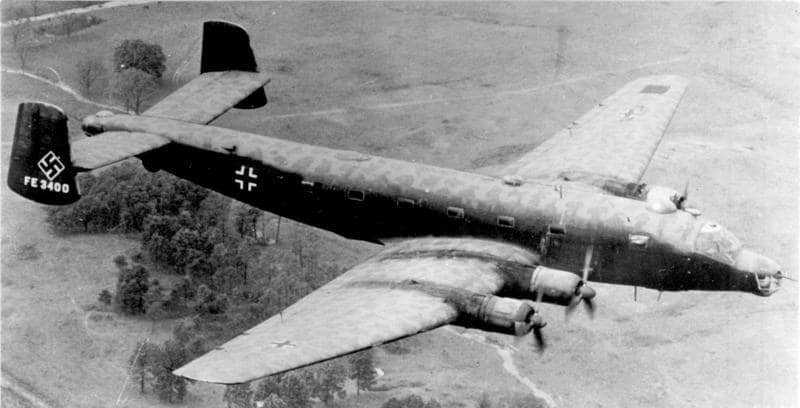
It was conceived for several roles: long-range maritime reconnaissance, heavy transport, and, on paper at least, as a contender for the Amerikabomber requirement, a competition Hermann Göring had set to find an aircraft that could bomb the United States from Europe. The distance alone, roughly 7,000 kilometres each way, made it one of the most demanding aviation problems of the war.
The Flight That Probably Never Happened
Here the record thins to rumour. In August 1944, captured Luftwaffe officers reportedly told British interrogators that two Ju 390s had flown close enough to Long Island to take photographs. The tale then hardened in print: a 1955 article in the Royal Air Force Flying Review, and, most famously, a 1969 newspaper piece built on the recollections of a Luftwaffe test pilot named Hans Pancherz.
From there it snowballed. Respected reference books repeated the claim, later authors cited those books, and a story resting on hearsay took on the appearance of established fact. But no photographs of Long Island ever surfaced. No American record of a German aircraft over the eastern seaboard exists. And when researcher James P. Duffy went looking for hard evidence, he found none.
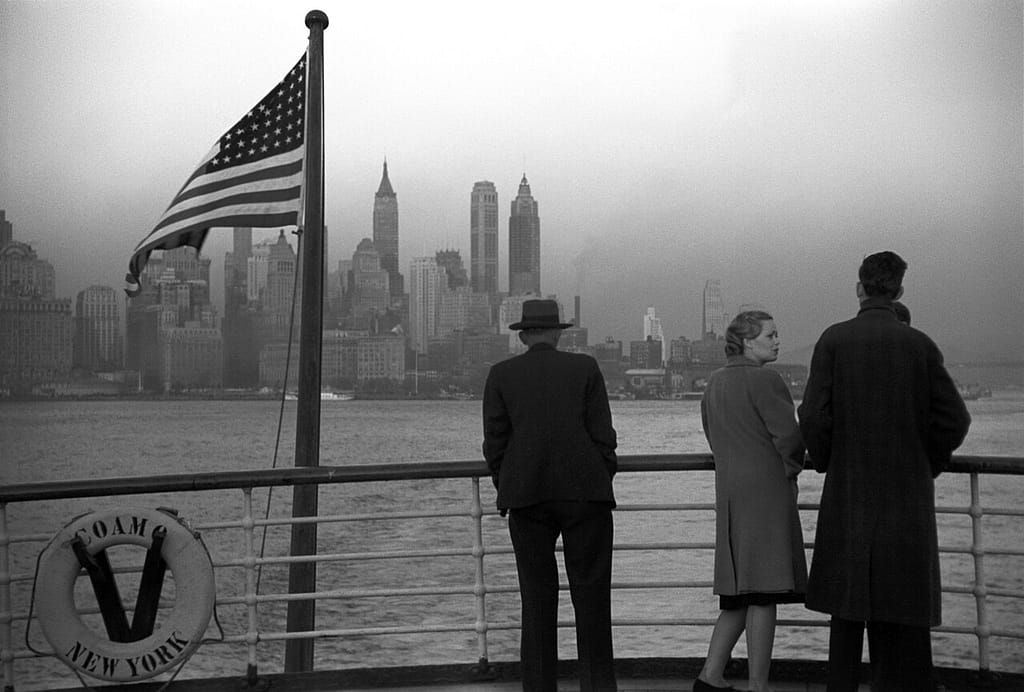
Most tellingly, the people closest to the story walked it back. Pancherz himself later cast doubt on the New York flight. Even William Green, the author whose influential books had done most to spread the account, quietly recanted.
Why the Legend Persists
The New York flight endures because it sits at the intersection of two irresistible ideas: a technically astonishing aircraft, and a near-miss with catastrophe on American soil. It is the kind of story that wants to be true. The engineering makes it just plausible enough, and the destroyed records of 1945 leave exactly the sort of gap in which legends breed.
What is certain is sobering enough. The Ju 390 was a real, flying, six-engine intercontinental aircraft, and the Amerikabomber programme was a genuine, if ultimately hopeless, Nazi ambition to carry the war to the United States. The contract for the 26 aircraft was cancelled in June 1944, and production ended that autumn. No German bomber ever reached New York, in 1944 or ever.
The Ju 390 deserves to be remembered for what it was: an extraordinary feat of wartime engineering that never found its war. The rest is a good story, and only a story.
Sources: Wikipedia; Historic Mysteries; PlaneHistoria; HistoryNet; research by James P. Duffy. The New York flight is presented as an unverified claim; no supporting evidence has ever been found.
0 commentaire