
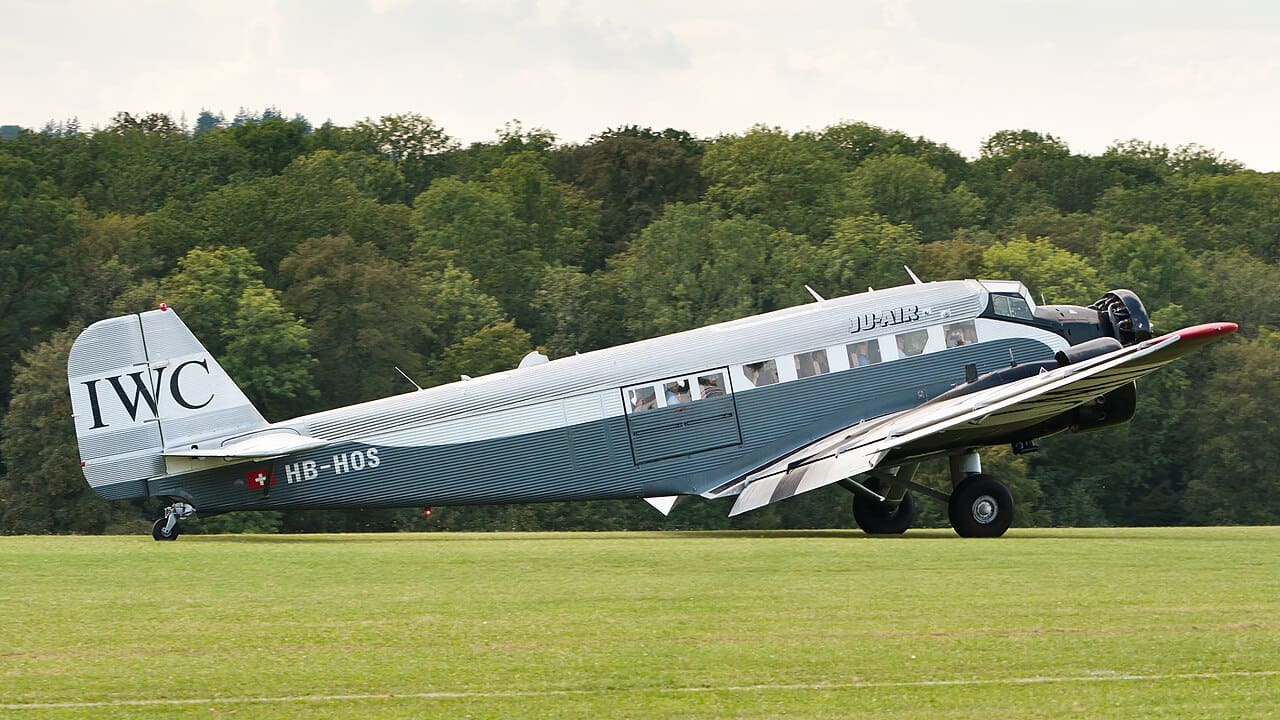
For thirty-five summers, one of the most beloved sounds over the Swiss Alps was the deep, uneven drone of three radial engines and the sight of a corrugated metal skin catching the light. It was the Junkers Ju 52 — “Tante Ju,” Auntie Ju — carrying passengers on nostalgic flights above the peaks. That era ended on August 4, 2018, and it is not coming back.
The story of the Ju 52 in Switzerland is really two stories: an engineering legend that flew for the better part of a century, and a tragedy that grounded it for good.
Informations clés
- Aéronef: Junkers Ju 52/3m — “Tante Ju” (Auntie Ju), the corrugated trimotor
- Origine: Germany; single-engine 1930, three-engine Ju 52/3m from 1932
- Construit: around 4,800, as airliner and military transport
- Swiss fleet: Three ex-Swiss Air Force Ju 52s, flown for pleasure by Ju-Air from Dübendorf
- Ju-Air flights: 1982 until the fatal crash of August 4, 2018
- Status today: Permanently grounded in Switzerland; the survivor is a static museum exhibit
Built like a bridge
The Ju 52 was a product of Hugo Junkers’ conviction that metal aircraft should be built like structures, not stretched fabric. Its skin was corrugated Duralumin — wavy, ridged sheet metal that gave the airframe enormous strength and its unmistakable ribbed appearance. The single-engine original flew in 1930; the definitive three-engine Ju 52/3m followed in 1932.
Slow, rugged and almost impossible to kill, it became the backbone of Lufthansa in the 1930s and then a workhorse of the Luftwaffe — hauling troops, dropping paratroopers, and flying supply missions from Crete to the doomed airlift at Stalingrad. Around 4,800 were built, and crews across two decades gave it the same affectionate names: Tante Ju, and Iron Annie.
Switzerland’s flying antiques
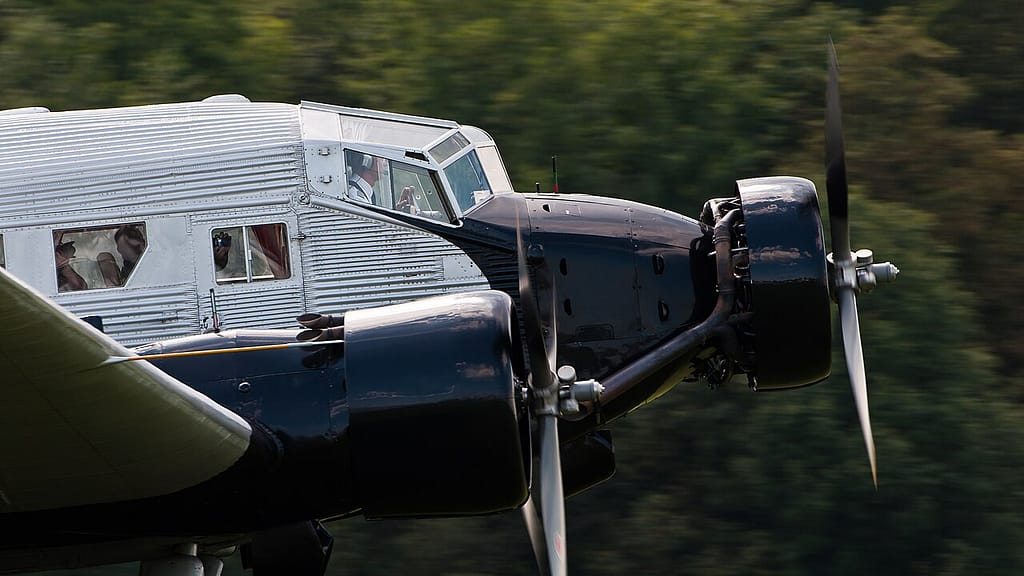
Switzerland’s connection ran deep. The Swiss Air Force bought three Ju 52s in 1939 and flew them into the 1980s — an astonishing service life. When the military finally retired them, the association Ju-Air kept them airworthy and, from 1982, offered the public the rare chance to fly aboard a genuine pre-war airliner over the Alps from its base at Dübendorf.
For decades it was one of the great experiences in European aviation: three old radials thundering, the ridged wing flexing gently, the Alps sliding past the square windows. It was living history, and thousands took the flight.
August 4, 2018
On that Saturday, the Ju-Air aircraft HB-HOT — one of the three ex-military machines — was returning from Locarno to Dübendorf when it went down on the mountainside of Piz Segnas, in canton Graubünden. All twenty people aboard, three crew and seventeen passengers, were killed. It was the first fatal accident in Ju-Air’s history.
The Swiss Transportation Safety Board investigated for more than two years. Its conclusions, published in January 2021, were unsparing.
The board found that the crew had flown the aircraft into a narrow valley at low altitude and dangerously low airspeed, with the centre of gravity outside limits, on the turbulent lee side of the mountains. When updrafts and downdrafts hit — conditions the pilots should have anticipated — the aircraft stalled, turned, and spun into the ground. It was not a freak failure of an old machine so much as a failure of airmanship and oversight.
Investigators reviewed radar data from 216 Ju-Air flights over four months in 2018 and judged more than a third of them to have been flown in a medium- to high-risk manner. Separately, inspectors had already found significant corrosion and structural issues in the fleet.
Grounded for good
The response was decisive. In November 2018 the safety board banned all Ju 52 flights in Switzerland, and in March 2019 the national aviation authority revoked Ju-Air’s commercial licence. Returning even one aircraft to the air would cost well over a million francs, and stricter rules would permit only a handful of passengers per flight. There is no realistic path back.
Today the surviving Swiss Ju 52 sits at Dübendorf as a static exhibit — you can climb aboard and sit in the cabin, but it will not fly again. Even Lufthansa’s famous Ju 52, long a fixture of European airshows, has since been grounded. The age of flying the Tante Ju is, quietly, over.
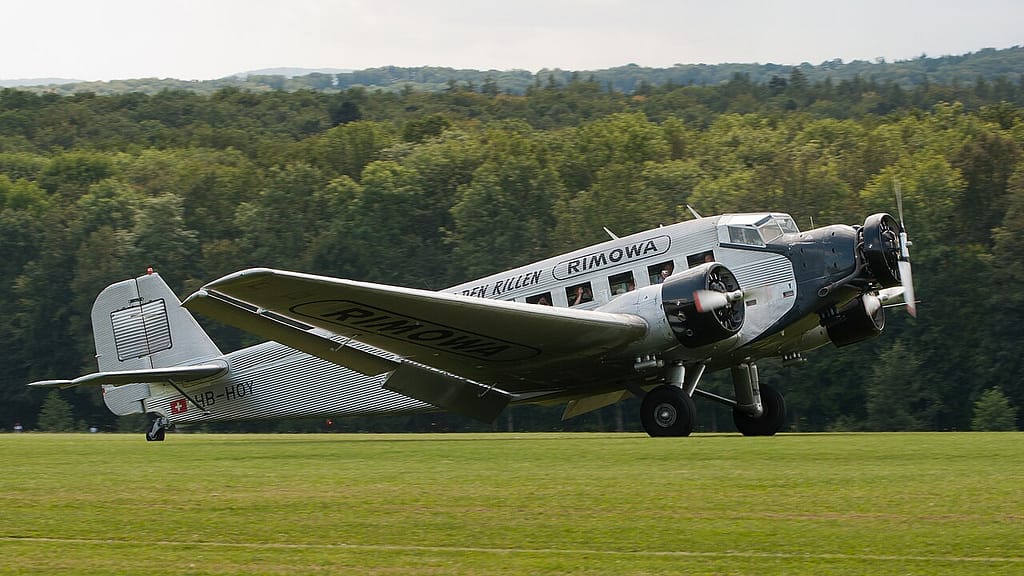
It is a hard lesson wrapped around a magnificent aircraft. The Ju 52 earned its legend over ninety years; keeping such machines flying safely, for paying passengers, in modern airspace, turned out to be a burden heavier than the airframe itself. Auntie Ju has landed for the last time in Switzerland — remembered, preserved, and no longer asked to do more than she safely can.
Sources: Wikipedia; Swiss Transportation Safety Board final report (2021); swissinfo.ch; FlightGlobal; Bureau of Aircraft Accidents Archives.
0 commentaire