
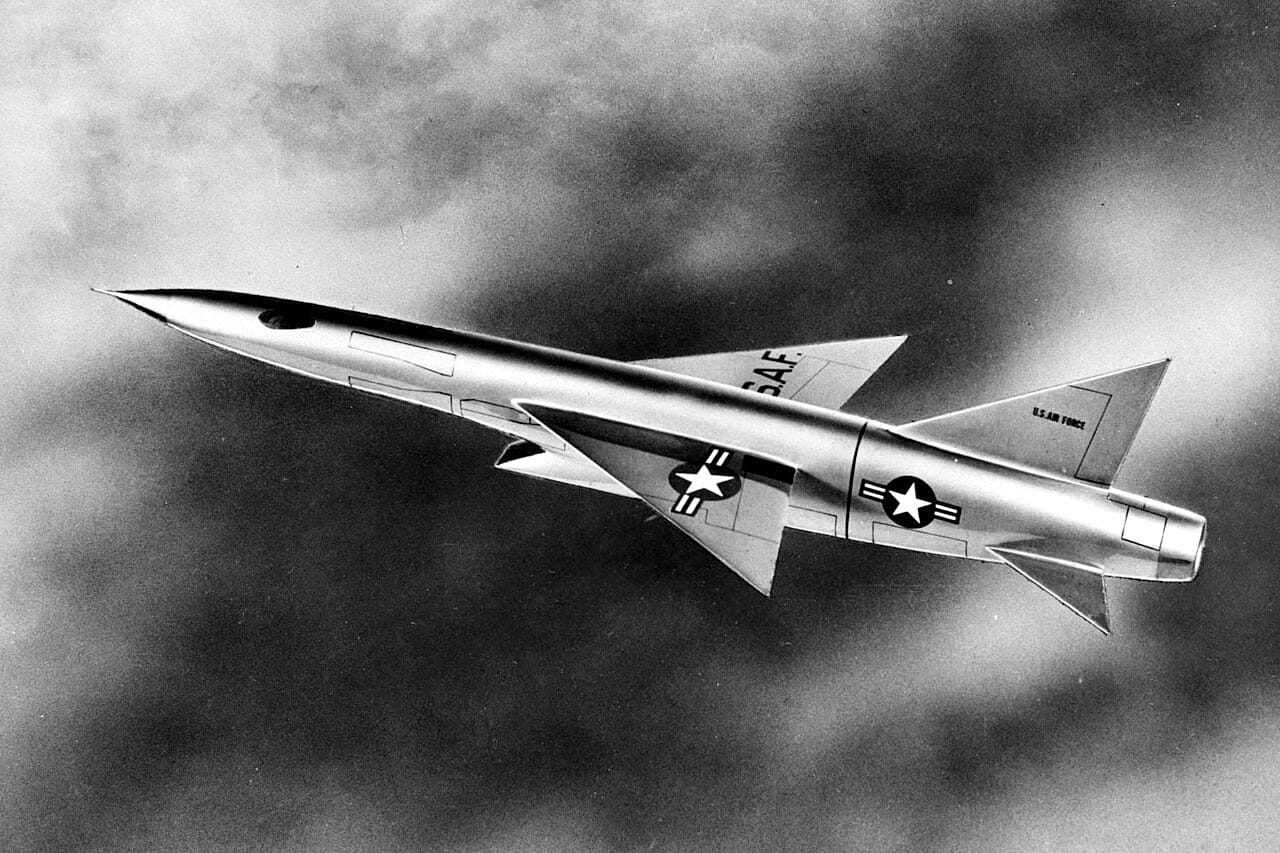
Il Republic XF-103 era stato progettato per fare qualcosa che nessun caccia dei primi anni '50 era in grado di fare: volare a Mach 3, tre volte la velocità del suono, ai margini della stratosfera, intercettare un bombardiere sovietico e distruggerlo con i missili. Per raggiungere questo obiettivo, i suoi progettisti presero una serie di decisioni radicali, a cominciare dal fatto che il pilota non avrebbe potuto vedere dritto davanti a sé.
Doveva essere costruito interamente in titanio, alimentato da un motore ibrido in parte turbogetto e in parte statoreattore, e dotato di un periscopio al posto del parabrezza. Nessun XF-103 volò mai. Venne completato solo un modello in scala reale in legno.
Informazioni rapide
| Tipo | Intercettore Mach 3 proposto (USA) — mai realizzato oltre un modello in scala |
| Designer | Alexander Kartveli, Republic Aviation |
| Struttura | Cellula interamente in titanio |
| Energia | Turbogetto Wright XJ67 abbinato a un ramjet XRJ55 (~37.000 lbf / 165 kN totali) |
| Prestazioni di progettazione | Circa Mach 3 a circa 75.000 piedi (24.000 m) |
| Cabina di pilotaggio | Periscopio al posto del parabrezza; capsula di salvataggio a espulsione verso il basso. |
| Destino | Contratto firmato nel 1954; annullato nel 1957 |
Progettato per Mach 3
Il volo sostenuto a Mach 3 produce temperature della cellula che le normali leghe di alluminio non possono sopportare. La risposta della Republic, fin dall'inizio, fu quella di costruire l'intero aereo in titanio, un materiale che all'inizio degli anni '50 era estremamente difficile da lavorare e modellare, e che divenne uno dei problemi centrali del programma. La forma era lunga, slanciata e appuntita, opera del capo progettista Alexander Kartveli, lo stesso ingegnere dietro il P-47 Thunderbolt e il F-105.
Un motore che si è trasformato in un ramjet
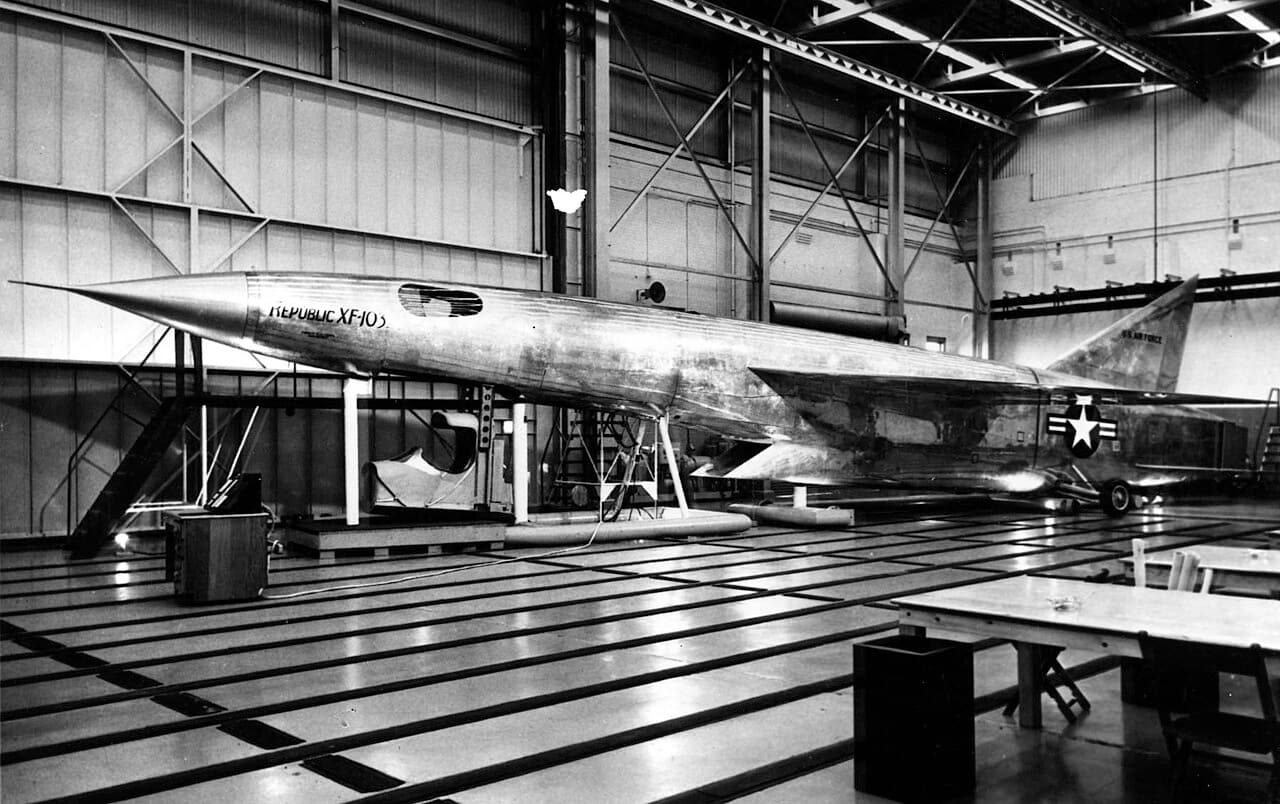
Il sistema di propulsione era la parte più ingegnosa e al tempo stesso più problematica. Un turbogetto Wright XJ67, una versione prodotta su licenza del Bristol Olympus britannico, era posizionato davanti a uno statoreattore XRJ55. A bassa velocità, il turbogetto funzionava in modo convenzionale; ad alta velocità, i suoi gas di scarico venivano convogliati nel condotto dello statoreattore, e si prevedeva che il sistema combinato "turbo-statoreattore" producesse circa 37.000 libbre di spinta, sufficienti a mantenere Mach 3. Un'idea elegante sulla carta, ma straordinariamente difficile da realizzare concretamente.
Un pilota che non poteva guardare fuori dalla parte anteriore
A Mach 3, una cabina di pilotaggio convenzionale era considerata un problema sia per il calore che per la resistenza aerodinamica, quindi l'Aeronautica Militare insistette per un periscopio e piccoli finestrini laterali al posto di un parabrezza. Kartveli sostenne la necessità di una vera cabina di pilotaggio, ma non riuscì a convincere il pilota. Il pilota sedeva in una capsula di salvataggio a espulsione verso il basso: a quelle velocità, sparare un uomo nel flusso d'aria lo avrebbe ucciso, quindi l'intera capsula era progettata per staccarsi completamente dall'aereo.
Alla fine furono la metallurgia, i finanziamenti e i missili a decretare la fine del progetto XF-103. La lavorazione del titanio si rivelò difficile e costosa, il motore presentava delle lacune e l'avvento dei missili balistici intercontinentali rese meno indispensabile un bombardiere-intercettore dedicato. Il programma fu cancellato nel 1957, dopo la costruzione del solo modello in scala.
L'XF-103 non fu un fallimento dell'immaginazione. Fu un'idea Mach 3, un decennio avanti rispetto ai materiali e ai motori che avrebbero potuto costruirla, e quasi tutto ciò che tentò, dalle strutture in titanio alla propulsione a ciclo combinato, sarebbe poi riapparso sul SR-71. L'XF-103 ha semplicemente posto la domanda per primo.
Fonti: Wikipedia; Defense Media Network.
Domande correlate
Cos'era il Republic XF-103?
Il Republic XF-103 era un progetto americano degli anni '50 per un intercettore in grado di raggiungere Mach 3, progettato per distruggere i bombardieri sovietici ad alta quota. Presentava una struttura interamente in titanio, un motore combinato turbogetto-statoreattore e un periscopio al posto del parabrezza. Non andò mai oltre la fase di modello in scala reale.
A che velocità era stato progettato per volare l'XF-103?
L'XF-103 è stato progettato per volare a circa Mach 3, tre volte la velocità del suono, ad altitudini intorno ai 75.000 piedi (24.000 m).
Perché l'XF-103 aveva un periscopio invece di un parabrezza?
A Mach 3, una cabina di pilotaggio convenzionale era considerata un problema in termini di calore e resistenza aerodinamica. L'aeronautica militare statunitense richiese un periscopio e piccoli finestrini laterali per la visione frontale al posto del parabrezza, nonostante le obiezioni del progettista Alexander Kartveli.
Che motore utilizzava l'XF-103?
Il progetto prevedeva l'utilizzo di un turbogetto Wright XJ67, una derivazione su licenza del Bristol Olympus, abbinato a uno statoreattore XRJ55. Ad alta velocità, il turbogetto alimentava lo statoreattore, e si prevedeva che l'unità combinata producesse una spinta di circa 37.000 libbre.
L'XF-103 ha mai volato?
No. L'XF-103 non ha mai volato. È stato completato solo un modello in scala reale prima che il programma venisse cancellato.
Perché il progetto XF-103 è stato cancellato?
Il programma fu cancellato nel 1957 a causa della difficoltà e del costo della fabbricazione del titanio, dei problemi al motore e del cambiamento di strategia, che si stava orientando verso i missili balistici intercontinentali, riducendo la necessità di un bombardiere-intercettore dedicato.

0 Commenti