


L-39 Albatros. Built to Thrill
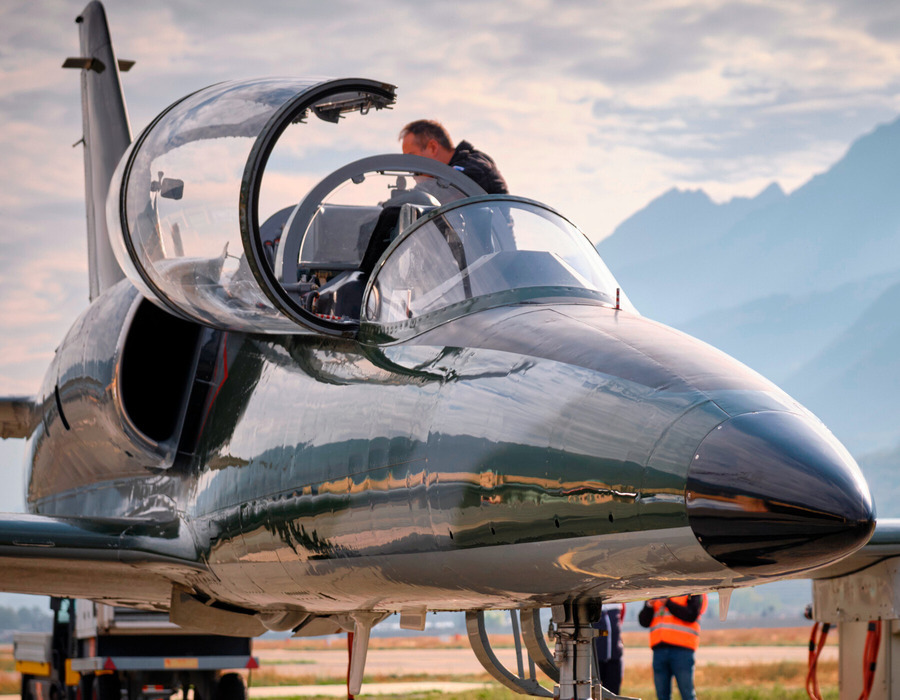
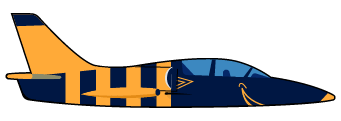
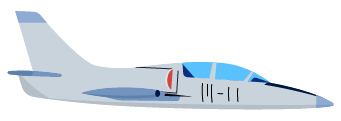
The world’s most successful jet trainer — over 2,900 built, flown by more than 30 air forces, and the first trainer ever powered by a turbofan engine. Designed in Czechoslovakia during the Cold War, the L-39 Albatros became a legend. Its state-of-the-art tandem cockpit with a raised rear seat and bubble canopy was revolutionary then — and still delivers an unmatched panoramic view today.
A Cold War Icon from Czechoslovakia
When Czechoslovakia’s Aero Vodochody set out to build the next-generation jet trainer for the Warsaw Pact, chief designer Jan Vlček and his team didn’t just meet the brief — they redefined the category. Planned as a replacement for the subsonic L-29 Delfin, it became the standard advanced jet trainer of Warsaw Pact nations, and many air forces worldwide. The L-39’s engineering is as purposeful as its reputation. The L-39 Albatros became the first trainer in history powered by a turbofan engine, the Ukrainian-built Ivchenko AI-25TL. That choice gave it better fuel efficiency, smoother handling, and more reliable performance than anything else in its class — and made it nearly impossible to beat in any competition.
- Innovator in Training: It was the first trainer aircraft in the world to be equipped with a turbofan engine, offering faster acceleration and better fuel efficiency.
- Versatile Performance: While a trainer, its design is robust enough to act as a light attack aircraft with four underwing hardpoints and a 23-mm twin-barrel gun pod.
- Rugged and Simple: Engineered to be reliable and low-maintenance, the L-39 can operate from austere, unpaved airfields.
- Distinctive Handling: It is described as highly nimble with a very fast throttle response, making it ideal for aerobatics and training.
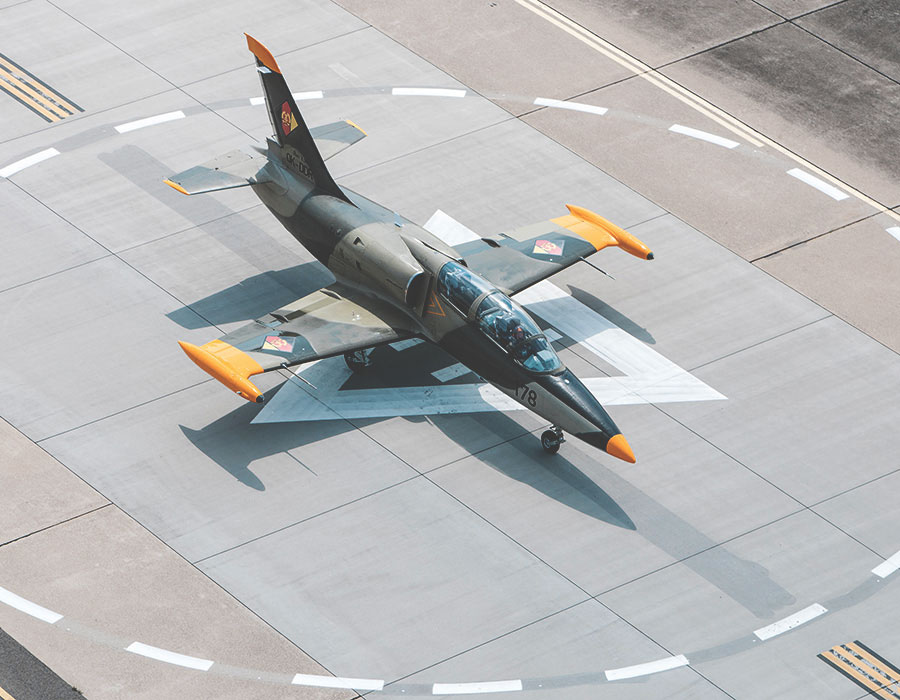
- Unmistakable Look: Featuring a long pointed nose, tandem seating, and distinctive non-jettisonable wingtip fuel tanks, the L-39 is a staple of airshows.
- High-G Tolerance: The airframe is capable of +8/−4 at a standard takeoff weight, allowing for high-G maneuvering.
Design and Airframe
A single turbofan mounted inside the fuselage, fed by shoulder-mounted intakes behind the cockpit. Trailing-arm landing gear tough enough for rough airstrips. Hardpoints for weapons and external stores. The result: an aircraft that’s forgiving to fly, easy to maintain and beautifully proportioned. Adopted across the entire Warsaw Pact, the L-39 went on to become the most widely used jet trainer ever built, with over 2,900 aircraft produced near Prague. Its success spawned several successors — the L-59 Super Albatros, the L-159 ALCA and the modern L-39NG — but none have matched the original’s global reach.
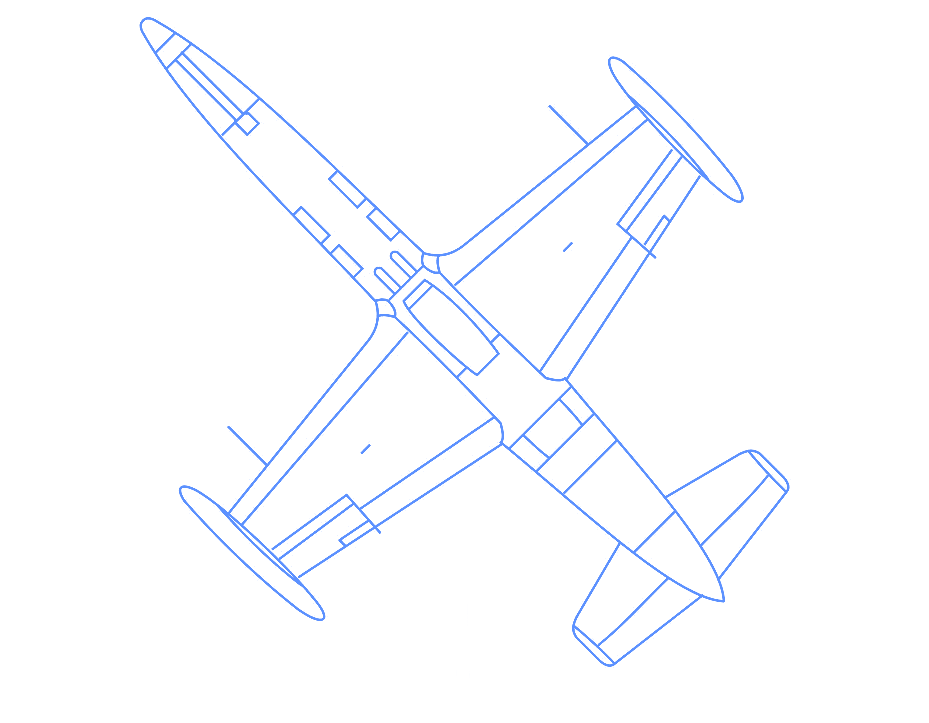
L-39 Interactive Blueprint
Interactive Aircraft Blueprint
Hover a module on desktop or tap it on mobile to reveal the highlighted aircraft section. Zoom in to explore details.
1. Glass-fibre nosecone
2. ILS antenna
3. Ground intercom socket
4. Navigational antenna
5. Nosewheel door, closed after cycling of undercarriage
6. Avionics equipment compartment
7. Nosewheel housing
8. Pitot head
9. Hinged access doors, port and starboard
10. On Board Oxygen Generator System (OBOGS)
11. Front pressure bulkhead
12. Nosewheel pivot mounting
13. Nosewheel leg strut
14. Levered suspension shock absorber
15. Forward retracting nosewheel
16. Shimmy damper
17. Ventral cannon pack
18. Rudder pedals
19. Incidence transmitter
20. Control column, fully duplicated controls
21. Instrument console
22. Undercarriage position visual indicator
23. Hot air de-iced one-piece windscreen
24. Front cockpit instrument panel with EFIS displays
25. Rear cockpit instrument panel with EFIS displays
26. Pilot's head-up display (HUD)
27. Stand-by horizon
28. Rear cockpit monitor screen
29. Stand-by compass
30. Individual cockpit canopies, hinged to starboard
31. Student Pilot's VS-2R rocket assisted ejection seat
32. Seat harness
33. Engine throttle lever
34. Side console panel
35. Front cockpit floor level
36. Boarding steps
37. Underfloor equipment bays
38. Rear cockpit floor level
39. Canopy external release
40. Canopy lifting handle
41. Rear instrument console
42. Canopy centre arch
43. Instructor's VS-2R ejection seat
44. Rear side console panel
45. Kick-in steps
46. Rear pressure bulkhead
47. Fuselage centre bag-type fuel tanks
48. Boundary layer splitter plate
49. Port air intake
50. Fuselage tank gravity filler
51. Tailplane control rods
52. Starboard air intake
53. Flap actuating linkage
54. Starboard outer wing pylon
55. Starboard wing panel
56. Pitot head
57. Landing/taxying light
58. Starboard navigation light
59. 100 lit (22 Imp gal) fixed wing tip fuel tank
60. Starboard aileron
61. Servo tab
62. Aileron operating linkage
63. Flap track fairing
64. Starboard double-slotted flap
65. Anti-collision strobe light
66. Intake flank fuel tank
67. Lateral ancillary equipment bays, port and starboard
68. Engine bay venting air intake
69. Fin root fillet
70. Rudder control rod
71. Two-spar fin torsion box structure
72. Rudder operating rod
73. Fin rib structure
74. Starboard tailplane
75. Starboard elevator
76. VOR antenna
77. Fin tip communications antenna
78. Rear navigation light
79. Static dischargers
80. Rudder rib structure
81. Rudder trim tab
82. Exhaust nozzle shroud
83. Elevator trim tabs
84. Port elevator rib structure
85. Static dischargers
86. Lower surface vortex generators
87. Fixed horizontal tailplane two-spar torsion box structure
88. Leading edge ribs
89. Tailplane spar attachment joints
90. Elevator hinge control linkage
91. Tailplane root fillet fairing
92. Fin spar joint
93. Jet pipe
94. Aft fuselage frame and stringer structure
95. Fuselage break point, engine removal
96. Main engine mounting
97. Garrett TFE731-4-1T turbofan engine
98. Full Authority Digital Engine Control (FADEC)
99. Engine accessory equipment gearbox
100. Hydraulic reservoir
101. Engine/gearbox bay venting air intake
102. Lucas starter generator
103. Accessory equipment access panel
104. Wing root trailing edge fillet
105. Mainwheel bay
106. Hydraulic retraction jack
107. Flap operating rod, driven from central hydraulic actuator
108. False rear spar
109. Flap guide rails
110. Port double-slotted flap
111. Aileron operating link
112. Tab actuator
113. Port servo/trim tab
114. Port aileron rib structure
115. Trailing edge ribs
116. Port wing tip fixed fuel tank
117. Tip tank filler cap
118. Port navigation light
119. Landing/taxying light
120. Pitot head
121. Front spar
122. Lower wing skin/stringer panel
123. Main spar
124. Wing panel rib structure
125. Pylon mounting hardpoint
126. Outboard stores pylon
127. Missile launch rail
128. R-35 (AA-2 Atoll) air-to-air missile
129. 350 lit (77 Imp gal) external fuel tank
130. Inboard stores pylon
131. Inboard pylon hardpoint
132. Port mainwheel
133. Levered suspension shock absorber
134. Mainwheel leg strut
135. Undercarriage leg pintle mounting
136. Main spar attachment joint
137. Fuselage lower main longeron
138. Airbrake hydraulic jack
139. Ventral airbrake panels (2)
140. Extended chord wing root fairing
141. Light stores dispenser
142. Ammunition feed, 150-rounds housed beneath rear cockpit floor
143. GSH-23 twin-barrel 23mm cannon
144. 113kg (250lb) HE bomb
145. UV-16-57, 16-round rocket launcher
146. 57mm rocket
L-39 Albatros operations worldwide
But the L-39 was never just a trainer. Built in multiple variants — the C for training, the ZO for weapons delivery and reconnaissance, the ZA for ground attack — the Albatros proved itself as a versatile military platform that went far beyond the classroom. Air forces around the world deployed it for close air support, armed reconnaissance, forward air control and strike missions. It has seen real combat in conflicts across Africa, the Middle East and Eastern Europe, earning a reputation as a rugged, adaptable aircraft that could do serious work well beyond its original training role. The interactive map below shows L-39 operations worldwide.

L-39 Technical Data
The L-39’s engineering is as purposeful as its reputation. A single turbofan mounted inside the fuselage, fed by shoulder-mounted intakes behind the cockpit. Trailing-arm landing gear tough enough for rough airstrips. Hardpoints for weapons and external stores. The result: an aircraft that’s forgiving to fly, easy to maintain and beautifully proportioned. Adopted across the entire Warsaw Pact, the L-39 went on to become the most widely used jet trainer ever built, with over 2,900 aircraft produced near Prague. Its success spawned several successors — the L-59 Super Albatros, the L-159 ALCA and the modern L-39NG — but none have matched the original’s global reach.
m
WINGSPAN
m
LENGTH
m
HEIGHT
km/h
MAX SPEED
km
RANGE
m/s
CLIMB RATE
m
SERVICE CEILING
kN
ENGINE THRUST
For aviation enthusiasts who want to go deeper, here is a broader technical snapshot of the L-39 Albatros.
| Crew | 2 |
| Engine | Ivchenko AI-25TL turbofan |
| Maximum thrust | 1,719 kg / 3,790 lb |
| Maximum speed | 950 kph / 580 mph |
| Range | 1,000 km / 621 mi |
| Maximum flight time | 2 hours 30 minutes |
| Climb time to 5,000 m | 5 minutes |
| Wingspan | 9.44 m / 30.97 ft |
| Length | 12.93 m / 39.8 ft |
| Height | 4.77 m / 15.45 ft |
| Empty weight | 3,456 kg / 7,639 lb |
| Maximum take-off weight | 4,700 kg / 10,362 lb |
Why the L-39 is MiGFlug’s workhorse
Since 2004, MiGFlug has operated the L-39 Albatros at multiple locations worldwide, making it a cornerstone of our flight experience portfolio. Its reliability, cost efficiency, and excellent cockpit visibility are why the L-39 remains our true workhorse.
Proven Reliability
Over 3,000 built and still flying across 30+ countries. A mature platform with decades of operational history — maximum uptime for scheduled flights.
Low Operating Costs
The single turbofan burns far less fuel than supersonic fighters. Spare parts are globally available, keeping per-flight costs competitive.
Elevated Rear Seat
The passenger sits higher than the pilot — unobstructed panoramic view through the bubble canopy. A genuine fighter experience with visibility in every direction.
Fly an L-39 Albatros
Select a location and make your dream of flying a real military jet come true.
What Customers Say
★★★★★
The moment we pulled 6g climbing vertical, I finally understood what real flying means. Everything else in life feels completely slow now.
★★★★★
Flying through the Swiss Alps at 500 knots, 200 meters off the valley floor. The pilot let me take the stick on the turns. Completely surreal.
★★★★★
I’ve done skydiving, Formula racing — everything. Nothing compares to 45 minutes with a test pilot who clearly loves every single second of it.