
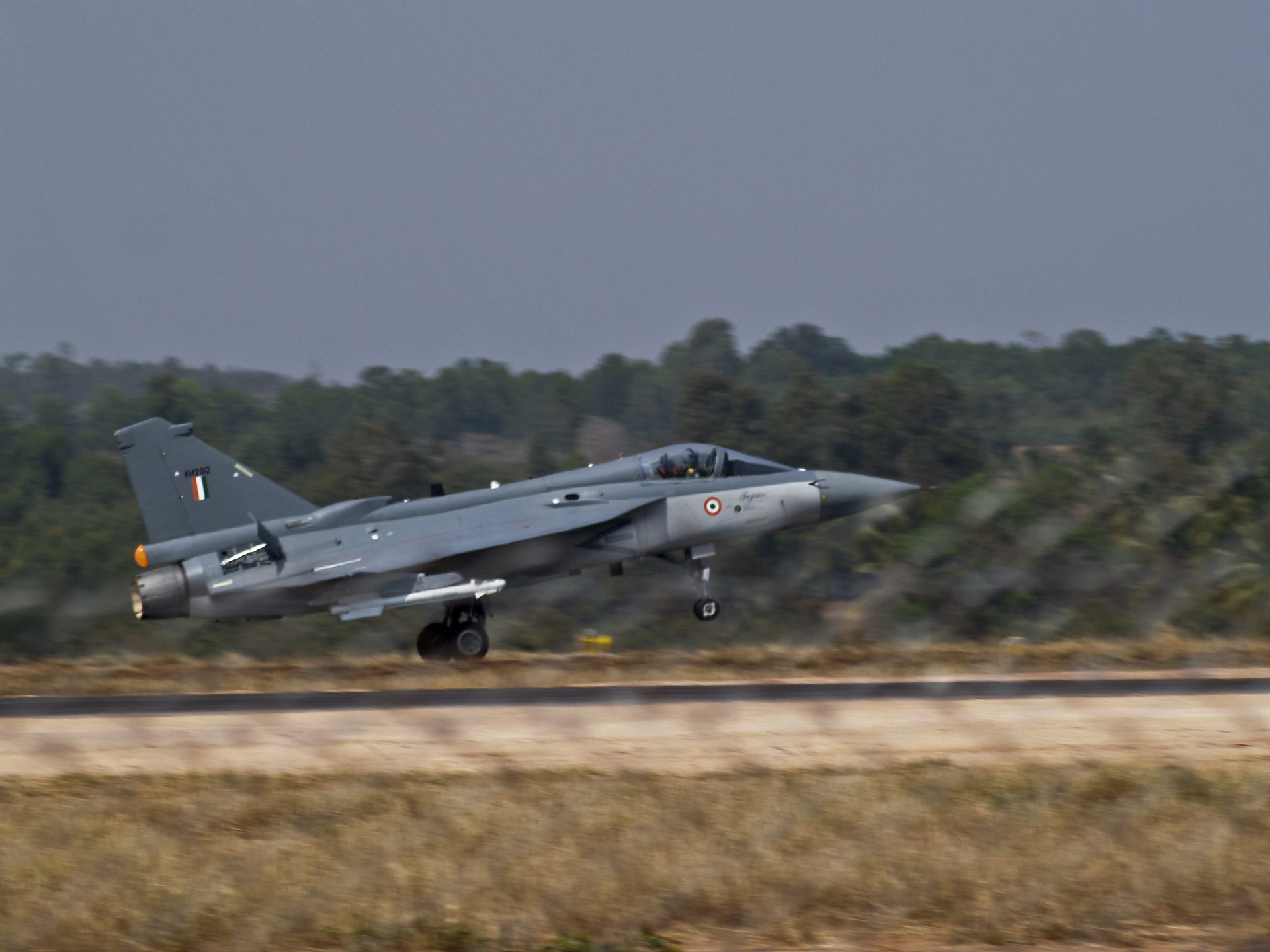
HAL Tejas
“Light Combat Aircraft”
India’s indigenous lightweight multirole fighter — a tailless compound-delta developed over four decades to replace the MiG-21 and prove the country could design and field a modern jet of its own.
Built to make India build fighters
The Tejas is less a single aircraft than the visible result of a national decision. In 1983 India sanctioned the Light Combat Aircraft (LCA) programme, and in 1984 set up the Aeronautical Development Agency (ADA) to run it, with Hindustan Aeronautics Limited (HAL) as the principal builder. The stated goal was twofold: replace the Indian Air Force’s huge, ageing fleet of Soviet MiG-21s, and — just as importantly — build an indigenous capability to design, integrate and certify a modern combat aircraft at home.
That ambition made for a long road. The programme had to develop its own quadruplex digital fly-by-wire flight-control system after outside support was curtailed, and US technology sanctions following India’s 1998 nuclear tests briefly disrupted access to engine and flight-control work. The first technology-demonstrator prototype did not fly until 4 January 2001, flown by Wing Commander Rajiv Kothiyal. Prime Minister Atal Bihari Vajpayee gave the aircraft its name — Tejas, a Sanskrit word for radiance — in 2003.
Operational milestones followed slowly: an Initial Operational Clearance in 2013, entry into IAF squadron service in 2016 with No. 45 Squadron (the “Flying Daggers”), and Final Operational Clearance in 2019. The improved Mk1A — with an AESA radar and updated electronic-warfare suite — has been ordered in large numbers since 2021, and a larger, more powerful Mk2 is in development. Timelines and delivery rates have repeatedly slipped, and critics call the effort overdue; supporters counter that it gave India a fighter industry it did not have before. Both readings are widely held.
01The HAL Tejas programme: why India’s Light Combat Aircraft took nearly forty years
Sanctioned in 1983 and first flown in 2001, the Tejas is often cited as one of the longest fighter-development timelines in modern aviation. Several factors are commonly blamed: an early decision to pursue difficult indigenous technologies — a relaxed-stability airframe, a home-grown digital fly-by-wire system and a high composite fraction — all at once; the loss of foreign assistance after the 1998 nuclear-test sanctions; and dependence on an imported engine, the General Electric F404, whose supply has continued to constrain deliveries into the 2020s.
Whether the programme is judged a success or a cautionary tale depends on what is measured. It has not produced a large fleet quickly, and orders have run well ahead of deliveries. But it did deliver a certified, in-service, largely Indian-built fighter and the design and testing base behind it — the explicit long-term aim from the start. These are contested framings, and this page presents both rather than adjudicating between them.
What makes it special
A tailless delta flown by wire
The Tejas has no tailplane — just a compound-delta wing and a single fin. Like many modern fighters it is deliberately aerodynamically relaxed-stability, which improves agility but makes it impossible to fly by hand; a quadruplex digital fly-by-wire system corrects the aircraft dozens of times a second. India developed that flight-control software largely in-house after external support was limited — one of the programme’s hardest and most-cited technical achievements.
Small, light and composite-heavy
The Tejas is one of the smallest and lightest supersonic fighters in service, with an empty weight commonly cited around 6.5 tonnes. A large share of the airframe — roughly 45% by weight and around 90% by surface area, figures widely quoted — is carbon-fibre composite. Composites cut weight and the number of joints and fasteners, and can reduce radar signature. The exact fractions vary between sources and variants, so treat them as approximate.
Indigenous avionics and the Mk1A radar
The Tejas carries a glass cockpit and a growing share of Indian-made avionics. The baseline Mk1 flew with an Israeli EL/M-2032 radar; the upgraded Mk1A is fitted with an AESA radar (the indigenous Uttam or Israeli EL/M-2052 is variously reported) plus a new electronic-warfare suite and beyond-visual-range missiles. Reported capability figures for the newest variants should be read as manufacturer or programme claims pending independent confirmation.
02The HAL Tejas fly-by-wire system: the software India had to write itself
A relaxed-stability aircraft cannot be flown without a flight-control computer constantly adjusting the surfaces. Early in the programme the flight-control law development had US involvement, but access narrowed and India completed and cleared much of the digital fly-by-wire work domestically. It is frequently highlighted as the single hardest element of the Tejas effort — and, once proven, as a foundational capability for later Indian aircraft. Specific development-cost and schedule claims around it vary by source.
03The HAL Tejas engine: why the F404 — and the F414 for the Mk2
The Tejas Mk1 and Mk1A are powered by a single General Electric F404-GE-IN20 afterburning turbofan of roughly 84 kN thrust. An indigenous engine (the GTRE Kaveri) was intended to power the aircraft but did not mature in time, leaving the type dependent on the imported F404 — and F404 supply delays have been repeatedly cited as a brake on Mk1A deliveries. The larger Mk2 is designed around the more powerful GE F414. Thrust and timeline figures here are programme figures and remain subject to change.
Full specifications
Airframe & Performance (Mk1)
- Bemanning
- 1 (two-seat trainer variant)
- Lengte
- 13.2 m
- Spanwijdte
- 8.2 m
- Hoogte
- 4.4 m
- Leeggewicht
- ~6,500 kg (commonly cited)
- Max takeoff weight
- ~13,500 kg
- Max speed
- ~Mach 1.6–1.8 (~1,975 km/h)
- Serviceplafond
- ~15,000 m (~50,000 ft)
- Ferry range
- ~3,000 km (with drop tanks)
- Hardpoints
- 8–9 (external load ~3,500–5,300 kg, reported)
Propulsion & Systems
- Engine (Mk1/1A)
- 1 × GE F404-GE-IN20
- Thrust
- ~84 kN (~19,000 lbf) with afterburner
- Engine (Mk2)
- 1 × GE F414 — in development
- Radar
- Mk1: EL/M-2032; Mk1A: AESA (Uttam / EL/M-2052)
- Gun
- 1 × 23 mm GSh-23 twin-barrel cannon
- Missiles
- R-73, ASRAAM, Derby, Astra BVR (reported fit)
- First flight
- 4 January 2001
- Unit cost
- ~US$40–50 million (estimate)
- Cost per flight hour
- No reliable public figure
04The HAL Tejas’s operating costs: why the figures are estimates
Indian defence contracts are usually reported as bulk-order totals in rupees rather than as a clean per-aircraft flyaway price, so a single unit cost for the Tejas is hard to pin down. Widely reported figures place a Mk1A in the very rough range of US$40–50 million depending on how development, infrastructure and spares are apportioned — treat any precise number as an estimate, not an audited price. No reliable public cost-per-flight-hour figure exists for the type. Any exact dollar figure attached to a Tejas should be read as an approximation.
From national programme to frontline squadron
LCA programme sanctioned
India approves the Light Combat Aircraft programme to replace its MiG-21 fleet with an indigenous fighter.
ADA formed
The Aeronautical Development Agency is set up to manage the programme, with HAL as principal manufacturer.
First flight
Technology demonstrator TD-1 first flies on 4 January, flown by Wg Cdr Rajiv Kothiyal.
Named “Tejas”
Prime Minister Vajpayee names the aircraft Tejas — Sanskrit for radiance.
Initial Operational Clearance
The Tejas Mk1 receives IOC, clearing it for induction into service.
Enters IAF service
No. 45 Squadron “Flying Daggers” becomes the first Tejas unit.
Final Operational Clearance
The Mk1 reaches FOC standard; a second squadron, No. 18 “Flying Bullets,” follows.
Large Mk1A order
India orders 83 improved Tejas Mk1A; deliveries later slip, largely on engine supply.
Mk1A flies; MiG-21 retires
The Mk1A makes its first flight; the IAF retires its last MiG-21s in 2025 and orders a further 97 Mk1A.
From the programme: twelve Tejas stories
The jet meant to replace the MiG-21
India launched the LCA to build a home-grown successor to its vast MiG-21 fleet.
Read the full story
A new agency to run it
The Aeronautical Development Agency was created specifically to manage the LCA.
Read the full story
The software India had to write
After outside help narrowed, India completed its own digital flight-control system.
Read the full story
Eighteen years to the runway
The first Tejas prototype did not fly until January 2001.
Read the full story
“Radiance”
Prime Minister Vajpayee gave the aircraft its Sanskrit name in 2003.
Read the full story
The engine that came from abroad
An indigenous engine never matured, leaving the Tejas dependent on the GE F404.
Read the full story
The Flying Daggers
No. 45 Squadron became the first Indian Air Force Tejas unit.
Read the full story
A carrier landing that led elsewhere
A naval Tejas made an arrested landing on INS Vikramaditya in 2020.
Read the full story
More on paper than in the air
India has ordered far more Tejas than have so far been delivered.
Read the full story
Two steps up
The programme is evolving through an upgraded Mk1A and a larger Mk2.
Read the full story
Interest, but no confirmed sale
Several countries have been linked to the Tejas; none has yet bought one.
Read the full story
A clean record, then two losses
The Tejas flew without a crash for over 20 years before two recent accidents.
Read the full story
The Tejas in pictures
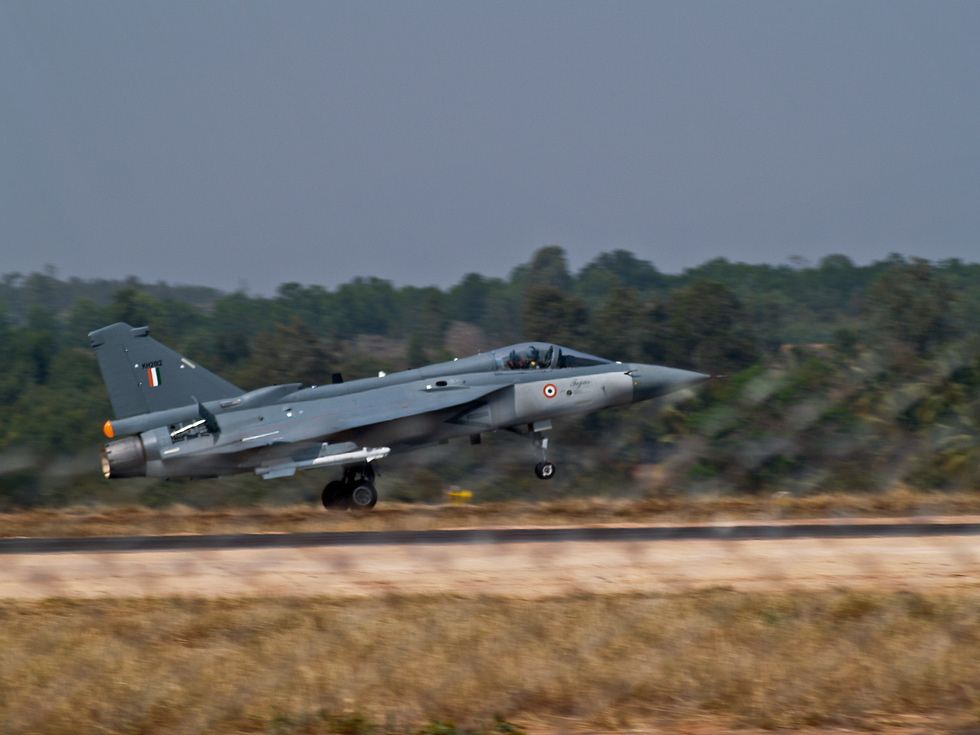

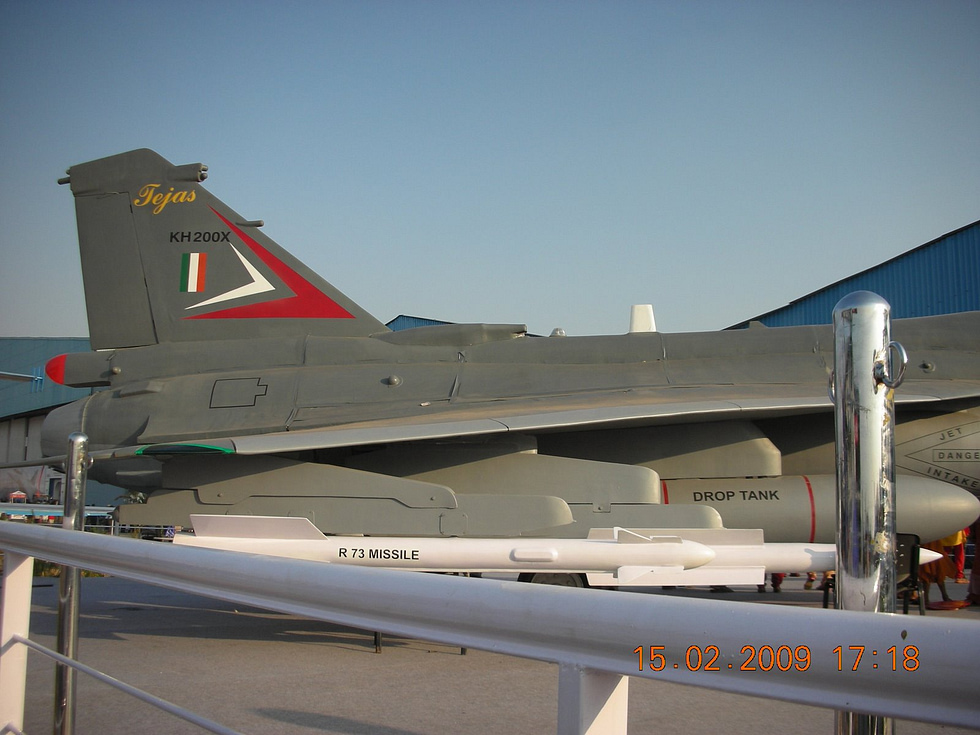
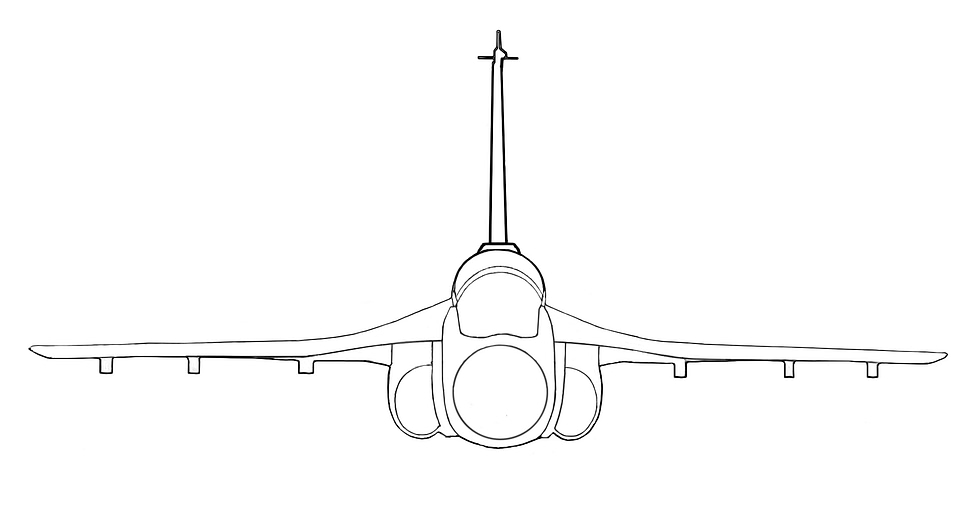

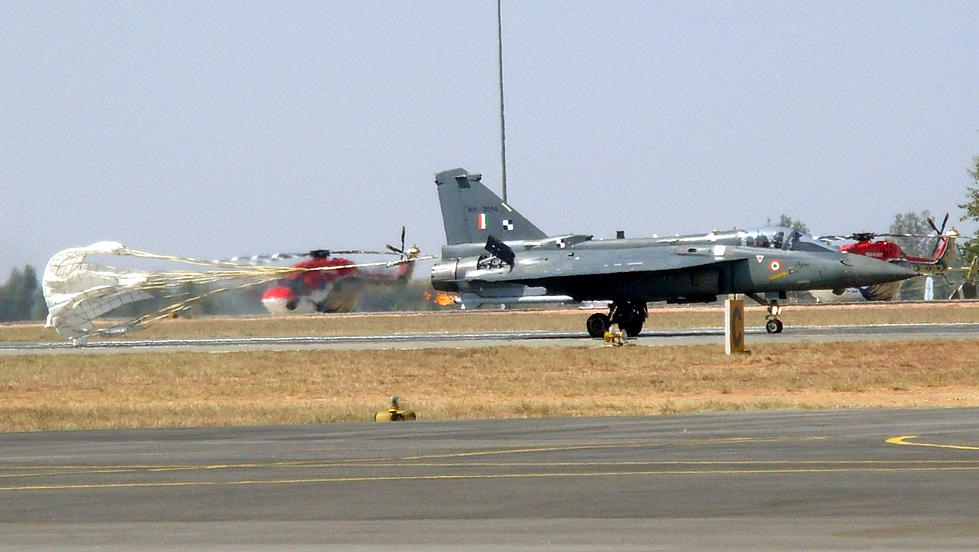
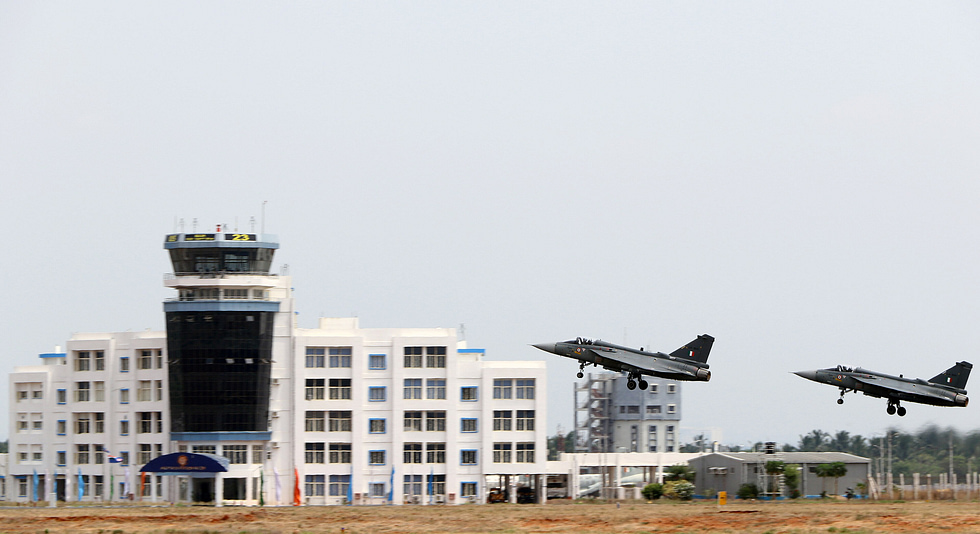
The Tejas in motion
A curated, high-authority video feature for the Tejas is coming soon. In the meantime, explore the photo gallery above and the stories from the programme.
Where the Tejas operates
The score that defines it
The Tejas has not been used in combat. Its significance is not a kill tally but a milestone: it is the first fighter designed and certified in India to reach frontline squadron service. Its record so far is written in first flights, clearances and orders rather than air-to-air engagements — and the figures below are programme milestones, not battle honours.
Compare the combat record of every military aircraft. Programme figures as of July 2026 and subject to change.
Everything people ask about the HAL Tejas
Can I fly in a Tejas?
Is the Tejas really made in India?
How fast is the Tejas?
Has the Tejas ever seen combat?
What is the difference between the Mk1A and the Mk2?
Does the Tejas replace the MiG-21?
Who operates the Tejas, and has anyone else ordered it?
You can’t fly the Tejas.
These, you can.
Some legends only live in museums — others are fuelled and waiting. MiGFlug has put civilians in real military jet cockpits since 2004.
 Fly the L-39 AlbatrosThe world’s most-flown jet trainer — aerobatics included
 Fly the F-104 Starfighter“The missile with a man in it”
 Fly the MiG-21The Cold War’s most-produced jet
 Vlieg met de T-33 Shooting StarAmerica’s first jet trainer
 Fly the DH VampireA piece of early jet history
 Fly the S.211Agile Italian jet trainer
 Fly the MB-326The classic Aermacchi jet
 Fly the MiG-15The Soviet legend of the Korean War
Continue the tour
Every fact, checked
- ADA / tejas.gov.inThe programme’s official site — milestones, variants and development history.
- Airforce TechnologySpecifications, engine, armament and variant reference.
- Livefist DefenceFirst-flight recollections and Indian defence-programme reporting.
- ThePrintMk1A orders, delivery delays and export-prospect coverage.
- The National InterestAnalysis of the Tejas’s role, strengths and limitations.
- Naval TechnologyThe naval Tejas and its 2020 arrested carrier landing.
- The War Zone (TWZ)Reporting on the 2025 Dubai Airshow crash.
- Military FactoryCross-checked specification and timeline data.